Translation – Insights on Priority Scheduling Algorithms
Author : Cyan_RA9
Sharing with everyoneEnglish translations, including computer English textbooks, computer fundamentals, Chinese and English poetry, English classics, daily conversations, etc. For each article, I will provide four parts: “Original Content”, “First Version Translation”, “Second Version Translation”, and “Vocabulary List”.
Translation — Insights on Priority Scheduling Algorithms
【Original Content】
Priority Scheduling Algorithm (PSA):
Functional Principles: Applicable to both job scheduling and process scheduling; the priority of jobs (processes) is assigned externally, and the system only needs to schedule based on these externally assigned priorities; PSA can be divided into “non-preemptive PSA” and “preemptive PSA” based on whether preemption is allowed; it can also be classified into “Static priorities” and “Dynamic priorities” depending on whether priorities can change dynamically during the scheduling program’s execution. Static priorities refer to scenarios where each process’s priority is predetermined at the start of the scheduling program and remains constant throughout its execution; Dynamic priorities refer to situations where each process’s priority can change during the execution of the scheduling program.
Applicable Scenarios: Suitable for Real-Time Systems or scenarios where task priority differentiation is necessary.
Advantages: Flexible, allowing priority adjustments based on task importance.
Disadvantages: Low-priority processes may experience “starvation”; dynamically adjusting priorities can increase overhead.
【First Version Translation (Before Polishing)】
PSA (Priority Scheduling Algorithm):
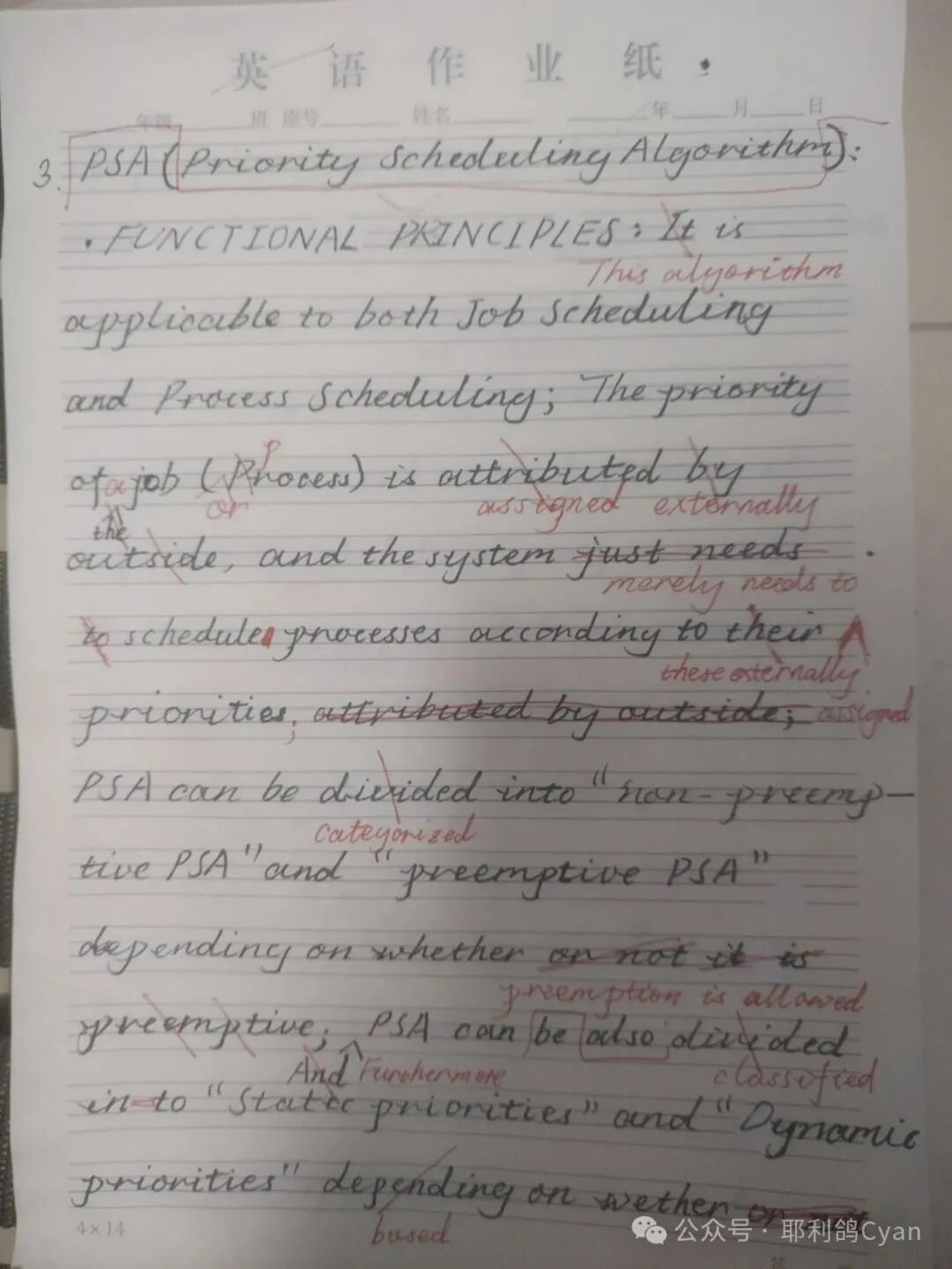
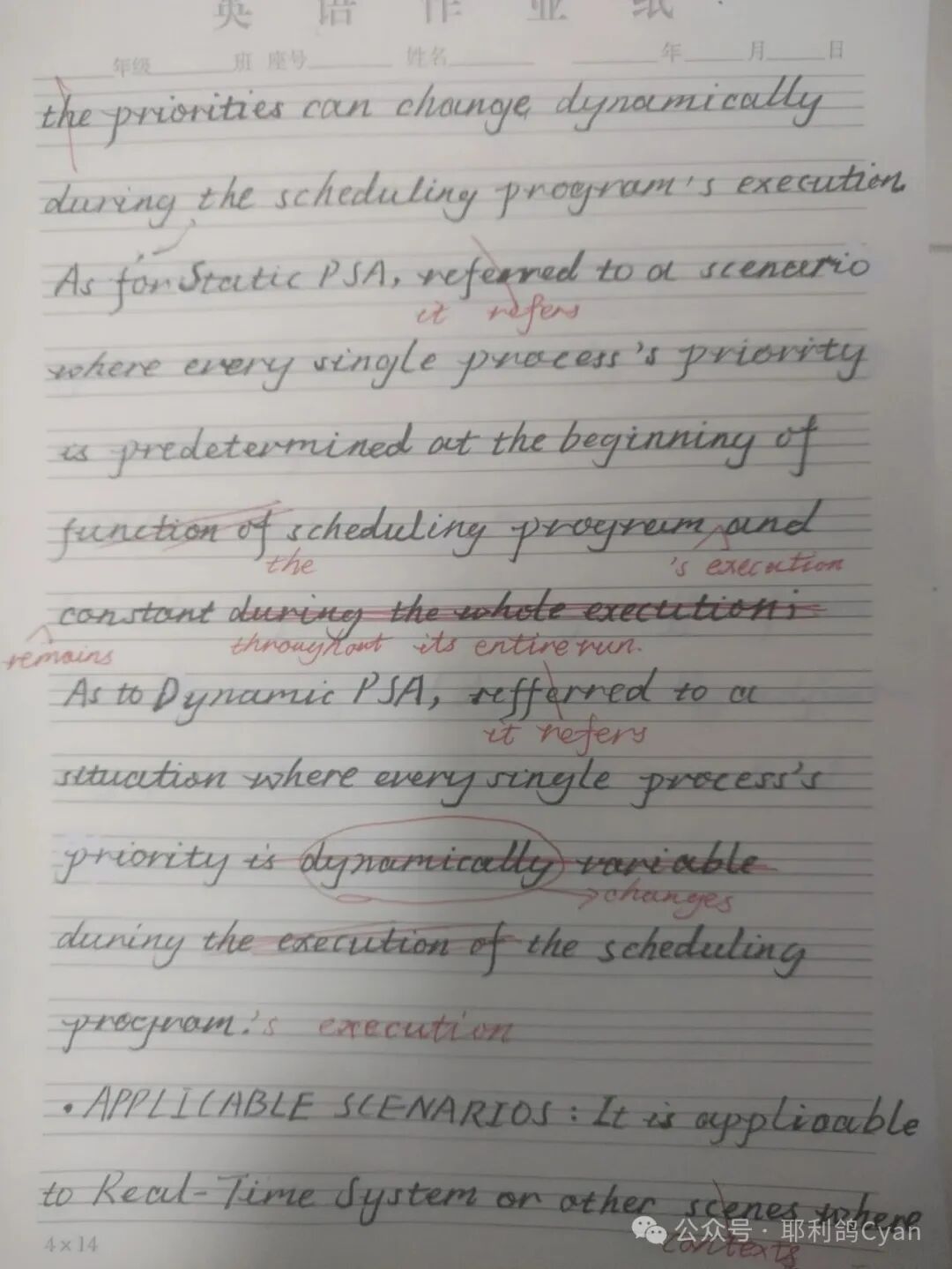
FUNCTIONAL PRINCIPLES: It is applicable to both job scheduling and process scheduling; the priority of the job (Process) is attributed by outside, and the system just needs to schedule processes according to their priorities attributed by outside; PSA can be divided into “non-preemptive PSA” and “preemptive PSA” depending on whether or not it is preemptive; And PSA can be also divided into “Static priorities” and “Dynamic priorities” depending on whether or not the priorities can change dynamically during the scheduling program’s execution. As for Static PSA, it refers to a scenario where every single process’s priority is predetermined at the beginning of the scheduling program’s execution and remains constant throughout its entire run; As to Dynamic PSA, it refers to a situation where every single process’s priority dynamically changes during the scheduling program’s execution.
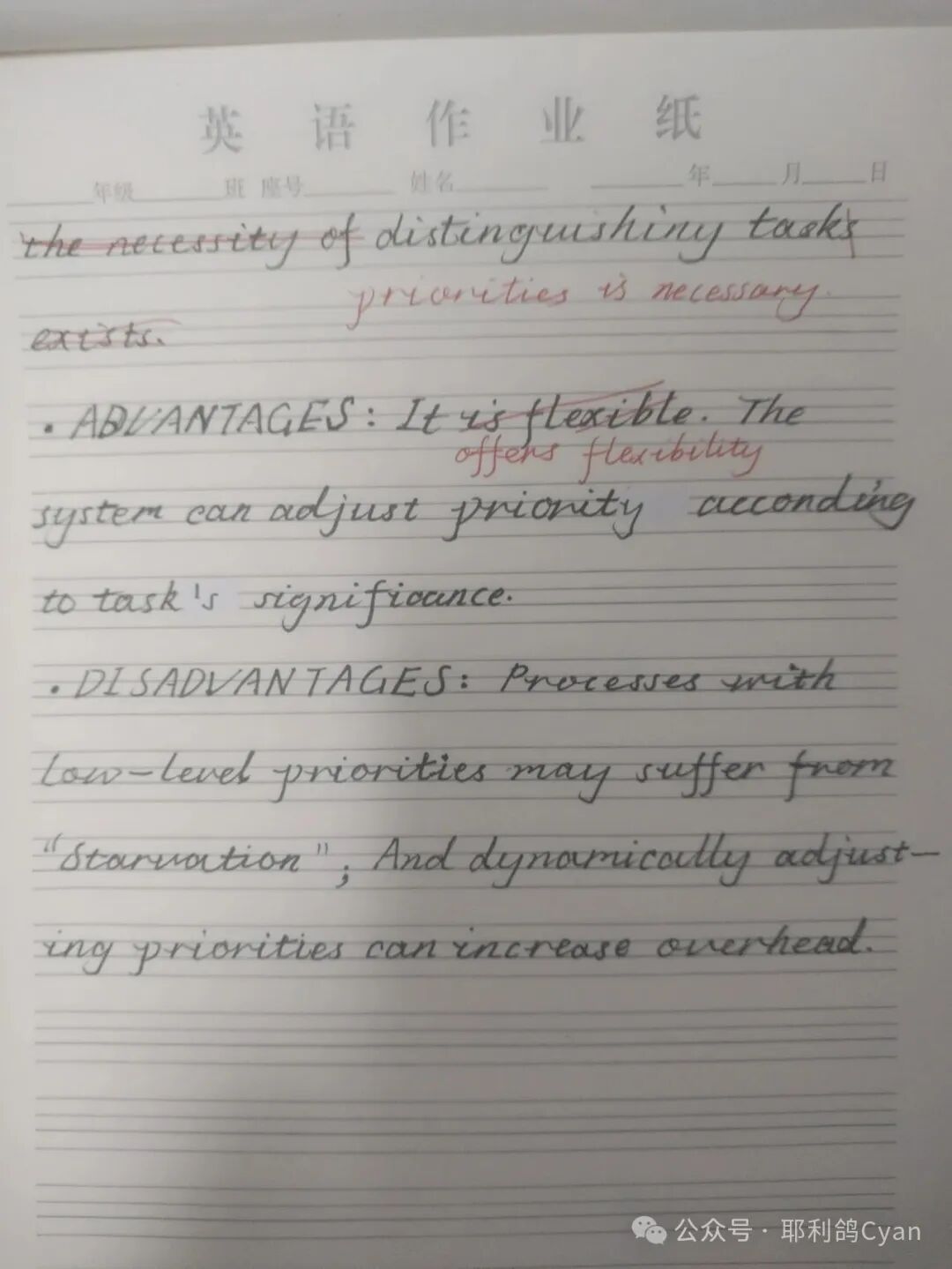
APPLICABLE SCENARIOS: It is applicable to Real-Time Systems or other scenes where the necessity of distinguishing tasks exists.
ADVANTAGES: It is flexible. The system can adjust priority according to task’s significance.
DISADVANTAGES: Processes with low-level priorities may suffer from “starvation”; and dynamically adjusting priorities can increase overhead.
【Second Version Translation (After Polishing)】
Priority Scheduling Algorithm (PSA)
FUNCTIONAL PRINCIPLES: This algorithm is applicable to both job scheduling and process scheduling; the priority of a job (or process) is assigned externally, and the system merely needs to schedule processes according to these externally assigned priorities; PSA can be categorized into “non-preemptive PSA” and “preemptive PSA” depending on whether preemption is allowed; furthermore, PSA can also be classified into “Static priorities” and “Dynamic priorities” based on whether priorities can change dynamically during the scheduling program’s execution. As for Static PSA, it refers to a scenario where every single process’s priority is predetermined at the beginning of the scheduling program’s execution and remains constant throughout its entire run; as to Dynamic PSA, it refers to a situation where every single process’s priority dynamically changes during the scheduling program’s execution.
APPLICABLE SCENARIOS: It is applicable to Real-Time Systems or other contexts where distinguishing task priorities is necessary.
ADVANTAGES: It offers flexibility. The system can adjust priority according to task’s significance.
DISADVANTAGES: Processes with low-level priorities may suffer from “starvation”; and dynamically adjusting priorities can increase overhead.
【Vocabulary List】
assign: v. to allocate, designate, assign, or arrange
assigned: adj. designated, assigned; v. past tense and past participle of assign
be assigned externally: phrase. assigned by external sources