1. Issues
For those considering a career change, it is essential to clarify whether this decision is made after serious consideration. You must be honest with yourself, as even if you manage to bluff your way through initially, HR will educate you later. Here are three questions to help you organize your thoughts:
1. Are you changing careers because you are facing difficulties in your current job that you are unwilling to confront?
2. Are you switching careers simply because the semiconductor industry offers higher salaries?
3. Am I truly aware of the effort and costs involved in changing careers?
4. There is no turning back in a career change; there are no slackers, and with zero experience, it is easy to be eliminated. As you age, you will face strong competition from younger graduates from top universities like 985 and 211.
2. Personal Positioning
After deciding to change careers, the first issue to address is positioning, which means understanding your level among those entering the relevant industry. A clear understanding of your situation will determine whether your job applications and interview strategies are targeted. For career changers, you can conduct a preliminary assessment based on the following dimensions: industry relevance, job relevance, alma mater, and years of experience. This will help clarify your strengths and weaknesses, allowing you to strategize effectively.
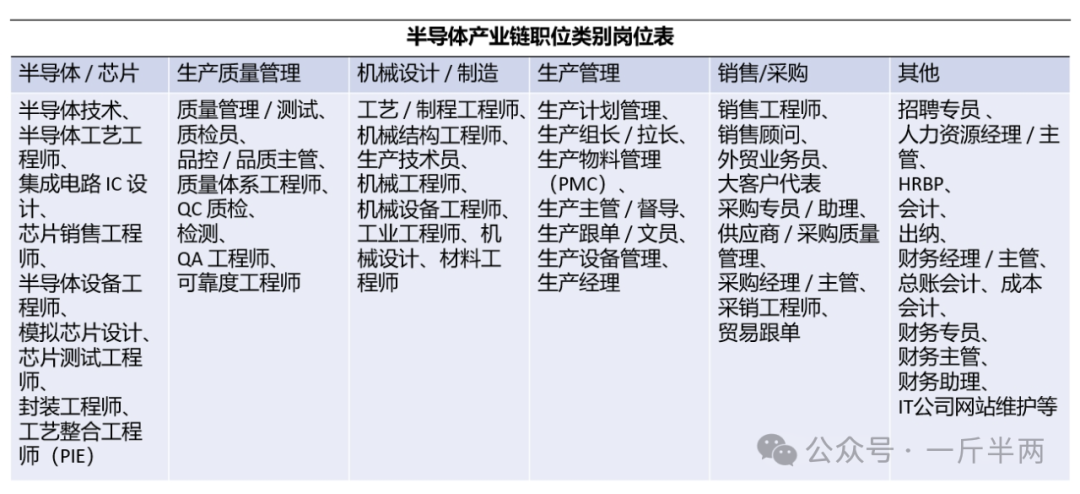
Recognizing your strengths is key to job hunting. For example, although my first job was in ToB sales in the chemical industry, which is not strongly related to my target position, I interacted with various suppliers, became familiar with multiple processes, and gained insights into operational models and implementation logic. These are transferable skills.
However, my weaknesses are also evident: I lack work experience in the semiconductor industry. Therefore, it is crucial to clarify your positioning when job hunting. If you blindly apply for highly technical positions from the start, such as sending out over 110 resumes on the first day, even if you get an interview the next day, you may miss the offer due to insufficient preparation, lack of deep thinking about interview questions, and anxiety affecting your performance. In fact, if you can approach it calmly, the outcome might be different.
It might be wise to start with assistant positions, interview at some ordinary companies to gain experience, and then try applying to larger firms. This is similar to leveling up in a game; if you are still at level 1, recklessly challenging a level 100 boss is likely to end in failure. However, for those with similar interview experience or higher education transitioning roles, they may have an “attribute bonus”. Otherwise, transitioning from civil engineering to electrical engineering or procurement, for example, could still allow a level 1 character to succeed against a boss. Understanding your own positioning allows you to leverage strengths and avoid weaknesses.
3. Preparation
Preparation is the most crucial step in all processes. It will determine the number of interview invitations you receive and the quantity and quality of offers. This step should not be taken lightly; all efforts are worthwhile. The preparation phase can be divided into four parts:
(1) Mindset
For those changing careers, mindset is often the key to success—after all, this path will be filled with various pressures, and the longer you have worked, the heavier this pressure becomes. However, during this career transition, I have noticeably grown in my mindset: in the past, when faced with similar difficulties, I would likely fall into extreme anxiety and irritability, even easily slipping into self-doubt; but this time, I maintained relative calm throughout the process. Even when emotions fluctuated, I could quickly adjust my state and re-engage in action.
This progress stems partly from my own expectations—I always strive to perform better than the last time; more importantly, I have maintained the right mindset: wherever I fall, I will get back up, brush off the dust, and keep moving forward!
(2) Resume
This includes both the resume you prepare and the online resume on job recruitment websites.
First, it is essential to understand that a resume is meant for the employer’s review. This may sound obvious, but many people do not think this through. Since it is for the employer, what information do they want to see? Information that is useful to them. What kind of information is useful to employers? To put it simply:1. This person has done this job before; 2. This person did this job well. If your resume can achieve this effect, you can wait for interview invitations.
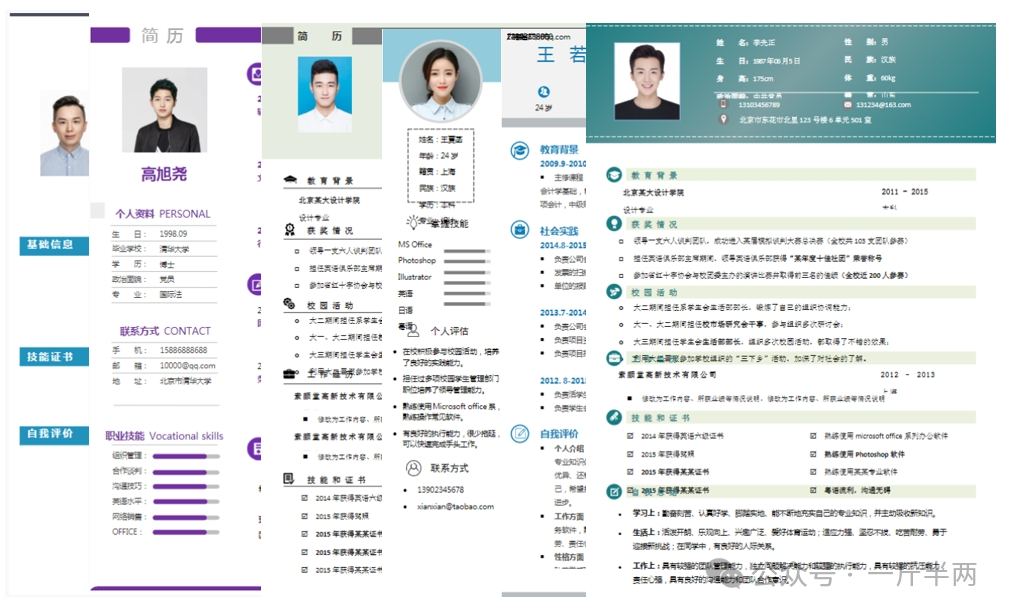
Therefore, there are two dimensions to follow when writing a resume:
1. Relevance. The more relevant information on your resume to the position, the higher its priority.
2. Present facts. It is best to use data to illustrate this. Many resumes read like a list of tasks, stating that they did A and B, but employers are more concerned with how well you did those tasks. A specific description method can refer to the STAR principle.
For online templates on recruitment websites, be sure to fill them out carefully. Many HR personnel will look at your online resume directly after chatting on platforms like Boss Zhipin. If the content is inappropriate, they will not consider you at all. One detail to note is the self-evaluation section, which is the first part HR sees. Many people’s self-evaluations are purely subjective concepts, such as “serious, proactive…” which are actually ineffective information. You can imagine how HR feels when they see hundreds of self-evaluations stating the same thing.
(3) Application
The most important point here is not to self-doubt before applying. If you feel unprepared for higher-level companies and hesitate to apply, you are preemptively cutting yourself off before others reject you. In this application process, I adhered to one principle: I would rather be rejected by others than self-censor. In short: if there is a company you want to apply to, do so boldly; the worst that can happen is a rejection.
Having a clear position and industry in mind, I recommend applying directly through the company’s official website and public accounts. For example, I previously published an article related to semiconductor lithography equipment and accessories.
4. Interview
During the interview, the best state is to be neither humble nor arrogant. Many people subconsciously feel inferior to the employer, especially in situations like career changes or resignations, where pressure is inherent; this mindset can be magnified. However, there is no need for this—remember, the biggest bottleneck for companies that want to achieve results is finding capable people. So, you must have more confidence in yourself.
Here are interview questions and resume templates available for download.
Interview skills
https://pan.baidu.com/s/18mCL4C6dKNNQDhcCoiXKnw?pwd=2221 Extract code: 2221
Resume template one
Link: https://pan.baidu.com/s/1q16tgvf59p5-PaVy-v2YSg?pwd=2221 Extract code: 2221