 In the foundational capabilities of the Internet of Things (IoT), domestic manufacturers are rapidly growing.
Source:21tech (News-21)
Author:Luo Yiqi
Editor:Zhang Weixian
Image Source:Tuchong
As we enter the era of intelligent connectivity, the IoT is endowed with richer application demands and deployment scenarios, and domestic technology providers are also growing rapidly within this context.
“
According to reports from 21st Century Business Herald, recently, Jixiang Technology completed a B+ round of financing, with investments from Yuexiu Industrial Fund, Haizhu District Fund, Poly Capital, and other institutions. Qixinbao shows that Jixiang Technology was established in 2018 and has previously gone through three rounds of financing, with shareholders including China Electronics Technology Group Corporation Venture Capital Fund, Minghui Fund, and AVIC Innovation.
This is a company focused on the independent research and development of wireless narrowband IoT communication systems, which operates independently after the transformation of scientific and technological achievements and mixed ownership reform by the Guangzhou Communication Research Institute. Its core technology is the TPUNB new urban IoT private network.
“TPUNB is a dedicated network communication protocol for the IoT, and the spatial capacity of the IoT is rapidly increasing, requiring different innovative technologies to complement and integrate with public networks.” Shen Shaolan, Vice President of Jixiang Technology, told reporters that the funds raised in the previous rounds of financing were mainly used for the research and development of TPUNB’s underlying communication technology. This time, in addition to continuing to invest in the development of the second-generation self-developed chips and the networking capabilities of the second-generation communication system, funds will also be used to expand business scenarios and ecosystem construction.
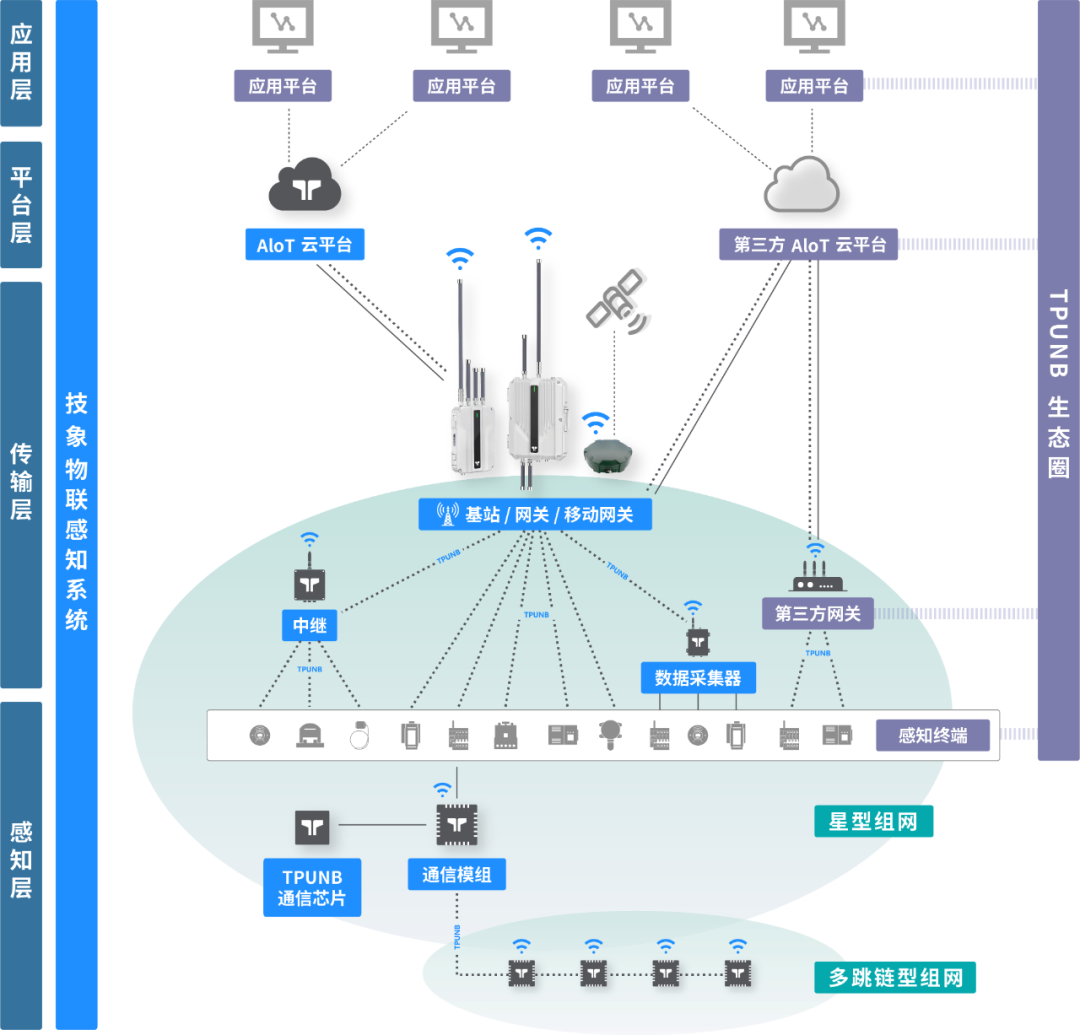
Jixiang Technology TPUNB Ecosystem
Image Source: Provided by the company, same below
In the rapidly developing IoT market, China is undoubtedly a major application bearer.
According to a recent report by IDC, global IoT (enterprise-level) spending reached $690.26 billion in 2021 and is expected to reach $1.1 trillion by 2026, with a five-year CAGR (Compound Annual Growth Rate) of 10.7%. Among them, China’s IoT (enterprise-level) market size is expected to reach $294 billion by 2026, accounting for about 25.7%, with a five-year CAGR of 13.2%, continuing to maintain the largest IoT market size globally.
This has become the confidence for domestic exploration in the underlying technology market of the IoT.
Shen Shaolan introduced that Jixiang Technology completed the first generation chip tape-out in August 2020 and is currently developing the second generation self-developed chip. With the addition of the second phase of networking capabilities, it can support more efficient calibration methods, higher transmission rates, and improved communication algorithms, thus enabling more networking modes.
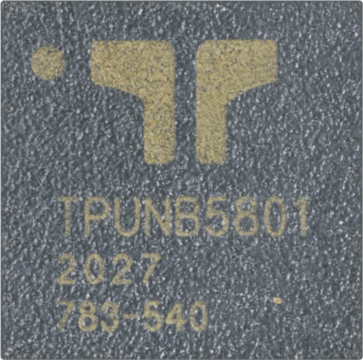
Chip: Xiangxin No. 1
This can adapt to various industry application needs, developing communication modules for different scenarios, industry gateways, etc., enriching the core network product system and upgrading the AIoT platform. “Currently, the clear application directions include to G business centered around digital government ‘one network management’, and to B business centered around large enterprises,” she continued.
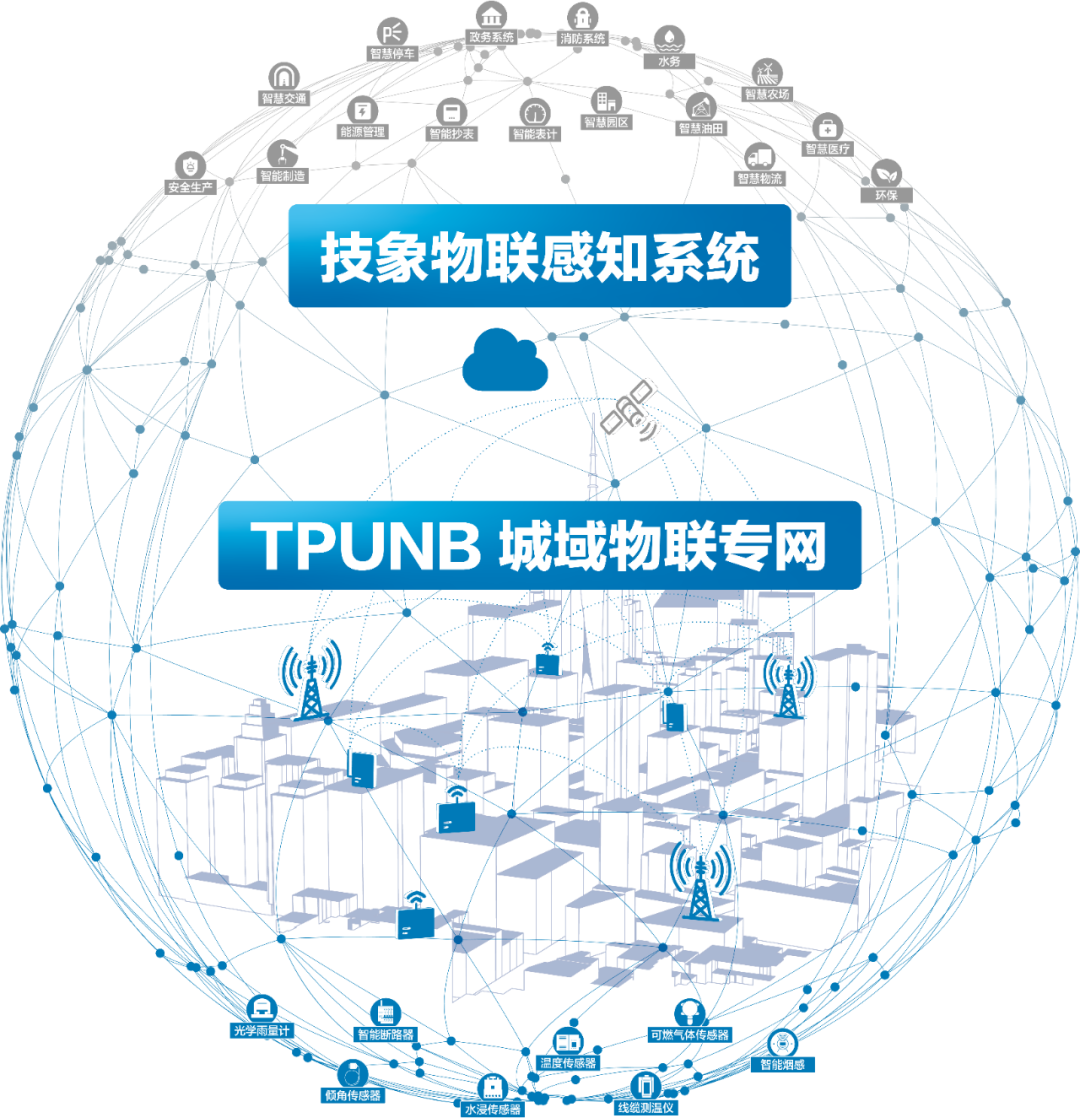
This also aligns with the general trend of application deployment in the industry. According to IDC, by 2026, the manufacturing industry represented by smart factories, the government industry represented by smart cities, the retail industry with online and offline omnichannel operations, and the public utility industry represented by smart grids will account for over 60% of China’s enterprise-level IoT market spending. In addition, smart buildings, smart logistics, and smart hospitals also have significant market growth potential.
On the basis of business, ecosystem construction can be better improved. “Business deployment is like a locomotive, which needs to drive ecosystem construction; when the ecosystem is sound, it acts like a train’s tail, accelerating the growth of the business base. Therefore, business development and ecosystem construction are promoted simultaneously, playing a dual-driving role of ‘head and tail’. We define this year as the year of business,” Shen Shaolan analyzed.
For underlying technologies, corresponding ecosystem construction is essential, but it is also a path that requires considerable effort and funding.
Shen Shaolan stated that Jixiang Technology’s TPUNB technology in industrial ecosystem construction mainly covers four parts: upstream chip manufacturers, midstream module, gateway, and platform manufacturers, downstream terminal manufacturers, solution providers, and cross-industry chain manufacturers and institutions. “In terms of perception terminals and application platforms, we enrich the vertical industry ecosystem while providing efficient docking methods for the ecosystem.”
According to reports, in terms of the application deployment pace of the IoT private network, Jixiang Technology is currently starting from Haizhu District and Huangpu District in Guangzhou, gradually radiating throughout the city, and the overall provincial deployment starts from Guangzhou and Jieyang, then radiating to other cities. Currently, the company has deployed 52 private network cases nationwide, covering scenarios such as urban governance, parks, campuses, distribution rooms, and smart utility tunnels.
Although digital construction has been proposed for many years, in the actual implementation process, there is often a lack of a unified IoT perception system to coordinate, resulting in bottlenecks in fully digital integration. For example, information silos between different departments, some business systems being redundantly constructed, and efficiency in responding to emergencies being affected.
Shen Shaolan analyzed that therefore, there is still a lot of development space around the IoT perception system, “The emphasis on digital construction in the 14th Five-Year Plan has led to a significant increase in digital demand across various regions, which is a trillion-level market. In the future, Jixiang Technology will accelerate business development around key areas such as smart cities, industrial internet, and rural revitalization, addressing existing pain points in ‘one network management’, and gradually advancing private network coverage; at the same time, building a more complete ecosystem, equipping more industry solutions on the private network to promote business growth.”

Editor: Lu Taoran

Previous Recommendations
Kuai Gou Da Che officially starts its IPO, is the freight industry turning from blue ocean to red ocean?
LCD TV panel prices continue to decline in June, panel manufacturers plan to reduce production in the third quarter
The disheartened New Oriental teacher amazed the live broadcast room