
The global pioneer in smartwatches, Pebble, once led the market over two years ahead of the Apple Watch, but recently ended its entrepreneurial journey by being acquired. Renowned American technology journalist Steven Levy wrote about the last days of smartwatch manufacturer Pebble before its acquisition by Fitbit. In an interview with Levy, Pebble’s CEO reflected on the mistakes they made.

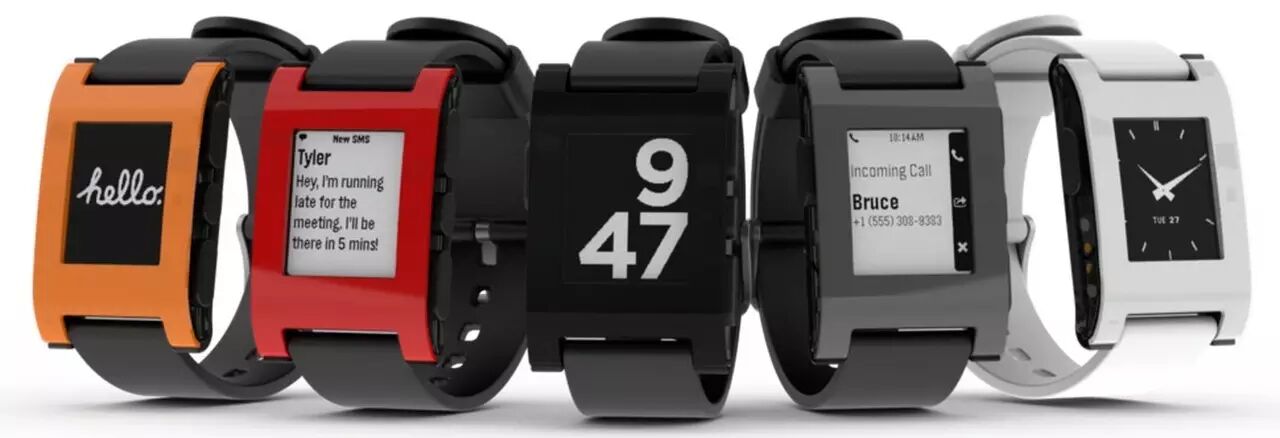
If the myth of Silicon Valley is true, Eric Migicovsky should be ecstatic at this moment. After all, he has failed.
For the past nine years, he dedicated all his energy to Pebble—starting the company at the age of 21 while studying in Delft, Netherlands, a city known more for its pottery than technology.
His journey has become legendary: struggling during the incubation at Y Combinator, but then skyrocketing to fame through the crowdfunding platform Kickstarter, they developed their own brand and sold over 2 million smartwatches. It sounds like a remarkable achievement, but that is not the whole story: Pebble fell into losses, with no hope of profitability in the short term.
Thus, on December 6, Migicovsky sold Pebble’s key assets to Fitbit, including the company’s intellectual property. Reports indicate that Fitbit will hire 40% of Pebble’s employees. Now, at 30 years old, Migicovsky faces his first day without the title of CEO since becoming an adult.
In a culture obsessed with failure, he finally received the ultimate diploma: a completely failed entrepreneurial experience.
But he is not happy.
He is not gloomy either. When I met this tall, bearded Canadian last week at a restaurant in Palo Alto, he still maintained the joy and wisdom of brighter prospects, but our conversation was quite serious. After all, Fitbit completed the acquisition of Pebble that day.
The reason Migicovsky was willing to meet me is that I periodically report on his company. I interviewed him back when he was just a hardware startup incubated by Y Combinator. That was during the winter session of Y Combinator in 2011, when his company was still called Alerta, and their smartwatch was named InPulse.
Additionally, Backchannel has interviewed him multiple times over the past two years, and we refer to that series of articles as “The Pebble Adventure.” After Apple released the Apple Watch in September 2014, I interviewed him again. At that time, Migicovsky said that the emergence of the Apple Watch was a recognition of wearable devices, and thus Pebble would benefit from it.
I have seen early versions of the Pebble Time Round, which looked cool and resembled a Swatch. Earlier this year, I was fortunate to see Pebble expand its product line to screenless devices—it can be attached to a keychain and enhance your running experience through streaming music. (It can also run Amazon Alexa software, supporting thousands of voice commands.)
When we arranged this meeting, news about Pebble selling to Fitbit had already leaked, and he brought up something I had already started thinking about: documenting Pebble’s final adventure.
“Adventurous” is a fitting description of Pebble’s journey this year: starting from a crisis in 2016. The previous year, the once-profitable company faced losses, and in the second half of 2015, it even failed to meet sales targets.
Pebble never recovered profitability after that. In March 2016, Migicovsky cut a quarter of the 160-person team, just as Pebble had moved from its shabby headquarters in Palo Alto to a spacious new office in Redwood City. They had optimistically rented two floors, but now the staff could only fill one floor.
The results showed that both Pebble and Apple misjudged the wearable market. The “iPhone on the wrist” did not gain public acceptance. So far, the only killer app on the wrist seems to be fitness.
Active users of wearable devices find it indeed useful to carry a device that tracks their health data and running metrics. Apple focuses on fashion, while Pebble emphasizes efficiency and tirelessly guides third-party innovation. However, these efforts did not pay off; only health and fitness can truly invigorate the smartwatch market.
“We woke up too late, and Apple also realized this issue,” Migicovsky said. (He admitted that notifications might be another key feature of smartwatches.) “We did not develop this market in 2014—if we had positioned ourselves as wearable fitness smartwatches back then, things might have been different.”
It is certain that Pebble has been trying to catch up. The products the company released earlier this year indeed focused on fitness, and the aforementioned Pebble Core keychain device is about the size of a Mahjong tile. (You may have noticed that the second-generation Apple Watch also targets fitness enthusiasts.)
Pebble also launched new smartwatches optimized for fitness applications, equipped with heart rate monitoring features. In April of this year, the Kickstarter crowdfunding project for this product attracted over $12 million in orders.
But it was all too late; these sales were not enough to save Pebble. Pebble Core was destined to become a ghost product—although its prototype was quite attractive, it would never be delivered to the 22,400 Kickstarter backers. (They will receive refunds through the Kickstarter system.)
In an interview in April this year, Migicovsky did not tell me that the reason they returned to Kickstarter was that the company could no longer continue financing. “It was hard to raise funds during layoffs; we were out of the picture,” he now tells me, “That’s why we used Kickstarter. After Kickstarter, we tried to raise funds, but we were unsuccessful.”
Throughout the spring and summer, Migicovsky tried various methods to save his company. But as summer ended and the Christmas shopping season approached—new products had been delayed, and their planned release date was no later than 2017—he began to hurry.
“September was busy,” he said, “I was flying around the world; I went to China to try to sign operating system licensing agreements and met some investors—who were at a different level than the investors I met in the early days.” He did not visit top venture capital firms but sought private equity firms and family trust funds—companies outside the traditional tech circle.
He considered many plans, even contemplating equity crowdfunding. However, due to the company’s frequent use of Kickstarter for product crowdfunding, this plan had to be abandoned. Many other proposals were also rejected, including some extreme ideas: “For example, firing everyone and reducing the company to 10 people to see what would happen.”
He now compares the situation at that time to the night of a presidential election: watching Trump’s votes increase, what could Hillary Clinton do to win? Like Hillary, Migicovsky felt powerless.
In October of this year, Migicovsky finally determined that Pebble was beyond saving. It was time to sell the company, but he first thought of protecting customers, maintaining relationships with developers, and striving for the interests of employees. Surprisingly, this gave him and other executives new motivation.
“Once we made the decision in October, things became simple,” Migicovsky said, “Our only task was to sell the company.”
The most suitable buyer was clearly Fitbit, the leader in the wearable fitness market, which had just entered the smartwatch market.
Migicovsky stated that besides having a good cash reserve (estimated by Bloomberg Businessweek to be nearly $40 million), what attracted him to Fitbit was the company’s willingness to retain Pebble’s developers and users.
Although it is still unclear how things will develop in the future—such as whether future Fitbit smartwatches can run the Pebble operating system—Migicovsky stated in his blog that the Fitbit deal could expand developers’ reach from 2 million Pebble users to 50 million Fitbit users. “Fitbit strongly supports developers,” he said.
Although the details of the deal have not been fully disclosed (Migicovsky cannot freely disclose this information), from the statements released by Pebble and Fitbit on their blogs, it appears to be an asset acquisition deal involving Pebble’s software, firmware, and patents, but not including actual hardware and inventory. Pebble will still be responsible for resolving its debts.
Pebble’s smartwatches can continue to be used, and Fitbit will initially support Pebble smartwatches, but warranty policies will no longer apply. Companies developing third-party applications and plugins can continue their business, but the number of users will continue to dwindle. Users who ordered Pebble products through Kickstarter will receive refunds.
Fitbit has also encountered its own troubles recently—the company lowered its sales forecast for the Christmas shopping season last month, and its stock price hit an all-time low—but after absorbing Pebble’s engineers and patents, Fitbit’s future products are expected to improve.
Ironically, when Migicovsky was interviewed in April last year, he stated that Fitbit had realized early on that fitness would become an important feature of early wearable devices and developed products based on that.
“They roughly understood how to transition from health products to more mainstream smartwatches,” he told me at the time, “Our situation is quite the opposite; we initially were general smartwatches, but now we must realize that health is the primary reason people use Pebble.” Of course, at that time, he clearly did not know that Fitbit would complete its transition by acquiring his company.
Fitbit CEO and co-founder James Park expressed a similar view in a press release: “As basic wearables become smarter and smartwatches increasingly add health and fitness features, we see the opportunity to develop our strengths and hope to expand our leadership in the wearable space.”
Migicovsky will not join Fitbit. He is noncommittal about whether he will work for Y Combinator. Whatever he does next, he will not leave Pebble with a fortune. “This is not that kind of deal,” he said, “This deal primarily considers the interests of customers, employees, and vendors.”
Does he have any regrets?
“I won’t change much,” he said, “My plan wasn’t perfect, but very few things are perfect. We tried, developed good products, and then sold out; we opened up a market… but we couldn’t go further.”
What does he think of Silicon Valley’s “badge of failure”? Migicovsky does not believe he has earned such a badge. “I may not fit the model of failing fast,” he said of his nine-year journey. But for Migicovsky, the important motivation for selling the company was to preserve the opportunity to continue nurturing the community he built.
“It’s not a large community, but I think it has a certain scale: about 2 million people worldwide,” he recalled.
In my view, Eric Migicovsky achieved a lot before turning 30. Although his company suddenly died, Pebble was indeed creative and inclusive, delivering value to users and creating a community for developers. In an era where large companies fight fiercely, sometimes even going astray, Pebble was refreshing.
Migicovsky is only 30 this year; he still has plenty of time to create brilliance for himself and many “watches” to help him seize opportunities. (Translation by Chang Ge)


Tencent Technology has opened an official Zhihu account!
Ask me anything, and I will answer
Hit the “Read More” button below
Waiting for you on Zhihu
↓