The DisappearingAPI
+
The Disappearing API? An Analysis of AI Agent Architecture: From Individual Operations to Collective Intelligence, How Can Developers Adapt?
At the Shanghai World Expo Exhibition Center, visitors line up in front of the Fourier booth just to experience the wonderful touch of the GR-3 robotic arm. This humanoid robot, designed with a “soft skin covering material,” is coated with supercar-grade interior materials and eco-friendly “Gute Cotton,” providing a delicate and warm touch. When touched, the 31 tactile sensors in its head and torso respond in real-time, causing the robot to turn its head to look at the experiencer and emit gentle voice feedback.
Behind this soft exterior is Fourier’s profound shift in the positioning of robots—from functional tools to emotional companions. The GR-3 stands 1.65 meters tall and weighs 71 kilograms, featuring a warm Morandi color scheme and an animal-like head design, completely breaking the cold image of traditional robots. Its design inspiration comes from “Baymax” in “Big Hero 6,” aiming to create a true companion that can enter the emotional world of humans.
From Tools to “Colleagues”: The Essential Breakthrough of AI Agents
01
What is an AI Agent? Unlike traditional AI models, an Agent is not a simple “question-answering machine”; it is an intelligent entity capable of perceiving the environment, planning decisions, executing actions, and achieving goals.
The core breakthroughs lie in three points:
Autonomous Goal Decomposition: When a user says, “Help me with market analysis,” the Agent automatically breaks it down into sub-tasks such as “collecting data → cleaning and processing → generating charts → writing reports.”
Tool Utilization Capability: It can not only generate text but also call APIs, execute code, and operate software, truly “getting things done.”
Continuous Learning and Evolution: It continuously optimizes strategies through interactive feedback, accumulating experience like humans.

Dissecting the Sparrow: The Four Core Layers of AI Agent Architecture
02
The current mainstream Agent architecture can be divided into four core components:
1. Brain Layer
The Large Language Model (LLM) is the “decision-making center” of the Agent, responsible for understanding, reasoning, and planning. However, the key is not how powerful the model itself is, but how to design prompt engineering and planning strategies.
For example, the ReAct framework combines Reasoning and Action, allowing the Agent to cycle through “think-action-observe”:
2. Perception & Action Layer
This is the “hands and feet” of the Agent interacting with the outside world. Through tool usage, the Agent can:
Access real-time information from search engines
Call APIs to perform specific operations (send emails, create calendars)
Run code to verify calculation results
Even operate software interfaces (through UI automation)
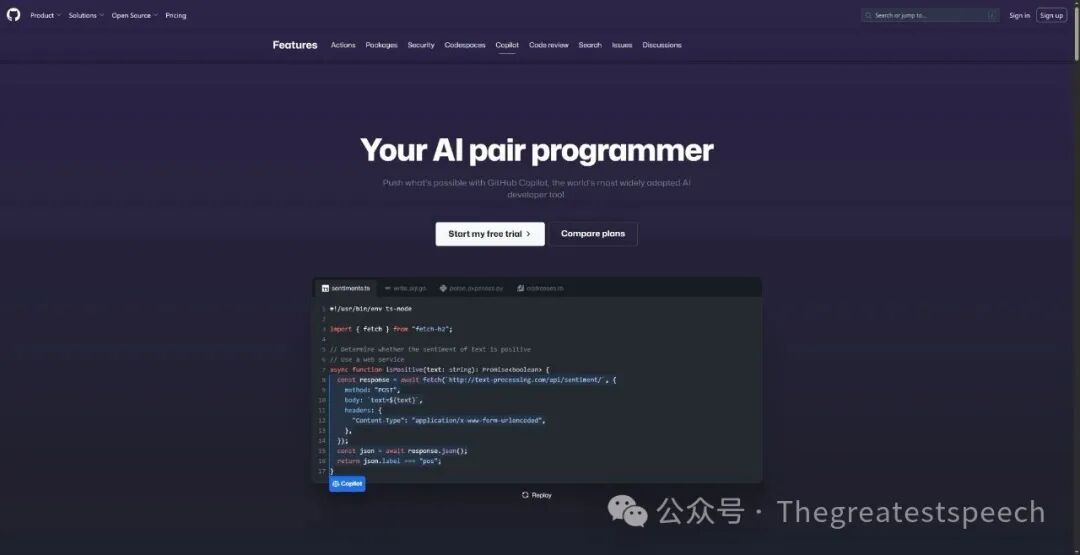
For example, GitHub Copilot can not only write code snippets but also call IDE interfaces to understand the entire project context, providing more accurate suggestions.
3. Memory Layer
The “experience repository” of the Agent, divided into:
Short-term memory: The context of the current session (similar to human working memory)
Long-term memory: Historical experiences stored in a vector database for retrieval and analogy
External memory: Connections to personal knowledge bases like Notion and Obsidian
This solves the LLM’s “goldfish memory” problem (not forgetting the original intention after 7×24 hours of continuous conversation), allowing the Agent to truly “know you.”
4. Coordination Layer
Multi-Agent collaboration is the current highest form. Different Agents perform their respective roles and “discuss” to solve complex problems:
Product Manager Agent: Understands user needs and generates product plans
Architect Agent: Designs technical architecture and selects technology stack
Programmer Agent: Writes code and debugs
Testing Agent: Designs test cases and verifies code quality
For example, ChatDev simulates the operation of a software company, where multiple Agents can complete a full game development cycle from requirements to executable files in just 7 minutes, fully automated.
Practical Cases: How AI Agents Are Changing Development?
03
Case 1: AutoGPT—Autonomous Task Tackling
The developer only needs to tell AutoGPT: “Add user authentication functionality to this project, using the JWT standard,” and it will:
Analyze the existing structure of the project
Search for best practice solutions
Write authentication middleware
Generate database migration scripts
Create test cases
Execute tests and fix issues
Traditional method: Developers manually research + code + test, taking hours to daysAgent method: Fully automated execution, taking minutes, with humans only needing to review.
Case 2: Devin—Full-Stack Engineer Agent
Cognition AI’s Devin demonstrates astonishing capabilities:
One-click deployment of a complete website (frontend + backend + database)
Debugging and fixing bugs in open-source projects
It can even take freelance tasks on Upwork.
Although not yet open, it foreshadows that AI Agents may directly replace some junior development tasks.
Case 3: MetaGPT—Multi-Agent Software Company
Input a one-sentence requirement: “Create a Snake game,” and MetaGPT will automatically assemble a “project team”:
Product Manager: Outputs PRD documents (including user stories, competitive analysis)
Architect: Designs technical solutions and API interfaces
Project Manager: Plans development tasks and timelines
Developer: Writes Python code (using Pygame)
QA Engineer: Writes test cases and generates test reports
Final output: Complete codebase, API documentation, test reports—while humans only need to provide one sentence.
How Can Developers Embrace the Agent Revolution?
04
In the face of the Agent wave, blind panic or rejection is not advisable. It is recommended to embrace change in three steps:
Phase One: Become an Agent User
On the tool level: Become proficient in using AI programming assistants like Copilot, Cursor, Adept, etc., to enhance efficiency.
On the thinking level: Learn to break down complex tasks into instructions that Agents can understand (Prompt engineering).
Phase Two: Become an Agent Designer
Skill upgrade: Master the core components of Agent architecture (planning, tool usage, memory management).
Development practice: Use frameworks like LangChain, LlamaIndex, AutoGen to build simple Agents.
Phase Three: Become an Agent Coordinator
Advanced capabilities: Design multi-Agent collaboration systems to solve more complex problems (such as automated testing, intelligent operations).
Human advantages: Focus on creative work (architecture design, product innovation), emotional interaction (user communication), and ethical oversight (AI decision review).
TGS Club AI Developer Community
TGS Club AI Developer Community
The Future is Here: The Inflection Point of the Agent Ecosystem
05
2024 will be the year of the AI Agent explosion. We predict the emergence of:
Vertical Agents: Super-expert Agents specializing in programming, design, testing, and other fields.
Operating System-Level Integration: Native integration of Agents in Windows, macOS, etc., becoming the “central nervous system” of the digital world.
Physical World Operations: Agents entering the real world through robots and autonomous driving (like the humanoid robot in Figure 01).
Emergence of Collective Intelligence: Millions of Agents collaborating to solve global issues (climate modeling, disease tracing).
Conclusion: A New Symbiotic Era Between Humans and Agents
06
APIs will not truly “disappear,” but the way they are called is shifting from mechanical code instructions to natural language collaboration. Future developers will no longer be “code farmers” but “Agent coaches”—guiding AI teams to work efficiently and reliably through task planning, capability expansion, and value alignment.
Just as the industrial revolution liberated human physical labor, the AI Agent revolution is liberating human mental labor. The only question is: Are you ready to work alongside AI Agents?
Today’s topic: What is the smartest AI Agent you have used in your work? What problem did it help you solve? Feel free to share your Agent stories in the comments!
This article is an original piece by the TGS Club AI Technology Community, aimed at providing developers with cutting-edge technical perspectives. If you need to reprint, please indicate the source. Follow us for more in-depth analyses of AI architecture!