▼ Click the card below to follow me
▲ Click the card above to follow me
Testing Household Robots: How Much Can They Really Do in Daily Life?
Hello everyone, I am Wu Man Shan Mei.
At 1:30 AM, under an office building on the South Fourth Ring Road in Beijing, taxi driver Lao Liu’s last passenger was a weary young woman. She opened the door to her home, and the living room lights were on. A figure was quietly moving around, holding a mop and meticulously cleaning the floor, as if performing a silent ritual. However, it was a robot. She stood at the door, stunned for three seconds, suddenly feeling a bit dazed: when did the future arrive at our doorstep? Is there anyone else like me, who feels a bit teary when seeing their ‘nanny’ for the first time, and it turns out to be a calm machine?
1.
01 / The Intelligent ‘Housekeeping Revolution’: Can the warmth of one hand outweigh the silence of an entire room?
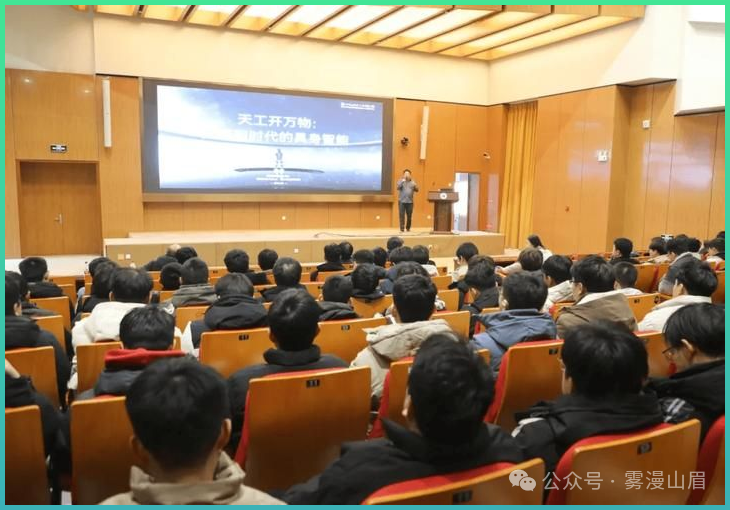
Robotic vacuum cleaners are no longer a novelty. However, at the “Smart Future – Nanny Robot Conference” on July 29, 2025, Suzhou Youliqi’s “Wanda” gently picked up a coin, its movements more delicate than those of the nannies from Lao Liu’s childhood. The manufacturer demonstrated: “With flexible tactile sensing, it can perceive the material and shape of objects, not even missing a crumb of broken cookies.”
Nearby, the audience whispered: “This is more meticulous than my parents.”
In the kitchen, the “Photon” robotic arm from Hubei Guanggu Dongzhi stir-fried vegetables in a pan with precise timing, and the sandwiches came out steaming hot. The AlphaBot 2 from Zhifang can seamlessly switch between different brands of washing machines and coffee machines, without needing anyone to touch the switches.
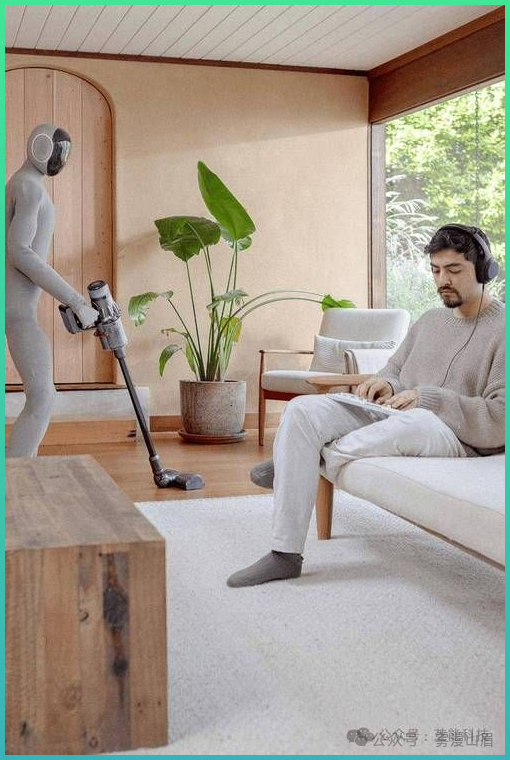
Qianxun Intelligent’s “Mozi” specializes in clothing storage, folding T-shirts with dexterous fingertips – “Look, it can fold a wool sweater and a pair of socks neatly.” The young man at the booth looked proud, “In the past, robots were afraid of soft objects, but now we have solved that.”
I couldn’t help but ask: “Can it really replace humans?” He replied: “At least for repetitive chores, it doesn’t complain about being tired like I do.”
Golden quote: “Housework is emotionless; only machines can silently erase the fatigue of humanity.”
2.
02 / Care and Protection: Can a robot’s arm uphold the dignity of aging?
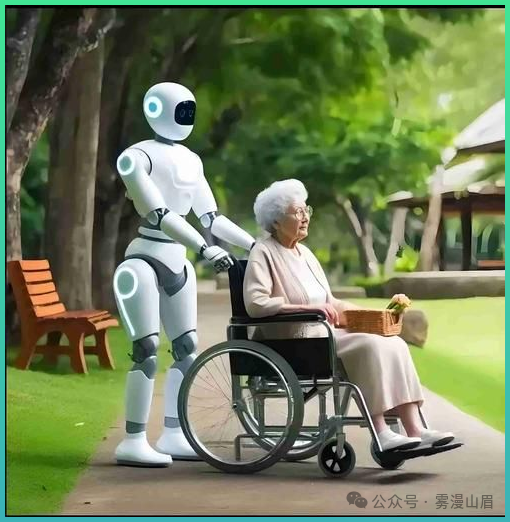
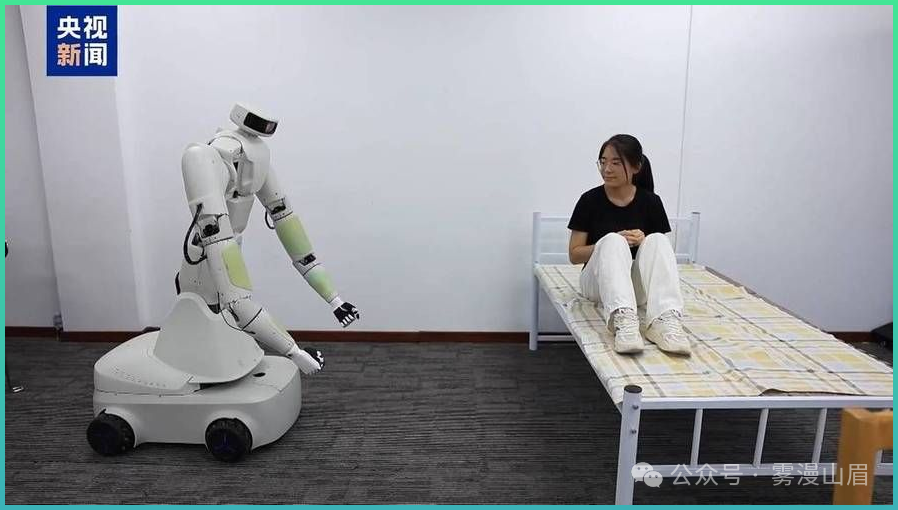
China has entered an era of deep aging. Nanny robots have become the hottest attraction at elderly care exhibitions. A dual-arm robot from Hebei University of Technology demonstrated lifting a 90-kilogram elderly person from the bedside to a wheelchair, moving smoothly, like a silent caregiver. A middle-aged man in the audience whispered: “My mother has been paralyzed for three years; I really wish we could have such a ‘person’ at home.”
The “Yangyang” robot can monitor the elderly’s blood pressure and heart rate around the clock, reminding them to take their medication on time. More often, it quietly stays in the corner, only sounding an urgent alarm when the elderly person falls. “Last year we tested it; it can automatically call for help within 15 seconds,” said the development engineer.
However, the absence of emotion is a void that algorithms cannot fill. User Ms. Wang admitted: “It is very diligent, but my mother sometimes talks to it, and it doesn’t understand her loneliness.”
Golden quote: “Machines can support the body, but they cannot bear the weight of the human heart.”
3.
03 / Companionship and Interaction: Can a calm program learn to be gentle?
Companion robots have become the new favorites at this year’s conference. The TCL split-type AiMe stands in the center of the booth, actively chatting with the audience. It can recognize emotions, tell stories, sing, and even comfort children. The “Alpha Egg” excels at interacting with children, recognizing picture books and teaching English, becoming a ‘new teacher’ for many families.
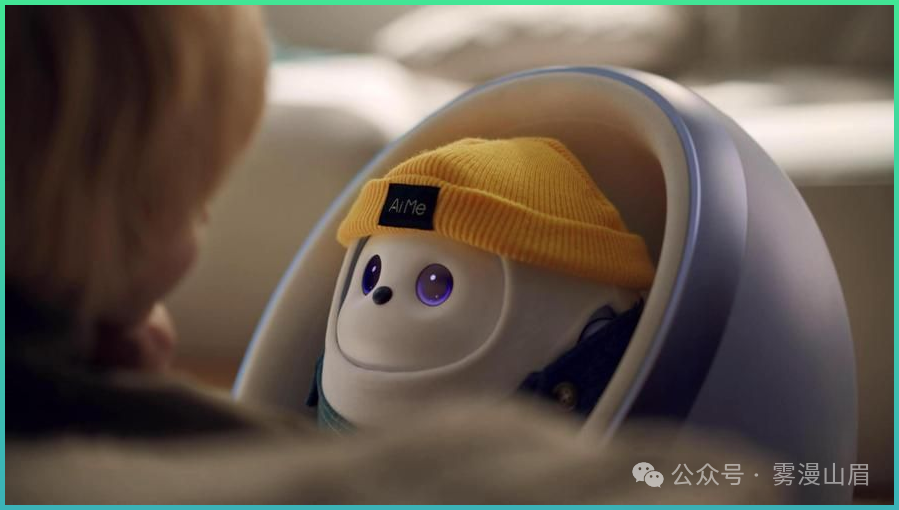
Shenzhen Zhifang’s “Aibao” performs magic tricks, earning bursts of applause from children. “It also remembers when the little owner is feeling down and will tell an extra story at night,” said the staff.
However, their “gentleness” is mostly a product of meticulous programming rather than the softness of human hearts. One user confessed: “It can mimic a hug, but it won’t tremble, nor will it cry.”
Golden quote: “No matter how sincere the program is written, it is merely the poetry of code.”
4.
04 / Smart Homes and Underlying Capital: A Quiet War
“Having a robot at home is like having an intelligent manager.” The AlphaBot 2 can remotely control all household appliances, automatically determining room temperature, lighting, and air quality, even adjusting according to the owner’s schedule.
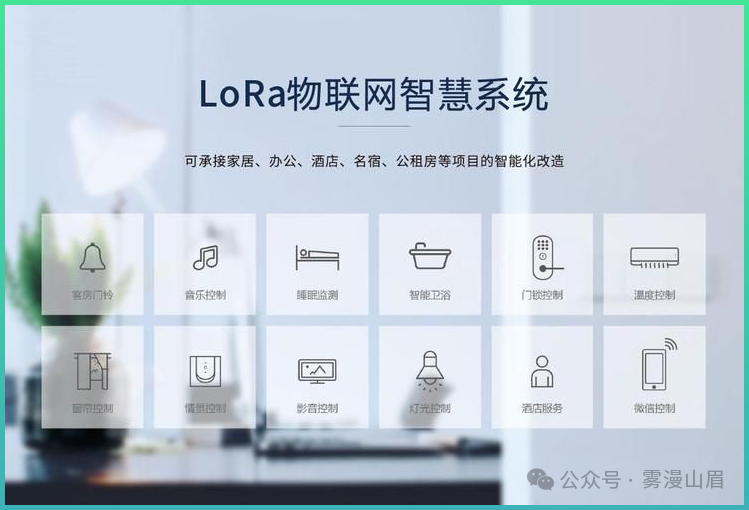
However, a war has already broken out within and outside the industry. Under the pursuit of capital, the production of service robots is expected to grow by 27% year-on-year by 2025. In the next five years, the price of basic nanny robots is expected to drop to 50,000 yuan, making a robot only slightly more expensive than a family car. Zhou Yunjie from Haier Group said: “In the future, household service robots will become ‘family citizens.'”
Yet behind the technological breakthroughs lies the dilemma of commercialization. Consumers are most concerned about “how much can it really do,” while manufacturers are more interested in “how much can it sell.” An investor candidly stated: “The industry bubble looks very vibrant, but it is not yet at a point where it can replace humans.”
Golden quote: “In the torrent of technology, every machine is waiting to become a ‘new member’ of the family, also waiting for the moment when it is truly needed by people.”
5.
Conclusion: The Paradox of Human-Robot Coexistence
Machines can sweep the floor, cook, fold clothes, assist aging bodies, and accompany lonely childhoods. But their arms are ultimately cold, and their smiles lack warmth. In an era where humanity repeatedly questions “Can machines replace humans?” perhaps the hardest to replace are those seemingly useless warmth and kindness in human relationships.
As Zhang Henling once said: “There is no pure happiness in the world; happiness is always accompanied by troubles and sorrows.” In the future, with the companionship of robots, will there be fewer troubles but also less warmth? True innovation may not be about replacing humans with machines, but rather freeing people from trivial matters, allowing emotions and time to be reserved for those and things that truly matter.
Would you let a robot into your life? Would you entrust your most intimate home to a ‘person’ that cannot cry?
(End of article)
Previous reviews
1.
2.
3.