Smart home appliances are products formed by integrating microprocessors、 sensor technology、 and network communication technology into household appliances after which they become appliances that have the ability to automatically sense the state of the residential space and the state of the appliances themselves, as well as the service status of the appliances, and can automatically control and receive commands from residential users either within the home or remotely; at the same time, smart home appliances, as part of smart homes, can interconnect with other appliances and facilities within the home to form a system that realizes smart home functions.
Concept
First of all, the concept of intelligence is not a scientific term; it refers to the ability that possesses some or all intelligent characteristics. Human intelligence is mainly manifested in the processes of perception, thinking, judgment, learning, and execution.
If the characteristics of human intelligence are embedded in a certain household appliance, thereby partially or completely replacing humans in performing certain tasks, or accomplishing tasks that humans cannot complete, such appliances can be referred to as smart home appliances. Therefore, products that possess sensitive perception capabilities, correct thinking abilities, accurate judgment, and effective execution capabilities, and comprehensively utilize these abilities are what we refer to as smart home appliances.
In fact, smart home appliances are not mysterious at all; recalling early electric irons and rice cooker thermostats, they already exhibited characteristics of intelligence. However, at that time, the level of intelligence was relatively low, and the concept of intelligence had not yet formed. With the development of sensor technology, chip technology, RFID technology, and network technology, truly intelligent home appliances began to enter our lives.
Smart home appliances are products formed by integrating microprocessors, sensor technology, and network communication technology into household appliances, which have the ability to automatically sense the state of the residential space and the state of the appliances themselves, as well as the service status of the appliances, and can automatically control and receive commands from residential users either within the home or remotely; at the same time, smart home appliances, as part of smart homes, can interconnect with other appliances and facilities within the home to form a system that realizes smart home functions.
The Difference Between Smart Home Appliances and Traditional Appliances
The difference between smart home appliances and traditional appliances cannot simply be distinguished by whether they are equipped with an operating system or a chip. The distinction mainly lies in the embodiment of the term “intelligent”.
First, the objects of perception are different; traditional appliances mainly sense time, temperature, etc.; while smart home appliances can perceive human emotions, actions, and behavioral habits, and can execute intelligent actions based on these perceptions. Secondly, the technical processing methods are different; traditional appliances are more mechanical or follow a very simple execution process. The operation of smart home appliances often relies on modern technologies such as the Internet of Things, the Internet, and electronic chips for application and processing. Finally, the demands they respond to are different; traditional appliances meet some basic needs in life, while smart home appliances respond to more diverse and higher-level consumer demands.
Thus, the difference between smart home appliances and traditional appliances lies in the realization of anthropomorphic intelligence; products capture and process information through sensors and control chips, and in addition to automatically setting and controlling based on the residential space environment and user needs, users can also make personalized settings according to their habits. Furthermore, when smart home appliances are connected to the Internet, they also possess the attributes of social networks. Additionally, smart home appliances can also be understood as Internet of Things appliances.
The rapid development of smart home appliances has become an inevitable trend, and the main reasons for their rapid development are as follows:
(1) The maturity and widespread application of network and communication technologies.
(2) The continuous improvement of information levels, gradually reaching a level that supports the large-scale development of the smart home appliance industry.
(3) The necessary preparation provided by Internet infrastructure and technical conditions for the development of smart home appliances.
(4) User demand for high-level appliances.
Characteristics and Functions
Compared to traditional household appliances, smart home appliances have the following characteristics:
1. Networking capabilities. Various smart home appliances can connect to each other through the home local area network and can also connect to the manufacturer’s service site through the home gateway interface, ultimately connecting to the Internet to achieve information sharing.
2. Intelligence. Smart home appliances can automatically respond to different surrounding environments without human intervention. For example, smart air conditioners can automatically adjust their operating status according to different seasons, climates, and user locations to achieve optimal results.
3. Openness and compatibility. Since the smart home appliances in a user’s home may come from different manufacturers, the smart home appliance platform must have development and compatibility.
4. Energy efficiency. Smart home appliances can automatically adjust their working time and working status based on the surrounding environment, thus achieving energy savings.
5. Ease of use. Since complex control operation processes have been resolved by the controllers embedded in smart home appliances, users only need to understand very simple operations. Smart home appliances are not limited to a single appliance but should be viewed as a technical system. As human application needs and the intelligence of household appliances continue to develop, their content will become richer, and the functions of smart home appliances will vary according to the actual application environment, but generally, they should have the following basic functions:
(1) Communication functions. Including telephone, network, remote control/alarm, etc.
(2) Intelligent control of consumer electronic products. For example, microwaves that can automatically control heating time and temperature, smart air conditioners that can automatically adjust temperature and humidity, and televisions/recorders that can automatically search for and record TV programs based on commands, etc.
(3) Interactive intelligent control. Voice recognition technology can enable voice control functions for smart home appliances; various active sensors (such as temperature, sound, motion, etc.) can achieve proactive action responses from smart home appliances. Users can also define different responses for different scenarios and different smart home appliances.
(4) Security control functions. Including access control systems, automatic fire alarms, gas leaks, electric leakage, water leakage, etc.
(5) Health and medical functions. Including health device monitoring, remote diagnosis, and abnormal monitoring of the elderly/patients, etc.
The rapid development of intelligent control technology and information technology has also made automation and intelligence of household appliances possible. Smart home appliances are devices that can automatically monitor their own faults, automatically measure, automatically control, automatically adjust, and communicate with remote control centers.
Traditional household appliances include air conditioners, refrigerators, vacuum cleaners, rice cookers, washing machines, etc., while new household appliances include induction cookers, disinfection cabinets, steam pots, etc. Whether traditional or new household appliances, their overall technology is continuously improving. The advancement of household appliances is primarily due to the adoption of advanced control technologies, transforming household appliances from mechanical tools into intelligent devices, with smart home appliances reflecting the latest technological advancements in household appliances.
Classification of Smart Home Appliances
Smart home appliance products are divided into two categories: one is those that adopt advanced technologies and equipment in electronics, mechanics, etc.; the other is those that simulate the experience of skilled operators in the home to perform fuzzy reasoning and fuzzy control. With the development of intelligent control technology, various smart home appliance products continue to emerge, such as refrigerators with computer and CNC technology integration, rice cookers with fuzzy logic thinking functions, variable frequency air conditioners, fully automatic washing machines, etc.
The intelligence level of smart home appliances varies, and there is a significant difference in the intelligence level of the same type of products, which can generally be divided into single intelligence and multiple intelligence. Single intelligent home appliances have only one function that simulates human intelligence. For example, in a fuzzy rice cooker, detecting the amount of rice and performing corresponding control is a process that simulates human intelligence. In a rice cooker, detecting the amount of rice cannot use weight sensors due to excessive heat in the environment. The process of using the principle that more rice means longer heat absorption time can achieve rice amount detection and take different control processes based on the amount of rice. This type of rice cooker is a single intelligent rice cooker that uses fuzzy reasoning for rice amount detection and fuzzy control reasoning for the entire process control. Multiple intelligent home appliances have multiple functions that simulate human intelligence. For example, multifunctional fuzzy rice cookers have multiple functions that simulate human intelligence. For instance, LG Electronics launched high-end smart home appliances equipped with revolutionary information services in South Korea. HomeChatTM can be used on two popular mobile social applications, NLP and LINE, which have over 300 million users. Through this technology, users can interact with LG’s latest home appliances and control, monitor, and share usage experiences via their smartphones. HomeChatTM interprets what true intelligence is, and LG’s high-end smart home appliance product line includes a refrigerator equipped with a camera, a washing machine that allows users to start or download washing programs through HomeChatTM technology, and a microwave oven that supports NFC interconnection technology and WiFi connectivity.
Ordinary smart home appliances use inexpensive “fuzzy control” intelligent control technology. A few high-end appliances utilize “neural network” technology (also known as neural network fuzzy control technology). Fuzzy control technology is currently the most widely used intelligent control technology in smart home appliances. The reason is that this technology aligns with human thinking, is relatively easy to understand, and does not require advanced mathematical knowledge for expression, and can be constructed using microcontrollers.
However, fuzzy logic and its control technology also have a drawback, which is the lack of learning ability, making it difficult for fuzzy control home appliance products to accumulate experience. The acquisition of knowledge and the accumulation of experience, which lead to new thinking, are the most obvious manifestations of human intelligence. Household appliances face issues such as external environmental differences, internal component wear, and user habits during operation, which require household appliances to learn about these states. For example, a washing machine experiences different external environments in spring, summer, autumn, and winter; due to different water temperatures and environmental temperatures, the washing procedures also differ. The washing machine should be able to automatically learn the washing procedures in different environments; additionally, in the early applications of washing machines, the components were in a tightly coupled state, after the break-in period, the components were in a loosely coupled state. Over time, the washing machine’s components should make appropriate adjustments to their states and generate corresponding optimized control processes; furthermore, after many washing cycles, the washing machine should automatically learn the optimal washing procedures under specific fabric and load conditions. When users place different amounts and types of clothing, the washing machine should automatically enter the learned optimal washing program—this requires a new intelligent technology: neural network control.
Smart refrigerators are a type of refrigerator that can perform intelligent control and intelligent management of food. For example, they can automatically switch refrigerator modes to keep food in the best storage condition, and users can check the types, quantities, and freshness information of food in the refrigerator anytime and anywhere through their smartphones or computers, providing users with healthy recipes and nutritional restrictions, and reminding users to replenish food regularly.
Smart air conditioning systems can analyze, judge, and automatically activate cooling, heating, dehumidification, and air purification functions based on external climate conditions according to preset indicators for the temperature, humidity, and air cleanliness inside the room. Users can also control the air conditioning remotely through smartphones and other terminals.
Status and Development
Jiang Feng, chairman of the China Household Electrical Appliances Association, stated in an interview with the “First Financial Daily” that the capital market is a catalyst. The capital market is highly focused on smart home appliances. Often, with the concept of intelligence, stock prices rise. Although smart home appliances are on the rise, high prices, lack of killer applications, and difficulties in interconnectivity have become obstacles to the implementation of smart home appliances.
First, there was the “1 billion gamble” by the leaders of Gree and Xiaomi, followed by Changhong’s bold claim that traditional functional refrigerators will completely disappear in the next 10 years, marking the end of the “smart appliance era” for white goods. Internet companies and traditional appliance manufacturers are competing for the smart home appliance market, vying for the industry’s “high ground”.
User interaction, fan economy, big data analysis, and other Internet thinking are sweeping through the appliance industry. Industry analysts predict that by 2020, the ecological output value of smart home appliances will soar from the previous 5 billion yuan to 1 trillion yuan, with smart terminals expected to reach a market scale of 800 billion yuan, and there is hope for a “20-fold growth in 10 years”. For smart home appliances to “land” and achieve large-scale application, it depends on whether the price is acceptable to the general public and whether the user experience is good enough to make consumers willing to pay for smart features. However, traditional enterprises bear a huge historical burden, making it difficult to make significant changes in their business models.
In terms of business models, smart home appliances have unlimited imaginative space. Because user data is valuable, even if appliance companies’ hardware products are low-margin or even unprofitable, they can create new value through data operations. For example, sharing information about what vegetables customers lack in their refrigerators and how often they buy them with supermarkets. However, in the current situation where smart home appliances are still in “information silos”, it can be said that “intelligence is easy to obtain, but data is hard to come by”, and the road to the future is still long.
Especially after entering the “mobile Internet era”, white goods appear “aged” in terms of networking and intelligence processes.
Compared to black appliances—such as color TVs—that can already connect to smartphones and other smart devices, air conditioners, refrigerators, and washing machines overall have a relatively low level of intelligence. If consumers want to upgrade their entire set of appliances, the cost is naturally considerable, far from as simple as replacing a smartphone. It is undeniable that most household appliances in use are still considered semi-new and far from reaching the end of their lifespan; how many consumers are willing to endure the pain of “upgrading” and pay for it?
Development
In the wake of the Internet wave, the concept of “smart home appliances” has begun to rise. The China Household Appliance Network released the “China High-end Home Appliance Market Report”, which shows that 40.7% of users have chosen “intelligence” as a property, and it is expected that by 2015, this figure will rise to 60%.
The integration of telecommunications networks, the Internet, and television networks, along with the “four screens in one” of televisions, smartphones, tablets, and computers, compresses space and extends time, making intelligence an inevitable trend of the times. After the integration of three networks and the application of Internet of Things technology, all appliances such as refrigerators, lights, air conditioners, televisions, DVDs, audio systems, microwaves, and washing machines will enter the smart era. Through smartphones or other integrated devices, all appliances can be conveniently controlled, thus providing development space for the interconnectivity and product upgrades of household appliances. Numerous appliance manufacturers are launching smart home appliance products, further accelerating the market pace of smart home appliances in China, which will lead to another industry reshuffle.
Regarding the future evolution of smart home appliance products, data analysis and the application of the Internet of Things in the appliance industry have a good user base, and user awareness is relatively high, which will lead to strong research and development efforts from manufacturers for smart home appliance products. It is believed that with the continuous development of electronic information technology in our country, the connotation of smart home appliances and smart homes will continue to change, and the market prospects for smart home appliances will be widely optimistic. Zhao Wenzhong predicts that the future development of household appliances will trend towards intelligence, achieving “human-machine dialogue, intelligent control, and automatic operation”, which will have a huge impact on the daily lives of existing households and will comprehensively rewrite the current state of the appliance market and industry pattern. The interconnectivity of information devices is an inevitable trend for the future intelligence of household appliances.
Prospects and Outlook
Prospects
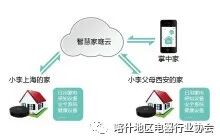
Since last year, the concept of smart homes has been rising, and products have been emerging, whether from traditional appliance companies or IT companies, all vying to seize the living room as the main battlefield for marketing. However, from the actual products, they are basically in the exploratory stage, lacking disruptive innovative products. Many smart home appliances launched are based on competitive rather than consumer perspectives, and therefore cannot achieve overall intelligence in design.
From the perspective of consumer demand for smart homes, regardless of brand or product, household appliances must be interconnected and controllable to form a truly smart home. However, the current situation is that each brand’s intelligent solutions are essentially self-contained, focusing only on what they can do, and failing to meet the real needs of consumers. If consumers want to realize their smart home dreams, they can only choose a complete solution from a single brand. Thus, either the purchase cost is too high, or the manufacturer lacks the strength to provide a complete set of smart home products. As a result, consumers need to use different brands of household appliances in their daily lives, but they cannot interconnect and control each other. Ultimately, each household is fragmented into multiple “islands” by different brands, thus losing the effect of intelligence.
In reality, various brand manufacturers cannot achieve compatibility with all competitors, while the embedded chips from HomeLink International do not require changing the original brand and functions of the products to achieve data compatibility. Whether it is Samsung or Apple, they can achieve customer neutrality through third-party platforms. Under this concept, it is not a competitive mindset, nor is it a short-sighted view of having you without me, but rather integration, completing a unified platform through fusion.
Driven by market demand, the iComhome home networking platform is just a beginning, but the trend is already clear. As appliance and home furnishing companies, if they do not apply big data, cloud computing, and other technologies, they will not be able to achieve “intelligence” and will be even less able to realize smart homes.
Therefore, under the market background where consumer demand dominates, smart home appliances and smart homes that do not enter the big data platform will ultimately face extinction.
Outlook
Looking ahead, today’s smartphones have entered the lives of the masses, becoming the ultimate control terminal, laying the groundwork for the popularization of smart home appliances.
Smart home appliances will become an indispensable part of smart homes, and after perfect integration, they will possess more efficient energy applications, interconnected appliance networks, and cloud security.
Appliances equipped with smart chips will be controlled by users’ smartphones, executing user-given commands.
Barriers to Popularization
Modern smart home appliances are more common in middle-income families abroad, where families have a certain economic strength, and the barriers to the popularization of appliance intelligence are relatively low.
For families with certain economic strength, the demand for quality of life will create space for the application of intelligence domestically.