This article mainly introduces the use of ADS to simulate SI, PI, and CE, rather than how to use ADS’s SIPro and PIPro.
Keysight Technologies’ Advanced Design System (ADS) software is a comprehensive high-speed circuit simulation design platform that provides complete solutions for signal and power integrity simulation. The layout design environment of ADS integrates the new SIPro/PIPro simulation analysis tools, which can help engineers efficiently complete PCB layout analysis and post-simulation for signal and power integrity in PCB design.
SIPro/PIPro is a functional module embedded in the ADS layout design environment, containing independent simulation interfaces and simulators for analyzing layout designs. Currently, the ADS layout supports importing various design file formats, such as ODB++, Gerber, IFF, EGS, Allegro Brd, etc.
SIPro/PIPro includes the following features:
-
PI-DC, for DC voltage drop analysis
-
PI-AC, for PDN impedance analysis
-
PPR (Power Plane Resonance Analysis), for power plane resonance analysis
-
Electro-Thermal, for electro-thermal co-simulation
-
Thermal, thermal simulation analysis
-
SIPro (Power-Aware Signal Integrity Analysis), for power-related signal integrity analysis
-
CEMI (Conducted EMI), for PCB power conduction simulation analysis
-
Impedance quick scan
The following figure shows the software interface of SI/PIPro and the basic simulation process.
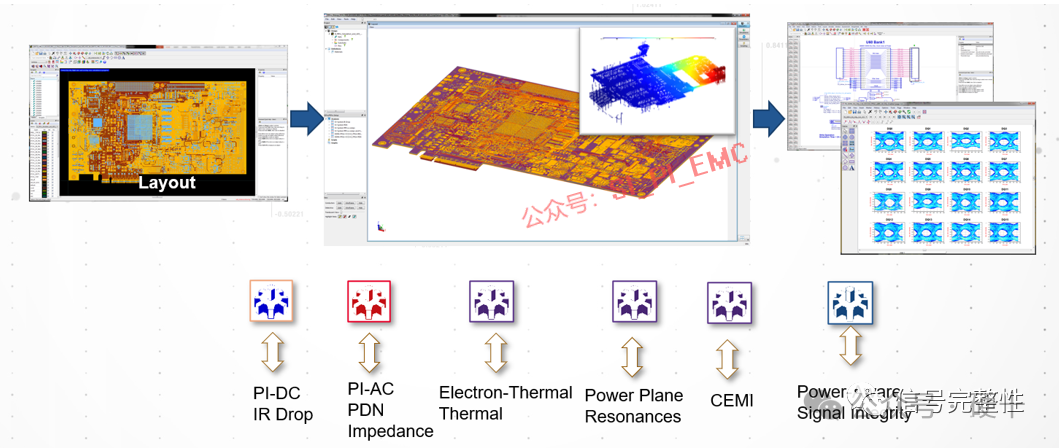
SIPro/PIPro has the following characteristics:
- Fast simulation speed, over 10 times faster than traditional planar or 3D electromagnetic field simulators.
- High simulation accuracy, comparable to 3D finite element method.
- Simple simulation process with a user-friendly interface.
- Easy generation of ADS schematics for circuit analysis.
- Can simulate non-regular PCB structures such as Tabbed routing.
- Convenient setup for Back drill vias.
- Can set signal or power terminals and corresponding reference terminals freely.
- Has a Python interface for easy management of capacitor model libraries.
1. PI-DC Analysis
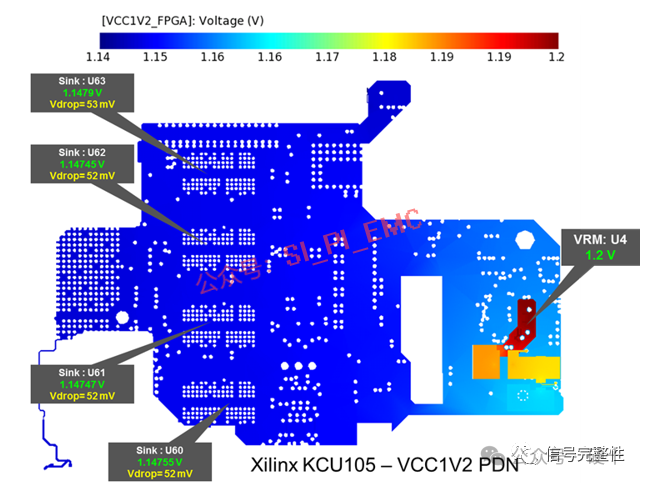
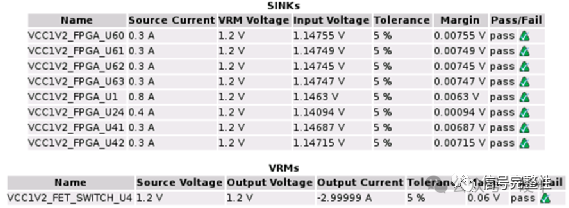
Due to excessive DC voltage drop, the voltage at the IC power terminal may fall below the recommended minimum voltage, potentially causing IC failure. High current density at vias can generate excessive heat, leading to circuit board cracking or burning, resulting in failure. PI-DC can calculate voltage, current, IR Drop (voltage drop), and power loss density of the power supply network under DC conditions. PIPro can help engineers identify the current density flowing through pins and vias of devices like chips under DC operating conditions, display pin voltages, and provide design margins. The simulation results can also automatically generate reports. The following figure shows the results of voltage drop, including graphical results and data tables.
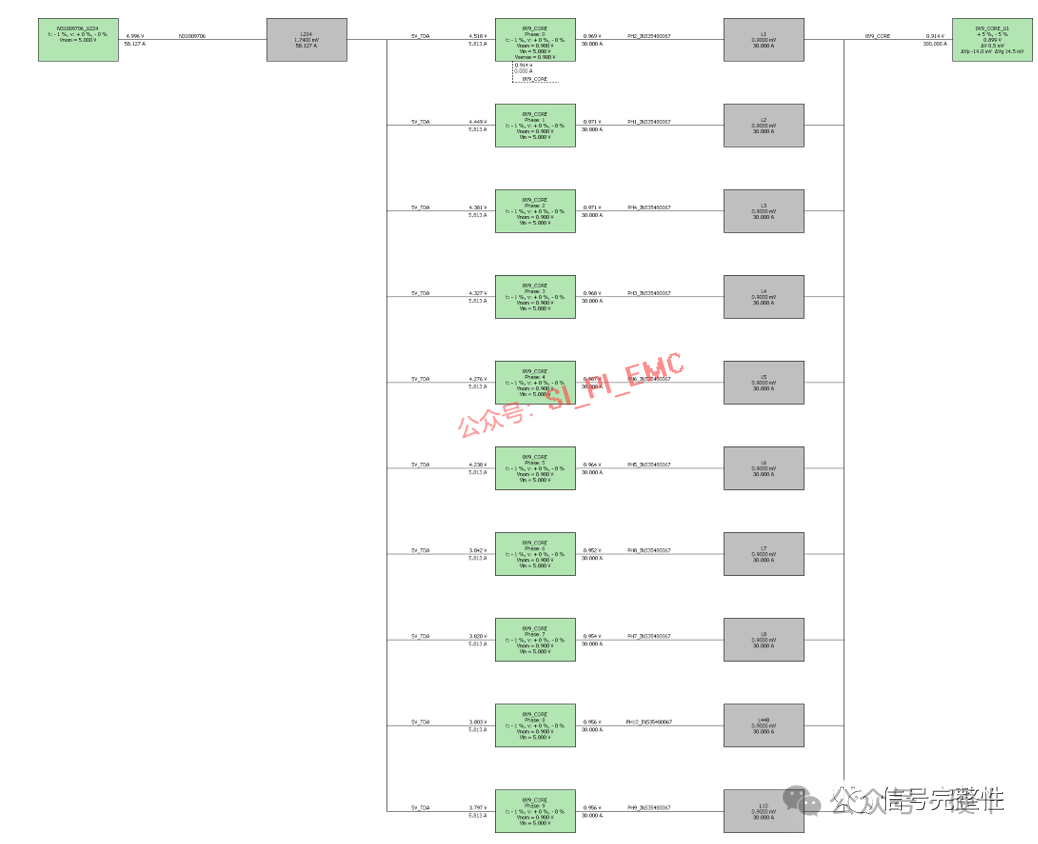
The power results output by PIPro also include results such as power trees. The following figure shows the results of a multi-phase power circuit with 300A current PI IR drop:
2. PI-AC Analysis
PI-AC analysis is used to extract the AC impedance characteristics of the power distribution network (PDN) and can display current density to identify hot spots. The extracted impedance network can be directly converted into ADS schematics for optimization with voltage regulator module (VRM) models and decoupling capacitors.
PI-AC analysis allows the addition of component models in the simulation, such as decoupling capacitor models. The software supports various component model forms, such as ideal lumped components, S-parameter models, component manufacturer model libraries, and custom circuit models. Users can define multiple models for the same component at once and easily switch between models.
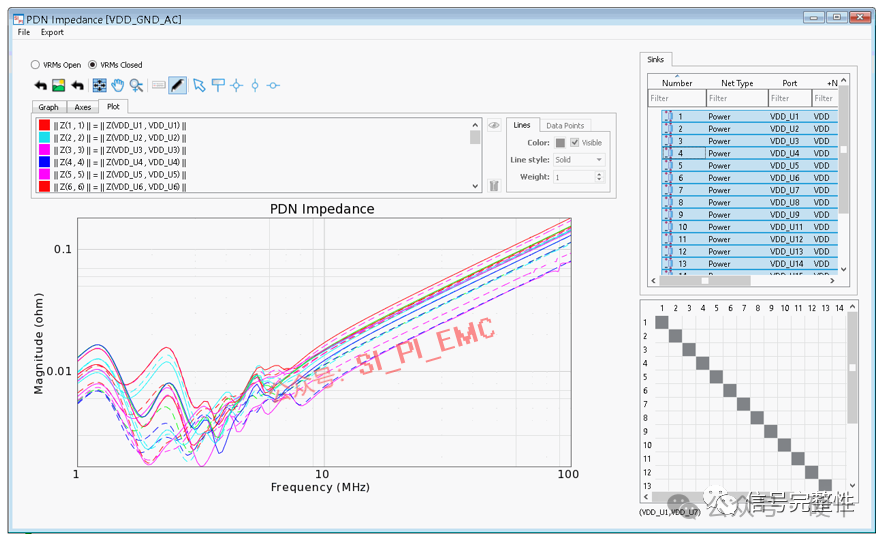
PI-AC analysis can analyze any number of specified power networks at once, and when changing component models, there is no need to repeat electromagnetic simulation to obtain new results. The following figure shows the PDN impedance curve.
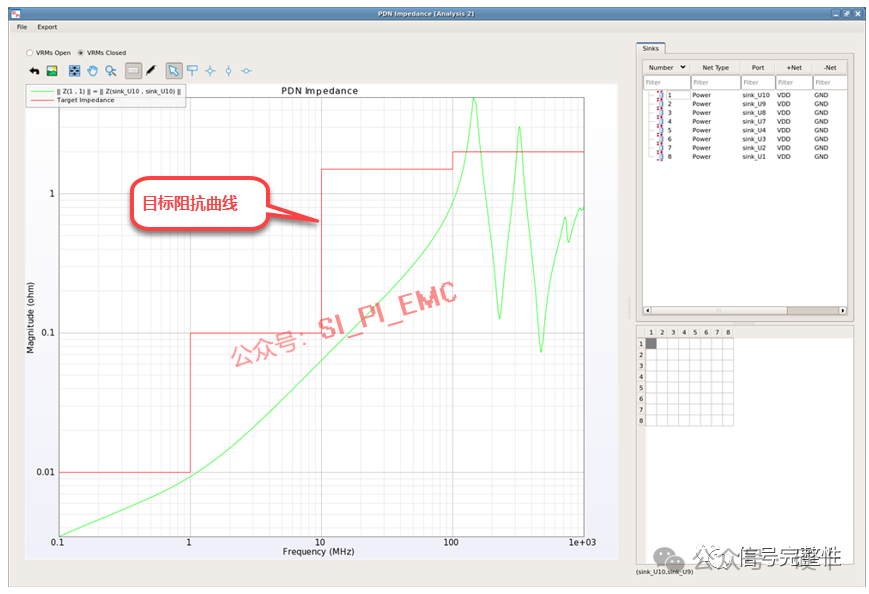
In PIPro, target impedance curves can be imported, and by comparing with the set target impedance, it can be determined whether the current design meets impedance requirements.
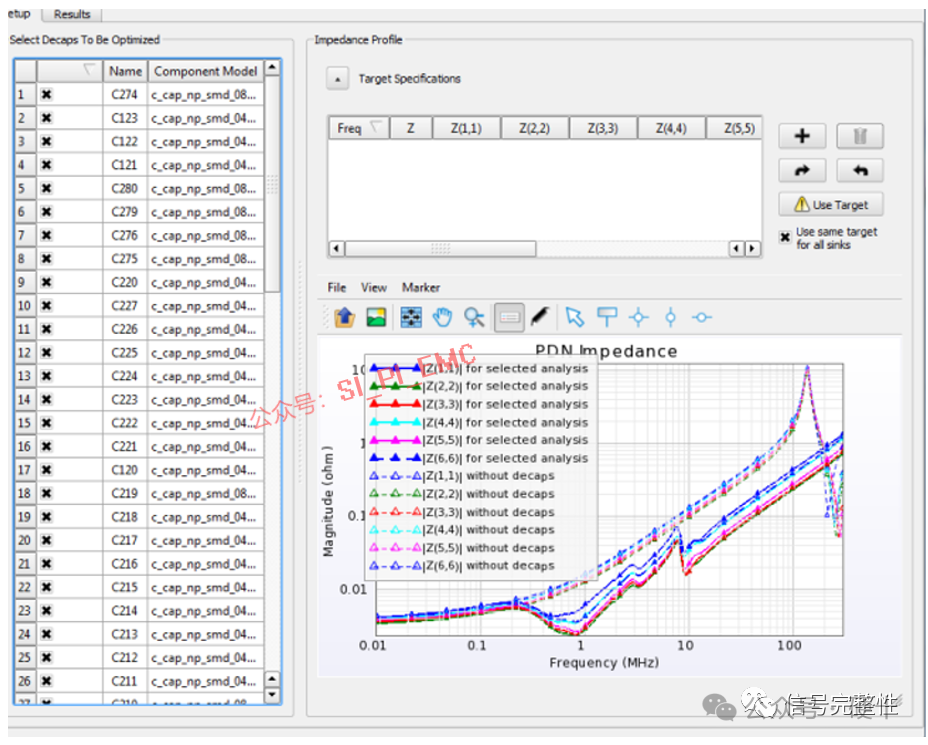
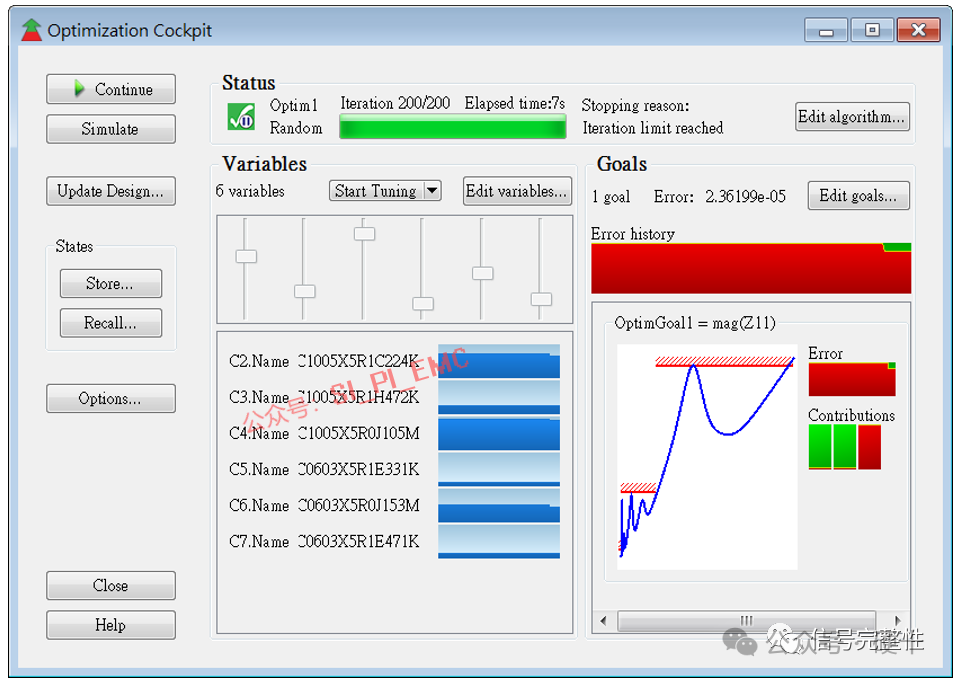
When the design impedance does not meet requirements, impedance optimization is necessary. PIPro itself comes with automatic optimization simulation.
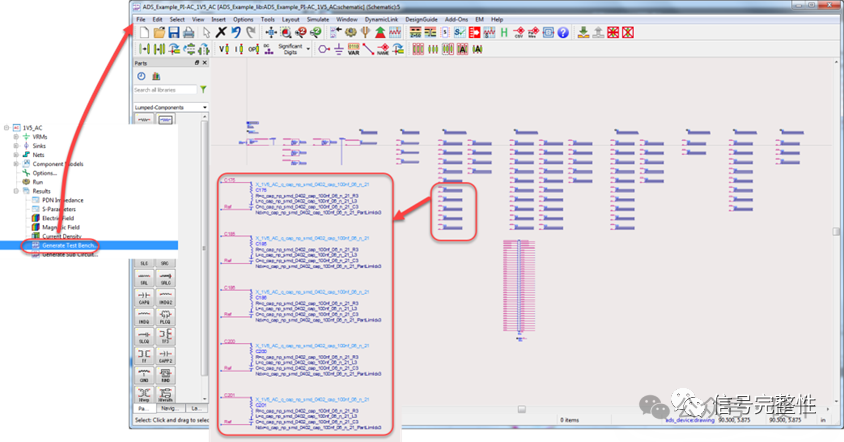
PIPro can automatically generate simulation circuit schematics, allowing users to optimize or tune component models in ADS schematics and select suitable component combinations.
ADS provides more than ten optimization methods to achieve rapid search for decoupling capacitor parameters, ensuring optimal performance. By analyzing the magnitude of current through decoupling capacitors, redundant capacitors can be eliminated, reducing design costs.
3. Power Plane Resonance (PPR) Analysis
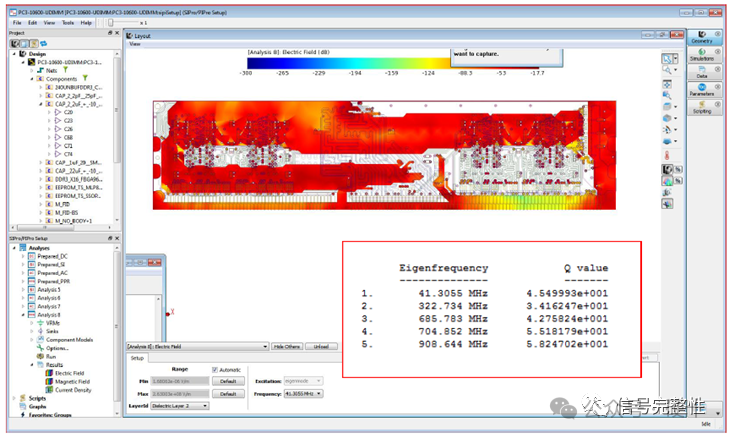
Power plane resonance analysis can calculate the self-resonant frequency and corresponding Q value of the power distribution network (PDN). It can help optimize the layout of decoupling capacitors and vias. Power plane resonance can interfere with sensitive analog circuits and generate excessive radiation, potentially causing designs to fail to meet EMC specifications.
4. Electro-Thermal Co-Simulation
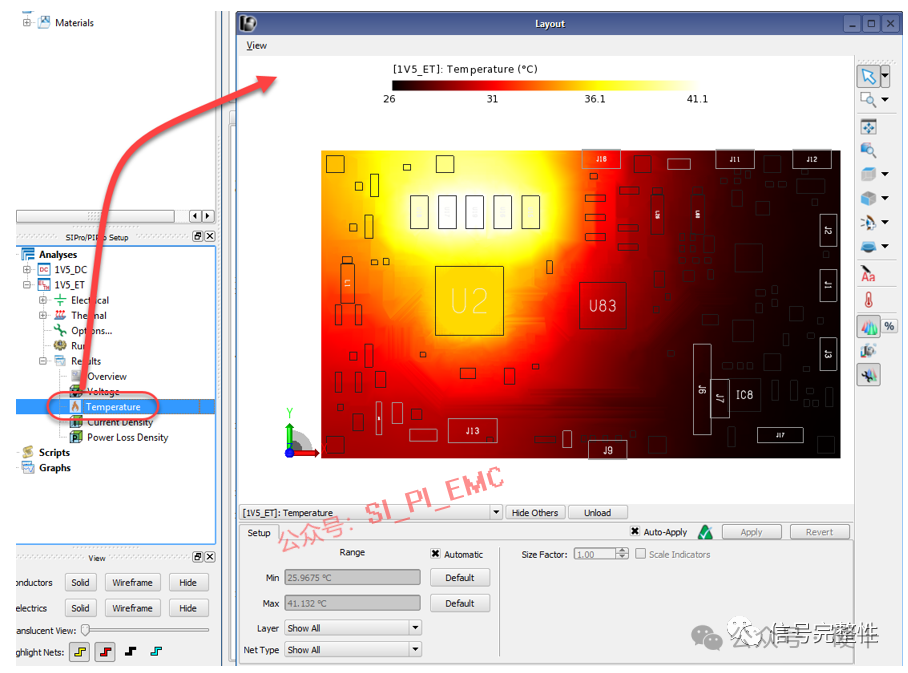
The power integrity analysis also integrates electro-thermal simulation capabilities, enabling electro/thermal co-simulation. The power integrity simulation engine (DC Drop) simulates the power network, providing power density to the thermal analyzer, which then performs thermal analysis based on device power consumption. The system iterates through this process multiple times to obtain updated temperature values until the simulation converges. The electro-thermal co-simulation temperature distribution map is displayed.
5. Power-Related Signal Integrity Analysis (SIPro)
In high-speed circuit signal integrity design, the shortest return path of signal current includes not only the ground plane but also the power plane. If only the reference ground plane is considered when extracting the S-parameters of signal traces, significant errors may occur in the simulation results. SIPro uses a unique hybrid algorithm to quickly extract the frequency domain model of signal traces (including vias) with the ground and power planes. This frequency domain model can be directly converted into ADS schematics for circuit simulation, such as time-domain transient simulation, channel simulation, DDR bus simulation, etc.
Compared to other simulation technologies, SIPro has the following characteristics:
-
Can consider the impact of the power plane on the return path.
-
No need to cut or simplify the layout design, maintaining the integrity of the ground and power planes.
-
Solver based on FEM and planar electromagnetic field technology, significantly improving accuracy compared to algorithms based on transmission line equivalent circuits.
-
Quick and easy port setup.
-
Fast simulation speed.
-
Can quickly view TDR/TDT and single-ended, mixed-mode S-parameter results.
-
Automatically generates circuit schematics.
Simultaneously simulates S-parameters of multiple transmission lines, as shown in the selected signal network:
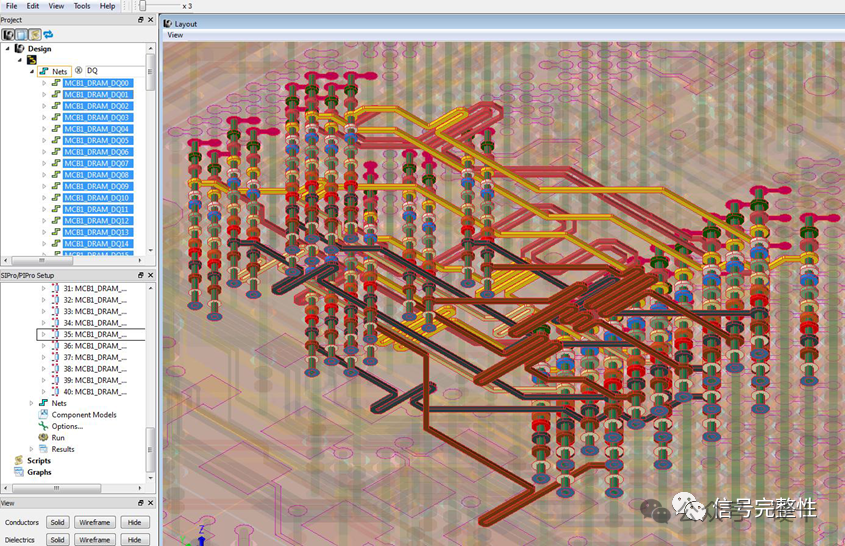
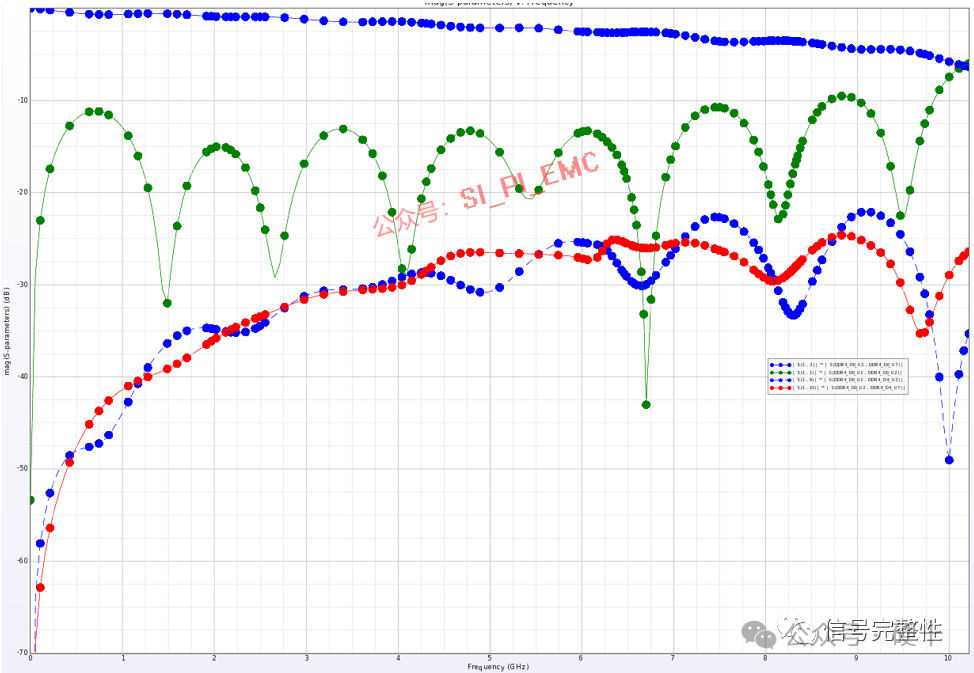
After simulation, it is possible to quickly view the insertion loss, return loss, and crosstalk of the transmission lines, as shown in the following figure:
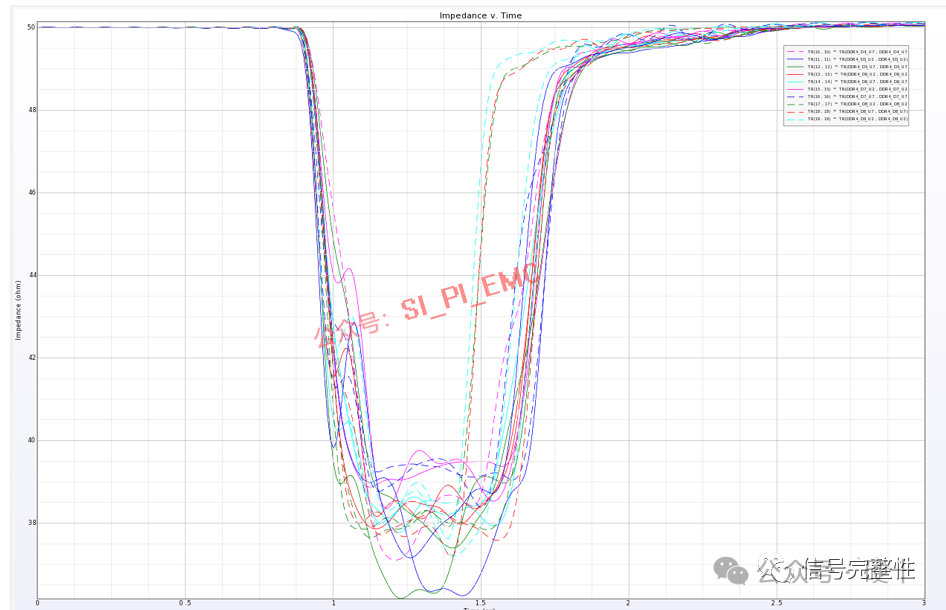
The following figure shows the TDR/TDT results after simulation in SIPro:
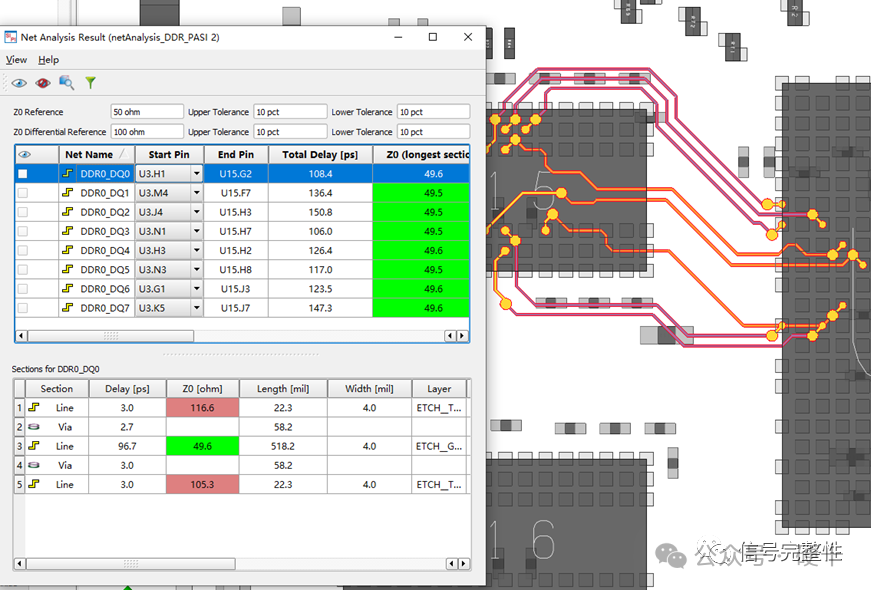
Layout engineers always hope to quickly identify design irregularities or non-compliance, especially for cost-sensitive 2-layer high-speed boards, where many impedance discontinuities often exist. The Rapid Scan feature in SIPro can meet this requirement for quick analysis. The following figure shows the impedance situation of transmission lines viewed quickly in SIPro:
6. Conducted Simulation Analysis (CEMI)
As EMC testing and analysis are often required in electronic products, conduction is one aspect of EMC. To better discover, avoid, and resolve conduction issues, CEMI can be used in PIPro for conducting simulation analysis of circuits. The following figure shows the simulation results of CE.
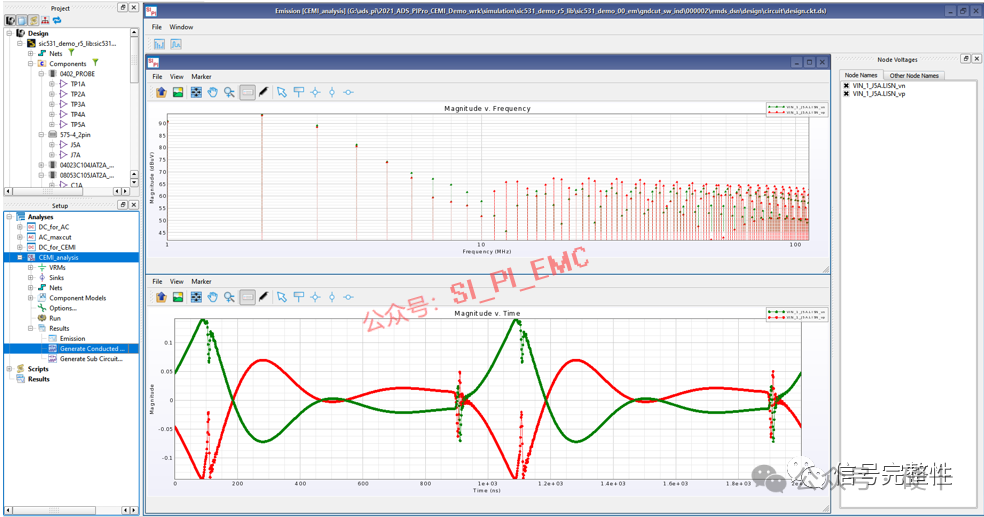
After simulation, a testbench can also be generated for further circuit analysis in ADS schematics to find solutions to the problems.
In summary, using SIPro/PIPro allows for quick and convenient simulation of PCB signal integrity, power integrity, and PCB conduction, as well as extraction of transmission line and power system parameter models.