The programming language Rust, known for its exceptional speed, safety, and performance, is gradually attracting more attention. Some companies have begun to leverage Rust to address critical and complex issues in the field of industrial automation.
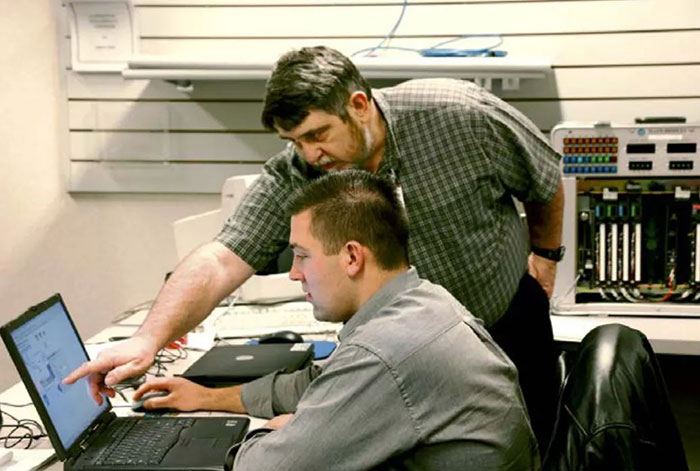
Image source: Rockwell Automation
Industrial automation is a unique field with its own complexities and critical systems that maintain the flow of supply chains. Safety, precision, and speed are essential elements of industrial automation. In this unique environment, a modern programming language is quietly emerging.Rust, known for its speed, safety, and performance, is gradually establishing a foothold in the industrial sector and is expected to redefine the way automation systems are built and maintained.
So, what is Rust?
Rust is a programming language that uniquely combines high performance with exceptional safety.Rust was introduced by the Mozilla Research Institute in 2010 to address challenges faced in low-level programming, such as memory management and concurrency, while maintaining speed, which differs from traditional programming languages like C and C++.
Over the past decade, industrial automation has made significant progress with the emergence of the latest technologies. It is no longer just about automating manufacturing processes but completing tasks faster, smarter, and safer. While traditional programming languages like C and C++ have been reliable thus far, they also face challenges such as memory leaks, data races, and security vulnerabilities. Rust aims to fundamentally address these issues through its unique design.
It is expected that Rust will soon become the primary language for developing new industrial and automation applications. According to a study titled “Have Memory Safety Challenges Been Resolved? An In-Depth Study of All Rust CVEs” it shows that in embedded systems and electronic devices, 60-70% of security vulnerabilities are caused by memory issues. Rust directly addresses these problems, providing significant improvements for secure software development.
Safety Without Sacrificing Speed
Rust is most notable for its strong emphasis on memory safety without a garbage collector. For industrial systems, a single failure can halt an entire production line, which is a factor that cannot be ignored. Rust‘s compile-time checks can prevent common errors before the code runs, ensuring that the software is not only fast but also reliable. This level of safety, combined with performance comparable to C++, makes Rust an ideal choice for automation systems that cannot afford to fail.

Effective Concurrency
In industrial automation systems, it is often necessary to run multiple processes simultaneously. For example, PLC controllers process data from multiple sensors that monitor operating conditions at any given time and enable robots to execute actions in milliseconds, responding accordingly. Rust‘s concurrency model prevents data races, meaning these processes can run smoothly in parallel without worrying about unpredictable behavior that may occur in other languages. In complex real-time automation environments where timing is critical, Rust is a perfect choice.
Safety is the Primary Concern
Safety is one of the most pressing concerns in today’s world and is crucial in industrial automation applications. With the rise of the Internet of Things and smart factories, devices are more interconnected than ever, unfortunately making them more susceptible to potential cyberattacks. Rust‘s memory safety features not only help prevent crashes but also mitigate common security vulnerabilities such as buffer overflows, which are the root cause of many cyberattacks. By implementing strict memory safety, Rust reduces the risk of human error introducing security vulnerabilities. Rust also eliminates many low-level errors, thereby reducing the attack surface in automation systems, making it harder for attackers to exploit weaknesses.
Scalability of Distributed Systems
We are seeing an increasing number of applications on distributed systems. Applications are distributed across the industrial sector, communicating and collaborating in a hive-like manner. The ability to effectively scale these distributed systems is more important than ever.Rust fully meets this need, providing the required performance. Using async/await syntax, Rust‘s asynchronous programming can more easily handle a large number of tasks simultaneously without slowing down or crashing.
Rust’s Practical Applications in Industrial Automation
Although Rust is not yet the default programming language in the field of industrial automation, it is gradually gaining more attention. Some companies are already utilizing Rust to solve critical and complex problems in industrial automation.
Embedded Systems: The Pillar of Automation
Rust has proven to be very effective in the field of embedded systems. These are microcomputers embedded in devices such as sensors, controllers, and robotic arms, often running on low-level resources.
For decades, these systems have been written in C or C++ due to their speed and low-level access to hardware, but Rust is becoming increasingly popular in this race. With Rust, there is no need to choose between speed and reliability; devices can have both.
The Internet of Things: Connecting Smart Factories
Rust can play a role in another area: the Internet of Things, as IoT applications are rapidly growing with the development of smart factories. Smart factories use interconnected devices to perform every task in an industrial environment. Large factories may have hundreds or even thousands of interconnected devices, all communicating and sharing data.
To operate at this level, the industry needs scalable and secure systems. Thanks to its advanced concurrency model, Rust can handle multiple tasks simultaneously, making it very suitable for these environments.
Rockwell Automation, a global leader in industrial automation and digital transformation, has been exploring the use of Rust for various IoT-related projects. By adopting Rust, it has not only significantly improved performance but also mitigated many security risks, such as memory safety vulnerabilities and buffer overflows. Additionally, it has significantly reduced the risk of being exploited by cyberattacks targeting IoT devices.
Robotics: Precision and Safety
The field of robotics is another area where Rust is beginning to shine. In industrial environments, robots can handle most potentially hazardous tasks. Ensuring their actions are reliable and predictable is crucial.
Traditionally, robotic software has heavily relied on C++ for performance, but C++ has drawbacks in concurrent processes. Using Rust in robotics ensures the safety and precision required for robotic systems in industrial environments. It can reduce the risk of errors that lead to costly or even dangerous failures.
Robonomics is an open-source decentralized platform for IoT applications and complex robotics, which has developed middleware based on Rust for the Robot Operating System (ROS 2), enhancing the safety and efficiency of robotic operations.
As technology advances, the field of industrial automation continues to evolve. The pressure to adopt cutting-edge technologies for innovation and safety is greater than ever. Rust is not just a programming language; it is changing the way we build reliable, efficient, and safe industrial systems. In the complex world of industrial automation, Rust provides the ideal balance of performance, safety, and advanced features. For any company committed to staying at the forefront of industrial automation, Rust is not just a choice worth considering; it is the direction forward.
Conclusion
Rust is not just a programming language; it is changing the way we build reliable, efficient, and safe industrial systems.
We should delve deeper into how to leverage Rust to solve critical and complex problems in industrial automation.
Editor: Chang Zhang

Related Articles:QT announces new bridging technology for languages like RustRust surpasses Python and Java in data engineeringIs Rust faster than C?