Resilience Evaluation of Terminal Operations Based on the Cloud Model
Heart of Machine Learning Date: July 24, 2025
The resilience evaluation of terminal operations based on the cloud model is an advanced assessment method that combines extensive learning theory and cloud model, used for quantifying the analysis of terminal operations during disturbance events.
-
Conflict Resolution utilizes extensive learning to resolve indicator conflicts (e.g., the mutual exclusivity of “shortening security check time” and “improving security check accuracy”), quantifying the degree of conflict through correlation functions.
-
Uncertainty Modeling The cloud model unifies randomness (flight delays) and fuzziness (“equipment status is good”) to avoid information loss in traditional fuzzy evaluations.
-
Dynamic Adaptability introduces temporal cloud algorithms, which update parameters in real-time.
-
Prevention: Identify resilience weaknesses (e.g., discovering that the entropy value of equipment failure rate $He>1$ indicates unstable maintenance strategies)
-
Response: Real-time output of resilience degradation warnings (e.g., a correlation drop from 0.7 to 0.3 triggers a red alert)
-
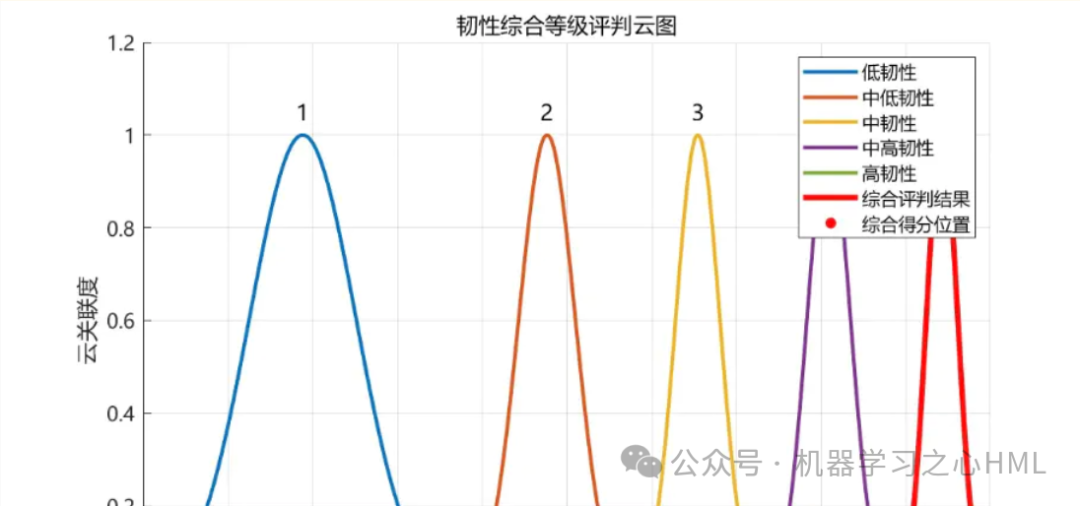
Post-Event Review: Compare the changes in cloud droplet distribution before and after disturbances to assess the effectiveness of strategies
Code Access (Non-charitable, please do not abuse)