
As one of the typical representatives of 5d transition metal oxides, the perovskite-structured SrIrO3 (SIO) exhibits strong spin-orbit coupling (SOC) and electron correlation energy (U), where the competition between the two leads to a variety of novel quantum effects in SIO, such as metal-insulator transitions, paramagnetic-antiferromagnetic transitions, and Mott insulator-Slater insulator intermediate states. At the interface of 3d – 5d oxides, the strong electron-electron correlation (EEC) introduced by the 3d system can modulate the interactions of electrons near the interface, thereby inducing novel physical properties. However, the physical mechanisms of interactions at the 3d – 5d interface are not yet fully understood, and there are still certain controversies and discrepancies in some aspects. Furthermore, SIO possesses a strong spin Hall effect and a large spin Hall angle, making it promising for applications in oxide spintronics. Fabricating multilayer films with magnetic materials can generate symmetry-induced anisotropic spin-orbit torque, current, and crystallographic direction-induced magnetic switching. However, current methods for controlling spin-charge conversion based on SIO rely on magnetic materials, necessitating the use of polarized photons or magnetic fields to manipulate the spin state of electrons. How to generate, detect, and control spin currents in non-magnetic SIO is crucial for designing spin-related devices. Enhancing and improving the fundamental research of SIO materials in spintronics to increase spin-charge conversion efficiency and develop new spin current detection methods is of great significance for promoting the application of oxide spin devices.
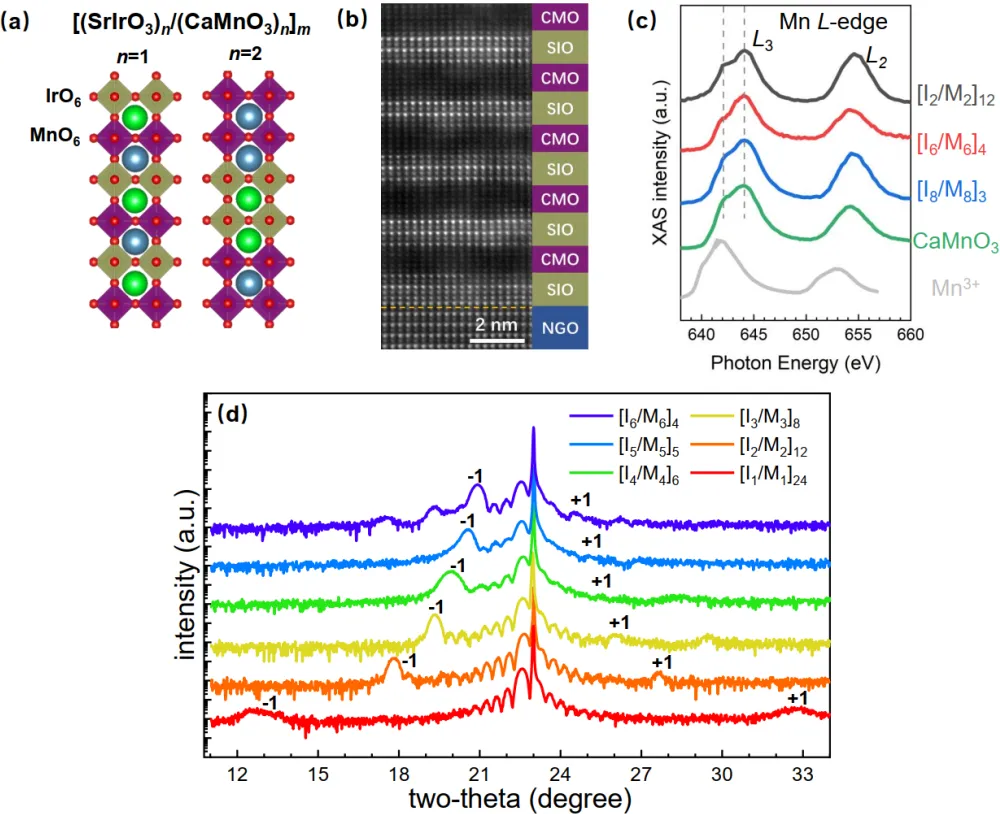
Figure 1. Structural characterization of the [(SrIrO3)n/(CaMnO3)n]m superlattice.
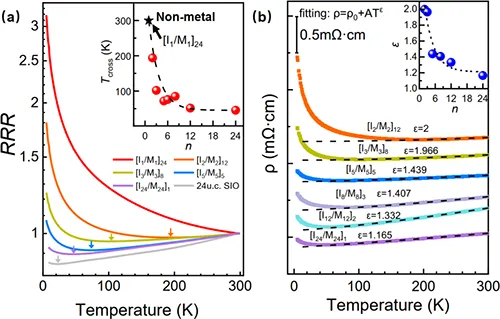
Figure 2. Metal-nonmetal transition occurring in the [(SrIrO3)n/(CaMnO3)n]m superlattice as the number of periods changes.
Researcher Meng Meng and postdoctoral fellow Gu Minghui from the HM-SF06 research group at the Institute of Physics, Chinese Academy of Sciences / National Research Center for Condensed Matter Physics in Beijing, under the leadership of group leader Researcher Guo Jiandong, have long been engaged in the controllable epitaxial growth and exploration of novel properties of low-dimensional transition metal oxide systems. They successfully introduced the 5d strong SOC oxide SIO into the 3d strongly correlated oxide CaMnO3 (CMO) and fabricated high-quality superlattice ([In/Mn]m samplesm increases, the system undergoes a metal-nonmetal transition, and the transition temperature increases with the number of periods m. Detailed low-temperature magnetoresistance analysis indicates that the metal-nonmetal transition in the system is due to the anti-correlation between SOC and EEC. The quasi-two-dimensional nature of EEC can affect the SOC strength of the SIO layer at the interface, extending to a certain depth within SIO. The relevant content of this study was published in ACS Applied Electronic Materials under the title “Modulation of the Metal−Nonmetal Crossover in SrIrO3/CaMnO3 Superlattices”.
Original link
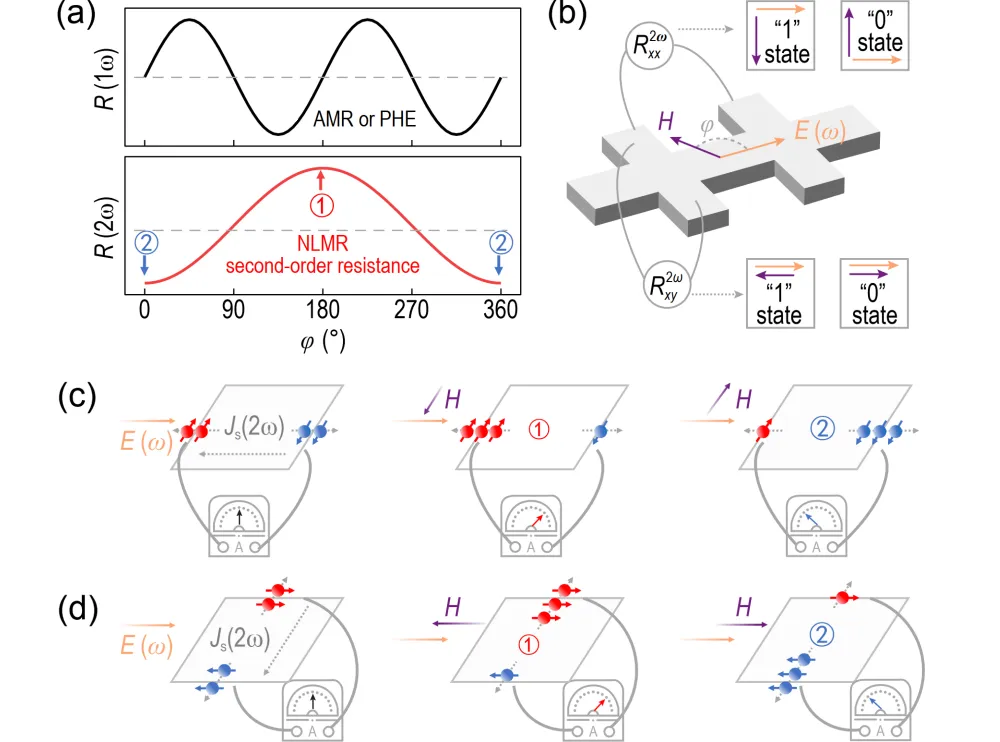 Figure 3. Schematic diagram of nonlinear magnetoelectric effect.
Recently, the team successfully introduced strain gradient into centrosymmetric SIO through precise growth control, breaking its spatial inversion symmetry and inducing non-trivial spin textures in momentum space. When the thickness of the SIO film grown on NdGaO3 substrate exceeds 24 unit cell layers, strain gradient behavior appears. As the thickness increases, the strain is continuously released. The reason for this mechanism is related to the combined effects of lattice mismatch and thermal expansion coefficient mismatch. Furthermore, using second-order nonlinear magnetoelectric transport effects, the momentum space spin texture was successfully detected in the coherently grown SIO film with a strain gradient. The second-order resistance with a period of 2π essentially elucidates the nonlinear spin-charge interconversion. When there is no strain gradient, the symmetry breaking at the interface of the SIO film can produce second-order unidirectional conductivity; however, when a strain gradient is introduced, SIO exhibits the superposition of two sets of nonlinear magnetoelectric effects, one set arising from interface symmetry breaking and the other from bulk symmetry breaking induced by strain gradient, with completely different Fermi surface warping properties. Our experimental results first propose that strain gradient can serve as an effective method to control momentum space spin textures, and provide an idea for introducing spin splitting in centrosymmetric systems, which is expected to be promoted in other centrosymmetric strong SOC materials.
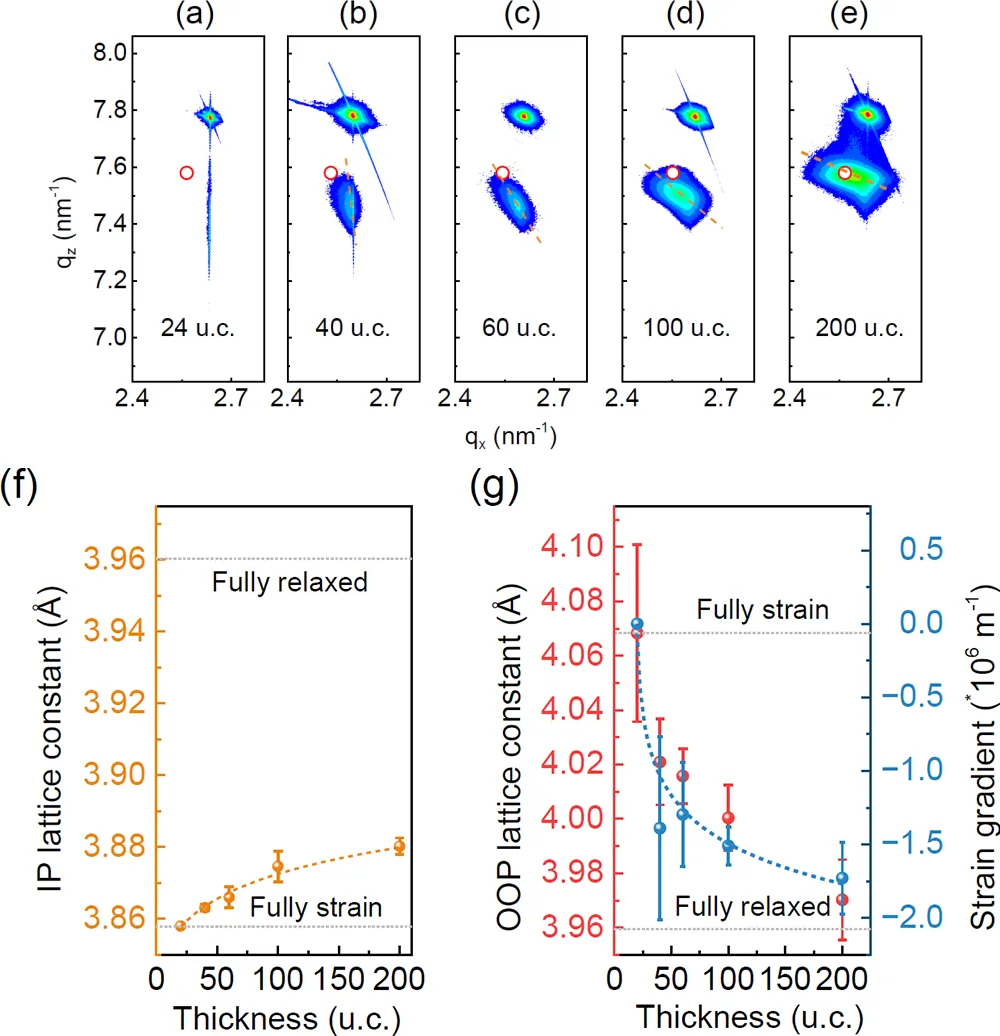 Figure 4. Structural characterization of SrIrO3 films of different thicknesses.
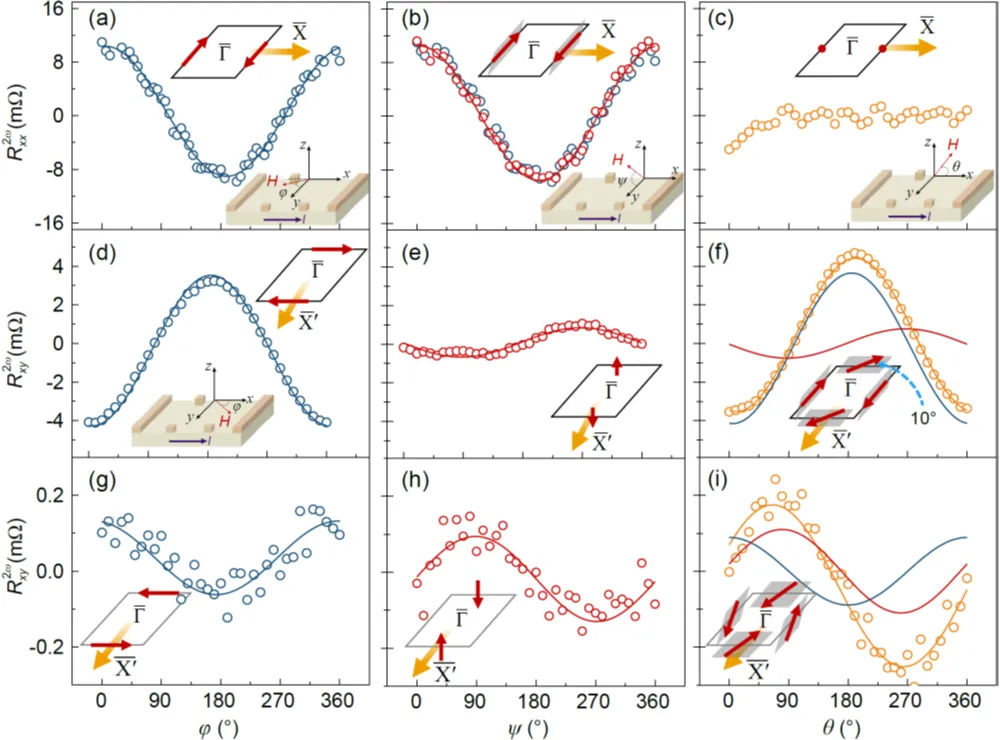
Figure 5. Second-order rotational resistance of SrIrO3 films under strain gradient.
The relevant content of this study was published in the National Science Review under the title “Momentum-space spin texture induced by strain gradient in nominally centrosymmetric SrIrO3 films”. Postdoctoral fellow Gu Minghui from the HM-SF06 group and doctoral student Sheng Haohai from the HM-T03 group are the co-first authors of the paper, with Researcher Wang Zhijun, Associate Researcher Meng Meng, and Researcher Guo Jiandong as corresponding authors. The structural characterization, microfabrication, and macroscopic transport characterization experiments in this work were completed on the SECUF device under extreme conditions, and this work also received significant help from Professor Gao Peng of Peking University in scanning transmission electron microscopy. This work was funded by projects from the Ministry of Science and Technology, the National Natural Science Foundation of China, and the Youth Innovation Promotion Association of the Chinese Academy of Sciences.
Original link
Figure 6. The SrIrO3 films under strain gradient exhibit the superposition of two sets of nonlinear magnetoelectric effects.
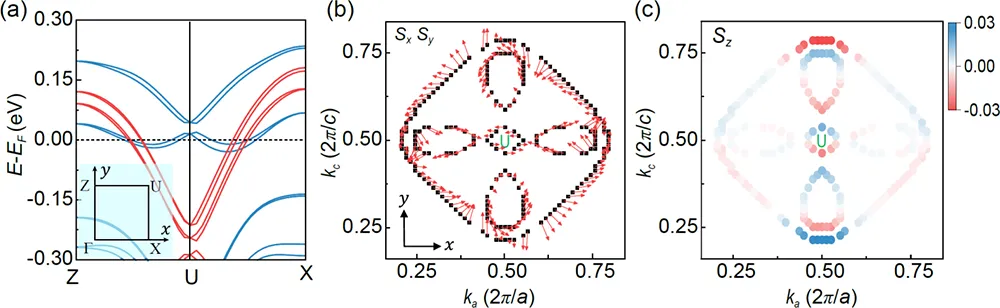
Figure 7. Spin texture in momentum space caused by strain gradient in SrIrO3.
Paper link:
https://academic.oup.com/nsr/advance-article/doi/10.1093/nsr/nwad296/7440018
(Click the lower left corner “Read the original text” to go directly to the original text)
Source: Institute of Physics, Chinese Academy of Sciences
For submissions, reprints, or collaborations, please contact WeChat:MatResFron001

Welcome to leave a message and share your views.Support the authors by clicking the “like” button in the lower right corner