Optical frequency comb sources can emit perfectly periodic and coherent optical waveforms, and have rapidly evolved towards chip-level integration solutions. Two particularly important types are semiconductor Fabry-Pérot lasers and passive ring Kerr microresonators.
Recently, Nikola Opačak, Benedikt Schwarz, and others from TU Wien in Austria published a paper in Nature, integrating these two technologies in a ring semiconductor laser, and demonstrated a free-running soliton formation example known as the Nozaki–Bekki soliton. These dissipative waveforms appear in a family of propagating localized dark pulses and are known in the complex Ginzburg–Landau equation.The research demonstrated that the Nozaki–Bekki solitons are structurally stable in the ring laser and spontaneously form as the laser bias is tuned, thus avoiding external optical pumping. Based on experimental findings and theoretical models, significant characteristics of these solitons were revealed, providing guidance for their generation. In addition to the fundamental solitons circulating within the ring laser, multi-soliton states were also demonstrated, validating localization properties and providing deep insights into soliton crystal formation.This result solidifies the monolithic electrically driven platform for direct soliton generation and opens doors to the interdisciplinary research field of laser multimode dynamics and Kerr parametric processes. Nozaki–Bekki solitons in semiconductor lasers.Nozaki–Bekki solitons in semiconductor lasers.
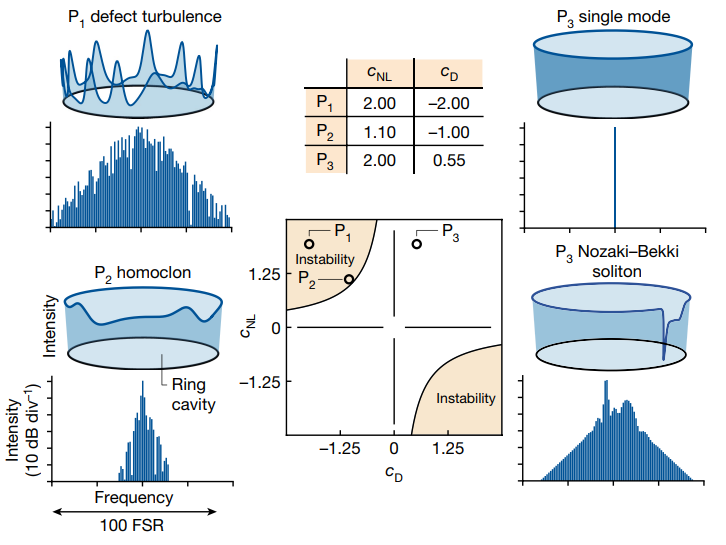
Figure 1: The complex Ginzburg–Landau equation with corresponding laser states, CGLE parameter space.
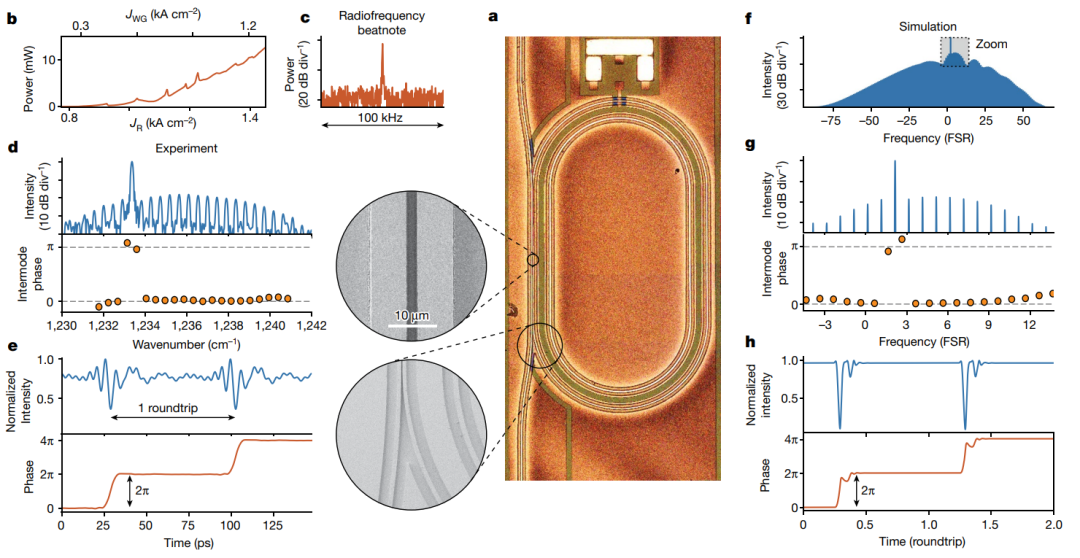
Figure 2: Experimental and theoretical characterization of the fundamental Nozaki–Bekki (NB) solitons in a single ring laser.
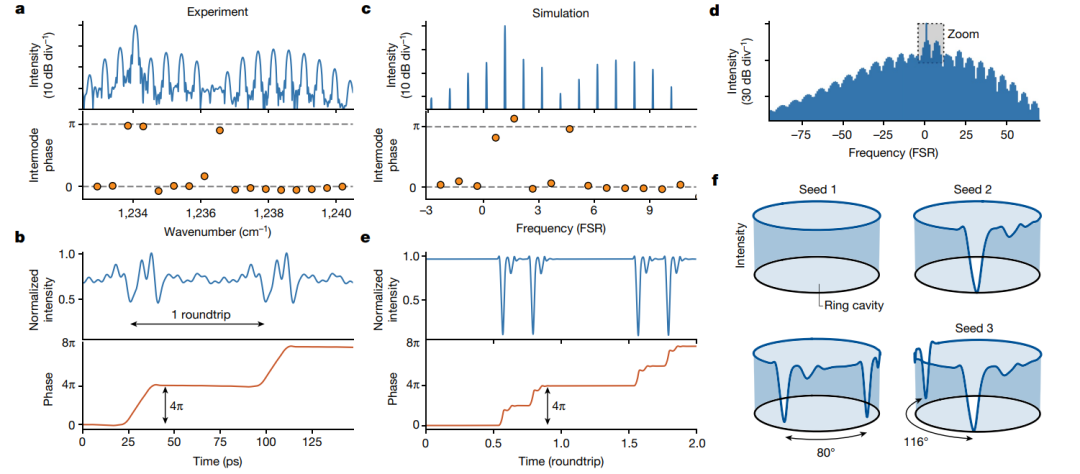
Figure 3: Multi-soliton states.
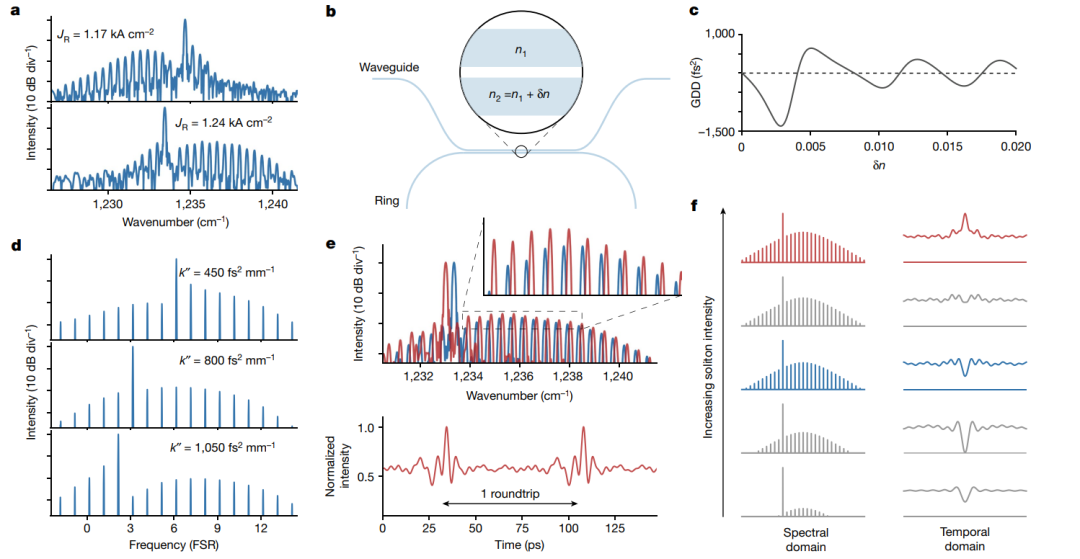
Figure 4: Coherent control of the NB soliton states.
Reference linkOpačak, N., Kazakov, D., Columbo, L.L. et al. Nozaki–Bekki solitons in semiconductor lasers. Nature 625, 685–690 (2024).https://doi.org/10.1038/s41586-023-06915-7https://www.nature.com/articles/s41586-023-06915-7This article is translated from Nature.Source: Today’s New MaterialsDisclaimer: The views expressed are solely those of the translator. If there are any inaccuracies, please leave a comment below!Recommended readingShanghai Institute of Optics and Fine Mechanics makes progress in high repetition rate femtosecond optical frequency comb sourcesNobel Prize in Physics: Optical Frequency CombResearch progress in integrated optical frequency comb technologyDevelopment and application of optical frequency comb technology over 20 yearsDissipative Kerr solitons in semiconductor ring lasers