

In industrial production scenarios, the stable operation of air conditioning systems directly affects the production environment and energy consumption costs.
The central air conditioning system renovation project at Ruineng’s Fuzhou factory effectively addressed practical issues such as complex debugging and temperature fluctuations under traditional control modes by introducing Adaptive PID PLC, providing a reference solution for industrial HVAC automation.
Project Background: Real Challenges of Factory Air Conditioning Systems

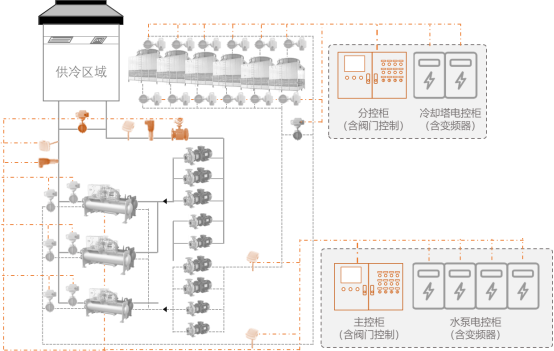
The central air conditioning system at Ruineng’s Fuzhou factory has a dual task: to maintain a stable temperature and humidity environment required for workshop production, and to ensure a comfortable experience in the office area.
Cooling Source Side: Three chilled water units in parallel, with pumps and fans equipped with variable frequency drives, need to coordinate temperature control;
End Side: 20 combined air handling units (AHUs) responsible for precise temperature and humidity control in different areas.
However, traditional control solutions have brought three major practical challenges for debugging personnel:
❌Debugging Difficulty: The system involves 43 PID control parameters, and traditional debugging relies on engineers’ experience and repeated trial and error, taking about 2 hours per debugging session, with difficulty ensuring parameter matching accuracy;
❌Temperature Fluctuations: Temperature can easily overshoot and oscillate, especially when the workshop production load changes, requiring frequent manual intervention to maintain set values;
❌Complex Programming: Using ladder diagrams to implement air thermophysical calculations is cumbersome and occupies a large amount of memory.

Yiwai Solution: Improving Debugging Efficiency
The Yiwai team focused on debugging pain points, using Adaptive PID PLC as the core, simplifying the debugging process through intelligent algorithms, making the control of the cooling source side and end devices more efficient:
▶ Cooling Source Side: Main unit linkage + variable frequency intelligent control
The Yiwai PLC is equipped with AI/AQ modules to achieve:
· Interlocking of chilled water units, intelligent start-stop, fault switching, with more agile response;
· Precise control of pump and fan variable frequency, improving both energy efficiency and effectiveness.
▶ AHU Side: One-click start-stop + intelligent damper adjustment
Also relying on Yiwai PLC, achieving:
·One-click start-stop for AHUs, simplifying operations;
·Automatic adaptation of water valve opening and fan frequency to temperature and humidity requirements, achieving more precise area temperature control.
|
Serial Number |
Device Name |
Yiwai Model |
Quantity |
| Main Control Cabinet Module | |||
| 1 |
CPU Module |
TK 1001-SR60-AC |
1 |
| 2 |
DI Module |
DE16 |
1 |
| 3 | AI Module |
AE08 |
2 |
| 4 |
AQ Module |
AQ04 |
3 |
| Cooling Tower Control Cabinet Module | |||
| 5 |
CPU Module |
TK 1001-SR30-AC |
1 |
| 6 |
CPU Module |
TK 1001-SR60-AC |
1 |
| 7 |
DI Module |
DE16 |
1 |
| 8 |
AI Module |
AE08 |
2 |
| 9 |
AQ Module |
AQ04 |
3 |
| Air Conditioning Fan Control Cabinet Module | |||
| 10 |
CPU Module |
TK 1001-SR60-AC |
5 |
| 11 |
AI Module |
AE08 |
20 |
| 12 |
AQ Module |
AQ04 |
20 |
| Human-Machine Interface | |||
| 13 |
10-inch HMI |
UH410-4EU01-0AA0 |
7 |
PLC Configuration Table
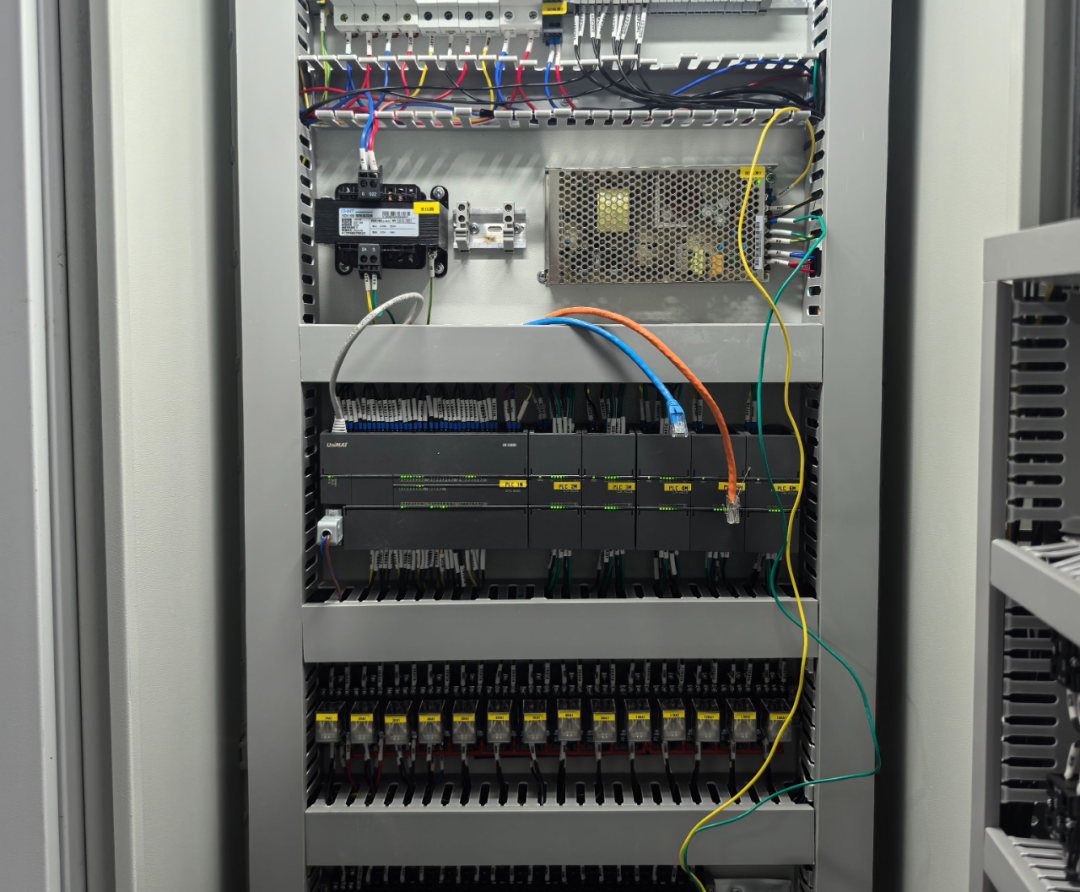
Internal Diagram of Fan Control Cabinet
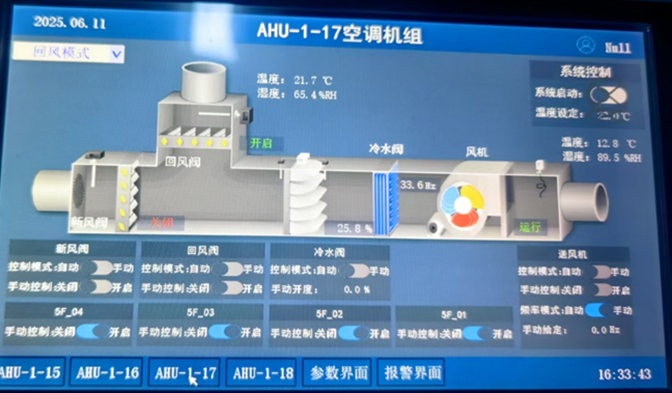 HMI Configuration Interface
Ground Effect: Three Key Values Revealed
The Yiwai Adaptive PID PLC supports professional HVAC PID algorithms at the underlying level, and the application layer only needs to call the corresponding library files to complete the overall configuration, demonstrating three key values in actual operation:
1. Significantly Simplified Debugging Process
Traditional PID parameter settings require engineers to test and calibrate each route, while the built-in adaptive algorithm of Yiwai PLC can automatically match optimal parameters based on different control scenarios (such as water valve control, fan frequency modulation).
On-site feedback: Previously, parameter adjustment took 2 hours, now selecting a scenario completes debugging, efficiency skyrockets!
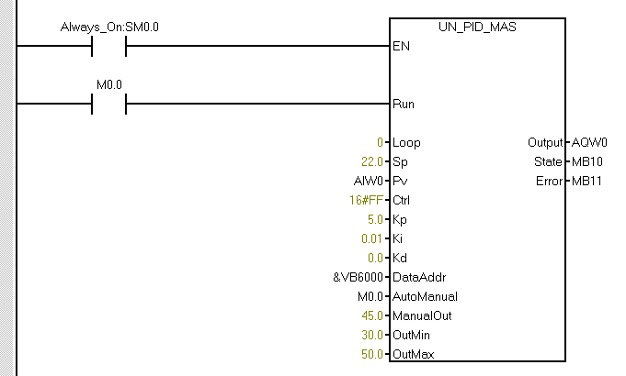
2. Fast and Stable Temperature Control
From the operating curve, it can be seen:
·After setting the on-site parameters, there was no manual intervention, achieving precise control of return and supply air temperatures;
·The control process has a fast response speed, with basically no overshoot or oscillation.
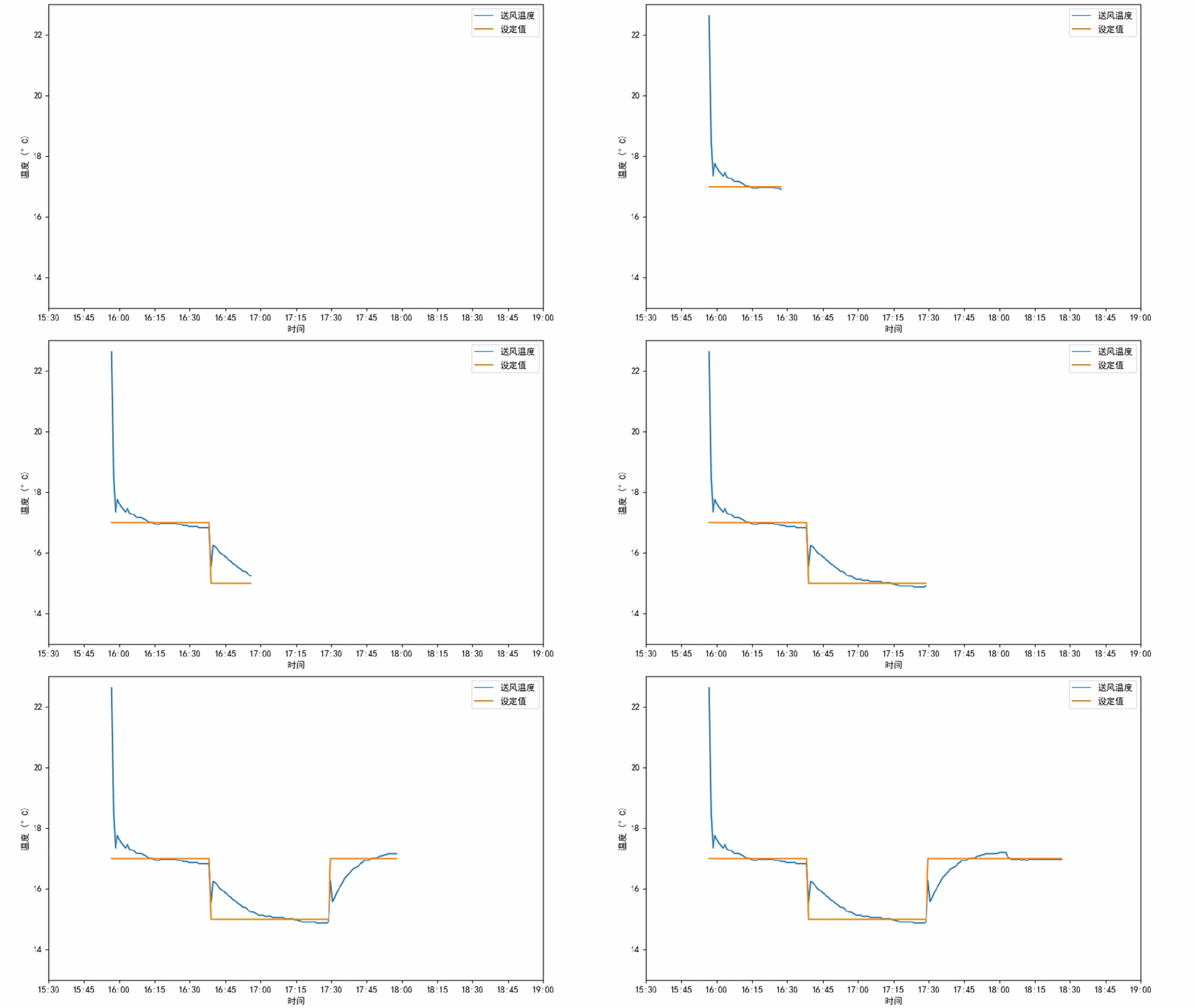 Control water valve opening based on supply air temperature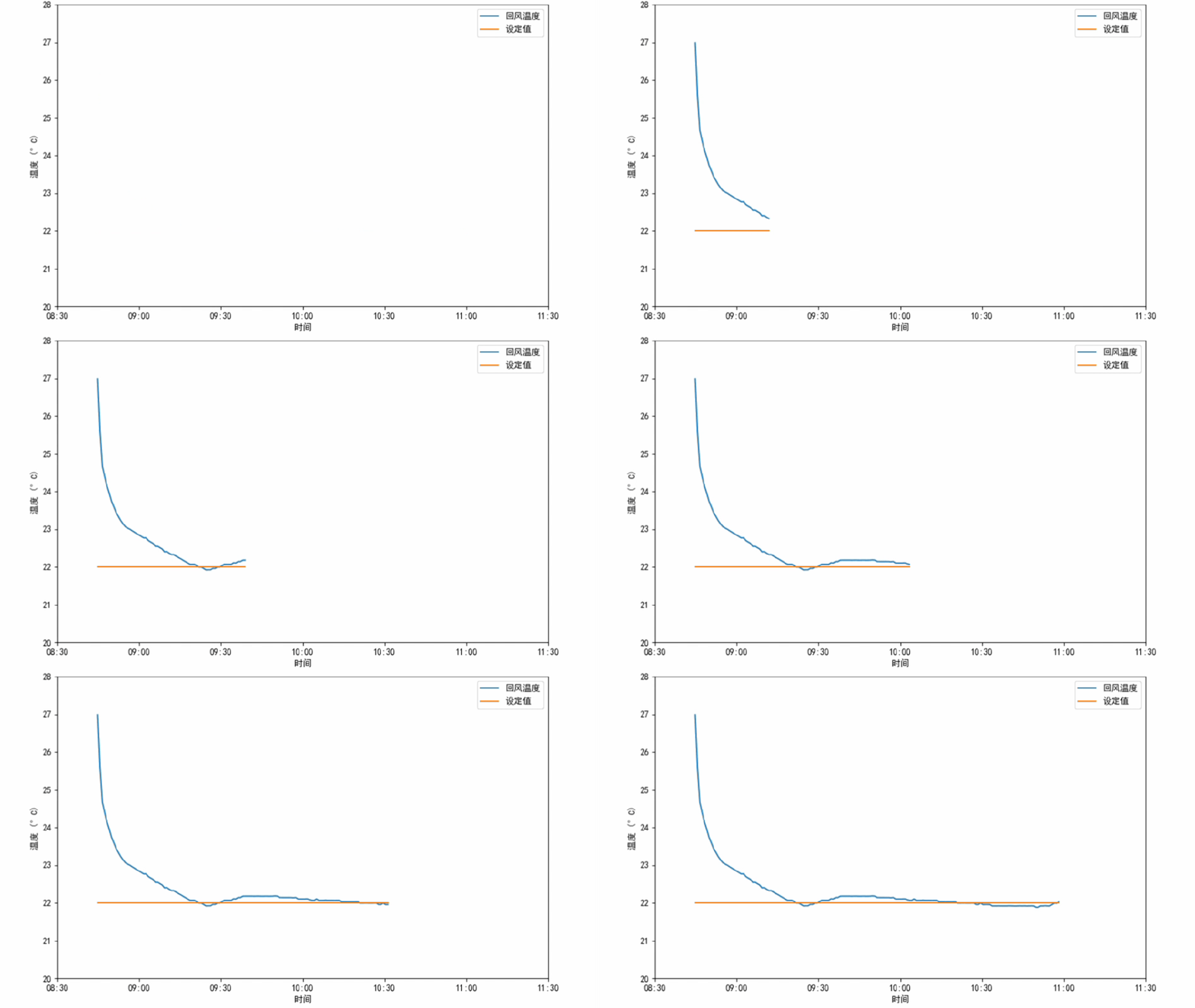
Control water valve opening based on return air temperature
3. Simplified Calculations with HVAC-Specific Algorithm Package
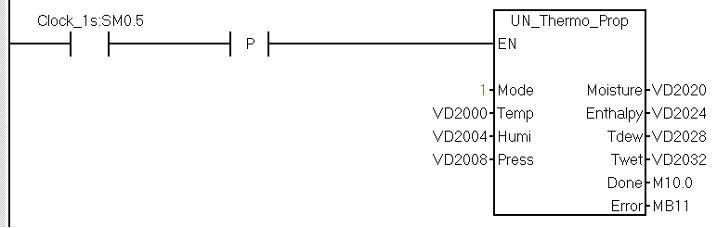
In HVAC control, parameters such as air enthalpy and dew point are essential. Traditional PLCs may require you to program these calculations yourself, which is cumbersome and prone to errors. Our PLC has a built-in professional air thermophysical calculation module. You only need to input the temperature and humidity detected by the sensors into the corresponding library parameters, and the PLC can directly calculate key parameters such as the enthalpy of moist air, dew point temperature, and moisture content, laying a solid foundation for more advanced energy-saving control strategies (such as enthalpy difference control, dew point supply air). It is simple to operate, with faster calculation efficiency and lower memory usage.
✨ Conclusion: The