“When the air conditioning units at the Bangkok factory collectively shut down in 40°C heat, and the diesel generators in Phuket burn the last drop of fuel—
the ‘10% critical point alarm’ of the Thai power grid has been triggered!” The surge in renewable energy has put this tourist nation in a dilemma: either allow electricity prices to soar by 30% and factories to halt production, or bet on energy storage technology to break the deadlock.
Chinese companies have taken a more aggressive approach: using liquid-cooled containers to absorb photovoltaic fluctuations, locking in a subsidy of 2.83 THB/kWh in a 25-year contract, and even enabling hotels on Koh Samui to achieve ‘zero power outage perception’!
However, behind the opportunities, the 20% tariff + 3 months of certification pit is swallowing 90% of the entrants… This article will reveal how to slice through the 300% growth cake of Thailand’s energy storage market using a ‘localization triple strategy’.

⚡ 1. In-depth Analysis of Policy Mechanisms
-
Differentiated Design of Feed-in Tariffs (FiT)
-
Exclusive electricity price for solar-storage integration: 2.83 THB/kWh (31% premium over the ordinary photovoltaic price of 2.16 THB/kWh), with a 25-year contract locking in returns, and a planned quota of 600MW from 2024 to 2030..
-
Upgraded Net Metering Policy: The new draft law in 2025 cancels the approval permit for rooftop photovoltaics, compresses the approval time for surplus electricity buyback from 45 days to 7 days, and removes capacity limits..
Precise Control of Tax Leverage
-
Equipment Import: 10% import tariff + 7% VAT on energy storage systems, but projects that meet BOI certification can receive an 8-year corporate income tax exemption and equipment tariff exemption..
-
Incentives for Local Manufacturing: Locally produced inverters are priced 15%-20% lower than imported products (e.g., Taweechai inverter mass production plan)..
Innovation in Power Trading Mechanisms
-
Corporate Power Purchase Agreements (PPAs) will enter legislative trials in 2025, allowing commercial and industrial users to purchase electricity directly from renewable energy producers, breaking EGAT’s monopoly..
🎯 2. Market Segmentation and Demand Mapping
1. Large-scale Storage on the Grid Side (Exploding from 2025 to 2027)
-
Driving Factors: The proportion of intermittent renewable energy is approaching the 10% critical point of the grid, and EGAT plans to add 10GW of storage capacity by 2037..
-
Project Forms:
-
Substation supporting storage (e.g., EGAT’s 200MW project in Central Thailand).
-
Pumped storage power stations (in planning).
-
Competitive Landscape: EGAT dominates project bidding, with Sungrow and CATL entering through technical cooperation..
2. Commercial and Industrial Energy Storage (Customized Solutions Dominate)
-
Core Scenarios:
-
Island microgrids (e.g., Koh Samui project: photovoltaic + storage replacing diesel units, reducing electricity costs by 40%).
-
Peak-valley arbitrage in industrial parks (the payback period for storage investment in factories around Bangkok is reduced to 5 years).
-
Technical Trends: Liquid-cooled storage systems + modular inverters (case study of Super Energy’s project in Chaiyaphum).
3. Residential Energy Storage (Policy Dividend Release Period)
-
Economic Model:
 ** The government provides a 30% installation subsidy + income tax deduction.
Channel Pain Points: Financing difficulties in rural areas require bundling with a “pay-as-you-go” model (e.g., solar water pump leasing)..
🛠️ 3. Detailed Explanation of Technical Certification Barriers
| Certification Type | Requirements | Cycle/Cost |
|---|---|---|
| Safety Certification | Must pass 37 electrical safety tests by NSTDA (including IP65 dust and water resistance, EMC anti-interference). | 8 weeks, cost approximately 50,000 THB. |
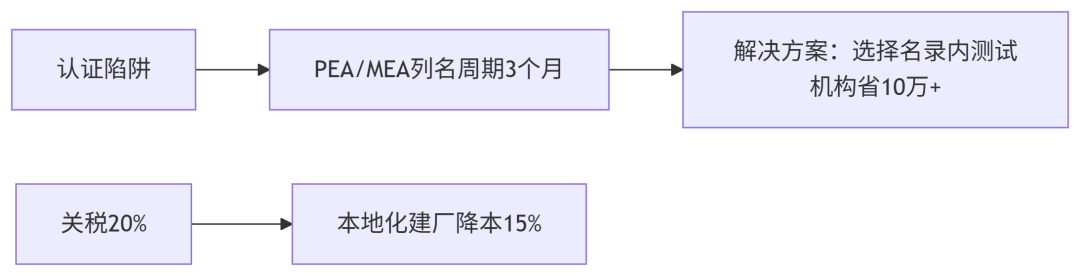
| Grid Connection Certification | PEA/MEA grid listing; if the testing agency is not on the approved list, travel witness fees for engineers must be paid. | Full process takes 3 months, additional costs over 100,000 THB. |
| Localization Adaptation | Mandatory requirement for cooling systems to adapt to 40°C high temperature/85% humidity environments (e.g., liquid cooling > air cooling solutions). | Requires additional design costs. |
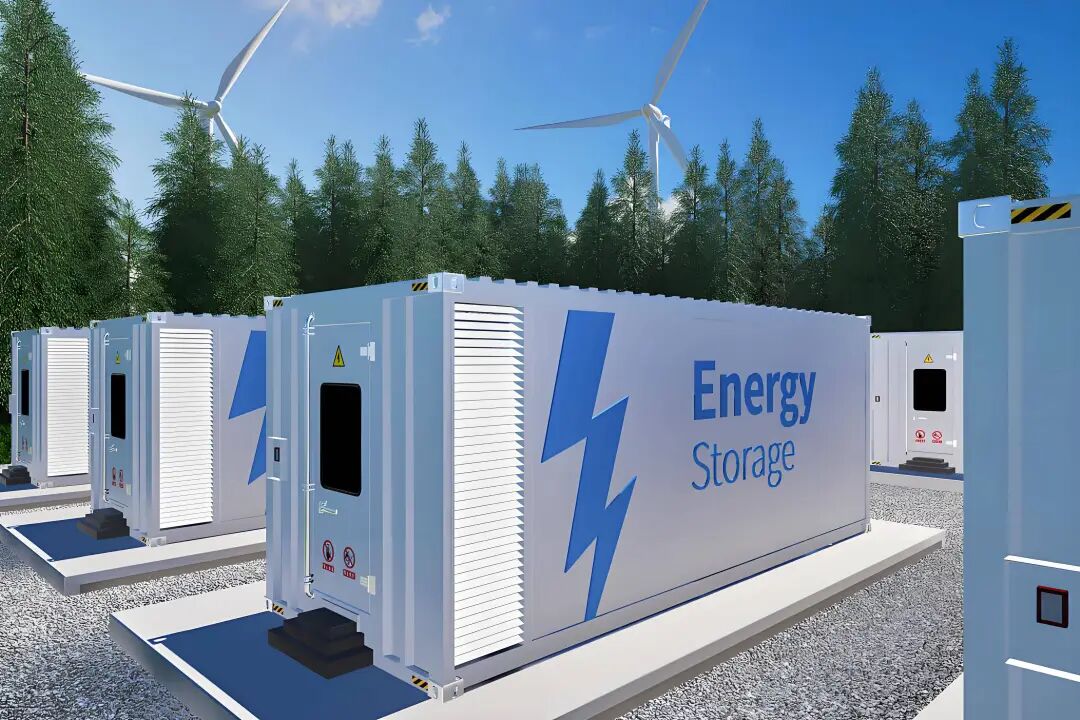
💰 4. Cost Structure and Profit Model
Cost breakdown of Chinese energy storage systems exported to Thailand (taking a 1MWh container storage as an example)::
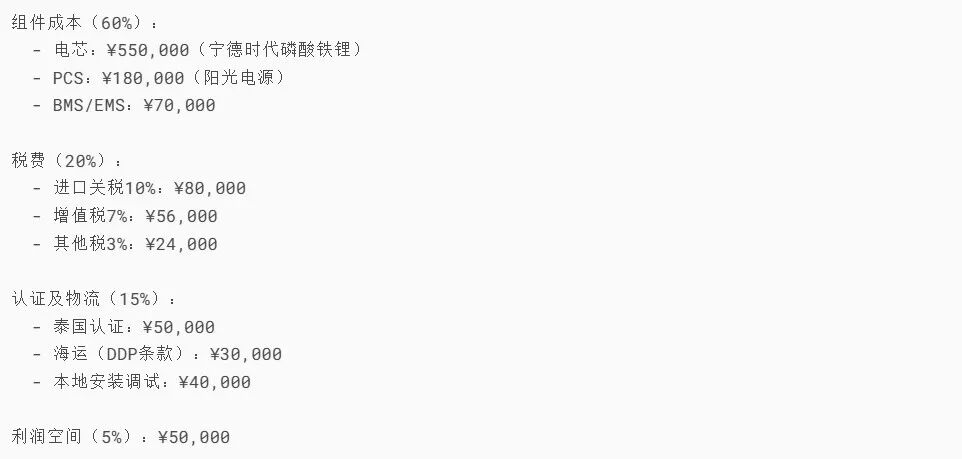
Note: In 2024, the export tax rebate for Chinese energy storage batteries will decrease from 13% to 9%, squeezing profit margins by 4%.
🌏 5. Localization Strategies and Case Studies
-
Localization of Production
-
Successful Case: Guoxuan High-Tech collaborates with Nuovo Plus to build a gigawatt-level battery factory; Chinese companies can replicate the model to apply for BOI tax incentives..
-
Policy Red Line: The “Foreign Business Act” requires foreign ownership to be ≤49%, and key technical positions must employ Thai nationals..
Channel Development
-
To Government: Through EGAT’s annual bidding (300MW energy storage procurement starting in Q4 2025)..
-
To Distributors: Binding with PEA/MEA regional agents (e.g., Siam Solar covering rural areas in the north)..
Cultural Adaptation
-
Religious Taboos: Energy storage devices should avoid using cowhide insulation materials (in a Buddhist country).
-
Business Practices: Project negotiations require reserving “tea break time”; the decision-making chain is relatively long.
⚠️ 6. Risk Map and Response Strategies
-
“Policy Dividend”: Diagram of FiT 2.83 THB/kWh price vs. base price of 2.16 THB, marking the 25-year contract profit space.
-
“Pitfall Guide”:
| Risk Dimension | Specific Manifestation | Solution |
|---|---|---|
| Policy Fluctuation | The PDP power plan is revised every 3 years, and renewable energy targets fluctuate. | Sign a FiT contract to lock in the electricity price for 25 years. |
| Electricity Payment Delays | PEA’s surplus electricity settlement cycle can be as long as 90 days. | Insure with China Export Credit Insurance for short-term trade insurance. |
| Technological Iteration | Global inverter efficiency improves by an average of 1.5% per year. | Co-establish a research and development center with Chulalongkorn University. |
| Local Competition | Energy Absolute pushes a 10% price reduction for a 2-hour storage system. | Differentiated development of a 4-hour long-duration storage system (matching factory night shift needs). |
🚀 7. Strategic Roadmap (2025-2027)
-
2025:
-
Participate in the Bangkok Renewable Energy 2025 exhibition to test channel reactions.
-
Jointly bid for EGAT’s grid-side energy storage package with PTT Group.
2026:
-
Set up an assembly plant in Nakhon Ratchasima (to avoid 20% import tax).
-
Develop a “photovoltaic + storage + diesel engine” integrated microgrid controller.
2027:
-
Compete for the rural microgrid project for 1,000 villages (government budget of $57 million).
-
Layout solid-state battery technology (collaboration with Egat laboratory).
The Thai energy storage market needs to adopt a “grid-side positioning, commercial profitability, and residential energy storage innovation” three-step strategy, through local production (tax reduction) + technical adaptation (high-temperature solutions) + financial innovation (green bonds) to break the current deadlock. Companies should seize the legislative window for PPAs in 2025 and bind with local giants to share policy dividends.
<span><span>- THE END -</span></span>
🌴 **Solar Energy Storage in the South Seas, Leading Carbon Neutrality!**
🚢 **Follow solar energy and carbon neutrality, and enjoy the guide to going overseas.**
🌐 More exciting … ► In Southeast Asia, frequent power outages are turning rooftop photovoltaics into “golden power sources”? ►Southeast Asia | Indonesia’s largest solar-storage integrated project of 200MW+80MWh. ►Southeast Asia | Opportunities and challenges in the rooftop photovoltaic market in Malaysia.►Solar Storage War: 30% of households in Pakistan go off-grid for self-rescue, government grid on the brink of collapse! ►Southeast Asia | Thailand | Opportunities and challenges in the rooftop photovoltaic market. ►Southeast Asia | The largest solar-storage integrated project in the Philippines of 3.5GW+4.5GWh.►1% tariff on inverters! Countdown to the explosion of solar storage in Bangladesh: 3 major window period dividends. ►Southeast Asia | Vietnam | New policies for rooftop photovoltaics, can be grid-connected, off-grid, and surplus electricity can be sold back to the grid.