Antarctic Bear Guide: The investment and financing situation in the foreign 3D printing industry has been generally poor in the past year or two, but there is a small hotspot in the application field of metal printed orthopedic implants.The global market for 3D printed medical implants is entering a period of rapid growth. According to the latest market research report, it is expected that by 2032, the market size will grow from approximately $2.5 billion in 2023 to over $12 billion, with a compound annual growth rate of 19.5%. The application of additive manufacturing technology in the orthopedic field is becoming increasingly widespread, driving innovation in personalized medical devices. This technology can produce highly customized, structurally complex implants that closely match human anatomical structures, enhancing the precision and effectiveness of medical treatments.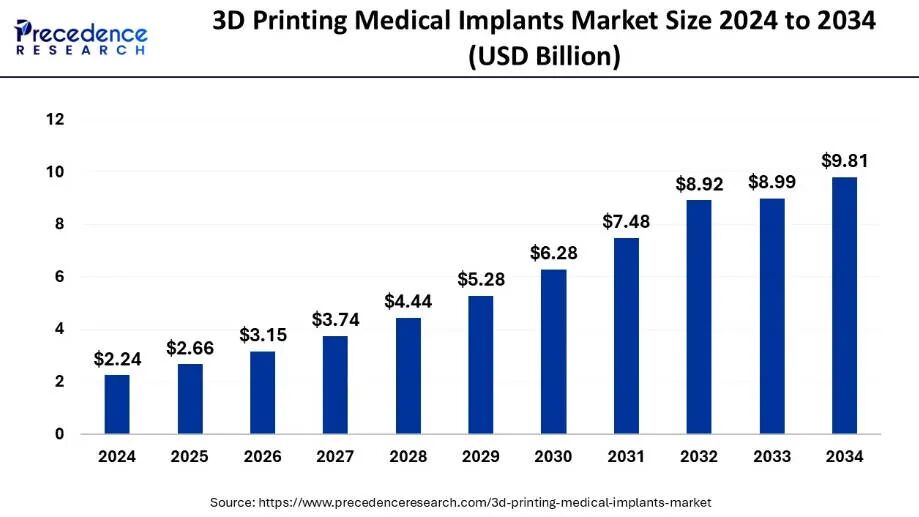 In this booming market context,metal 3D printed orthopedic implantshave become one of the focal points of market attention. With continuous technological breakthroughs and deeper clinical applications, more and more innovative companies are gaining favor from investors. These companies are achieving breakthroughs in material selection, structural design, and personalized customization through advanced additive manufacturing technology, bringing revolutionary solutions to the orthopedic medical field.Antarctic Bear has compiled financing cases in the field of metal 3D printed orthopedic implants from 2024 to 2025.Carlsmed: Completed $100.5 million IPO in August 2025 to advance personalized spinal surgery platformIn August 2025, Carlsmed successfully completed its initial public offering on NASDAQ, raising approximately $100.5 million(approximately 721.8 million RMB). This California-based personalized surgical medical technology company plans to use the funds to comprehensively expand the production scale and market coverage of its globally pioneering 3D printed personalized spinal surgery platform, aprevo.
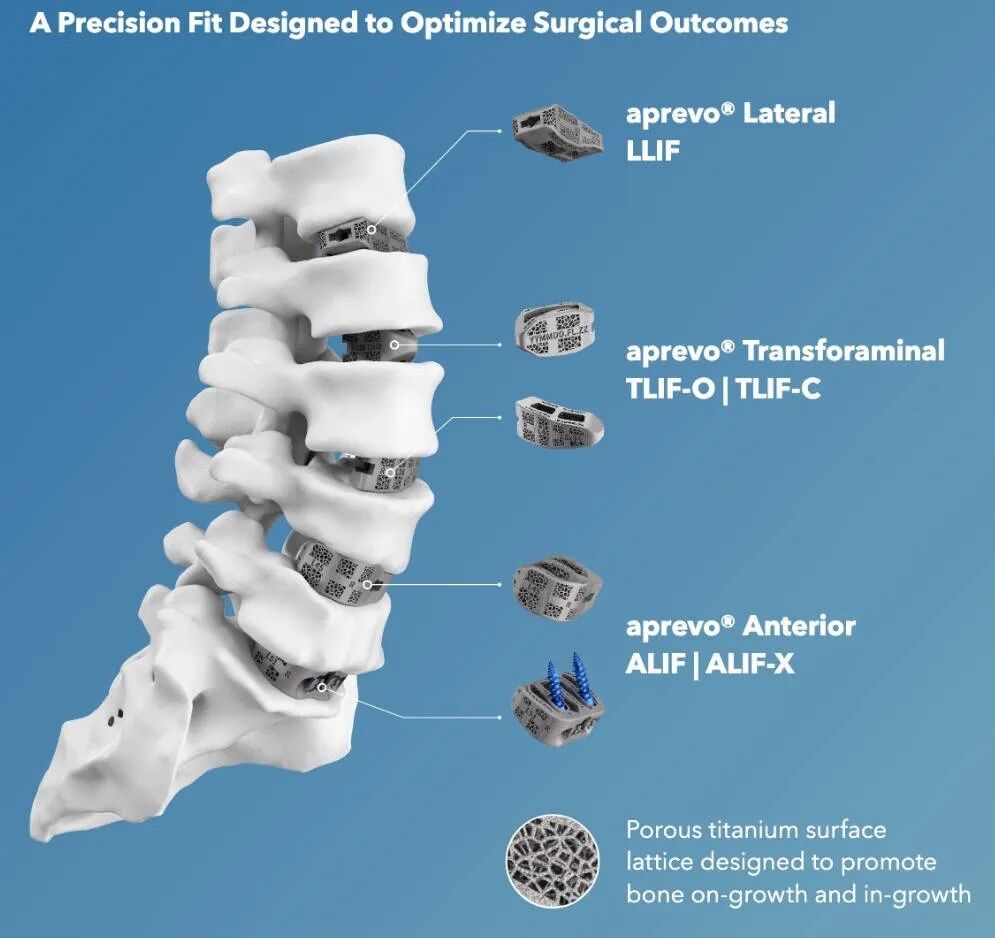 △Carlsmed 3D printed titanium implant illustrationThe company’s core technology isthe deep integration of artificial intelligence and advanced 3D printing technology, which can quickly generate highly personalized titanium spinal implants using precise CT scan data from patients. This innovative approach significantly improves surgical precision, greatly reduces surgical trauma, and shortens recovery time. Carlsmed has received important approvals from the Centers for Medicare & Medicaid Services (CMS) in the United States, and its 3D printed aprevo implants will receive new technology add-on payments (NTAP) for cervical fusion surgeries, with a maximum additional reimbursement of $21,000 per surgery. This groundbreaking development indicatesthe rapid popularization and wide acceptance of personalized spinal surgery technology in the U.S. medical market. The company’s technology represents innovation in medical technology, showcasing the enormous potential of additive manufacturing in the field of precision medicine.OSSTEC: Secured £2.5 million funding in May 2025 to advance joint replacement technologyThe spin-off company OSSTEC from Imperial College London successfully secured £2.5 million in funding to advance the market process of its innovative joint replacement system. The innovative technology developed by the company, based on bone-like materials, is expected to significantly simplify surgical processes, reduce the risk of implant failure, and extend patient activity time.
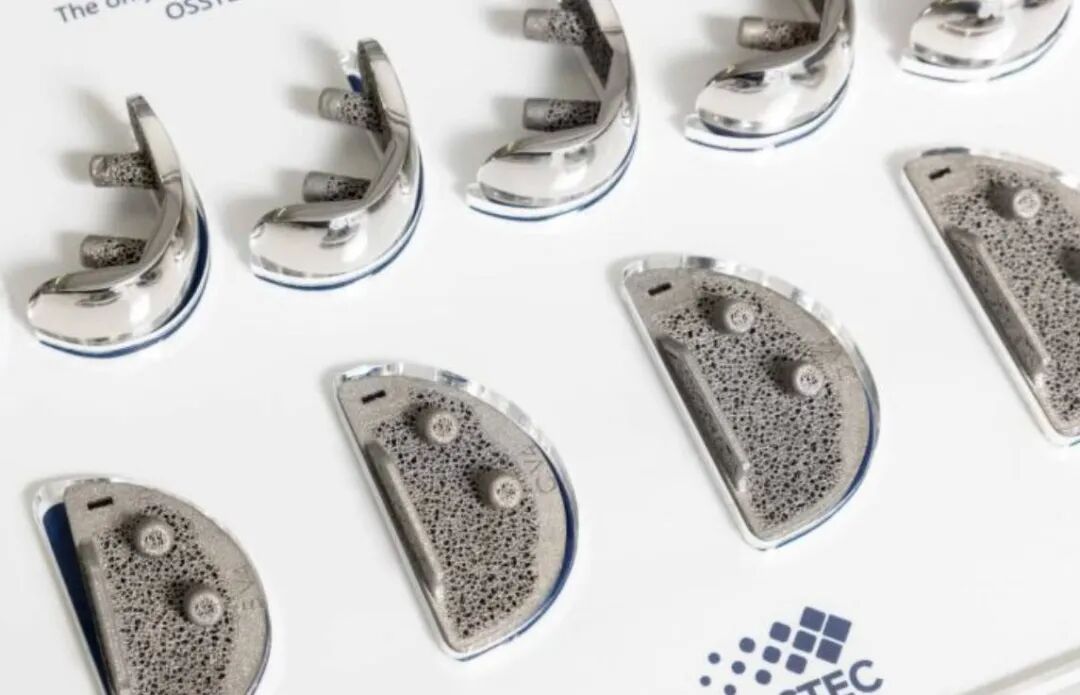 Founder and CEO Dr. Max Munford stated that this funding will help the company obtain approval from U.S. regulatory authorities, initiate the first surgical trials in the UK, and ultimately achieve its first revenue in the U.S. Empirical Ventures, as the lead investor in this round of financing, highly recognizes OSSTEC’s potential to translate scientific discoveries into real-world impacts.OSSTEC originated from a mechanical engineering PhD student project in 2021, dedicated to exploring the application of 3D printing in surgical procedures. The company plans to first apply its technology to partial knee replacement surgeries and has assembled a professional team of engineers and surgeons. Dr. Munford emphasized that the company will continue to maintain close collaboration with academia, using its first product as a platform for further innovation.Restor3d: Secured $38 million funding in April 2025 to launch four new 3D printed product linesIn April 2025, Restor3d, which focuses on 3D printed personalized orthopedic implants, completed $38 million in funding. This financing, led by a well-known venture capital firm, will support the company in launching four new 3D printed product lines in 2025-2026, marking a significant strategic layout in the field of personalized orthopedic implants. The four product lines planned for launch include the Veritas reverse total shoulder system, iTotal Identity 3DP porous non-bone cement total knee joint, Kinos modular stem total ankle system, and Velora 3DP porous acetabular system. These products utilize the company’s self-developed TIDAL technology, which, through precise additive manufacturing processes, can customize implants according to each patient’s unique anatomical structure, significantly improving surgical precision and the long-term adaptability of the implants.
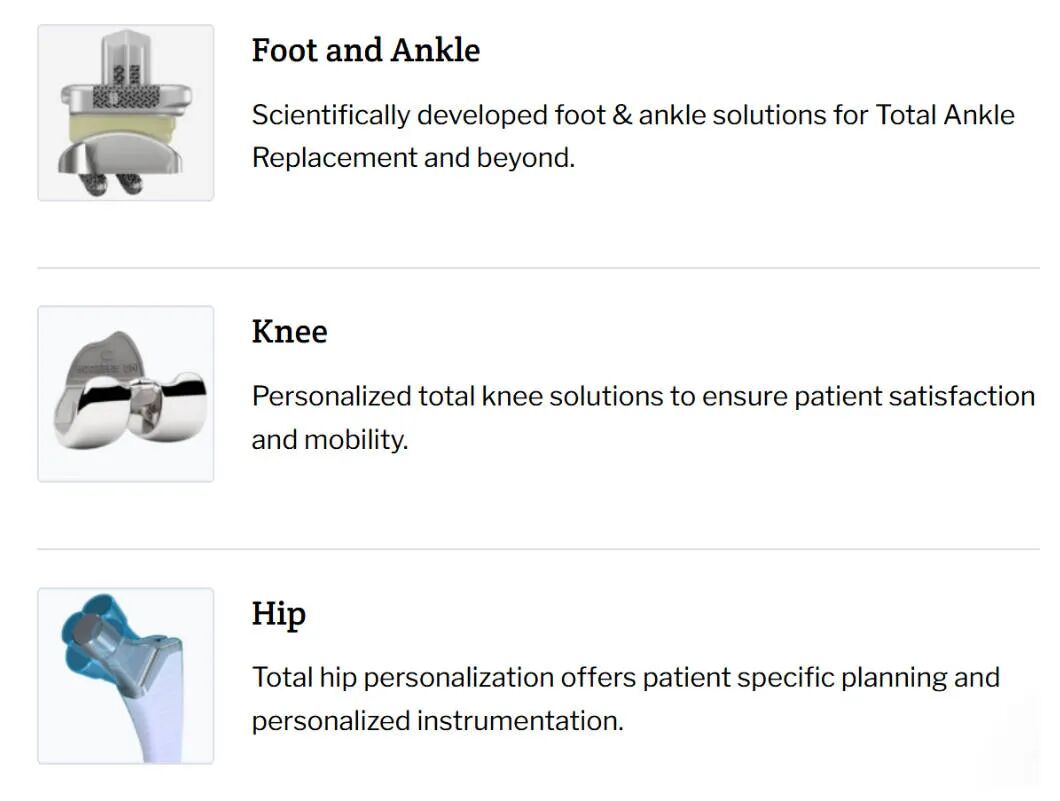 Restor3d’s innovation is not only reflected in product design but also in its forward-looking business model. The company is rapidly approaching positive operating cash flow, laying a solid foundation for future technological research and market expansion. This funding will accelerate the company’s strategic layout in the personalized orthopedic implant market, further consolidating its technological leadership.NanoHive Medical: Secured $7 million funding in August 2024 to develop spinal surgery equipmentIn 2024, NanoHive Medical successfully completed $7 million in Series C funding. This company, which focuses on 3D printed titanium alloy instruments for spinal surgery, is experiencing significant development opportunities. Outcome Capital served as the advisor for this round of financing, and the funds will be used for several key strategic directions:Expanding the U.S. commercial team, developing “smart” sensor implant delivery technology, expanding the Hive soft titanium spinal instrument product line, and entering specific international markets.
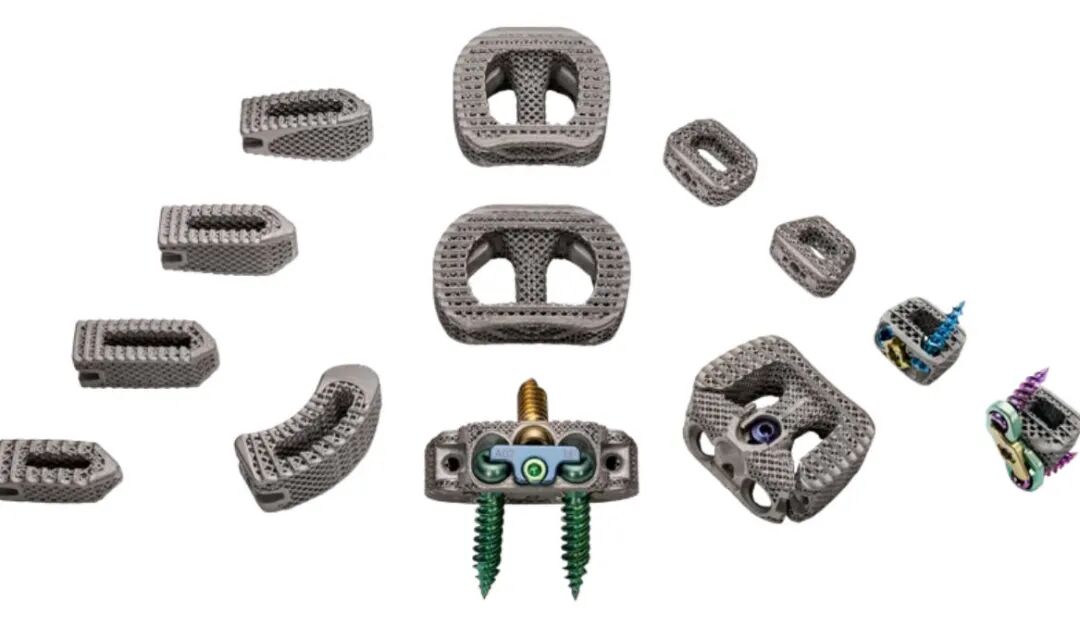 The company’s uniquebionic soft titanium technology allows it to stand out in the $2.2 billion spinal interbody fusion market. The Hive interbody fusion series products provide surgeons and patients with excellent biomechanical performance, including ideal elastic modulus, precise diagnostic imaging capabilities, and excellent osteoblast integration functions, effectively enhancing the clinical treatment experience.Antarctic Bear CommentsMetal 3D printing is witnessing remarkable investments and technological breakthroughs in the field of implants. Metal 3D printing can accurately customize orthopedic implants based on patients’ unique anatomical structures, improving surgical precision and patient comfort.Various capital sources, including startups and medical device giants, are intensively laying out this track, optimistic about its enormous potential in reducing production costs, shortening production cycles, and enhancing the level of medical personalization.Althoughtechnically, challenges such as biocompatibility and long-term stability still exist, metal 3D printing has demonstrated its innovative ability to change the landscape of the orthopedic implant industry, heralding a bright future for personalized medical device manufacturing!