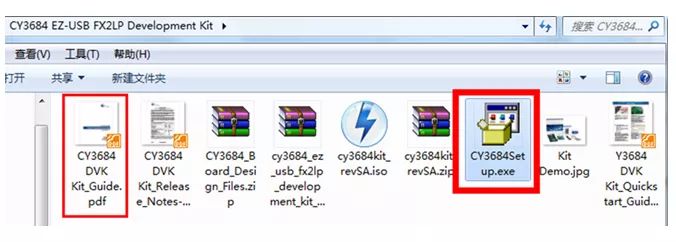
As most ARM processors now integrate USB interfaces, and since FPGAs consist of pure logic circuits (let’s not discuss heterogeneous FPGAs like MPSOCs), designing a USB 2.0 core with Verilog HDL is quite challenging and also requires a PHY. Therefore, using a USB bridge chip is unavoidable.USB 2.0 bridge chips include FTDI’s FT232H and FT2232H from Taiwan, CHxxx from Nanjing Qinheng, and of course, the focus of this article, the Cypress CY7C68013, which is not only a USB 2.0 bridge chip but also a powerful processor.The CY7C68013 is widely used in USB Blaster, FPGA, and other systems.For detailed information about the CY7C68013, please refer to the official website: http://www.cypress.com. In the VIP Mini documentation package, under the directory “03_Chip Camera and Other Data Manuals”00_CY7C68013 Data” Bingo provides both Chinese and English materials for the CY7C68013. I hope readers can read the manual thoroughly to understand the features and usage of the CY7C68013.The logic block diagram of the CY7C68013 is shown below, which includes the following components:(1) USB 2.0 high-speed transceiver, capable of achieving rates up to 480 Mbps(2) 48MHz four-clock cycle 8051 core(3) Internal 16KB RAM(4) 4KB FIFO(5) I2C, UART controllers, etc.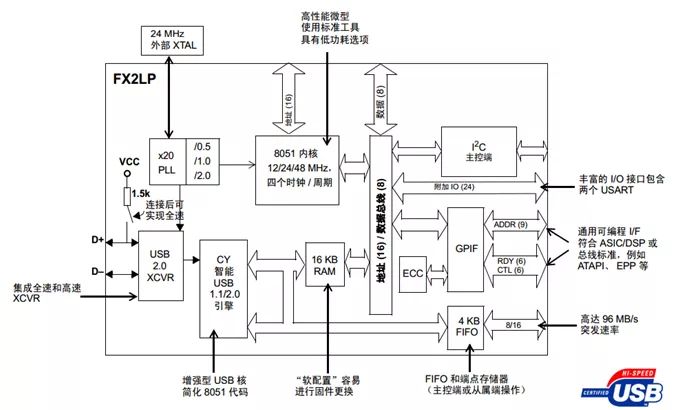 Cypress provides a development kit for the CY7C68013, which is mainly targeted at the official CY3684 development board, offering schematics, firmware examples, development guides, and other documents.Although there is no official development kit, these materials can be used for reference, learning, and porting!For more information, please download it from the official website:http://www.cypress.com/?rID=14321, as shown in the figure below:
 In addition, the configuration of the CY7C68013 is completed in KEIL.Therefore, we also need the KEIL platform.The CY3684 provides the KEIL UV2 platform, but the outdated version is unacceptable. Here, Bingo uses Keil UVision 4.73.00, C51V95200, which can be found in the VIP Mini development board documentation package under “02_Tools, Drivers, USB Software\