Many students’ first step into computer programming skills is Python, and many have heard about the struggles of their seniors in college with JAVA. So, what can encompass everything JAVA and Python can do? That’s right, it’s what we are sharing today—C++!
As a mainstream programming language alongside JAVA and Python, C++ is the “oldest” and most comprehensive among the three.
As a core mandatory course in computer science, computer engineering, software engineering, and other related fields, the content required to learn C++ is often more extensive and complex.
Today, we will further enlighten everyone about computer programming languages and ‘C++’, covering subject introduction, recommended majors and subjects, and textbook recommendations, so that everyone can have a clear understanding of C++. Without further ado, let’s get straight to the essentials!

Subject Introduction
Programming languages can serve as a bridge between natural language and machine language, facilitating our ability to implement ideas in computers. The well-known C++, JAVA, and Python all belong to the high-level programming languages. Safety, reliability, and stability are three common characteristics of programming languages compared to low-level and mid-level programming languages.
Let’s briefly introduce the three programming languages. C++ is an extension of the C language, developed by Bjarne Stroustrup in the early 1980s. Its features include high performance, object-oriented programming (OOP) support, and low-level programming capabilities, applied in system-level programming, game development, embedded systems, graphical interfaces, and scientific computing.
For an introduction to data structures and Python,check out last week’s post: Data Structures & Python Introduction for Computer Newbies!
(Below is a video introduction to the C++ subject, click the link to view it!)
Recommended Majors and Subjects
C++ is undoubtedly a core mandatory course for computer science majors. Additionally, for STEM majors such as data science, statistics, finance, and biology, especially biostatistics and engineering, in-depth learning of C++ technology is also required.
It is worth mentioning that during university, you will encounter various competitions, where the first recommended programming language is C++, followed by JAVA, and lastly Python.
In practical applications, C++ is commonly used in system-level development, game development, embedded system development, high-performance computing, and network security.
For example, in the field of network security, C++ is widely used for:
Firewalls
Vulnerability detection
Network protocol analysis
Reverse engineering
Moreover, many components of the domestic operating system—Hongmeng—are developed using C++, such as the most critical system kernel, system libraries, frameworks, and drivers. Many graphical and audio software are also developed using C++, such as the commonly used OpenCV, OpenGL, and user interfaces. Due to its high-performance characteristics, C++ is used to handle real-time graphical rendering and complex computational tasks.
In terms of employment prospects, C++ has relatively less competitive pressure compared to the other two programming languages, making it more friendly for employment, with a wider range of future job opportunities, such as game development, financial software, embedded systems, and graphical image processing.
👉 Comparing C++ with the other two languages:
C++ vs Java: C++ excels in performance. However, for enterprise-level development, Java is more suitable due to its lack of complex applications and flashy features; but for graphics and audio applications, C++ is more appropriate.
C++ vs Python: C++ again has higher performance. Python, due to its many mature libraries and frameworks, is widely used in automation scripts, machine learning, and big data development.
Overall, C++ can accomplish all the functionalities that Java and Python can, and the number of practitioners in C++ is noticeably less than that in Java, resulting in lower competitive pressure. Its application fields are also broader, with C++ being irreplaceable in areas like financial quantification and embedded systems.
However, it should be noted that C++ requires more content to be learned initially, which raises the requirements for learners, thus increasing the barrier to learning C++. The relatively small number of practitioners in C++ in the current job market and the lower competitive pressure are also related to this. As long as you can endure the learning process and master C++, the long-term returns will surely be considerable.
Finally, one major application of C++ is—algorithms. The application of algorithms has already permeated all aspects of our lives, from quick responses in social/communication software to path planning algorithms in navigation software, rendering algorithms capable of ray tracing, ambient occlusion, and rasterization, network synchronization algorithms, and generative algorithms, all achieved through algorithms.
Network synchronization algorithms are the means to achieve consistency of game states among different players, and algorithms are ubiquitous in game development, enhancing game performance, complexity, and player experience. From basic path planning to complex artificial intelligence and physics simulations, algorithms assist developers in creating more engaging and realistic game worlds. Understanding and applying these algorithms is an important step in becoming an excellent game developer.
Textbook Recommendations
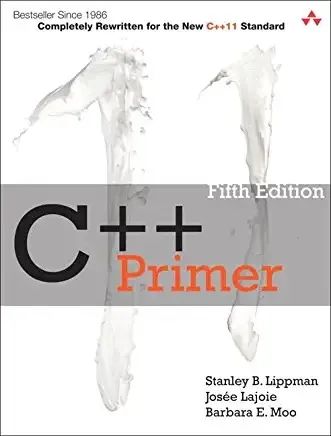
This book is based on the C11 standard, which is the C++ version released in 2011. Although there have been multiple versions of C++ since then, such as 2017 and 2020, the C11 standard book is already sufficient for our current self-learning needs.
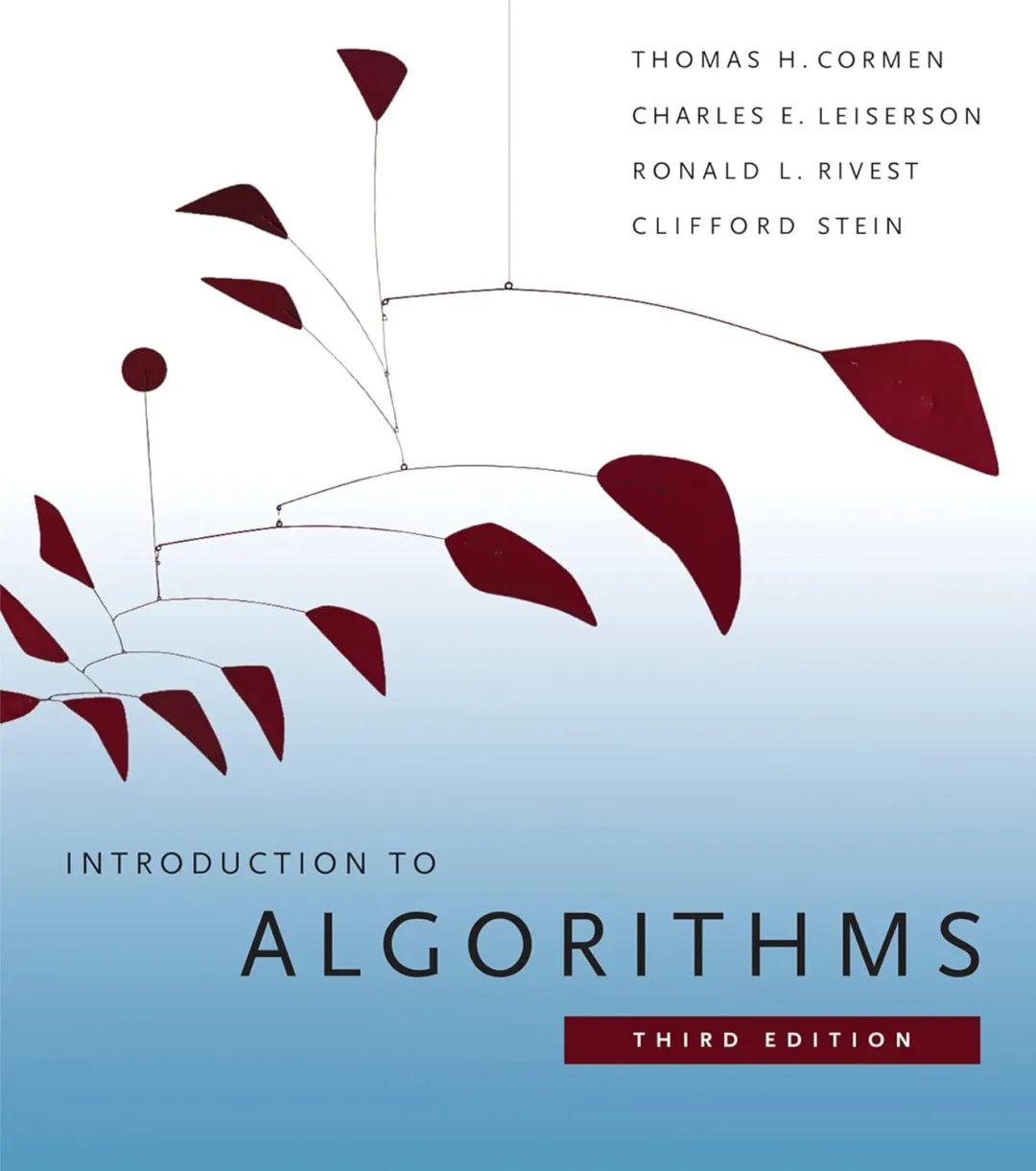
Algorithms contain some very abstract concepts that may not be visualizable. This book uses some very vivid examples to help us explain algorithms, making it very friendly for students without a background in algorithms, with examples that are easy to understand.
(Below is a video recommendation for C++ subjects & textbooks, click the link to view it!)
That’s all for the C++ enlightenment content. I believe after reading this, you will have a clear understanding of the C++ course! May everyone enjoy the journey to becoming a top student!
TD University Preparatory Course