Source: Fresh Date Classroom
Original Author: Little Date Jun
This article provides a detailed introduction to AI-related concepts.
What Exactly Is AI?
AI is short for artificial intelligence.
Artificial, many students only recognize half of the word, thinking it is some adjective related to art. However, this is not the case; artificial means “man-made” or “synthetic,” which is the opposite of natural.
Intelligence, this is hard to misinterpret, means “intelligence.” The name of Intel Corporation is based on the first five letters of this word.
Combined, AI means “man-made intelligence,” creating intelligence through human means.
There are many definitions of AI in the industry. A more academic one states:
AI is a comprehensive science that studies and develops theories, methods, technologies, and application systems for simulating, extending, and enhancing human intelligent behavior.
This definition is quite convoluted and difficult to digest.
In fact, for AI, we can break it down.
Firstly, the essential attribute of AI is that it is a science, a technical field.
It involves knowledge from various disciplines such as computer science, mathematics, statistics, philosophy, psychology, etc., but overall, it is categorized under computer science.
Secondly, the research purpose of AI is to enable a “system” to possess intelligence.
This “system” could be a software program, a computer, or even a robot.
Thirdly, what level qualifies as true intelligence?
This is the key issue. Currently, the ability to perceive, understand, think, judge, and make decisions like a human is what constitutes artificial intelligence.
In conjunction with robots, mechanical arms, and other physical carriers, AI can also achieve mobility.
Considering the above three points, understanding the definition of AI becomes much easier.
What Is the Difference Between AI and Ordinary Computers?
AI is still fundamentally based on the basic functionalities of computers, utilizing semiconductor chip technology (which is why it is often referred to as “silicon-based”) and some computer systems and platforms.
So, how does it differ from traditional computer programs?
A traditional computer program is simply a set of rules. Programmers instruct the computer on the rules through code, and the computer makes judgments and processes input data based on those rules.
For example, the classic “if…else…” statement—”If over 65 years old, then retire; otherwise, continue working.”
Then, the computer program will judge and process all input age data based on this rule.
However, in real life, many factors (such as images and sounds) are extremely complex and diverse, making it challenging to provide fixed rules for the computer to achieve high accuracy in judgment and processing.
For instance, judging whether a dog is indeed a dog.
Dogs come in many breeds, each with different colors, sizes, and facial features. A dog can also have various expressions and postures at different times and be in different background environments.
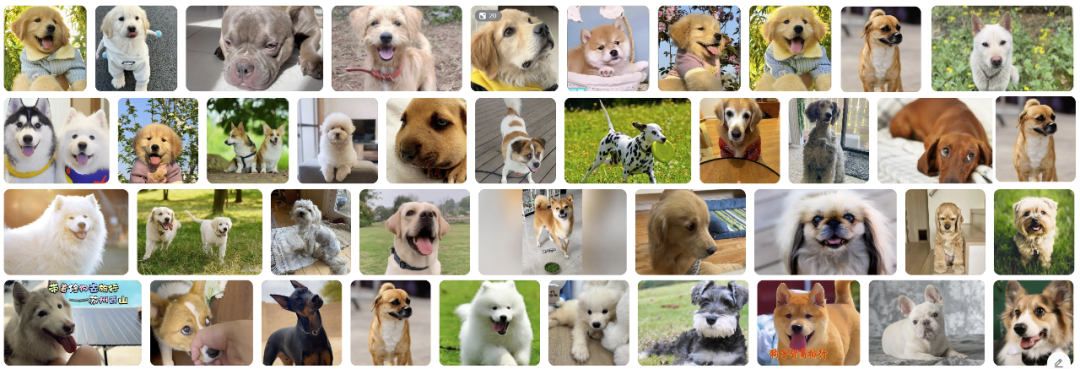
Thus, the images of dogs captured by a computer through a camera are virtually endless. It is hard to help the computer make judgments through a limited set of rules.
To enable the computer to achieve intelligence like that of a human, simple rule-based approaches cannot be used; rather, it should be educated like a child, continuously inputting data and answers, allowing it to summarize features and form its own judgment rules.
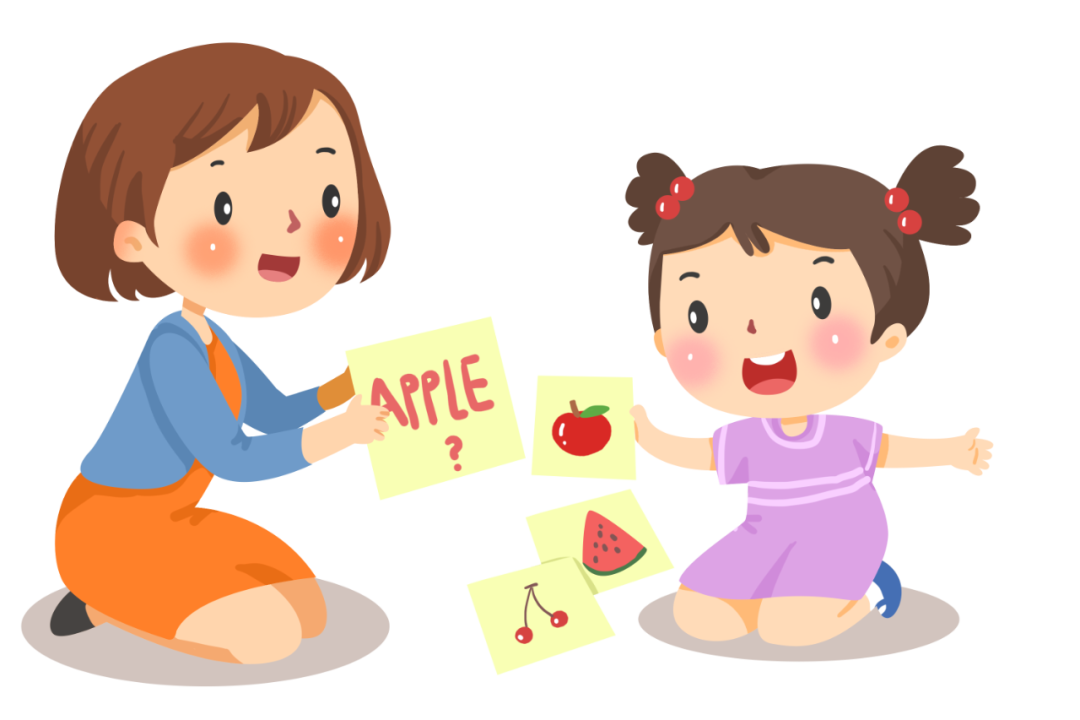
In other words, in classic program design, humans input rules (i.e., programs) and data, and the system outputs answers.

In contrast, the AI computation process consists of two steps:
The first step involves inputting data and the expected answer, with the system outputting the rules.
The second step applies the output rules to new data, and then outputs the answers.
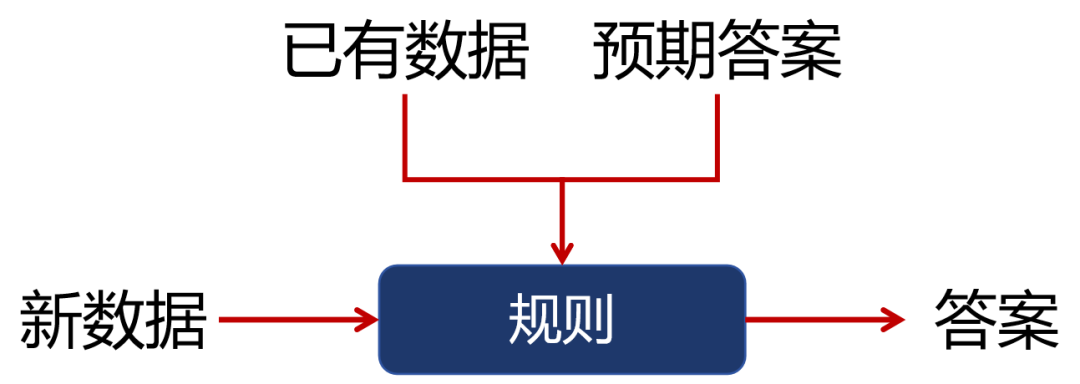
The first step can be termed “training,” while the second step is the actual “work.”
This exemplifies a typical difference between traditional computing programs and current mainstream AI technology. (Note, I am referring to “current mainstream AI.” Some “historical AI” and “non-mainstream AI” have different methods and cannot be generalized.)
What Are the Categories of AI?
As mentioned earlier, artificial intelligence is a vast scientific field.
Since its formal inception in the 1950s, many scientists have conducted extensive research and produced many remarkable results around artificial intelligence.
These studies are categorized into various schools based on different ideological directions. Some of the more representative ones include the symbolic school, connectionist school, and behaviorist school.
These schools do not have a right or wrong distinction and also have some cross-integration.
In the early days (1960-1990), symbolicism (represented by expert systems and knowledge graphs) was mainstream. Later, starting in 1980, connectionism (represented by neural networks) rose to prominence and remains mainstream to this day.
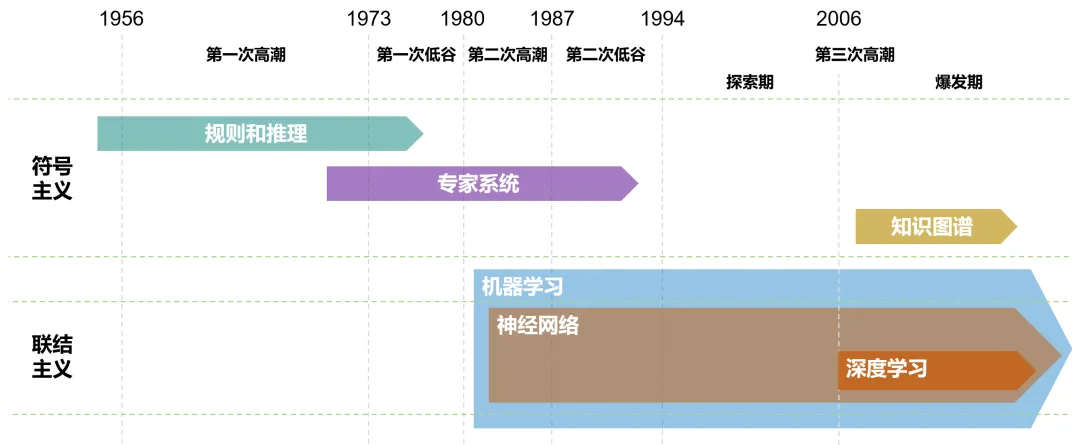
In the future, new technologies may emerge, forming new schools.
Apart from directional routes, we can also classify AI based on intelligence levels and application fields.
By intelligence level, AI can be divided into: Weak AI, Strong AI, and Super AI.
Weak AI specializes only in a single task or a set of related tasks, lacking general intelligence capabilities. We are currently at this stage.
Strong AI is somewhat more advanced, possessing certain general intelligence capabilities, able to understand, learn, and apply to various different tasks. This remains in the theoretical and research phase and has not yet been realized.
Super AI, of course, is the strongest. It surpasses human intelligence in almost all aspects, including creativity and social skills. Super AI is the ultimate form we hypothesize it could achieve in the future.
Regarding the classification of AI by application field, we will discuss that later.
What Is Machine Learning?
In fact, we have already mentioned machine learning when discussing rule summarization.
The core idea of machine learning is to construct a model that can learn from data and use this model for prediction or decision-making.
Machine learning is not a specific model or algorithm. It encompasses many types, such as:
Supervised Learning: The algorithm learns from a labeled dataset, where each training sample has a known outcome.
Unsupervised Learning: The algorithm learns from an unlabeled dataset.
Semi-supervised Learning: Combines a small amount of labeled data with a large amount of unlabeled data for training.
Reinforcement Learning: Learns which actions can earn rewards and which can lead to penalties through trial and error.
What Is Deep Learning?
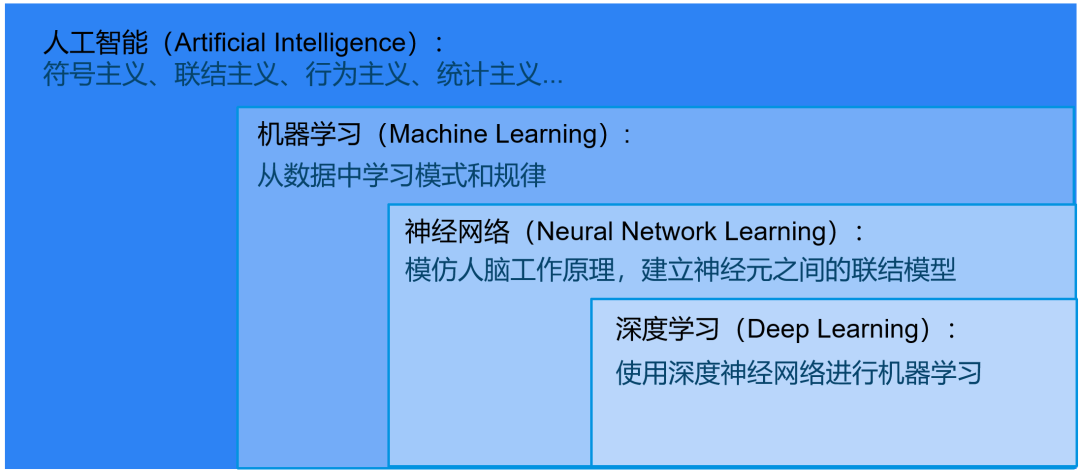
Deep learning, specifically, is learning through deep neural networks.
Deep learning is an important branch of machine learning. Under machine learning, there is a “neural network” route, and deep learning is an enhanced version of “neural network” learning.
Neural networks represent connectionism. As the name suggests, this route mimics the working principles of the human brain, establishing models of connections between neurons to achieve artificial neural computation.
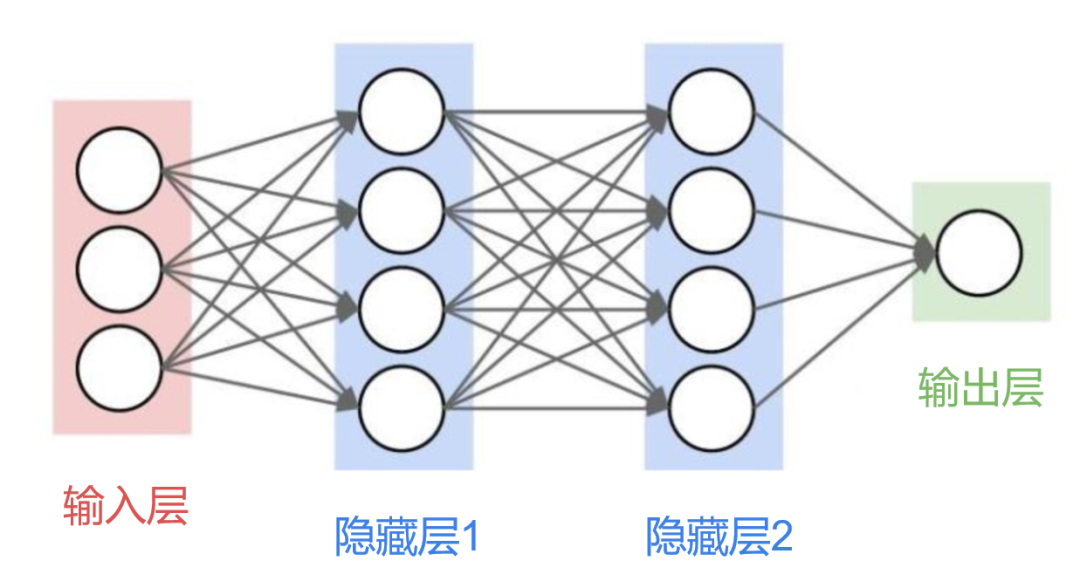
In deep learning, the term “depth” refers to the number of hidden layers in the neural network.
Classic machine learning algorithms use neural networks with an input layer, one or two “hidden layers”, and an output layer.
Deep learning algorithms utilize more “hidden layers” (hundreds of them). Its capabilities are much stronger, allowing the neural network to accomplish more complex tasks.
The relationship between machine learning, neural networks, and deep learning can be seen in the following diagram:
What Are Convolutional Neural Networks and Recurrent Neural Networks?
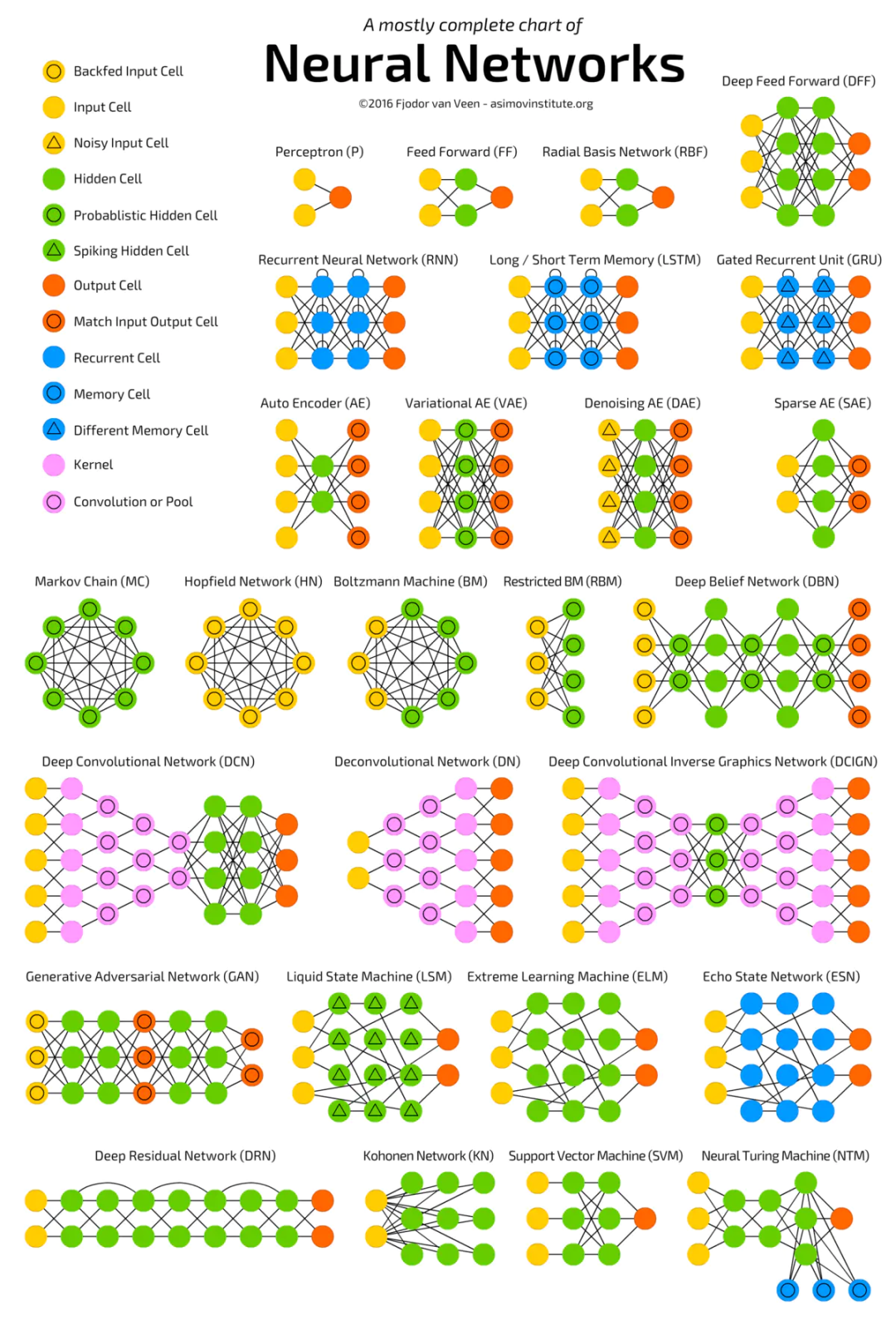
Since the rise of neural networks in the 1980s, many models and algorithms have been developed. Each model and algorithm has its own characteristics and functions.
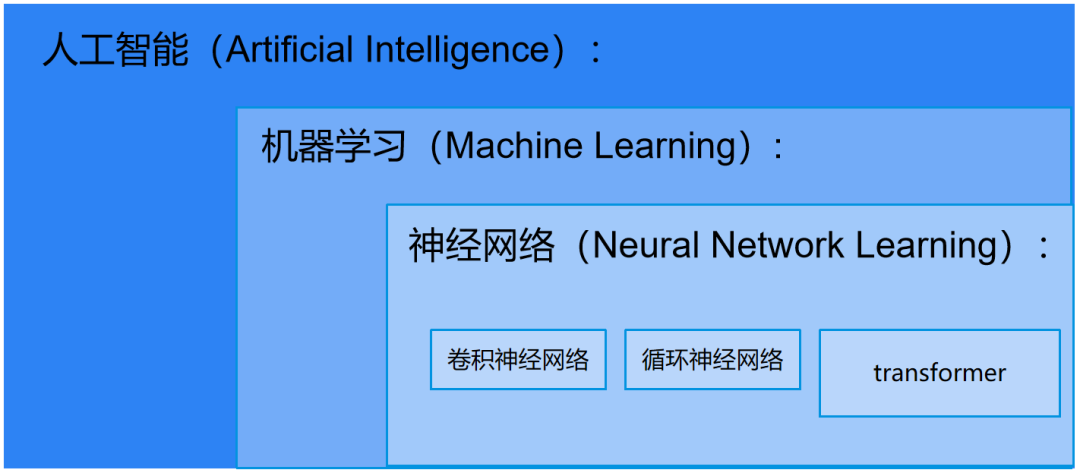
Convolutional Neural Networks (CNN) and Recurrent Neural Networks (RNN) are well-known neural network models that emerged around the 1990s.
Their specific working principles are quite complex. Just remember:
Convolutional Neural Networks (CNN) are a type of neural network used to process data with a grid-like structure (such as images and videos). Therefore, they are commonly used in computer vision for image recognition and image classification.
In contrast, Recurrent Neural Networks (RNN) are used to process sequential data, such as language models and time series predictions. Thus, they are typically used for natural language processing and speech recognition.
What Is a Transformer?
The transformer is also a neural network model. It is younger (introduced in 2017 by a Google research team) and more powerful than convolutional and recurrent neural networks.
As a non-specialist, there is no need to study its working principle; just know:
1. It is a deep learning model;
2. It employs a mechanism called self-attention;
3. It effectively addresses the bottlenecks (limitations) of convolutional and recurrent neural networks;
4. It is well-suited for natural language processing (NLP) tasks. Compared to recurrent neural networks, its computations can be highly parallelized, simplifying model architecture and significantly improving training efficiency;
5. It has also been extended to other fields, such as computer vision and speech recognition;
6. Most of the large models we frequently mention are almost based on transformers.
There are many types of neural networks. I found a diagram online for reference:
What Is a Large Model?
The recent popularity of AI is due to large models. So, what is a large model?
A large model is a machine learning model with a massive parameter scale and complex computational structure.
Parameters refer to the variables that are learned and adjusted during model training. Parameters define the behavior, performance, implementation costs, and computational resource requirements of the model. In simple terms, parameters are the parts used internally by the model to make predictions or decisions.
Large models typically have millions to billions of parameters. In contrast, models with fewer parameters are considered small models. For some niche fields or scenarios, small models can suffice.
Large models require large-scale data for training and consume substantial computational resources.
Large models can be categorized into several types. The term “large model” usually refers to language large models (trained on text data). However, there are also vision large models (trained on image data) and multimodal large models (which include both text and images).
The vast majority of large models are based on the core structure of transformers and their variants.
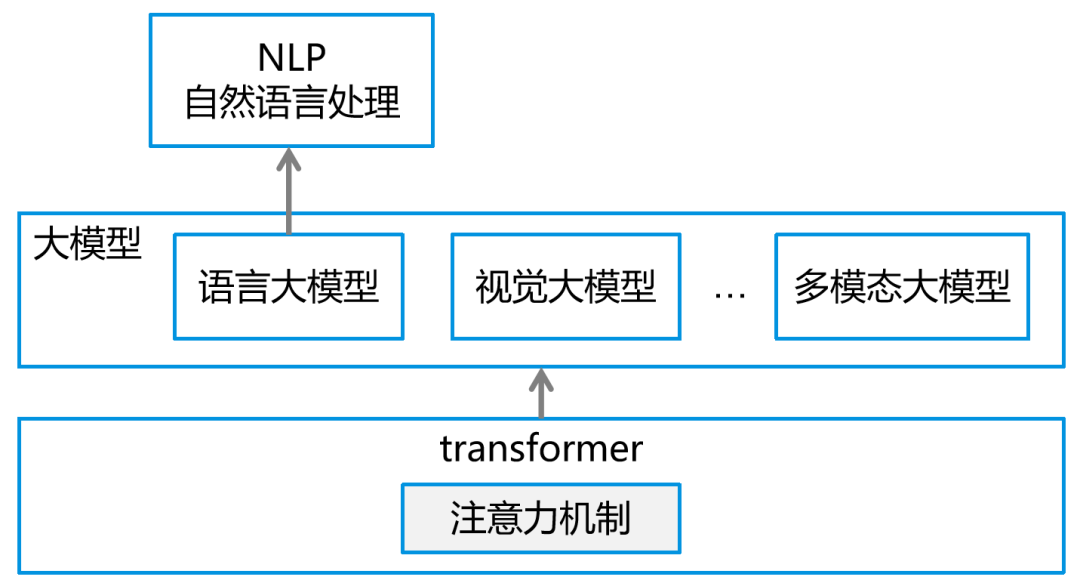
By application field, large models can be divided into general large models and industry-specific large models.
General large models have broader training datasets, covering a wider range of fields. Industry-specific large models, as the name suggests, derive their training data from specific industries and are applied to specialized fields (such as finance, healthcare, law, and industry).
What Is the Essence of GPT?
GPT-1, GPT-2… GPT-4o, etc., are language large models launched by OpenAI in the United States, all based on the transformer architecture.
The full name of GPT is Generative Pre-trained Transformer.
Generative indicates that this model can generate continuous and logical text content, such as completing conversations, creating stories, writing code, or composing poems and songs.
Here, it is worth mentioning that the term AIGC refers to AI Generated Content, which can be text, images, audio, video, etc.
The GPT series focuses on text, while Google has also launched a competitor called BERT.
For text-to-image generation, notable examples include DALL·E (also from OpenAI), Midjourney (well-known), and Stable Diffusion (open-source).
For text-to-audio (music), we have Suno (OpenAI), Stable Audio Open (open-sourced by Stability.ai), and Audiobox (Meta).
For text-to-video, there are Sora (OpenAI), Stable Video Diffusion (open-sourced by Stability.ai), and Soya (open-source). Images can also generate videos, such as Tencent’s Follow-Your-Click.

AIGC is a definition from an “application dimension”; it is not a specific technology or model. The emergence of AIGC expands the capabilities of AI, breaking the previous limitations of AI primarily being used for recognition and broadening application scenarios.
Now, let’s continue explaining the second letter of GPT—Pre-trained.
Pre-trained means that the model is first trained on a large-scale unlabeled text corpus to learn the statistical laws and potential structures of language.
Through pre-training, the model gains a certain level of generality. The larger the training data (such as web text, news, etc.), the stronger the model’s capabilities.
The public’s attention to AI surged primarily due to the explosive popularity of ChatGPT at the beginning of 2023.
ChatGPT’s “chat” means conversation. ChatGPT is an AI dialogue application service developed by OpenAI based on the GPT model (it can also be understood as GPT-3.5).
Through this service, people can personally experience the power of the GPT model, which is beneficial for promoting and popularizing the technology.
It has been proven that OpenAI’s strategy was successful. ChatGPT has fully attracted public attention and successfully driven the development boom in the AI field.
What Can AI Actually Do?
The applications of AI are extremely broad.
In summary, compared to traditional computer systems, the expanded capabilities that AI can provide include: image recognition, speech recognition, natural language processing, and embodied intelligence.
Image recognition is sometimes classified as computer vision (Computer Vision, CV), enabling computers to understand and process images and videos. Common applications include cameras, industrial quality inspection, and facial recognition.

Speech recognition involves understanding and processing audio to extract the information contained in the audio. Common applications include mobile voice assistants, telephone call centers, and voice-controlled smart homes, mainly used in interactive scenarios.
Natural language processing, as mentioned earlier, enables computers to understand and process natural language, knowing what we are actually saying. This is very popular and is often used for creative tasks such as writing news articles, drafting written materials, video production, game development, and music composition.
Embodied intelligence refers to AI being implemented in a physical form (“body”) and gaining and demonstrating intelligence through interaction with the environment.
AI-equipped robots fall under the category of embodied intelligence.
A typical example is Stanford University’s “Mobile ALOHA,” a household embodied robot that can cook, brew coffee, and even play with cats, which has gone viral online.
It is worth mentioning that not all robots are humanoid, nor do all robots use AI.
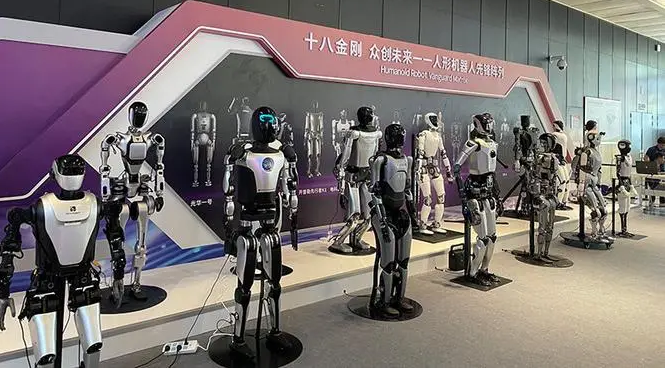 Humanoid Robot
AI is particularly adept at processing vast amounts of data, learning and training through massive datasets, and, based on new massive data, completing tasks that humans cannot achieve. In other words, it can identify potential patterns within vast amounts of data.
Currently, AI applications across various vertical industries primarily revolve around the capabilities mentioned above.
Let’s give some common examples.
In the healthcare field, AI can already be used to analyze X-rays, CT scans, MRI images, etc., helping to identify abnormal areas and even make diagnostic judgments. AI can also be used to identify cellular mutations in tissue samples, assisting pathologists in cancer screening and diagnosing other diseases.
AI can analyze patients’ genomic data to determine the most suitable treatment plans. It can also assist in predicting disease trends based on patients’ medical histories and physiological indicators.
In drug development, AI can help simulate chemical interactions, shortening the new drug development cycle.
During severe public health events, AI can analyze epidemiological data to predict disease transmission trends.
In the financial sector, AI can monitor market dynamics in real-time, identify potential market risks, and formulate corresponding risk hedging strategies.
AI can also evaluate credit risks by analyzing borrowers’ credit histories, income situations, consumption behaviors, and other multidimensional data. Of course, AI can also provide the most suitable investment portfolio recommendations based on investors’ personal financial situations, risk preferences, and return objectives.
Similar examples are countless. In industrial manufacturing, educational tourism, commercial retail, agriculture, forestry, animal husbandry, public safety, and government governance, AI has already seen practical landing scenarios and cases.
AI is changing society and altering each of our work and lives.
How Should We View AI?
The commercial and social value of AI is undeniable. Its rise is also unstoppable.
From the perspective of enterprises, AI can automate repetitive and tedious tasks, improve production efficiency and quality, while reducing production costs and labor costs.
This advantage is crucial for manufacturing and service industries, directly affecting the competitiveness and even survival of enterprises.
From the perspective of the government, AI can not only enhance governance efficiency but also bring new business models, products, and services, stimulating the economy.
Powerful AI is also a form of national competitiveness. In terms of technological competition and national defense, if AI technology is inferior to others, it could lead to severe consequences.
From an individual perspective, AI can help us complete certain tasks and improve our quality of life.
From a human perspective, AI can play an important role in disease treatment, disaster prediction, climate forecasting, and eradicating poverty.

However, everything has two sides. As a tool, AI has both advantages and disadvantages.
The most immediate drawback is that it may threaten a large number of human jobs, leading to mass unemployment. According to McKinsey’s research, between 2030 and 2060, about 50% of occupations may gradually be replaced by AI, especially for knowledge workers.
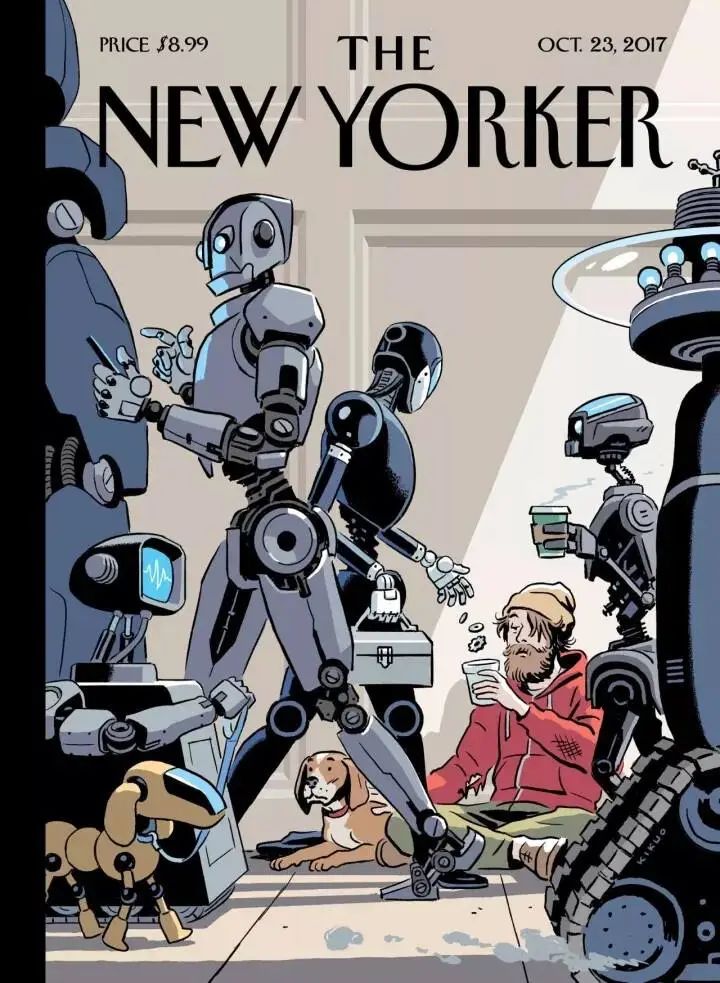
Image from The New Yorker
Additionally, AI has been used to wage wars, commit fraud (such as voice imitation or deepfake scams), and infringe on civil rights (excessive information collection and privacy violations).
If only a few companies possess advanced AI technology, it may exacerbate social inequities. AI algorithm biases may also lead to unfair outcomes.
As AI becomes more powerful, it may lead to dependency on AI, causing people to lose their ability to think independently and solve problems. The strong creativity of AI could also diminish human motivation and confidence in creativity.
There are also a series of issues surrounding the development of AI, including safety (data breaches, system crashes), ethical and moral concerns.
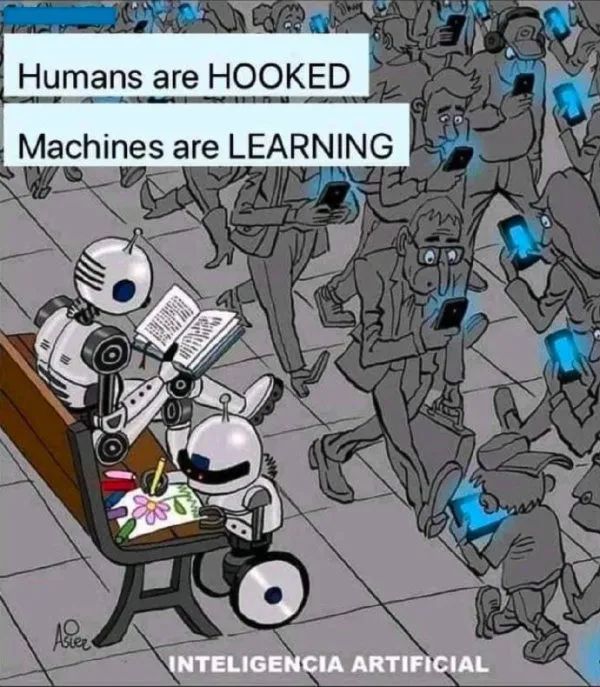
We currently do not have reliable solutions to address all these issues. Therefore, we can only explore, think, and resolve them gradually as we develop AI. It is essential to maintain vigilance and caution towards AI.
As ordinary people, the most practical approach for now is to understand it and learn it. First, learn to use common AI tools and platforms to help improve work efficiency and enhance quality of life.
A saying goes: “In the future, what will eliminate you is not AI, but those who master AI.” Rather than being anxious, it is better to face it bravely and embrace it positively, gaining the initiative as early as possible.
END
Reproduced content only represents the author’s views
It does not represent the position of the Semiconductor Institute of the Chinese Academy of Sciences
Editor: Schrödinger’s Cat
Editor-in-chief: Six Dollar Fish
Submission Email: [email protected]
Previous Recommendations1.The Semiconductor Institute has made progress in the research of bionic covering-type neuron models and learning methods2.The Semiconductor Institute has made important progress in the inverted structure perovskite solar cell field3.Why are copper interconnects used in chips?4.What exactly is 7nm in chips?5.Silicon-based integrated optical quantum chip technology6.How anomalous is the quantum anomalous Hall effect? It may lead to the next revolution in information technology!