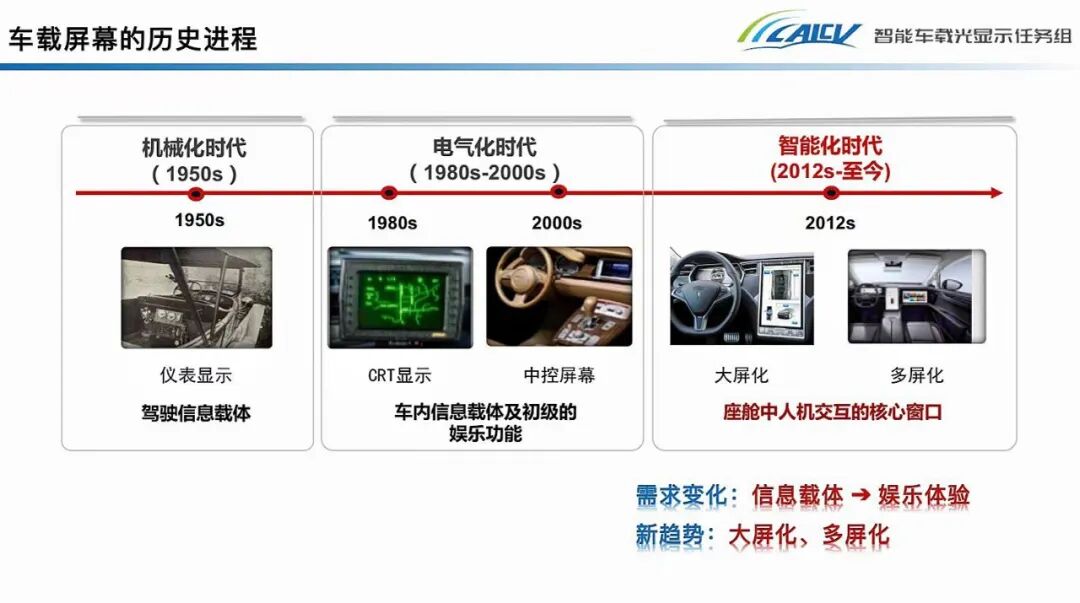
With the rapid development of the “new four modernizations” in the automotive industry, the in-vehicle display industry is continuously exploring and innovating to provide users with better entertainment and experiential value. The new generation of display technology represented by light field displays has become the focus of industry attention. Consequently, the CAICV Intelligent Vehicle Light Display Task Group has organized the compilation of the “In-Vehicle Light Field Display White Paper,” aimed at discussing the common challenges faced by the in-vehicle display industry with the industry, helping the industry better seize opportunities and promote the development of in-vehicle light field displays.Firstly, the white paper comprehensively reviews the development history of the in-vehicle display industry. As users continuously generate new demands for in-vehicle displays, related display technologies are also constantly improving and evolving, with various display technologies flourishing. At the same time, as smart vehicles move towards becoming the “third living space,” the trend of larger and multiple screens has emerged in in-vehicle displays, with users’ entertainment needs gradually increasing, and the new generation of immersive experience display entertainment screens is gradually gaining industry attention.
Secondly, the white paper points out that the current in-vehicle displays face three major user pain points: first, the physical space limitations within the vehicle restrict screen size, leading to poor viewing experiences; second, the close viewing distance can easily cause eye fatigue; and third, watching screens in the vehicle can easily lead to motion sickness, resulting in a poor experience. Additionally, the industry faces challenges such as insufficient innovative technology layout and low autonomy in the industrial chain.To enhance user experience and address the common issues of existing screens, the white paper proposes a new solution for in-vehicle displays: the light field display. The in-vehicle light field display employs unique spatial optical technology, increasing the viewing distance through multiple light reflections to achieve a long-distance imaging effect of up to 3 meters, allowing a small physical screen to display a large image, enabling a cinema-level immersive experience in the vehicle.
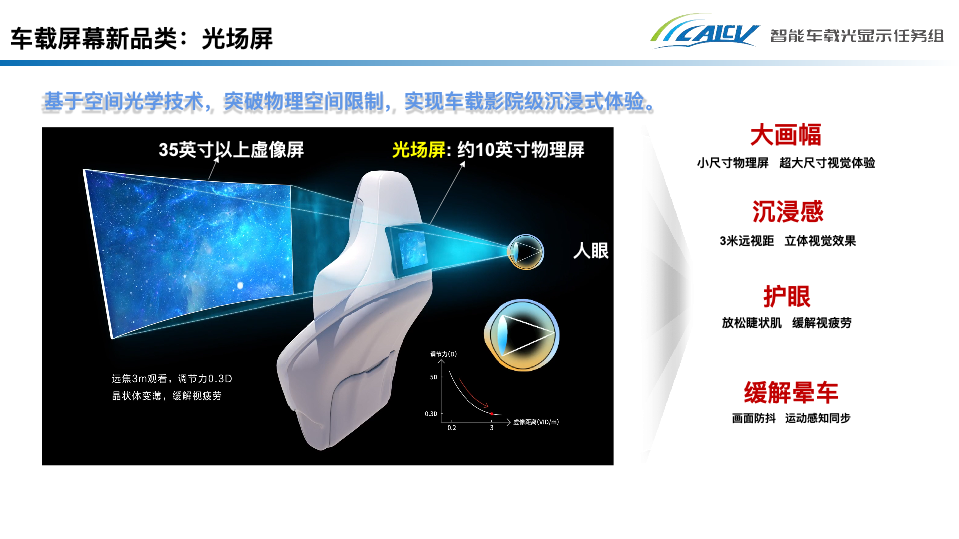
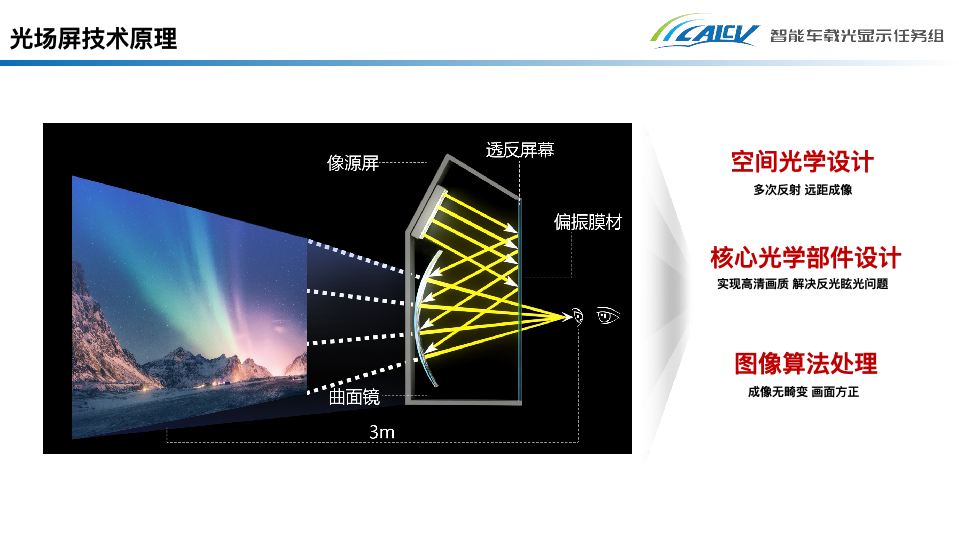
At the same time, the light field display allows for distant imaging, keeping the ciliary muscles of the human eye relaxed, which can reduce eye fatigue and protect vision. Furthermore, the light field display achieves synchronized motion perception for passengers through distant imaging, reducing dizziness and effectively alleviating motion sickness.On the technical side, the white paper elaborates on the three core technologies of the light field display to achieve the best viewing effect: first, utilizing spatial optical system design, achieving distant imaging through multiple reflections and high-precision curved mirror integration; second, employing optical components such as curved mirrors and polarizing films to ensure clear and pure display in bright daylight conditions; third, image processing algorithm technology ensures that the images seen by the human eye are undistorted, with a flat and even picture.
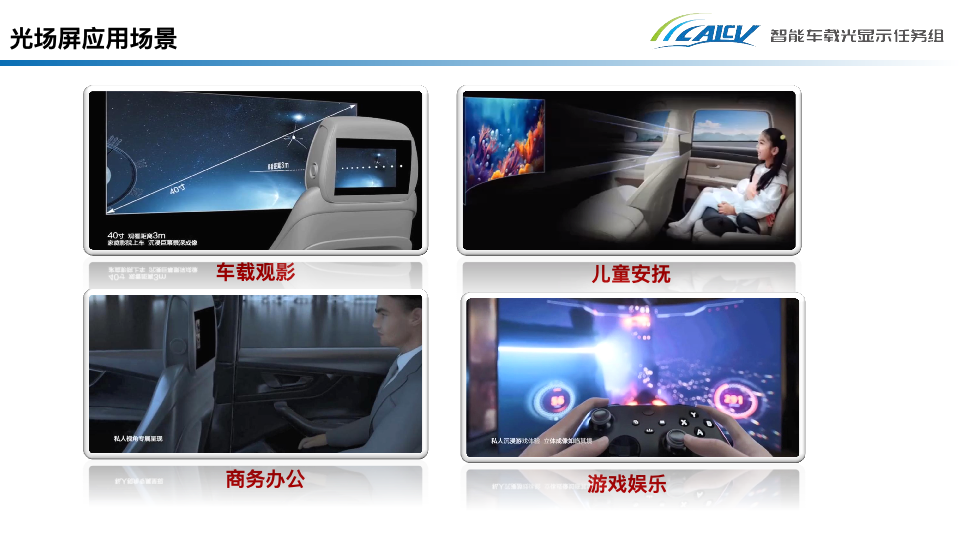
In terms of applications, the in-vehicle light field display, with its unique advantages of “large image, immersive experience, eye protection, and low motion sickness,” can significantly enhance consumer experience, especially in high-frequency scenarios such as in-vehicle viewing, business office, child soothing, and gaming entertainment. The white paper provides in-depth analysis of these four high-frequency scenarios.
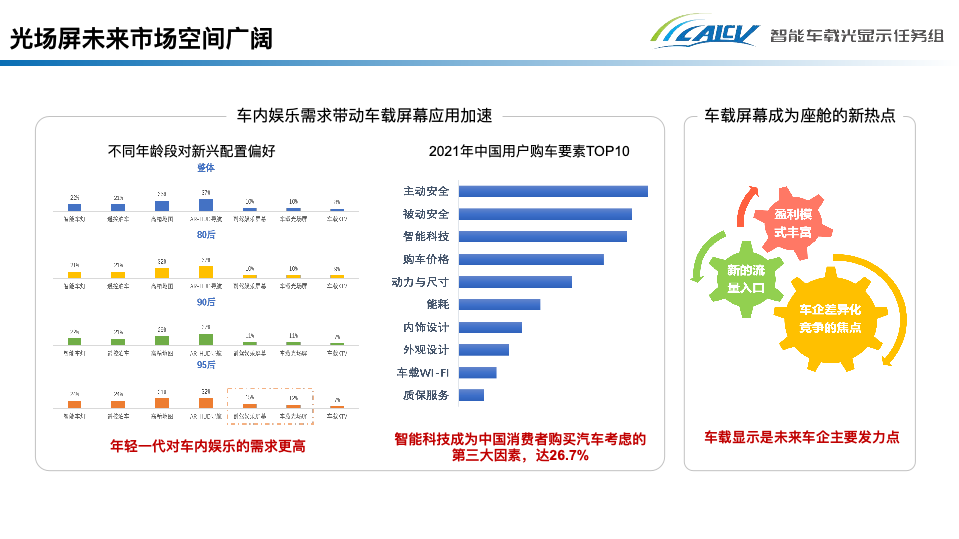
From a market perspective, the white paper points out that the younger generation has a higher demand for in-vehicle entertainment, which drives the accelerated application of in-vehicle displays. Additionally, from the perspective of OEMs, in-vehicle display products have become the focus of differentiation competition among automakers, with in-vehicle light field displays having high integration with entertainment software and providing a good experience, potentially becoming a new entry point for smart cockpits in the future.
Finally, the white paper provides development suggestions from three aspects: policy planning, standards and regulations, and industry applications. In terms of policy, it is recommended to guide policies based on the common demands of leading enterprises in the display and automotive industries; regarding standards, it is suggested to collaboratively build a standard system for in-vehicle light displays through relevant ecological enterprises, standard organizations, and certification testing institutions; in terms of industry applications, it is hoped to establish an industrial platform for innovation and application promotion of automotive display technology, uniting multiple enterprises, universities, and research institutions to form a complete industrial ecosystem.