
Major Interpretation
01
Training Objectives
This major aims to cultivate students with firm ideals and beliefs, comprehensive development in morality, intelligence, physical fitness, aesthetics, and labor, possessing a certain level of scientific and cultural knowledge, good humanistic quality, professional ethics, and innovative consciousness, as well as a spirit of craftsmanship and strong employment ability and sustainable development capability. Students will master knowledge and technical skills relevant to this major, targeting roles such as research and development assistants, production personnel, and operational service personnel in the intelligent connected vehicle industry, including vehicle and system (component) manufacturing, operation, and service. Graduates will be capable of engaging in sample assembly, debugging, calibration, testing, quality inspection, and relevant process management of intelligent connected vehicles and systems (components), as well as vehicle operation, inspection, maintenance, modification, and evaluation work as high-quality technical and skilled talents.
02
Core Courses
Considering the cultivation requirements of comprehensive quality, the courses are divided into basic courses and specialized courses. Basic courses are public courses that lay a solid foundation for the development and in-depth study of specialized courses; specialized courses are taught in a targeted manner, preparing students for future employment. At the same time, to broaden students’ employment prospects, elective courses are used to cross-supplement, enabling students in this major to meet the demands of various positions in intelligent vehicle research and development, assembly, trial production, testing, validation, and product operation and maintenance.
03
Employment Directions
This major primarily targets enterprises engaged in the research and development, trial production, and testing of complete vehicles and components of intelligent connected vehicles, focusing on jobs related to the intelligent connected vehicle field and auxiliary research work. Main positions include: 1. Sample trial production and testing of intelligent connected vehicles and systems (components); 2. Intelligent manufacturing engineering technicians; completion, debugging, calibration, and testing of intelligent connected vehicles and systems (components); 3. Quality inspection and related process management; 4. Intelligent connected vehicle operation, technical services, and value-added services.

Faculty Strength

The Intelligent Automotive and Engineering College has a rigorous and well-structured dual-teacher faculty team, combining full-time and part-time instructors with high professional standards. Currently, there are 2 provincial and municipal chief technicians, 1 skills master studio, 7 national vocational skills assessment examiners, and 22 key teachers at the school level.
Experimental Training Conditions
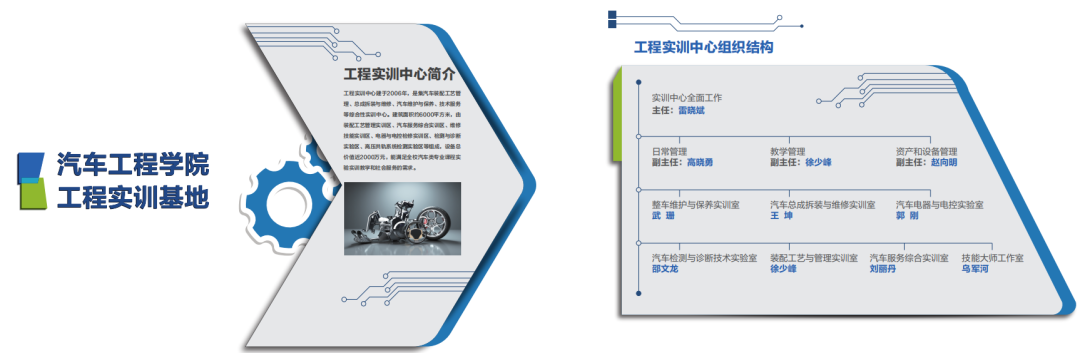
The college’s experimental training rooms cover an area of over 20,000 square meters, including an engine structure laboratory, chassis structure laboratory, automotive electrical laboratory, automotive performance laboratory, intelligent connected vehicle engineering laboratory, intelligent connected vehicle simulation laboratory, assembly process and management training room, virtual simulation and process management training room, comprehensive automotive service training room, automotive inspection and diagnostic technology laboratory, and automotive engineering training center (which includes multiple training rooms for maintenance and repair technology). It can accommodate 800 students simultaneously for experiments and internships. Among them, the automotive performance laboratory and the intelligent connected vehicle engineering laboratory are key laboratories for the college, while the automotive engineering training center is a provincial-level demonstration training base in Shaanxi, providing strong support for practical teaching activities.
⒈Intelligent Connected Vehicle Engineering Laboratory
The laboratory is equipped with basic testing equipment, key components of intelligent connected vehicles, intelligent sensor assembly and debugging platforms, wire-controlled chassis assembly and debugging platforms, and related supporting tools for debugging platforms.
The intelligent sensor assembly and debugging platform is used to complete the integrated teaching and assessment tasks of intelligent sensors in intelligent connected vehicles. It deploys devices such as visual sensors, millimeter-wave radar, ultrasonic radar, laser radar, and combined navigation, enabling an intuitive demonstration of the structure and working principles of typical intelligent sensors, and combined with teaching vehicles (equipment for the second phase) to achieve assembly, debugging, calibration, testing, fault diagnosis, and other teaching and assessment tasks for various sensors.
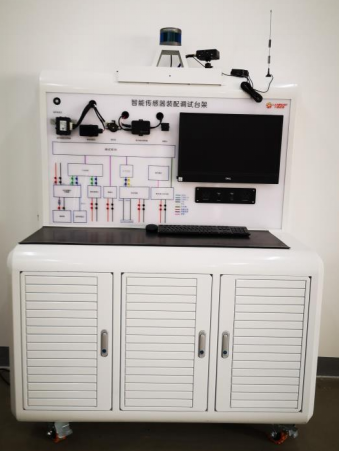
Intelligent Sensor Assembly Debugging Platform
The wire-controlled chassis assembly and debugging platform is used to complete the integrated teaching and assessment tasks of the wire-controlled system in intelligent connected vehicles. By deploying devices such as wire-controlled steering systems, wire-controlled braking systems, and wire-controlled driving systems, it can visually demonstrate the composition, structure, and working principles of typical wire-controlled systems and components, and combined with teaching vehicles (equipment for the second phase) to achieve assembly, debugging, calibration, testing, fault diagnosis, and other teaching and assessment tasks.
▲ Wire-Controlled Chassis Assembly Debugging Platform
⒉ Intelligent Connected Vehicle Simulation Laboratory
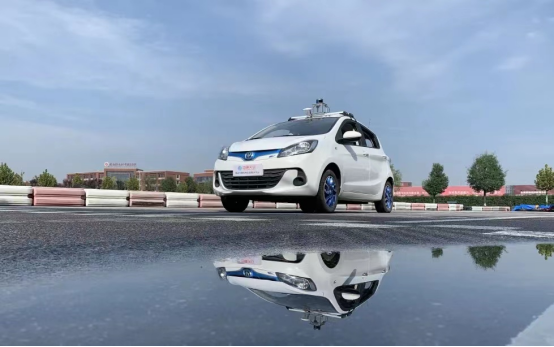
The laboratory is equipped with an intelligent vehicle system experimental teaching platform and 8 sets of VTOX-08/TL vehicle networking teaching experimental platforms. Among them, the vehicle networking teaching experimental platform integrates laser radar, GPS positioning modules, inertial navigation systems, industrial control computers (including CAN communication cards), and can conduct multiple experimental projects of intelligent vehicles through upper and lower computer control systems; the VTOX-08/TL vehicle networking teaching experimental platform is a smart driving simulation operating platform based on the Internet of Vehicles, which integrates road condition information, road information, environmental information, sign information, vehicle condition information, and sensor device information through big data network transmission, allowing for a comprehensive experience of various vehicle driving experiences and real-time information exchange in teaching.
▲ Intelligent Vehicle System Experimental Teaching Platform
▲ VTOX-08/TL Vehicle Networking Teaching Experimental Platform
⒊Automotive Digital Virtual Innovation Laboratory
Established in 2017, the laboratory uses virtual reality technology to simulate a virtual environment that closely resembles reality, undertaking VR experiences of virtual maintenance for automotive students under information technology conditions through three-dimensional dynamic vision and physical behavior system simulations. By applying new technologies, it provides students with a visual, auditory, and tactile immersive automotive knowledge learning experience, enhancing their interest in learning and understanding the different experiences that new technologies bring to learning, life, and work.
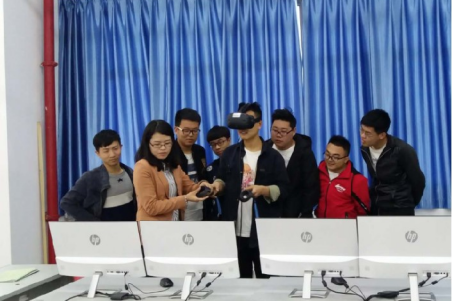

VR
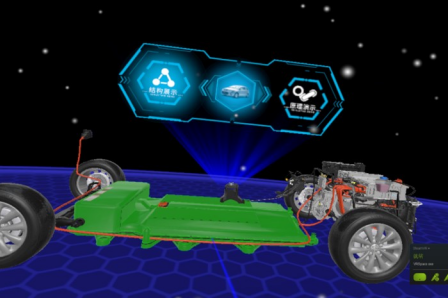
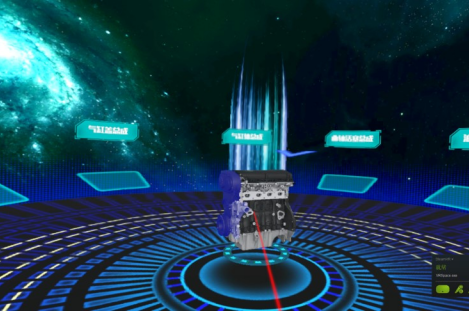
The experimental equipment includes VR system equipment, engine structure, disassembly and assembly, and software for new energy vehicle technology, as well as a hardware environment for software development.
⒋Automotive Engine Comprehensive Performance Laboratory
The Automotive Engine Comprehensive Performance Laboratory mainly undertakes the experimental tasks of the “Automotive Engine Principles” course. Through engine bench experiments, it simulates various working conditions that the engine may encounter in actual use. It checks the basic data on engine structure to assess engine power performance, economy, and reliability. The main experimental projects undertaken by the Automotive Engine Comprehensive Performance Laboratory include:
★Engine External Characteristic Test
★Engine Load Characteristic Test
★Engine Power Test (Total Power Test, Net Power Test)
★Engine Full Load Ideal Characteristic Test
★Engine Starting Performance Test
★Engine Oil Consumption Test
★Gasoline Engine Mechanical Efficiency Measurement
★Engine Emission Performance Measurement
★Engine Noise Testing
(Equipped with portable noise meter to measure engine noise at various speeds)
⒌Automotive Inspection and Diagnostic Technology Laboratory
The Automotive Inspection and Diagnostic Technology Laboratory mainly undertakes two types of experimental practical teaching projects: comprehensive projects (exhaust detection, smoke opacity detection, management system fault setting and elimination, etc.) and verification projects (sensor detection, actuator testing, nozzle cleaning and testing, circuit diagram measurement and analysis, etc.). The laboratory also bears the tasks of course design and practical training for young teachers. The Automotive Inspection and Fault Diagnosis Technology Laboratory adheres to a rigorous academic style and aims to cultivate students’ independent thinking, analysis, and operational abilities. It trains students to apply basic theoretical knowledge to solve practical problems.
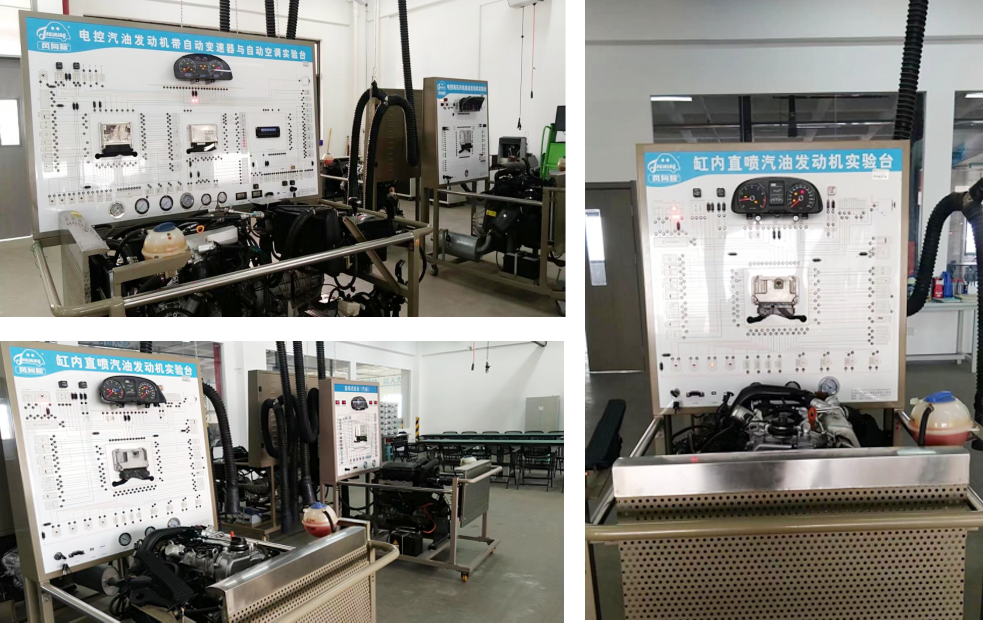
The Automotive Inspection and Diagnostic Technology Laboratory covers an area of over 600 square meters, with fixed assets exceeding 2 million yuan. It includes 6 complete vehicles, 16 wind direction sensor detection experimental boxes, 2 gasoline engine electronic control comprehensive experimental platforms, 1 diesel engine electronic control experimental platform, 1 electronic control suspension, 4 automatic transmission experimental platforms, and is equipped with a Bosch 740 engine comprehensive analyzer, 3 nozzle testing machines, 2 diesel pump calibration instruments, teaching auxiliary materials, repair manuals, circuit diagrams, etc. It can simultaneously meet the experimental training teaching tasks for 50 students in two classes.
⒍Assembly Process and Quality Management Training Room
The Assembly Process and Quality Management Training Room mainly undertakes the experimental practical teaching tasks of assembly processes and quality management of automotive engines and chassis in the automotive major. Through learning, students can master the assembly process and workflow of automotive power systems and chassis systems, as well as key procedures, process analysis, quality control points, and quality management methods and requirements during the assembly process. It can also provide simulated training locations for students’ course design and graduation projects, and can also be used for teachers’ research work.
The Assembly Process and Quality Management (Quality Management) Experimental (Training) Room integrates theoretical and practical teaching concepts, meeting both theoretical teaching and practical training requirements, allowing students to engage in hands-on operations while learning about the composition and working principles of automotive chassis, achieving a combined teaching method of “dynamic and static integration.” The main equipment includes: chassis conveyor line, chassis lifting equipment, trim sliding plate, ground plate conveyor equipment, roller conveyor equipment, assisting equipment, lighting equipment, PEV testing line, MES, AGV, and production management systems (IPMS, TMS), as well as teaching all-in-one machines and other supporting information technology teaching equipment and software. It combines teaching, practical training, and research functions.
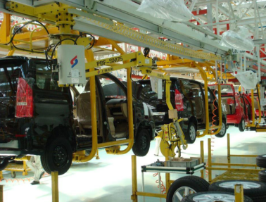
▲ Automotive Chassis Assembly Line
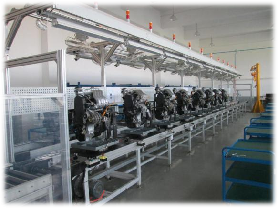
▲ Powertrain Assembly Line
⒎Automotive Service Comprehensive Training Room
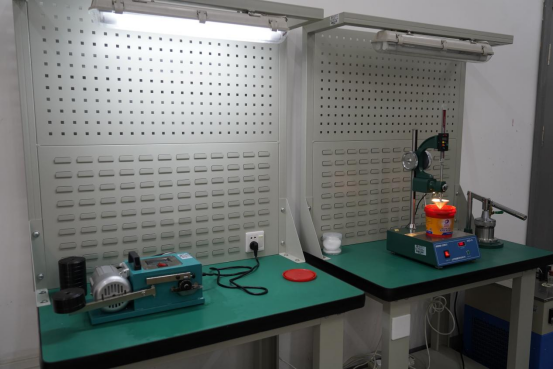
The Automotive Service Comprehensive Laboratory offers training projects including: testing the pour point and cloud point of oil, testing the penetration of lubricating grease, testing the anti-wear properties of lubricating oil, testing the boiling point of brake fluid, testing the water content of brake fluid, testing the freezing point of coolant, comparing the flow properties of lubricating oil, and demonstrating and comparing the physicochemical properties of various oils. Through the construction of this laboratory, the main goal is to enable students to master the properties, specifications, grades, and selection rules of automotive operating materials, and cultivate students’ thinking to solve vehicle fault problems through analysis of changes in oil performance.
The Automotive Service Comprehensive Laboratory covers an area of approximately 70 square meters, with assets of about 500,000 yuan. It includes one pour point testing device, a complete set of grease penetration testing devices, 2 anti-wear testing machines for lubricating oil and grease, 3 boiling point testing devices for automotive brake fluid, 3 water content testing devices for automotive brake fluid, 3 freezing point testing devices, two demonstration platforms, and various oils. It can simultaneously meet the experimental training teaching tasks for 25 students in one class.
⒏Automotive Maintenance Technology Laboratory
The laboratory is equipped with various types of engines to meet the requirements for disassembly and maintenance, along with measuring tools for professional assessments and training. Additionally, it includes engine disassembly and assembly platforms to meet the basic skills training before engine disassembly. Furthermore, the laboratory is equipped with manual and automatic transmission chassis experimental platforms, which can demonstrate the working conditions of steering systems, suspension systems, transmission systems, driving systems, and braking systems, and can be used for practical operations of chassis disassembly and debugging. The manual transmission disassembly platform, clutch training platform, and differential dissection platform allow for teaching on the automotive transmission system, providing students with a comprehensive understanding of clutches, transmissions, and differentials. Through practical training, the Automotive Maintenance Technology Laboratory familiarizes students with the standardized disassembly and debugging of the overall automotive structure, correcting deficiencies and bad habits during practical training in a timely manner, laying a solid foundation for future work.
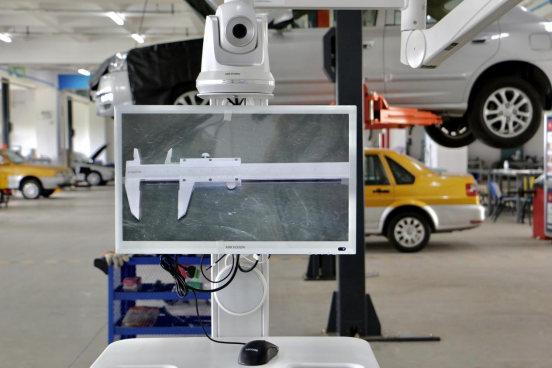
The training room covers an area of approximately 600 square meters, including 6 standardized training positions and 4 engine training areas. The service majors include two provincial key majors: automotive inspection and maintenance, and automotive application and maintenance. The main courses undertaken include automotive maintenance, engine structure and principles, automotive chassis structure and maintenance, transmission structure and maintenance, and other related courses. It can simultaneously meet the experimental training teaching tasks for 80 students in two classes.
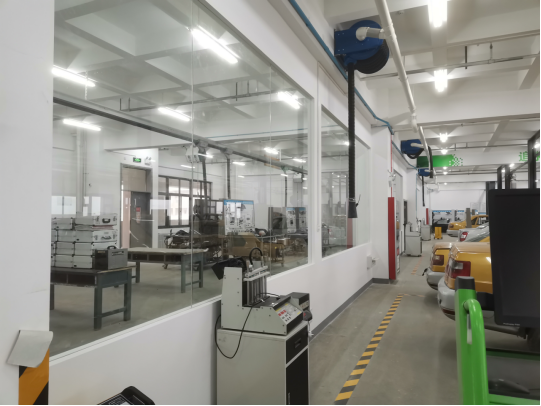
⒑Complete Vehicle Maintenance and Care Laboratory
The Complete Vehicle Maintenance and Care Laboratory mainly undertakes recognition of complete vehicles and training projects for graded maintenance and care of vehicles, including “New Car PDI Inspection,” “Complete Vehicle Structure Recognition,” “Maintenance Plan Formulation,” “Level 1 Vehicle Maintenance and Care,” “Level 2 Vehicle Maintenance and Care,” and “Maintenance and Care Equipment Usage” among other teaching tasks. Through practical training, students can achieve pre-job training and carry out automotive grade maintenance functions. It cultivates students’ basic qualities for professional roles, equips them with automotive maintenance skills, and forms initial learning and practical abilities, laying the foundation for further cultivating students’ comprehensive and key professional abilities.
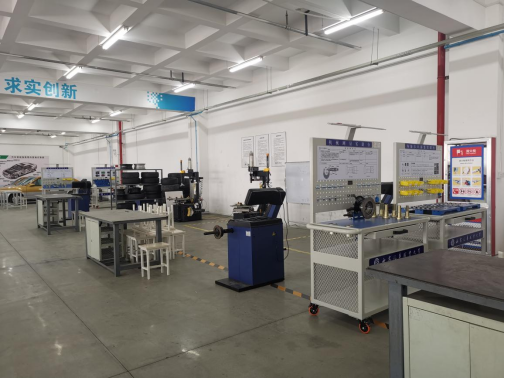
The Complete Vehicle Maintenance and Care Laboratory covers an area of approximately 800 square meters, with fixed assets exceeding 2.6 million yuan. It includes 10 complete vehicles, 5 oil recovery machines, 1 automatic transmission oil change machine, 4 tire changers, 4 dynamic balancing machines, 10 scissor lifts, 6 self-made training platforms from Xi’an Automotive Vocational University, teaching auxiliary materials, repair manuals, circuit diagrams, etc. It can simultaneously meet the experimental training teaching tasks for 120 students.
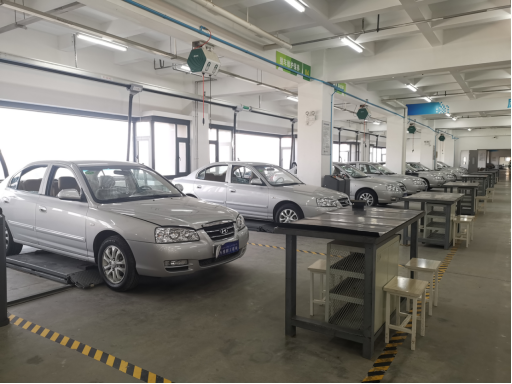
⒒Automotive Performance Laboratory
The Automotive Performance Laboratory mainly undertakes experimental tasks for the undergraduate automotive major’s “Automotive Theory” course. It can simultaneously meet the experimental teaching tasks for 20 students. Through experiments, it mainly satisfies the testing and analysis of dynamic performance of complete vehicles, computer simulation, and verification functions. It helps students understand automotive dynamic performance evaluation indicators, master the impact of automotive structure on driving performance, and cultivate students’ practical manipulation abilities and scientific research capabilities.
The main experimental teaching projects undertaken by the Automotive Performance Laboratory include: 1. Basic experiments on automotive dynamic performance; 2. Complete vehicle power performance experiments; 3. Handling stability experiments; 4. Braking experiments; 5. Fuel economy experiments; 6. Simulation analysis of automotive handling stability and smoothness.
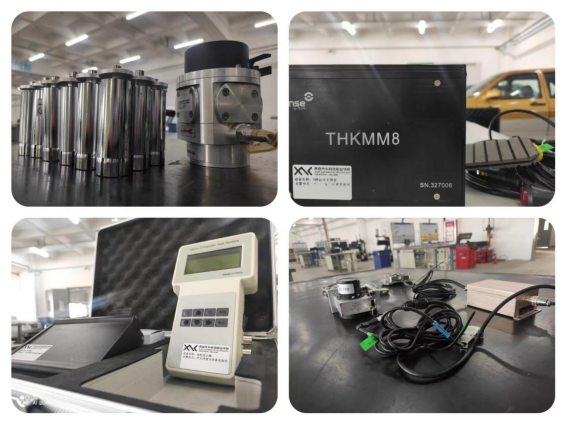
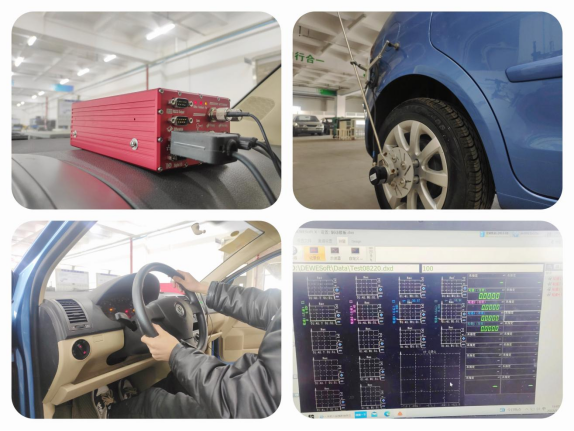
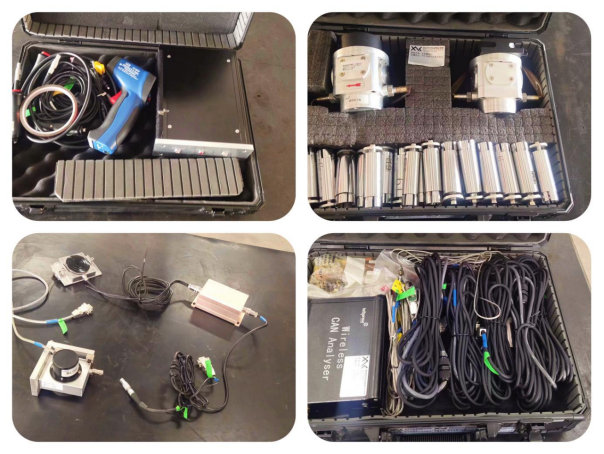
The Automotive Performance Laboratory covers an area of 64 square meters, with a total value of experimental equipment exceeding 550,000 yuan.
⒓Virtual Simulation and Process Management Laboratory
The Virtual Simulation and Process Management Laboratory mainly undertakes virtual experimental teaching for undergraduate automotive majors in courses such as “Automotive Assembly Process and Quality Management,” “SolidWorks 3D Modeling,” and “CATIA Automotive Structural Design.” The laboratory is also equipped with software such as CAD, ADAMS, ANSYS, and CarSim, enabling students to master specific technical skills.
The Virtual Simulation and Process Management Laboratory covers an area of 64 square meters, with a total value of experimental equipment exceeding 760,000 yuan.
⒔Automotive Suspension Testing Laboratory
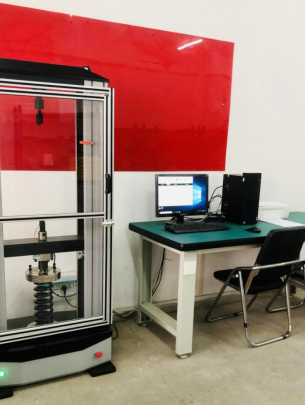
The Automotive Suspension Testing and Analysis Laboratory covers an area of 64 square meters, with a total value exceeding 350,000 yuan, and can conduct various tests and analysis experiments related to automotive suspension. The shock absorber fatigue testing platform is mainly used for testing various air suspension airbags, modified vehicles, SUVs, armored vehicles, light trucks, heavy trucks, beach buggies, and other vehicles. It can also produce special fixtures to adapt to fatigue tests of special samples. The spring stiffness testing platform is mainly used for fatigue life testing of various helical cylindrical springs, air springs, elastic elements, and other components.
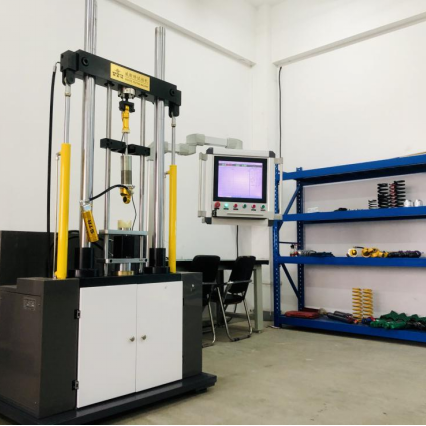
⒔Automotive Modification Technology Training Room
The Automotive Modification Technology Training Room covers an area of 100 square meters, with a total value of over 60,000 yuan, and undertakes practical training for courses such as “Automotive Engine Modification Technology” and “Automotive Chassis Modification Technology” in automotive styling and modification technology, automotive sports and modification technology. The training room is equipped with sandblasting machines, student-operated parts processing machine tools, welding equipment (CO2 protection welding machine, electric welding machine, argon arc welding machine), drilling machines, milling machines, various metal cutting machines, and bending machines for making Baja racing car frames, as well as 300 types of repair tools. The training room can simultaneously accommodate 30 people for practical training, providing an excellent teaching environment for students.
Research Achievements
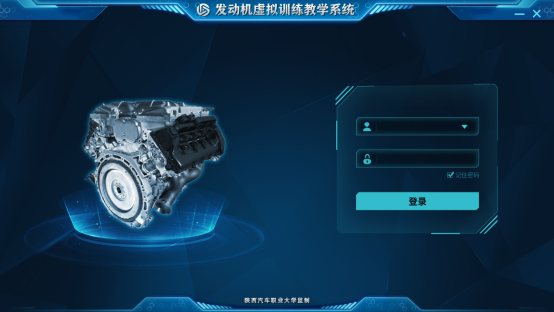
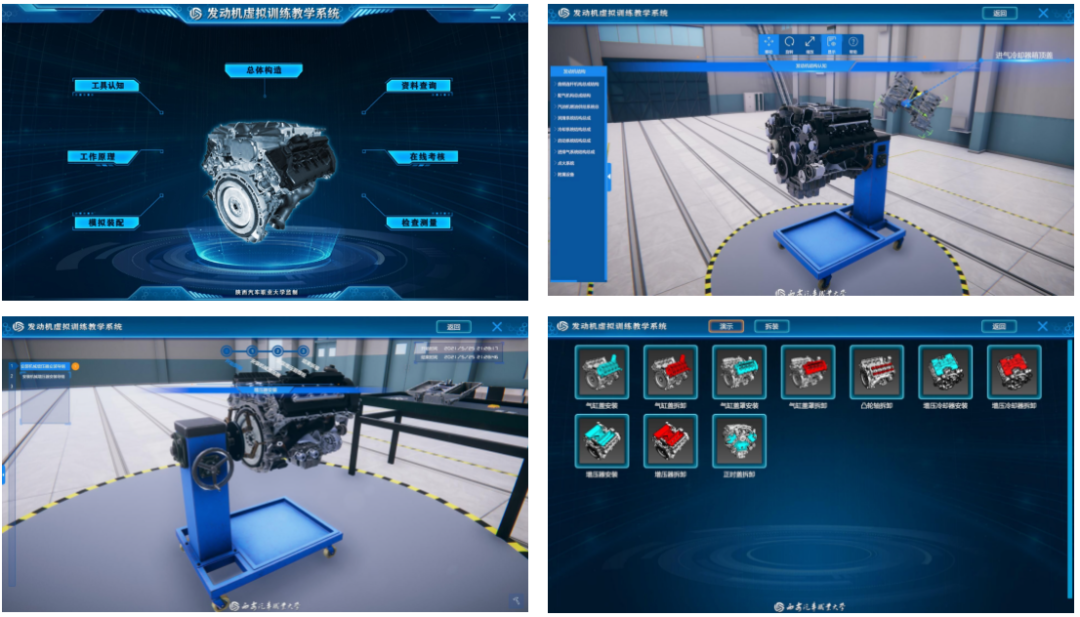
▲ Development and Application of Engine Virtual Simulation Teaching Platform
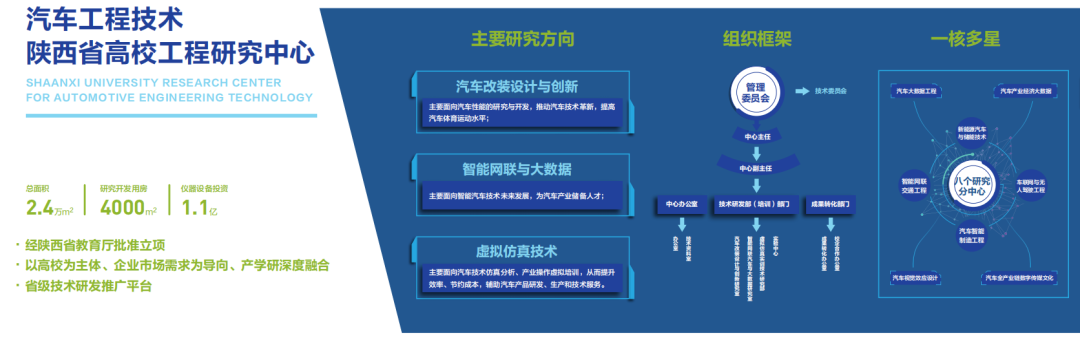
In November 2021, the “Automotive Engineering Technology Shaanxi Provincial Engineering Research Center” was included in the construction list of Shaanxi Provincial Engineering Research Centers, with a construction period of three years. This marks a breakthrough in the school’s research work and platform construction. The Automotive Engineering Technology Research Center is based on disciplines such as automotive technology, big data technology, new energy vehicle technology, intelligent manufacturing, and Internet of Things engineering technology, characterized by the professional construction of Xi’an Automotive Vocational University, and aims to serve regional economic development. It includes three main research directions: automotive modification design and innovation, intelligent connectivity and big data, and virtual simulation training technology.
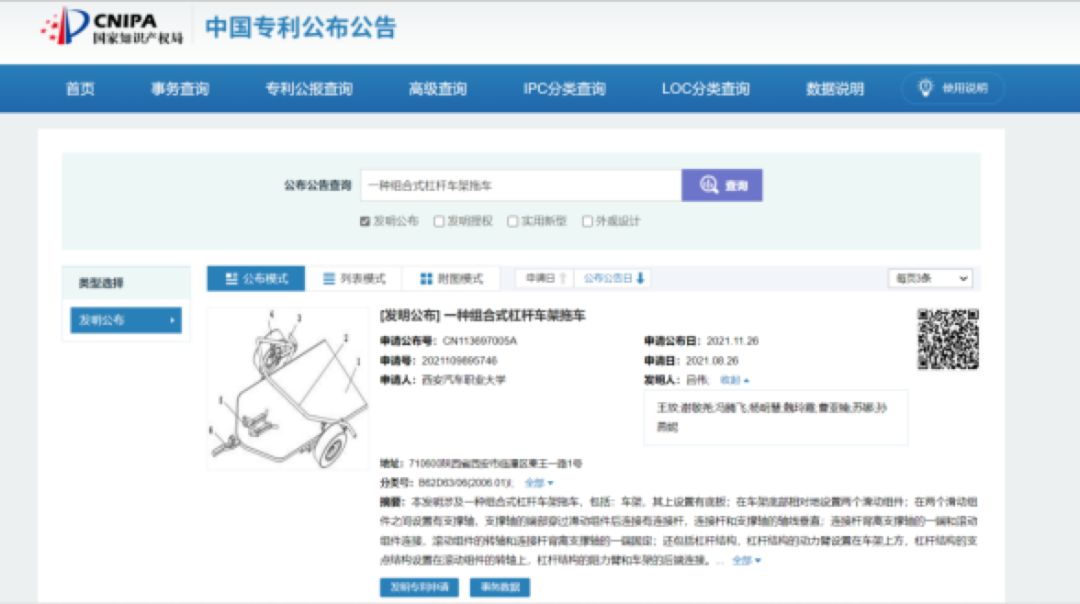
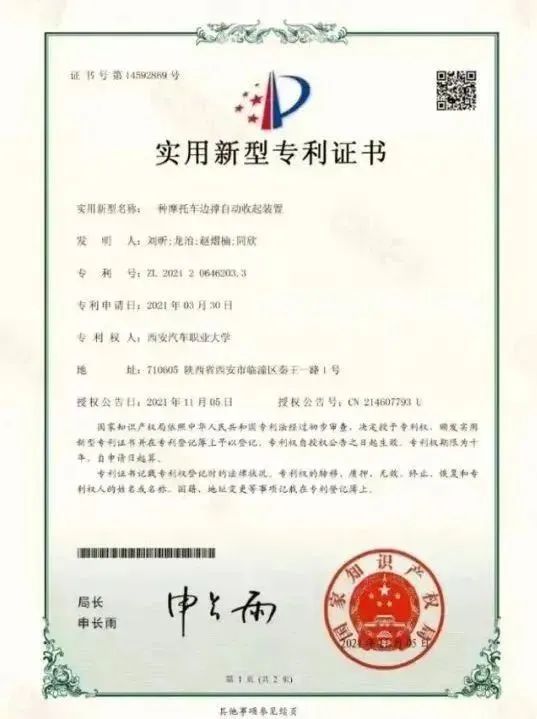
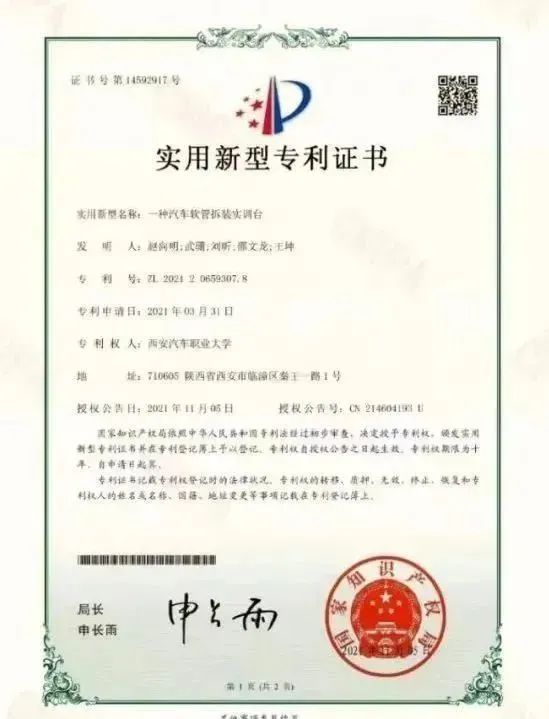
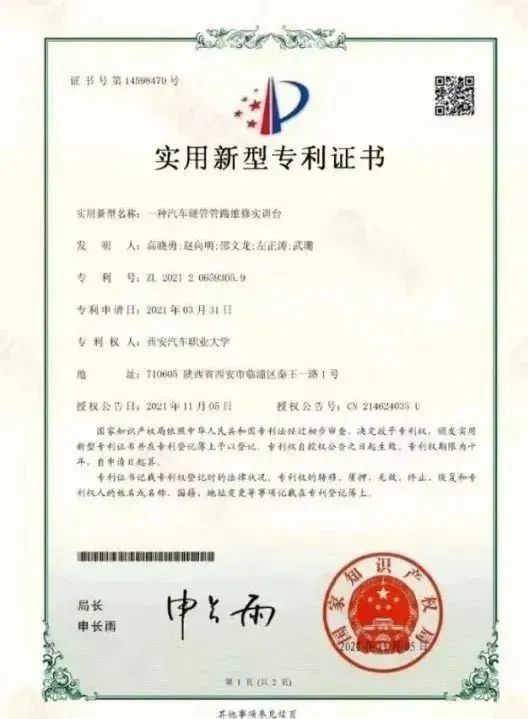
Invention Patents
School-Enterprise Cooperation
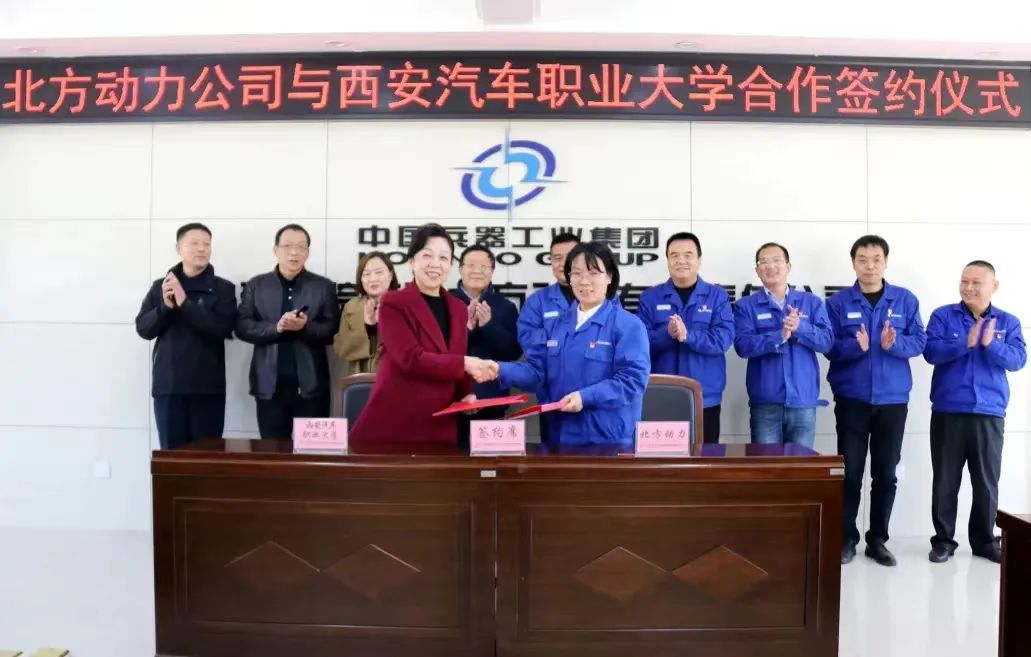
The Intelligent Automotive and Engineering College collaborates with external training bases such as China Ordnance Industry Group Corporation, the Xi’an Automotive Industry Chain Supply Chain Alliance, Shaanxi Province’s Scrap Vehicle Recycling and Dismantling Co., Ltd., and Aoluwike Automotive Technology Co., Ltd. At the same time, it has established school-enterprise cooperation projects with well-known automotive companies such as FAW-Volkswagen, Audi, SAIC General Motors, Volvo, Jaguar Land Rover, and Porsche, and has opened branded school-enterprise cooperation classes. This achieves “cooperative construction, cooperative education, cooperative employment, and cooperative development,” cultivating and delivering a large number of high-quality skilled talents to the co-building enterprises every year and paving high-quality, mature, and stable employment channels for graduates.
Cooperative Construction
Cooperative Education
Cooperative Employment
Cooperative Development
In long-term school-running practices, the college adheres to the path of connotative development, characteristic development, and harmonious development, comprehensively improving the level of teaching, research, and talent cultivation quality, and focusing on building a high-level college with distinct characteristics.

Click the image below for details


If you have any questions, please scan the QR code below
Contact the responsible teachers in each area of our school
Available 24 hours online to answer your questions
— END —
Planning | Admissions Office New Media Center
Editing | Li Leyang, Wang Kaixuan
Review | Gao Libin
Official QQ | 800006772
Registration Hotline | 029-6252-0000
400-029-1987
Official Website | www.xvua.edu.cn
Lintong Campus Address | No. 1 Qinwang Road, Lintong District, Xi’an
Bailuyuan Campus Address | No. 168 Shui’an Road, Baqiao District, Xi’an