1.1
Data Processing
IBM BSP Information System Planning Guide: Introduction (1975)
-
Environmental Changes
In today’s rapidly changing environment, businesses must continuously and quickly adjust to adapt to changes. This requires senior management to have access to the latest information at all times, enabling them to achieve more efficient business management through in-depth analysis and resource allocation trade-offs. When information is shared across the organization, strategic decision-making is optimized, the basis for decisions becomes more solid, and operational efficiency can be significantly improved.
-
From Operational Support to Management Control
The field of data processing is undergoing a transformation. Until recently, most companies viewed it as a service function to support a single business unit or regional operation. Over the past two decades, various application systems have been developed independently, without considering cross-functional collaborative support, and have neglected to provide information support for management control. This “functional autonomy” model has led to the fragmentation and redundancy of data files, making it difficult for operational system data across functional areas to interoperate.
However, modern enterprises have gradually recognized that data is a strategic resource as important as human resources, capital, equipment, and raw materials. Companies urgently need to integrate core data assets, allowing information to flow across departmental barriers throughout the organization, enabling management to build a holistic business perspective and make cross-functional decisions.
Despite many companies recognizing the importance of building a comprehensive information system, they face several key factors that hinder implementation:
-
Failure to obtain authorization and deep involvement from management;
-
Goals and strategies set are disconnected from the overall corporate strategy;
-
Attempting to implement information systems without understanding the business from an integrated management perspective;
-
Blindly pursuing entirely new comprehensive systems rather than evolving and upgrading existing systems;
-
Lack of necessary information system management functions to effectively configure information resources.
In 1956, following the death of founder Thomas Watson, his son Tom Watson Jr. officially took over IBM. This new leader keenly recognized that the company was at a critical moment of strategic transformation, with the focus on driving transformation requiring the urgent need toreshape business strategy,reform organizational structure, andoptimize management systems.
Based on the deep cooperation experience with the military during World War II, Tom firmly believed that electronic computers would lead a technological revolution. However, there were significant internal disagreements regarding the shift in strategic focus.Some employees within the company had a general fear of electronic computers, and it is said that during Thomas Watson’s lifetime, he had explicitly prohibited the use of the term “computer” in favor of “calculator” to avoid triggering labor disputes over “robots replacing human labor”.
At that time, IBM’s traditional punch card business held an almost monopolistic position in the market, contributing 85% of the company’s revenue, but it was also facing the risk of antitrust lawsuits, and the market outlook was becoming increasingly bleak. Despite significant resistance, Tom pushed against the tide, leveraging external pressure to force internal change, and promoted the electronic computer business strategy from the top down:
-
Business Segment Upgrade: Establishing a strategic business unit DPD (Data Processing Division), integrating R&D (engineering), manufacturing, sales, and service to form a complete closed loop, providing customers with end-to-end data processing services;
-
Business Model Innovation: Given the high cost of purchasing commercial computer equipment, innovatively adopting a subscription payment model, providing monthly/yearly paid data processing services, allowing customers to obtain results without needing to access backend information systems. This “black box service” concept is highly similar to contemporary SaaS business models.
After establishing the new business strategy, Tom began to reform the organizational structure. He fully drew onthe U.S. military’s regional combat system to construct a matrix management structure:
-
Market Regional Layout: Domestic business was directly overseen by Tom himself, while overseas markets were managed by his brother Authur Watson;
-
Organizational Matrix Operation: Each business unit, based on the type of products and services, clearly defined business scope and responsibilities, emphasizing horizontal cross-departmental collaboration:
-
DPD (Data Processing Division): Focused on the development of electronic computer systems and the provision of data processing services, further subdivided into DSD (Mainframe Systems Department) and GPD (General Products Department);
-
IRD (Information Recording Division): Focused on non-computer information control, covering the entire chain of products and services for information input, storage, distribution, retrieval, and display;
-
SPD (System Products Division): Deeply engaged in vertical fields, customizing document processing equipment (proofreading machines, engraving machines, sorting machines, etc.) for financial institutions.
-
Decentralization of Management Authority: Breaking the centralized model of the founder’s era, granting each business unit a high degree of autonomy, but achieving cross-departmental collaboration through a regular meeting mechanism.
As the new business model and organizational structure were deeply implemented, challenges at the management system level gradually emerged:
-
Regional Fragmentation: Each regional branch formed data silos, with data processing confined to a single branch, resulting in severe interoperability issues across regions;
-
Redundant Construction: Manufacturing and sales systems had highly similar functions but were developed independently, leading to significant differences in system design and performance, with annual development costs continuously rising;
-
Lack of Standards: There was a lack of interoperability mechanisms across systems, critical data could not be shared, leading to large-scale data redundancy and redundant system function development.
The challenges faced by the DPD division were extremely severe, severely restricting the efficiency and quality of data processing operations. For example, when the marketing department developed a unified order input system, few truly focused on the effective docking mechanism between the data input from the engineering department and the data output from the production department. The consequence was that the company failed to achieve the expected return on investment in data processing—rooted in the fact that the information needs of the business (especially the decision-making needs of the general manager responsible for that business) were not adequately met.
To systematically address management challenges such as data silos, redundant construction, and lack of standards, the DPD established the Information Systems Control and Planning Department (ISCPD) at headquarters in 1966. This department first conducted a comprehensive inventory and assessment of existing data processing information systems and future planning, while establishing the strategic principle of “business needs-oriented” and formulating five core strategies:
-
Clarifying Data Responsibility (Fixed data responsibility)
-
Establishing a Single Source Data and Parallel Distribution Mechanism (Single source and parallel distribution)
-
Implementing Central Control and Planning of Information Systems (Central control and planning)
-
Ensuring Organizational Independence of Data (Organizational independence)
-
Promoting Resource Integration and Sharing (Resource sharing)
The core responsibility of ISCPD is to promote the gradual incorporation of decentralized regional information systems into a unified governance framework. By constructing an enterprise-level information governance system, it systematically addresses the management system defects exposed earlier, establishing a sustainable operational guarantee foundation for data processing operations.
1.2
Duane Walker’s BSP Architecture Manuscript
Dewey (“Duane”) Walker joined IBM as a systems engineer immediately after obtaining a Bachelor of Science in Mathematics from Pennsylvania State University in 1953. During his work, he pursued and obtained an MBA degree through night classes at New York University. At the time of the establishment of ISCPD, Walker served as the corporate information systems architecture manager, responsible for system architecture design. Through the ISCPD department, IBM implemented centralized information management, and Walker became one of the five core team members of the department.
During the comprehensive inventory and assessment of existing business systems and future planning by ISCPD, Walker systematically organized and assessed the management status of data processing information systems through a two-week research analysis. This research analysis method was summarized by Walker into a manuscript, named “Business Systems Planning” (BSP), which is the original prototype of the BSP methodology.
At the same time, John Zachman, then a client manager in IBM’s marketing department, encountered difficulties in integrating information systems in his work. He was responsible for the integration of information systems resulting from the merger of Atlantic, Richfield, and Sinclair oil companies.
The root of the problem lay in the design logic of commercial computer systems at the time: enterprise process automation systems were entirely customized based on specific organizational structures, leading to a tight coupling between organizational responsibilities and system processes. Once a significant adjustment occurred in the enterprise organizational structure (such as a merger or reorganization), the original systems often faced the dilemma of being entirely discarded or requiring large-scale reconstruction.In this context, Zachman sought solutions through internal channels at IBM, where he met Walker. Walker proposed that the core principle should be to decouple “organizational responsibilities” (Who) from “business processes” (How), ensuring that information system design is independent of specific organizational forms. Based on this principle, Zachman studied Walker’s BSP architecture manuscript and ultimately successfully guided Atlantic Richfield in completing the integration of information systems. This collaboration directly led to Zachman’s career transition within IBM, where he was transferred to the BSP project team, focusing on the iterative optimization and standardized implementation of the methodology.In 1974, Walker left IBM to join Humana as Senior Vice President of Management Systems. As the founder of the BSP methodology, he did not further develop this theory until his death in 2012. Subsequently, the evolution and improvement of the BSP methodology were entirely taken over by Zachman and his team.It is worth noting that although Walker’s original architecture manuscript is currently not available through public channels, according to Zachman, the first edition of “BSP: Information Systems Planning Guide” published in 1975 retained the core theoretical framework and methodology of the manuscript. The main work of Zachman’s team was to systematically organize the content and standardize its presentation.
1.3
The Essence and Evolution of the BSP Methodology
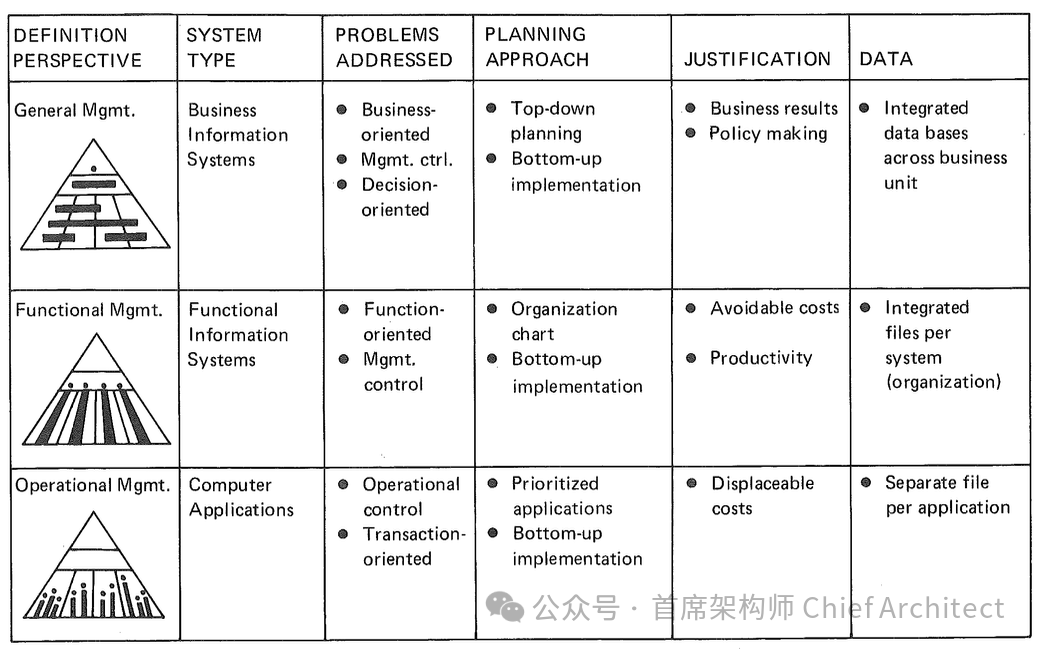
The BSP methodology guide has evolved from the first edition to the fourth edition (1975/1978/1981/1984), with its core views, concepts, and methods remaining consistent. Its view posits that information systems should be defined from a business management perspective, supporting business decisions and solving business problems. The so-called business management perspective is essentially a layered architectural perspective: overall management, functional management, and operational management. In practical terms, each level perspective corresponds to different system types, problem domains, planning methods, legitimate purposes, and data:
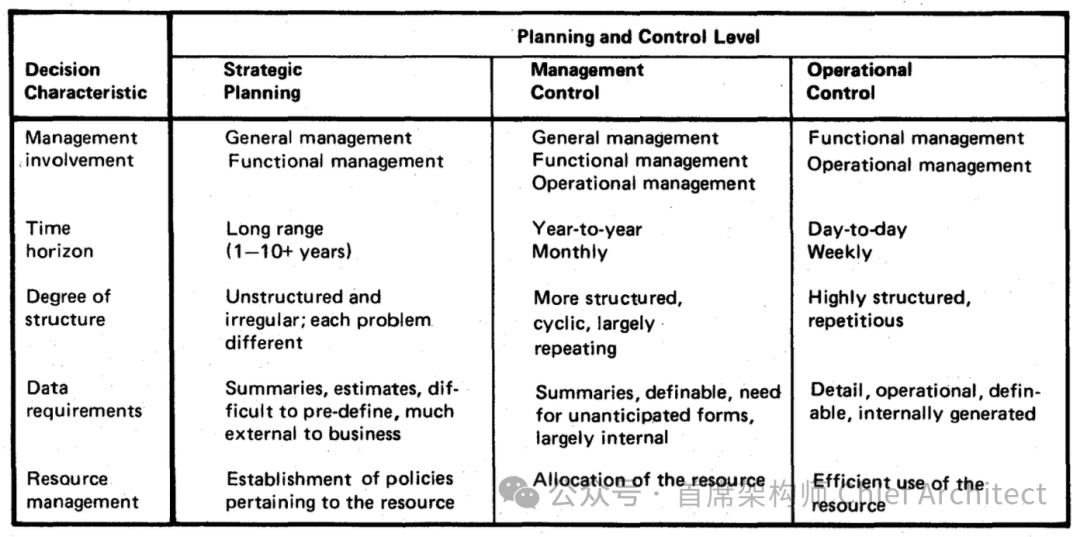
Moreover, each level perspective also corresponds to the business activities of strategic planning, management control, and operational control. These activities have significantly different purposes and characteristics:
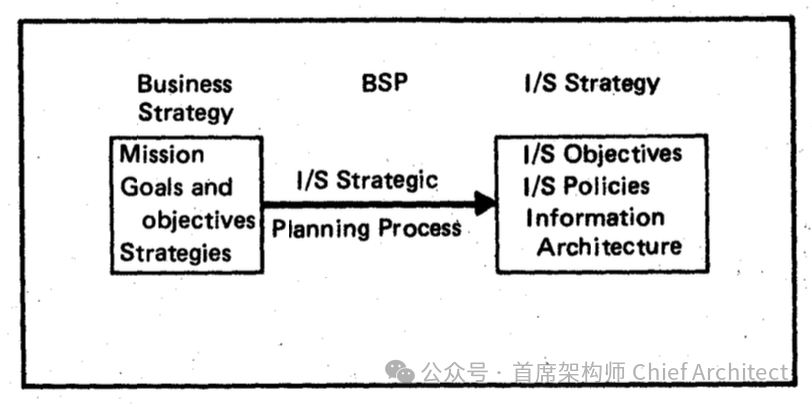
BSP emphasizes the concepts of “Top-down” and “system integration”. Although information systems have the technical feasibility for independent development, they must effectively support the strategic goals and tactical objectives of the enterprise. Therefore, top-down architectural planning must guide system integration to ensure global optimization rather than local optimization.
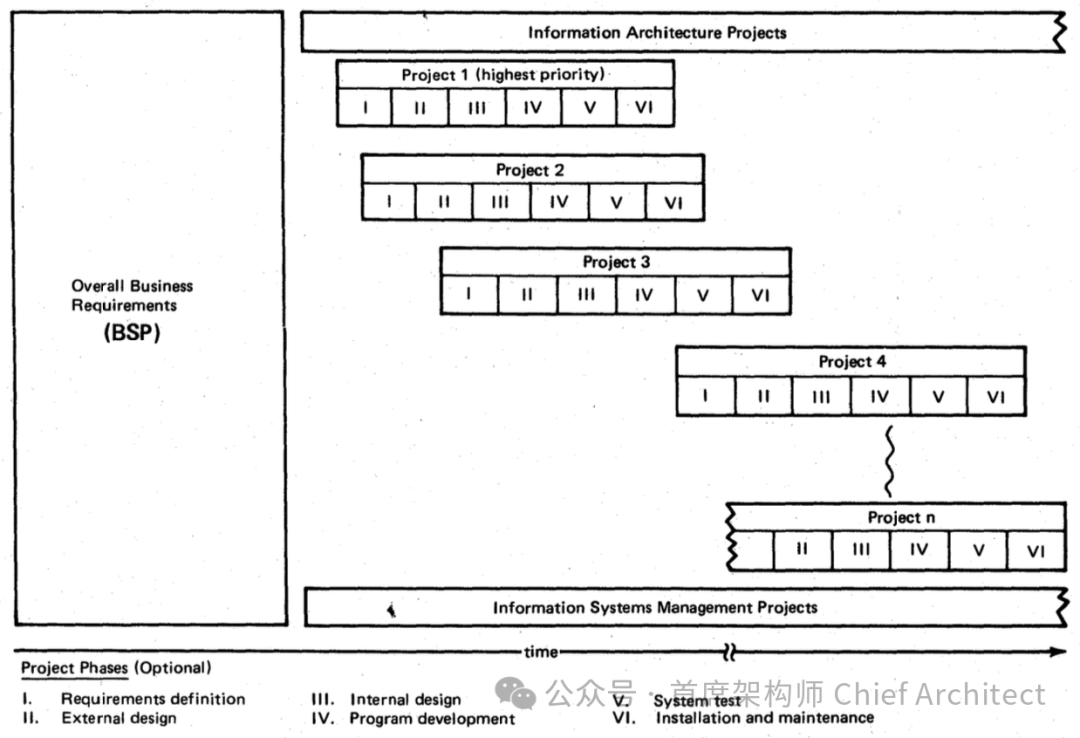
 Based on the above views and concepts, BSP proposed an innovative information system planning methodology: top-down planning, bottom-up design and implementation.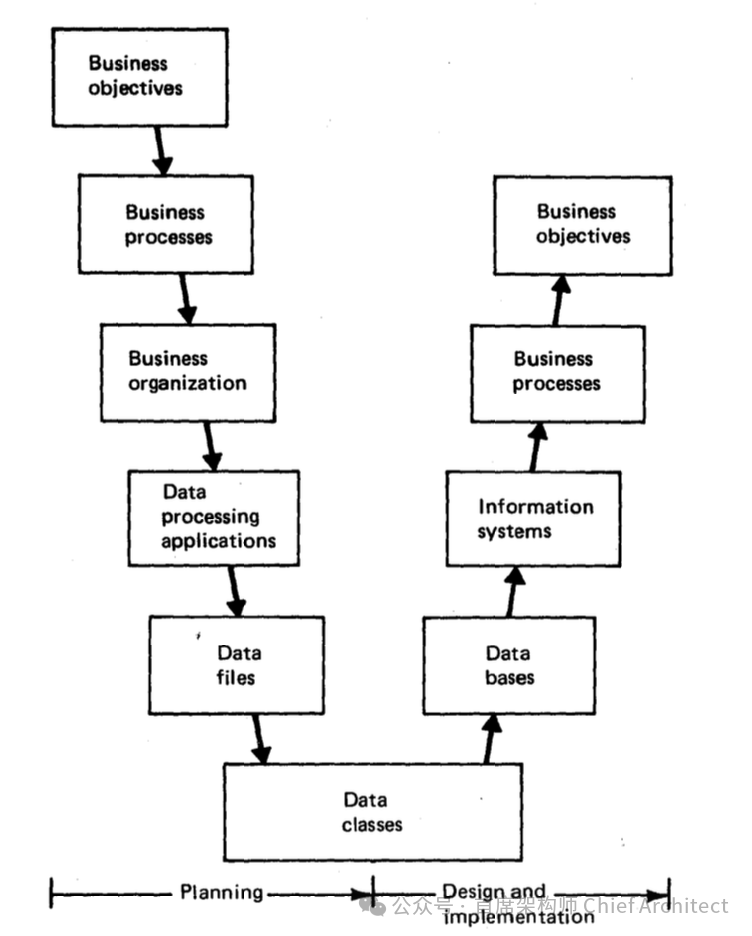
In summary, the activities in the planning phase include defining business objectives, defining business processes, defining data classifications, and defining information architecture; while in the design and implementation phase, based on the overall business needs produced in the planning phase, managing project groups, and conducting parallel and integrated management of multiple projects:
IBM defined the implementation of the BSP planning phase as a research project, with an operational model highly similar to modern IT consulting projects:
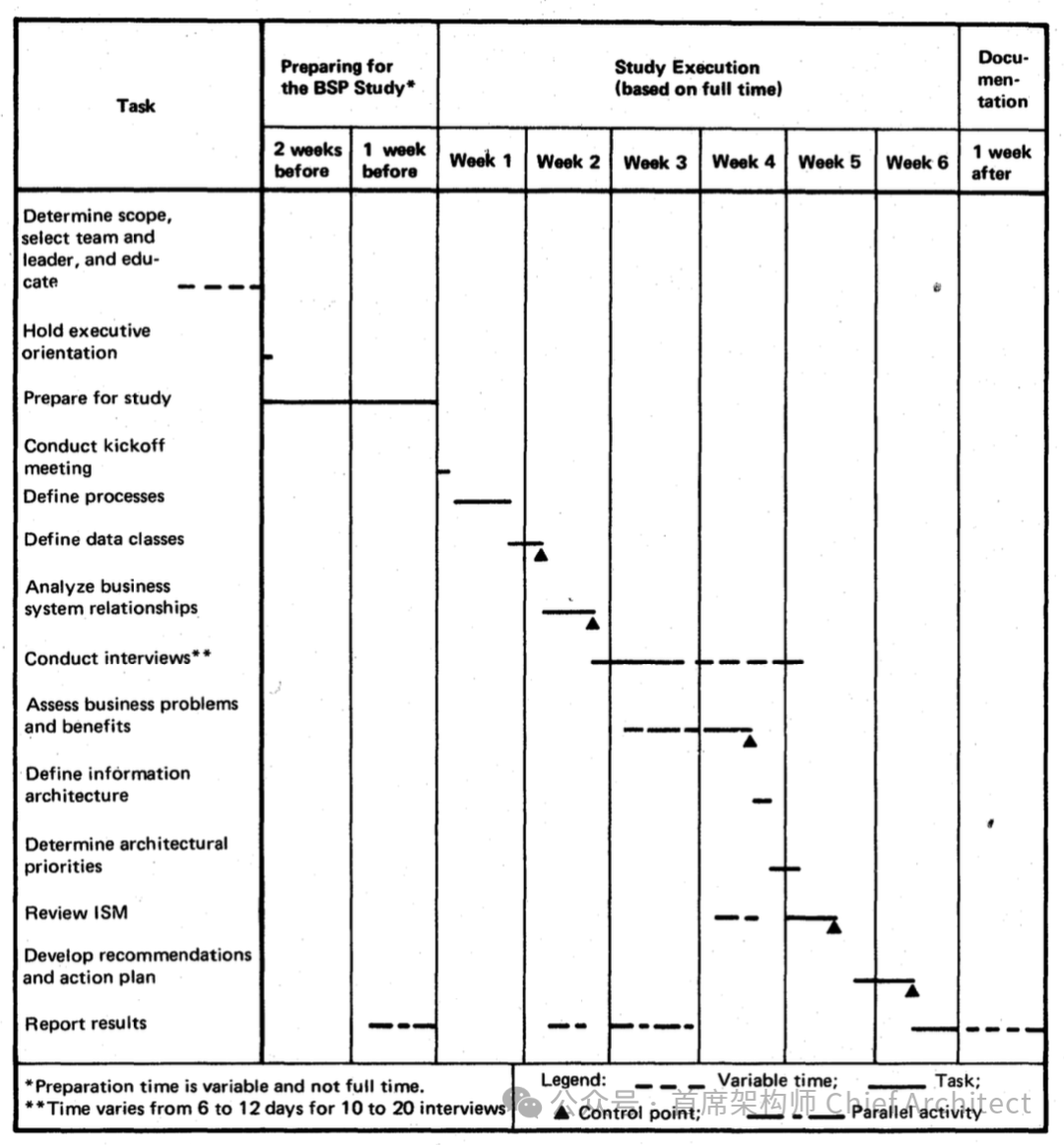
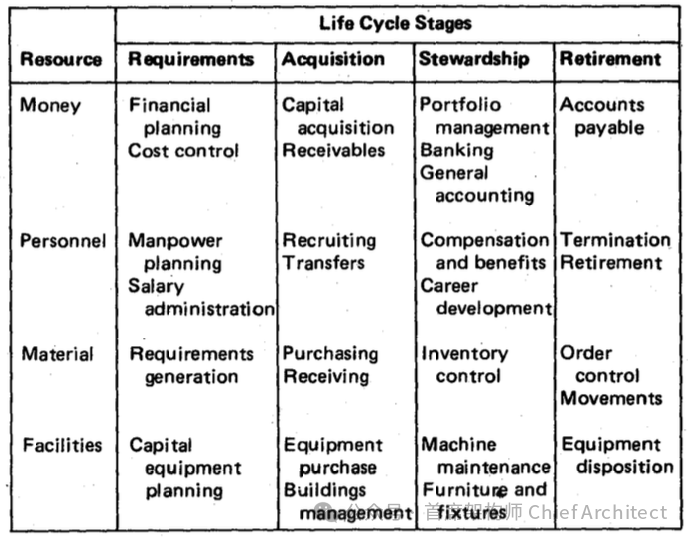
From defining project goals and scope, team formation, senior authorization, project preparation to project kick-off, the BSP guide provides very detailed work instructions; from process analysis, information resource analysis, process/organization relationship analysis to general process modeling, BSP provides very practical analysis tools:
**Process Analysis: Business Flow of Products/Services**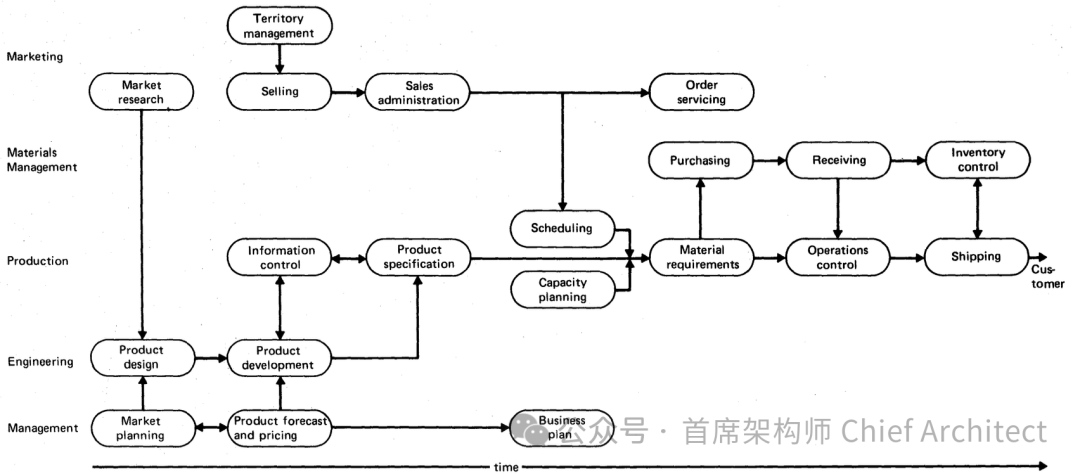 **Information Resource Analysis: Data Resource Objects at Each Stage of the Process**
 **Process/Organization Analysis: Process and Organization Matrix**
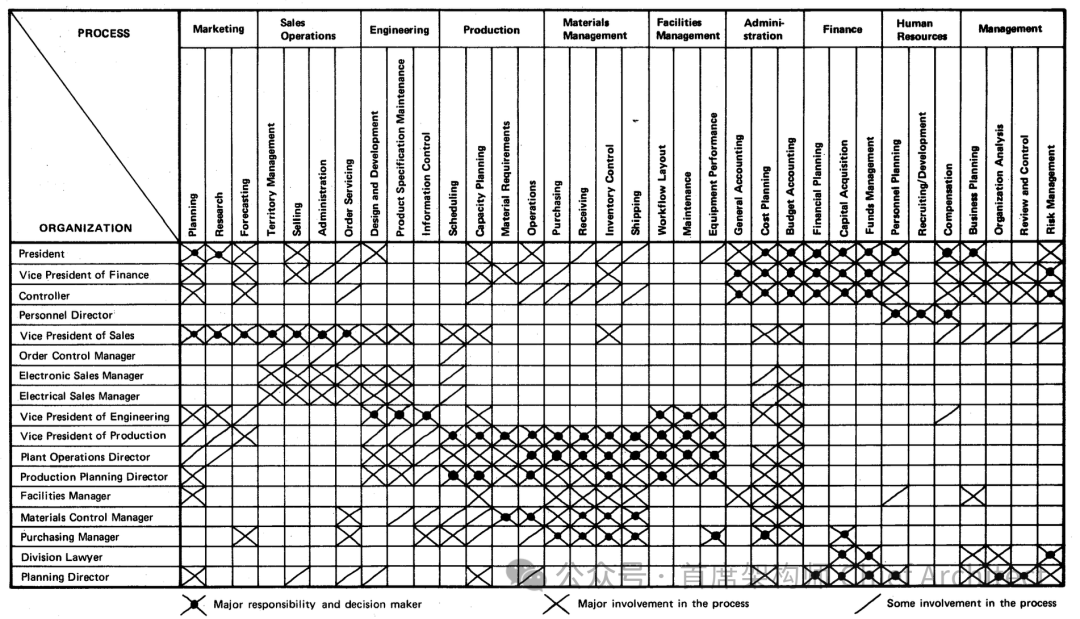 **General Process Modeling: Business Process Matrix**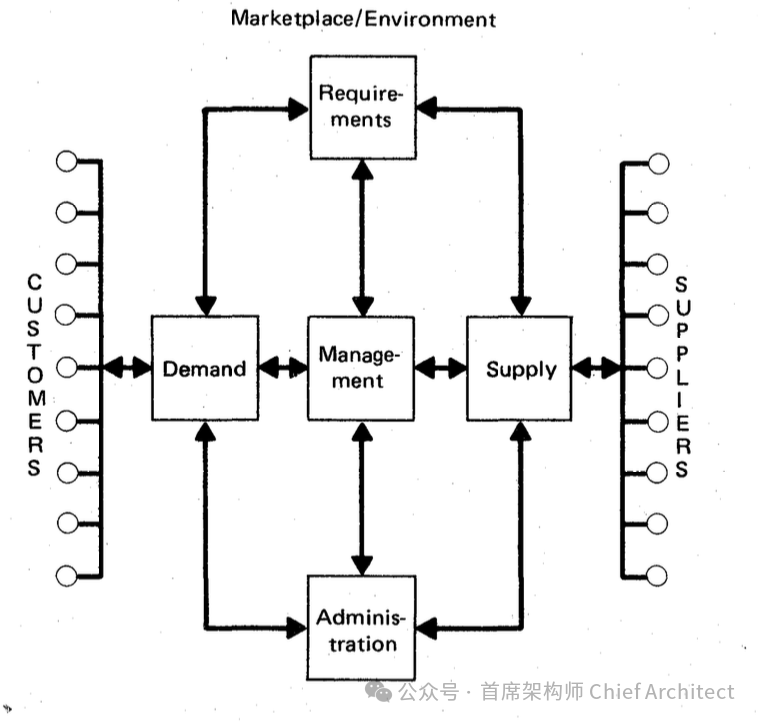
From data modeling analysis to information system analysis, the BSP methodology provides very innovative classifications and powerful analysis tools:
**Data Modeling Analysis: Information Lifecycle**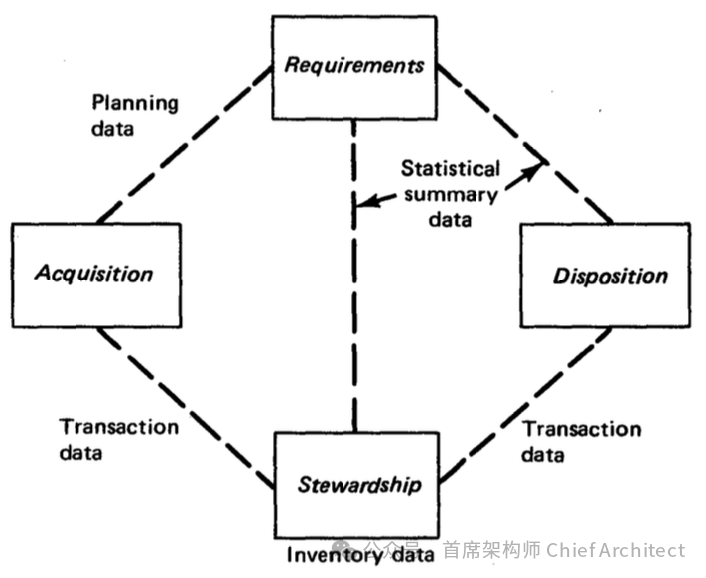 **Data Modeling Analysis: Data Class/Business Entity Matrix**
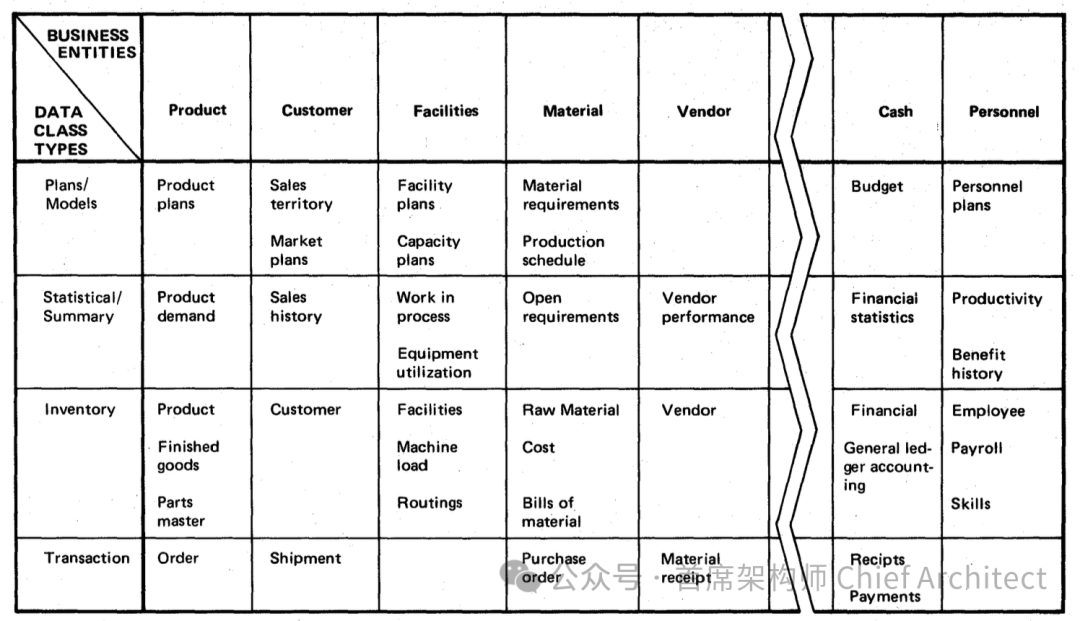 **Data Modeling Analysis: Relationship Analysis of Data Classes and Process Inputs/Outputs**
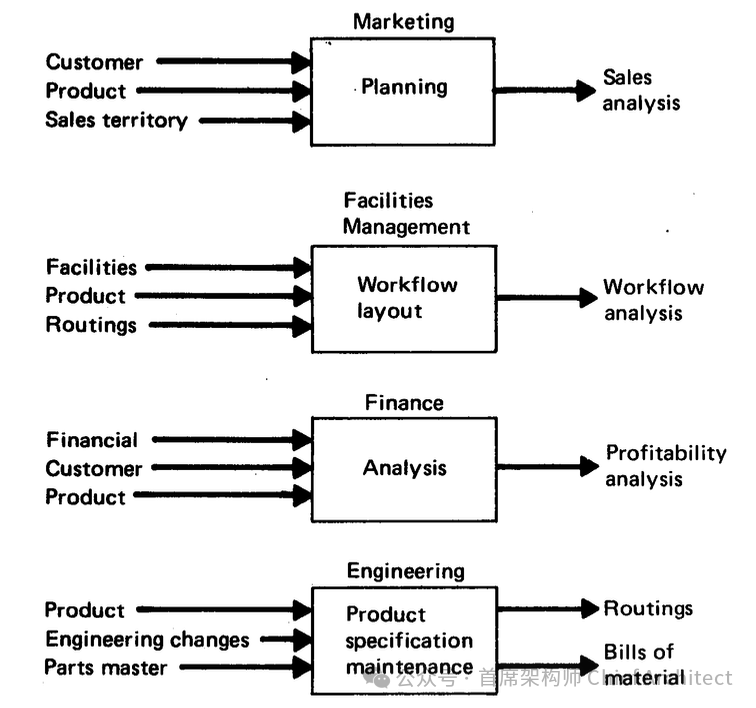 **Data Modeling Analysis: Relationship Analysis of Data Operations (Create C/Use U) and Processes**
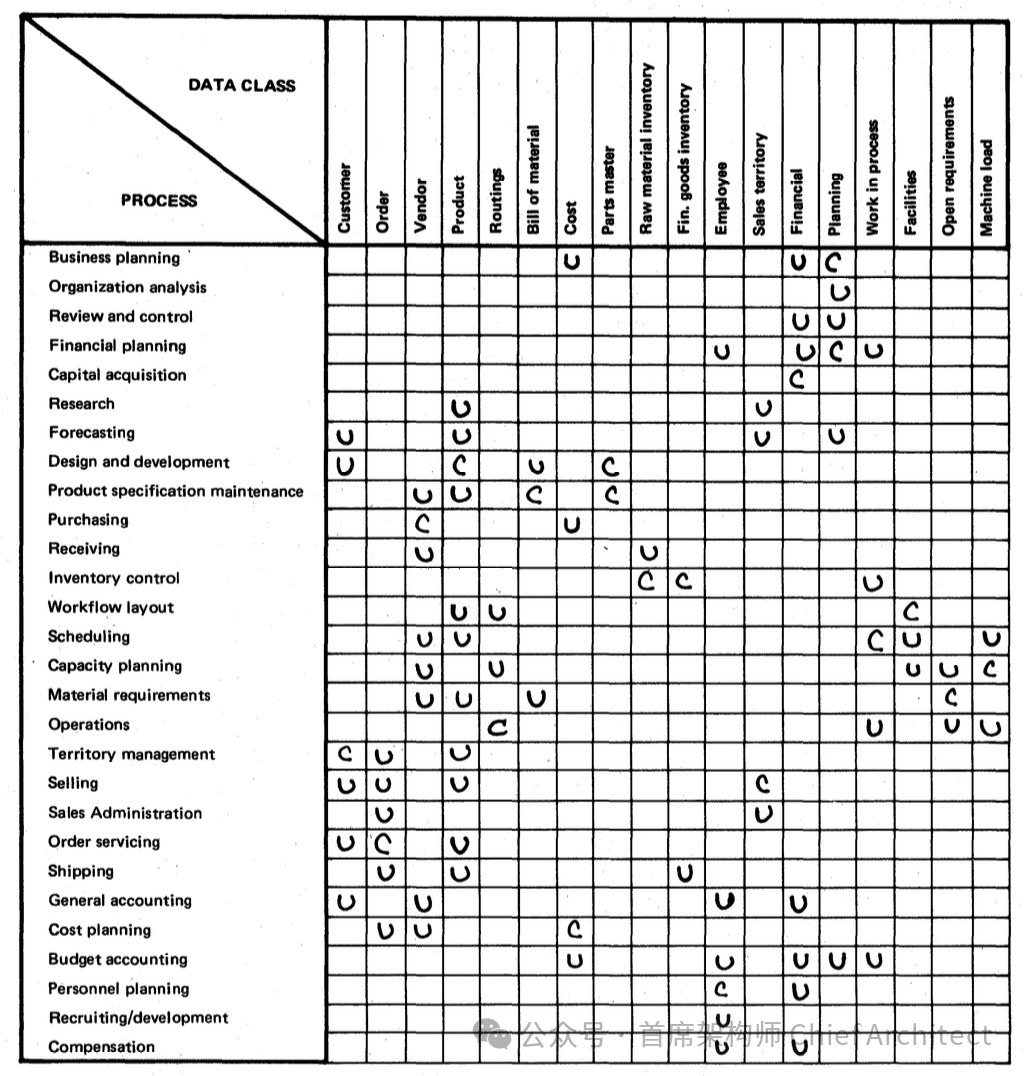 **Information System Analysis: Support of Current Systems for Organization/Processes**
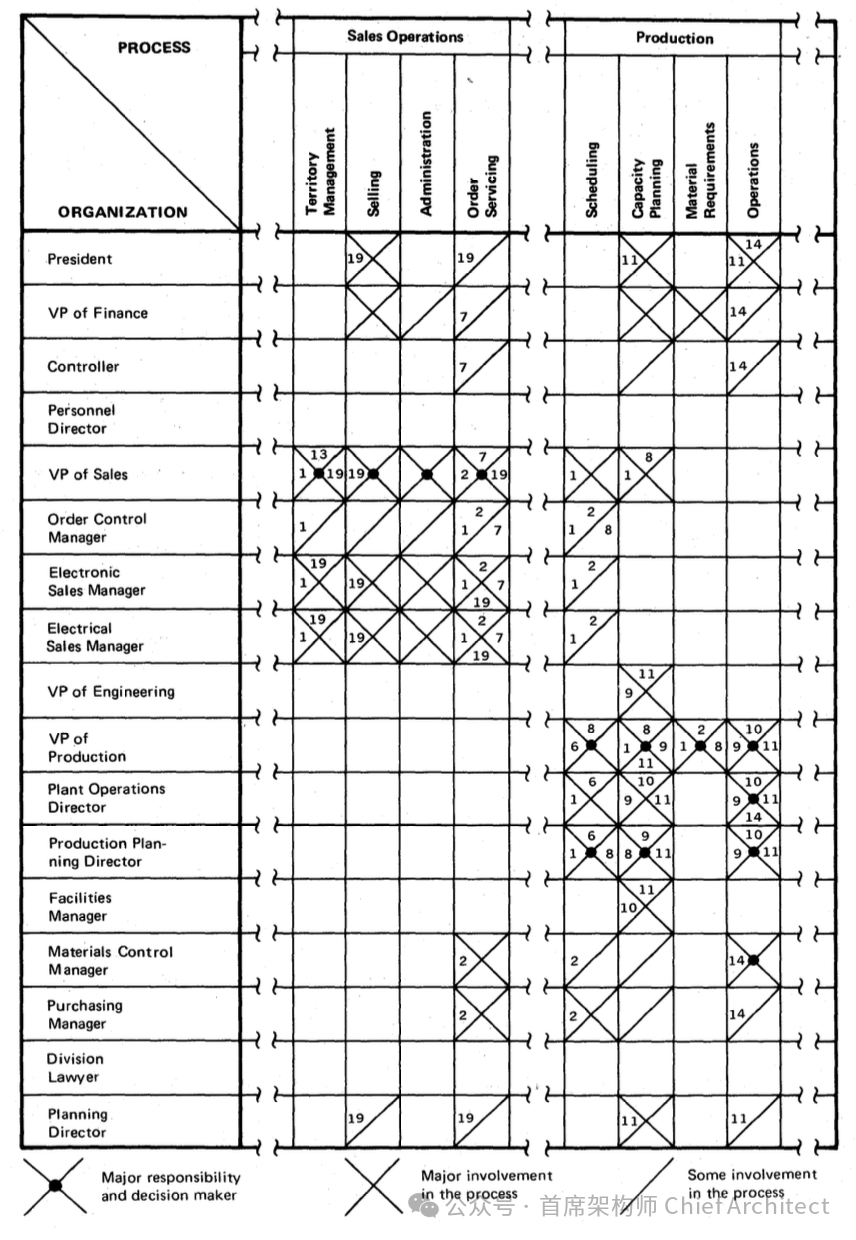 **Information System Analysis: System/Data File Matrix**
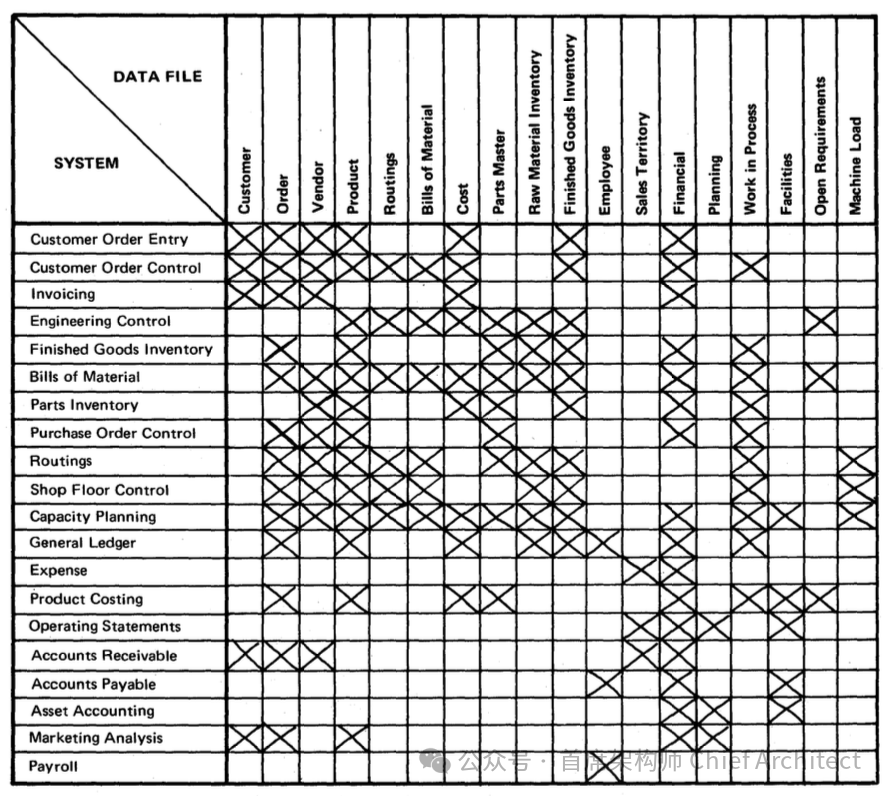 Based on the results produced from the above analysis methods and tools, the analysis results are summarized and classified from the perspective of evaluating business problems and benefits:
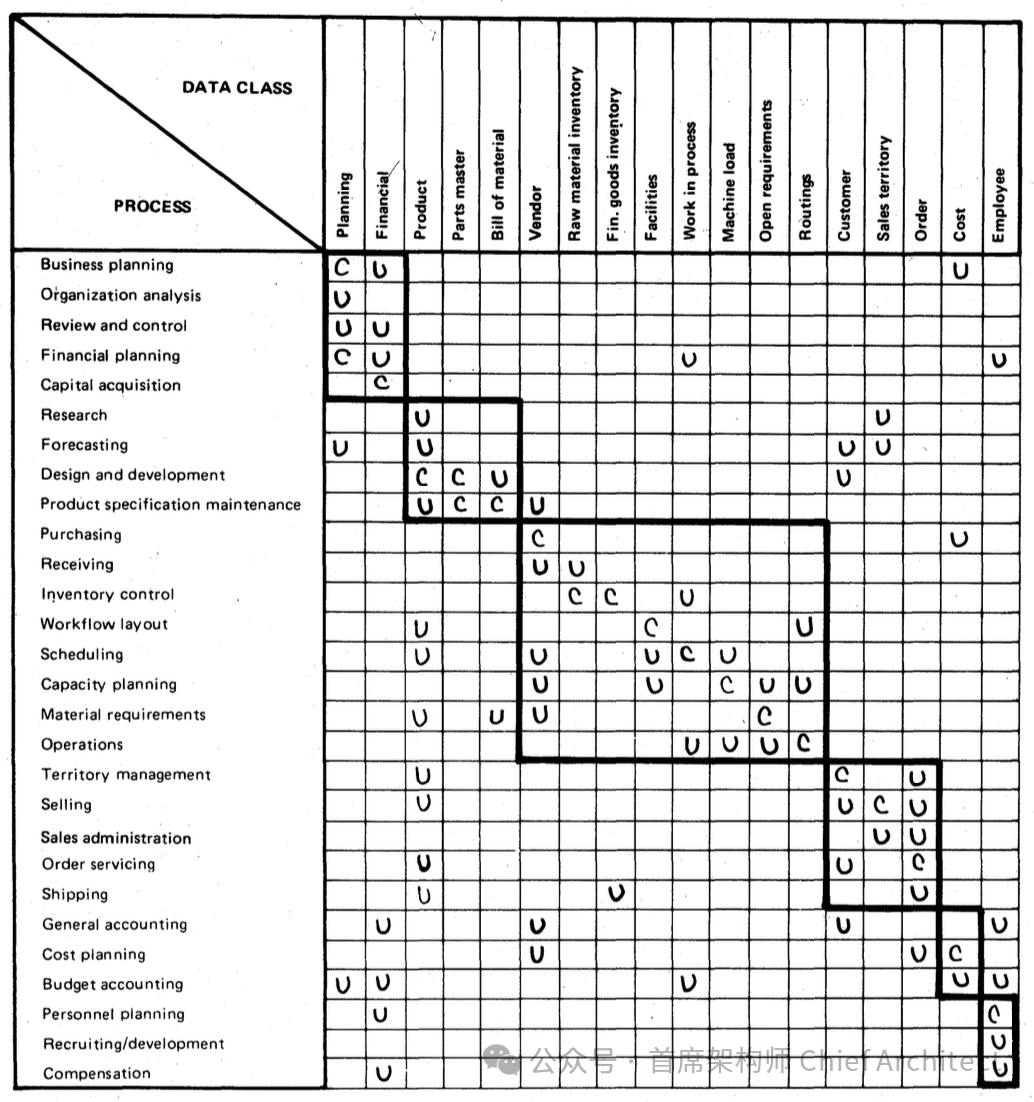
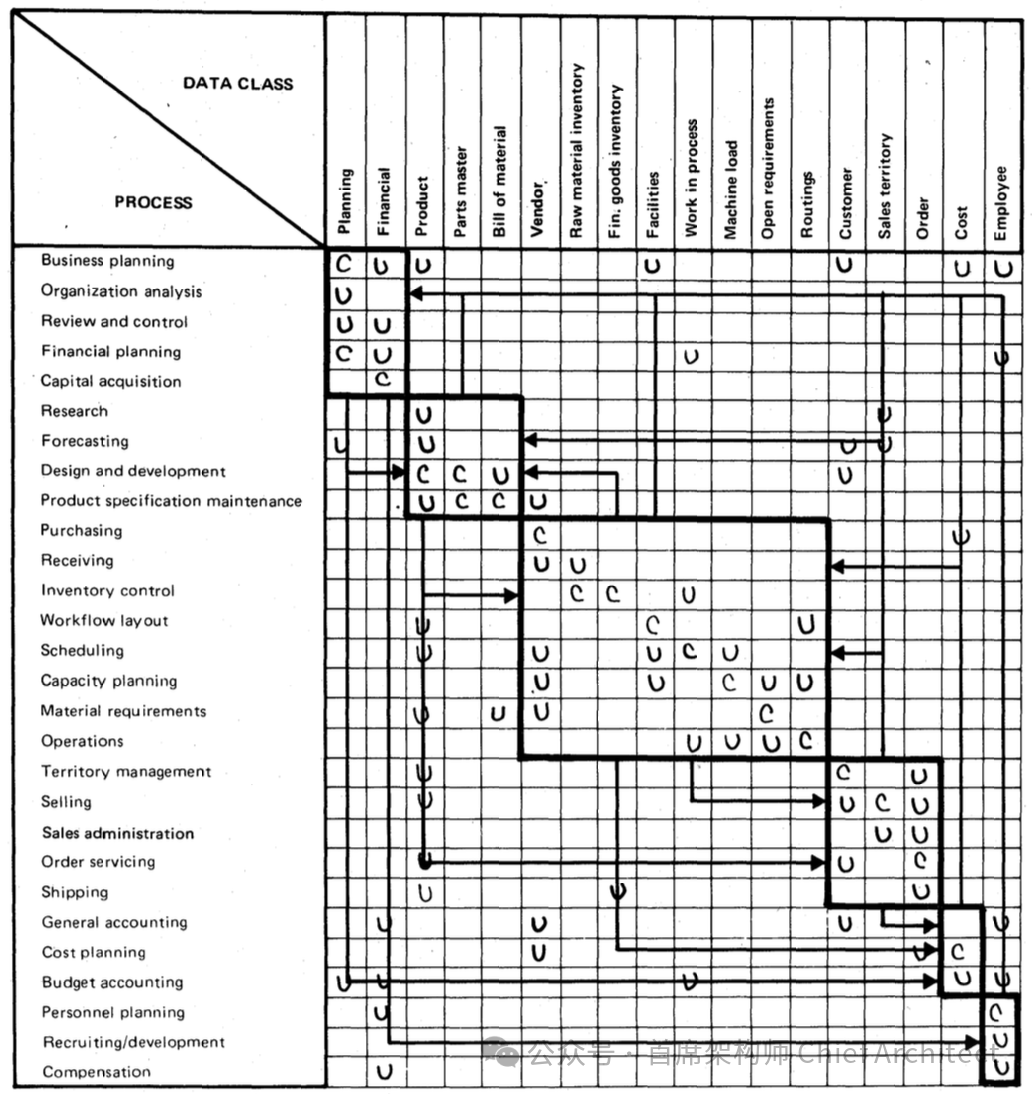
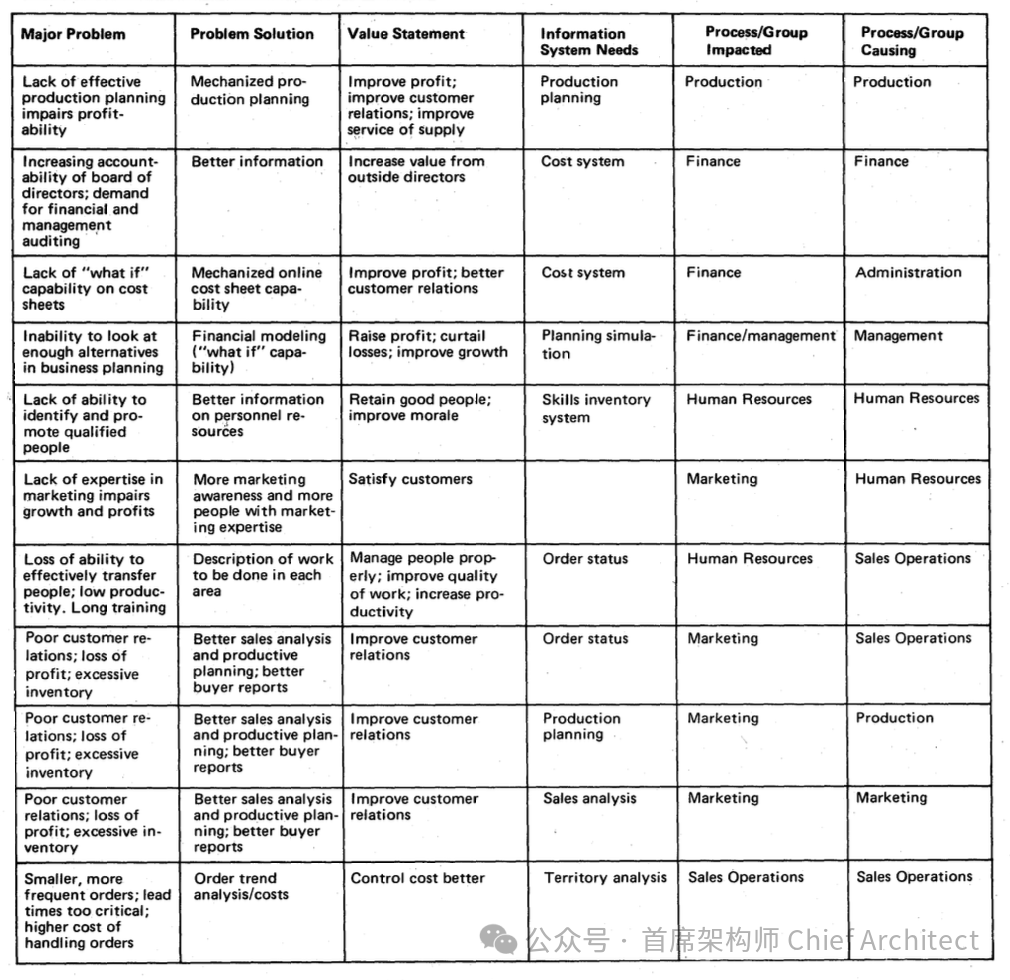 Using modern IT consulting terminology, the above work completes the business and system status survey. The next task for the BSP team is: defining information architecture, identifying systems/subsystems, and determining architectural priorities.Defining information architecture is the core task of the BSP methodology, and its logical method is to identify definitions by combining “process operations” and “data flow”:**Information Architecture Definition: Process Operation Grouping**
 **Information Architecture Definition: Data Flow Identification**
 **Information Architecture Definition: Information Architecture Diagram**
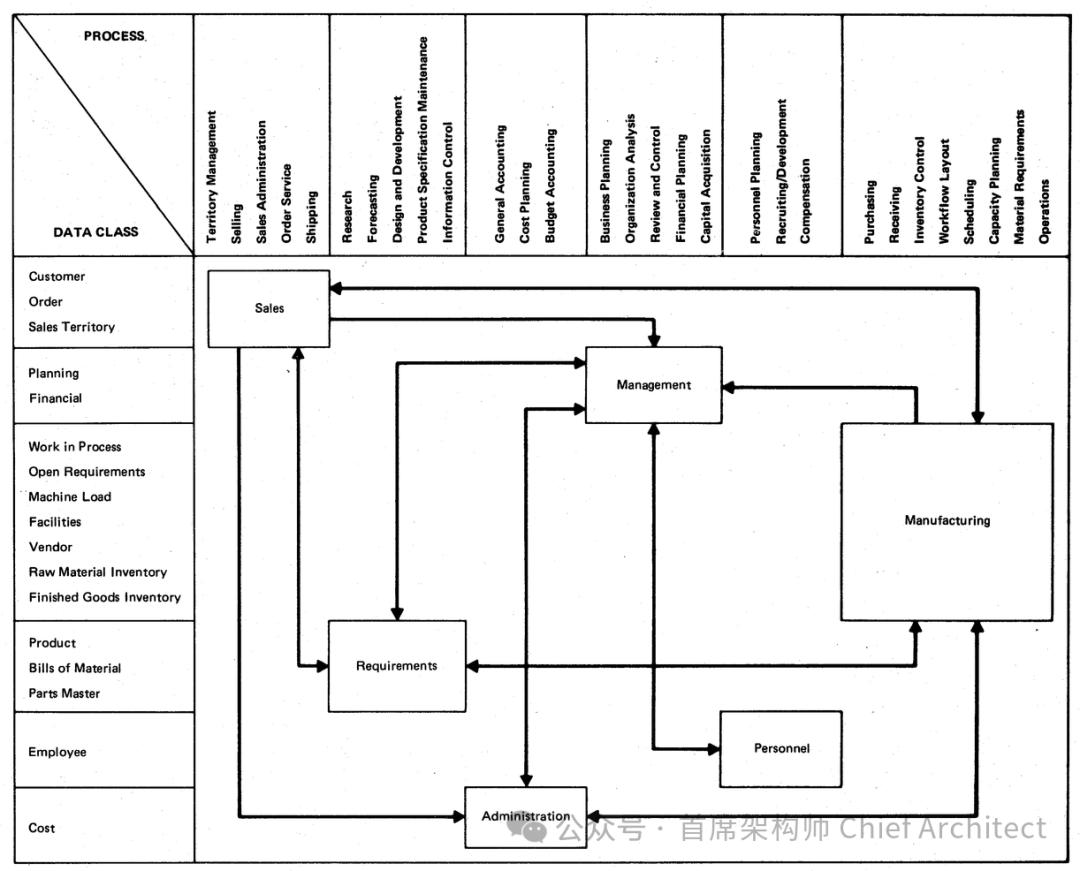 Combining the data lifecycle (creation, control, and use) in the information architecture and the supporting relationship of business processes (which data supports which processes), the subsystems/systems are identified.Once the subsystems/systems are identified, they are analyzed and scored based on four dimensions (potential benefits/organizational impact/business success/business needs) to determine architectural priorities:
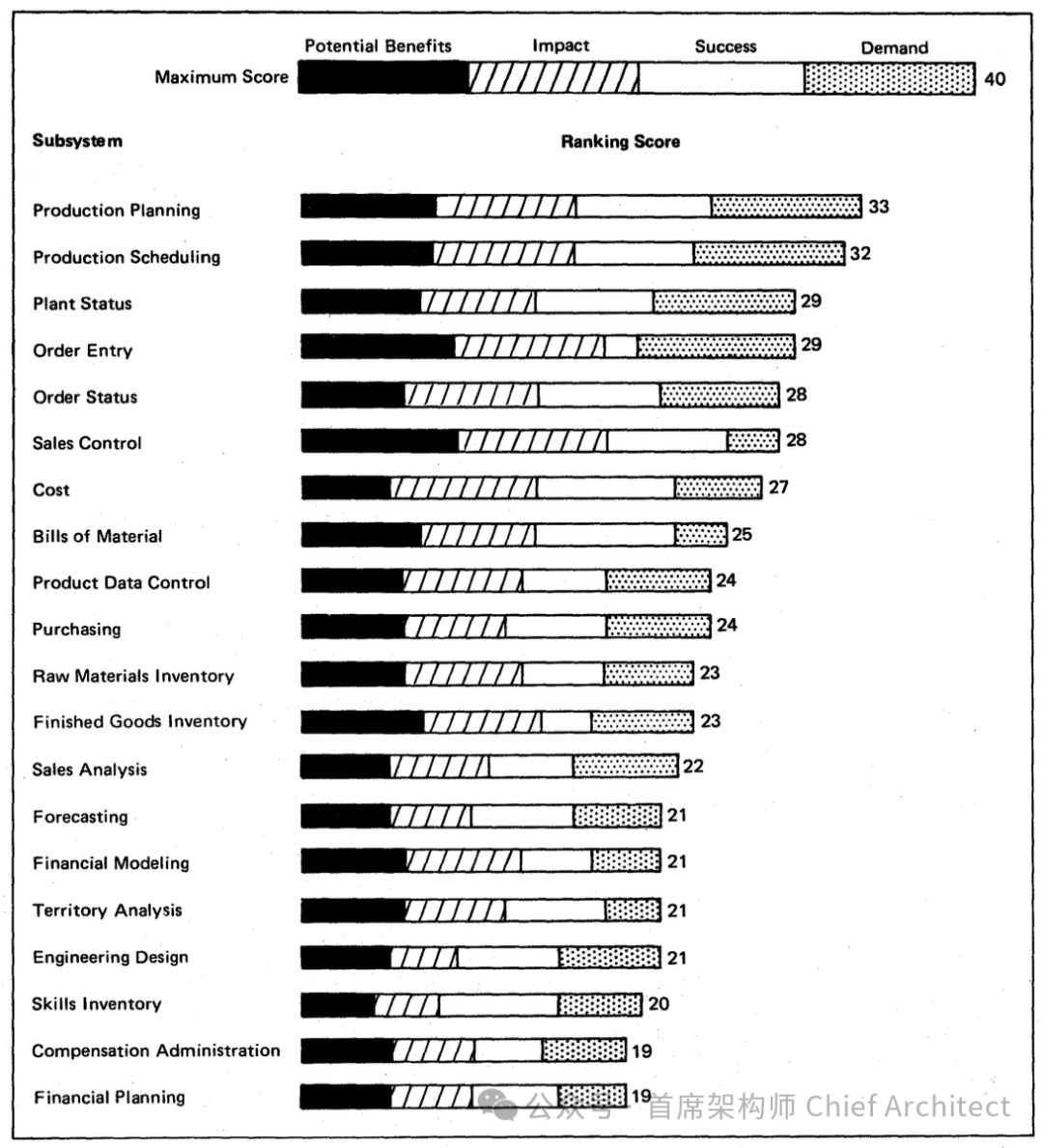 At this point, the main tasks of the BSP project planning phase have been completed, and the final step is to formulate an action plan and report project results.From the first edition to the fourth edition, the BSP guide not only reflects the continuous improvement of the methodology itself but also provides comprehensive and continuously updated reference practice examples in the appendix. These examples cover business processes across various industries (the highest content proportion), data modeling design, potential benefit analysis, information system management, and even typical subject references for project research reports.**Appendix: Industry Process Groups and Process Reference Examples**
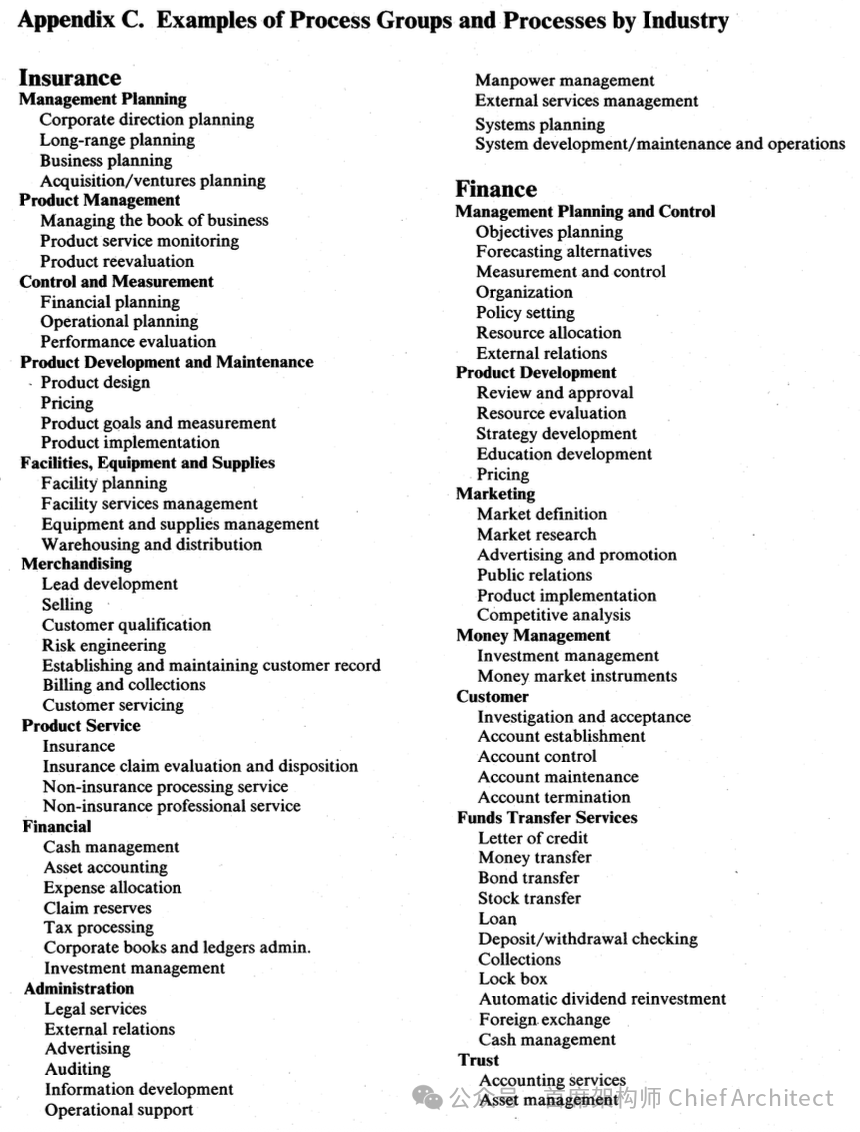 **Appendix: System and Data Class Matrix Reference Examples**
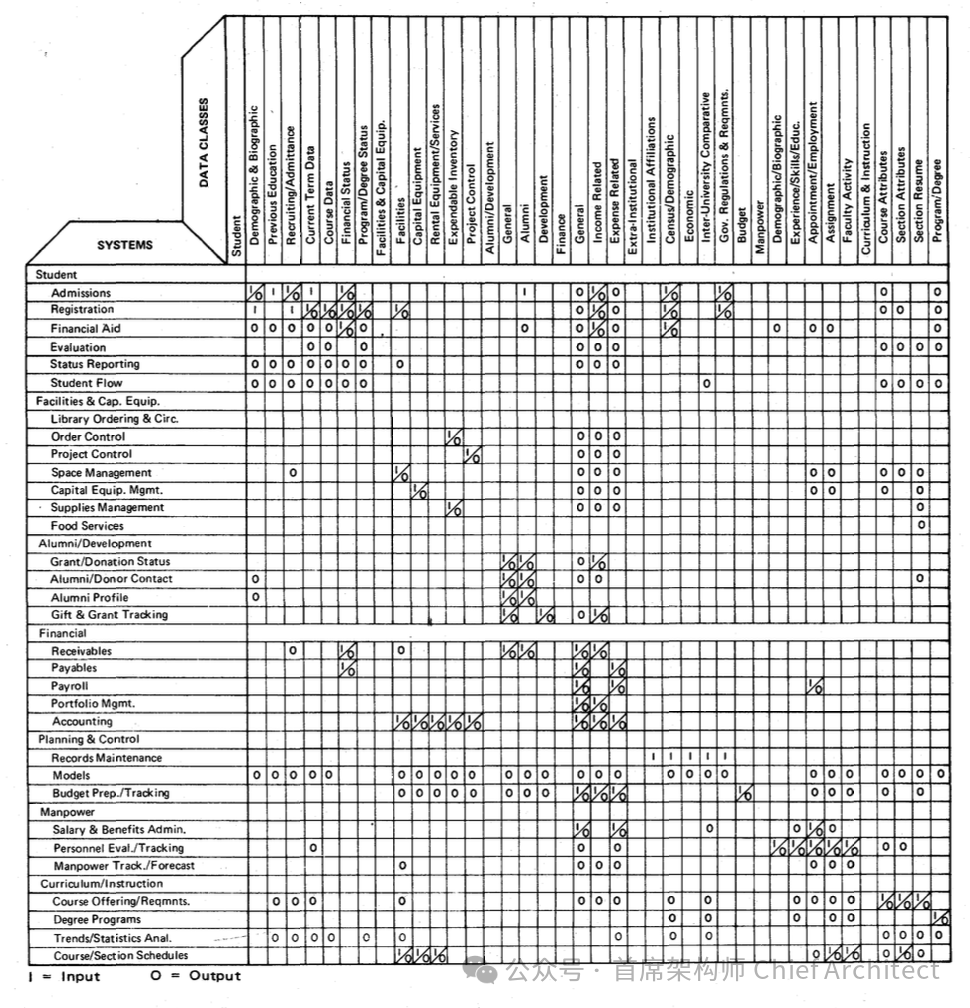 **Appendix: Potential Topics for BSP Research Reports**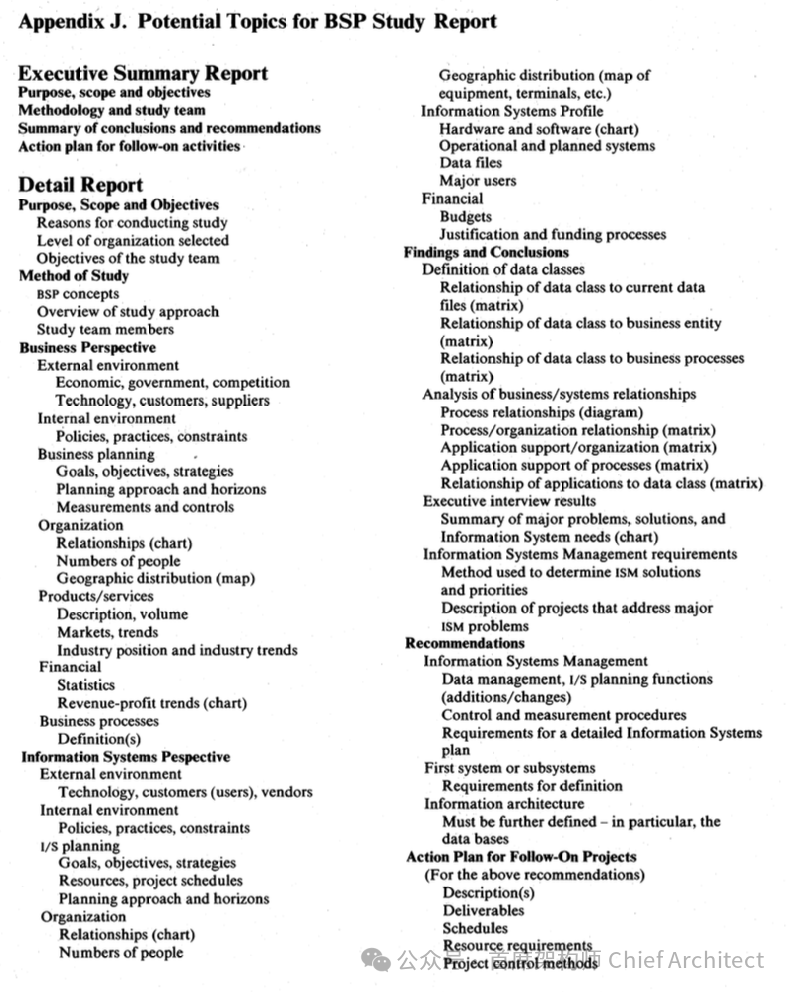
1.5
The Practice and Impact of the BSP Methodology
The BSP methodology claims to have cross-industry universality, with its core argument being that although different organizational forms (public institutions/commercial organizations) have differences in business attributes, service models, and product portfolios, the needs for information system construction imply common characteristics. However, due to the extremely limited public practice cases, the credibility of this claim lacks sufficient empirical support.
The Naval Postgraduate School published a special paper in 1986 titled “A Study on the Applicability of IBM BSP in Strategic Information Systems Planning for the Naval Reserve,” which is one of the few existing practical research documents on the BSP methodology.

The study mainly focused on four questions:
1) What is the organizational structure of the Naval Reserve? What is the information flow supporting that organizational structure?
2) What information systems currently support the Naval Reserve, and how effective are they?
3) Does the Naval Reserve have a long-term IS (Information Systems) strategy? If so, what is the underlying methodology?
4) Is BSP a feasible IS planning methodology for the Naval Reserve?
After completing the organizational structure analysis and information system assessment of the Naval Reserve, the study questioned the effectiveness of “strategic planning” (the most important theoretical assumption of the BSP methodology) in military systems:
In many organizations, strategic planning is often unpopular. Its essence is to respond to a distant and uncertain future, and its potential benefits and sense of achievement take a long time to manifest. In the short term, planning not only lacks obvious immediate benefits but can also have direct negative impacts—it occupies valuable human resources that could be used for daily operations. This is especially true in the military, where pressing crises abound, and no one has enough time to realize the benefits of strategic planning (for personal honor). It is often regarded as a meaningless mandatory ritual, damaging the reputation of planning, and its final outcomes are often shelved.
However, the study also emphasized that the importance of “strategic information systems planning” should not continue to be overlooked:
In many cases, heavy costs have been incurred due to inadequate planning. Undoubtedly, a considerable portion of less successful information systems is due to poor planning and execution. Better strategic information systems planning helps ensure that resources are applied in an almost optimal manner in the future and avoids the kind of system development failures that have plagued many organizations in the past. At best, planning can make it possible to select system projects, providing maximum future benefits for managers and other users; extending the role of information systems to key areas of strategic management and operational management.
It is noteworthy that the study also provided a systematic introduction to the BSP methodology (based on the fourth edition of 1984). By the end of the paper, the key research conclusions were as follows:
The Naval Reserve is a structurally complex and geographically dispersed organization, and its effective management is not easy. This organization is rich in information but poorly managed.Efficient information resource management is a key prerequisite for its successful operation.Due to the characteristics and scope of external information interfaces, this task becomes even more complex. The information systems of the Naval Reserve rely on various data owned and defined by external organizations.
Information systems are becoming increasingly important for the management and daily operations of the Naval Reserve. Crucially, their development is the result of comprehensive and careful strategic information systems planning. Many defects in the current information systems can be attributed to long-term inadequate planning. The key needs of current and future systems depend on effective information systems planning. Unfortunately, the planning environment of the organization is oriented towards short-term crises. The organizational culture is contrary to any form of strategic thinking. This is a major issue for the Naval Reserve and a problem that no planning methodology itself can solve.Fundamental changes in concepts are needed within the organization to promote more effective information resource management, thereby achieving more efficient overall management.
When assessing whether BSP is suitable for strategic information systems planning, several prominent issues must be considered. The most critical is the degree of fit between the methodology and the planning culture and other important organizational environmental factors. All the ideas represented by BSP are incompatible with the organizational culture of the Naval Reserve. Before the BSP study can truly take effect, the organization’s perception and implementation of planning activities must undergo substantial changes. Otherwise, it may only be an academic activity with minimal impact on the organization. However, it may be more easily accepted than openly calling for strategic planning, as it can indeed provide short-term benefits in determining architectural priorities.
A related issue is the adaptability of BSP in the Naval strategic information systems planning process. Just as communication between computers requires hardware and software compatibility, the compatibility of planning methods across different levels of the same organization is equally important. Although BSP is not strictly compatible with the planning methods prescribed by OP-16 (the planning method currently used by the Naval Reserve), there is also no conflict. Compared to the still-developing OP-16 method, BSP seems more practical.
In BSP, research verification relies on interviews with senior management. This presupposes that these managers possess foresight and accurate cognition, with a thorough understanding of organizational functions and issues. For the Naval Reserve, this may be a dangerous assumption. The key is whether these managers fully understand the functions and issues at the lower levels of the organization. Another related issue is whether the research can obtain sufficient information input from the grassroots. Given that senior managers may not fully grasp organizational needs, the research team must thoroughly investigate the entire organization. Without leaving the New Orleans base, they cannot complete the research. They must visit subordinate command units at all levels to obtain the true situation of the organization.
BSP can become a major component of a feasible planning process. However, this is not a simple solution to the problem of institutions neglecting strategic planning activities.Although BSP research can provide significant benefits, it remains merely a tool; if misused or used in the wrong environment, it offers little help to the organization. BSP can provide a comprehensive approach to understanding the organization’s processes regarding information needs.This is precisely what the Naval Reserve has yet to implement but urgently needs.In addition to the Naval Reserve, other military departments (such as the Naval Aviation Systems Command) also conducted information system architecture studies based on BSP during the same period. Although there is a lack of practical records of BSP in commercial organizations at that time, according to Zachman, IBM faced significant challenges when officially launching BSP as an independent product in 1981. When IBM explained, “This is an architectural methodology,” the most common response from customers was, “Got it, but what can it actually do?”Ultimately, this forced IBM to terminate the separate sale of BSP.It is worth noting that although BSP ceased to be updated after the fourth edition in 1984, its foundational contributions to the development of enterprise architecture cannot be overlooked (see “EA01 The Origins of Enterprise Architecture”).
1.5
Conclusion of this Chapter
This chapter systematically outlines the development context of the BSP methodology, including its background, method evolution, and practical validation. As a pioneering theory in the field of enterprise architecture, the business-driven architecture concept and process-data analysis method proposed by BSP still hold significant reference value, and this intellectual legacy continues to influence the theoretical development and practical innovation of modern enterprise architecture.
References:
- BSP: Business Systems Planning: Information Systems Planning Guide (1st Edition), GE20-0527-1, IBM Corporation, White Plains, NY (1975).
- BSP: Business Systems Planning: Information Systems Planning Guide (2nd Edition), GE20-0527-2, IBM Corporation, White Plains, NY (1978).
- BSP: Business Systems Planning: Information Systems Planning Guide (4th Edition), GE20-0527-4, IBM Corporation, Atlanta, GA (1984).
- J.A. Zachman, R. Sessions: Exclusive Interview with John Zachman, President of Zachman International, CEO of Zachman Framework Associates, Perspectives of the International Association of Software Architects, Austin, TX (2007).
- IBM Archives: DPD chronology, https://www.ibm.com/ibm/history/exhibits/dpd50/dpd50_chronology.html
-
Erecting the Framework: John Zachman, the father of enterprise architecture, reflects on the influences and impacts of his “periodic table of the enterprise”, Interview by Dan Ruby (2004)
-
Duckworth, Frederick: An investigation of IBM’s Business Systems Planning (BSP) as a suitable methodology for strategic information systems planning for the Naval Reserve (1986)
END