
 Click the blue text to follow“Prospective Research on CCUS”
Recently, the technology project of the group company, “Verification of the First Set of COAP Technology for 135MW Units” undertaken by the Greenhouse Gas Emission Reduction Technology Department of the Huaneng Group Clean Energy Technology Research Institute, successfully passed acceptance, with an overall rating of excellent.
COAP Technology
is an original technology developed by Huaneng, and is the world’s first integrated removal technology for multiple pollutants in flue gas. This technology employs a self-developed low-temperature oxidation adsorption process (Cold Oxidation Adsorption Process) to achieve the synergistic and efficient adsorption purification of multiple pollutants in flue gas and near-zero emission control. Since 2019, the research and development team at the Clean Energy Institute has focused on this technology, achieving a series of breakthroughs in mechanism research, adsorption materials, and core process equipment.
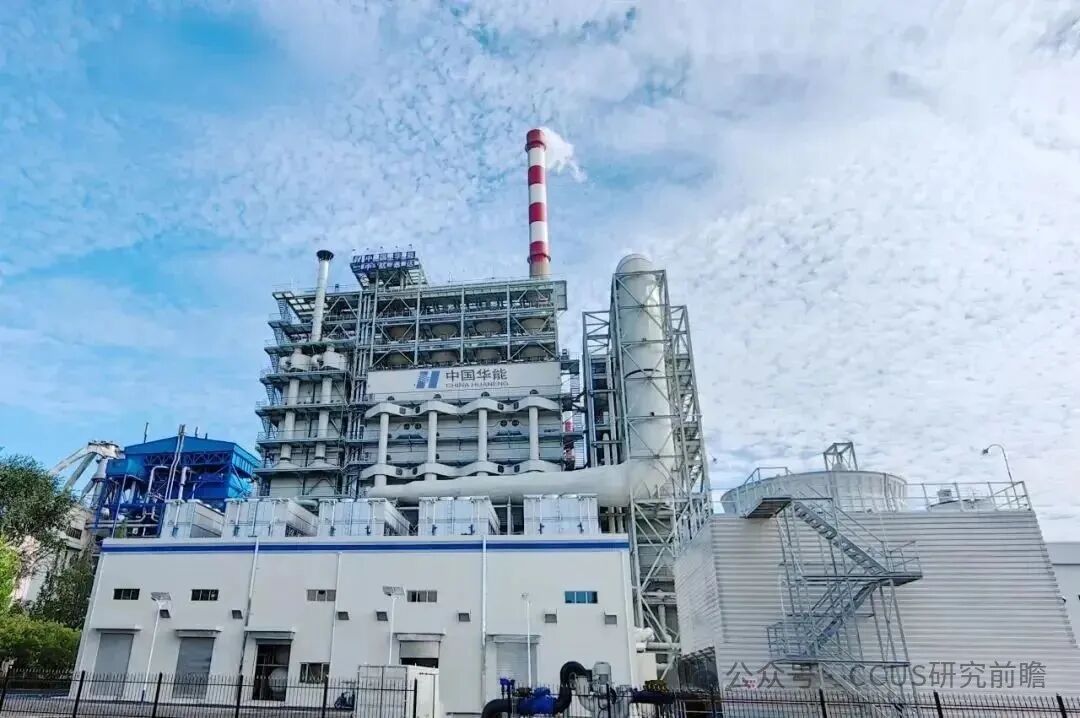
In July 2024, the first engineering verification of COAP technology was successfully implemented at Unit 7 of the Linyi Power Plant, covering the entire flue gas flow and process. Third-party testing indicated that SO2, NOx, and particulate matter emissions were all below 1mg/Nm3, with a synergistic removal efficiency of over 95% for SO3, heavy metals, halides, and other pollutants. This also marks a significant breakthrough in China’s control of coal-fired pollutants, moving from “ultra-low emissions” to “near-zero emissions” and from “single control” to “integrated control.” Additionally, the project successfully verified core COAP technologies for nitrogen oxide recycling and sulfur resource utilization, achieving deep desulfurization and denitrification without consuming limestone, ammonia, or urea, and successfully converting sulfur dioxide in flue gas into high-value industrial-grade sodium sulfate products. In June 2025, the project results were identified as internationally leading by the China Electromechanical Engineering Society.
The implementation of this project has overcome several major technical challenges in transitioning the original COAP technology from laboratory to engineering application, resulting in a number of high-value domestic and international patents. Moving forward, the project team will continue to innovate around the upgrading and iteration of COAP technology and accelerate the transformation of scientific and technological achievements, promoting applications in the treatment of coal-fired flue gas and other industrial flue gases. Furthermore, the project team will deepen the research and demonstration of COAP + low-temperature adsorption carbon capture technology, supporting the realization of China’s dual carbon goals.
Source: Huaneng Group Clean Energy Technology Research InstituteENDClick the QR code below to join the industry group of thousands

Previous Recommendations
How to Control Leakage in CO₂ Storage? Gel Regulation and Multiphase Flow Optimization Solutions
Reference: Zhenhua Rui, Xin Wen, Yang Zhao et al. Conformance control design for CO2 geological utilization and storage with case studies in Yanchang and Shengli CCUS pilot projects[J]. GEOENERGY SCIENCE AND ENGINEERING, 2025, 254.
Click to read

How to Accurately Predict CO₂ Density in CCUS? Gaussian Process Regression Solves the Problem
Reference: Shirin Gholami, Elahe Rostaminikoo, Leila Khajenoori et al. Density determination of CO2-Rich fluids within CCUS processes[J]. MEASUREMENT SENSORS, 2025, 38.
Click to read

How Do Geological Reactions Limit Carbon Storage Efficiency? Research on Geochemical Mechanism Optimization
Reference: Shuaiyi Lu, Pan Jiang, Lianghan Cong et al. Review of geochemical processes in CCUS: Mechanisms, processes, and implications[J]. GONDWANA RESEARCH, 2025, 146.
Click to read
What is the Thermodynamic-Economic Comparison of Air and Carbon Dioxide Energy Storage?
Reference: Qingping Ye, Zhimei Zheng, Jiaqiang Wang et al. A comprehensive performance comparison between compressed air energy storage and compressed carbon dioxide energy storage[J]. ENERGY CONVERSION AND MANAGEMENT, 2024, 319.
Click to read
How Does Carbon Pricing Drive Refining CCUS Investment? Option Model Integrates Carbon Chemistry and EOR Benefits
Reference: Fang et al. A Real Options Model for CCUS Investment: CO2 Hydrogenation to Methanol in a Chinese Integrated Refining–Chemical Plant[J]. ENERGIES, 3092.
Click to read
Is the Existing Well + New Well Optimal? Economic Viability of CO₂ Storage in Algeria
Reference: Al-Alawia et al. Unlocking the potentials of depleted gas fields: A numerical evaluation of underground CO2 storage and geothermal energy harvesting[J]. ENERGY GEOSCIENCE, 2025, 6.
Click to read
Can Environmental Protection Tax Drive CCUS Innovation? Dual Goal Game Reveals Welfare Drivers
Reference: Su et al. Dynamic Optimal Control Strategy of CCUS Technology Innovation in Coal Power Stations Under Environmental Protection Tax[J]. SYSTEMS, 2025, 13.
Click to read
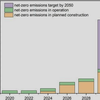
Is CCUS a Panacea or a Fantasy for Carbon Neutrality? How Collaborative Innovation Can Break Through Bottlenecks
Reference: Zhao. CCUS: A Panacea or a Placebo in the fight against climate change?[J]. GREEN ENERGY AND ENVIRONMENT, 2025, 10.
Click to read
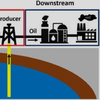
How to Resolve the Imbalance of Carbon Storage Incentives? Tiered Indicators Balance the Dual Benefits of CCUS
Reference: Paiaman et al. A novel efficiency-based, tiered carbon storage incentive approach for CCUS through CO2 enhanced oil recovery and storage[J]. INTERNATIONAL JOURNAL OF GREENHOUSE GAS CONTROL, 2025,.
Click to read
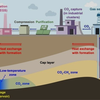
How to Optimize the CCUS-EGR System? Fully Coupled Model Breaks Through Thermal Loss Bottlenecks
Reference: Gao et al. Wellbore-reservoir and multiphysics coupling model for liquid CO2 cyclic injection in a CCUS-EGR framework[J]. JOURNAL OF HYDROLOGY, 2025,658.
Click to read
How to Break the Economic Risks of CCUS-EOR? Multidimensional Assessment Reveals Comprehensive Benefits
Reference: Miao et al. Comprehensive evaluation of CCUS technology: A case study of China’s first million-tonne CCUS-EOR project[J]. ENVIRONMENTAL IMPACT ASSESSMENT REVIEW, 2025,110.
Click to read
How Can CO₂ Foam Achieve Dual Carbon Reduction? Stable Foam Mechanism Enhances EOR
Reference: Gao et al. CO2 foam generation, propagation and decay characteristics: Recent advances and future perspectives with focus on CCUS implications[J]. FUEL, 2025,389.
Click to read
How to Resolve the Bottlenecks of Large-Scale CCUS? Innovations in Monitoring and Synergy of Three Chains
Reference: Rui et al. Challenges in the Large-Scale Deployment of CCUS[J]. ENGINEERING, 2025,44.
Click to read