On the afternoon of October 29, 2022, the Great Vascular Surgery Forum was held online as part of the Great Wall Cardiology Conference and the Asian Cardiology Conference. The forum invited leading figures from major cardiovascular centers across the country to give online lectures and share experiences. The first session of the forum was successfully conducted under the leadership of Professors Wang Xiaolong and Li Jianrong from Beijing Anzhen Hospital, Capital Medical University.
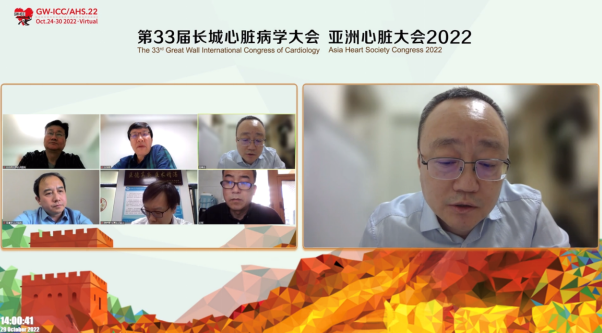
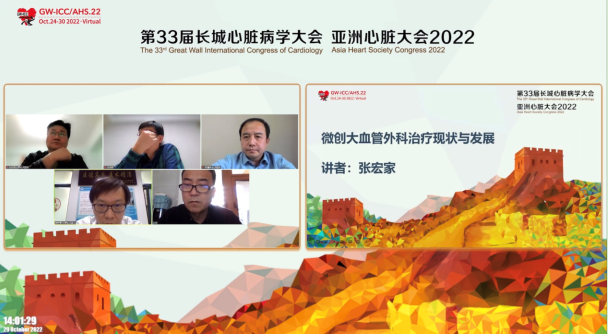
At the beginning of the meeting, Professor Li Haiyang from Beijing Anzhen Hospital, representing Professor Zhang Hongjia, spoke to share the current status and development of minimally invasive vascular surgery. Professor Li Haiyang reviewed the development of minimally invasive techniques such as small incision surgery in the upper sternum, hybrid surgery, and endovascular techniques, summarizing the strengths and advantages of various minimally invasive technologies, affirming the benefits and strong vitality of minimally invasive vascular surgery.
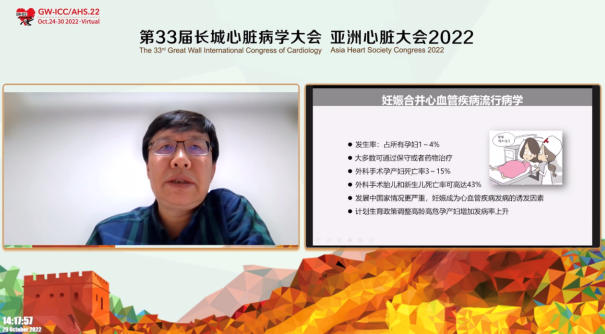
Subsequently, Professor Zhu Junming from Beijing Anzhen Hospital shared strategies for treating acute aortic dissection in pregnancy. Pregnancy is a key factor in triggering cardiovascular diseases, and among these, aortic dissection poses the greatest danger, severely threatening the lives of both mother and fetus. Professor Zhu shared experiences and developments in treating such diseases in China, from “one vessel, one life” to “one vessel, two lives,” and even “one vessel, three lives,” highlighting the arduous exploration process.
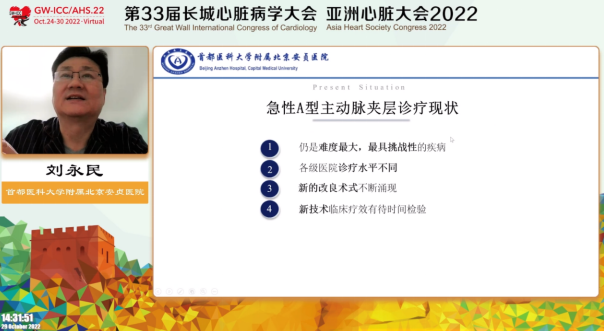
Next, Professor Liu Yongmin from Beijing Anzhen Hospital discussed surgical strategies for type A aortic dissection based on an analysis of reasons for reoperation. Acute type A aortic dissection remains one of the most challenging and difficult diseases. Professor Liu summarized the situations and reasons for reoperations at Anzhen Hospital. He further analyzed surgical strategies for reoperations through two typical cases.
Professor Zheng Jun from Beijing Anzhen Hospital interpreted the “Chinese Expert Consensus on Aortic Surgery – Sun’s Operation.” Professor Zheng elaborated on the specific practices of the representative surgical technique for treating type A dissection involving the aortic arch, known as Sun’s operation, from surgical preparation to surgical steps.
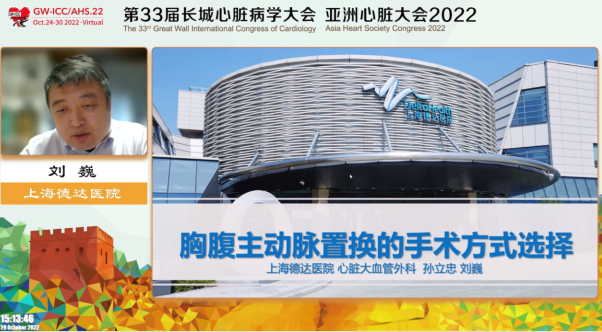
Following this, Professor Liu Wei from Shanghai Deda Hospital discussed the selection of surgical methods for thoracoabdominal aorta. Professor Liu provided a comprehensive explanation of the development and epidemiology of thoracoabdominal aorta, as well as surgical preparation, method selection, surgical access, and perioperative management, focusing on the detailed challenges during the surgical process, with clear logic and thought, benefiting the audience greatly.
Finally, Professor An Jun from Yanbian University Affiliated Hospital shared treatment strategies for type B dissection/aneurysm involving the aortic arch. Since the first report of TEVAR surgery for treating aortic dissection in 1999, various aortic interventional techniques have rapidly developed. Professor An shared his center’s experiences and insights on treating type B dissection/aneurysm involving the aortic arch.
During the discussion session, experts shared their insights and engaged in extensive and in-depth exchanges, providing valuable perspectives for the audience.
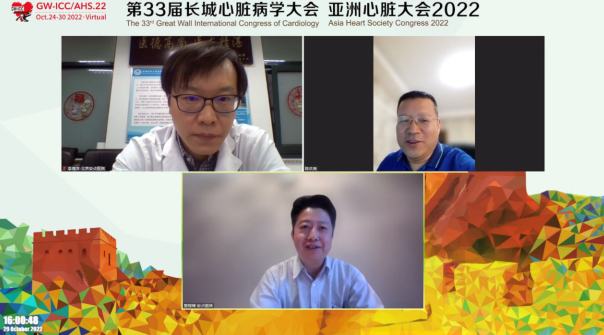
The second session of the forum was hosted by Professor Li Chengnan from Beijing Anzhen Hospital and Professor Chen Qingliang from Tianjin Chest Hospital.
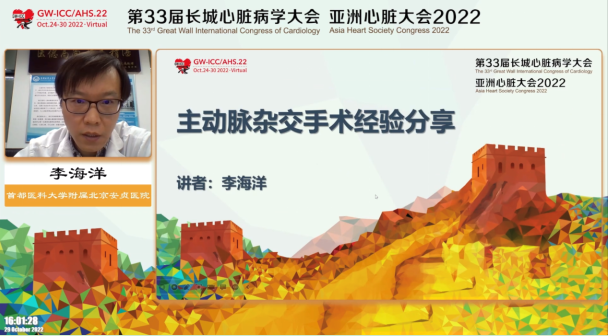
Professor Li Haiyang from Beijing Anzhen Hospital was the first to speak, sharing experiences in aortic hybrid surgery. As the deputy director of the hybrid treatment center at Anzhen Hospital, Professor Li has extensive experience in hybrid surgical treatment. He provided a detailed explanation of four types of hybrid surgeries through specific cases and analyzed the data of hybrid patients over the past two years.
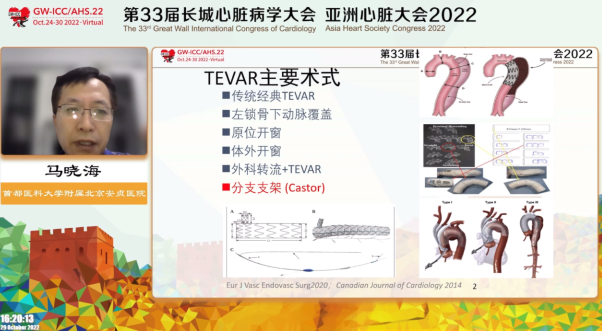
Following him, Professor Ma Xiaohai from Beijing Anzhen Hospital presented on the application of branch stents in TEVAR. Branch stent therapy is a powerful endovascular treatment technique for the aorta. Since 2020, Anzhen Hospital has completed 41 cases, and Professor Ma showcased preliminary research results from his center, explaining the indications and surgical process for branch stents through specific clinical cases.
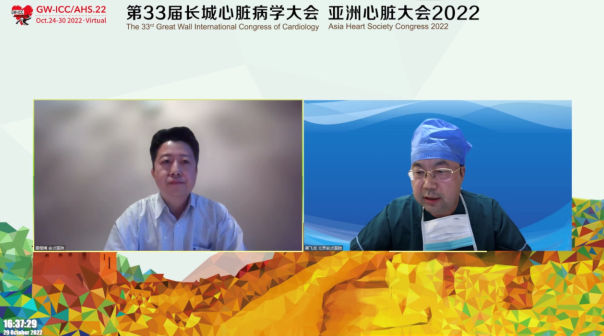
Subsequently, Professor Hei Feilong from Beijing Anzhen Hospital discussed the management of extracorporeal circulation in major vascular surgeries, detailing aspects such as cannulation methods, fluid management, brain perfusion strategy selection, and brain oxygen monitoring techniques, providing a thorough analysis of the best strategies for extracorporeal circulation during aortic surgery based on cutting-edge research results and rich clinical experience.
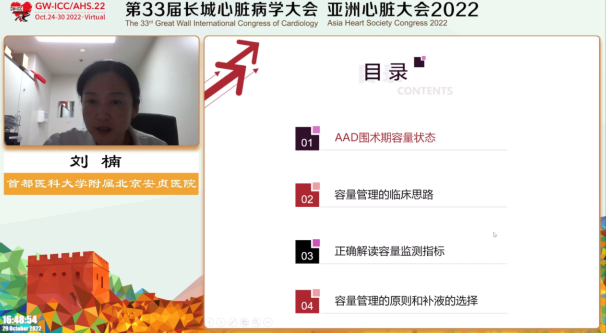
After that, Professor Liu Nan from Beijing Anzhen Hospital shared insights on perioperative volume management for aortic dissection. Patients undergoing aortic surgery experience a series of complex pathophysiological changes, such as systemic inflammatory responses and coagulation disorders, leading to microcirculation disorders. Professor Liu emphasized the need for more detection indicators during the perioperative period to help clinicians assess the true volume status of patients and to establish individualized volume targets from a holistic perspective.
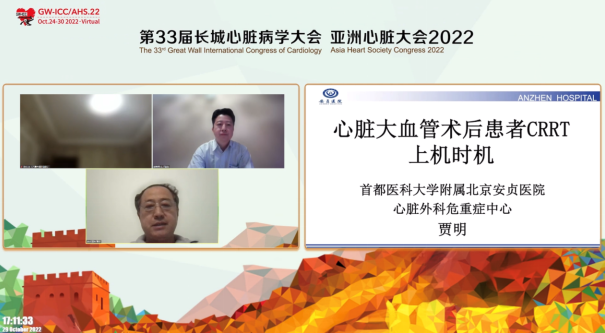
Professor Jia Ming from Beijing Anzhen Hospital introduced the timing of continuous renal replacement therapy (CRRT) after aortic surgery. Acute kidney injury is one of the most common complications after major cardiovascular surgery, with high incidence and mortality rates. Continuous renal replacement therapy (CRRT) is an important method for treating AKI. Professor Jia provided a detailed overview of the history of CRRT development, indications, and explained the best timing for postoperative CRRT based on both domestic and international guidelines and expert consensus.
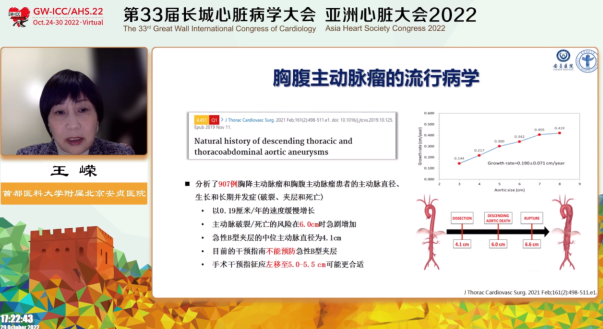
Finally, Professor Wang Rong from Beijing Anzhen Hospital shared insights on anesthesia and organ protection during thoracoabdominal aorta replacement surgery. Thoracoabdominal aorta replacement is an important strategy for treating thoracoabdominal aortic aneurysms. Professor Wang systematically reviewed recent research results on organ protection during thoracoabdominal aorta surgery, discussing strategies for protecting organs during the perioperative period, including blood protection, cardiopulmonary protection, and spinal protection.
During this forum, the collision of ideas and in-depth exchanges among vascular surgery experts from various regions allowed participants to learn about the latest advancements in this field and share their advanced experiences. The discussions further elevated their thoughts and perspectives, providing valuable guidelines for future clinical practice and better benefiting patients.
In the golden autumn of October, we have an appointment in the “air”!