
On July 8, local time in the United States, GlobalFoundries (GF) announced that it has reached a final acquisition agreement with MIPS, a leading supplier of artificial intelligence and processor IP. However, the specific transaction amount has not been disclosed. After more than 40 years of operation, this well-established semiconductor IP company has experienced a series of changes, including being acquired by Imagination, being split and sold to Wave Computing, abandoning the MIPS architecture and shifting to RISC-V, and now finally finding a new home.
Why did GlobalFoundries acquire MIPS?
GlobalFoundries believes that this strategic acquisition will expand its customizable IP product portfolio, allowing it to further differentiate its process technology through IP and software capabilities.
GlobalFoundries President and COO Niels Anderskouv stated, “MIPS has a long tradition of providing efficient and scalable computing IP tailored for performance-critical applications, aligning strategically with the evolving demands of AI platforms across different markets. Through this acquisition, we will enhance our capabilities to offer customers more flexible solutions, combining our differentiated process technology and world-class manufacturing capabilities to help them create top-tier products. This acquisition will be a strong step forward in breaking through the boundaries of efficiency and performance in widespread applications in automotive, industrial, and data center infrastructure.”
Specifically, after abandoning the MIPS architecture, MIPS fully shifted to developing open architecture RISC-V processor IP. In November 2024, MIPS will release the industry’s first high-performance AI RISC-V automotive CPU for ADAS and autonomous vehicles—P8700. For example, Mobileye’s EyeQ chip uses it; in April of this year, MIPS also launched the Atlas product line, a comprehensive computing core designed for real-time and application processing, along with dedicated AI edge processing cores, aimed at enabling leading automotive, industrial, and embedded technology companies to deploy secure, reliable, and efficient physical AI at the edge. Additionally, MIPS introduced Atlas Explorer, a virtual platform that optimizes performance, power consumption, and area during the design cycle.
MIPS CEO Sameer Wasson stated, “Becoming part of GlobalFoundries marks the beginning of a bold new chapter for MIPS. GlobalFoundries’ strong track record in providing differentiated technology through a secure global manufacturing footprint will enhance our ability to accelerate innovation and expand solutions—unlocking new opportunities in physical AI and delivering greater value to our customers.”
Clearly, from GlobalFoundries’ perspective, acquiring MIPS and its RISC-V IP will aid in the development of its future foundry business. This also reflects GlobalFoundries’ optimism about the future development of RISC-V. It is particularly noteworthy that MIPS still holds the intellectual property rights to the MIPS instruction set, and there are still many products based on the MIPS instruction set in the automotive electronics field. Perhaps GlobalFoundries may consider opening up MIPS’s RISC-V technology and its intellectual property in the future to attract foundry orders from chip developers based on these intellectual properties. So the question arises, after Wave Computing acquired MIPS and renamed it, even after transitioning to RISC-V, it still retained the MIPS brand, primarily because MIPS is more well-known than Wave Computing. However, after GlobalFoundries completes the acquisition of MIPS, will it retain the MIPS brand in the future, continue to use it, or put it on hold? After all, according to GlobalFoundries, what they value is MIPS’s RISC-V related technology.
It should be noted that the acquisition of MIPS is subject to customary closing conditions, including obtaining necessary regulatory approvals, and is expected to be completed in the second half of 2025. After the acquisition, MIPS will continue to operate as an independent business within GlobalFoundries and provide services to its customers through a wide range of technologies.
The Rise of MIPS
It is well known that Intel’s x86 architecture is a CISC (Complex Instruction Set Computer) architecture, which is unique to it. In the late 1970s, IBM realized that increasingly complex instruction systems were not only difficult to implement but could also degrade system performance. Therefore, scientists such as Patterson from the University of California, Berkeley, and Hennessy from Stanford University began to attempt to design a Reduced Instruction Set (RISC).
RISC is a CPU instruction set architecture that contrasts with CISC, breaking longer instructions into several single instructions of the same length, simplifying CPU operations, speeding up processing, and making design and development easier.
Subsequently, architectures such as Arm, IBM PowerPC, MIPS, SPARC, Alpha, and even the recently popular RISC-V architecture have evolved from the open-source RISC (Reduced Instruction Set Computer) architecture, forming a self-owned intellectual property instruction set architecture.
As one of the leaders in the RISC architecture, Hennessy led a team to develop the first MIPS architecture processor in 1981. In 1984, Hennessy left Stanford University to found MIPS. Since then, MIPS has launched several generations of very successful commercial products, such as the R3000, which sold over a million units, and the R3000A, which sold over a hundred million units. MIPS processors have been adopted by many leading computer manufacturers, including Epson, DEC, Toshiba, and router giant Cisco.
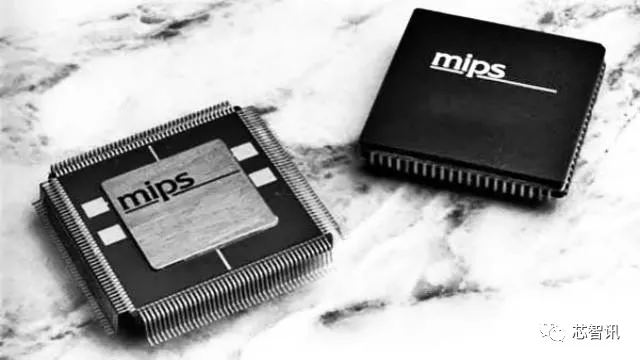
In 1991, MIPS also pioneered the first commercially available 64-bit microprocessor, the R4000. In contrast, Arm did not release its 64-bit Arm processor core until 2012.
However, during this process, due to limitations in cost and R&D investment, MIPS struggled to compete with Intel’s x86 architecture and large companies like IBM and Sun that used self-developed RISC architecture chips, gradually falling into difficulties.
In 1992, MIPS was acquired by Silicon Graphics. In 1996, MIPS launched the R10000, which was touted as the world’s fastest processor at the time, attracting widespread attention in the industry. In 1998, MIPS successfully went public on NASDAQ, marking a high point for the company.
The Decline of MIPS and Its Shift to RISC-V
However, with the rise of mobile communication terminals—smartphones, MIPS began to gradually decline.
After MIPS was acquired by Silicon Graphics in 1992, it focused on developing high-end technology for Silicon Graphics systems. Although some of MIPS’s general-purpose processors continued to be produced, almost all embedded technology licenses were closed, causing MIPS to effectively “disappear” from the market between 1992 and 1996.
This allowed Arm to rapidly capture the embedded 32-bit core market during this period, most notably with the rapid success of Nokia and TI in the mobile market, subsequently dominating an increasingly wide range of fields.
On one hand, MIPS had previously focused on the computer market, where it had strong performance but also high power consumption. At that time, smartphones did not have high performance requirements but had high power consumption demands.
On the other hand, MIPS’s business model also had issues. For example, its IP licensing was more expensive than instruction set licensing and allowed for the addition of instructions, prompting its customers to design their own MIPS cores and add various instructions according to their needs, leading to severe fragmentation of the MIPS ecosystem, which was detrimental to its development.
As another major player in the RISC camp, Arm, despite lackluster performance in the 1990s and stagnant processor shipments, successfully captured the mobile market. With the explosive growth of the mobile market, Arm processors gained a reputation for excellent energy efficiency, primarily through IP licensing (instruction set licensing is much more expensive than IP licensing), making other chip manufacturers more willing to design chips based on Arm core IP, controlling fragmentation while accelerating ecosystem development. Especially with the rise of mobile internet, the emergence of the Android system, and the explosion of the smartphone market, Arm gradually built a massive mobile ecosystem.
Data shows that in 2006, global Arm chip shipments reached 2 billion units, growing to 4.5 billion units by 2010. Official data indicates that in the fiscal year 2021, chip shipments based on Arm architecture reached a record high of 29.2 billion units.
In contrast, MIPS not only missed the mobile market but also faced defeat in the computer market, with major RISC camp players like IBM and Sun being gradually defeated by Intel’s x86 architecture, further diminishing MIPS’s influence.
In 2011, the MIPS camp’s Beijing Junzheng, in collaboration with related manufacturers, launched the world’s first MIPS architecture CPU XBurst Android 4.0 tablet, priced at only $99, which quickly gained success in the market. At that time, the outside world believed that MIPS was likely to compete directly with Arm in the mobile sector.
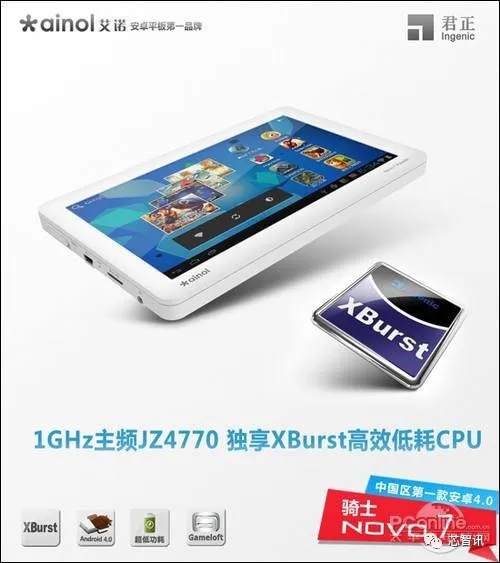
However, at that time, Arm had already established a complete ecosystem in the mobile market. MIPS, on the other hand, needed to adapt each application to the Android system. Due to the limited number of mobile terminals based on the MIPS architecture, the only chip manufacturer entering the mobile market with MIPS chips was Junzheng, and software vendors were understandably reluctant to adapt. Without comprehensive ecosystem support, the entry of new chip manufacturers, and the inability of Junzheng and MIPS to invest heavily in building a mobile ecosystem, MIPS’s “success” in the tablet market was merely fleeting.
On the other hand, perhaps to avoid the threat from MIPS, in November 2013, Arm invested $167.5 million, in collaboration with its patent organization Bridge Crossing LLC, to acquire 498 of MIPS’s 580 patents for $350 million. Meanwhile, graphics processor IP vendor Imagination Technologies acquired MIPS’s operating business and the remaining 82 key patents related to core architecture for $60 million, retaining the right to use all patents sold to Bridge Crossing LLC royalty-free. Similarly, Bridge Crossing LLC also received a restrictive license for the 82 retained patents.
This division of MIPS was a significant blow to the company itself, and subsequently, MIPS changed hands several times, severely impacting its normal development.
In 2017, Imagination Technologies, to facilitate its acquisition by Chinese firm Canyon Bridge Capital Partners, divested MIPS’s embedded processor business in the United States, selling it to California-based investment firm Tallwood Venture Capital for $65 million.
In June 2018, AI chip startup Wave Computing officially acquired MIPS from Tallwood Venture Capital.
At the time of acquisition, Wave Computing hoped to leverage MIPS for significant growth. On December 18, 2018, Wave Computing announced that MIPS would open source its latest core R6 in the first quarter of 2019, aiming to accelerate the adoption of the MIPS instruction set architecture and help the gradually marginalized MIPS instruction set architecture get back on track. Meanwhile, the open-source RISC-V architecture was beginning to gain market popularity.
However, by the end of 2019, Wave Computing informed registered MIPS Open users via email: “We regret to announce the closure of the MIPS Open program, effective November 14, 2019. Wave will no longer provide free downloads of MIPS open components, including MIPS architecture, cores, tools, IDE, simulators, FPGA packages, and/or any related software code or computer hardware.”
Thus, MIPS’s brief foray into open source officially ended, further dampening developer enthusiasm for MIPS.
Even more frustrating for developers in the MIPS camp was that Wave Computing, after renaming itself to MIPS, announced in early 2021 that it would no longer design MIPS processors but would shift to developing RISC-V processors.
Wave Computing’s statement at the time explained: “Looking ahead, the restructured business will be called MIPS, reflecting the company’s strategic focus on the groundbreaking RISC-based processor architecture originally developed by MIPS. MIPS is developing an eighth-generation architecture based on industry-leading standards, which will be based on the open-source RISC-V processor standard.”
The fact that the owners of MIPS technology have abandoned the MIPS architecture in favor of RISC-V seems to signal the end of the MIPS era.
What is the future of the MIPS ecosystem in China? Although MIPS’s development in China continued at that time, with Longxin and Beijing Junzheng being the two major builders of the MIPS ecosystem in China.
As early as 2001, when the Institute of Computing Technology of the Chinese Academy of Sciences established the Longxin project group to develop domestic CPUs, the Longxin project group recognized the mature architecture of MIPS that could be freely modified. At that time, MIPS, having missed the mobile market opportunity, hoped to leverage Longxin to explore the computer and embedded markets in China.
Subsequently, the Longxin Central Processing Unit of the Institute of Computing Technology obtained all patents and licenses for the MIPS processor IP and its bus and instruction set. After Longxin began industrialization, in 2011, Longxin Zhongke independently purchased the MIPS architecture license.
According to public reports, Longxin Zhongke obtained a lifetime license from MIPS, renewing every few years for a fixed fee, with Longxin Zhongke having the right to decide whether to renew (i.e., the initiative to renew), and both parties not needing to renegotiate, with the agreement not being terminable unless both parties go bankrupt.
However, Longxin launched its self-developed instruction system LoongArch in 2020, and subsequently in 2021, it released the first processors based on the LoongArch instruction system, with all new CPUs now transitioning to the LoongArch instruction system.
It is worth mentioning that domestic chip manufacturer Xilianxin obtained exclusive commercial operating rights for MIPS in China (including Hong Kong and Macau) from Wave Computing and MIPS in December 2018, along with permanent, irrevocable exclusive commercial operating licenses for over 1,400 MIPS CPU technologies and related intellectual properties in China (global non-exclusive sales rights), including all core instruction set architectures, core licensing and sublicensing rights, modification rights, litigation rights, naming rights, and manufacturing rights.
After Longxin transitioned to the LoongArch instruction system, in 2021, Xilianxin engaged in intellectual property litigation with Longxin over the MIPS technology licensing contract in multiple locations. Although the court confirmed Xilianxin’s MIPS rights, it rejected its other claims, resulting in a factual victory for Longxin.
In addition to Longxin, Beijing Junzheng is also a major supporter of the MIPS architecture in China. For instance, as mentioned earlier, in 2011, Beijing Junzheng launched the world’s first Android 4.0 tablet with a MIPS architecture CPU, achieving market success. Although Beijing Junzheng exited the mobile market in 2013, it has still established a foothold in the IoT and smart hardware markets with its self-developed processors based on the MIPS architecture.
In 2018, Xian Yonghui, then Vice President of Beijing Junzheng, stated in a media interview, “Our products can achieve excellent high performance and low power consumption advantages, partly because the MIPS architecture itself is conducive to low-power design, and partly due to technological accumulation.” He also mentioned that MIPS performs better than Arm in communication protocols.
However, as Longxin transitioned to LoongArch and the litigation between Xilianxin and Longxin erupted, Beijing Junzheng also began planning to shift to the RISC-V camp. In 2021, Beijing Junzheng stated on its investor interaction platform, “The company has been promoting the RISC-V CPU core development in recent years, which is relatively complex, and we will launch chip products based on RISC-V cores when the time is right.” In recent years, Beijing Junzheng has also launched its self-developed RISC-V-based CPU core Victory, although it is currently mainly used in co-processors within SoCs.
However, as the saying goes, a thin camel is bigger than a horse. The current shipment of chips based on the MIPS architecture from Longxin, Beijing Junzheng, and other domestic MIPS architecture shipments still amounts to several hundred million units annually.
It is reported that when Xilianxin first took over MIPS’s rights in China, the shipment of MIPS-based processors in China was 68.3 million units, which grew to 173 million units by 2021, and by the first half of 2022, it had already surpassed the total for 2021. This reflects the rapid development of MIPS in China at that time. Xilianxin even proposed a goal to reach 1.4 billion authorized chips by 2025.
However, looking back now, with Longxin gradually transitioning to LoongArch starting in 2021 and Beijing Junzheng also shifting to RISC-V, the future of the MIPS ecosystem in China is shrouded in uncertainty.
For more information on the RISC-V ecosystem in China, please refer to Xinzhi News’s previous article: “What is the charm of RISC-V chips, and why should they be encouraged for nationwide use?”
Editor: Xinzhi News – Langke Jian
Previous Exciting ArticlesDeeply cultivated for nearly 40 years! NXP’s China strategy fully upgraded: Building a fully domestic supply chain!Taiwan Semiconductor’s average bonus exceeds 440,000, while Samsung’s foundry department has zero bonuses!Did Huawei’s Pangu model “plagiarize” Alibaba’s Qwen? Official responseWhy did Noth Micro issue a “statement” angrily refuting its major shareholder?Is Roma’s factory completely shut down? Official responseWill Intel “give up” on the 18A process and stop developing glass substrates?Wolfspeed applies for bankruptcy reorganization, stock price skyrockets by 176%!MediaTek’s average annual salary for regular employees is 1.054 million, while TSMC’s is 831,000!Proposed fundraising of 8 billion yuan! Moore Threads IPO accepted: Cumulative losses exceed 5 billion yuan over 3 years!Proposed fundraising of 3.9 billion yuan! Muxi Co., Ltd. IPO accepted: GPU cumulative sales exceed 25,000 units!NVIDIA’s GB300 AI server is about to ship, with a surge in demand for 1.6T optical modulesUnisoc completes IPO counseling filing: Valuation may reach 70 billion yuan!Canada orders to ban Hikvision! Official responsePre-investment valuation of 14 billion yuan? Rumor has it that Biran Technology has raised 1.5 billion yuan and plans to IPO in Hong Kong!Produced in Nanchang! The real main force of domestic BAW filtersStarting at 253,500 yuan! Xiaomi YU7 officially launched: Sales exceeded 200,000 units in 3 minutes!Longxin 3C6000 series released: Competing with Intel’s third-generation Xeon processors! New GPGPU chip exposed!
For industry communication and cooperation, please add WeChat: icsmart01
Xinzhi News official group: 221807116