“The Path of an Excellent Engineer in Three Stages”
1. Basic Stage: TIA Portal PLC Technology.
2. Intermediate Stage: TIA Portal and C# Advanced Language Technology.
3. Advanced Stage: Standardized Programming Methods for PLCs.
The Path of Standardization!

Editor’s Note: A friend from the TIA Portal community asked: How to convert REAL to 4 bytes in TIA Portal? This question is universal, especially regarding the understanding of data types. I shared it in 15 TIA Portal technical groups for discussion, and a friend provided four methods worth learning, which I share with everyone.
Method 1: Using POKE and PEEK_BYTE in SCL Statements
Define a REAL data type variable in a standard-access DB data block and use the following conversion SCL program to implement the conversion: with a byte array of length 4. Taking the floating-point number 3.14 as an example, its corresponding hexadecimal number is: 16#4048_F5C3, defined as follows:
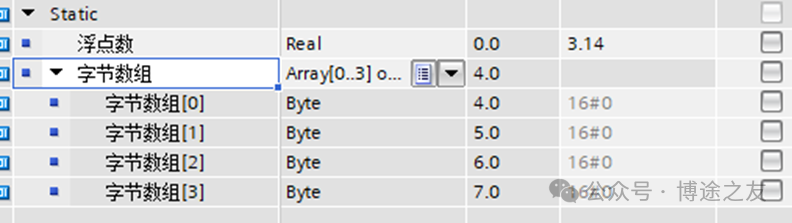
Use the following conversion SCL program to implement the conversion:

Note: Cycle is of USint data type. For specific usage of POKE and PEEK_BYTE, please refer to the TIA Portal help.
After executing the program, the conversion result is as follows:

Method 2: Using Serialization Instruction
Define a floating-point number in the DB block, taking 3.14 as an example, its corresponding hexadecimal number is: 16#4048_F5C3. The program using this instruction for conversion is as follows:
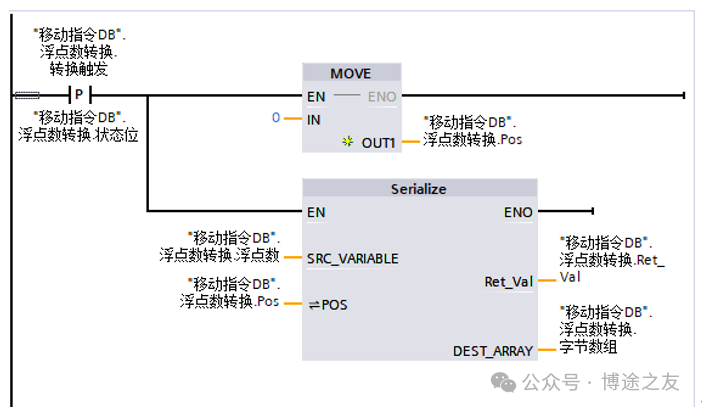
Note: For specific usage of this instruction, please refer to the TIA Portal help.
After executing the conversion instruction, the byte array will save the four bytes corresponding to the floating-point number as follows:

Method 3: Using Slice Access Method for Conversion
Define a REAL data type variable and a byte array of length 4 in a DB data block, taking 3.14 as an example, its corresponding hexadecimal number is: 16#4048_F5C3. Use an FC block to encapsulate the conversion, with the FC interface defined as follows:
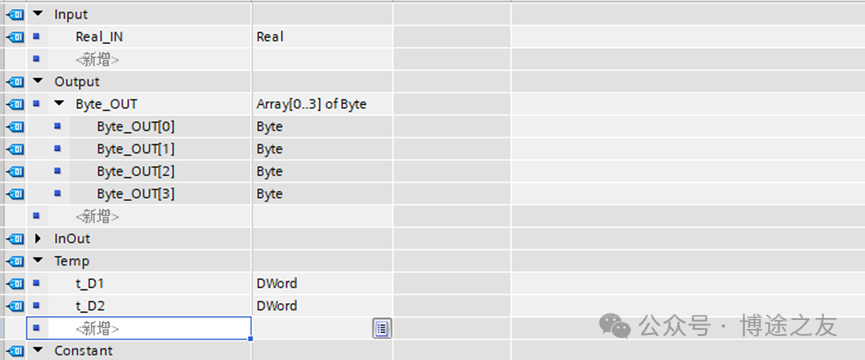
The conversion program is as follows:
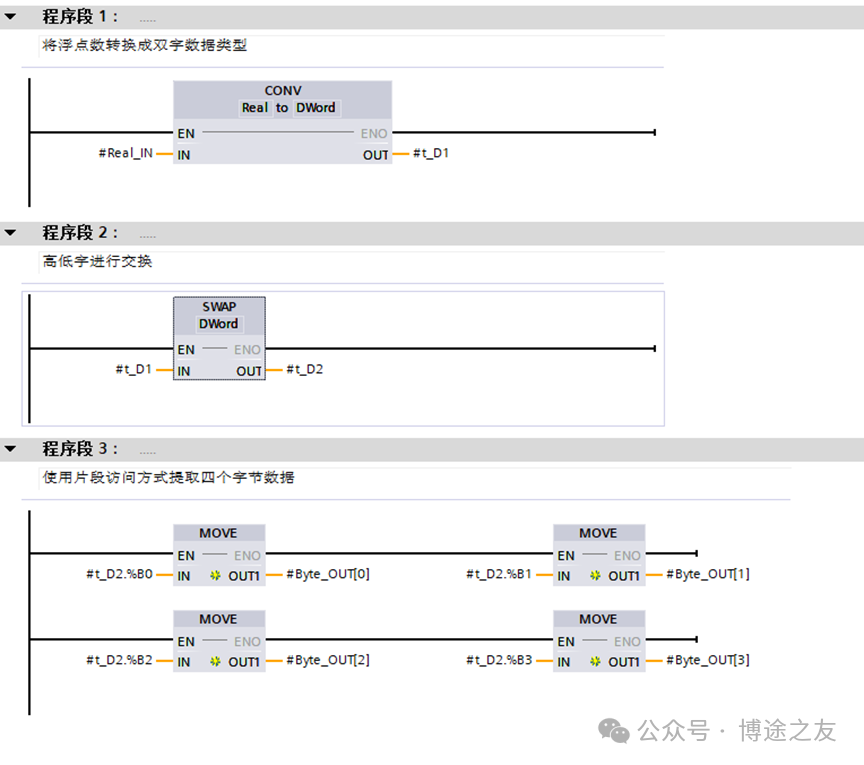
Note: When using slice access, be careful with the conversion of high and low words.
After executing the program, the conversion result is as follows:

Method 4: Using AT Access Method for Conversion
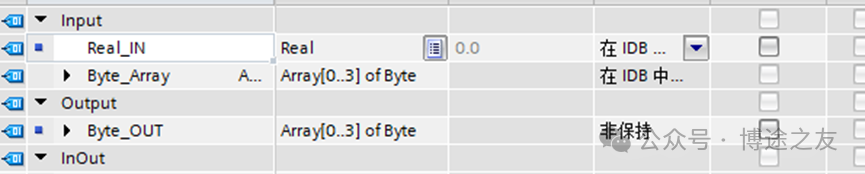
Define a REAL data type variable and a byte array of length 4 in a DB data block, taking 3.14 as an example, its corresponding hexadecimal number is: 16#4048_F5C3. Use an FB block to encapsulate the conversion, with the FB interface defined as follows:
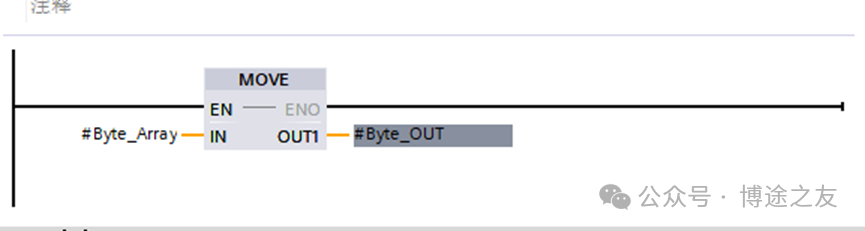
In this FB, use the MOVE instruction to assign values
After executing the program, the conversion result is as follows:

Conclusion: All roads lead to Rome; I hope to find the optimal path!
Walk with the “Excellent Ones”!
Make technical learning simpler!

Learning methods for PLC standardization: a process from chaos to understanding and insight.
Technical methods for PLC standardization: What technical points does standardization include? What is the relationship between these technical points?
Video explanation of the technical route for PLC standardization: S88 standard, technical architecture, and continuous iteration.
Discussion in TIA Portal groups: Two groups discussed C# and SCL languages, finally clarifying the application of SCL language.
The value of group communication: Real feedback from friends in the Siemens elite group over 6 years.
Book friends’ appointment: Release of three major supporting resources for TIA Portal PLC books.
Join TIA Portal friends and meet excellent engineers.

Teacher Rui’s books (available for purchase on JD and Dangdang)