
 Click the blue text to follow us
In today’s digital age, traditional access control systems can no longer meet the dual demands for security and convenience. This article will introduce a face recognition access control system developed based on MATLAB, which utilizes advanced PCA algorithms and SVM classification technology to achieve an intelligent experience of “face scanning to open the door”.
Pain Points and Innovations of Traditional Access Control
Traditional access control systems rely on access cards and manual verification, which pose numerous security risks: cards can be easily lost or duplicated, and manual verification is inefficient and prone to errors. According to statistics, identity fraud causes up to $6 billion in economic losses annually in the United States alone.
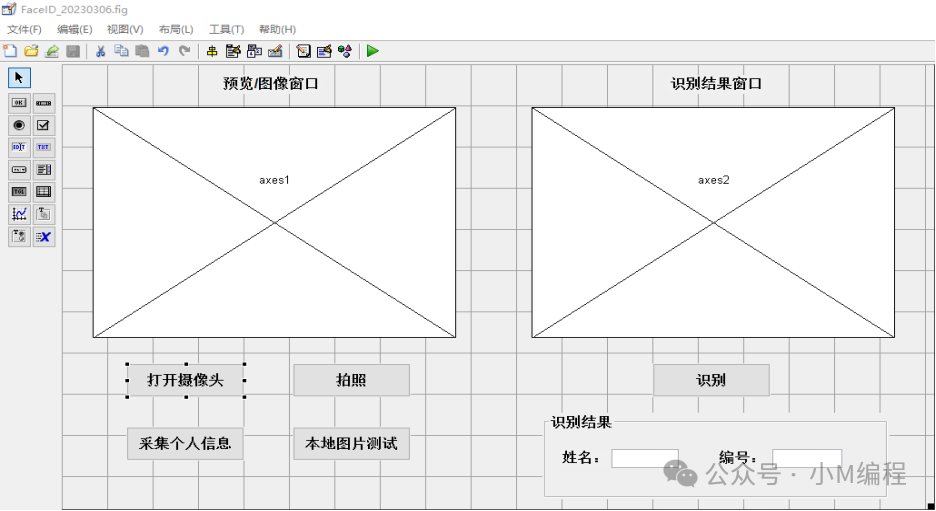
In contrast, face recognition-based access control systems have completely changed this situation—there is no need to carry any cards; identity verification can be completed simply by “scanning the face”, which is both secure and convenient. This type of system is particularly suitable for places with high security requirements, such as laboratories and data centers.
Core Technology Analysis: The Powerful Combination of PCA and SVM
This system employs a combined algorithm architecture of Principal Component Analysis (PCA) and Support Vector Machine (SVM) to achieve efficient and accurate face recognition.
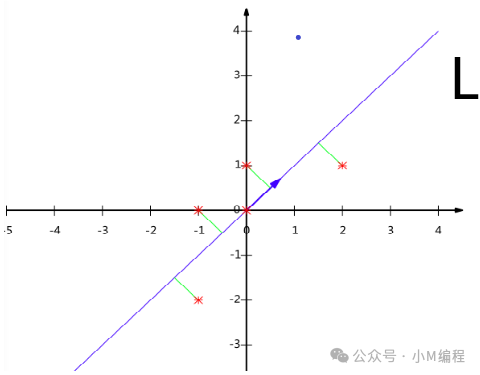
PCA Algorithm acts like a savvy data compression expert, extracting the most representative features from vast amounts of face data, reducing high-dimensional image data to low-dimensional while retaining key identification information. As shown in Figure 2.3, PCA effectively reduces dimensionality by finding the best projection direction.
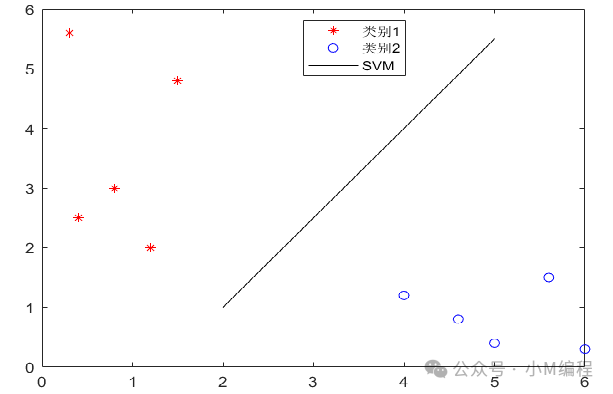
SVM Classifier serves as a meticulous “gatekeeper”, searching for the optimal classification boundary in high-dimensional feature space to ensure accurate differentiation of different faces. As shown in Figure 2.4, SVM enhances the system’s robustness and accuracy by maximizing the classification margin.
The advantages of this combined algorithm include:
Strong adaptability to changes in lighting, expressions, etc.
Excellent performance in small sample situations
Relatively simple implementation and easy deployment
System Function Experience: Full Process from Enrollment to Recognition
The system provides an intuitive GUI interface, making it simple and convenient to operate:
Personal Information Collection: Click the “Collect Personal Information” button, enter student ID, name, and other information, and the system will automatically capture and store the user’s face image in the training set.
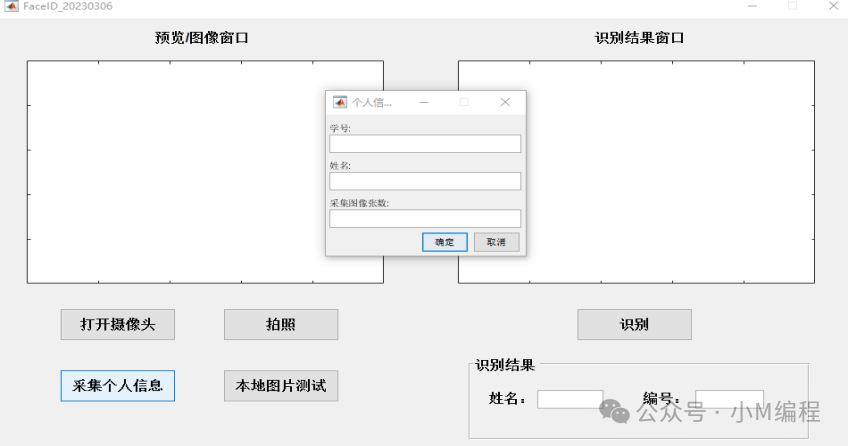
Local Image Testing: Users can select pre-stored test images for recognition verification. When recognition is successful, the system will display the matched personnel information along with a “Welcome Home” prompt; unregistered individuals will receive a “No such person found” message.
Real-time Camera Recognition: Users only need to face the camera, and the system can capture the face image in real-time and complete recognition, making the entire process smooth and natural.
Practical Application Effects and Outlook
In practical tests, the system has a high recognition accuracy for registered personnel, effectively distinguishing between individuals inside and outside the database. However, there are some limitations, such as insufficient adaptability to significant posture changes, which will be a direction for future improvements.
With the continuous development of technology, face recognition access control systems will continue to optimize in the following areas:
Improving recognition robustness in complex environments (e.g., lighting changes, occlusions, etc.)
Enhancing processing efficiency for large-scale data
Reducing the error recognition rate
This MATLAB-based face recognition access control system not only represents the development direction of access control technology but also showcases the broad application prospects of biometric technology in daily life. It is both an innovation of traditional access methods and a reflection of intelligent living.
In the future, as algorithms continue to optimize and hardware performance improves, this “seamless passage” experience will become a standard configuration in more locations, achieving a perfect unity of security and convenience.
END