Click the blue text Follow me
In fields such as smart manufacturing, warehousing logistics, and outdoor operations, the differences between industrial tablets and consumer-grade tablets go far beyond reinforced casings. The core distinctions are also reflected in interface design and functional expansion, which determine whether the devices can drive productivity in harsh environments.
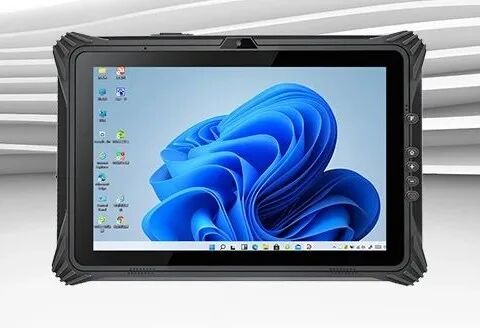
1. Core Industrial Interfaces
Rugged industrial tablets are equipped with various specialized interfaces to meet complex scenarios:
1. Ethernet Port:Ensures reliable wired network connections in industrial environments with unstable WiFi or high security requirements, safeguarding real-time data transmission.
2. Serial Port:Used to connect traditional industrial devices such as PLCs, sensors, and CNC machines, enabling bidirectional communication and control, serving as a key hub in automated production lines.
3. Industrial-grade USB Port:Supports frequent plug-and-play and high-load transmission, allowing direct connections to peripherals like barcode scanners and printers.
4. Display Interface:Can output images to monitoring screens, significantly enhancing operational efficiency.
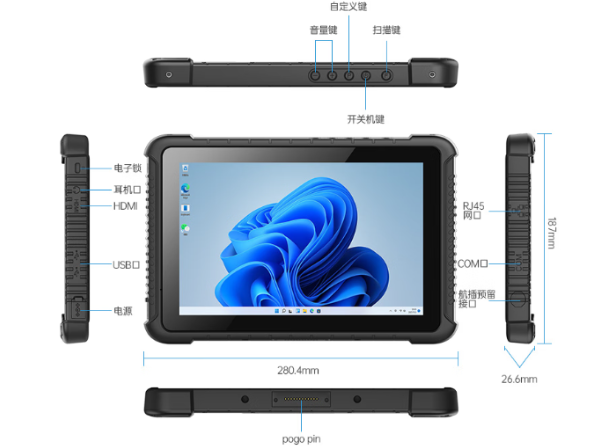
5. QR Code Scanning Module:Enables rapid scanning in logistics sorting or inventory management, far exceeding the efficiency of consumer tablets with external cameras.
Additionally, rugged industrial tablets can be configured with shortcut interfaces to trigger emergency operations or high-frequency functions with one touch, greatly improving operational efficiency.
2. Environmental Adaptability
The core advantage of industrial tablets also lies in their adaptability to extreme environments:
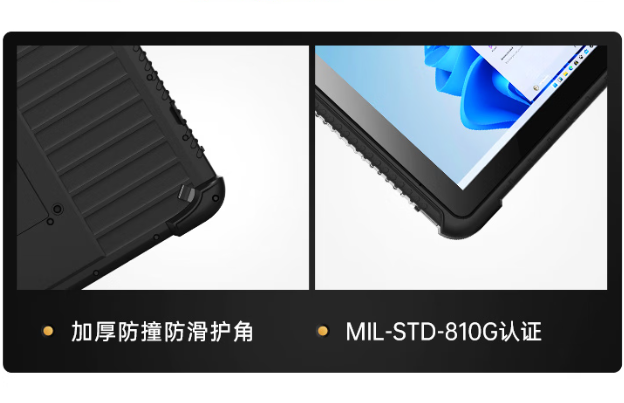
1. Protection Capability:Typically certified with an IP65 rating or higher, they can withstand high-pressure water jets, dust intrusion, and have drop resistance from heights of over 0.8 meters.
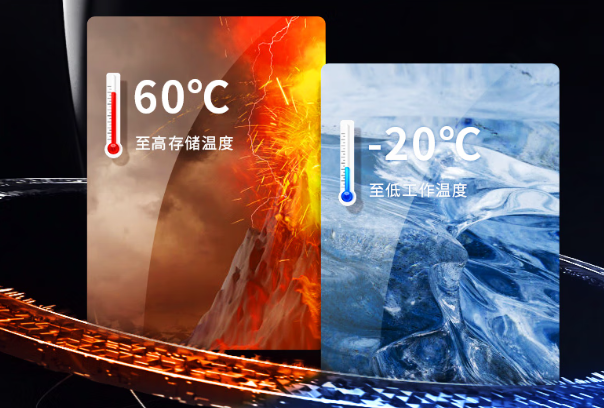
2. Wide Temperature Operation:They can operate in environments ranging from -20℃ to 60℃ (consumer tablets usually only support 0-40℃), ensuring continuous operation in cold storage or high-temperature workshops.
3. Consumer Tablets: Experience First, Weak Expansion
Consumer-grade tablets from brands like Huawei and Apple typically have highly simplified interfaces; for example, the iPad Pro currently retains only the Type-C port, primarily serving charging and basic external connections. Their functional design is more focused on user experience, lacking the capability for direct connections to industrial devices.
Consumer tablets prioritize lightweight designs, while rugged industrial tablets are generally reinforced, heavier, impact-resistant, and corrosion-resistant, suitable for extreme environments with oil, moisture, etc.
4. Systems and Ecosystems
Consumer tablets emphasize ecosystem collaboration, while industrial applications require support for customized OS and dedicated software. Industrial tablets typically support Android or Windows systems, compatible with industry-specific software, meeting private deployment needs.
5. Purchasing Recommendations
For scenarios such as warehousing, inspections, and production lines, it is essential to prioritize interface compatibility, protection levels, and battery life. Consumer tablets are suitable for mobile office work and light creative tasks, while the stability and expandability required in industrial scenarios must rely on professional equipment.
If you need a highly reliable rugged industrial tablet, you can contact professional manufacturers like Dongtian Industrial Control, who can customize interfaces based on scenarios to ensure seamless integration of hardware and industry applications.
 END
END
Follow me for more industry news!