 Charging Head Network’s 3661st disassembly report.
Introduction
The Charging Head Network has acquired the Huawei R4850G1 power module. This module uses digital control, supports a wide range of voltage inputs, with a default output voltage of 53.5V and a rated output power of 3000W. The output power is 1200W at low voltage input. The power module has connectors at the rear for input, output, and communication connections.
The front of the power module is equipped with installation clips, secured with screws. The panel contains a metal grille and a cooling fan. The module panel has indicator lights to indicate working status and faults. Below, we will present the disassembly of the Huawei R4850G1 power module, taking a look at the internal design and materials used.
Appearance of the Huawei R4850G1 Power Module
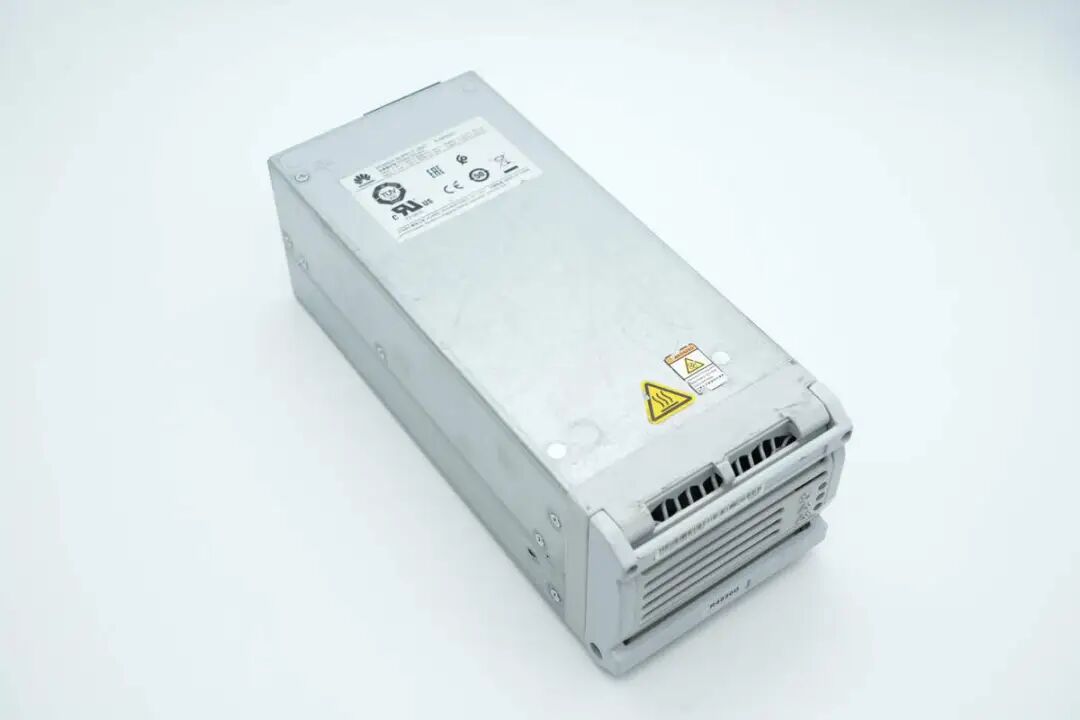
The Huawei R4850G1 power module features a metal casing, with installation clips at the front.
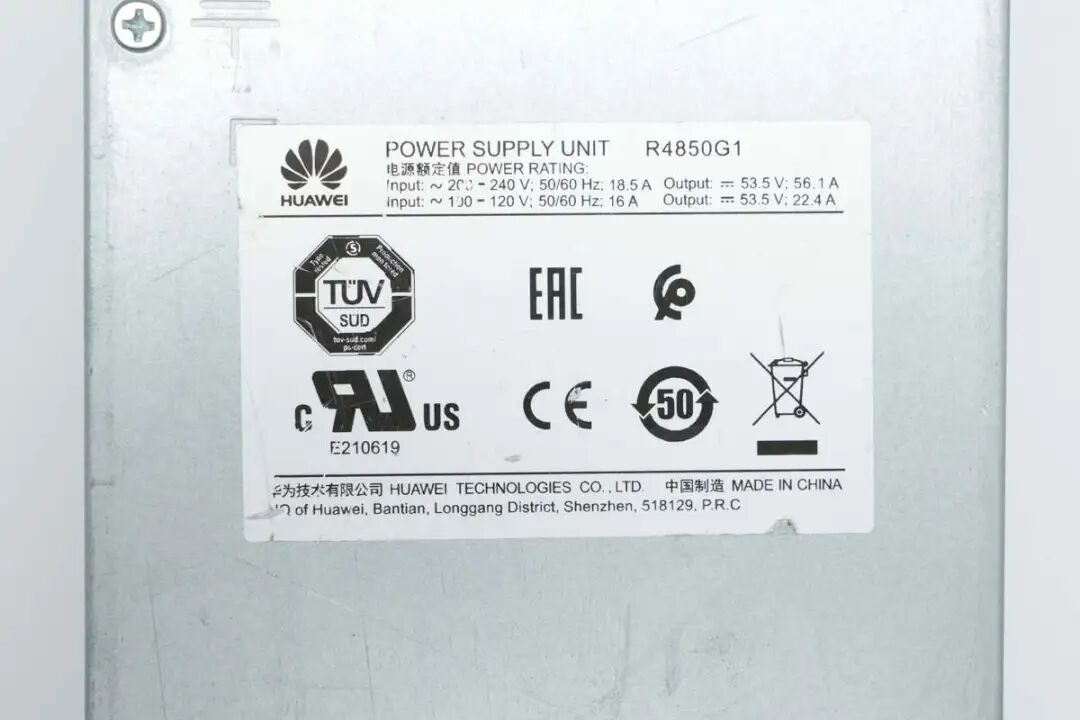
Close-up of the power module’s nameplate
Model: R4850G1
Power Ratings:
Input: ~200-240V; 50/60Hz; 18.5A
Output: 53.5V; 56.1A
Input: ~100-120V; 50/60Hz; 16A
Output: 53.5V; 22.4A
This power supply has passed TUV, EAC, CP, UL, and CE certifications.
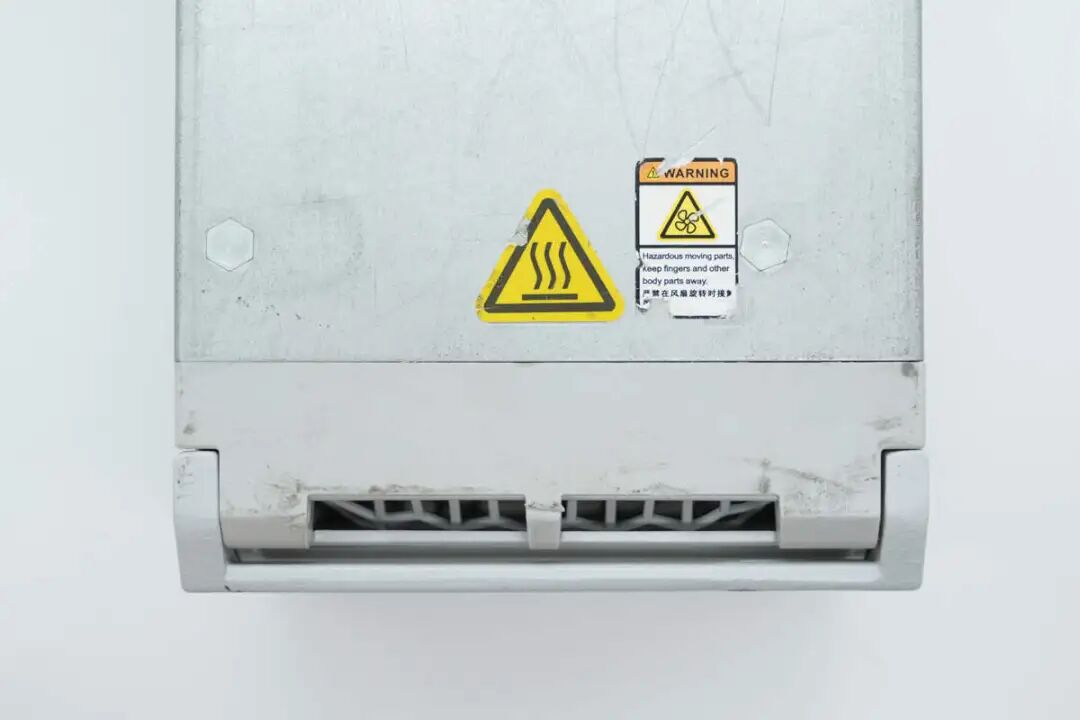
The top of the casing has a warning label.
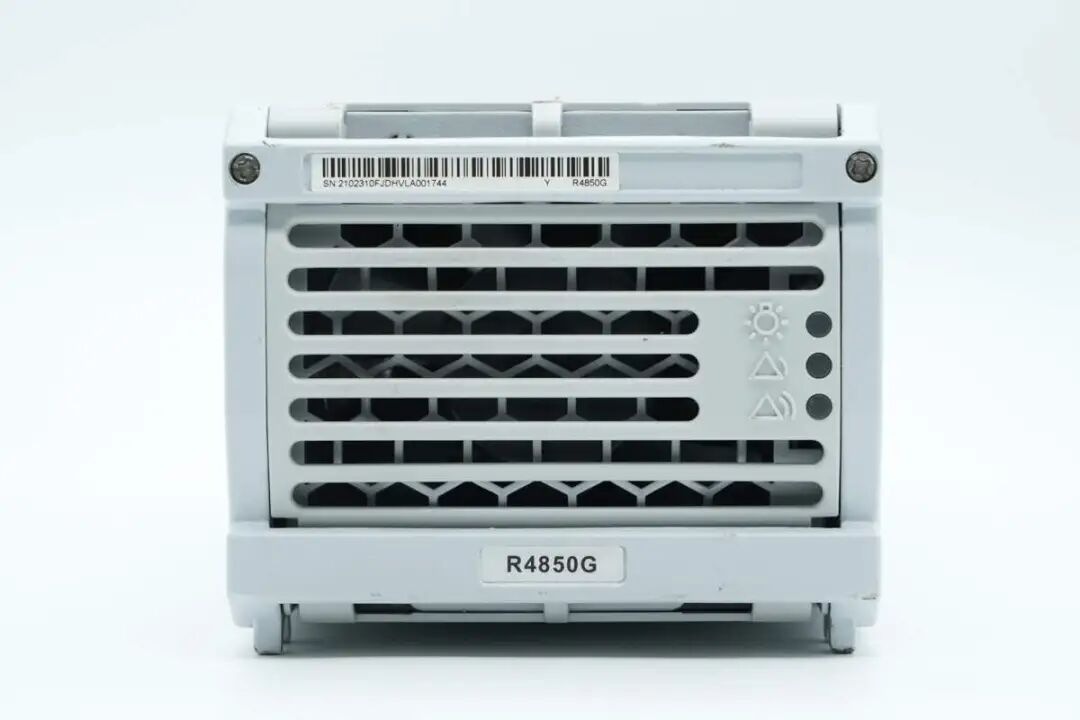
The panel has installation handles, and the bottom has installation clips secured with screws. Inside, there is a cooling fan, and the right side of the panel has indicator lights.
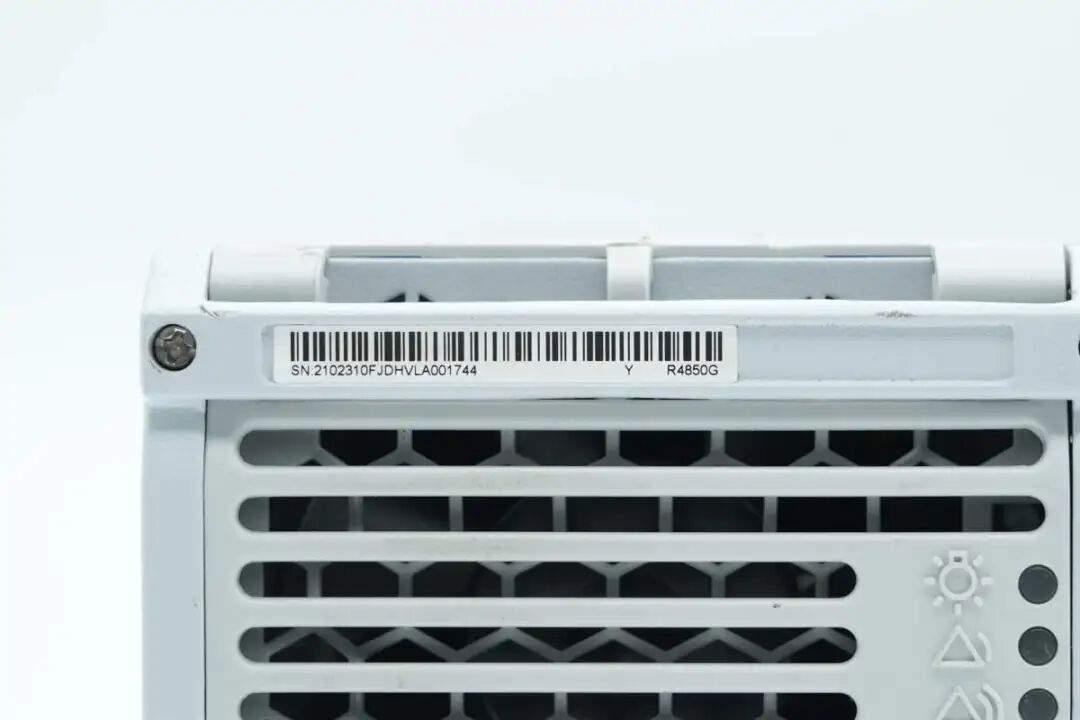
The handle has a serial number sticker attached.
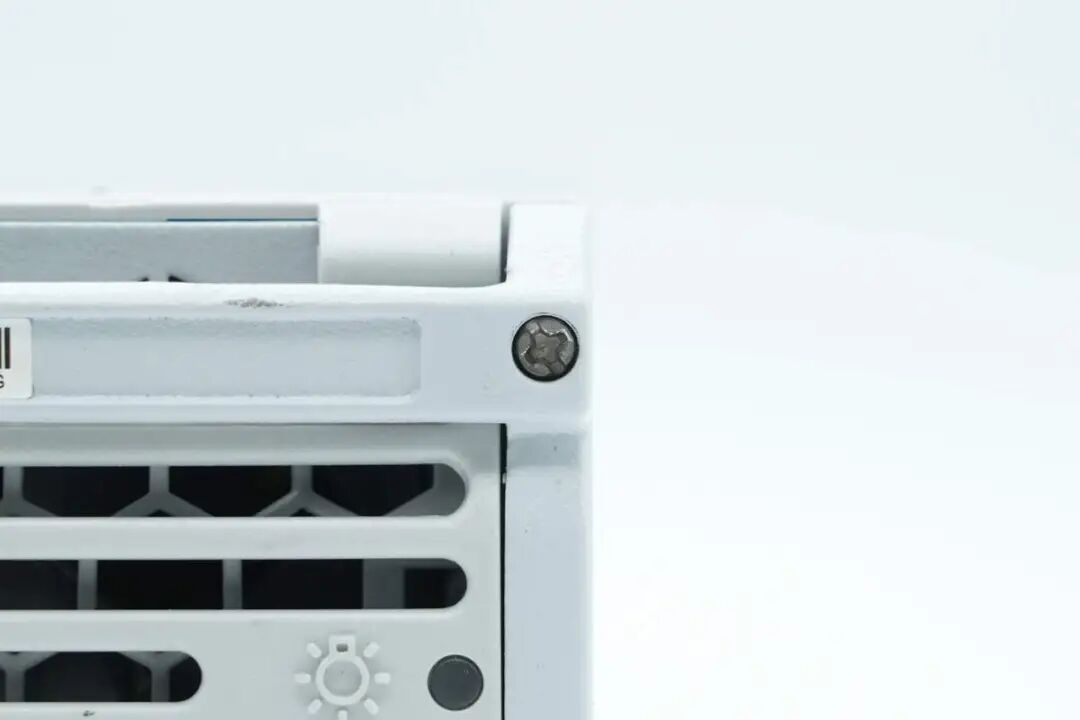
The handle is secured with screws.
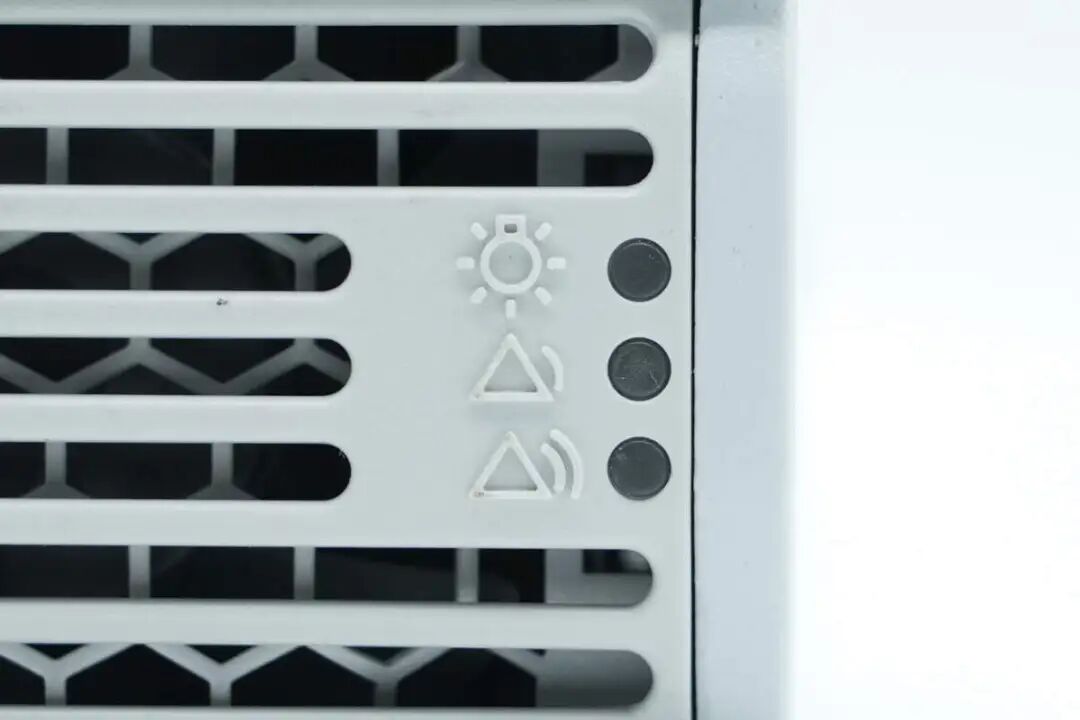
Close-up of the power indicator light, alarm indicator light, and fault indicator light.
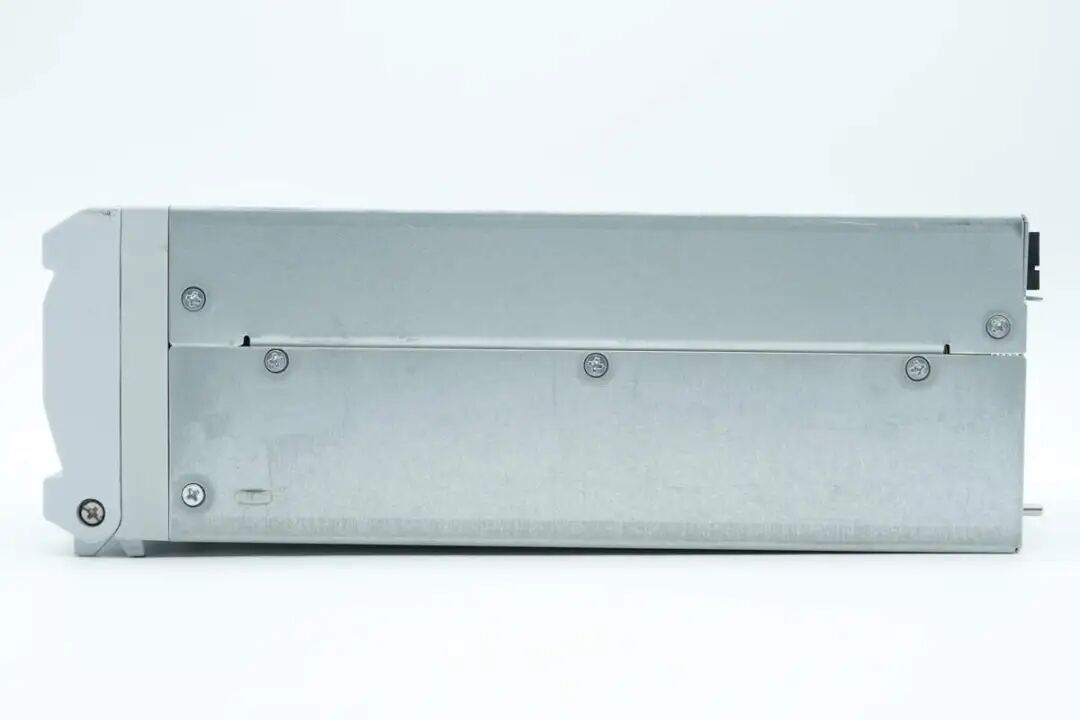
The side of the casing has fixed screws.
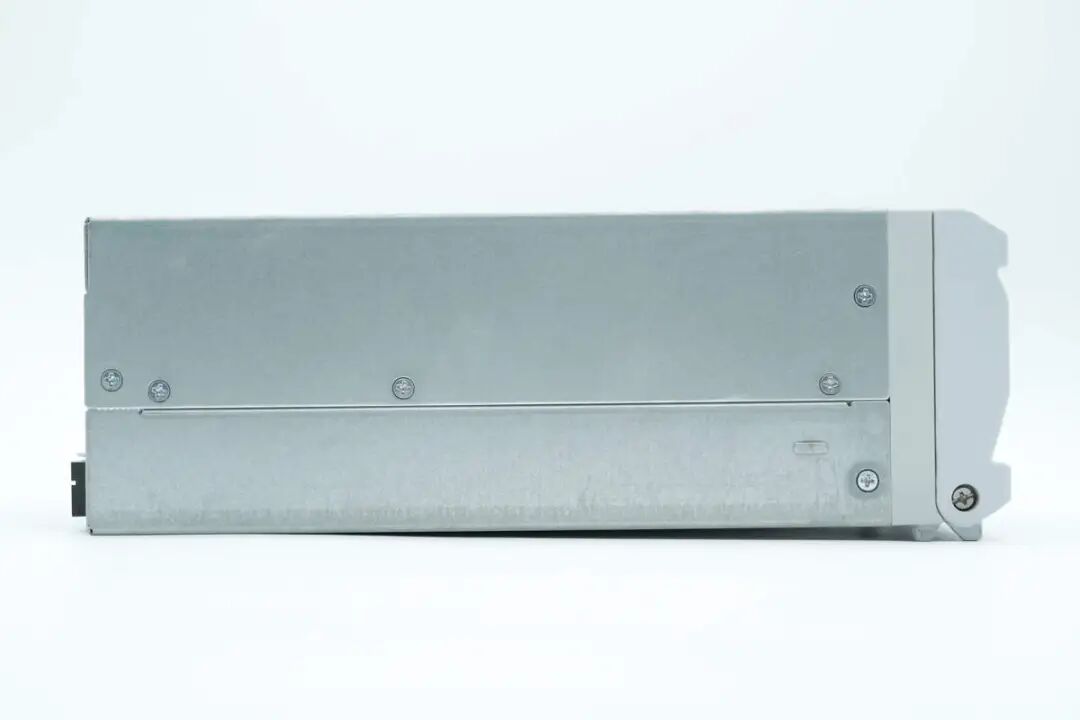
The other side also has corresponding fixed screws.
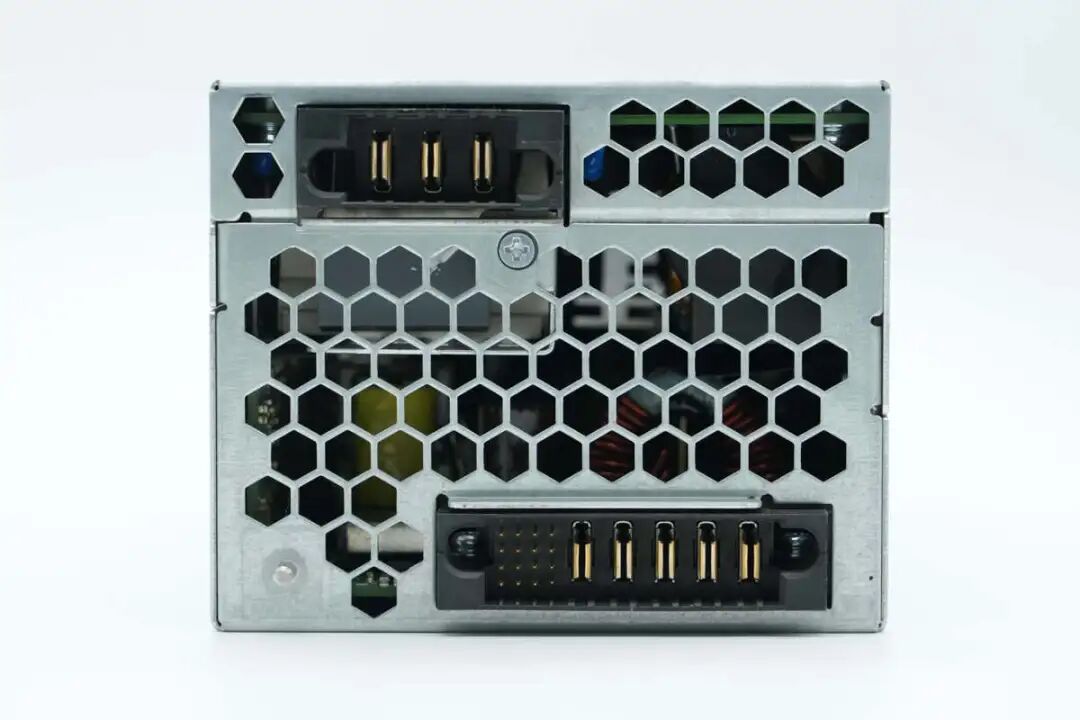
The rear of the casing has heat dissipation openings and connection sockets.
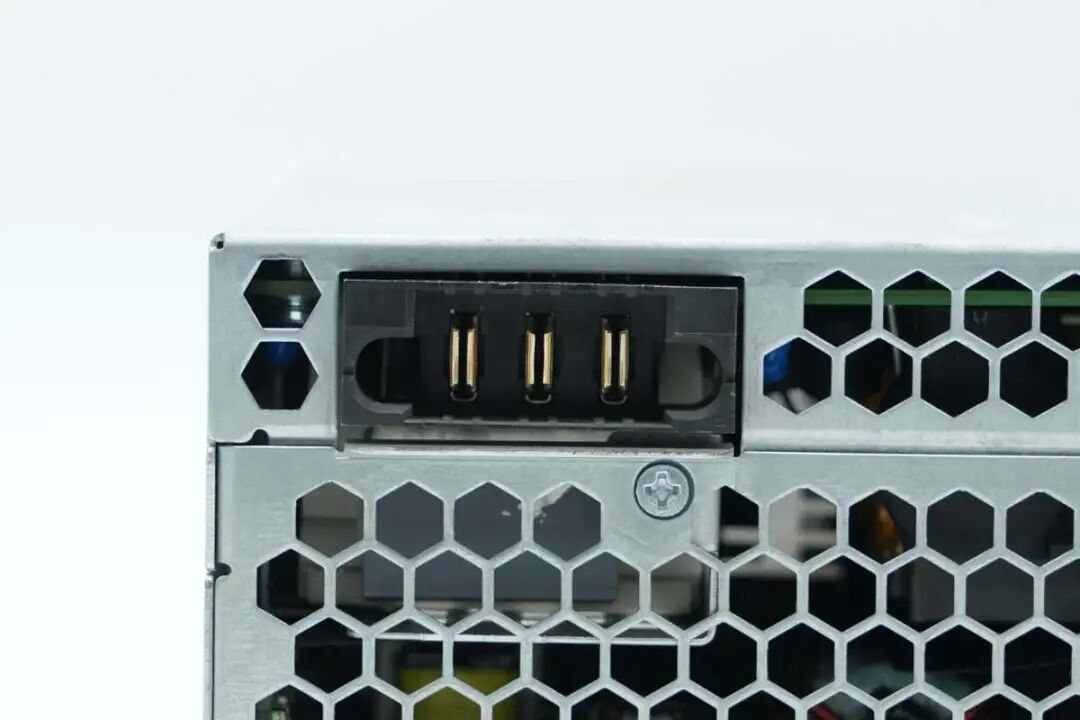
Close-up of the module’s AC input socket.
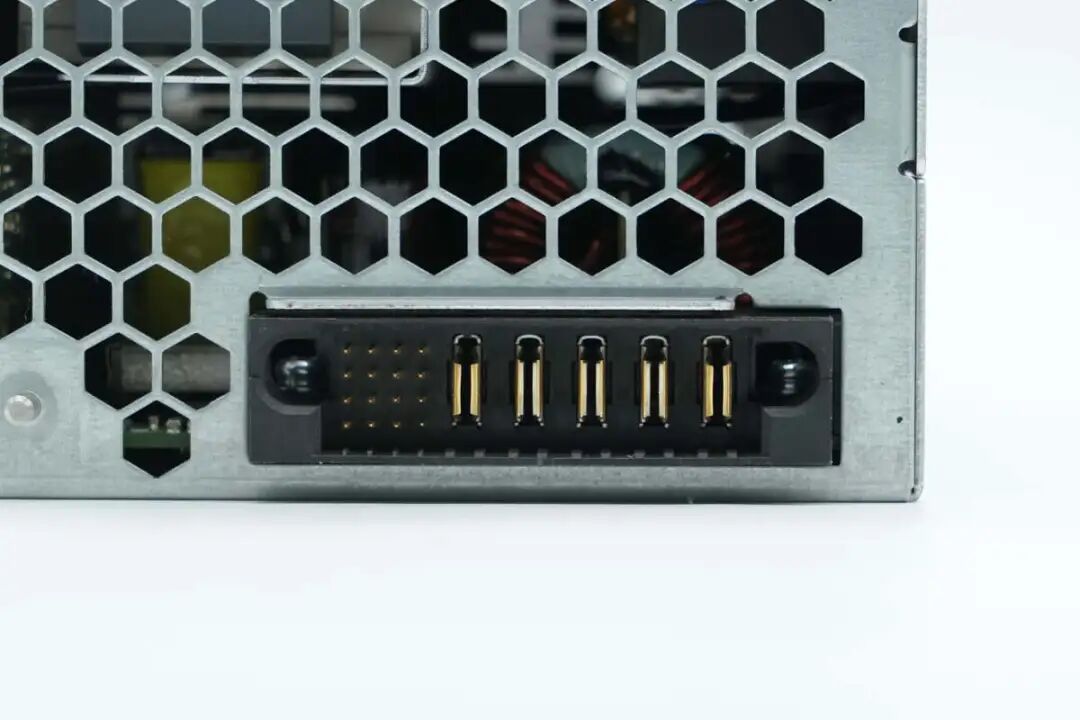
Close-up of the module’s communication interface and DC output socket.
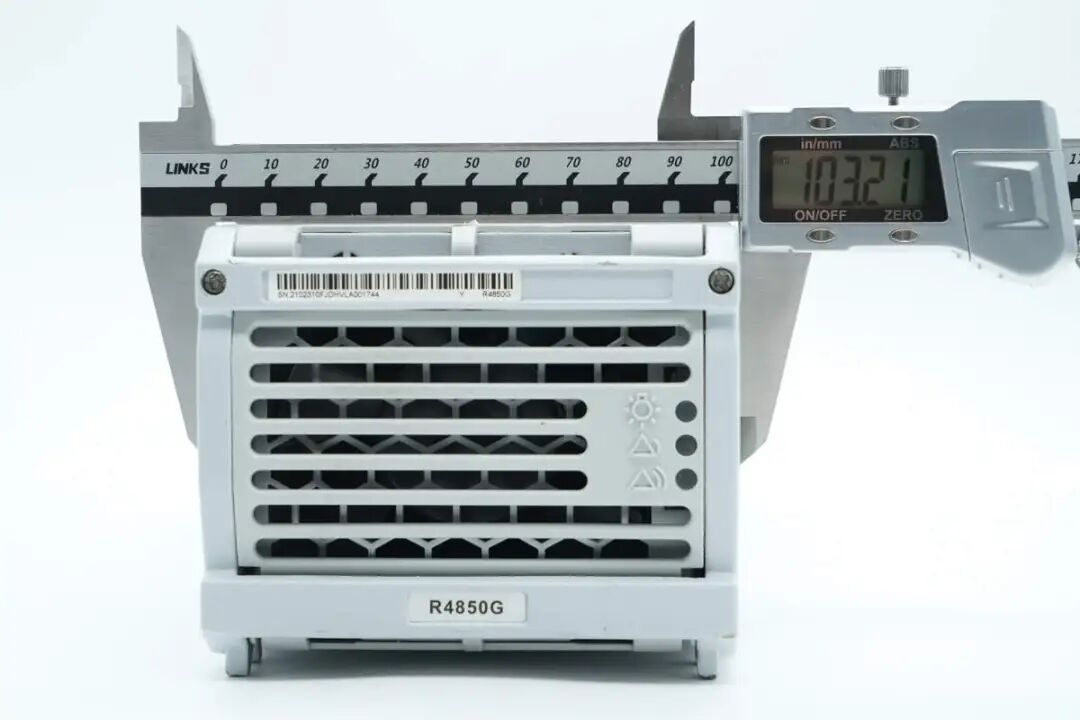
The measured width of the power module is approximately 103.2mm.
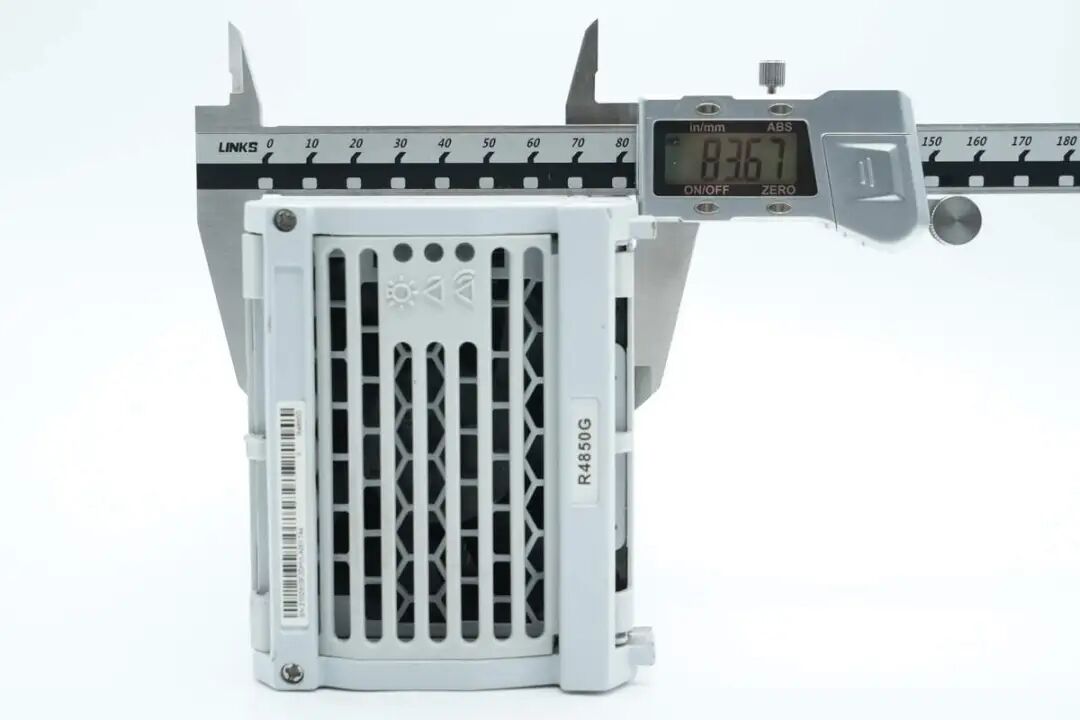
The height is approximately 83.7mm.
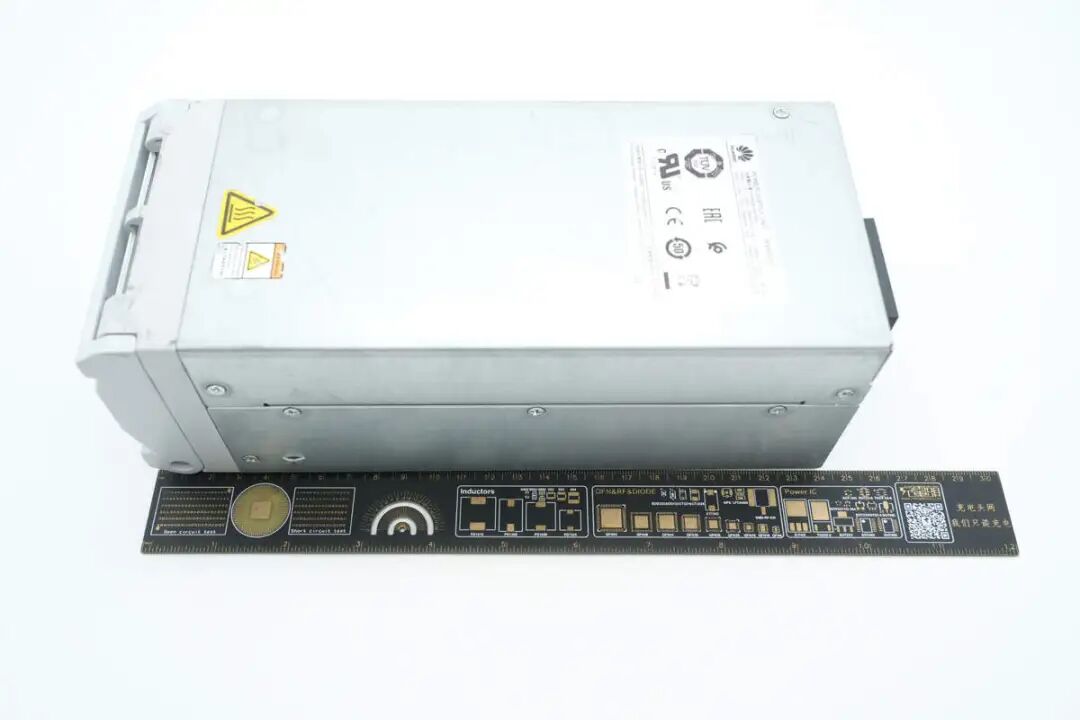
The length is approximately 242mm.
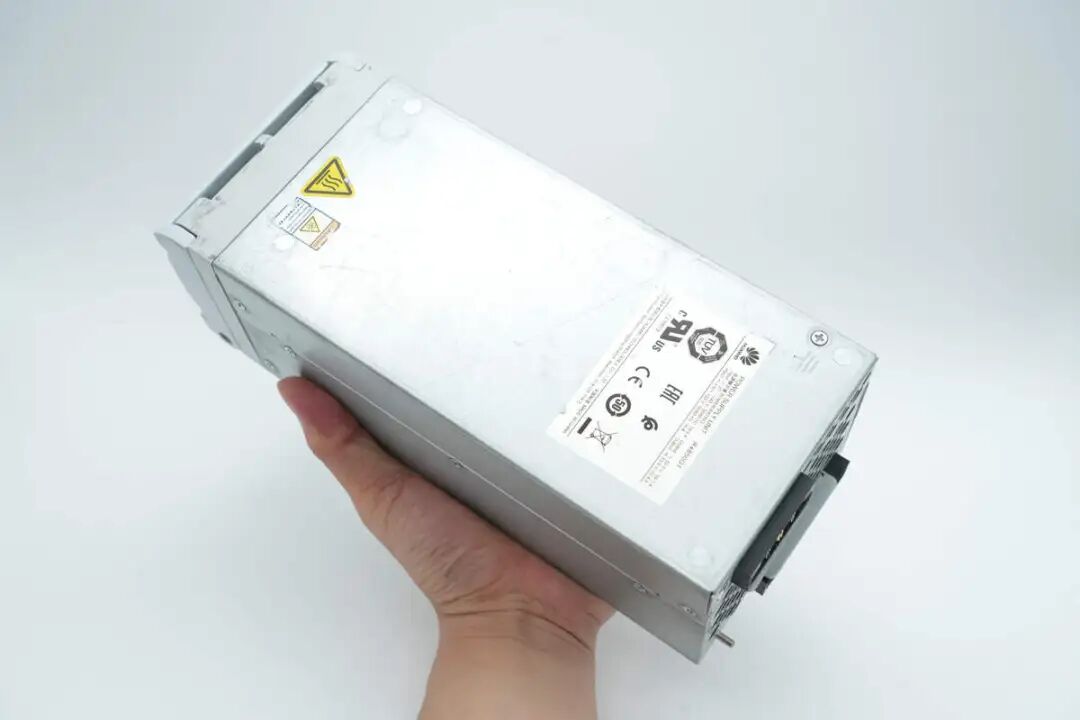
The power module’s size is intuitively felt when held in hand.
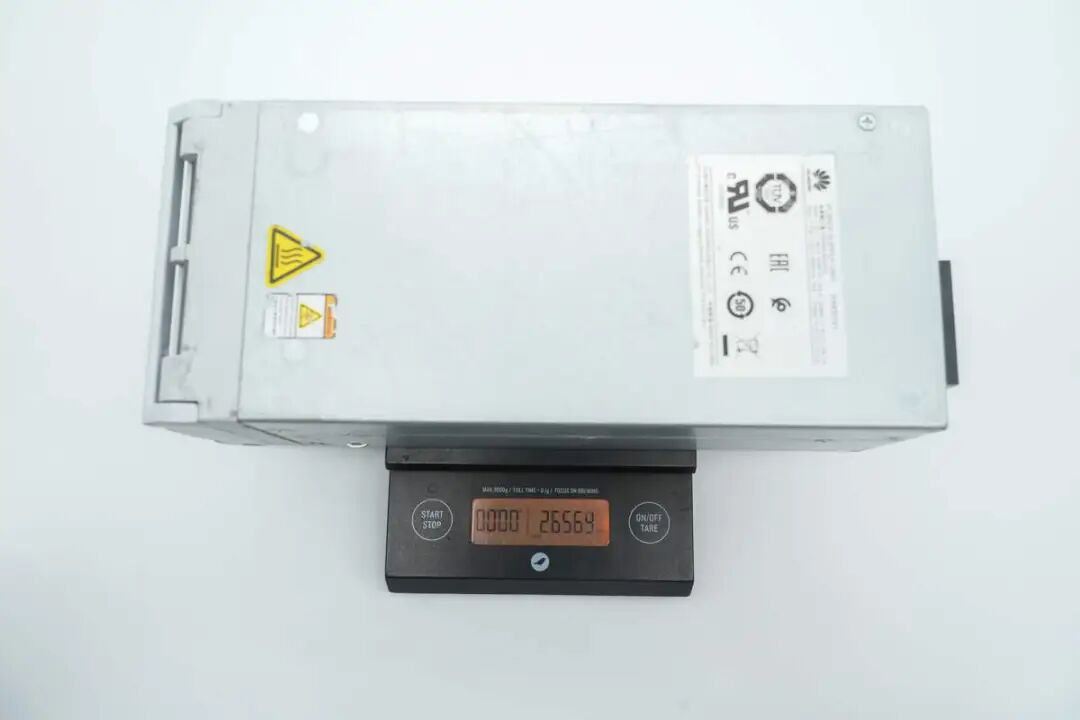
The measured weight of the power module is approximately 2656g.
Disassembly of the Huawei R4850G1 Power Module
Having reviewed the appearance of this power module, we will now proceed with the disassembly to examine the internal design and materials used.
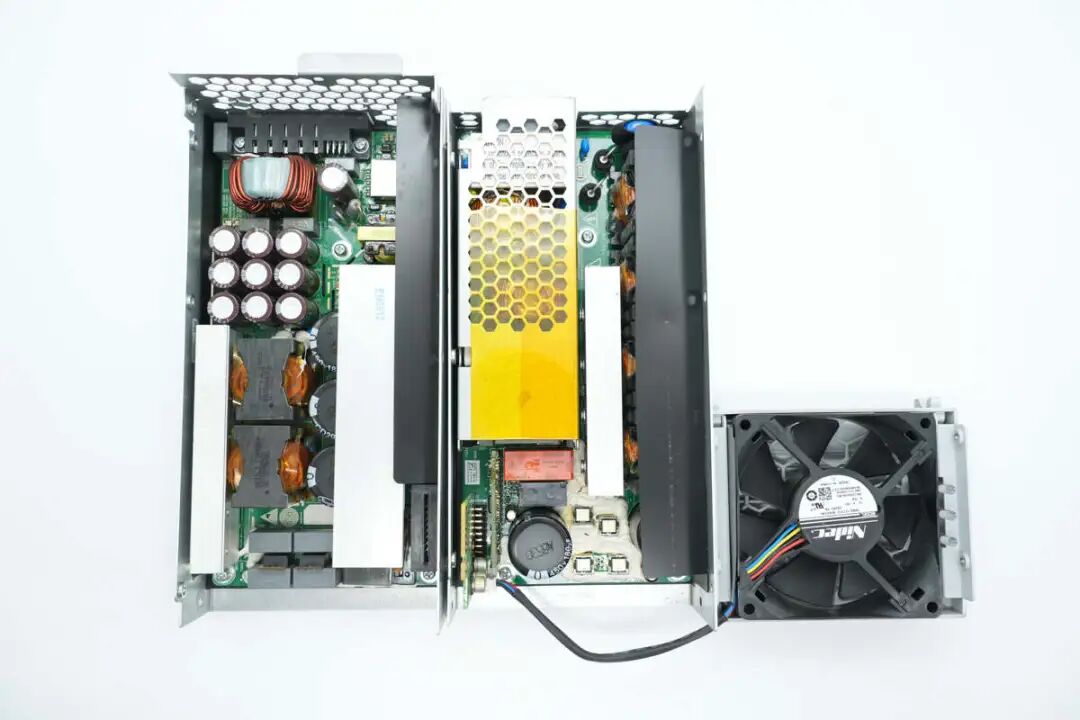
First, unscrew the fixed screws to open the power supply casing, revealing PCBA modules inside both the upper and lower casings.
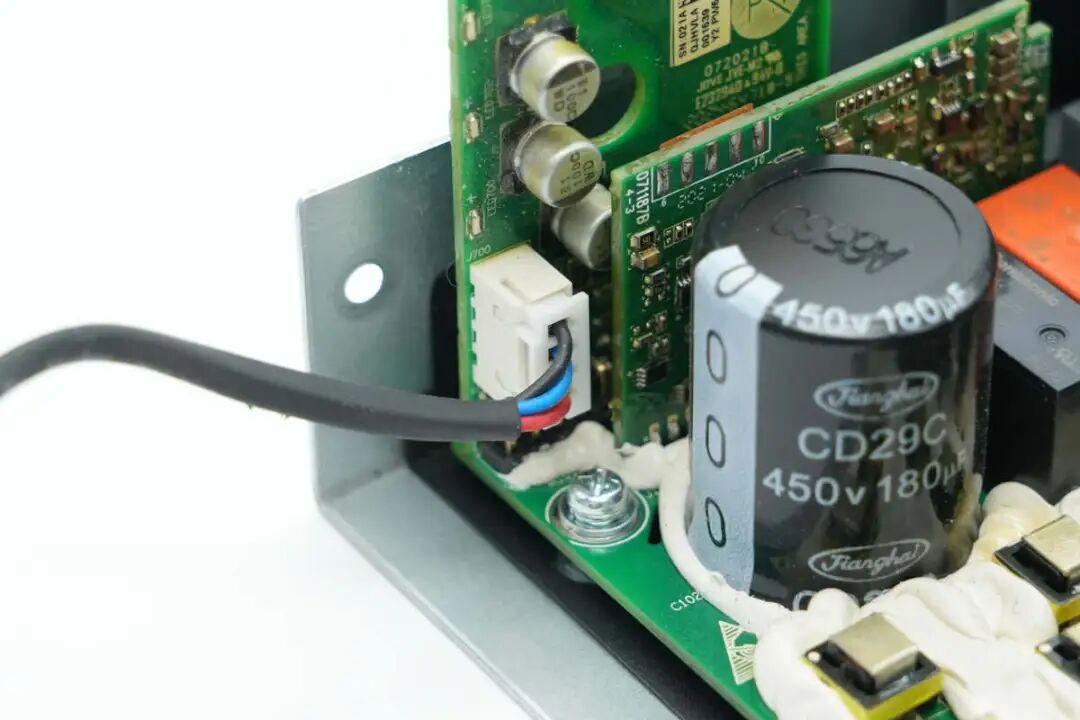
The cooling fan is connected via a connector.
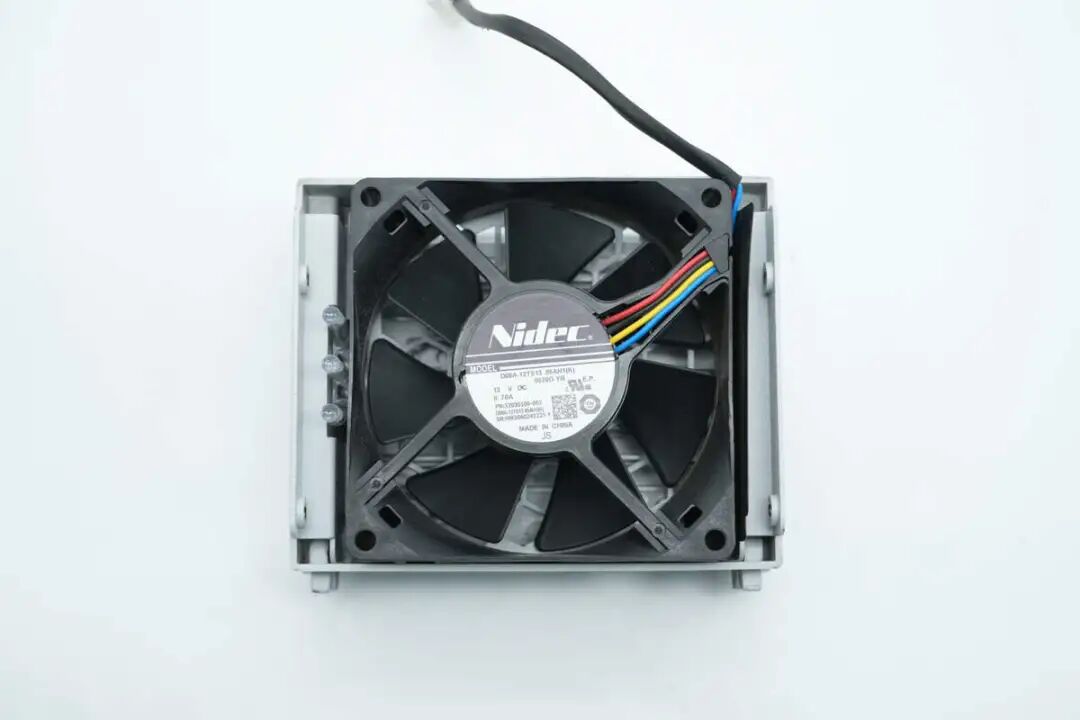
The cooling fan is from Nidec, model D08A-12TS13, rated at 12V 0.7A.
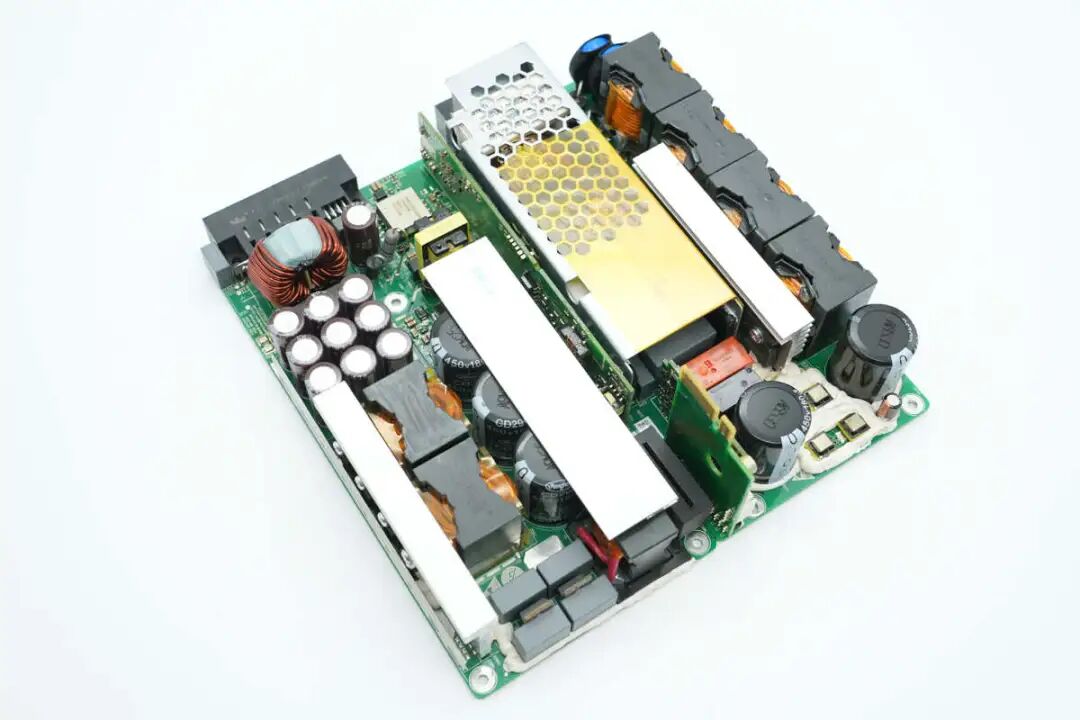
Removing the PCBA module from the casing, the right side is the PFC module, and the left side is the LLC module, connected via a small board and connectors.
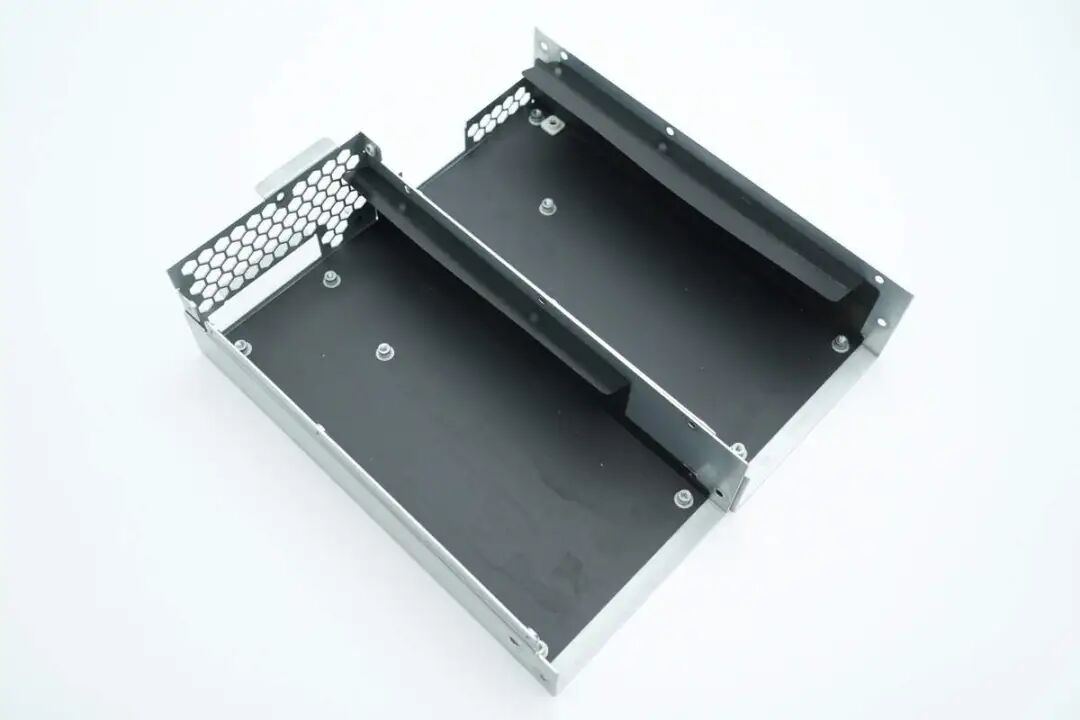
The metal casing has insulating mylar sheets inside.
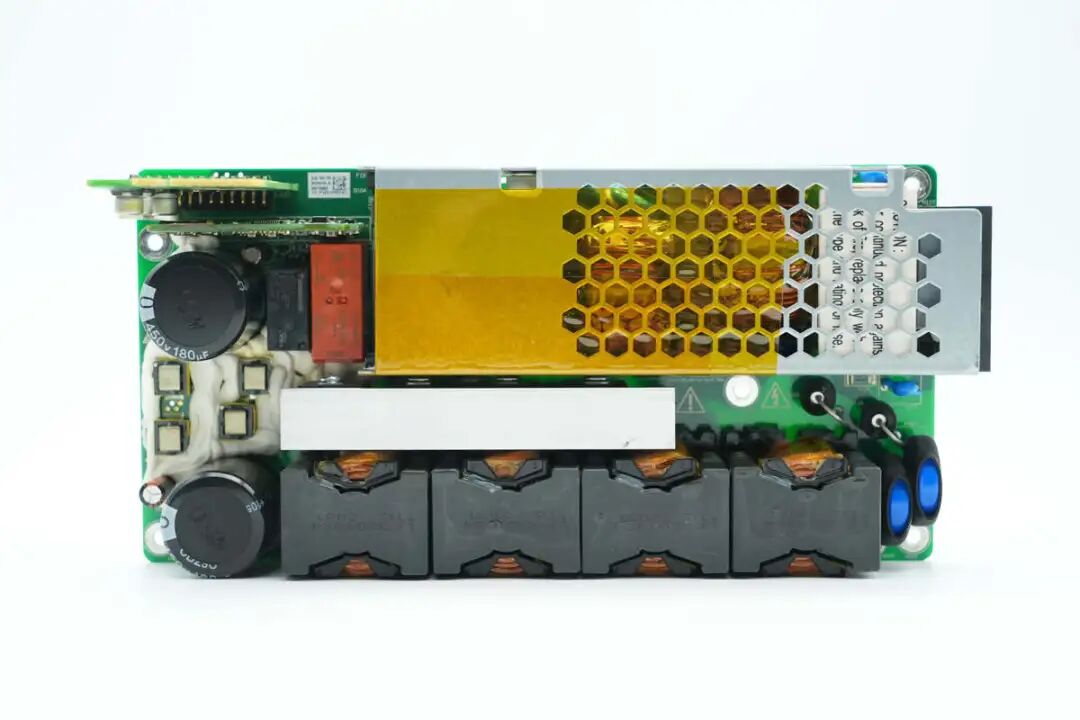
Overview of the PFC module, with a shield for the rectifier bridge’s heat dissipation at the top, containing safety X2 capacitors and common mode inductors inside. Below are the PFC switching transistors and PFC inductors. The left side has high-voltage filter capacitors, the upper left corner has a control board and connection board, and the lower right corner has gas discharge tubes and varistors.
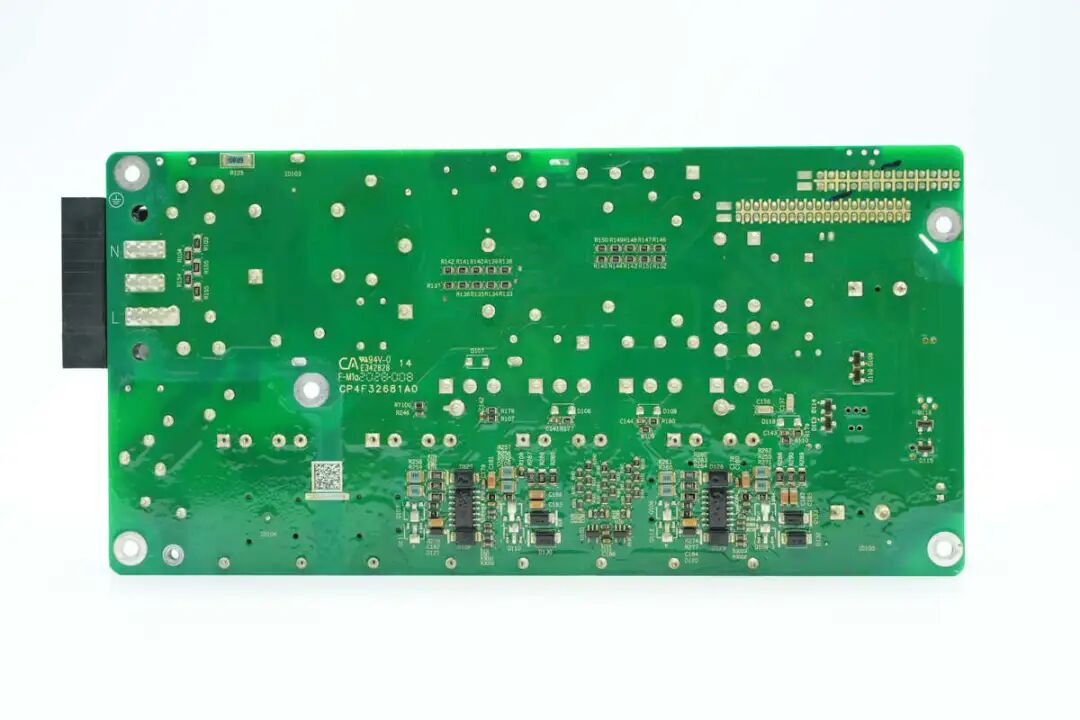
The back of the PFC module has two half-bridge drivers.
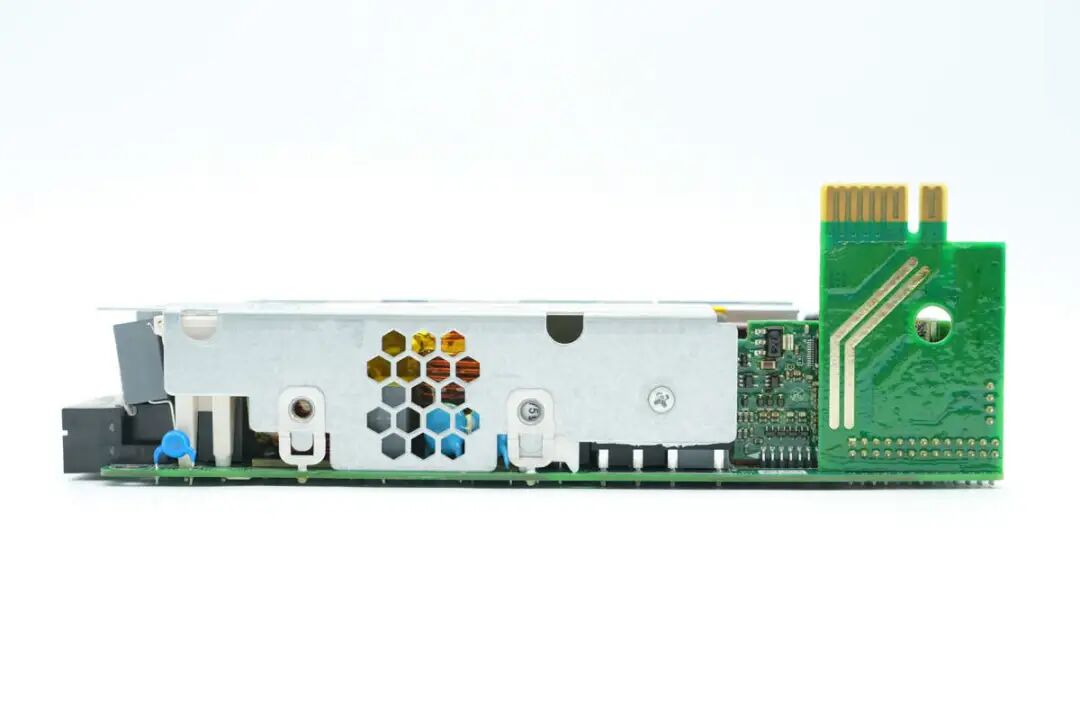
The heat sink has soldered tabs for securing, and the rectifier bridge is secured to the heat sink with screws.
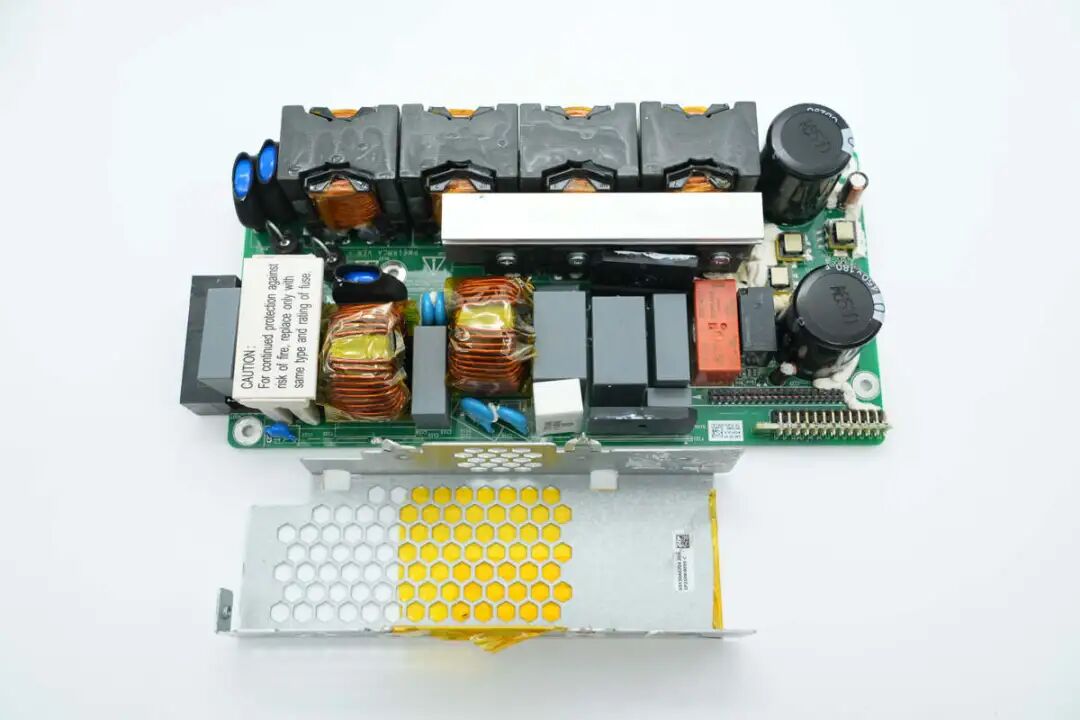
Removing the shield reveals common mode inductors and safety capacitors, as well as two rectifier bridges for heat dissipation.
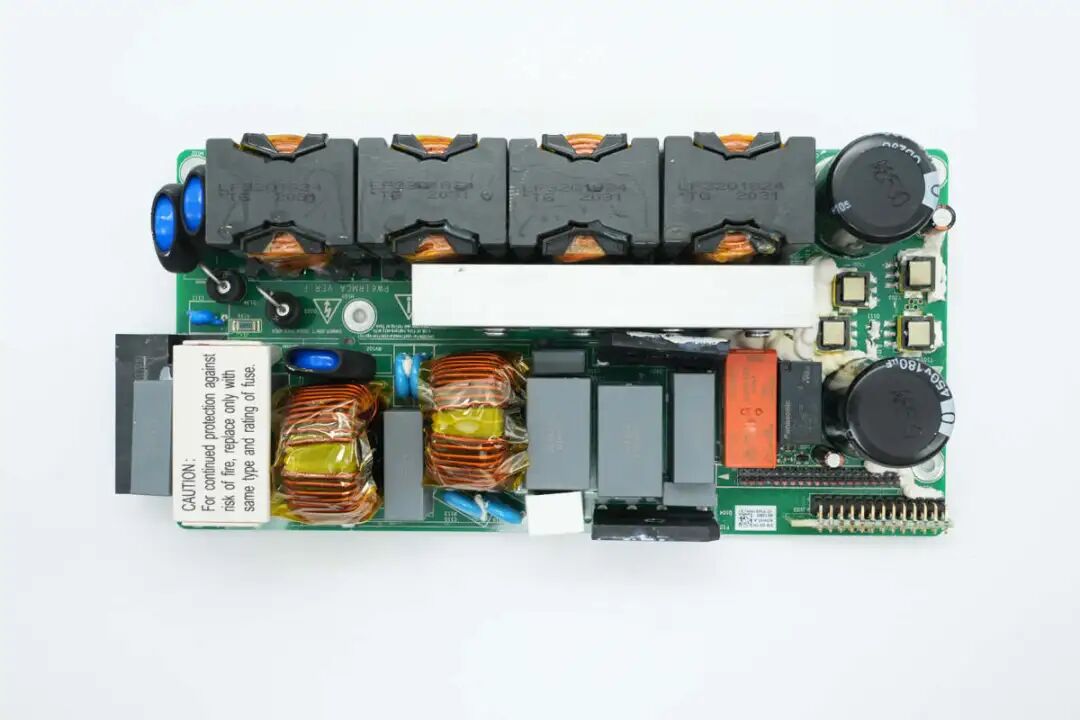
Under the shield, there are fuses, common mode inductors, safety X2 capacitors, and rectifier bridges.
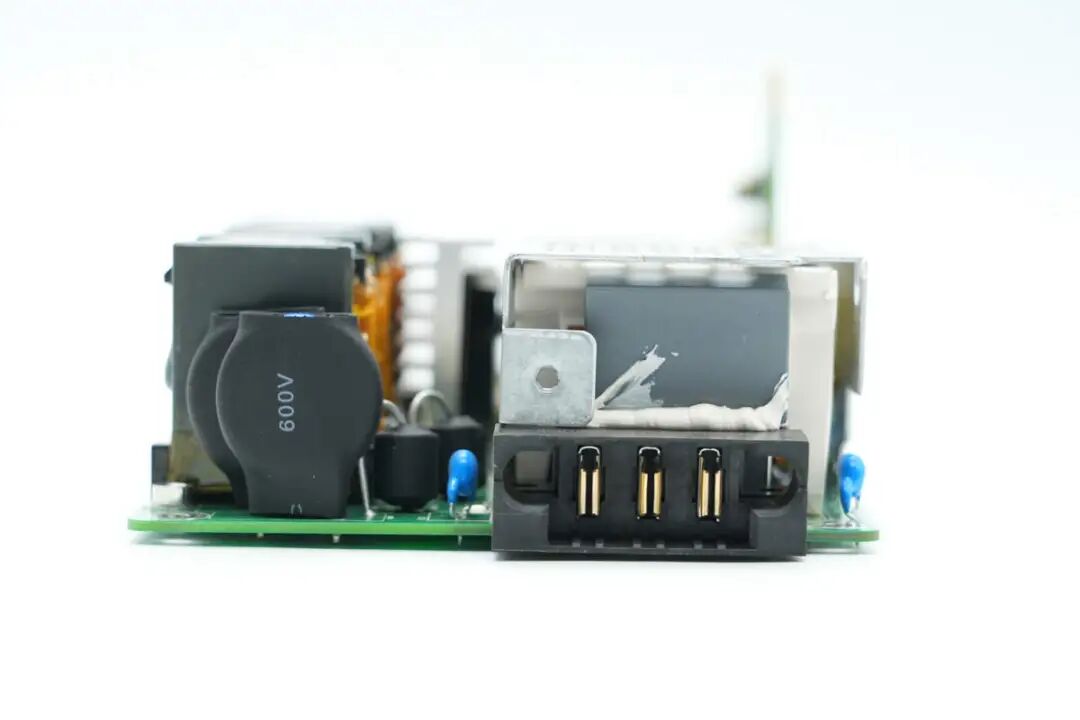
The input end of the PCBA module overview, with input sockets and varistors.
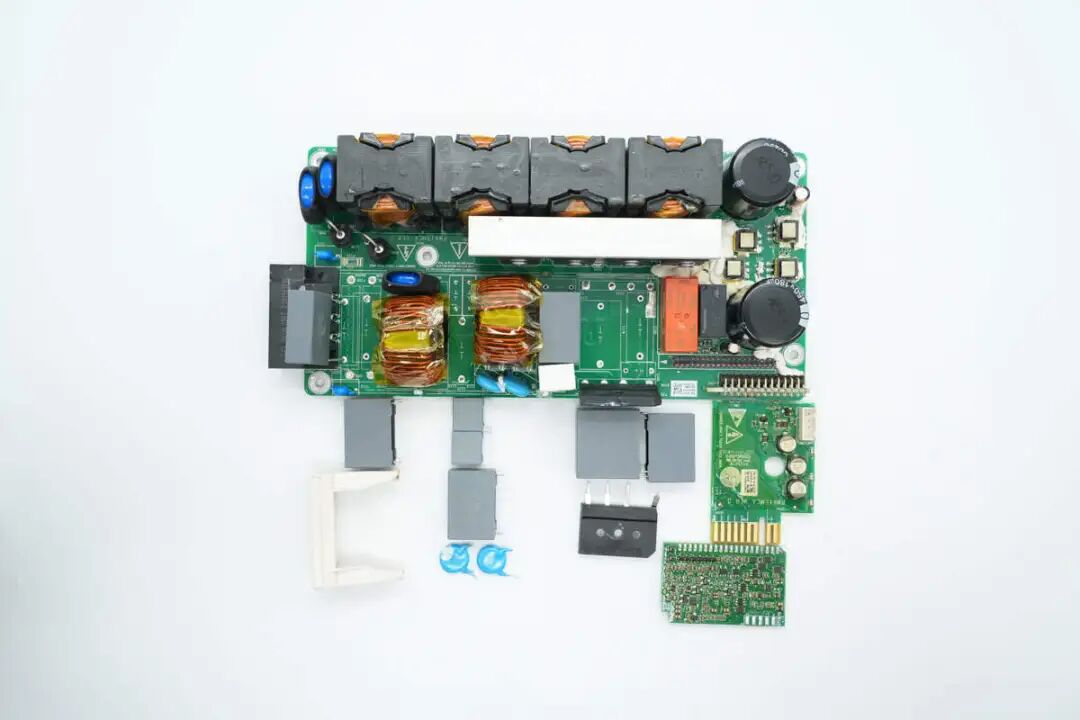
Removing the soldered fuse, safety X2 capacitors, Y capacitors, and rectifier bridges, with the control board and connection board on the right side.
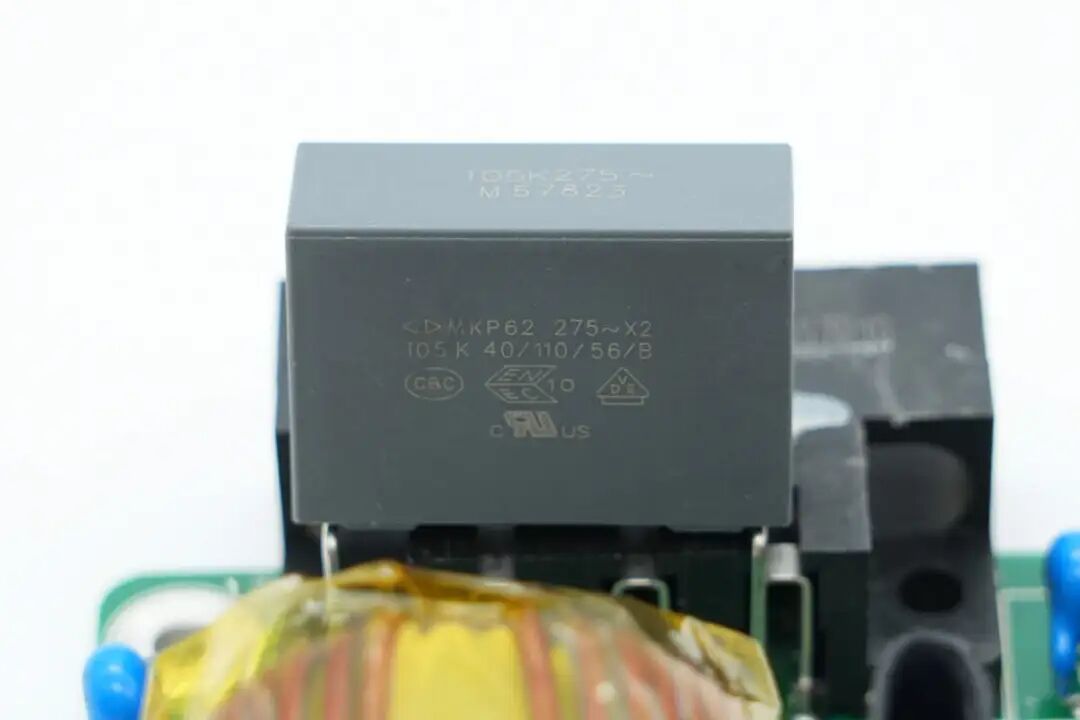
The safety X2 capacitor is from Xiamen Farah, rated at 1μF.
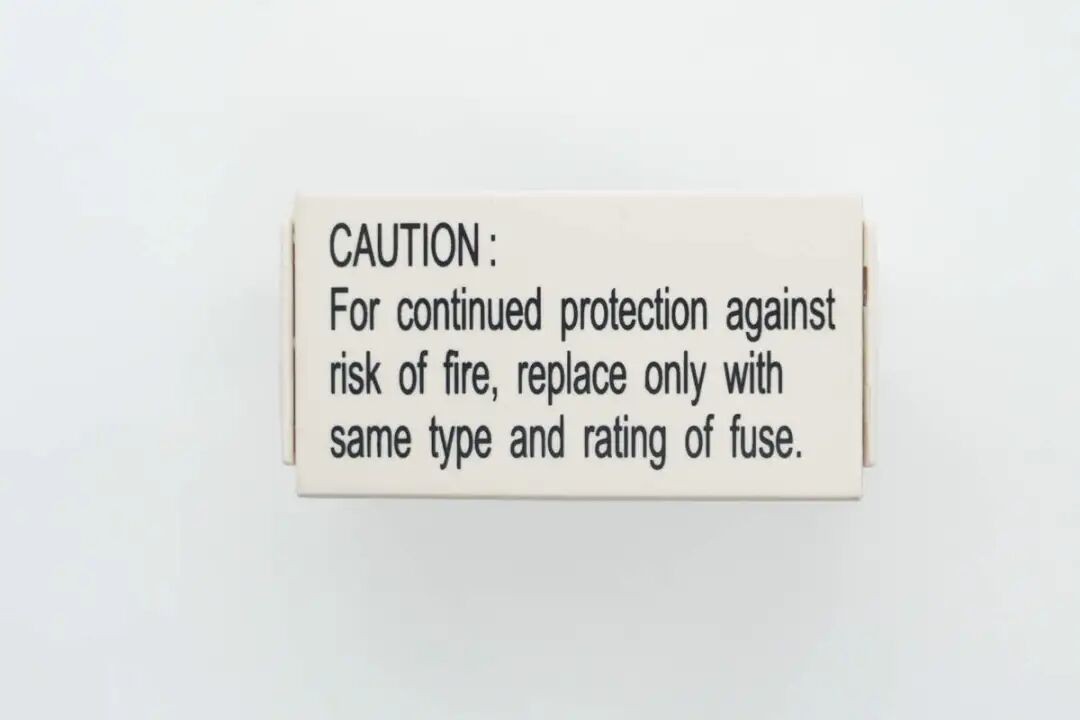
The input fuse has an insulating cover.
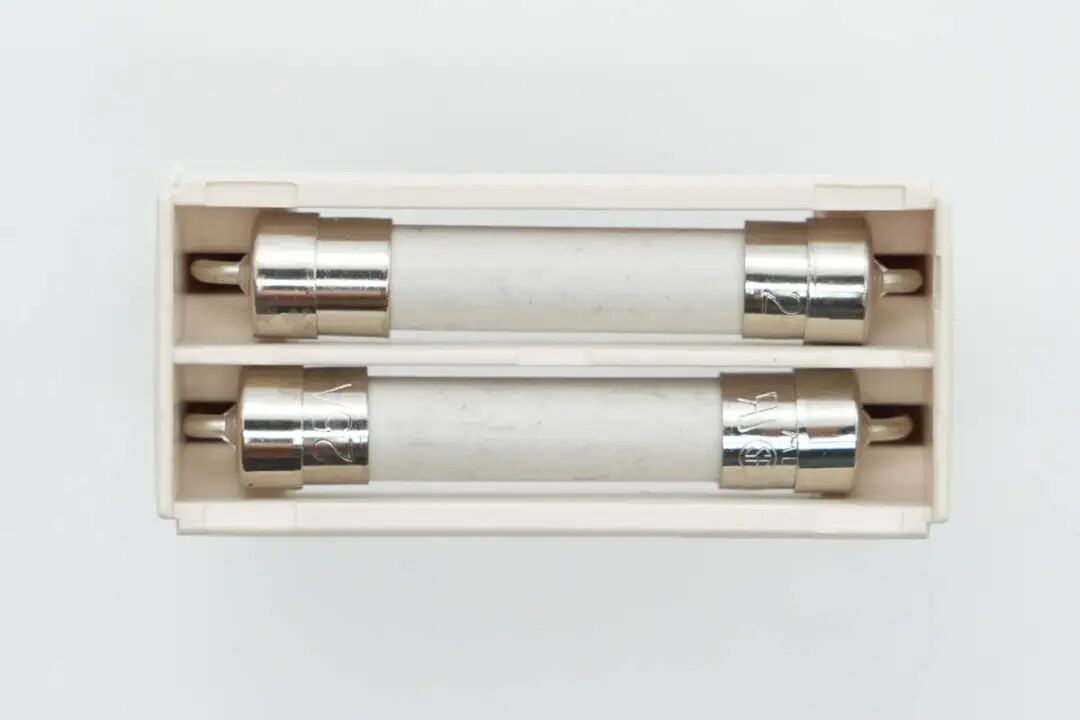
Inside the insulating casing, there are two tubular fuses rated at 25A.
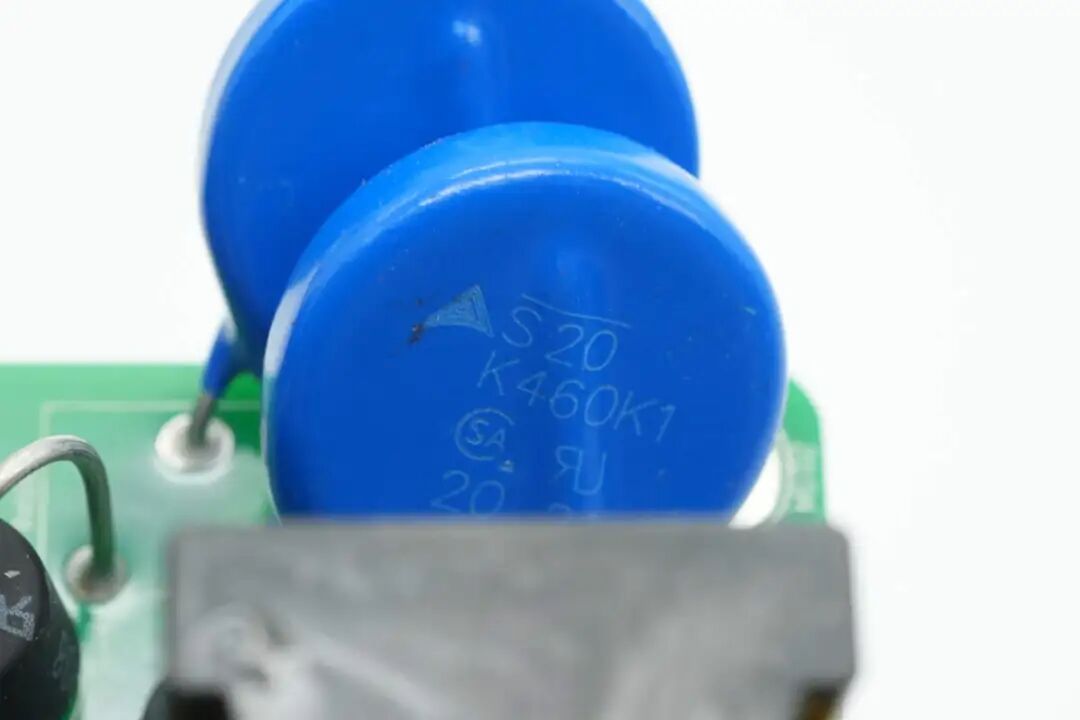
The varistor is from TDK, marked S20K460K1.
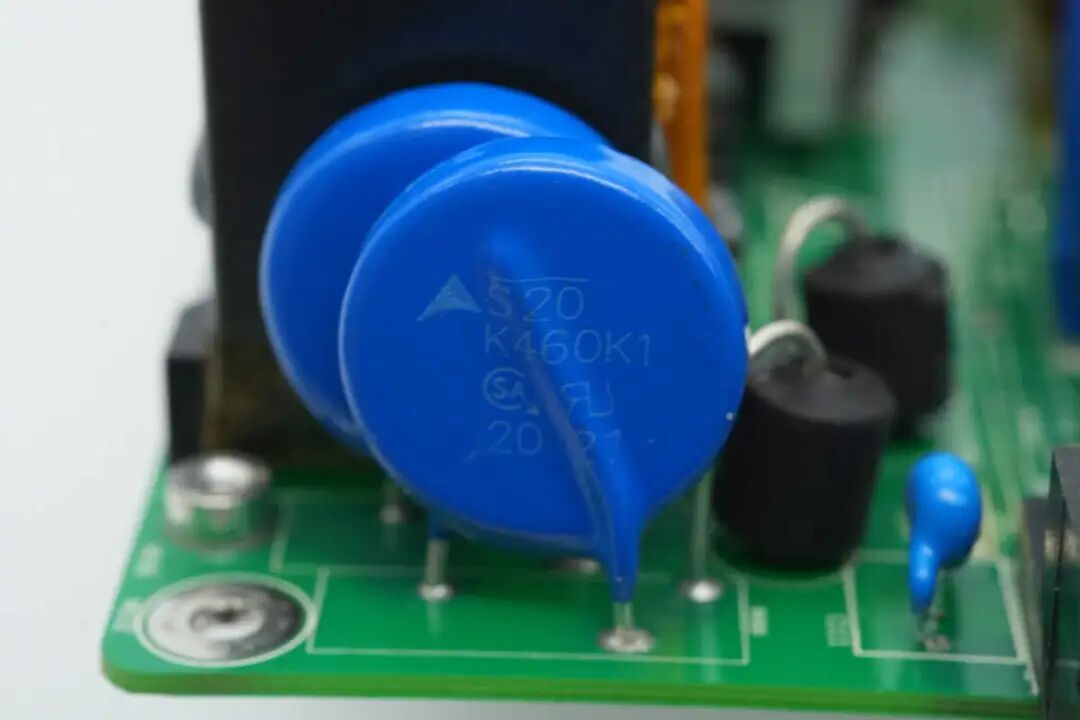
The other varistor has the same marking.
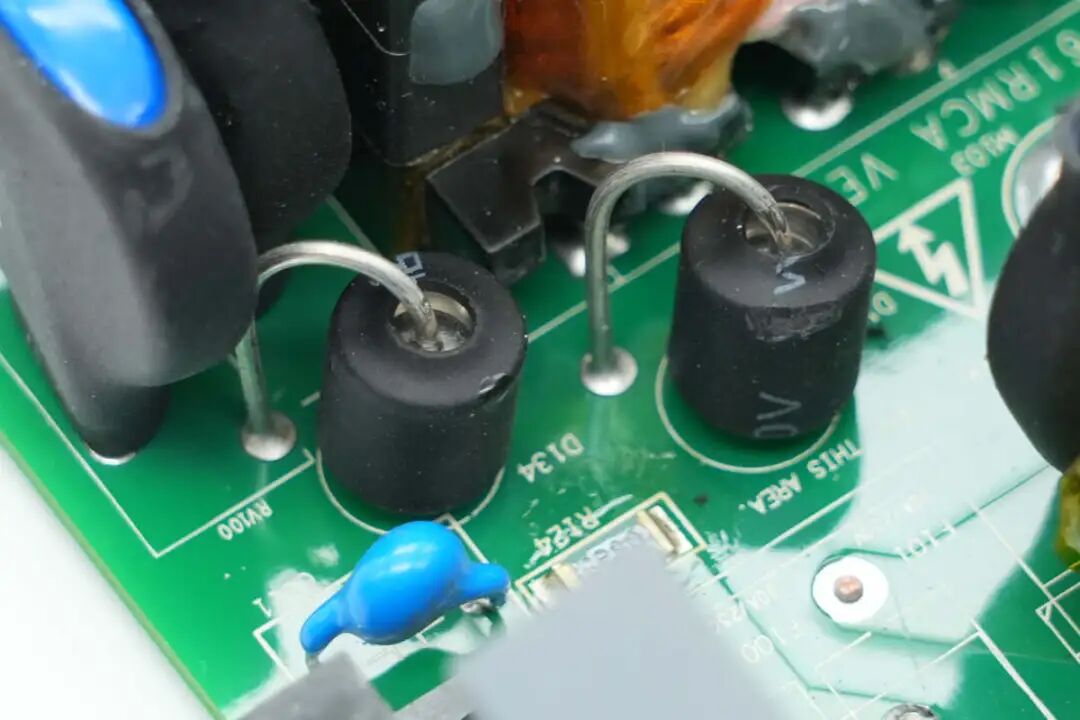
The gas discharge tube is insulated with heat shrink tubing, used in conjunction with the varistor for lightning protection.
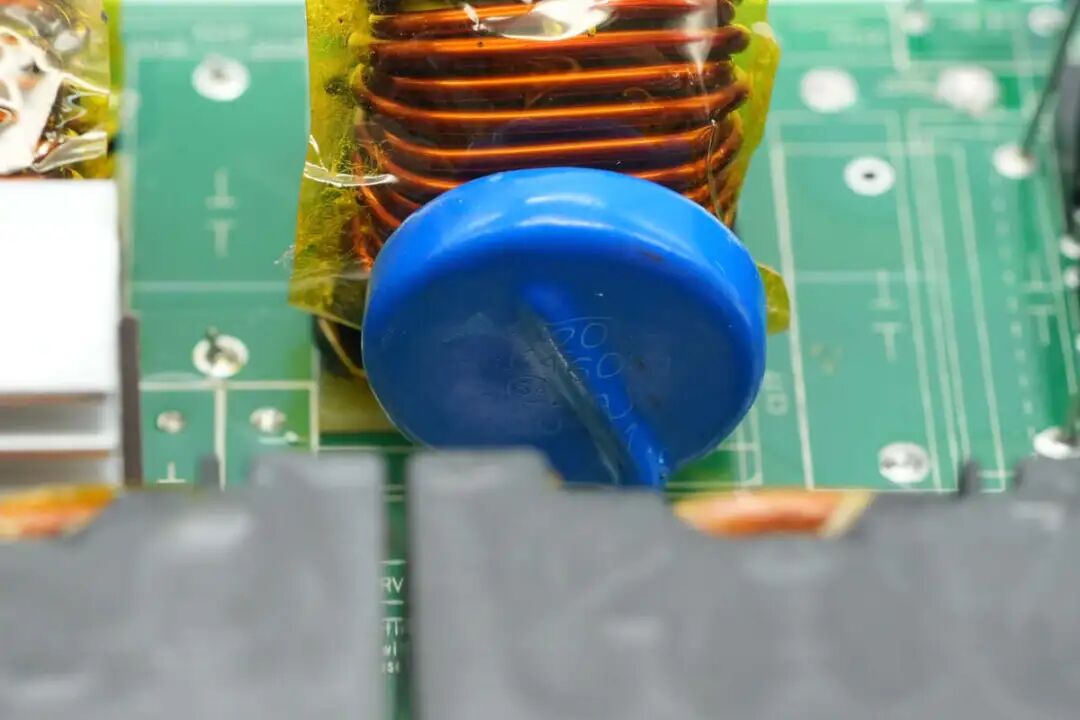
Three varistors are used for lightning protection.
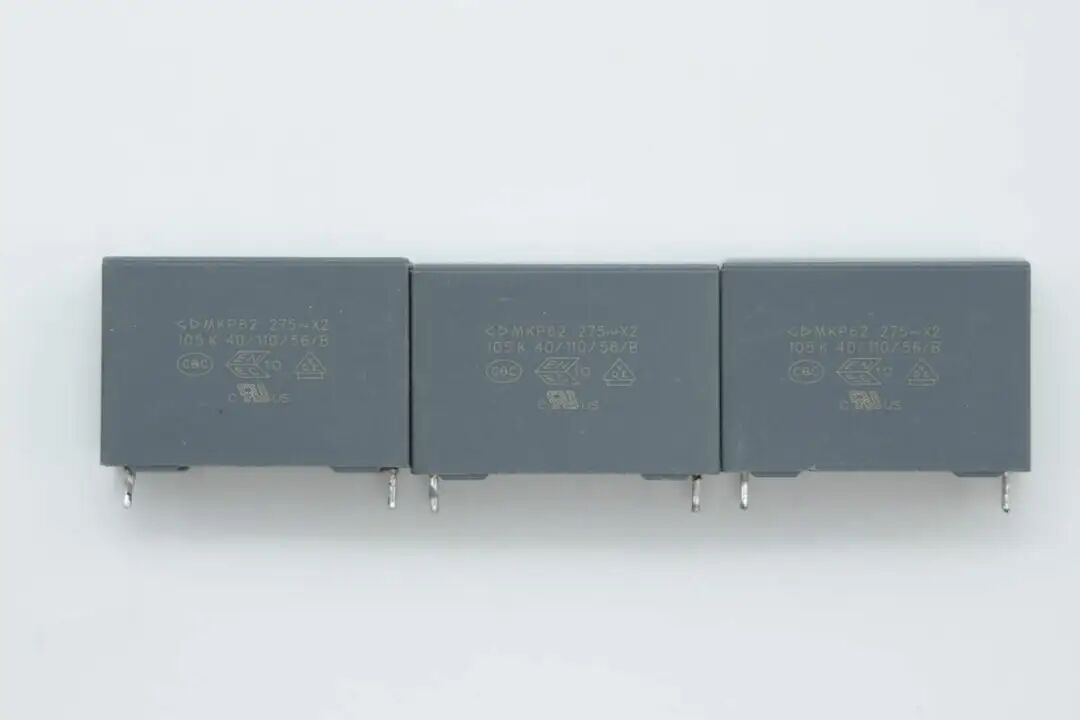
Three safety X2 capacitors are rated at 1μF.
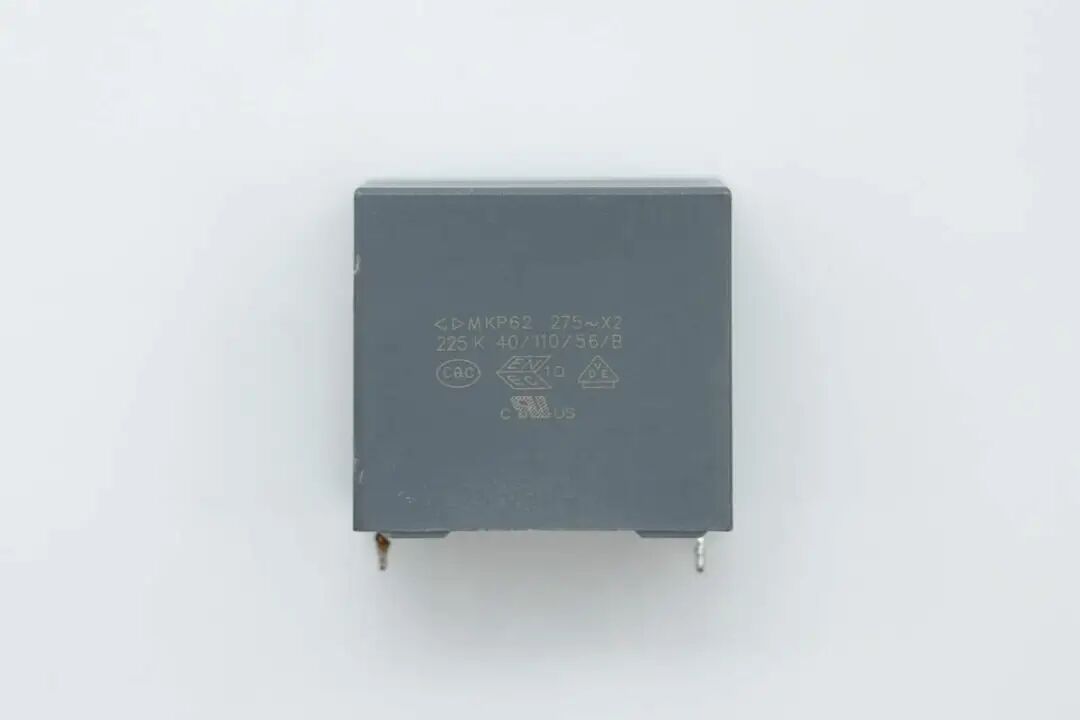
Another capacitor is rated at 2.2μF.
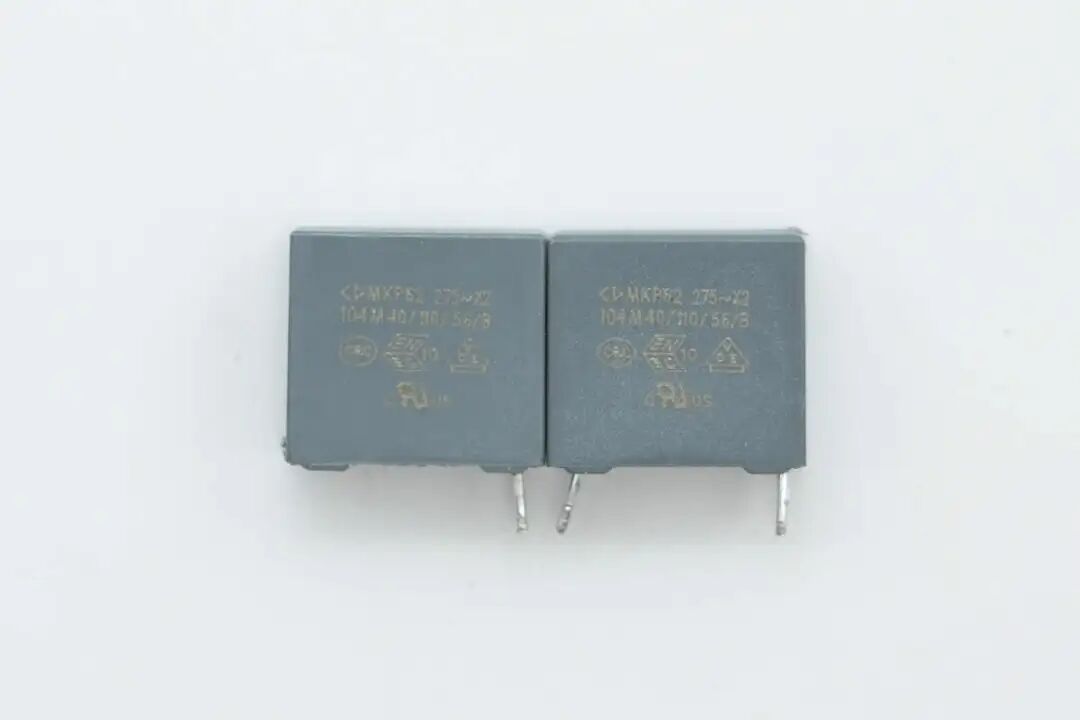
Two film capacitors are rated at 0.1μF.
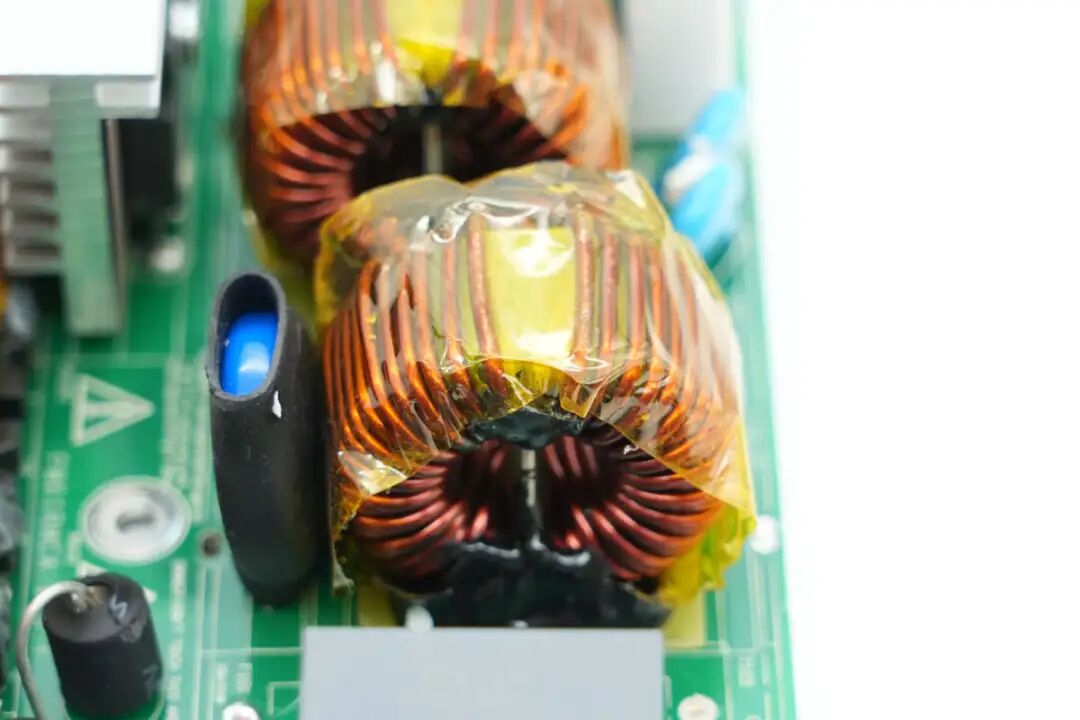
The common mode inductor is wound with enameled wire and insulated with high-temperature tape.
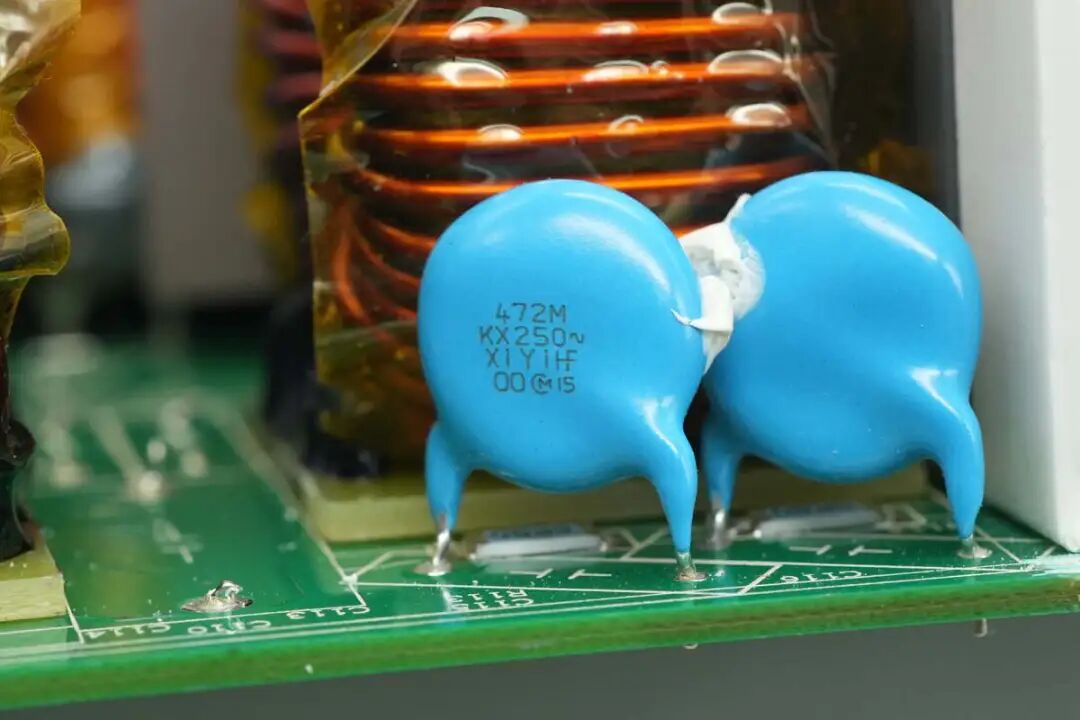
Two blue Y capacitors are from Murata, secured with glue.
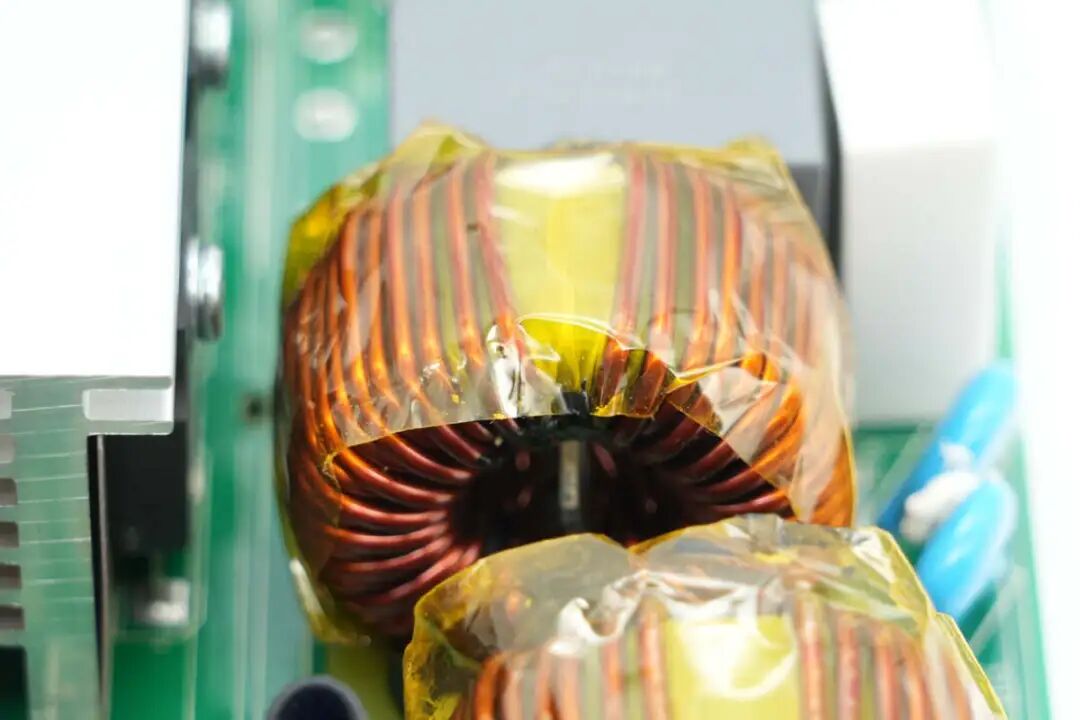
The other common mode inductor is also insulated with high-temperature tape.
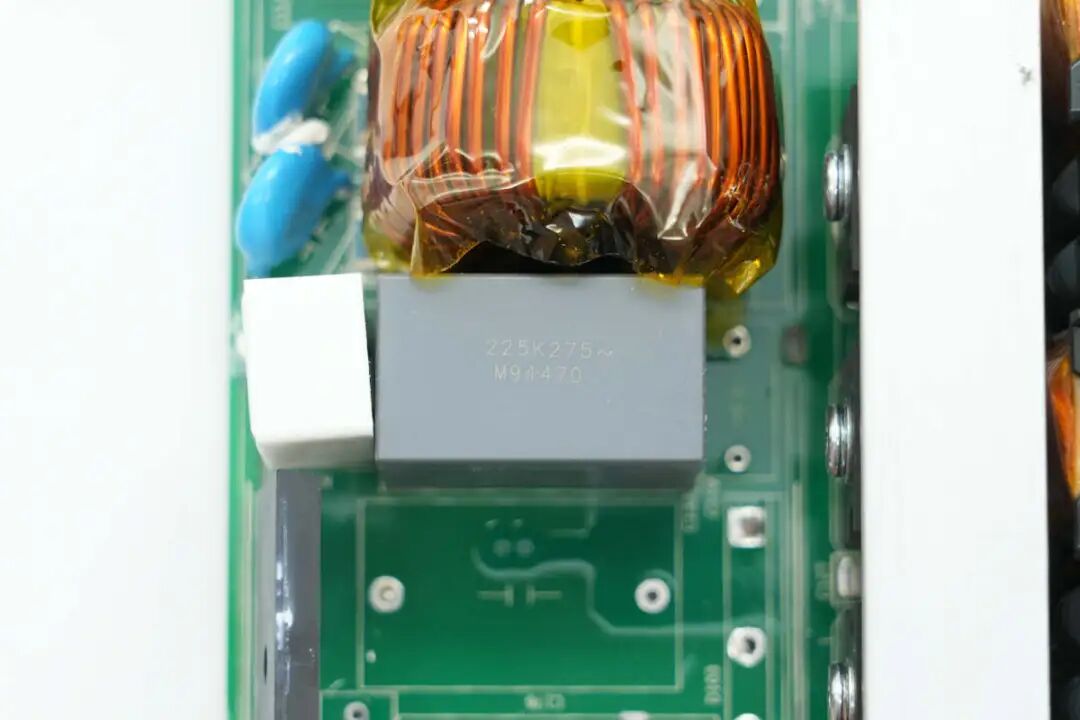
The film filter capacitor is rated at 2.2μF.
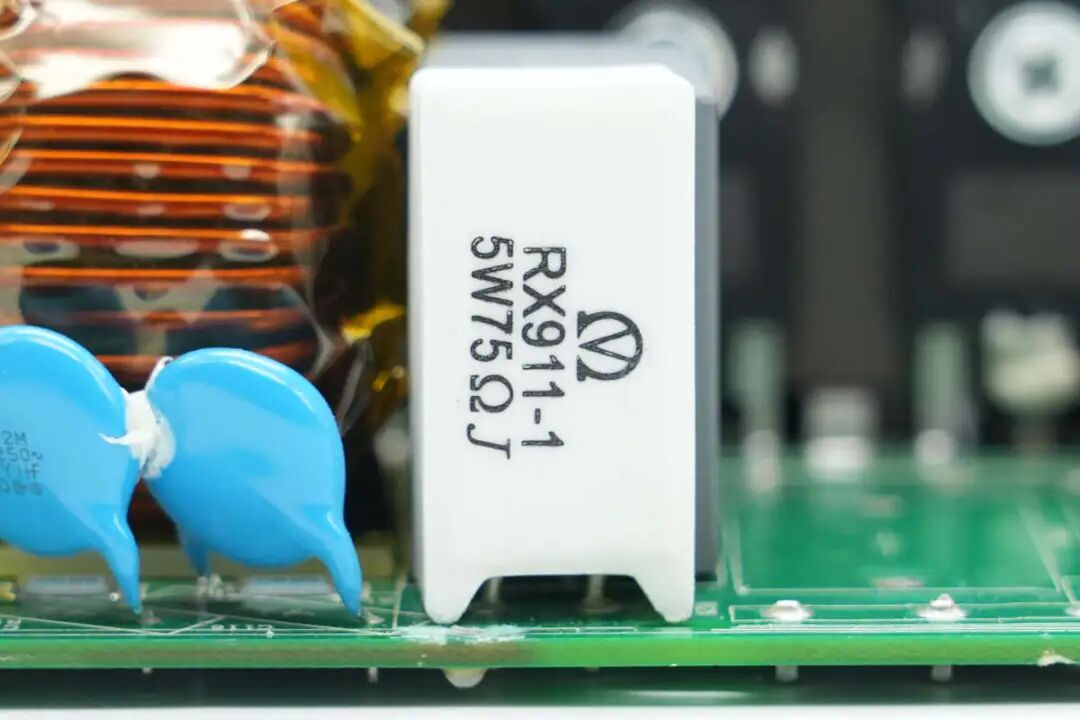
The cement resistor used for soft start is rated at 5W 75Ω.
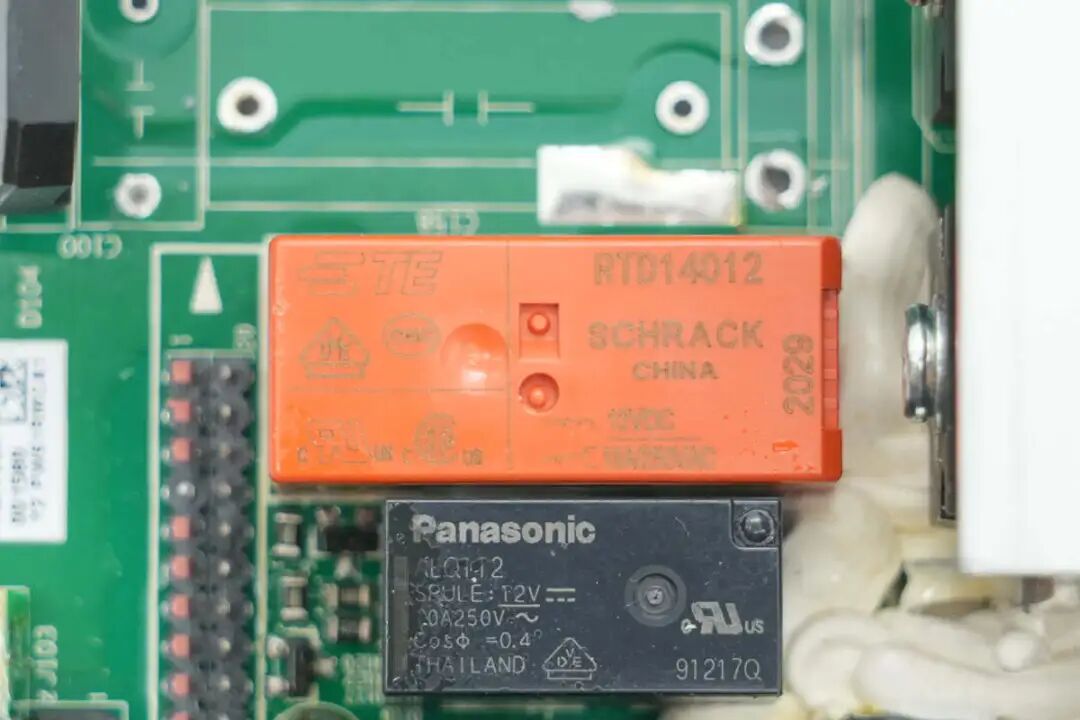
The relay is from TE, model RTD14012, with a set of normally open contacts, contact current 16A, coil voltage 12V.
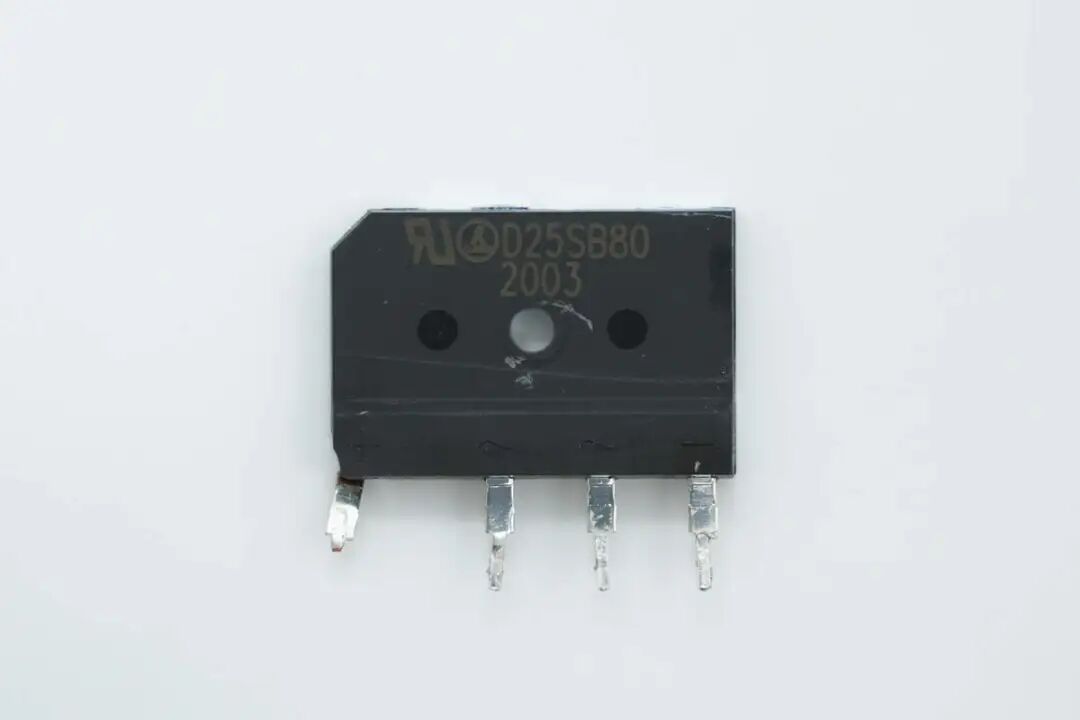
The rectifier bridge is from Leshan Radio, model D25SB80, rated at 800V 25A, in D5 package.
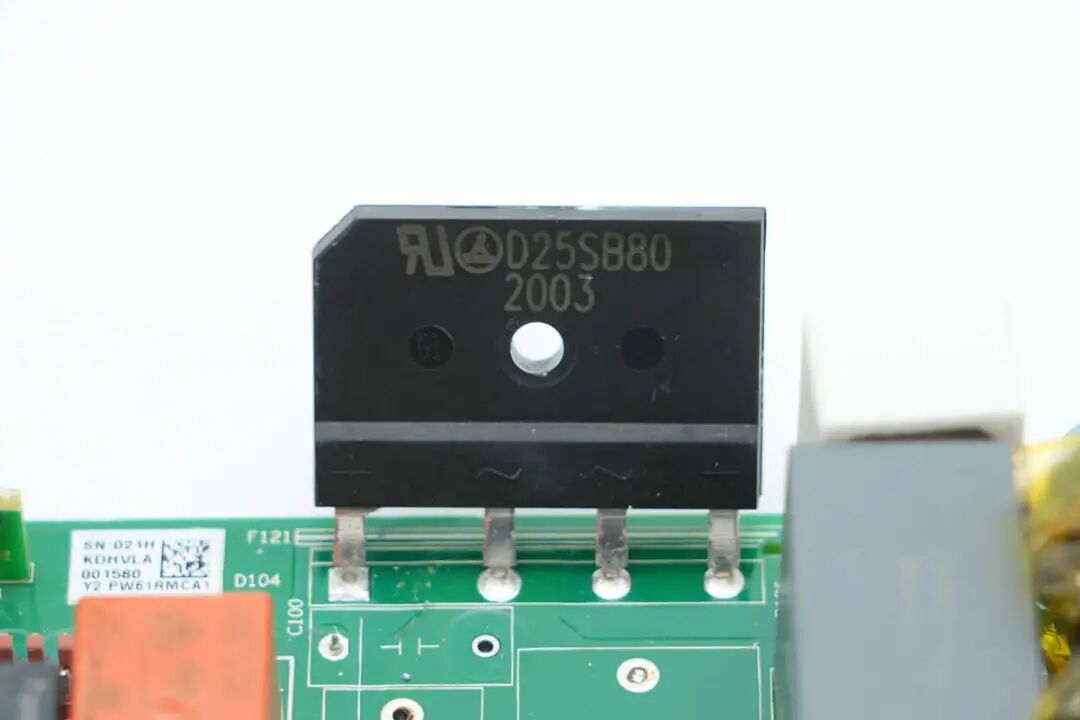
The other rectifier bridge has the same model.
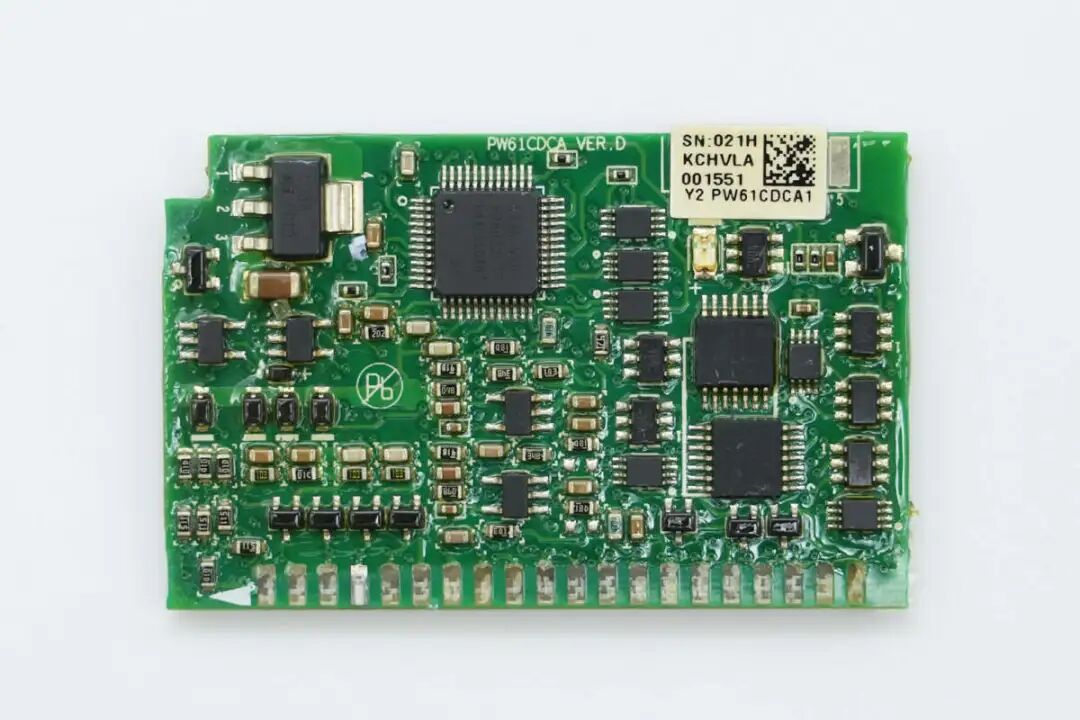
The front of the control board has the PFC controller, OR gate chip, linear regulator chip, and operational amplifier chip.
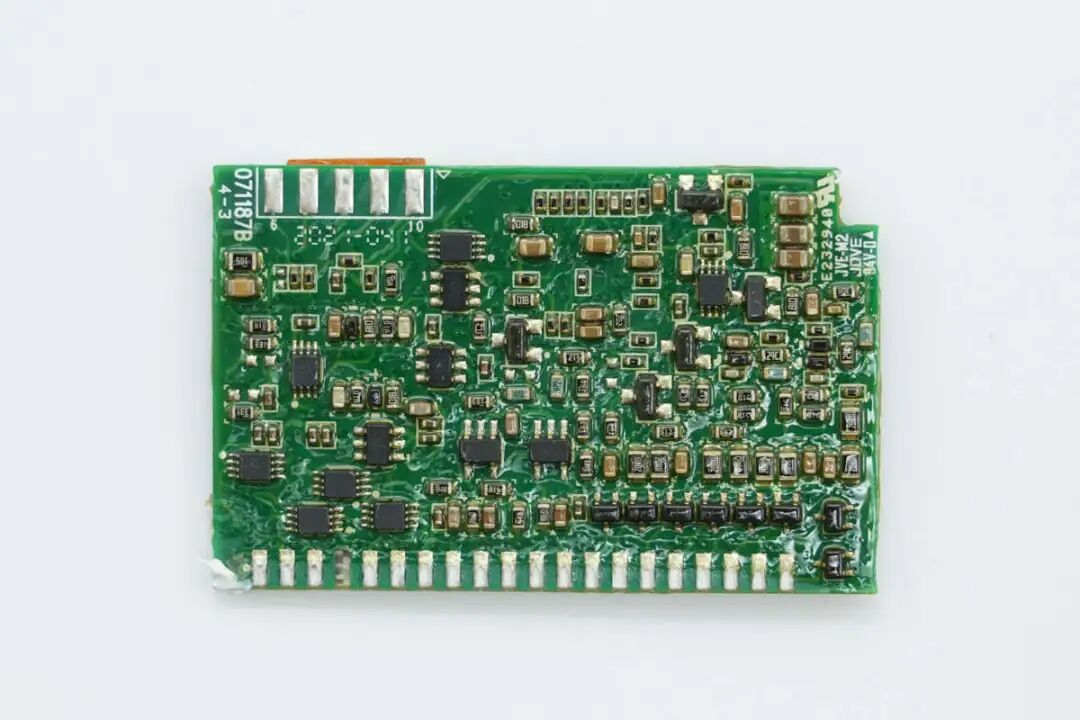
The back of the control board overview, with multiple chips and resistor-capacitor components.
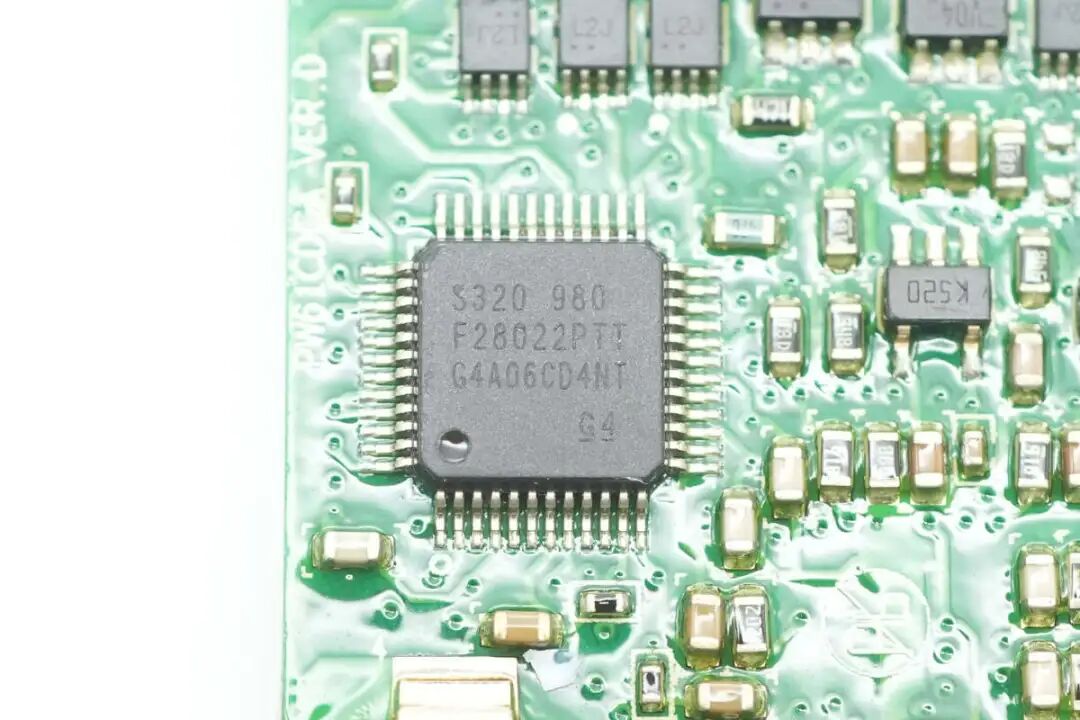
The PFC controller is from Texas Instruments, model TMS320F28022, with an integrated C2000 32-bit MCU, a main frequency of 50MHz, 32KB FLASH, and 12KB SRAM. The chip has UART, SPI, and I2C interfaces, in LQFP48 package.
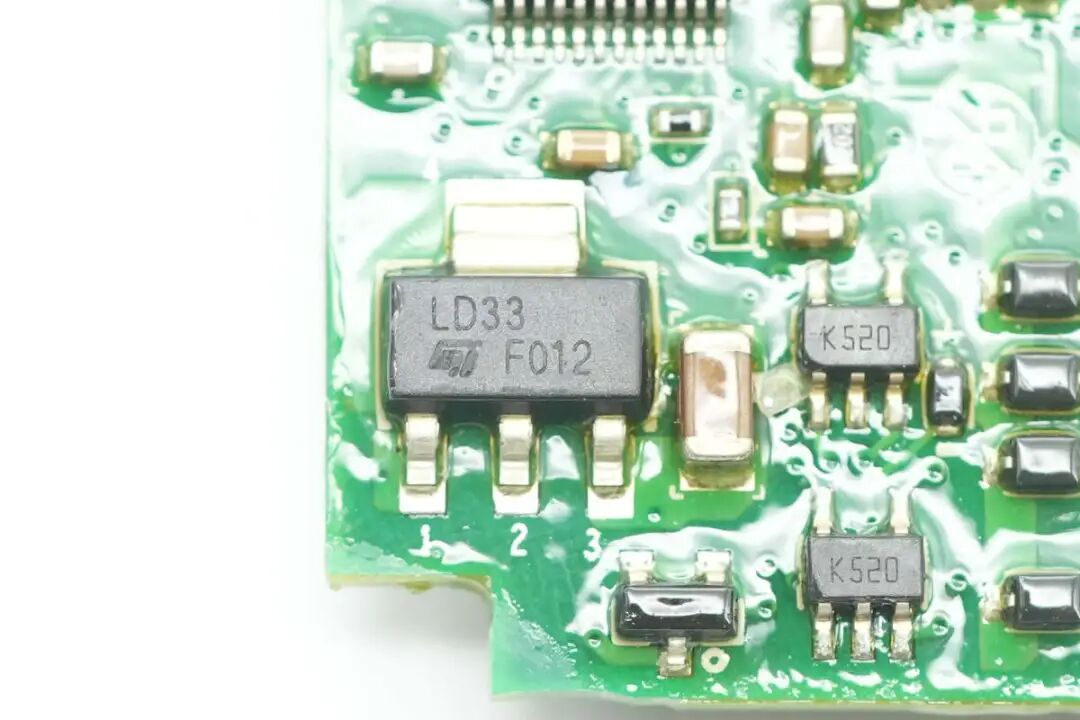
The voltage regulator chip is from STMicroelectronics, marked LD33, used to power the PFC controller, in SOT223 package.
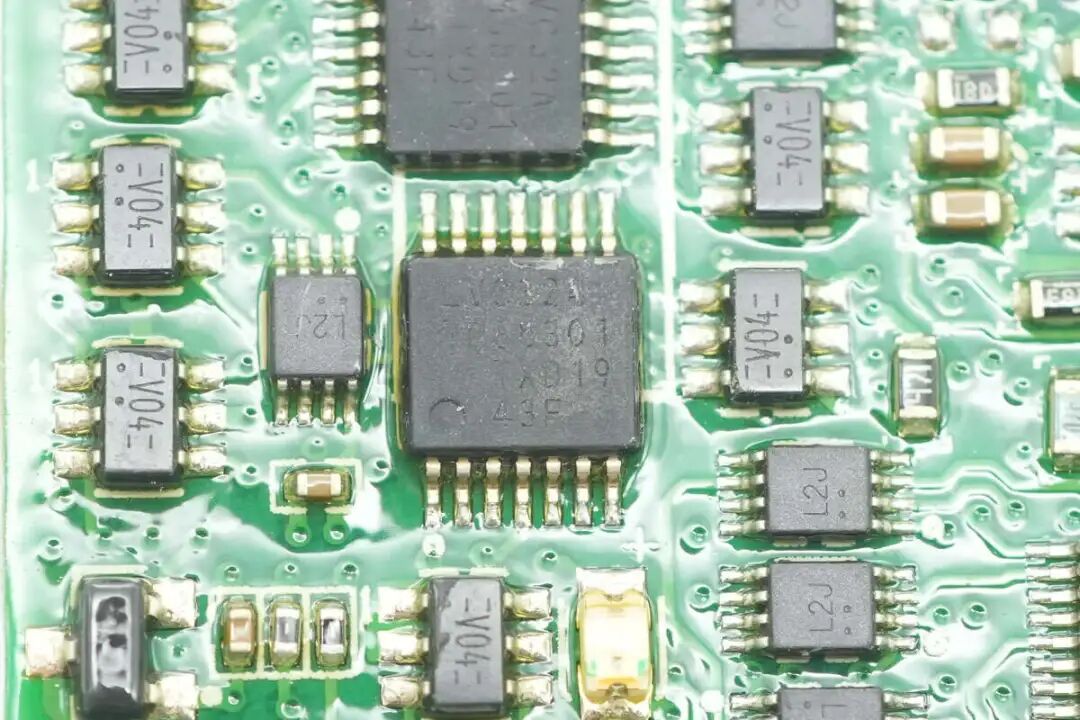
The OR gate chip is from Nexperia, model 74LVC32A, a four-channel 2-input OR gate, in TSSOP14 package.
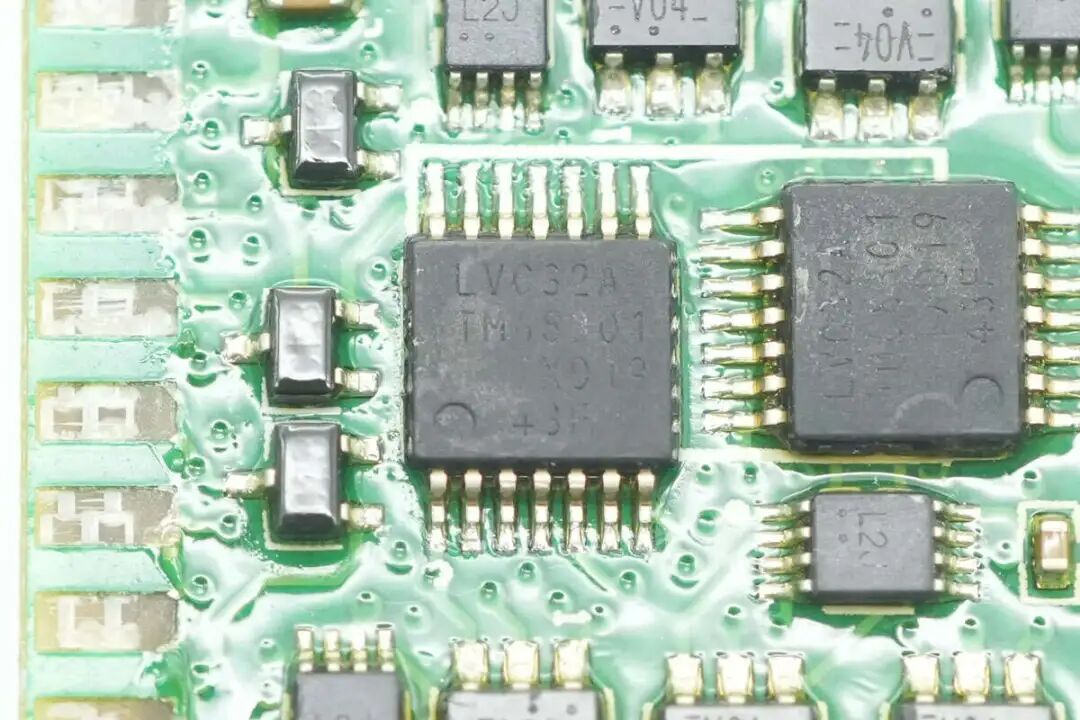
The other OR gate chip has the same model.
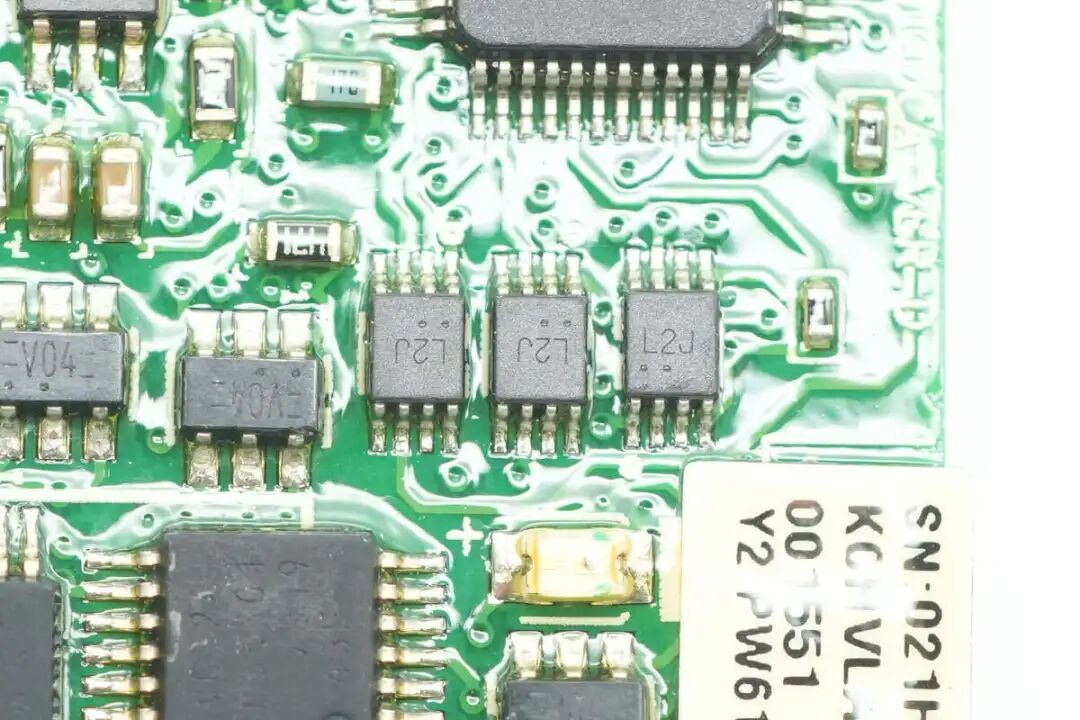
Three chips marked L2J.
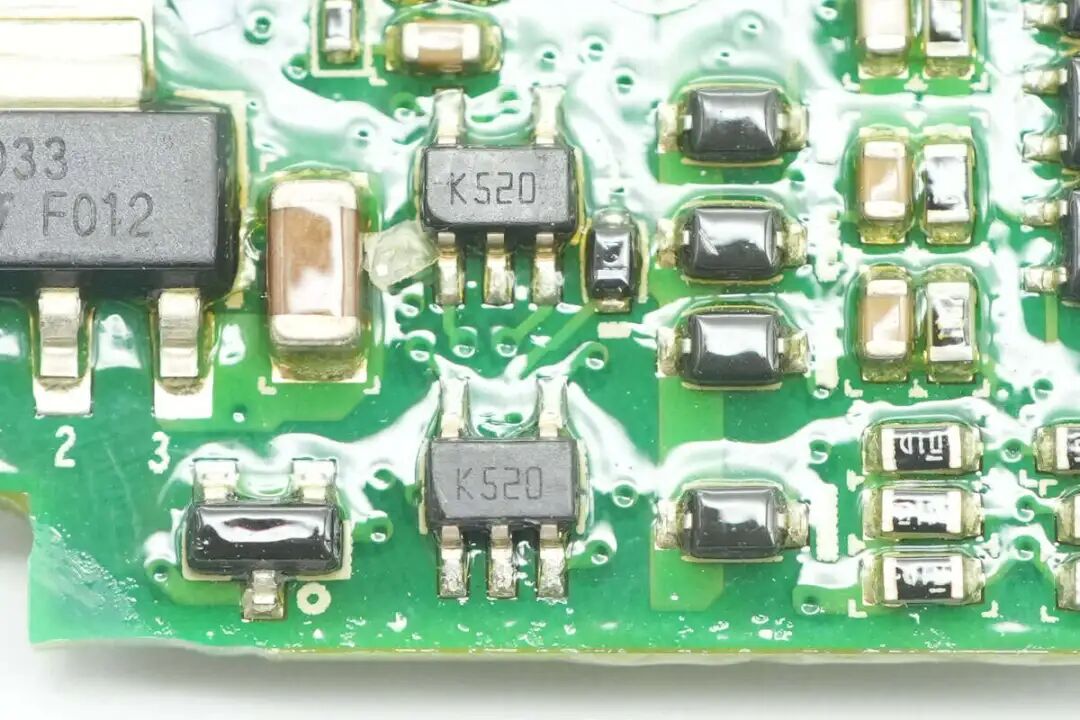
The voltage comparator is from STMicroelectronics, marked K520, model TS3021ILT, a high-speed voltage comparator with rail-to-rail input, supporting 1.8-5V power supply, in SOT23-5 package.
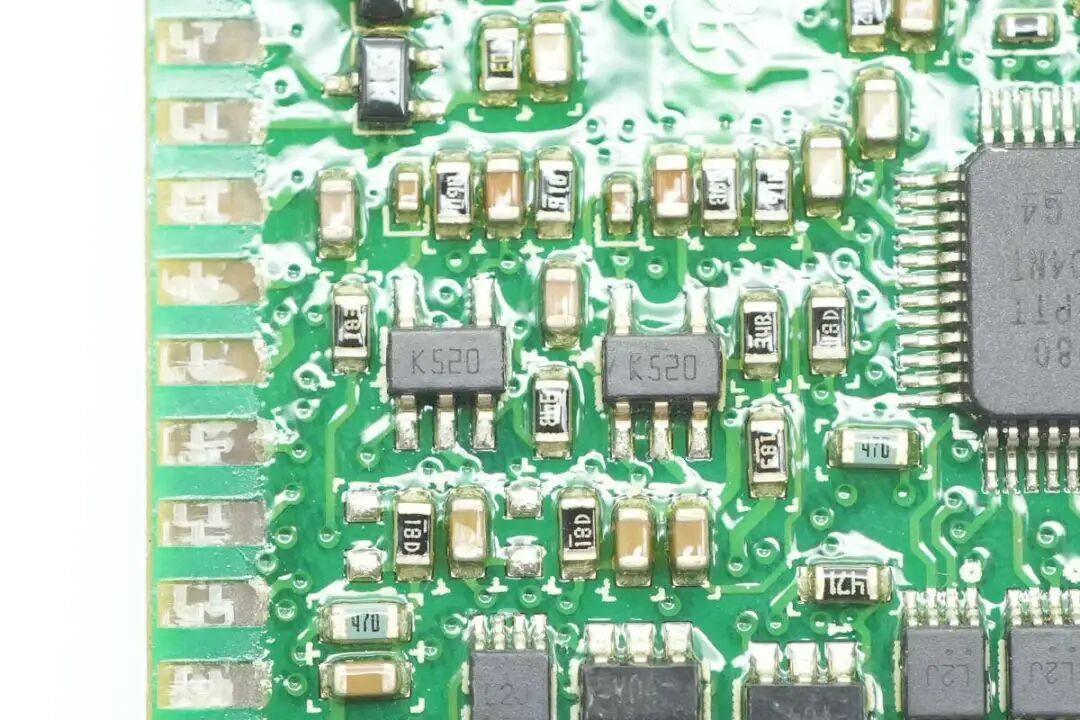
Two other voltage comparators have the same model.
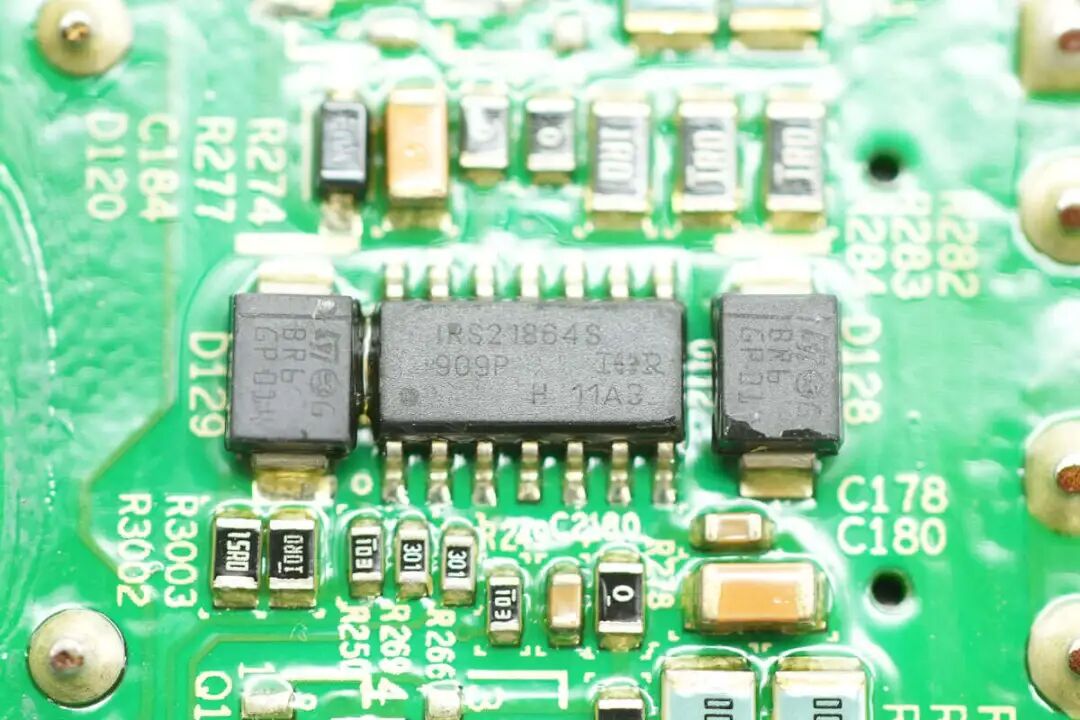
The half-bridge driver is from Infineon, model IRS21864S, rated for 600V, with 4A pull-up and 4A pull-down current capability, supporting IGBT and MOS applications, in SOIC14 package.
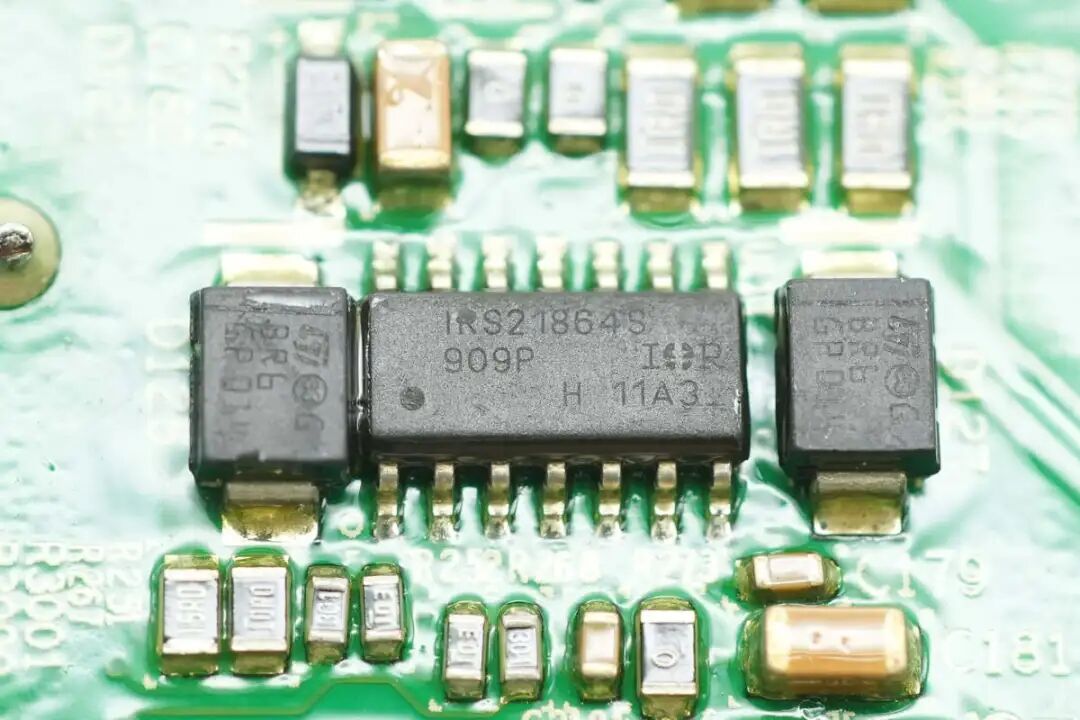
The other half-bridge driver has the same model.
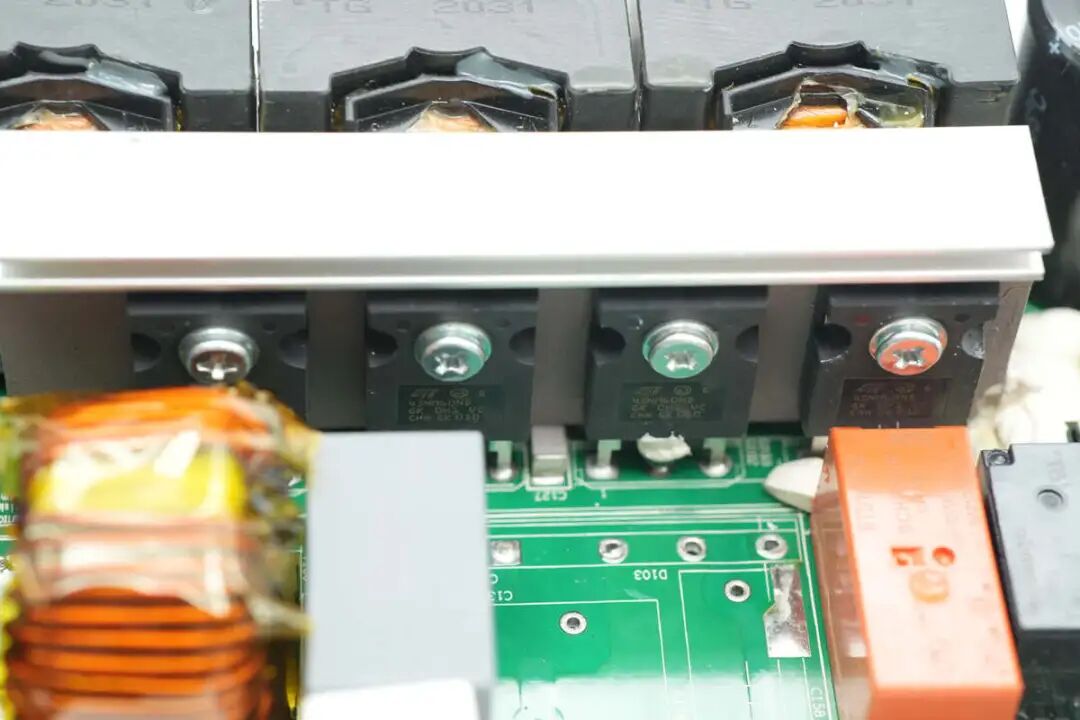
The heat sink secures four PFC switching transistors.
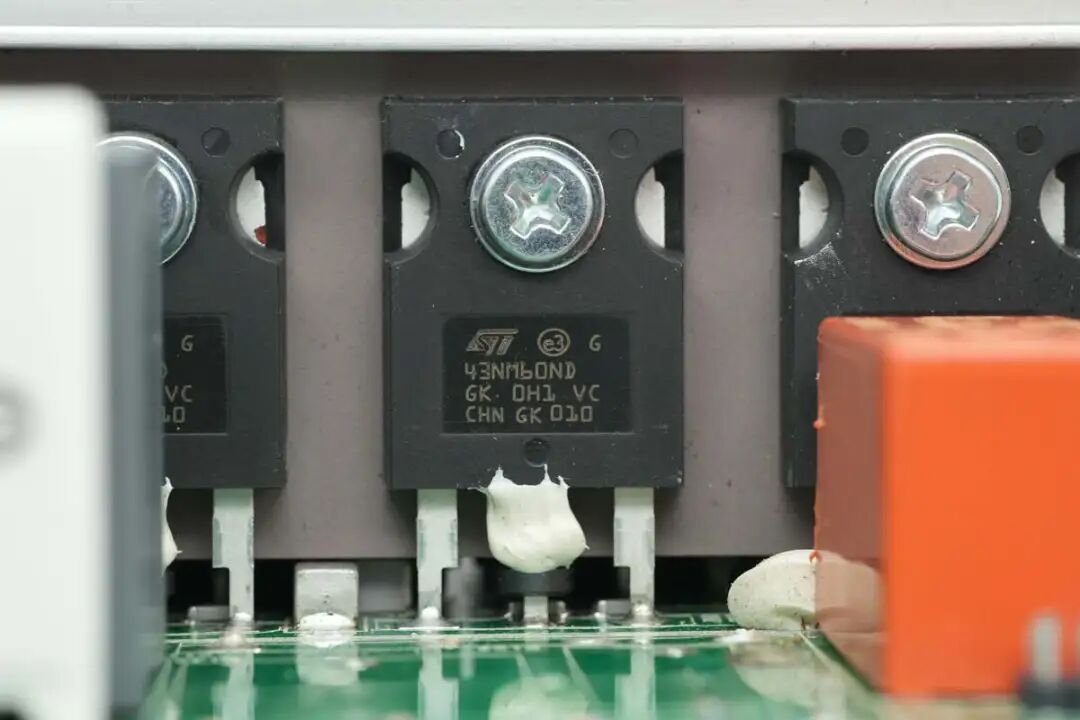
The PFC switching transistors are from STMicroelectronics, model STW43NM60ND, NMOS, rated for 600V, with a conduction resistance of 75mΩ, in TO-247 package.
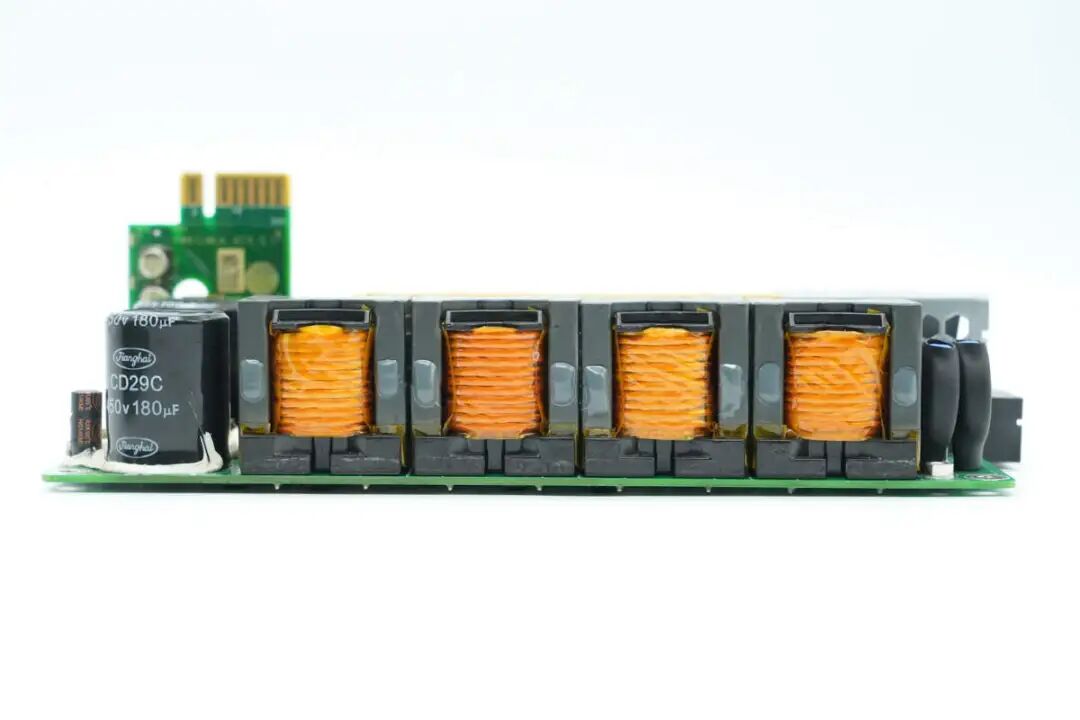
The PCBA module has the PFC inductor soldered on the side.
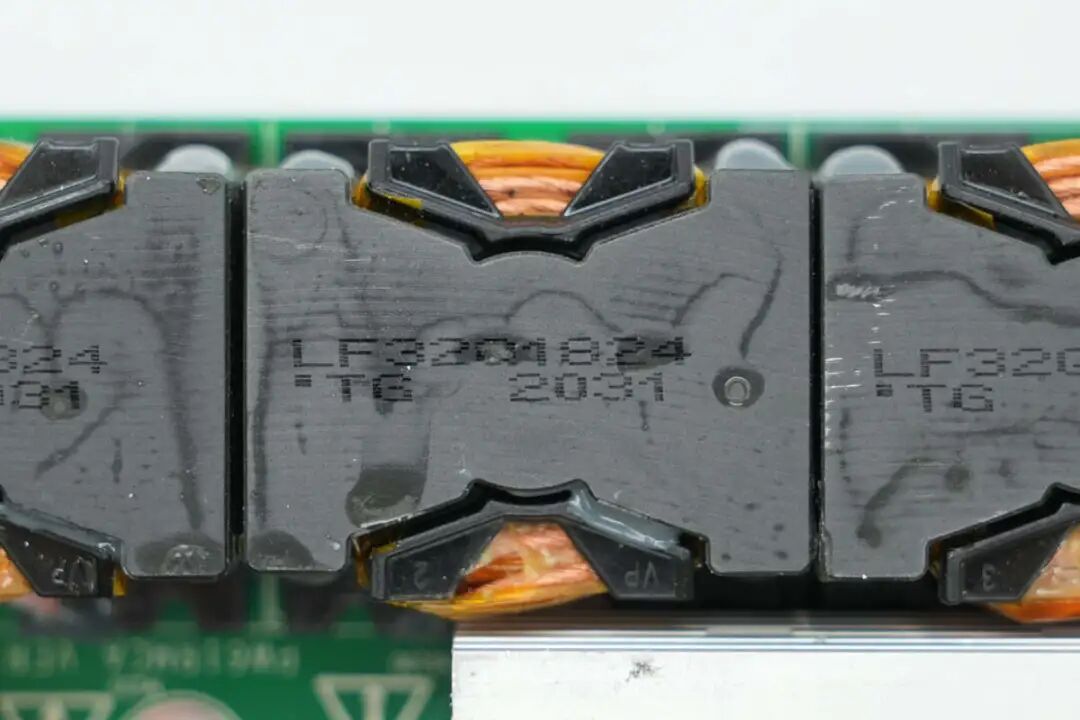
The PFC inductor is wound with litz wire.
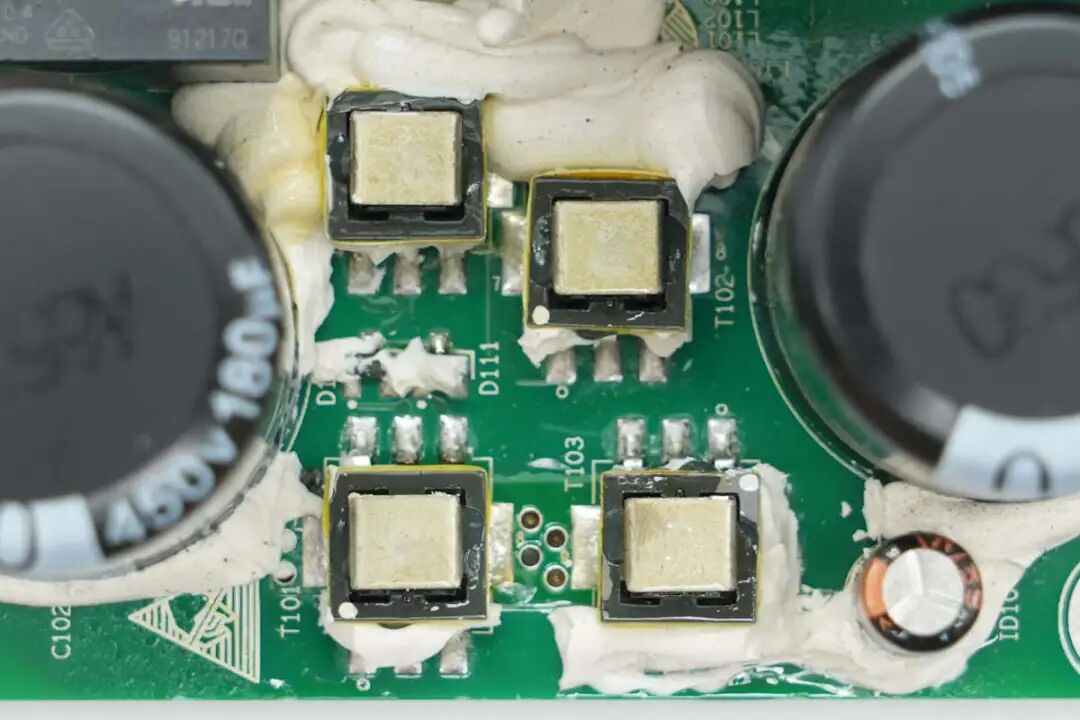
Close-up of four surface-mounted current transformers.
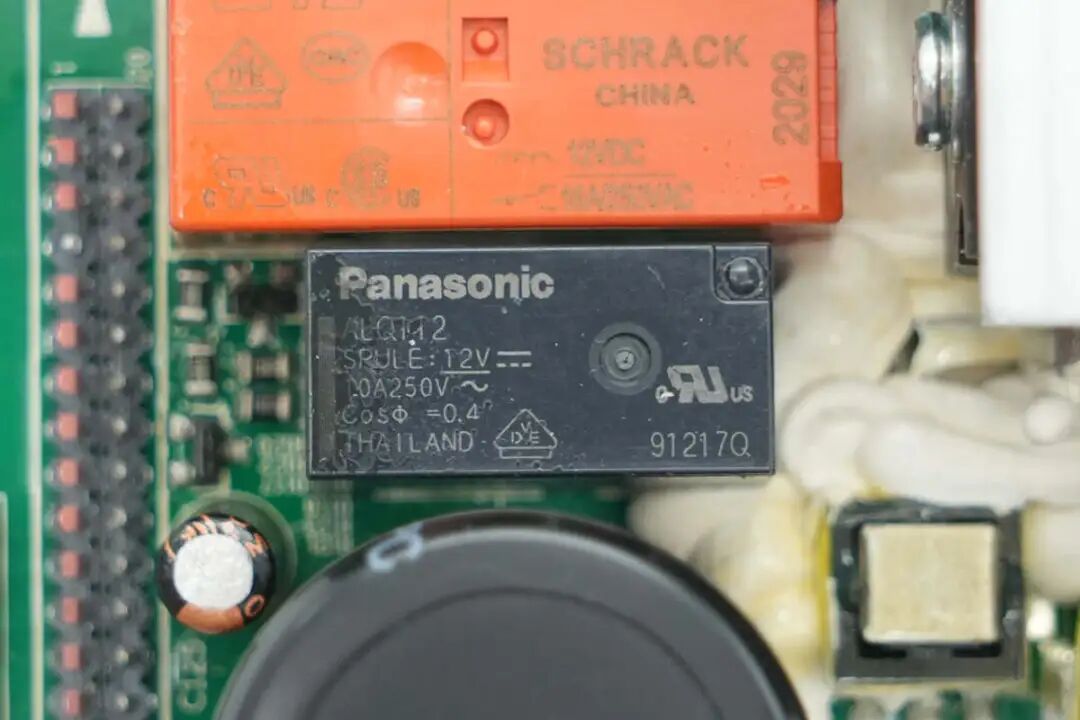
The relay is from Panasonic, model ALQ112, with a set of changeover contacts, contact capacity 10A, coil voltage 12V.
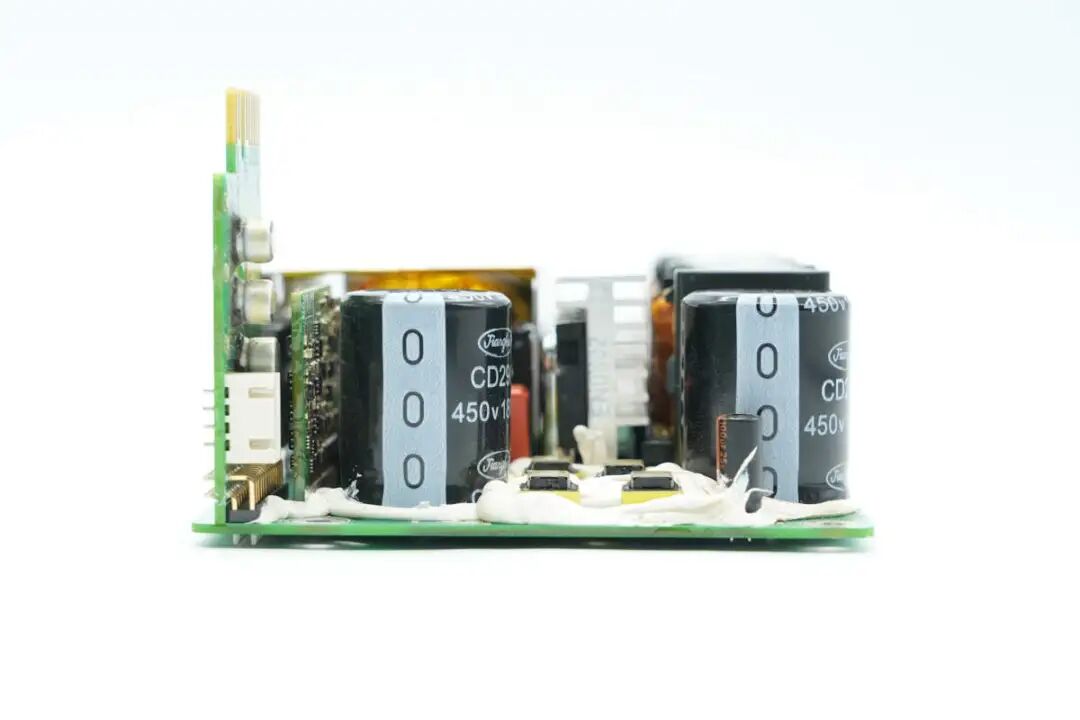
There are two filter capacitors at the output end.
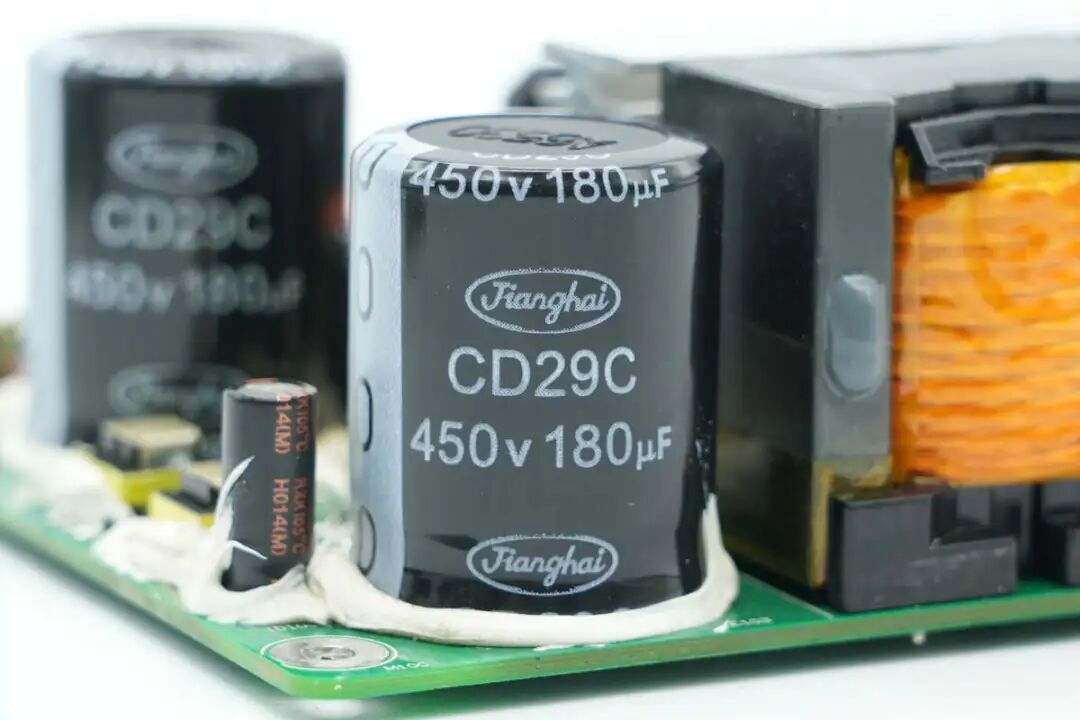
The filter capacitors are from Jianghai, part of the CD29C series, rated at 450V 180μF, reinforced with glue at the bottom.
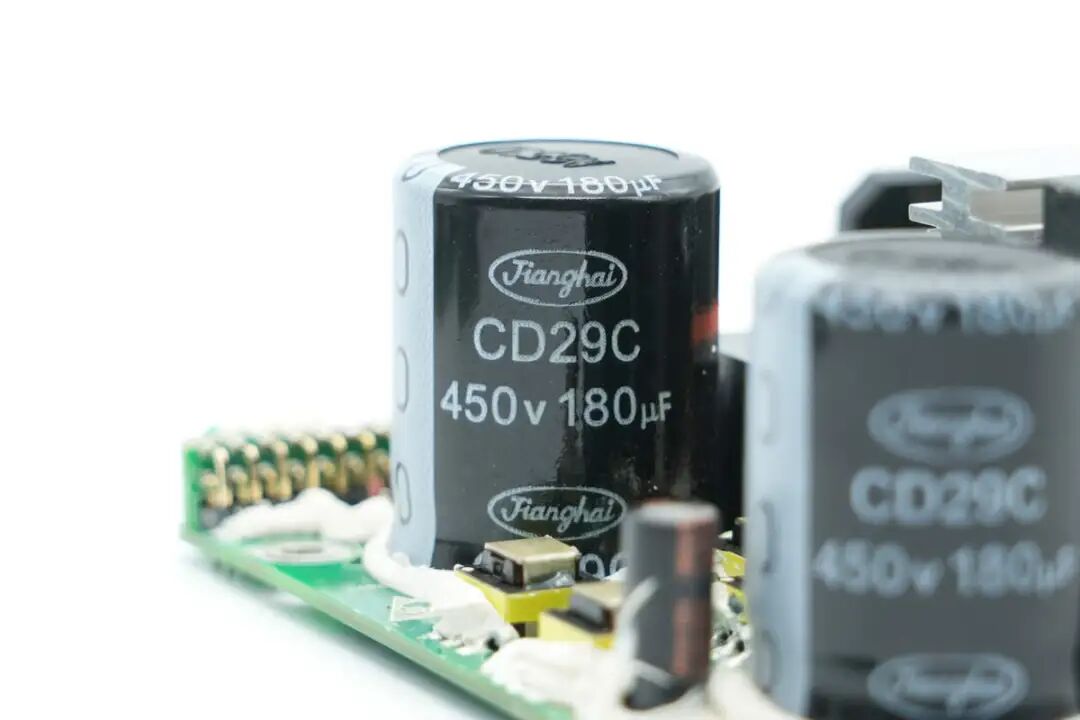
The connection board is connected by soldering, with gold fingers on the right side.
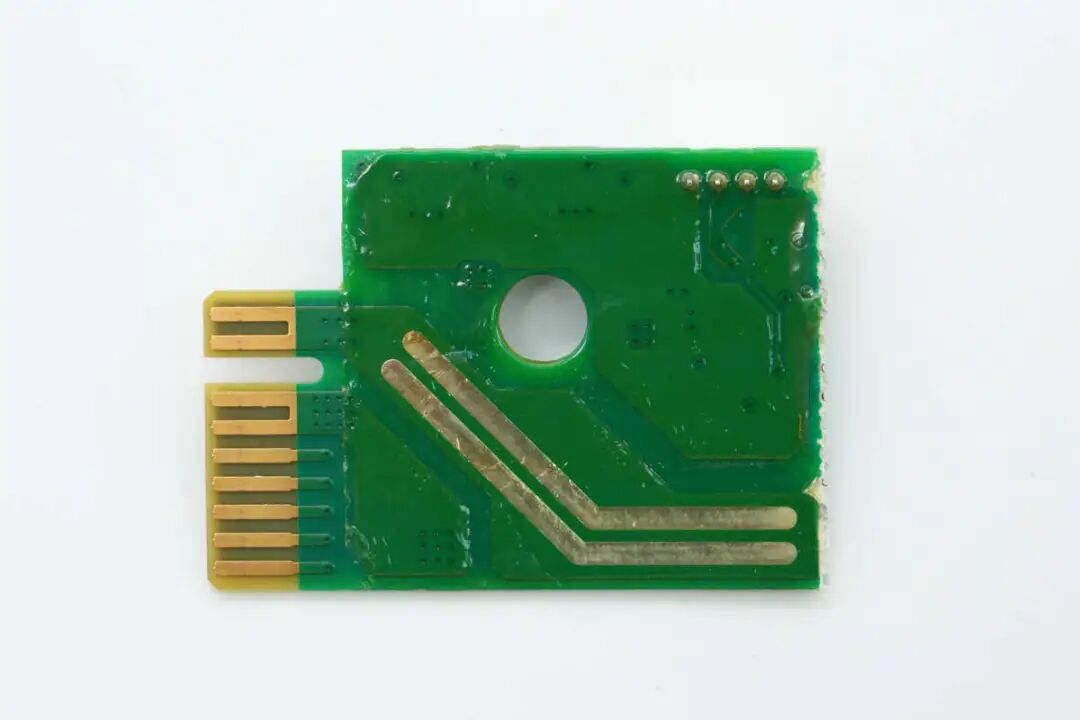
The back of the small board is exposed copper with solder to enhance current carrying capacity.
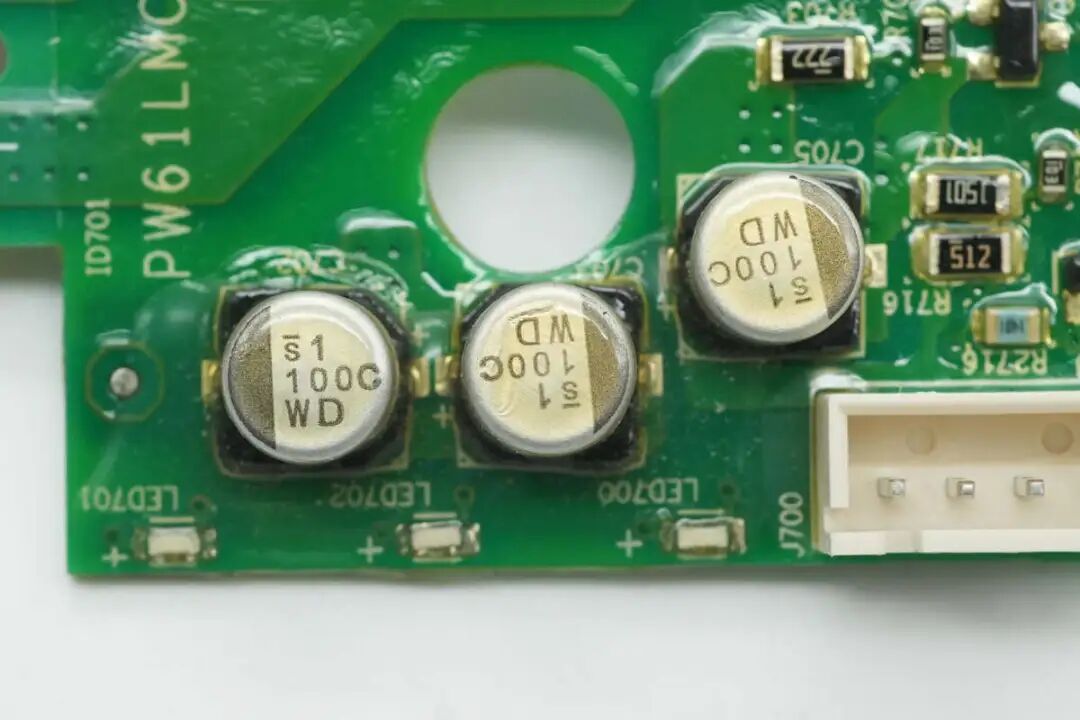
Three surface-mounted filter capacitors are rated at 100μF 16V, with an LED status indicator light below.
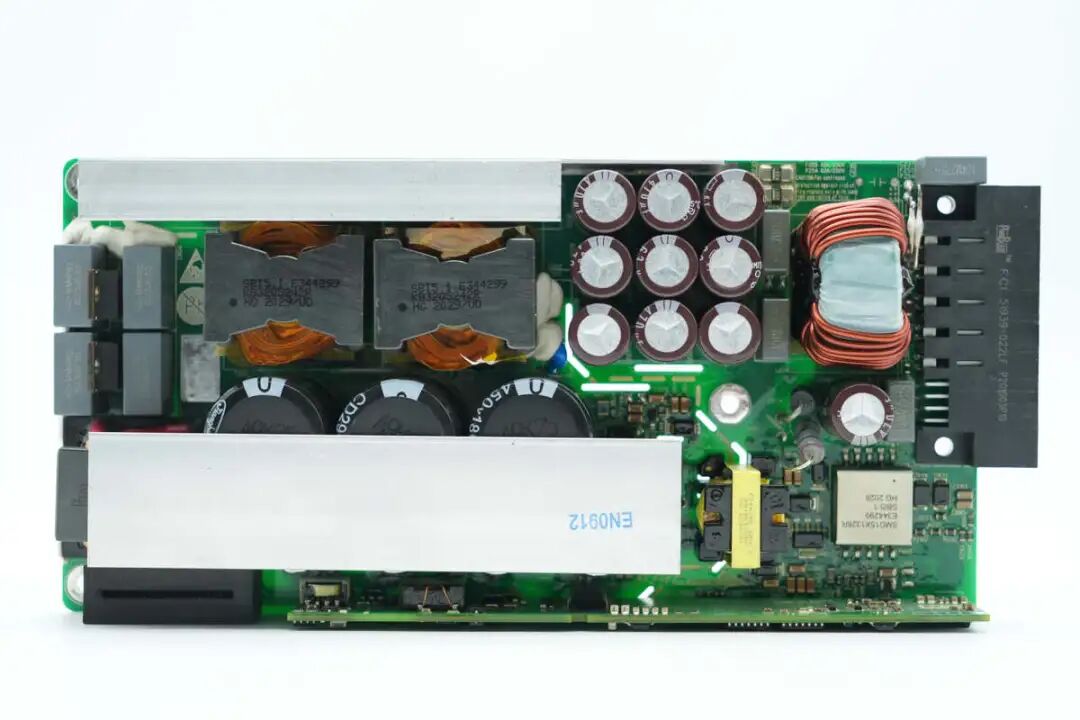
The LLC module overview, with the control board at the bottom, LLC switching transistors, high-voltage filter capacitors, transformers, and synchronous rectifiers at the top. The left side has resonant capacitors and resonant inductors, while the right side has output filter capacitors, filter inductors, and auxiliary power supply.
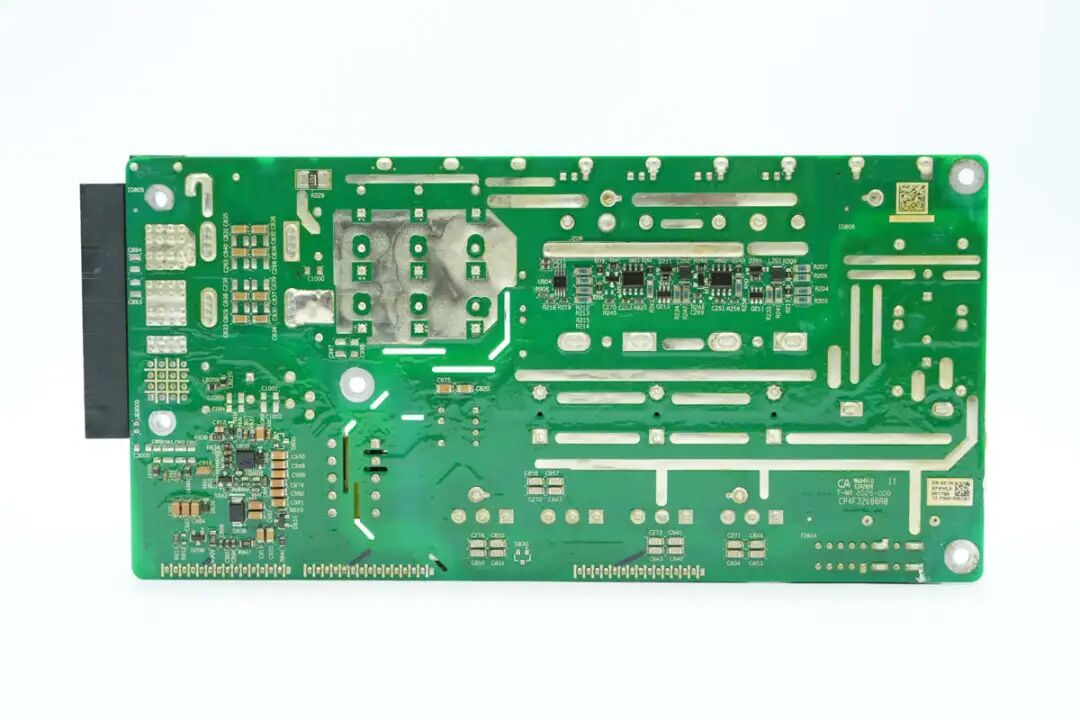
The back of the LLC module has drivers, with exposed copper for high current traces to enhance current carrying capacity.
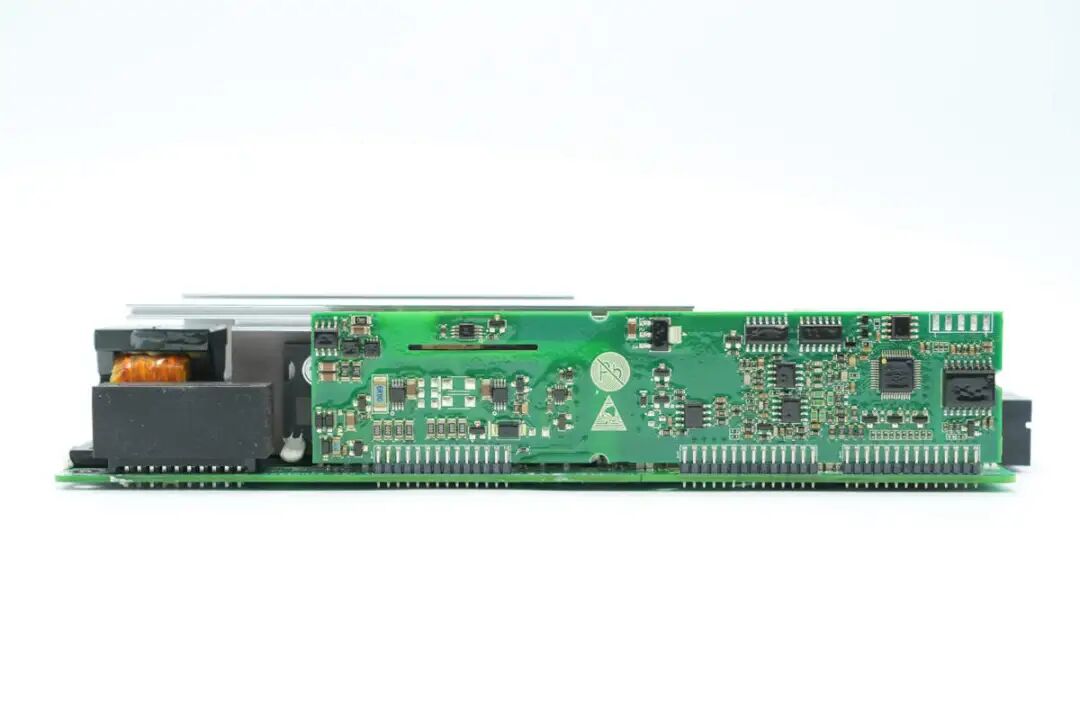
The PCBA module has the input socket and control board soldered on the side.
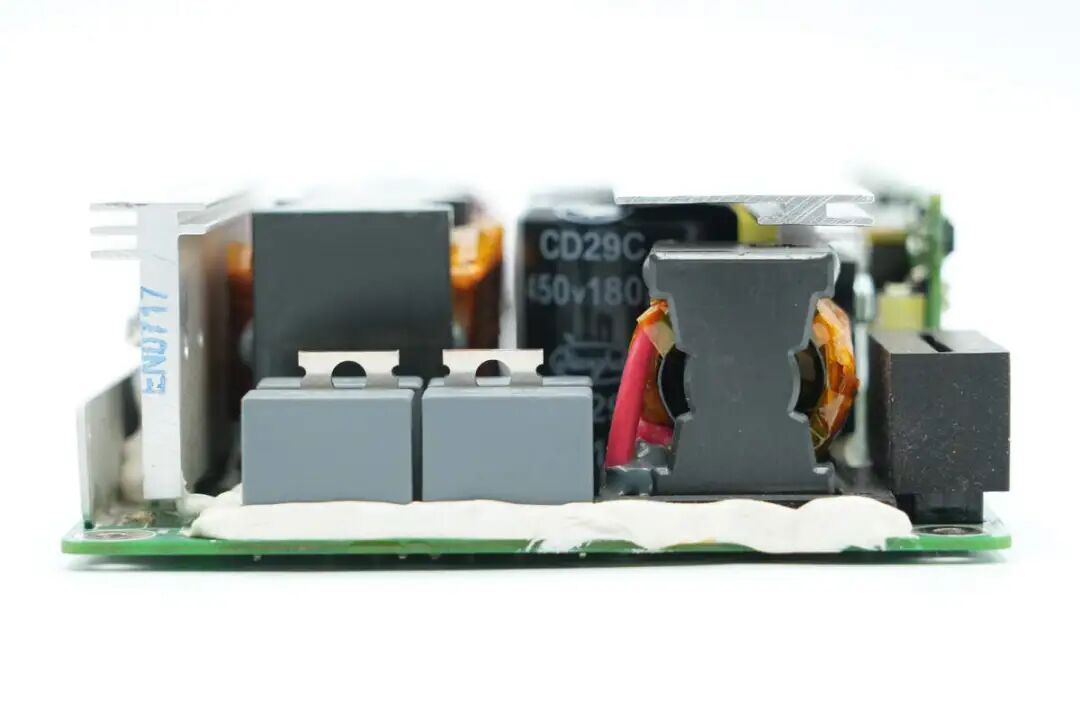
The other side has resonant capacitors, diodes, and resonant inductors.
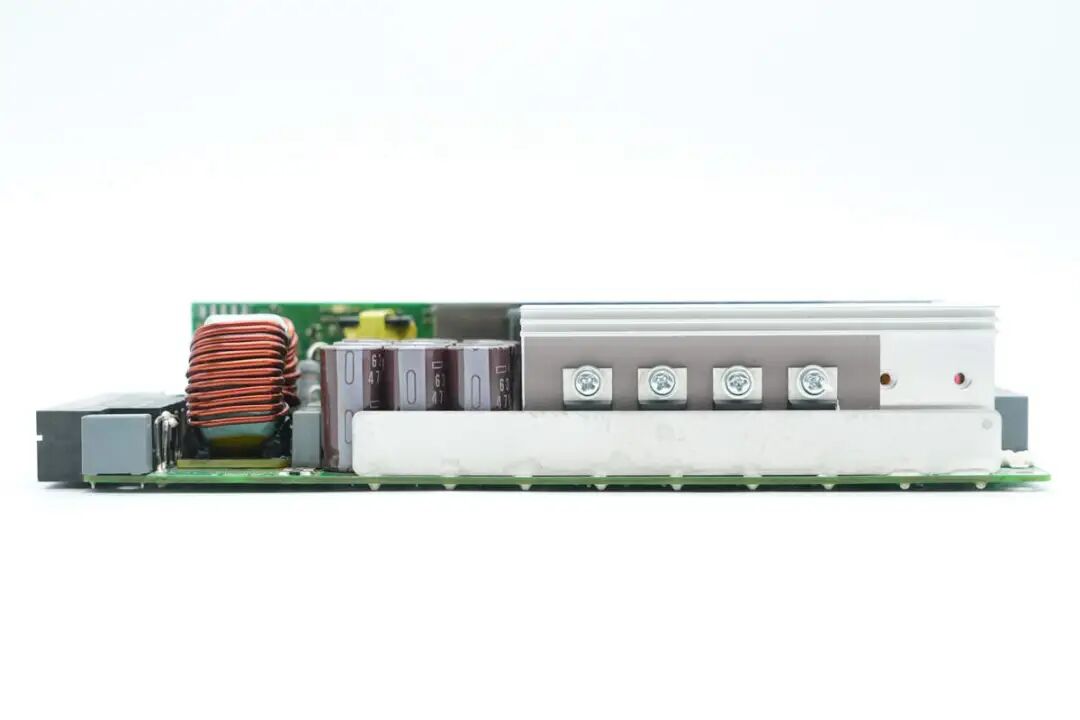
The PCBA module has copper bars for current carrying, with synchronous rectifiers and filter capacitors.
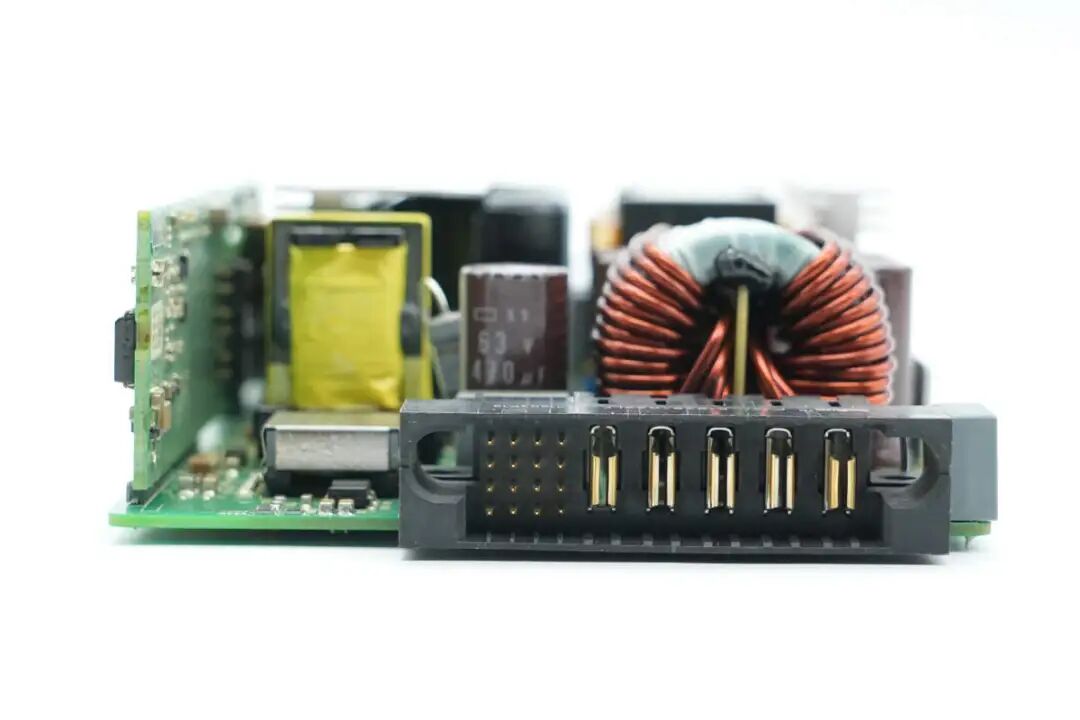
The output end has connection sockets and filter inductors.
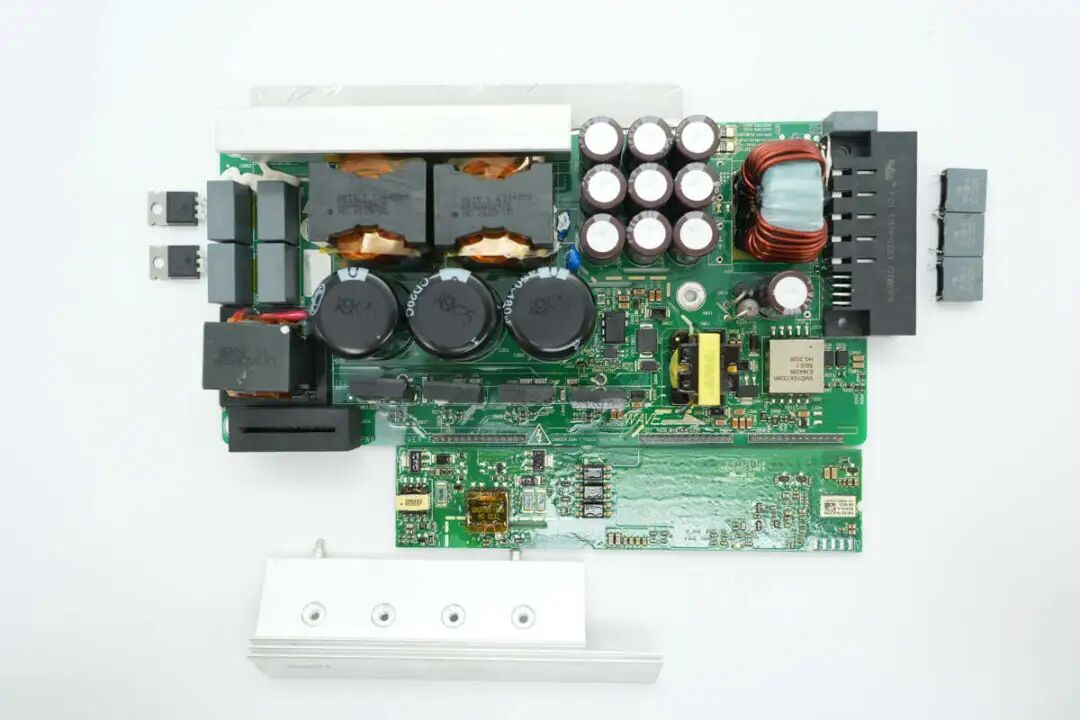
Removing the heat sink, soldering to remove the diodes, filter capacitors, and control board, continuing the disassembly.
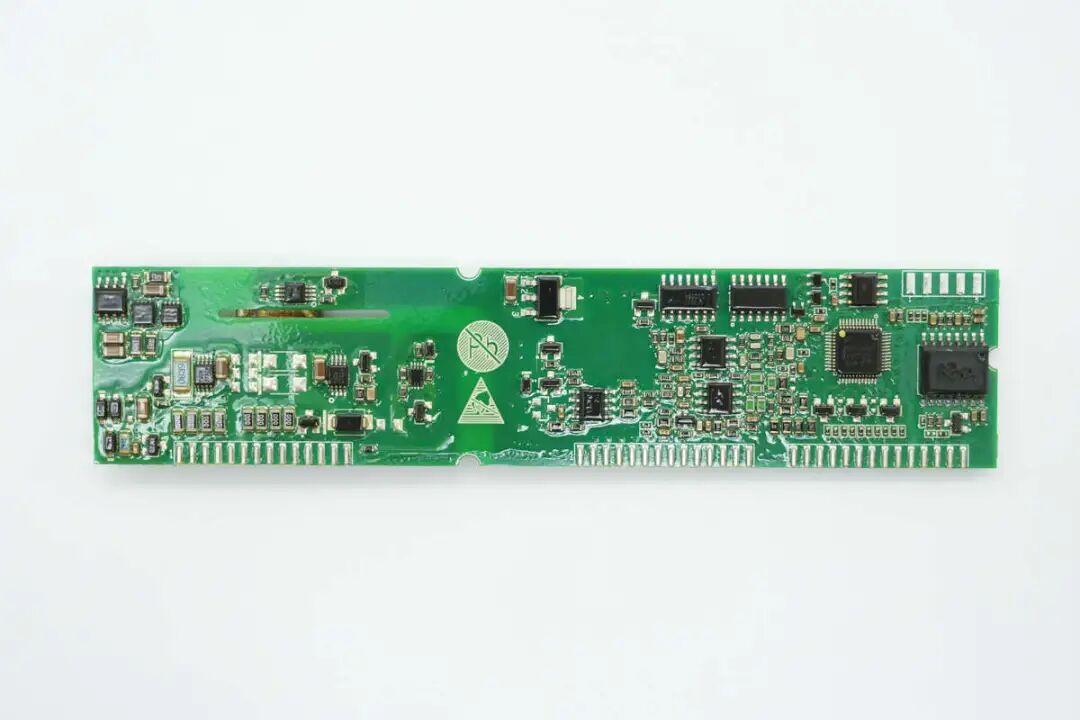
The left side of the control board has power chips and driver chips, with a voltage regulator chip in the middle, and on the right side are operational amplifier chips, LLC controllers, memory, and isolation chips.
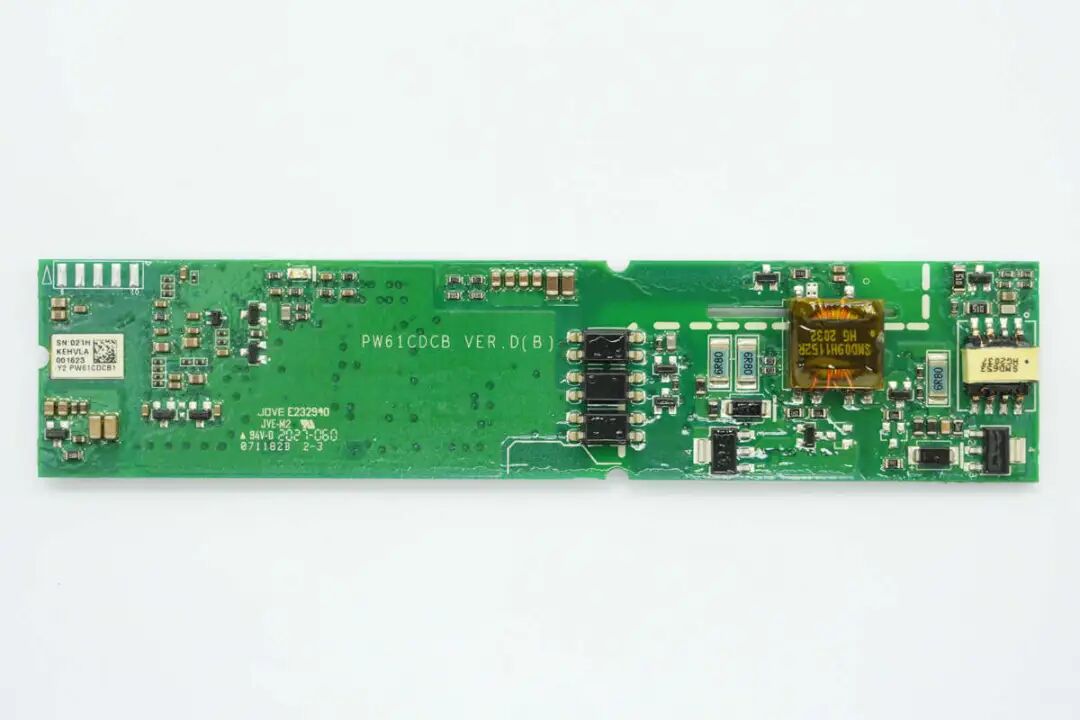
The other side of the control board has an auxiliary power transformer and driver transformer, as well as communication optocouplers.
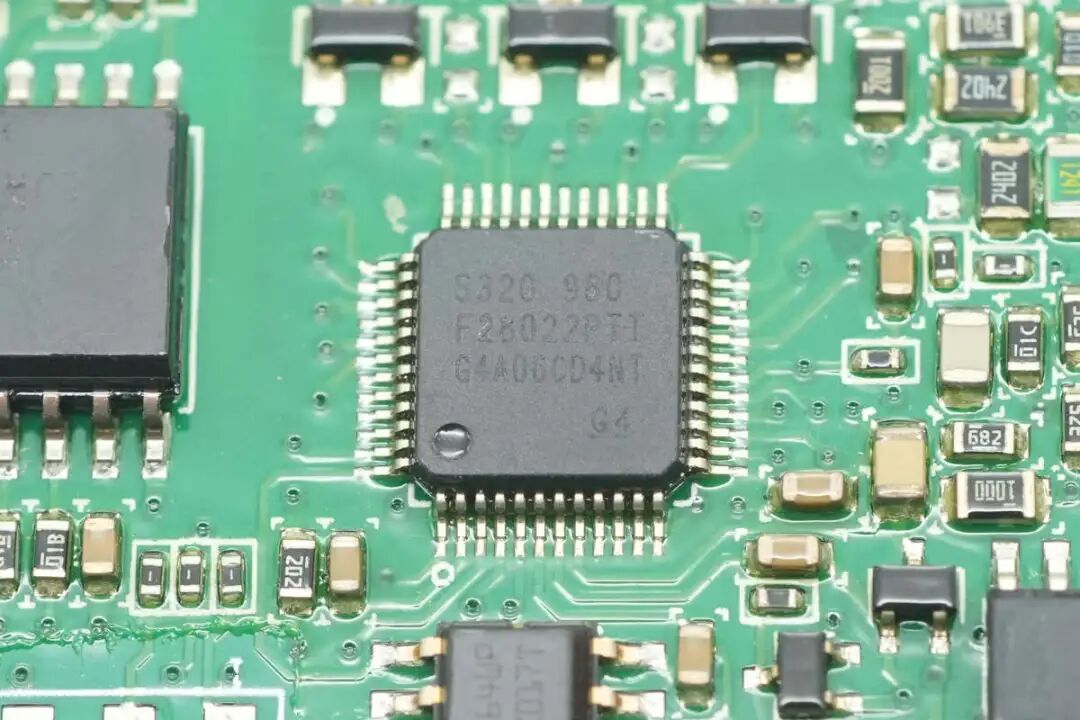
The LLC controller uses the Texas Instruments TMS320F28022, the same model as the PFC controller.
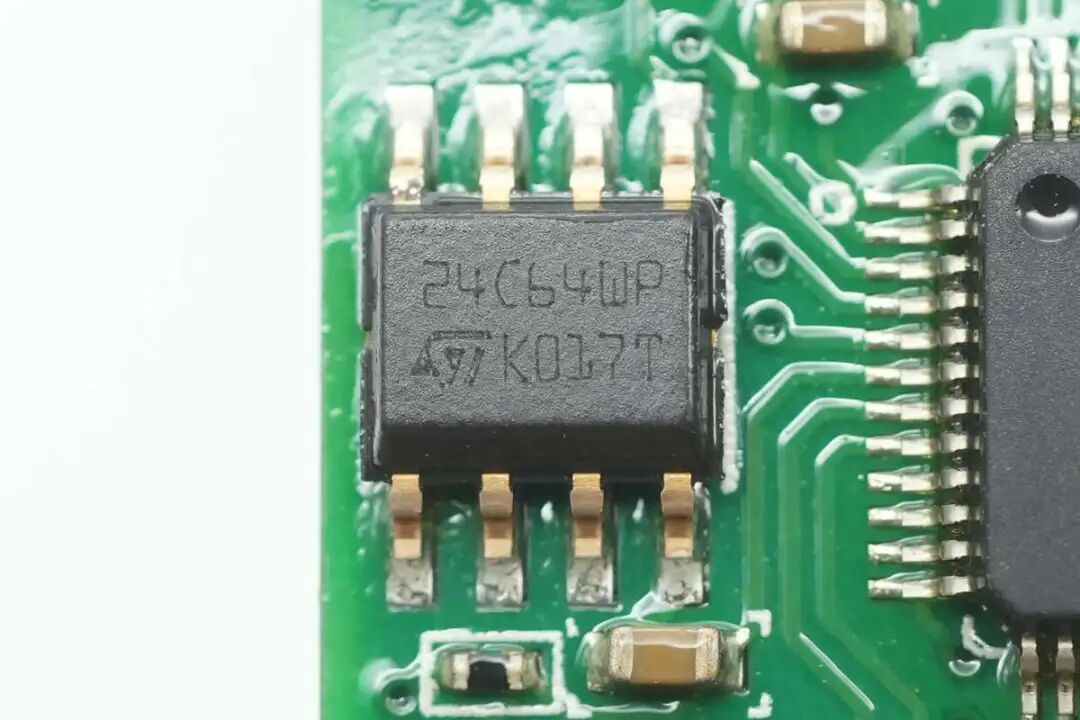
The memory chip is from STMicroelectronics, model M24C64-W, with a capacity of 8KB, in SO8 package.
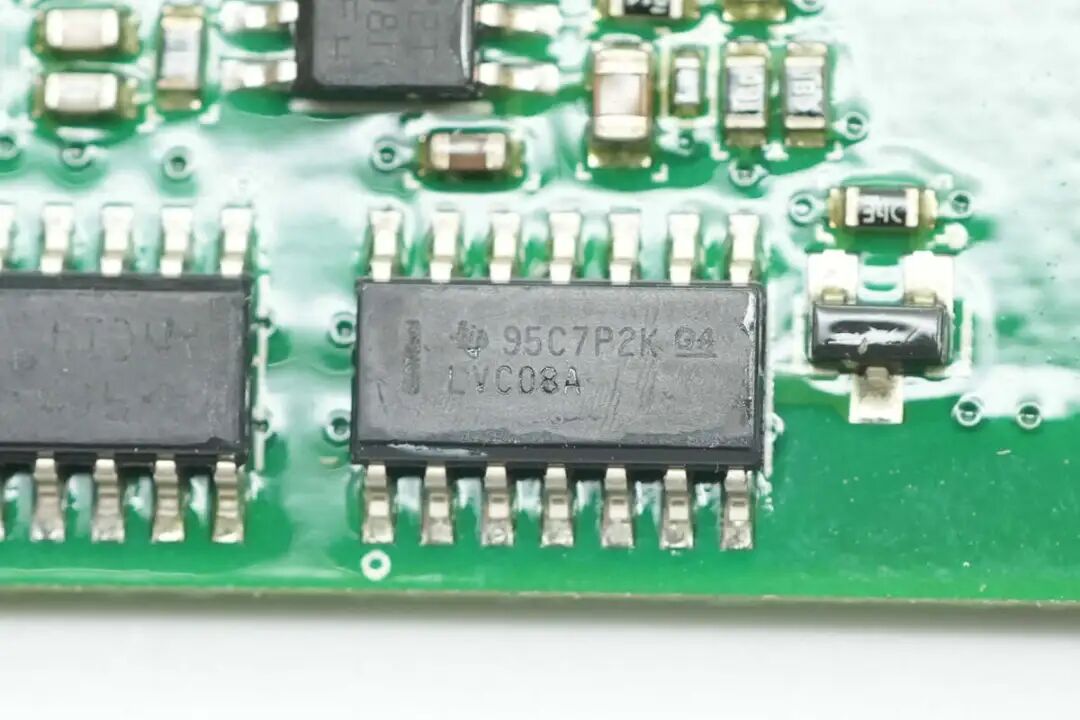
The AND gate chip is from Texas Instruments, marked LVC08A, model SN74LVC08A, a four-channel 2-input AND gate, in SOIC14 package.
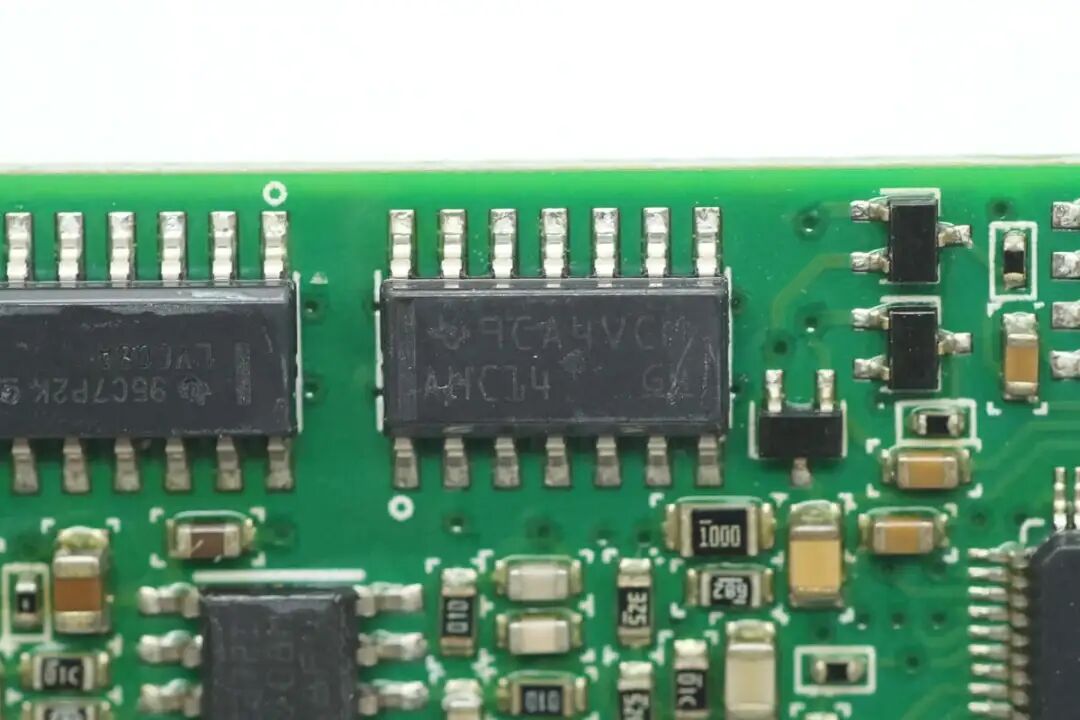
The inverter chip is from Texas Instruments, marked AHC14, model SN74AHC14, a 6-channel inverter, in SOIC14 package.
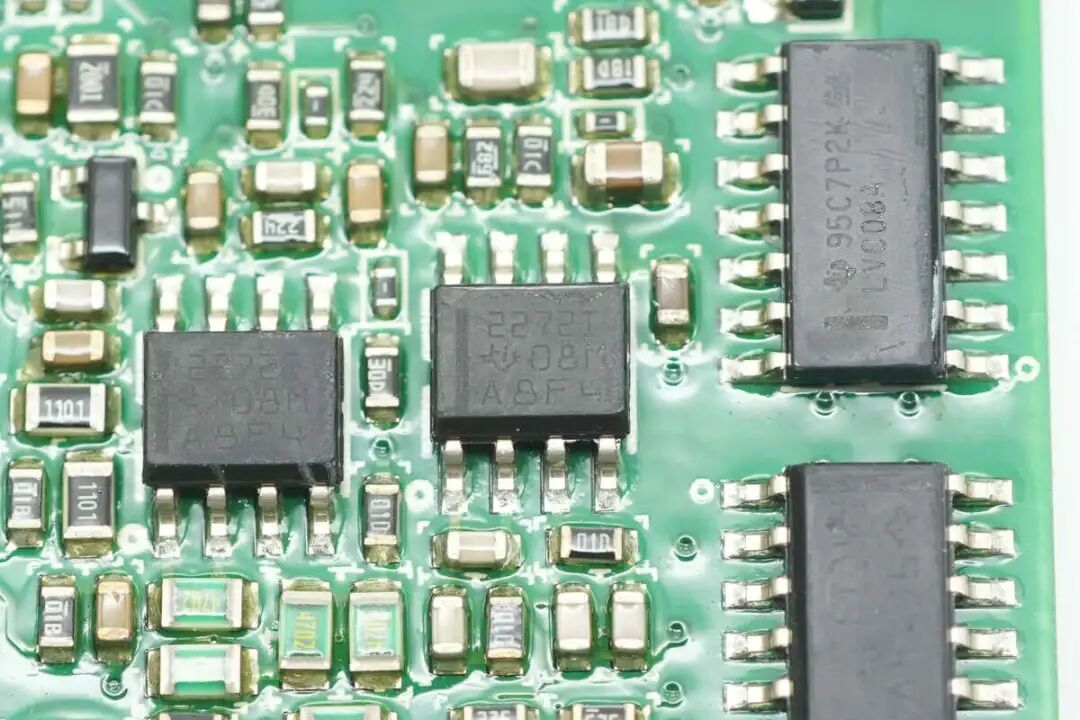
The dual operational amplifier is from Texas Instruments, model TLC2272, a dual-channel, low-noise rail-to-rail operational amplifier, in SOIC8 package.
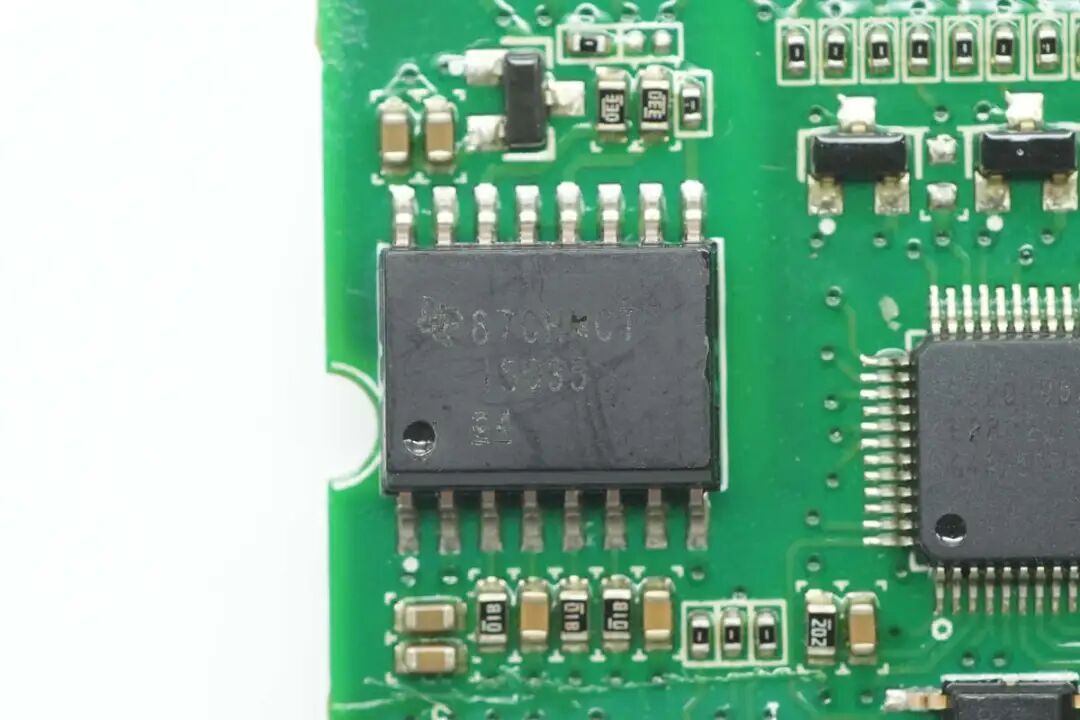
The isolation chip is from Texas Instruments, model ISO35, used for isolating communication, with a transmission rate of 1Mbps and an isolation capability of 2.5kVrms, in SOIC16 package.
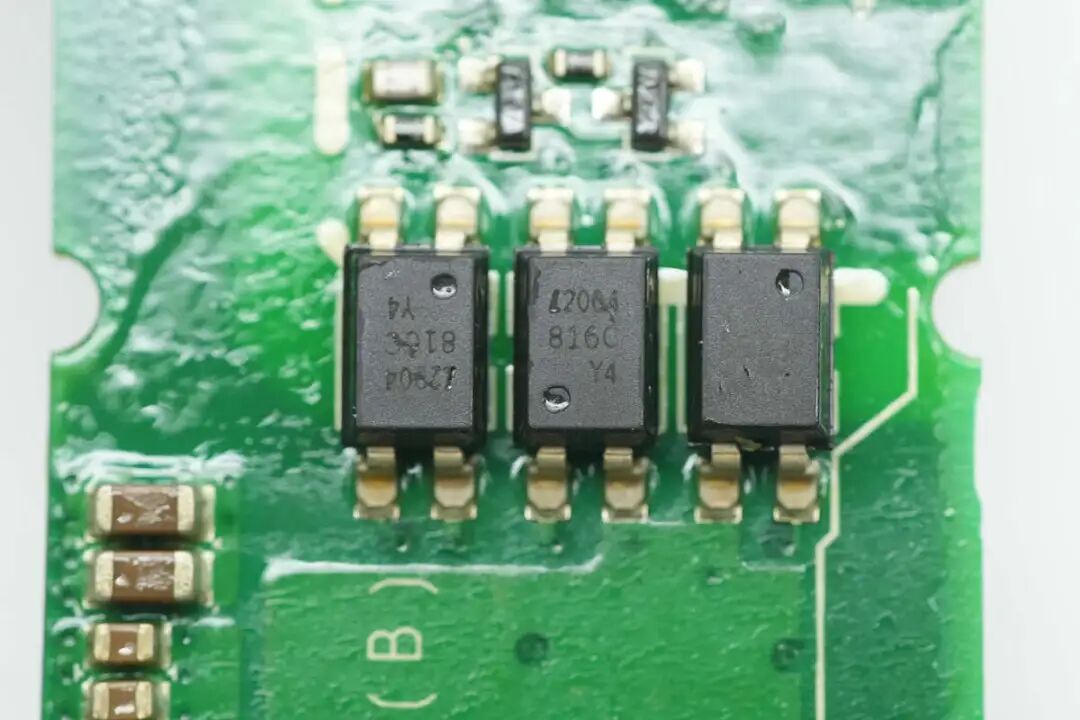
Three LTV-816C optocouplers are used for feedback isolation.
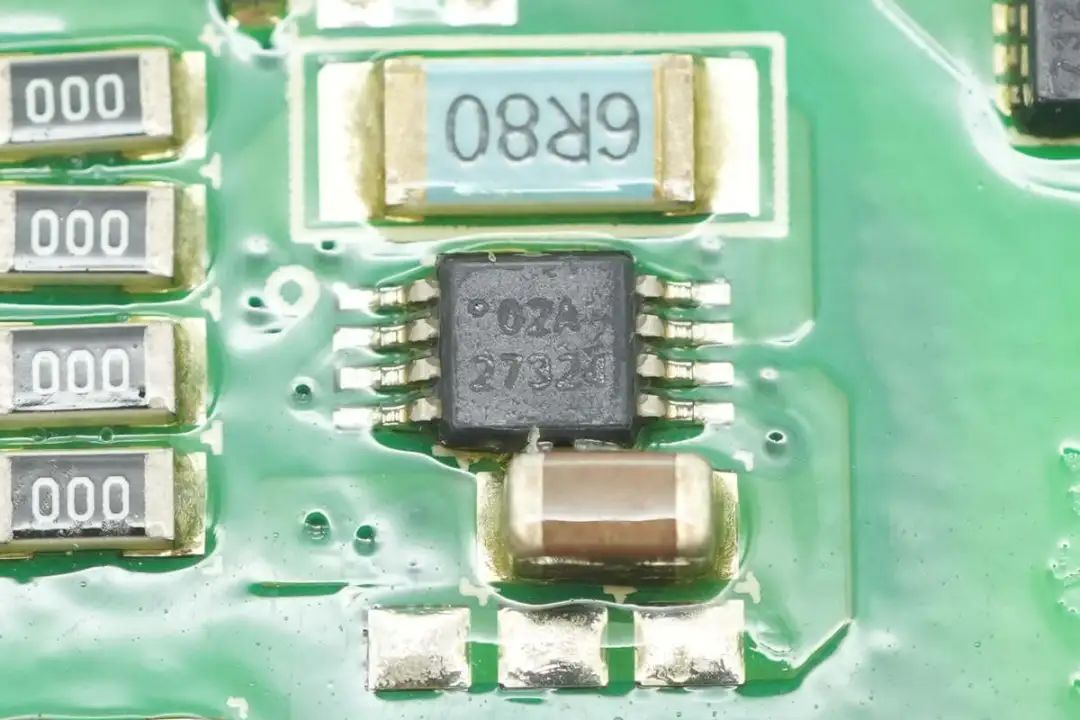
The driver is from Texas Instruments, model UCC27324, a dual low-side gate driver with 4A output current, in MSOP-8 PowerPAD package, used for driving LLC switching transistors.
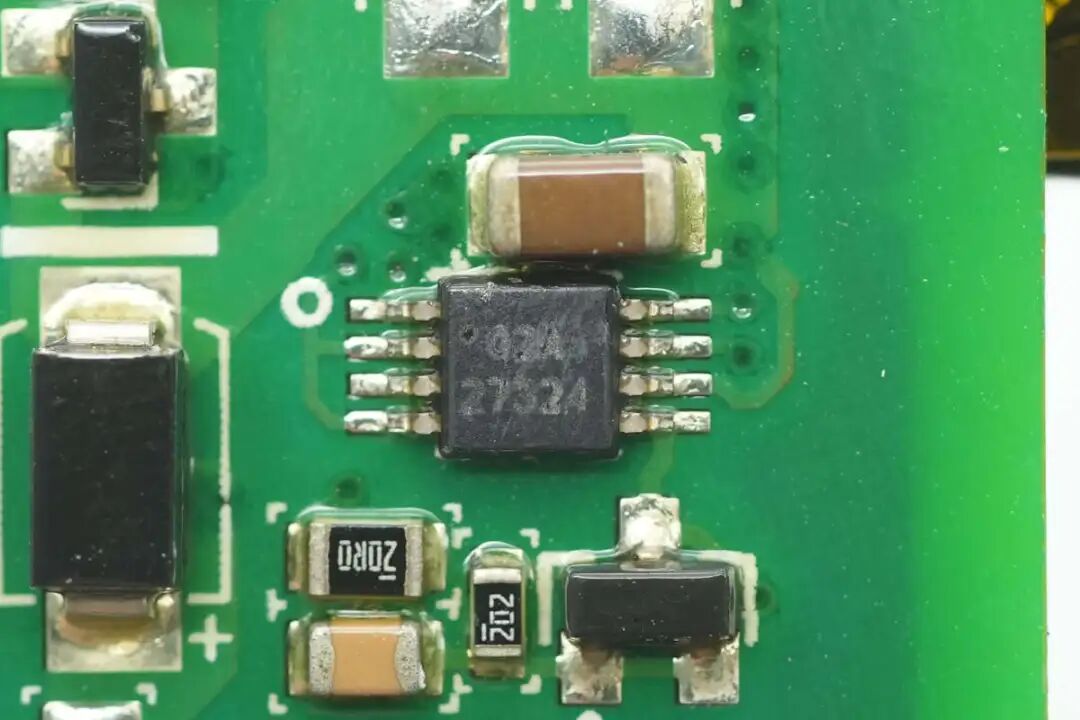
The other driver has the same model.
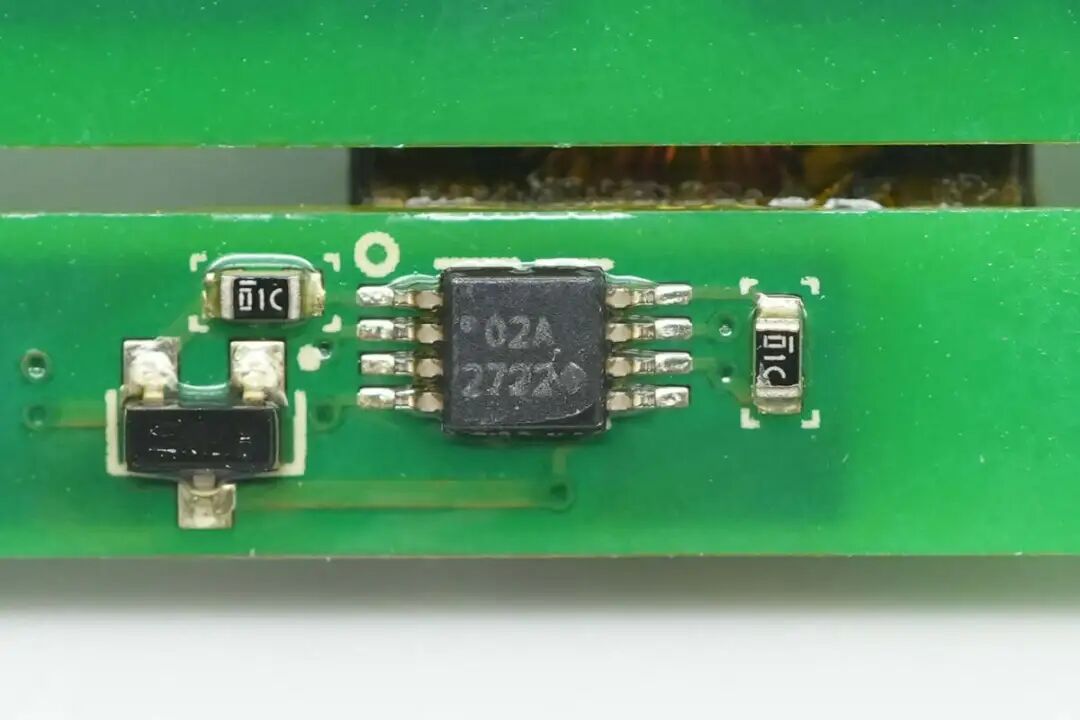
A separate driver is used to drive the isolation transformer.
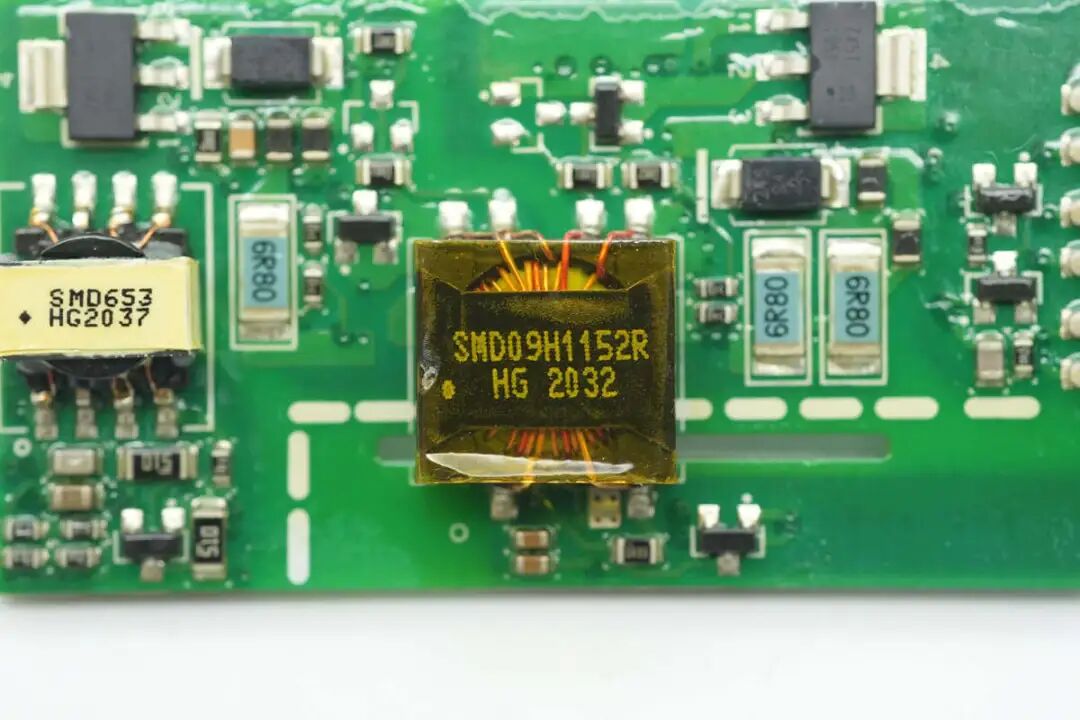
Close-up of the isolation transformer used to drive the high-side switching transistors.
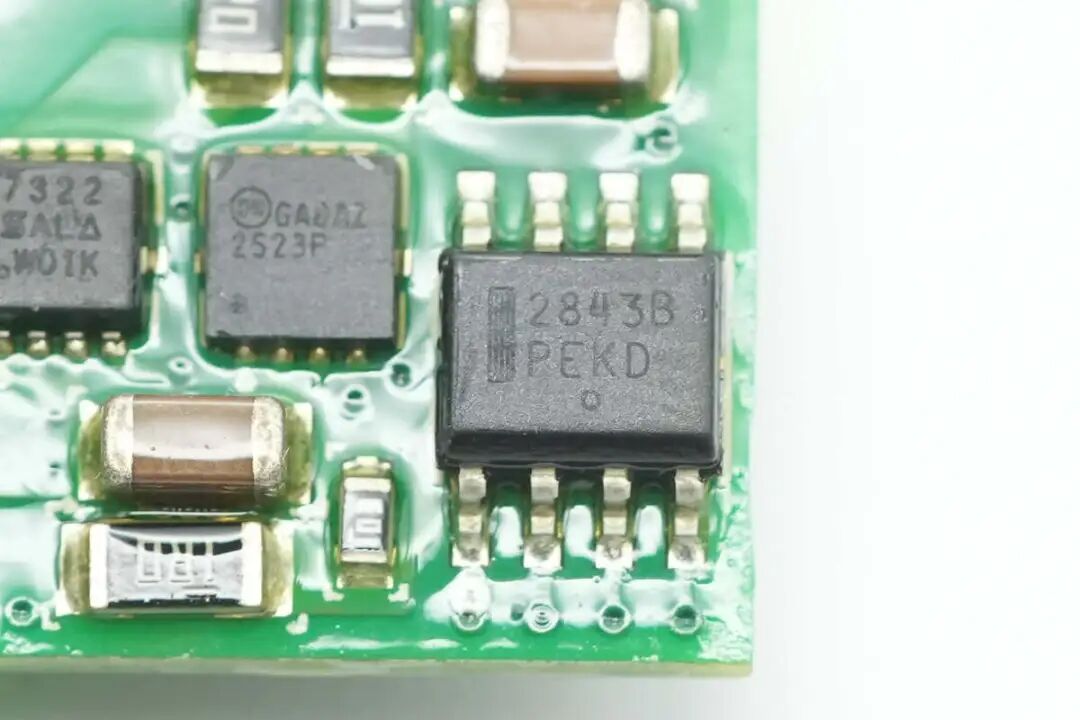
The auxiliary power chip is from On Semiconductor, model UC2843B, a high-performance PWM controller for switch-mode power supplies and DC-DC converters, in SO-8 package.
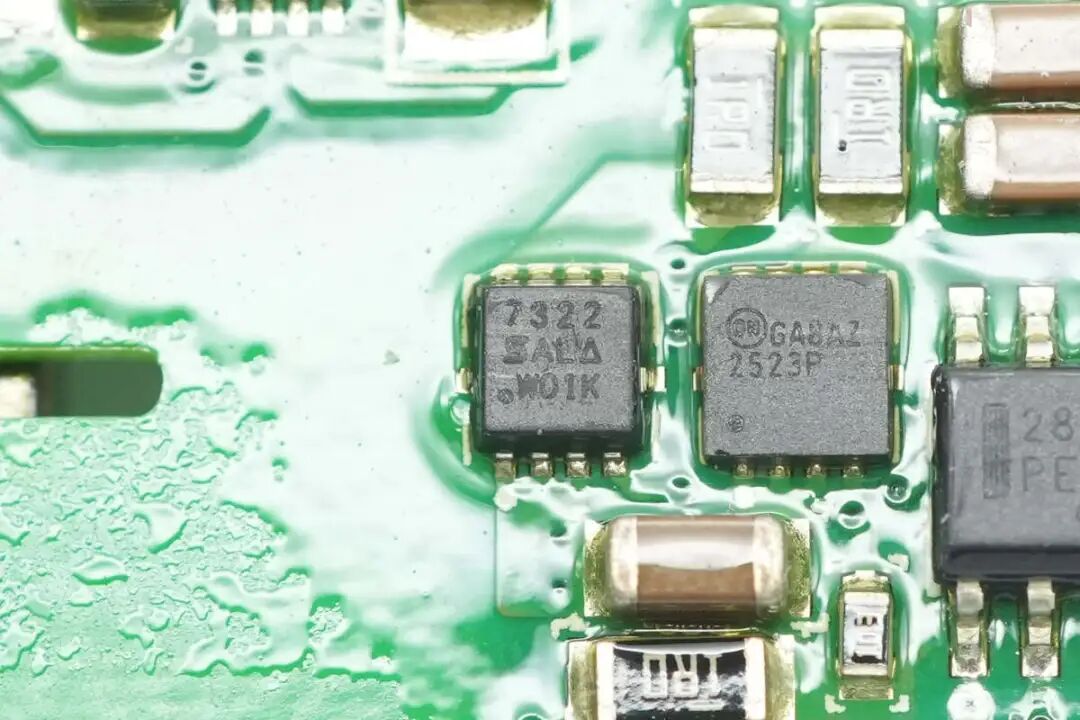
Close-up of the TVS used for overvoltage protection.
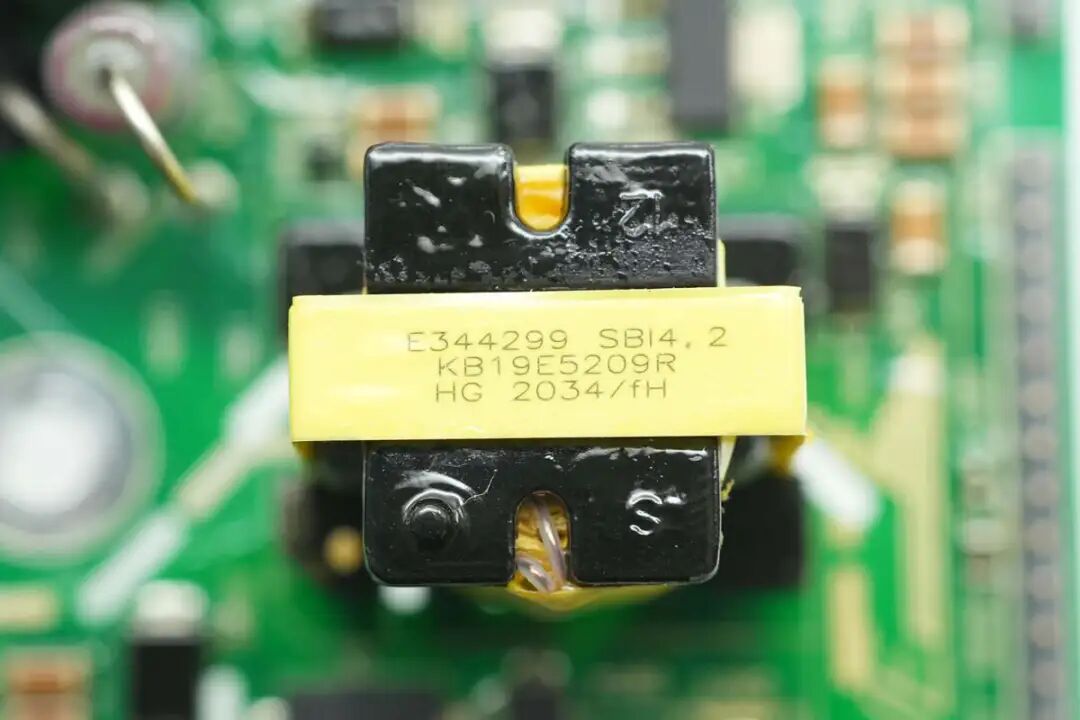
Close-up of the auxiliary power transformer.
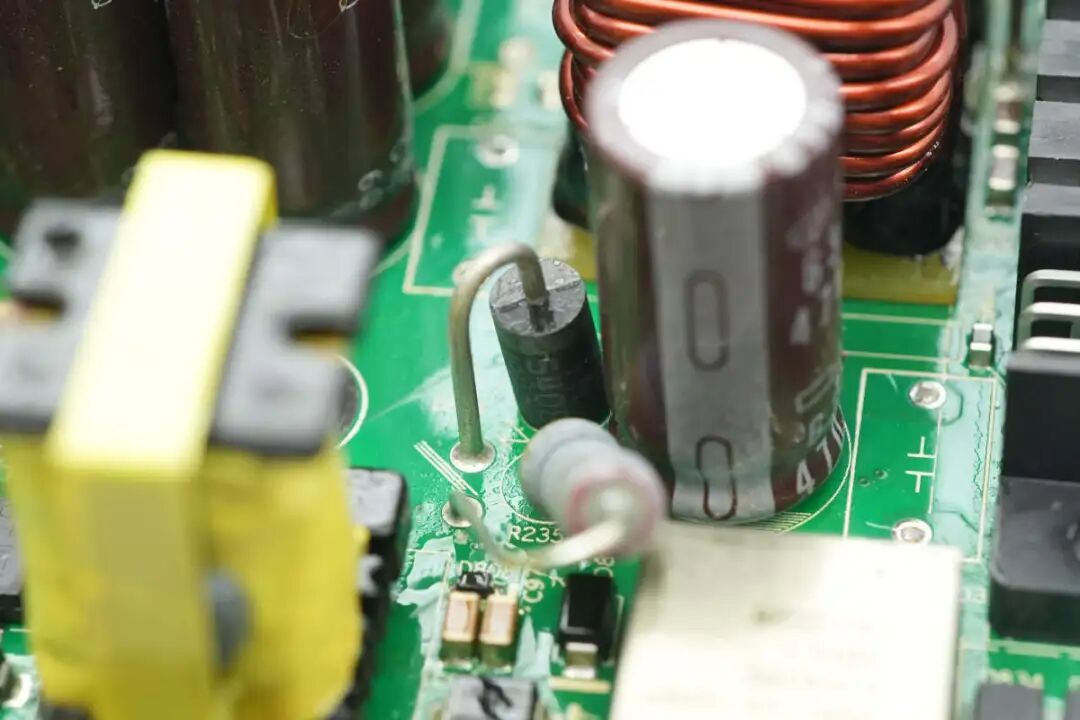
Close-up of the output rectifier diode.
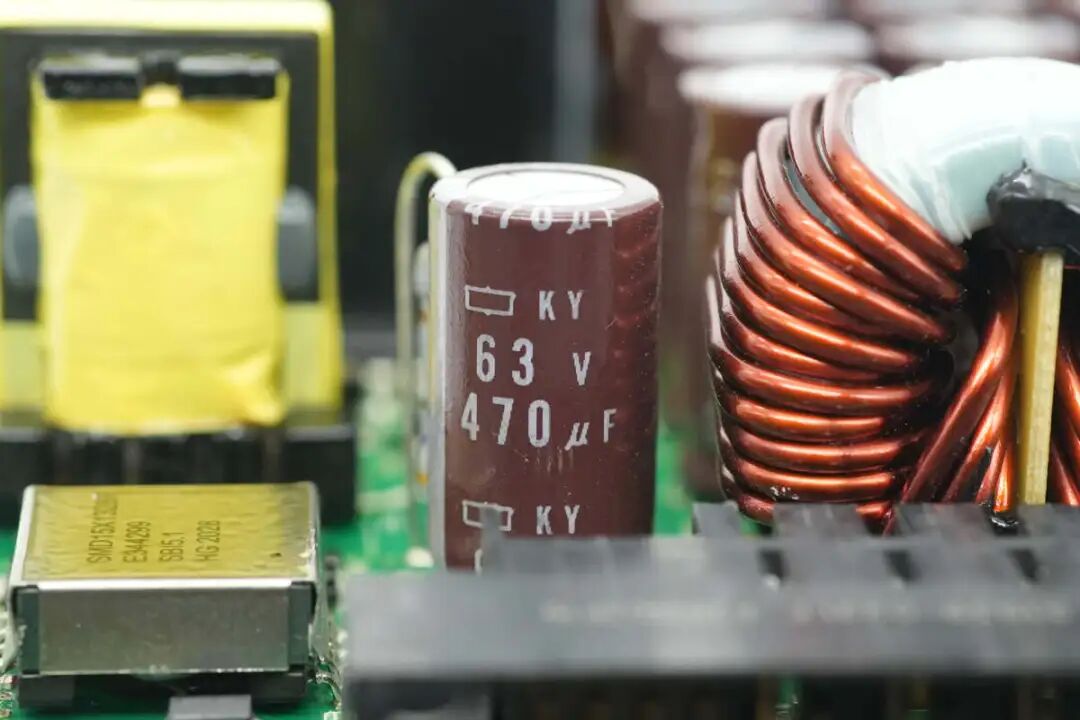
The output filter capacitor is rated at 63V 470μF.
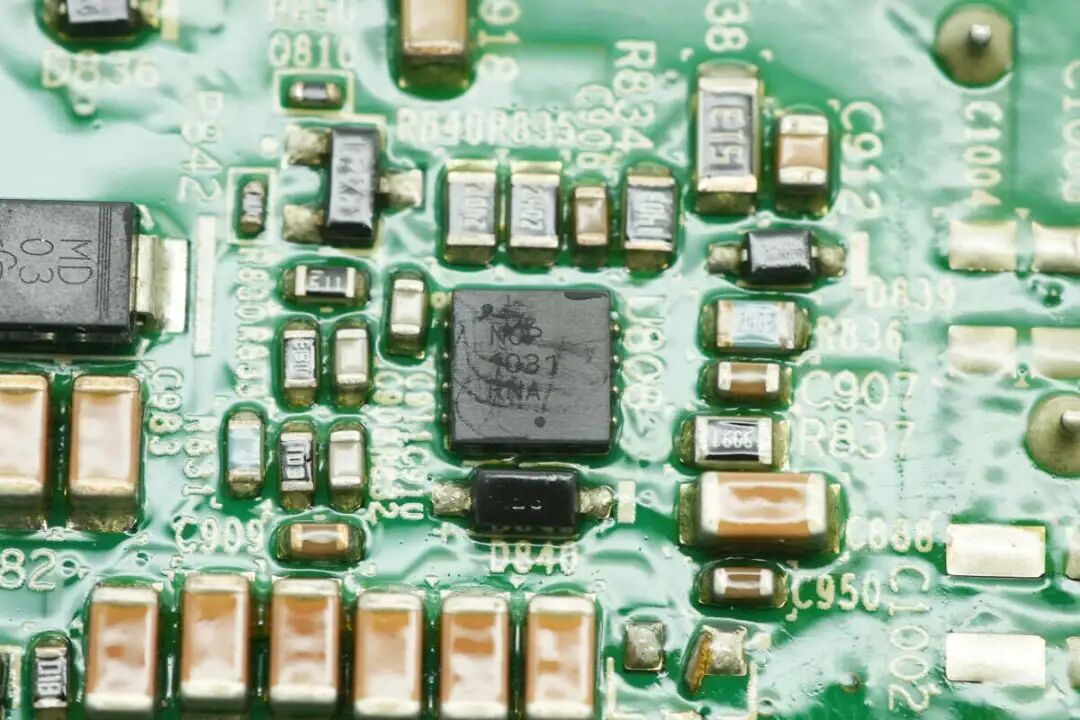
The other main control chip for the power supply is from On Semiconductor, model NCP1031, with an integrated switch and current sensing resistor, featuring a 200V rated switch and startup circuit, suitable for 48V telecom applications, 42V automotive applications, and 12V input applications. The chip supports 6W output power, in DFN-8 package.
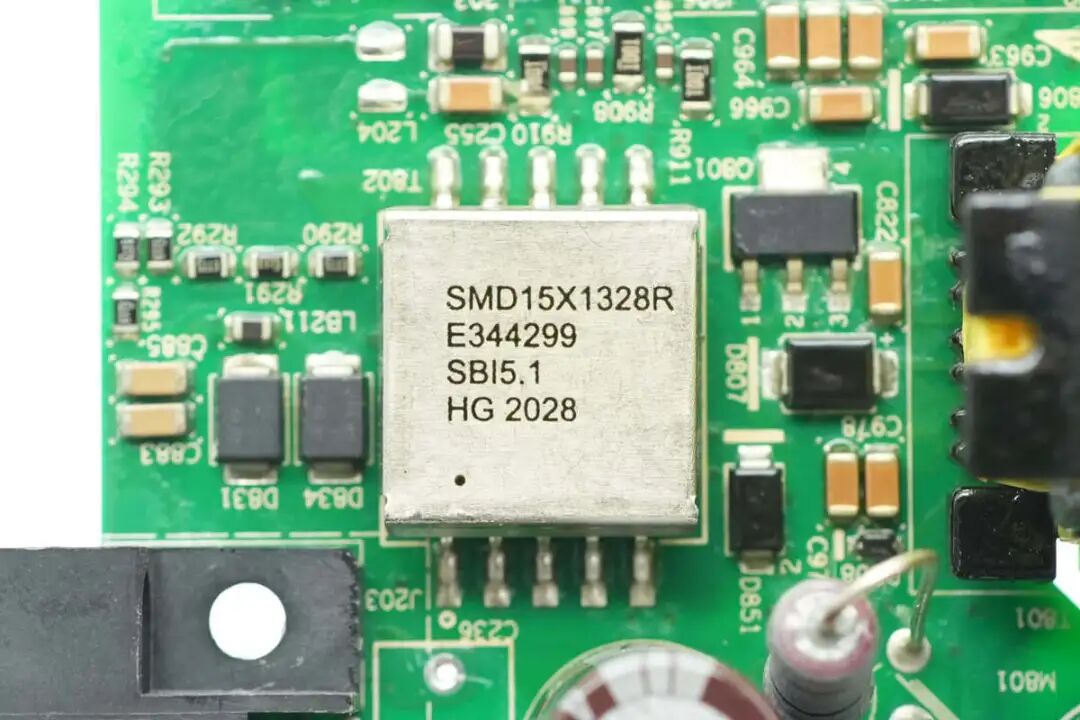
The transformer has a shielding cover.
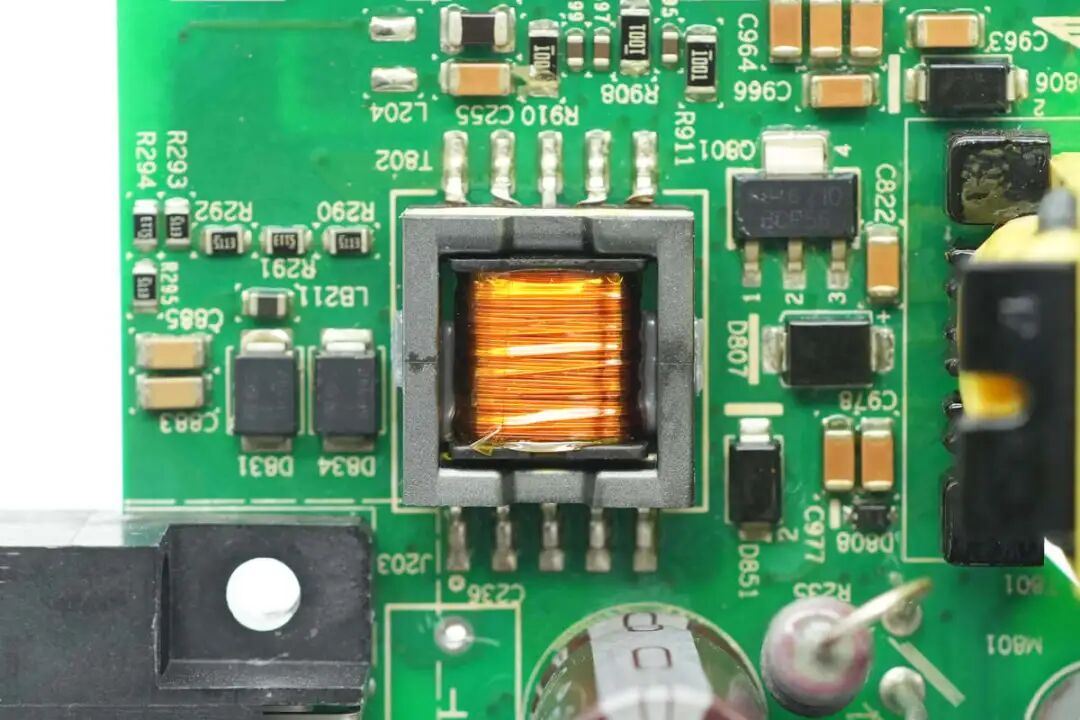
Removing the shielding cover reveals the internal core and coil.
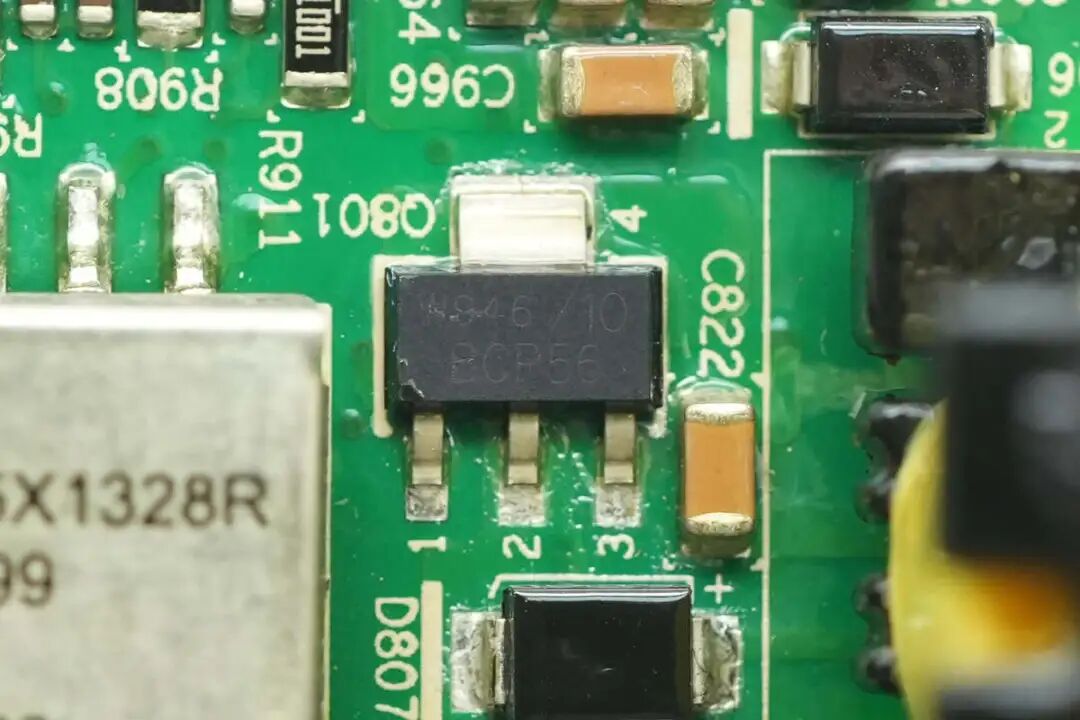
A BCP56 transistor close-up.
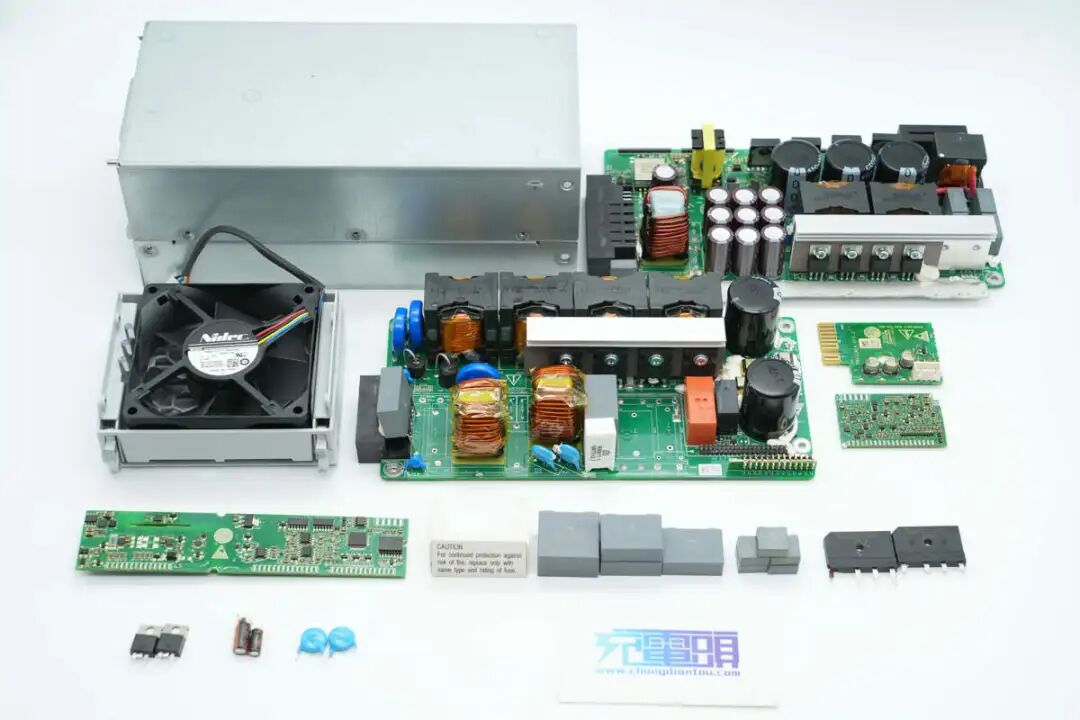
Overview of all disassembled components, a family photo.
Charging Head Network Disassembly Summary
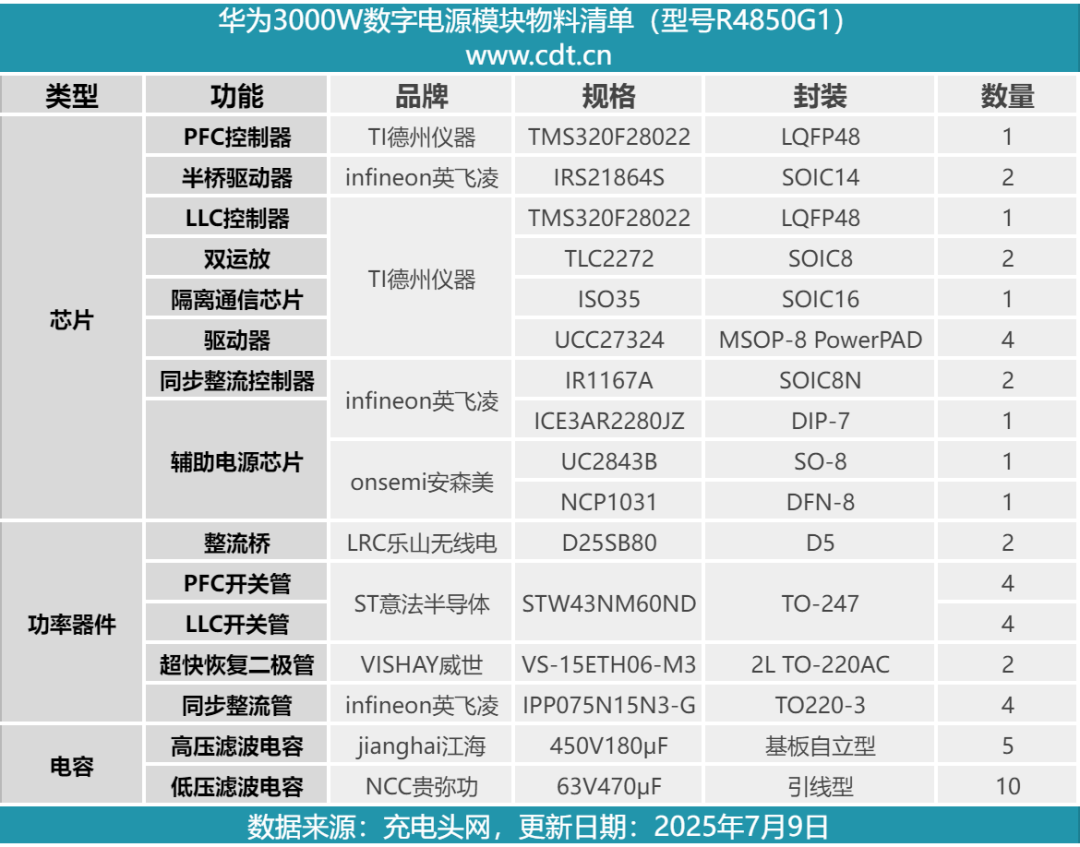
Finally, here is the core component list of the Huawei R4850G1 power module for your reference.
The Huawei R4850G1 power module features a metal casing, with installation clips at the front, secured with screws. The rated input voltage of the module is 200-240V, with an output power of 3000W, and 1200W at low voltage input. The front of the module has a cooling fan and indicator lights, while the rear has connectors for AC input, DC output, and communication connections, facilitating replacement and maintenance.
Through disassembly, the Charging Head Network learned that the Huawei R4850G1 power module adopts a PFC+LLC architecture, with two PCBA modules connected via connectors. The PFC controller uses the Texas Instruments TMS320F28022 controller paired with the Infineon IRS21864S half-bridge driver, while the LLC controller is of the same model, paired with the Texas Instruments UCC27324 driver.
The PFC and LLC switching transistors are from STMicroelectronics, model STW43NM60D, while the synchronous rectifier is from Infineon, model IPP075N15N3-G. The high-voltage capacitors inside the module are from Jianghai, and the output filter capacitors are from Guimi Gong. The control board is vertically soldered with small boards, making full use of space to reduce volume, and all components are covered with conformal coating for protection, with solid and reliable internal workmanship and materials.
Related Articles:1、Summary of Huawei’s product evaluations and disassemblies over the years, including 63 evaluations and 81 disassemblies2、Disassembly Report: Huawei 2600W DC Power Module
3、Disassembly Report: Huawei NetEngine AR Series Router 350W Power Module
4、Disassembly Report: Huawei 3000W GaN Server Power Supply5、Disassembly Report: Huawei 3000W Titanium Gold GaN Power Supply
6、Disassembly Report: Huawei 750W Titanium Gold Server Power Supply
「Exhibition Preview」2025 (Autumn) Asia Charging Exhibition