As our country enters a period of comprehensive development, the technological strength is increasingly enhanced, and the development of multirotor drone technology is particularly rapid, widely applied in military and civilian fields, with related research tending towards maturity. Drones, due to their compact size, flexible control, quick response, and various payload options, can be quickly applied across different industries. For example, an aircraft equipped with an aerial photography module can achieve aerial photography functions; an aircraft equipped with a flaw detection module can perform line inspection functions. Moreover, drones also have extensive applications in agricultural irrigation, marine monitoring, and mineral exploration. This article analyzes the current development status of multirotor drones and discusses their applications in the communication field.
1 Current Development Status of Multirotor Drones
Multirotor drones were born in the 1960s, initially in the laboratory research stage, mainly focusing on the control theory of aircraft. At that time, the aircraft was limited by the imperfect hardware system, and many studies remained at the algorithm level without practical verification. A notable example is the Backstepping algorithm proposed by the University of Pennsylvania, corresponding to the HMX4 system, which achieved a high-sensitivity attitude calculation algorithm for aircraft and was the first to carry an imaging system on an aircraft. Overall, early research on control algorithms such as neural control algorithms and adaptive control algorithms was relatively in-depth.
China’s development in the field of multirotor drones started relatively late but has progressed rapidly. At the end of the 20th century, the electronic chip industry entered a period of rapid development, with various electronic devices enhancing functionality while reducing power consumption and packaging size, greatly promoting the development of our aircraft industry. China has not only extended research on control theory and control algorithms but has also applied various new methods and theories. For example, the National University of Defense Technology, during its research, based on the Backstepping algorithm, used tools like Matlab to simulate and model various parameters of the algorithm, utilizing the square root filtering method to determine the most suitable flight parameters for the current aircraft, significantly saving research time and making it easy to apply in actual flight operations. Additionally, the development of civilian multirotor drones in China has been particularly rapid, with private enterprises represented by DJI elevating the commercial application of multirotor drones to unprecedented levels, gradually becoming a leading enterprise in the global civilian drone market. The launch of their Phantom product quickly gained worldwide popularity, greatly promoting the development of China’s multirotor drone industry.
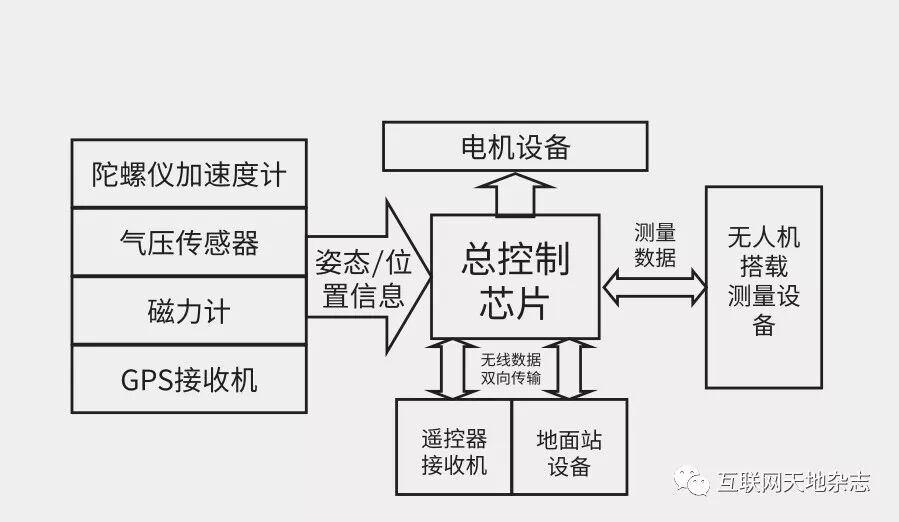
Figure 1: Schematic Diagram of Multirotor Control Process
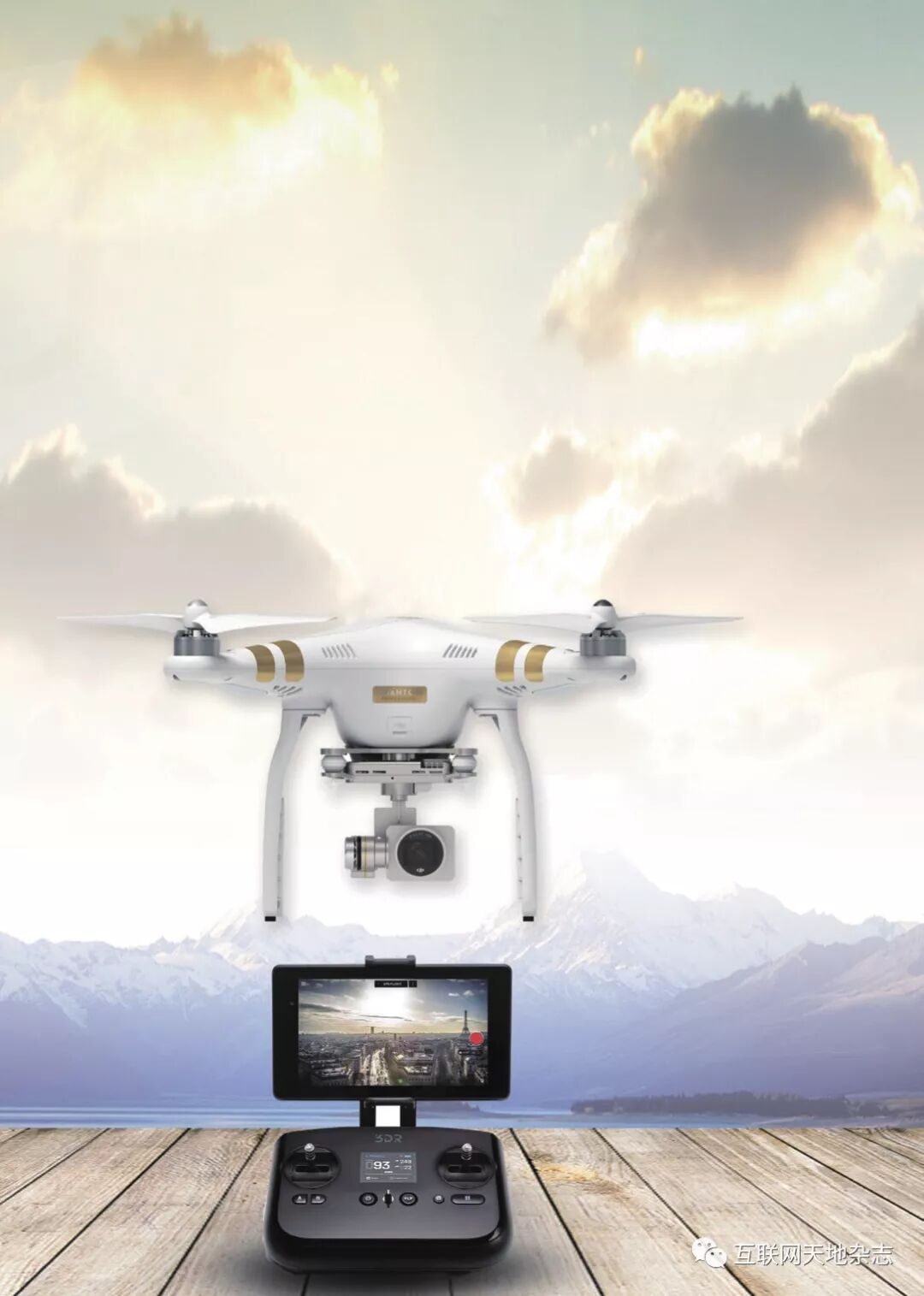
2 Basic Working Principles of Multirotor Drones
Multirotor aircraft achieve automatic controlled flight, and the various devices onboard work in coordination, requiring the drone’s control, communication, sensing, and information processing to be synchronized in an orderly manner. The work of multirotor drones is completed through multiple tasks. As shown in Figure 1, its working principle can be divided into three parts based on functionality: the aircraft part, the onboard equipment part, and the ground station part.
2.1 Aircraft Part
The basic function of multirotor drones is flight, which is also the core function of the drone, directly related to the working condition and effectiveness of the drone. A good flight platform can strongly support various tasks, with the most important aspect being the control of flight attitude.
Generally speaking, multirotor drones are a type of six-degree-of-freedom vertical take-off and landing machine. If only four motors are driven, meaning there are only four input quantities, this system is considered under-actuated, and the input quantities need to be accurately calculated to achieve the desired control of the attitude.
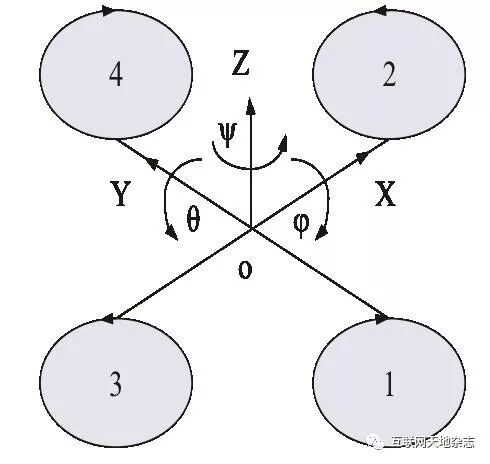
Figure 2: Schematic Diagram of Body Coordinate System
Describing the motion of the drone as two types of motion: the motion of the center of mass and the motion around the center of mass, as shown in Figure 2, the six degrees of freedom can be viewed as three angular motions and three center of mass motions, modeled using the body coordinates  . Both coordinate systems satisfy the right-hand rule. The specific definitions of these two coordinate systems are as follows:
Define the origin point O of the body coordinate system to be at the center of mass of the drone. The positive direction of the coordinate axis aX is defined as the direction from the center of mass of the drone to a propeller; the positive direction of aY is perpendicular to it; the positive direction of aZ points towards the sky; the coordinate systems of aX, aY, and  satisfy the right-hand rule.
The drone in this article can be regarded as a rigid body, and it is convenient to describe it using the quaternion method for modeling. The transformation relationship between the body coordinate system and the ground coordinate system is as follows:
According to the rigid body rotation Euler theorem, the displacement of a rigid body around a fixed point can be obtained by rotating around a certain axis through that point by a certain angle. Assuming the angle of rotation around the axis is α, xb, yb, zb are the components of the rotation axis in the X, Y, and Z directions, respectively.
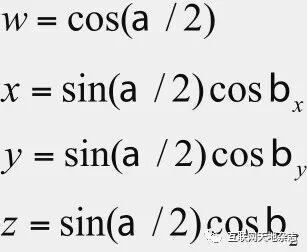
Since the quaternion  has a norm of 1, the direction of the rotation axis is determined by the imaginary part of the quaternion.
2.2 Onboard Equipment Part
The onboard equipment undertakes the tasks of the aircraft, utilizing its devices to complete various tasks, mainly divided into sensor modules and communication modules. During flight, the onboard equipment detects various external information to assist the execution devices in completing complex tasks. Various external data need to be collected in real-time during flight, and the main control center processes this data. For example, the camera module records images or takes photos, while the ultrasonic module measures distances and avoids obstacles. The communication module enables communication with the ground station, transmitting data for processing.
2.3 Ground Station Part
Using SPSS17.0 statistical software for analysis, measurement data is expressed as mean ± standard deviation; comparisons between two groups with normally distributed data use t-tests; comparisons between more than two independent groups use one-way ANOVA; non-normally distributed data use non-parametric tests; comparisons between ordinal data use rank-sum tests; P < 0.05 is considered statistically significant.
3 Applications of Multirotor Drones in the Communication Field
In recent years, the communication field has developed rapidly. China’s three major operators have successively entered the 4G network era and began trial operations of the 5G network in 2019. Major equipment manufacturers such as Huawei and ZTE have already started investing in the research and development of 6G networks, placing China at the forefront of the global communication industry. Technology is continuously innovating and developing, and the scale of corresponding equipment is also constantly growing, while labor costs are on the rise. While people enjoy the convenience brought by 4G signals, some issues are worth our consideration.
As people’s activity range expands, the construction of base stations is also increasing. Inevitably, some base stations are built on rooftops, mountain tops, or even islands, which require regular maintenance and repair, posing significant challenges for maintenance personnel. In extreme situations, the role of communication equipment becomes crucial, thus multirotor drones have great potential for development in these areas.
3.1 Using Multirotor Drones for Emergency Network Communication
China is a mountainous country, with mountainous, hilly, and plateau areas accounting for 69% of the total land area. These regions frequently experience natural disasters, often damaging local communication equipment and causing communication interruptions in some areas. Disaster areas are generally in inconvenient transportation conditions, making it extremely difficult to repair communication equipment, and normal communication cannot be restored in a short time, which is very unfavorable for disaster relief efforts. The drone platform, with its unique advantages, can quickly establish emergency network communication.
Multirotor drones are powered by electricity, flying flexibly and performing stably. If equipped with a base station system, they can serve as a mobile base station, greatly enhancing communication recovery efforts during emergencies.
As shown in Figure 3, the radio waves we use for daily communication can be considered to transmit in straight lines. When encountering obstacles, their transmission effectiveness is significantly affected. If there is a base station in the sky, it can expand the communication range, achieving wireless communication within that area. According to test results, a drone system equipped with a lightweight 4G base station, ascending vertically to 100 meters, can provide communication guarantees such as VoLTE and data services for disaster areas, with a coverage distance of up to 4 kilometers and a coverage area of up to 50 square kilometers, supporting a maximum number of users of up to 1800.
Using a “tethered” drone will effectively solve the drone’s hovering capability and significantly reduce the weight of the drone caused by battery weight. By utilizing high-efficiency lightweight cables, the drone’s working time can be extended from a few minutes to several hours, simplifying the structure of the aircraft.
3.2 Using Multirotor Drones for Communication Facility Inspection
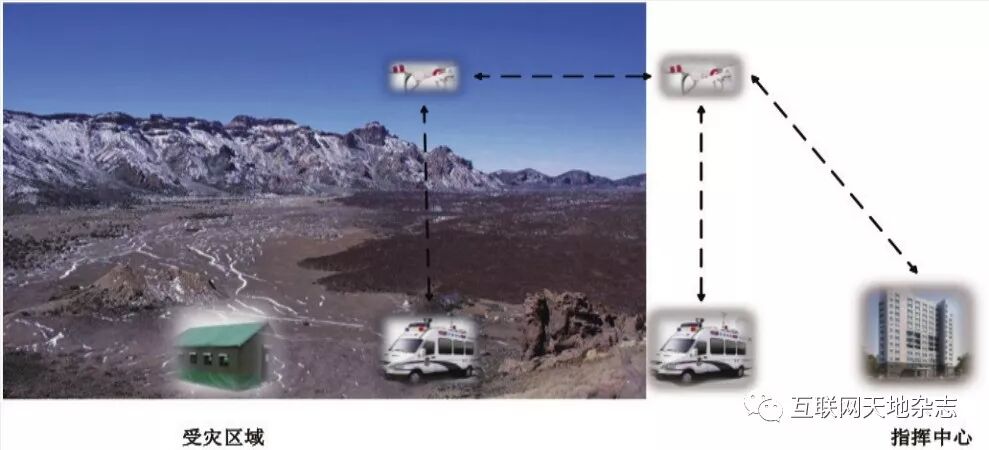
Figure 3: Schematic Diagram of Emergency Network Communication
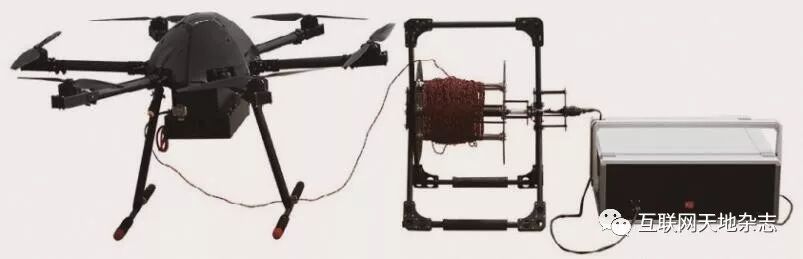
Figure 4: Tethered Multirotor Aircraft
China’s communication facilities generally consist of terminal equipment, transmission equipment, and switching equipment, where terminal and switching equipment have a high density of users, making daily application and maintenance convenient. However, transmission equipment, due to its large scale, wide distribution, and inaccessibility, poses challenges for maintenance work. The maintenance of transmission equipment, especially base stations, is crucial for the normal use of communication networks. Finding effective means to maintain these can greatly save material and labor costs. Multirotor drones are a flexible and convenient flight platform. Utilizing this platform to carry relevant devices can significantly simplify the steps of equipment inspection while improving inspection efficiency. The specific tasks of drone inspection include: the drone flies slowly according to the operator’s instructions until it reaches the top of the base station tower, performing a hovering operation. Using the onboard high-definition imaging module for remote visual inspection, it observes whether there are any defective areas, and once found, immediately takes photos and uploads them to the ground station for analysis. Currently, the high-definition imaging module mainly includes high-definition cameras, infrared flaw detection modules, and ultrasonic distance measuring devices, which are sufficient for identifying and photographing general faults, especially for base stations in hard-to-reach terrains such as mountains or lakes, effectively saving labor costs. According to a certain telecommunications company in Jiangsu, using drone inspections can reduce inspection costs by 30%. The use of drone inspection technology can effectively complete tasks such as identifying broken lines, fallen insulators, and foreign object detection related to base stations; the data transmitted by the drone, combined with expert analysis and decision-making at the ground station, can effectively complete the inspection of related base station equipment.
4 Conclusion and Outlook
This article summarizes the current development status of drones, introduces relevant control schemes, and their applications in the communication field. Drones, due to their flexible control and powerful functions, possess unparalleled advantages. Although there are various challenges to overcome at this stage, in the long run, drones will undoubtedly play a significant role in the communication field.
The rapid development of technology is greatly changing our lives and work. We must grasp this trend to avoid being left behind by the times. Currently, research on drones and their applications in China is still in full swing, with the past line-of-sight working state gradually being eliminated, and advanced technologies beyond line-of-sight are being intensively researched and tested. The development of drone technology is also extremely rapid, with various applications in the communication field emerging one after another, which will undoubtedly strongly promote the development of communication technology in our country.
The original text was published in “Internet World” Issue 5, 2019, Authors: Wang Qi,Jiao Jinge
Submission Email: [email protected]
Cover Inquiry: 010-68209027