IoT Think Tank Original
Please indicate the source and origin when reprinting

Introduction
Last March, with the release of a documentary titled “Amazing, My Country,” terms like “Amazing, My Country” and “Independent Innovation” became popular. The film narrates the stories behind the “Chinese Dream,” igniting the technological confidence of the Chinese people time and again.
Last March, with the release of a documentary titled “Amazing, My Country,” terms like “Amazing, My Country” and “Independent Innovation” became popular. The film narrates the stories behind the “Chinese Dream,” igniting the technological confidence of the Chinese people time and again.
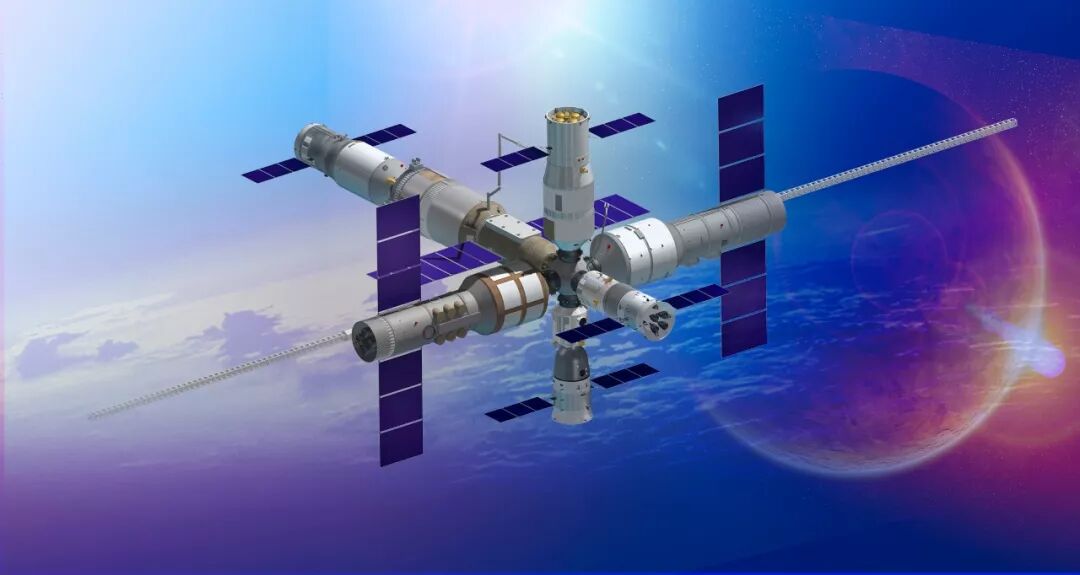
A year later, examples of China’s technological confidence are once again reflected in reality. When the U.S. attempted to sanction Huawei by targeting ZTE, this company, which possesses core independent research and development capabilities, firmly retaliated against the U.S. sanctions. After Google announced the cessation of supply to Huawei, the news of Huawei’s upcoming Harmony operating system encouraged many Chinese enterprises. Among them is the subject of this article, Guoxin Chip Microelectronics, a domestic company with independent R&D capabilities.
Guoxin Chip Microelectronics is a high-tech company that provides edge computing hardware and software products as well as complete solutions for the industrial Internet. The company currently has a research and development team with over ten years of experience in the industrial field, possessing a completely independently developed industrial IoT real-time operating system NECRO, a highly integrated edge computing full-stack module NOM that made a remarkable debut at the 7th China Innovation and Entrepreneurship Competition, and the soon-to-be mass-produced NOC chip. However, what is particularly impressive is the company’s unique insights into industrial digitization and intelligent manufacturing, as well as its refined service solutions based on the NECRO operating system.
The IoT operating system connects hardware devices below and application development above. Analogous to Android and iOS in the smartphone domain, there are well-known real-time operating systems like QNX and VxWorks in the industrial IoT field. However, these systems also have their drawbacks. Firstly, for domestic small and medium-sized enterprises, these systems come with high licensing and usage fees; secondly, when incidents like the “ZTE event” and “Huawei event” become the norm, foreign companies frequently use their core patents to restrict the development of domestic enterprises. Lacking core capabilities means that technological updates and iterations are constrained, and product development suffers greatly. No matter how good the concept of the industrial Internet is, it will ultimately be a mirage.
Deepening Edge Computing to Lower Industry Barriers
For most enterprises, intelligent transformation is an inevitable path to achieve a leapfrog development, but most domestic industrial enterprises have their own characteristics. Pursuing “intelligent manufacturing” and “Industry 4.0” is the ideal of every enterprise, while pragmatically pursuing return on investment and factory yield rates is what enterprises focus on more in their pursuit of dreams.
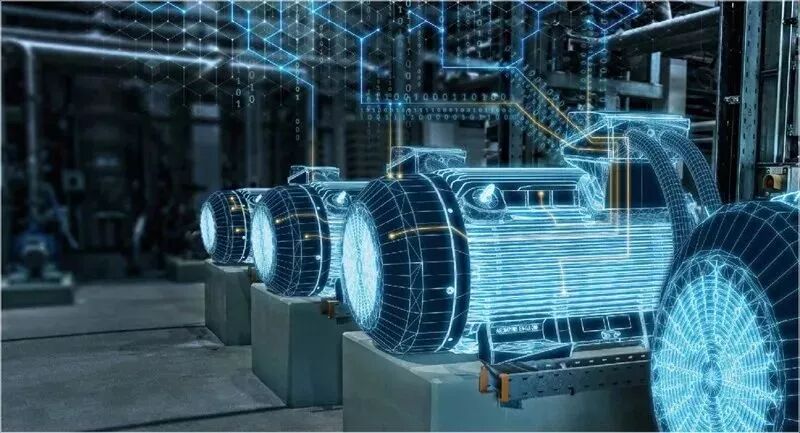
Everything must be “adapted to local conditions,” and this principle also applies in the industrial field. Only Chinese enterprises understand the “national conditions” of Chinese industry. The previous approach of borrowing from others is no longer suitable for the local environment, often resulting in outcomes that are not worth the cost. For example, well-known foreign real-time operating systems like VxWorks and QNX are mostly used in military and heavy equipment manufacturing, but their advantages come with high costs. For many enterprises, technical adaptation is a more efficient strategy.
The industrial Internet has a long supply chain, and Guoxin Chip Microelectronics focuses on the industrial IoT operating system layer, leveraging its experienced development team to provide edge computing capabilities for traditional gateway manufacturers. In addition to enhancing the competitiveness of its clients with the industry’s most integrated solutions, it can also avoid squeezing the survival space between upstream and downstream in the industry and the collision of interests.
Guoxin Chip Microelectronics CTO Jiang Chen stated that achieving intelligent manufacturing and digital transformation for enterprises is a process of building trust, with the ultimate goal of realizing the visualization and intelligence of enterprise data, and this process is rich.
The strategy of Guoxin Chip Microelectronics is to make capabilities similar to water, electricity, and gas. It is well known that the IoT era is characterized by high integration and significant differentiation. In such a production environment, it is necessary to reasonably and sustainably distribute resources to empower each production line.
However, there are countless industrial scenarios, and the “shelf life” of industrial data is often very short. According to a Gartner report, as digital business continues to develop, by 2022, 75% of the data generated by enterprises will be processed through distributed computing.
In industrial production, using traditional IT methods to collect data and analyze logs means that data cannot enter the operational closed loop, and the value of data cannot be fully realized. Edge computing is the deep integration of IT and OT, with a large amount of real-time data relying on real-time buses like PLCs. At this level, this is currently a problem that embedded Linux cannot solve. Guoxin Chip Microelectronics’ “software-hardware integrated” real-time IoT operating system solution is the core of the software and hardware for gateways and edge computing servers, connecting massive sensors, PLCs, DCS, and other heterogeneous data to achieve precise modeling and deep computing. It not only meets the customized needs of industrial production but also significantly reduces enterprise costs, and can even lower software licensing fees to a few hundred yuan. At the same time, the hardware modules customized based on the NECRO operating system can maximize the potential of NECRO.
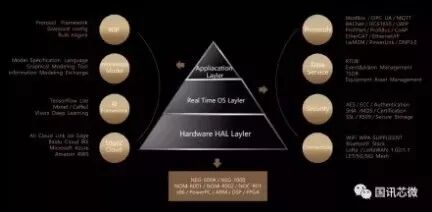
According to my understanding, NECRO can not only meet the needs for the integration and deep modeling of real-time and non-real-time OT data in industrial sites. In response to the situation where different devices speak different languages, NECRO has currently accumulated 107 industrial protocols, giving it a first-mover advantage even compared to industry giants. Additionally, NECRO is a multi-network integration platform that can easily accommodate the existing network communication and OT methods in factories. By leveraging existing IT technologies and “lightly loading” IoT, it provides a very flexible combination platform for end customers.
Adhering to Independent Innovation to Enhance Core Competitiveness
Industry is the economic lifeline of a country and one of the supporting industries of the national economy. Currently, global industry is moving towards intelligent manufacturing, but for Chinese industrial enterprises, following foreign technology to develop domestic industries has led to a loss of initiative in the “Industrial 2.0” and “Industrial 3.0” eras.
Jiang Chen told the IoT Think Tank that in his extensive experience, he has focused on the localization of real-time operating systems like VxWorks for seven years. He does not deny that Guoxin Chip Microelectronics is moving forward on the shoulders of giants, which is why it places great importance on core independent intellectual property rights.
For Chinese industry to seek breakthroughs, it must build the industrial Internet, achieving localization from the bottom layers of operating systems, PaaS, IaaS, and SaaS. Only by breaking the monopoly of foreign enterprises in “software-hardware technology” and mastering core capabilities can the foundation for intelligent manufacturing be built.
In the industrial field, Guoxin Chip Microelectronics’ work is to define production through software, but the software charging model can easily lead some people to exploit loopholes and use reverse engineering to crack it. To protect its intellectual property, Guoxin Chip Microelectronics binds NECRO to hardware modules through a software-hardware integrated approach. This way, intellectual property is protected, and the capabilities of the software can be maximized based on customized hardware, while the modules can be sold at near-cost prices.
Similar to Huawei, Guoxin Chip Microelectronics is looking far ahead while standing on the shoulders of giants. According to Jiang Chen, currently, very few manufacturers in the industrial field recognize the value of edge computing operating systems. Although large companies usually respond quickly, their window period is about six months. However, based on Guoxin Chip Microelectronics’ decades of accumulation and completely independent product R&D capabilities, he firmly believes that the future holds more opportunities than challenges.
Currently,Guoxin Chip Microelectronics has achieved remarkable results in terms of invention patents, utility model patents, and software copyrights, and the number is expected to grow at a rate of two to three times this year.
Finally, this article concludes with a quote from Jiang Chen. He said, “There is no such thing as black technology in this world, only micro-innovation. Especially in industry, experience is often more important than technological innovation. Perhaps 99% is experience, and only 1% is innovation, while Guoxin Chip Microelectronics sees that 1% based on the 99%.

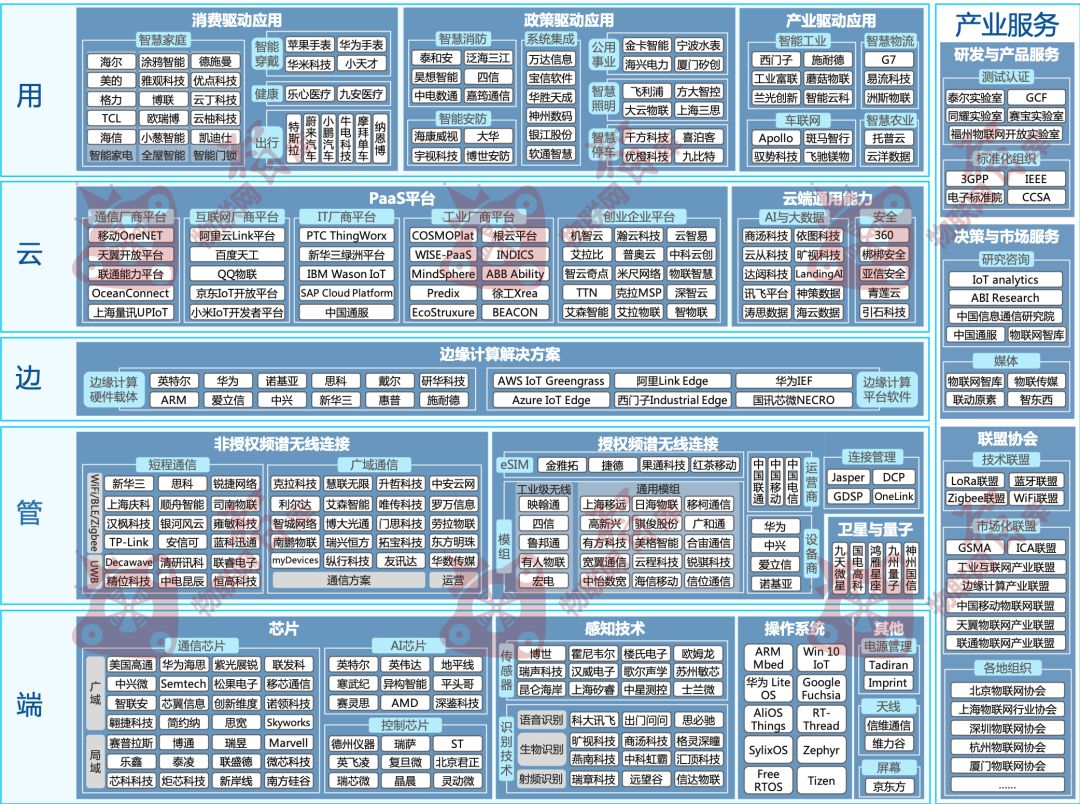
IoT Think Tank “2019-2020 China IoT Industry Panorama”

Previous Hot Articles (Click on the article title to read directly):
-
“How Difficult is it to Make Smart Locks for Shared Bicycles?”
-
“Cognitive Computing, Blockchain IoT, IoT Security… Those Who Understand Will Control the Future”
-
“[Heavy Release] 2017-2018 China IoT Industry Panorama Report – The Deep Transformation of IoT to Industry Has Begun”
-
“[Heavy] IoT Industry Panorama Report, the First Domestic IoT Industry Two-Dimensional Perspective Panorama”
-
“A Cartoon Explains: Besides WiFi and Bluetooth, What Can the Recently Popular NB-IoT Do?”
-
“A Cartoon Explains: Behind NB-IoT, What is the LoRa Everyone is Talking About?”