Embedded development serves as the core support for modern smart hardware and IoT technologies, with its entire industry chain exhibiting a highly specialized division of labor from chip-level to end applications. With the advancement of technologies such as 5G and AIoT, embedded systems have permeated key areas like smart homes, industrial control, and medical electronics, forming a complete ecosystem where chip manufacturers serve as the technical source, module developers act as intermediaries, and industry product vendors represent the end terminals. This article will systematically analyze the functional characteristics of the six major business segments of the embedded industry chain and provide an in-depth interpretation of the full-process business composition of industry product developers, while also outlining the core work content of embedded developers throughout the project lifecycle, offering a panoramic business reference for practitioners.
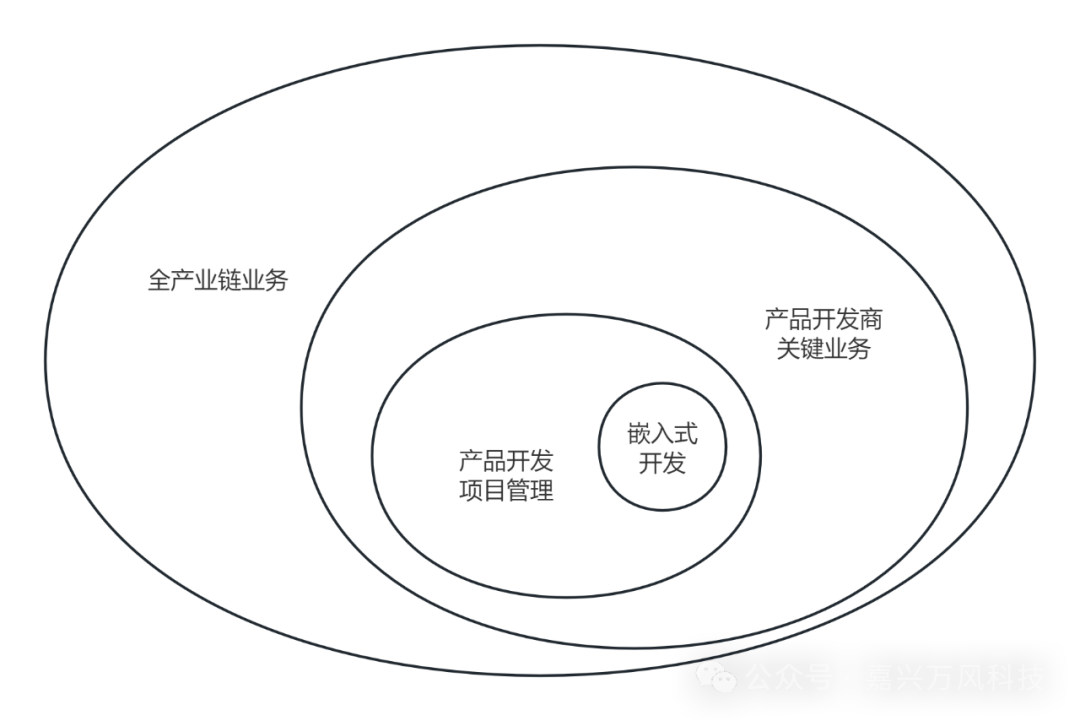
The embedded development of business and industry products involved in realizing product value
1. Full Industry Chain Embedded Development Business Map
1. Chip Manufacturers
Core Functions: Chip-level driver development (GPIO/I2C protocol stack), hardware abstraction layer (HAL) design, and SDK toolchain construction
Technical Features: Proficiency in register-level debugging, RTOS adaptation (such as FreeRTOS/ThreadX), and low-power optimization is required
Representative Companies: Leading domestic chip design companies such as HiSilicon, Rockchip, and Allwinner Technology
2. Third-Party System Developers
Core Value: Cross-platform hardware integration (ARM/RISC-V), industry solution packaging (such as industrial protocol stack porting)
Emerging Directions:
- IoT gateway development (supporting MQTT/CoAP protocols)
- Edge computing framework deployment (TensorFlow Lite for microcontrollers)
Typical Clients: Smart building control systems, in-vehicle information entertainment platform developers
3. Industry Product Developers
Vertical Fields:
- Smart Home: Device control logic development (such as temperature control algorithms)
- Medical Electronics: Design compliant with industry standards such as IEC 60601
Technical Trends: AIoT device development (such as agricultural sensor networks) and real-time optimization
4. Module Developers
Sub-Directions:
- Communication Modules: BLE Mesh/Wi-Fi 6 protocol stack development
- Sensor Modules: Multi-source data fusion (IMU + environmental sensors)
Core Capabilities: Standardized API interface design, supporting rapid integration with mainstream MCUs
5. Solution Providers
Service Model: Providing full-stack technical services from hardware design to system integration
Technical Advantages:
- Support for ARM/RISC-V multi-architecture platforms
- Covering OS adaptations such as Linux/RT-Thread
Typical Scenarios: Custom industrial control PLCs, low-power optimization for smart wearables
6. Toolchain Service Providers
Core Products:
- Embedded IDEs (such as alternatives to Keil, IAR)
- Automated testing tools (EMC/EMI testing suites)
Industry Value: Shortening the R&D link between chip manufacturers and end manufacturers
2. Key Business System of Industry Product Developers
1. Product Development System
- Includes hardware/software R&D, prototype design, and testing validation throughout the process
- Typical Scenarios: SDK toolchain development for chip manufacturers, communication protocol stack optimization for module manufacturers
2. Production Management
- Covers supply chain coordination, quality control, and capacity planning
- Special Requirements: Medical devices must comply with GMP production standards
3. Marketing System
- Includes channel development (online and offline), brand promotion, and customer education
- Innovative Forms: Release of technical white papers, operation of developer communities
4. Operational Support System
- Includes customer service, after-sales support, and technical training
- Digital Trends: Deployment of AI customer service systems, development of remote diagnostic tools
3. Full Lifecycle Workflow of Embedded Development
1. Feasibility Assessment Stage——Technical Feasibility Analysis
- Assessing hardware platform selection (MCU/MPU performance parameters) and software development toolchain compatibility
- Identifying technical risks (such as insufficient real-time performance, excessive power consumption) and proposing mitigation plans
2. Design Planning Stage——Solution Design
- Establishing system architecture (such as RTOS selection, communication protocol stack design)
- Completing the technical specification document (including interface definitions, performance indicators)
3. Detailed Design Stage——Software Design Implementation
- Developing device drivers (GPIO/I2C drivers) and application logic
- Outputting functional prototypes and validating key technical indicators (such as response delay ≤ 10ms)
4. Prototype Validation Testing Stage——Problem Closure Management
- Executing white-box/black-box testing (coverage ≥ 90%) and fixing deficiencies
- Optimizing system reliability (such as EMC anti-interference design)