Chip Things (WeChat: aichip001) by Wei Shiwei
Chip Wing Information Technology is moving to a new location next month.The headquarters office in the Shanghai Pudong Software Park is nearly too small for its NB-IoT chip startup team of over 50 people, and two vacant spots in the office will soon be filled by two new technical R&D personnel.However, their new home near the current office building will accommodate a team of 70-80 people, marking another significant step in the rapid expansion of Chip Wing Information Technology, which was founded just three years ago.As a company that started with NB-IoT chips, Chip Wing Information Technology’s products have begun to take off this year, attracting considerable attention from both capital and media.In April, Chip Wing Information Technology achieved first and fifth place in the bidding for the 2020 NB-IoT IoT module centralized procurement project with China Telecom’s Jiangsu branch, securing over 30% of the market share.In June, it quickly won a single-source procurement project for 2 million units from China Mobile’s China Mobile IoT. At the same time, it completed nearly 200 million RMB in Series A+ financing, led by He Li Capital, with follow-on investments from Fengrui Capital, Dongfang Jiafu, and others.“This year we have indeed created a sensation in the industry, with good news pouring in,” said Li Jian, Senior Vice President of Chip Wing Information Technology, confidently to Chip Things.
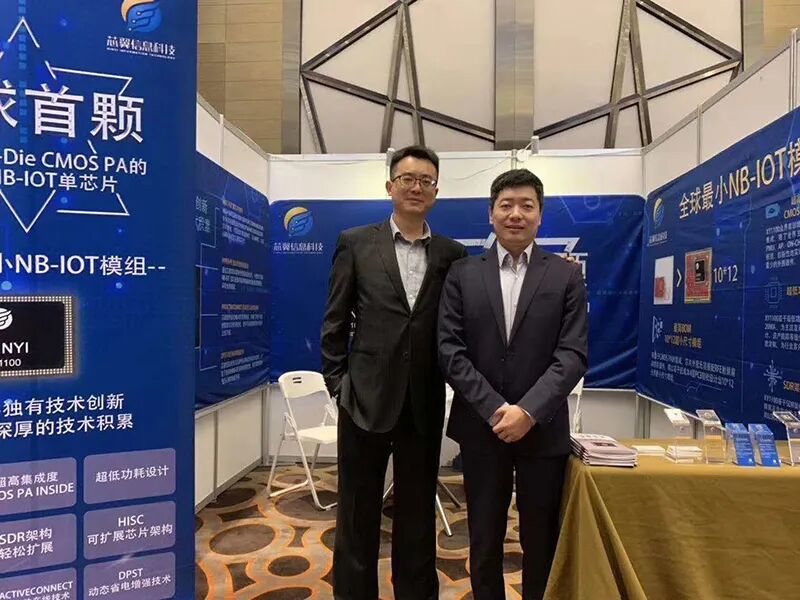
▲ In 2019, Chip Wing Information Technology participated in the Global Meter Exhibition, with Senior Vice President Li Jian (right) and Marketing Director Chen Zhenglei (left) posing for a photo.In its initial three years, Chip Wing Information Technology has rapidly expanded its business, establishing its own low-power IoT chip landscape, covering digital, RF, and analog fields, and achieving widespread deployment in smart cities, smart logistics, smart agriculture, and wearable devices.With various directions in chip entrepreneurship, why did Chip Wing Information Technology choose to focus on the NB-IoT field? In the vast and fragmented IoT market, how did it stand out with its XY1100 chip?To find answers to these questions, Chip Things conducted an in-depth interview with Li Jian, Senior Vice President of Chip Wing Information Technology, and visited the company’s headquarters in Shanghai, uncovering many highlights and innovative stories from this independent NB-IoT chip startup.
01
From Zero to One: A Decade of Entrepreneurship for Semiconductor Returnees
Unlike many domestic entrepreneurs, Li Jian graduated from Southeast University in 1998 and went to Dalhousie University in Canada for his master’s degree, subsequently entering the communications and chip industry, where he has worked for nearly 20 years.Around 2005, Li Jian began working at Intel’s China and U.S. headquarters, primarily responsible for technical support, sales, marketing, and management over the next 13 years.During his time in the U.S., Li Jian fortuitously met Xiao Jianhong, who had been working at Broadcom for several years, now the founder and CEO of Chip Wing Information Technology. At that time, one was in Silicon Valley in Northern California, and the other was in Los Angeles in Southern California.
In fact, Xiao Jianhong’s educational background is similar to Li Jian’s. After graduating from Peking University, he went to Texas A&M University in the U.S. for a PhD in RF integrated circuit design (RFIC).
After obtaining his PhD, Xiao Jianhong directly joined Broadcom, continuing research in broadband RF and analog circuits, and within just seven years became Broadcom’s youngest Senior Principal Scientist.
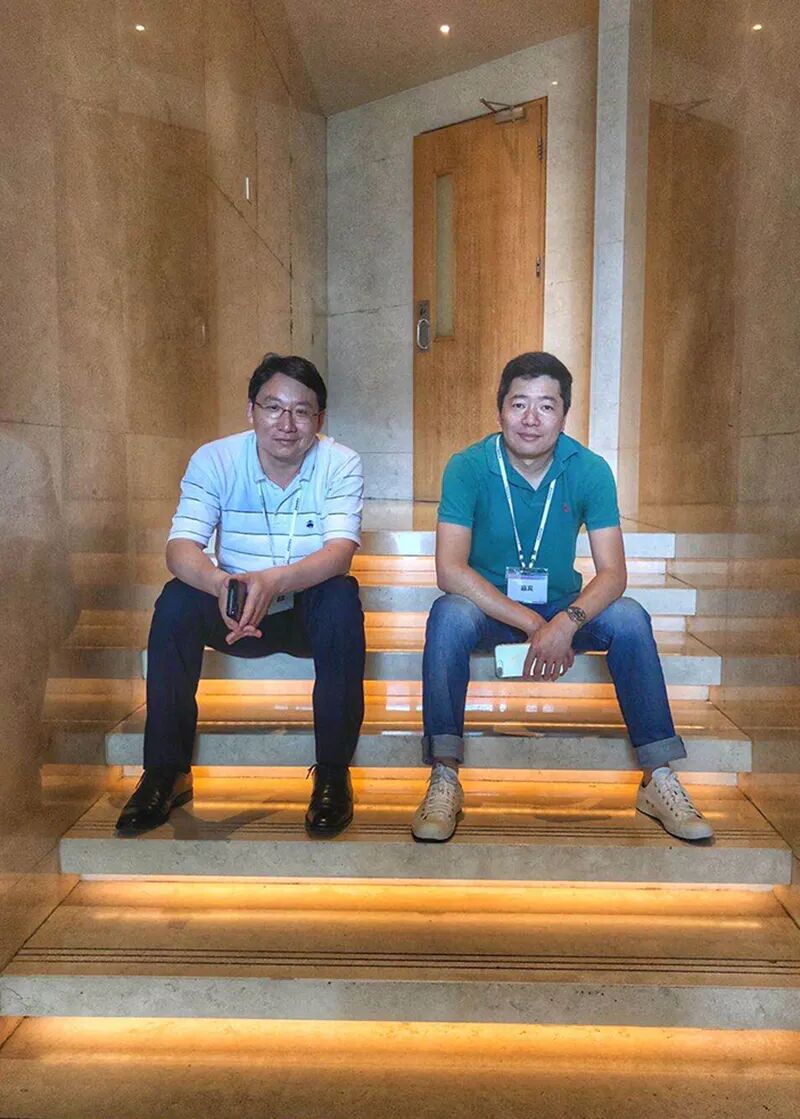
▲ In June 2018, Xiao Jianhong, founder and CEO of Chip Wing Information Technology (left), participated in a startup roadshow, coinciding with Li Jian (right), who was still at Intel, returning to China on a business trip, and they both attended the event together.One day in 2008, Xiao Jianhong shared his entrepreneurial dream with Li Jian, who jokingly replied, “When you start your business back in China, we can collaborate; you handle technology, and I’ll handle sales and marketing.” At that time, they had no idea that this casual conversation would become a reality ten years later.Fate is a strange thing. In 2018, when Xiao Jianhong, having given up his position as a Senior Principal Scientist at Broadcom, extended an olive branch to Li Jian to return to China and start a business, Li Jian chose the latter despite the lucrative salary at a large company.Li Jian agreed without hesitation. “Although we returnees may not necessarily succeed, if I continue to hold a high-paying engineering job at a foreign company without taking a chance, I might regret it at 80. As for whether starting a business in China will succeed, I have to try to find out.” he said.Within just two weeks, Li Jian completed all resignation procedures, packed his bags, and returned to China. On a Saturday evening in August 2018, a transoceanic flight from over 9,000 kilometers away landed in Shanghai, China.Li Jian’s entrepreneurial journey was just beginning.At that time, Chip Wing Information Technology, founded in March 2017, had been growing for less than a year, with a team of fewer than 40 people, but had already secured tens of millions of RMB in angel round investments from Fengrui Capital, Zhongke Chuangxing, and Zhejiang Pudu Technology, as well as 20 million RMB in Pre-A round investment from Jinka Intelligent.The recognition from investors was undoubtedly a great trust and encouragement for this newly established company.However, the entrepreneurial path of Chip Wing Information Technology was not smooth sailing; alongside the capital’s favor, there were also many doubts awaiting them.
02
From Spark to Wildfire: The Birth of the First NB-IoT Chip
In the early stages of entrepreneurship, skepticism is inevitable, and Chip Wing Information Technology was no exception.Initially, in the NB-IoT chip industry, how to integrate the CMOS PA (power amplifier) into a single SoC (system on chip) was a direction of continuous research and exploration in the industry.At that time, companies including Qualcomm, Huawei HiSilicon, MediaTek, and Unisoc were still developing NB-IoT chips using external PAs. However, for users, NB-IoT chips with external PAs were not only less flexible in design but also more expensive.
Therefore, when Chip Wing Information Technology, a fledgling company, released the world’s first NB-IoT chip with integrated CMOS PA in June 2018, many voices of skepticism followed.
Ultimately, Chip Wing Information Technology responded to these doubts by successfully landing product applications, continuously securing orders from China Telecom and China Mobile. The star of these orders was the XY1100 chip.
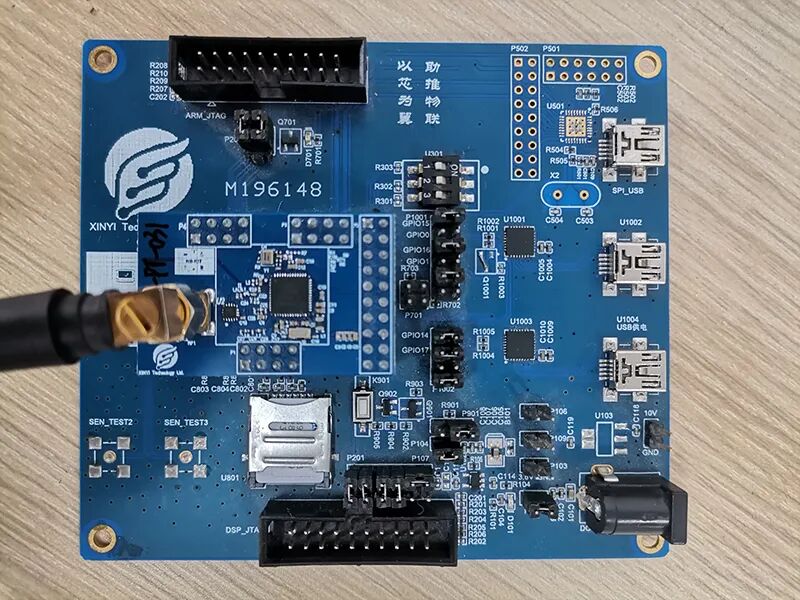
In fact, the XY1100 chip achieved its first tape-out just 8 months after Chip Wing Information Technology was established, quickly entering mass production, and officially began commercial shipments in the fourth quarter of 2019, with current shipments reaching the million level.
“The XY1100 is the world’s first mass-produced NB-IoT SoC with integrated CMOS PA on a single die.” Li Jian mentioned that the XY1100 has four core advantages: ultra-high integration, ultra-low power consumption, strong flexibility, and extremely low cost. For example, under ultra-low power design, its power-saving mode (PSM) current is measured to be as low as 700nA, which is one-seventh of competitors.At the same time, the XY1100 adopts a software-defined radio (SDR) architecture, which not only flexibly supports optimized and effective physical layer receiver algorithms but also supports LoRa and custom protocols in addition to NB-IoT, further meeting the fragmented market demand.
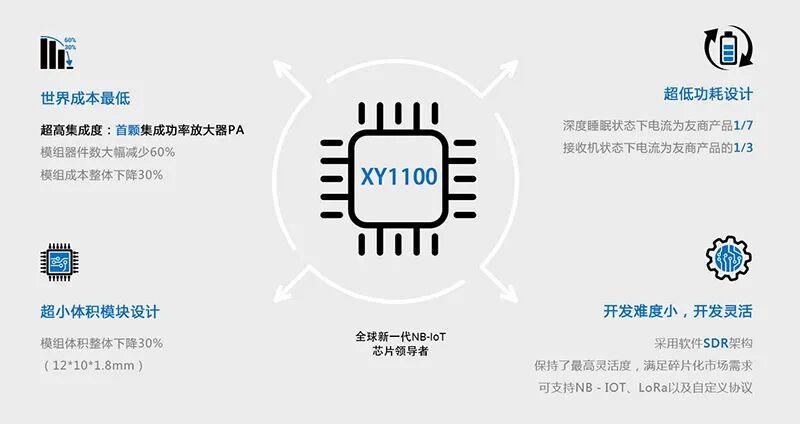
Besides the DSP and Cortex-M3, all other technologies of the XY1100 chip are 100% independently developed by Chip Wing Information Technology, with manufacturing outsourced to SMIC. “It is a standard domestic chip that not only fills a domestic gap in a small scope but also effectively avoids the issue of technological bottlenecks,” Li Jian said.
This chip also brought a new milestone for Chip Wing Information Technology.In the first half of this year, the 5G smart remote gas meter developed based on the XY1100 NB-IoT chip module solution successfully passed testing by Jinka Intelligent, a leading domestic smart gas meter company, becoming the first to achieve commercial use of the new generation NB-IoT platform in the gas meter industry.Chip Wing Information Technology’s first shot with the XY1100 chip undoubtedly set a good start for the company’s competition in the NB-IoT chip track.Today, Chip Wing Information Technology has expanded its team from 40 people in 2018 to nearly 100, with 90% of the team being R&D personnel and 15 overseas scientists. The founder and core team members come from well-known chip and communication companies such as Broadcom, Qualcomm, Intel, Huawei HiSilicon, and ZTE. In addition, Chip Wing Information Technology is headquartered in Shanghai, with branches in Nanjing, Shenzhen, and other locations.“To be honest, we have no way out; we must always maintain a sense of crisis and push forward,” Li Jian lamented, stating that as a startup, Chip Wing Information Technology is like a ship with many leaks, and only by moving forward at high speed and gradually improving the company’s governance and institutional construction can they survive.And this ship is accelerating towards broader waters.
03
Starting with the NB-IoT Chip: How to Navigate the Vast Sea of IoT?
Under the bright halo of the XY1100 chip, we return to the eve of Chip Wing Information Technology’s establishment and confront a very realistic topic.Why did Chip Wing Information Technology choose to become an NB-IoT chip company?“If the internet era connected people, then in the next five to ten years, the connection between people may be quite limited, as the human internet market has already been firmly occupied by industry giants from the bottom to the top, from chips to operating systems to applications, leaving little opportunity for innovative companies,” Li Jian said.However, the IoT is different; the connection between things is a vast blue ocean with enormous imaginative space. “Due to the fragmentation of the IoT industry, no giant can connect all applications, nor can any company provide a chip that covers all industries and fields,” Li Jian noted, emphasizing that the diversity of the IoT industry presents both challenges and significance for entrepreneurship.Based on rational judgment, analysis, and reflection on the IoT industry, Chip Wing Information Technology decided to start from the perspective of IoT terminals, officially opening the chapter of its story.
However, the NB-IoT chip is just the beginning for Chip Wing Information Technology. Because Li Jian and his team believe that future IoT smart terminal chips will not be limited to communication but will be a combination of communication, perception, edge computing, security, and energy efficiency across multiple dimensions.
In simple terms, Chip Wing Information Technology’s IoT chip layout is primarily based on these five dimensions, continuously diversifying combinations to develop chips for different functions and applications to meet the needs of various industries.
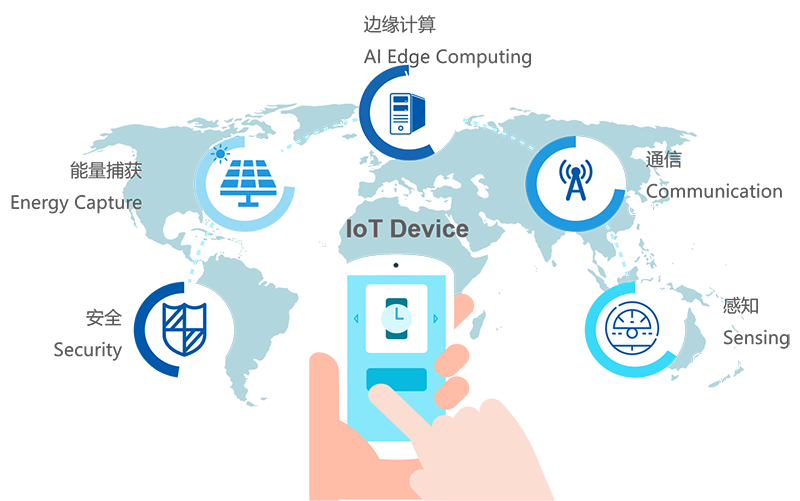
If communication is the thumb, then perception is like the index finger. “Sensors are everywhere in life, from the temperature and humidity in the home to factory production lines and traffic lights on the street… If the vast data generated by these applications cannot be utilized, it would be a waste,” Li Jian said. By using perception to collect this data and combining it with communication to develop chips, new possibilities can emerge.
The third dimension is AI-based edge computing. Due to connection efficiency and data volume issues, not all perception data is suitable for cloud storage; in cases where data volume is small and latency requirements are high (such as in industrial control), edge computing is a better choice.The fourth dimension is security. In the era of big data explosion, it is crucial to ensure not only the privacy and security of personal data but also the security of machine data. Especially when hundreds of billions of machines are connected, it is necessary to prevent network information and data from being hacked and stolen.“If we can provide hardware from the chip level to build chip-level security mechanisms, it will greatly ensure the connection security of massive machines,” Li Jian explained.The fifth dimension is energy efficiency. Although NB-IoT belongs to low-power wide-area IoT, many areas still rely on batteries, but battery technology is developing slowly.“If circuits can capture energy from the environment (energy harvesting), it can meet the needs of some special low-power scenarios,” Li Jian mentioned, for example, converting solar energy and electromagnetic wave energy into electrical energy can extend the product’s lifecycle to some extent.Based on these five dimensions, Chip Wing Information Technology envisions countless combinations for the development of IoT chips. “Ultimately, there will be opportunities to create a highly integrated, fully functional product, becoming an intelligent SoC for the Internet of Everything,” Li Jian said, emphasizing the importance of cleverly combining these five dimensions through technology to provide cost-effective chip products.Currently, Chip Wing Information Technology has prioritized entering the communication field and plans to gradually extend its technology to perception, edge computing, security, and energy efficiency tracks in the future. The first NB-IoT chip, XY1100, already covers the communication and edge computing dimensions.
04
From Present to Future: The Two Keywords of “Innovation” and “Shipment”
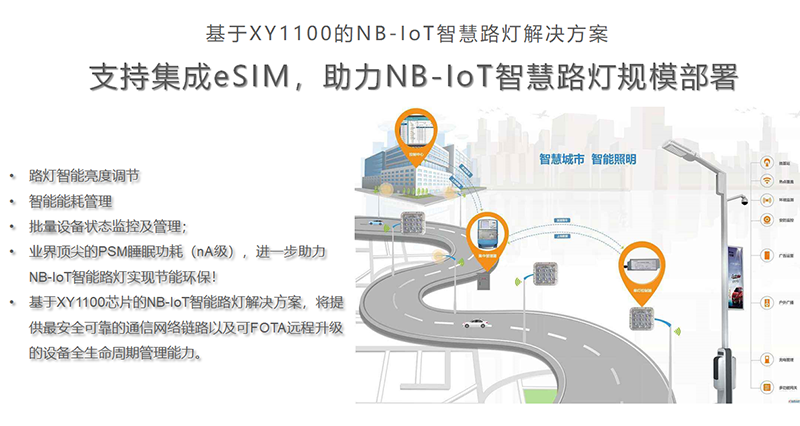
At this stage, Chip Wing Information Technology is primarily focused on the smart city track, deeply integrating into sub-markets such as metering (gas/water meters), while also covering personal wearables, asset management, smart agriculture, and smart logistics across multiple industries.However, for Chip Wing Information Technology, the challenges of the future are just beginning.On one hand, the highly fragmented nature of the IoT industry and the difficulty for giants to dominate presents rapid development opportunities for emerging companies like Chip Wing Information Technology.On the other hand, in May this year, China’s Ministry of Industry and Information Technology issued a notice on further promoting the comprehensive development of mobile IoT, further clarifying the important positioning of NB-IoT technology development in China, proposing to establish a comprehensive ecosystem for mobile IoT that coordinates the development of NB-IoT (narrowband IoT), 4G, and 5G.
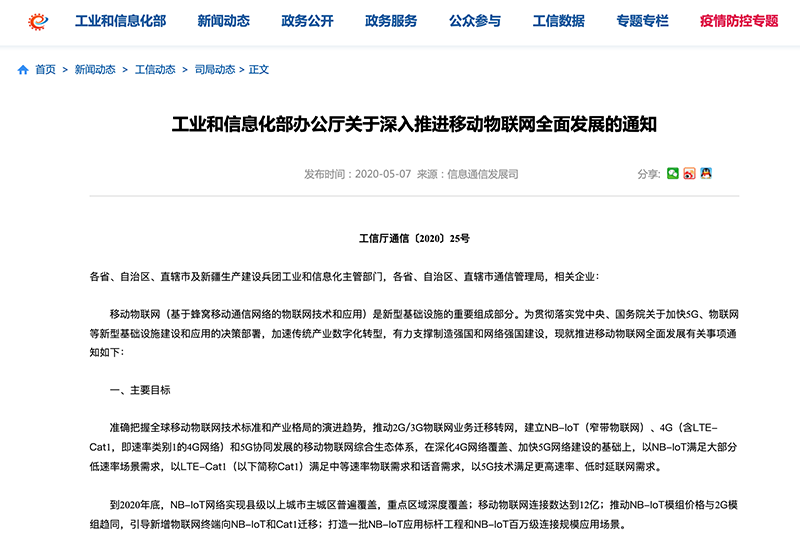
This document directly pushes more opportunities in front of Chip Wing Information Technology, while also intensifying market competition.
Li Jian believes that the formal inclusion of NB-IoT technology in the global 5G standard, the retirement of China’s 2G/3G technologies, and the new infrastructure being vigorously developed by the state all provide a broader market for the development of China’s NB-IoT industry.“Our goal is not to overthrow all the giant companies but to create differentiation based on our own characteristics.” In Li Jian’s view, under the influence of industry characteristics and national policies, how to leverage their technological strength to gain market recognition and expand the industry pie, allowing all players to compete fully, is the way to realize more industry value.What will be Chip Wing Information Technology’s next development plan?“Innovation” and “shipment” are the two keywords for Chip Wing Information Technology in the second half of the year. “A single product cannot conquer the world; for the company’s development, in the second half of the year, we must not only continue to increase innovation and R&D efforts, but also achieve broader deployment of new chip products,” Li Jian stated.
05
Conclusion: Gains and Losses in the New Era of Entrepreneurship
Since the 21st century, waves of chip entrepreneurship have provided countless entrepreneurs and companies with opportunities to shine, and Chip Wing Information Technology, as one of the “new waves” in this historical tide, is striving to seize the opportunities presented by NB-IoT.Through thick and thin, this batch of entrepreneurs has given up lucrative million-dollar salaries abroad to return home and start anew, supported not only by a desire to contribute to the localization of Chinese chips but also by a belief that Chinese semiconductor manufacturing will one day stand tall on the international stage.Even if this contribution may be minimal, and they may be washed away by other waves, when we look back at the history of industrial localization, it has grown like sand piling up to form a tower, and there are no shortcuts.Development in semiconductor entrepreneurship is an inevitable trend; how to better achieve technological innovation and self-control, accelerate product deployment and industry maturity, is not only the destination for Chip Wing Information Technology as a “wave” but also the direction for the entire semiconductor industry to contemplate and strive for.
Recommended Materials
Previous material summaries:
(1) Chip semiconductor material download
(2) Global IC supplier white paper download
(3) FPGA 30G material package download
(4) Hot Chips conference official PPT collection download(5)ISSCC 2020 papers + PPT collection
Previous individual materials:
Chip 001: “Analysis of Global and Chinese Chip Industry Development”
Chip 002: “In-depth Research Report on the Chip Industry – Including Introductions to 135 Related Companies”
Chip 003: “Beyond Moore’s Law: A 30-page PPT Explaining Its Impact on Semiconductors”
Chip 004: “In-depth Report on the Global EDA Chip Design Software Industry”
Chip 005: “2019 AI Chip Industry Research Report”Chip 006: “Camera Chips: CMOS Image Sensor (CIS) Industry Report”Chip 007: “Exploring Global Semiconductor Industry Giants”Chip 008: “Trends in the New Energy Vehicle Industry Series Report Eight: Power Semiconductors, The Song of Electric Power”Chip Things 009: “In-depth Study of Wide Bandgap Semiconductors: The Rise and Future of SiC and GaN”
Chip Things 010: “Integrated Circuit Design Annual Meeting: Opportunities for EDA and RISC-V Development”
Community Recruitment
“Chip Semiconductor Technology Community” is now recruiting!Inside the group, there are:Industry analysis and interpretation, report material sharing, communication with industry expertsReply “Group” in the background to join!
For more hot articles on chips and semiconductors,
please reply “Chip” in the Chip Things WeChat public account dialogue page to view.
1. Products and Technologies:
“The Battle of Lithography Machines”
“Detailed Explanation of Lithography Machines: The ‘Terrifying’ Light Source System”
“Huawei’s 28-Year History of Chip Development”
“Huawei’s Chip Review”
2. Important Historical Reviews
“SMIC: The Reluctant Infighting”
“The EDA War: A Story from Silicon Valley’s Jungle”
“The Legend of ASML”