On July 18, Hunan Daily reported (by multimedia journalist Zhou Ti, correspondent Wang Dingling, Peng Lu, and Zhou Feng) that “Our goal is to allow more children to chase their dreams with their own legs.” On July 17, Dr. Xu Xuezheng, chief physician of the Department of Bone and Soft Tissue Tumors at Hunan Provincial Tumor Hospital, introduced a recent breakthrough in the treatment of pediatric osteosarcoma: the team successfully completed the province’s first customized prosthetic limb preservation surgery for a child, saving the left lower limb of a 12-year-old girl named Xiaoya (pseudonym) and giving her the possibility to stand and walk again.
In March of this year, Xiaoya, who lives in Loudi, began to experience a dull pain in her left ankle after physical education class. Her family thought it was just a sprain, but two weeks later, the pain worsened and was accompanied by local swelling. After an examination at a local hospital, X-rays suggested a suspicious lesion at the distal tibia, and she was referred to Hunan Provincial Tumor Hospital for further examination, where she was diagnosed with osteosarcoma.
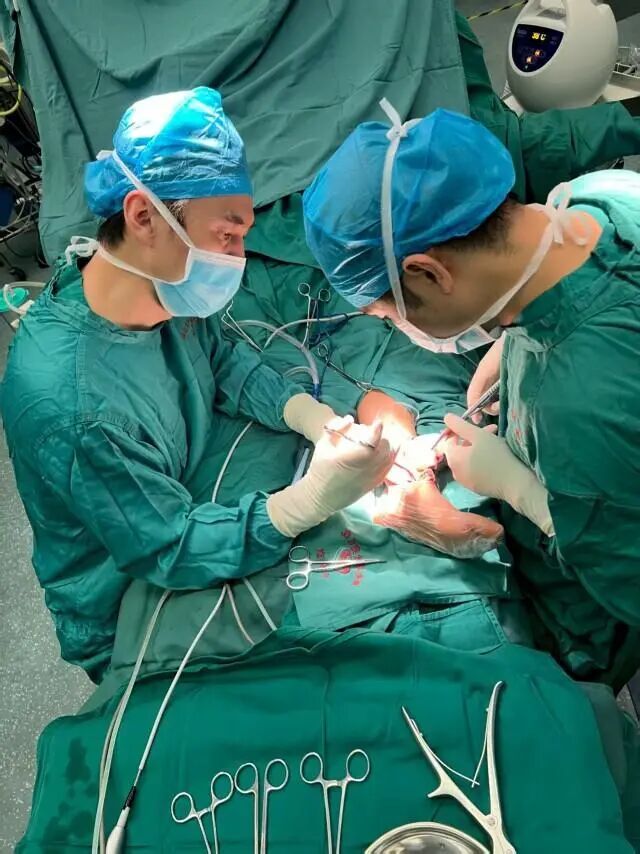
“Osteosarcoma of the distal tibia accounts for about 10% of cases in pediatric patients, and its location is very close to the ankle joint, leaving very limited space for surgical resection. If not handled properly, amputation is the only option,” Dr. Xu stated. However, since the child is in a growth and development phase, amputation would severely affect her appearance, walking ability, spinal development, and mental health.
“Over the past 40 years, the five-year survival rate for osteosarcoma has increased from less than 20% to about 70%, but the amputation rate remains high,” Dr. Xu told reporters. With the advent of 3D printing technology, prosthetics and ligament reconstruction holes and joint surface structures can be designed in an “integrated” manner, allowing the prosthetic to fit the patient’s bones better and improving postoperative function.
To preserve the child’s leg as much as possible, the hospital quickly initiated a multidisciplinary team (MDT) for bone tumors. The imaging department accurately measured the tumor boundaries, and the surgeons comprehensively assessed the requirements for bone strength and joint stability, collaborating with a domestic 3D printing center to design a personalized prosthetic.
Ultimately, the expert team developed a “customized” limb preservation plan. The surgery lasted three hours and was successfully completed. Next, Xiaoya will undergo follow-up chemotherapy and, under the guidance of a sports rehabilitation therapist, will engage in balance and strength training to empower her “new leg”.
According to statistics from Hunan Provincial Tumor Hospital, since the introduction of personalized prosthetic replacement in 2018, the amputation rate for pediatric osteosarcoma of the distal tibia has decreased from 65% to less than 10%.
“Even so, parents must pay close attention to their children’s bone and joint health,” Dr. Xu advised. Osteosarcoma is common in adolescents aged 10 to 20 and is often mistaken for “growing pains” or “sports injuries.” If a child experiences unexplained limb pain, nighttime pain, or local swelling, they should seek medical attention promptly, undergo comprehensive imaging examinations, and early detection and standardized treatment can improve the cure rate. (Source: Hunan Daily, copyright belongs to the original author; if there is any infringement, please contact us for deletion.)