FreeRTOS Kernel Development Manual – Low Power Support

Word count 2266, reading time approximately 12 minutes 11 Low Power Support 11.1 Power Saving Introduction FreeRTOS provides a simple method to enter low power mode using the IDLE task hook and tickless idle mode. Typically, using the IDLE task hook allows the microcontroller running FreeRTOS to enter a low power state, reducing its power … Read more
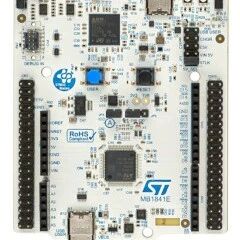

From Unboxing to Practical Use: A 30-Day Experience with the STM32U385RG Development Board

From Unboxing to Practical Use: A 30-Day Experience with the STM32U385RG Development Board

ST MCU Forum https://bbs.21ic.com/iclist-49-1.html *Reading Instructions: The following is a brief summary display, with no particular order. For detailed evaluation processes, source code, and materials, please click the original link to view. Evaluation One 1. Development Environment Setup and LED Blinking https://bbs.21ic.com/icview-3470430-1-1.html 2. Implementing Onboard Debugging Serial Communication https://bbs.21ic.com/icview-3470452-1-1.html This article implements UART serial communication. … Read more

Can the MCU Watchdog Function Work in Low Power Mode?

Can the MCU Watchdog Function Work in Low Power Mode?

Recently, a group of friends in the chat asked a question about whether the watchdog can work in low power mode: This sparked discussions among various experts: All MCUs have a watchdog function, which is used to monitor and resolve system failures caused by software faults, preventing the system from becoming unresponsive due to runaway … Read more

How FreeRTOS Manages Time: An Analysis of Tick, Interrupts, and Scheduling Mechanisms

How FreeRTOS Manages Time: An Analysis of Tick, Interrupts, and Scheduling Mechanisms

Table of Contents Background and Overview Source and Configuration of Tick Timer 2.1 <span>configTICK_RATE_HZ</span> 2.2 Hardware Timer & <span>vPortSetupTimerInterrupt</span> Processing Flow of Tick Interrupt 3.1 Interrupt Entry and FreeRTOS Hook 3.2 Time Statistics and Delay Management Time Slicing and Dynamic Priority Scheduling 4.1 Preemptive vs. Cooperative Kernel 4.2 Round Robin Scheduling Context Switching Mechanism 5.1 … Read more

The Basis for FreeRTOS Task Allocation

The Basis for FreeRTOS Task Allocation

The Core Role of the FreeRTOS Idle Task ‌Maintaining Minimum System Operation Guarantee‌ Automatically created after the scheduler starts, with the lowest priority (usually 0), ensuring that there is always a task for the system to execute. When all user tasks are blocked or suspended, the idle task takes over the CPU to avoid an … Read more