How to Generate an EXE File from Python Automation Scripts

How to Generate an EXE File from Python Automation Scripts

1. IntroductionTo avoid issues during automated execution caused by different Python or library versions, reduce the threshold for testers, protect core business logic and test code, and facilitate the use by testers, generating an .exe executable file can better address these problems.2. How to Use PyInstaller to Generate an .exe File (No Python Environment Required)1. … Read more
Usage and Best Practices of Linux Shebang (#!)

In many script files, we can see the following code on the <span>first line</span>: #!/bin/bash 或 #!/usr/bin/env python Carefully observe that the first line of the script file starts with the characters <span>#!</span>. This character sequence consisting of <span>hash</span> and <span>exclamation mark</span> is called <span>Shebang</span> (also known as <span>Hashbang</span>). Its purpose is to tell the … Read more

Compilation and Build Tools for C Language

Compilation and Build Tools for C Language

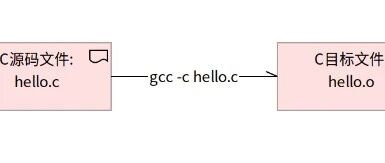
The C language can be used to write operating systems, drivers, and applications. When developing with C, we first write the source code, then compile and link the dependent libraries, and finally generate an executable program. Taking the gcc compiler as an example, as shown in the figure below: In actual projects, there will be … Read more

Daily C: The Compilation Process from C Language to Executable File

Daily C: The Compilation Process from C Language to Executable File

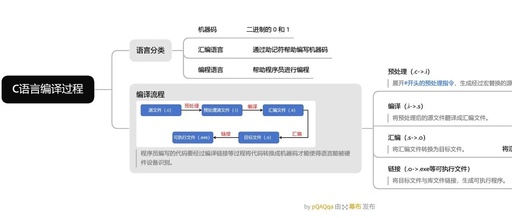
Today we will learn about how the C language is transformed into an executable file through the compilation process, and what happens at each stage of the transformation. Language Classification Before we begin, we need to have a general understanding of the development of computer programming languages. Since the birth of computers, the development of … Read more

Analysis of the readelf Command and ELF Files in Embedded Linux

Analysis of the readelf Command and ELF Files in Embedded Linux

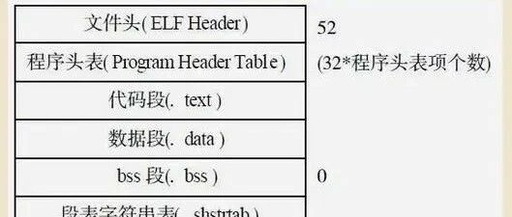
ELF (Executable and Linking Format) is a file format that defines how the internal information of object files is composed and organized. The kernel uses this information to load executable files, determining where to fetch code, where to obtain initialization data, and where to load shared libraries, among other details. There are three types of … Read more

Various Methods to Package Python Files (.py) into Executable Files (.exe)

Various Methods to Package Python Files (.py) into Executable Files (.exe)

Introduction There are various methods to package Python files (.py) into executable files (.exe), each corresponding to different libraries in Python. The four commonly used libraries are: PyInstaller, cx_Freeze, Py2exe, and Nuitka. Each has its own characteristics and limitations, and we can choose the appropriate method based on our needs. 1. Using the PyInstaller Library … Read more

Analysis of Answers for Assembly Language Experiment 3

Analysis of Answers for Assembly Language Experiment 3

“Assembly Language” 3rd Edition by Wang Shuang Chapter 4: The First Program (Page 94) Experiment 3: Programming, Compiling, Linking, and Debugging (1) Save the following program as t1.asm and generate the executable file t1.exe. assume cs:codeseg codeseg segment mov ax, 2000H mov ss, ax mov sp, 0 add sp, 10 pop ax pop bx push … Read more

How to Add a Directory to the PATH Environment Variable in Linux

How to Add a Directory to the PATH Environment Variable in Linux

When entering commands in the Linux command line, you are essentially instructing the shell to run an executable file with a specified name. Executable programs in Linux (such as <span>ls</span>, <span>find</span>, <span>file</span>, etc.) are typically stored in multiple different system directories. As long as they have executable permissions, files stored in these directories can be … Read more

Assembly Language: Chapter 4 – The First Complete Assembly Program

Assembly Language: Chapter 4 - The First Complete Assembly Program

This series will explain the book “Assembly Language”. This section covers Chapter 4 – The First Complete Assembly Program. We can finally write our first complete program. Previously, we were writing some instructions in Debug and executing them there. Now we will start writing a complete assembly language program, using <span>compilation</span> and <span>linking</span> to compile … Read more

Generating Executable EXE Programs on Windows with Python

Generating Executable EXE Programs on Windows with Python

Introduction A small program was created using Python, intended for use on Windows. This demo documents the implementation process. The library used for packaging is the third-party Python library PyInstaller. Content Overview Packaging with PyInstaller Testing for usability Steps to Operate 1. Packaging with PyInstaller Install the pyinstaller dependency pip install pyinstaller Package a single … Read more