Medical Engineering Collaboration | Shenzhen University Training Camp Diary: C Language Challenge

Medical Engineering Collaboration | Shenzhen University Training Camp Diary: C Language Challenge

C Language Big Challenge July Location:Shenzhen University Excellence Engineer Training Camp Shen University Training Camp Diary # FromC Language Beginner to Microcontroller Reserves! Every line of code brings you closer to innovation. Summer Breeze In this summer, we traveled a thousand kilometers to Shenzhen University for the Medical Engineering Integration Excellence Engineer Training Camp, embarking … Read more

Summary of Two Types of Type Conversion in C: Understanding Implicit and Explicit Conversion

Summary of Two Types of Type Conversion in C: Understanding Implicit and Explicit Conversion

“From today onwards, study hard and make progress every day” Repetition is the best method for memory; spend one minute each day to remember the basics of C language. “C Language Beginner’s Essential Knowledge Notes Series of 100 Articles”“ 24. Summary of Two Types of Type Conversion: Understanding Implicit and Explicit Conversion 1. Basic Concept … Read more

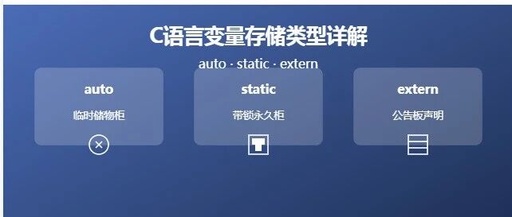
Detailed Explanation of C Language Variable Storage Types: auto, static, and extern

Detailed Explanation of C Language Variable Storage Types: auto, static, and extern

Are you confused about the keywords <span><span>auto</span></span>, <span><span>static</span></span>, and <span><span>extern</span></span> in C language? Today, we will use the most vivid locker analogy to help you thoroughly understand their differences! 🔑 1. auto – Temporary Locker (Default Type) The most common local variable, no need to explicitly write the <span><span>auto</span></span> keyword Simple Explanation: Just like a … Read more

In-Depth Analysis of C Language: What Happens to Variables in Memory? (Continued)

In-Depth Analysis of C Language: What Happens to Variables in Memory? (Continued)

In the last lesson, we explored the “behind-the-scenes story” of variable definitions in memory, and I believe everyone has gained a preliminary understanding of memory, hard drives, and the binary language of computers. Today, we will continue to delve deeper, uncovering the true mystery behind why an int type variable “occupies four bytes” and the … Read more

C Language Learning Notes: Summary of if Statement Usage Techniques

C Language Learning Notes: Summary of if Statement Usage Techniques

“From today on, study hard and make progress every day.” Repetition is the best method for memory; spend one minute each day to remember the basics of C language. “C Language Beginner’s Essential Knowledge Notes Series of 100 Articles”“ 25. if Statement: The Most Common Conditional Judgment 1. Basic Structure of if Statement The if … Read more

C Language Program to Determine if a Number is Even or Odd

C Language Program to Determine if a Number is Even or Odd

Determine if a number is even or odd #define _CRT_SECURE_NO_WARNINGS#include <stdio.h>#include <stdlib.h> // system function required int main(){ int a; while (1) // infinite loop { printf("Please enter an integer:\n"); scanf("%d", &a); if (a % 2 == 0) { printf("%d is even\n", a); } else { printf("%d is odd\n", a); } printf("Press any key to … Read more

In-Depth Analysis of C Language Variables: What Happens in Memory?

In-Depth Analysis of C Language Variables: What Happens in Memory?

In the last lesson, we briefly introduced the usage of variables, but many students expressed that they still find the question, “What exactly happens in the computer when we define a variable?” a bit “peculiar” and hard to understand. Don’t worry, in this lesson we will delve into this seemingly simple yet very core question—what … Read more

Daily Learning | Basic Training in C Language

Daily Learning | Basic Training in C Language

Question: Sort 10 numbers. NEXT Answer: #include<stdio.h> #define N 10 int main() { int i,j,a[N],temp; printf(“Please enter 10 numbers:\n”); for(i=0;i<N;i++) scanf(“%d”,&a[i]); for(i=0;i<N-1;i++) { int min=i; for(j=i+1;j<N;j++) if(a[min]>a[j]) min=j; if(min!=i) { temp=a[min]; a[min]=a[i]; a[i]=temp; } } printf(“The sorted result is:\n”); for(i=0;i<N;i++) printf(“%d “,a[i]); printf(“\n”); return 0; } THE END Saturday, August 30, 2025 Study hard, make … Read more

C Language Learning Notes: 100 Articles – 23. Operator Precedence and Associativity: Just Remember This One Mnemonic, Which Is… Add Parentheses

C Language Learning Notes: 100 Articles - 23. Operator Precedence and Associativity: Just Remember This One Mnemonic, Which Is... Add Parentheses

“From today on, study hard and make progress every day” Repetition is the best method for memory; spend one minute every day to remember the basics of C language. “C Language Beginner’s Essential Knowledge Notes Series of 100 Articles“ 23. Operator Precedence and Associativity: Just Remember This One Mnemonic, Which Is Add Parentheses 1. Basic … Read more

The Development History of the C Language

The Development History of the C Language

The C language, as a milestone in the history of computer programming languages, has profoundly influenced the software industry and the field of computer science with its efficiency, portability, and flexibility, leaving an indelible mark from system development to application programming. Its development spans over half a century and can be divided into four key … Read more