Everyone uses Wi-Fi frequently while working in the company.
In recent years, with the development of technology, high-bandwidth applications such as HD video conferencing have become increasingly common. However, the company’s network is quite inadequate, frequently lagging and severely affecting the user experience. Even though the IT colleagues have optimized the network well, it still cannot be resolved.
Why is this happening? What are the “difficulties” of the company’s Wi-Fi?
In this article, I will provide an in-depth analysis.
█ Why is the Wi-Fi Speed So Slow?
In simple terms, there are two main reasons for slow Wi-Fi speeds:
First, the upstream bandwidth is small. A narrow pipe means a slow speed.
Second, the wireless signal coverage is poor. This could be due to issues with the Wi-Fi itself or external environmental factors, such as distance, obstacles, or interference.
The wireless transmission segment from the Wi-Fi AP (Access Point) to the terminal is commonly referred to as the air interface.
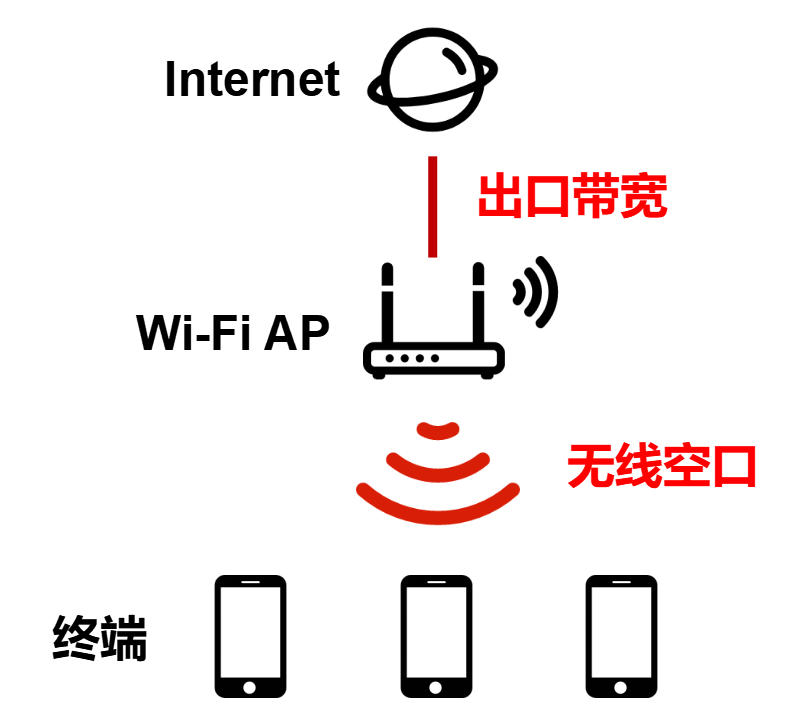
Many people encountering slow Wi-Fi speeds often first complain about the small bandwidth provided by the Wi-Fi provider. However, in reality, interference from wireless signals is likely the true source of the problem.
As we all know, wireless communication requires the use of radio frequency bands. Wi-Fi operates on the ISM (Industrial Scientific Medical) band, commonly known as the free band, with frequency ranges of 2.4GHz and 5GHz (there is also a 6GHz band abroad, but it is not open in China, so this article will not discuss it).
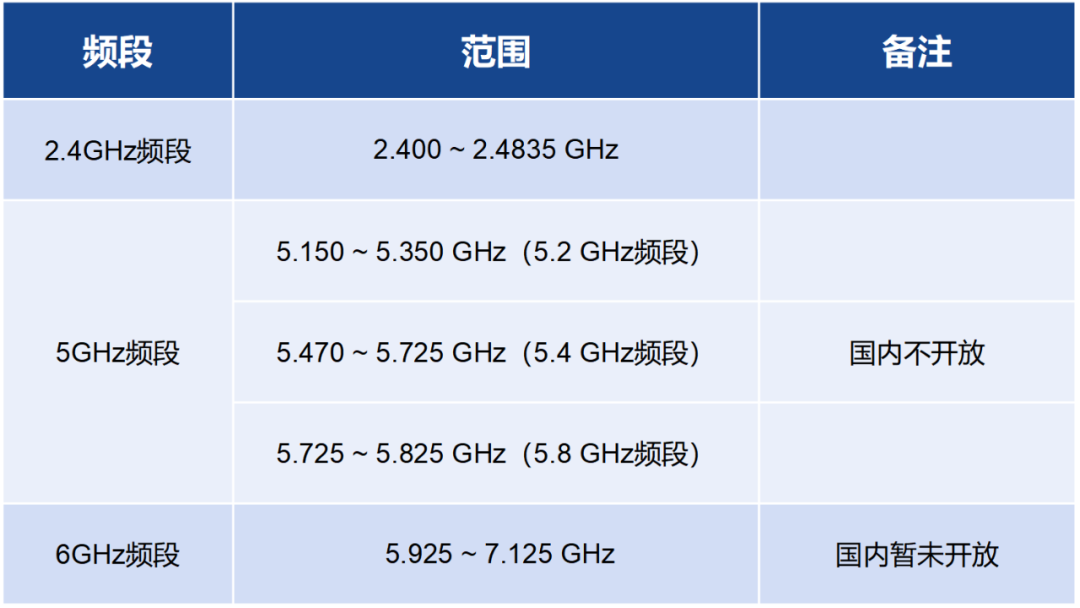
These frequency bands are divided into channels for communication between terminals (such as mobile phones) and APs.
The frequency width of the channels (bandwidth) is divided into 20MHz, 40MHz, 80MHz, 160MHz, and 320MHz (not available in China).
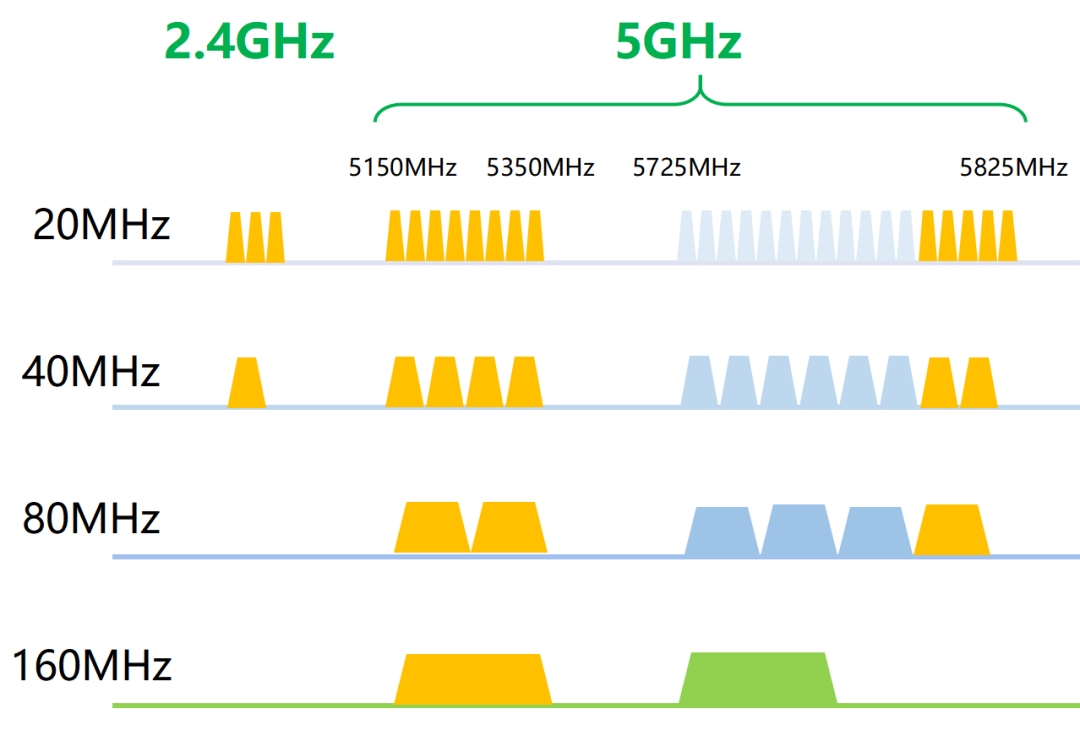
The yellow represents the channels used in China.
The larger the bandwidth, the higher the achievable network connection speed (equivalent to widening the lanes). However, the total bandwidth (authorized spectrum range) remains unchanged; if a larger bandwidth is used, the number of channels (lanes) will decrease.
In the 2.4G band, there are a total of 14 channels (China uses channels 1-13), each channel has a bandwidth of 22MHz (including a 2MHz mandatory isolation band), and the spacing between each channel is 5MHz (the spacing between channels 13 and 14 is 12MHz).
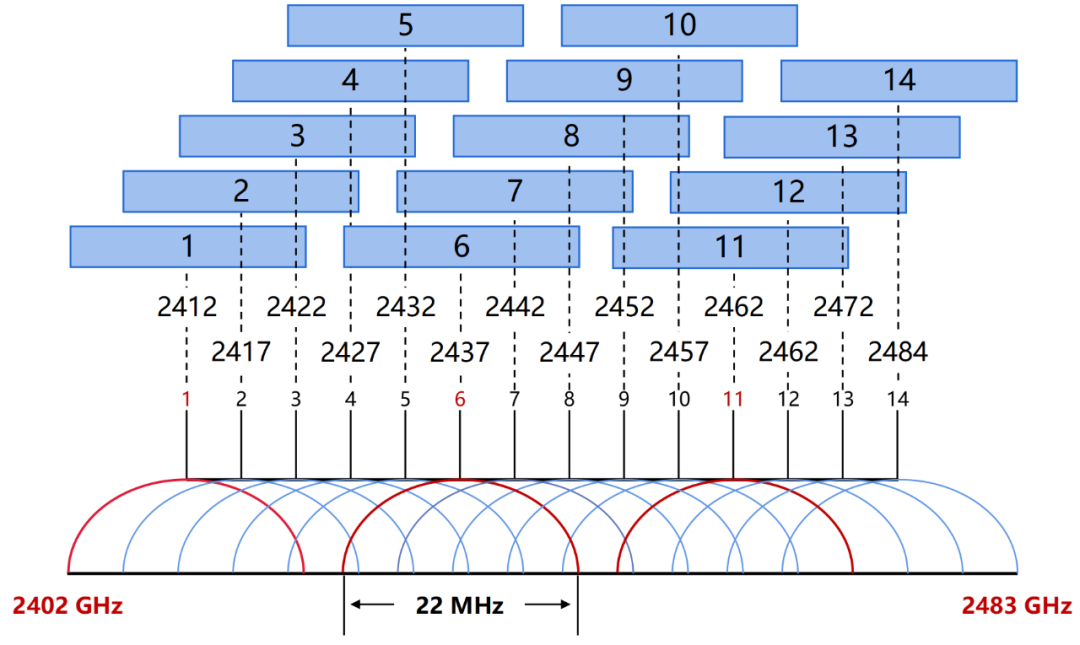
Channels in the 2.4G band.
The 2.4G band has low attenuation and can transmit over longer distances. However, its bandwidth is narrow, resulting in lower achievable connection speeds.
Its main issue is excessive interference. Although it has 13 channels, there are actually only 3 non-overlapping channels (channels 1/6/11). Currently, apart from a few IoT devices (which do not require high speeds), most terminals such as mobile phones, computers, and TVs that require high-speed connections do not use it.
The 5G band is the most commonly used now. It is divided into 24 non-overlapping channels. In China, the channel numbers are 36-64 and 149-165, totaling 13 channels.
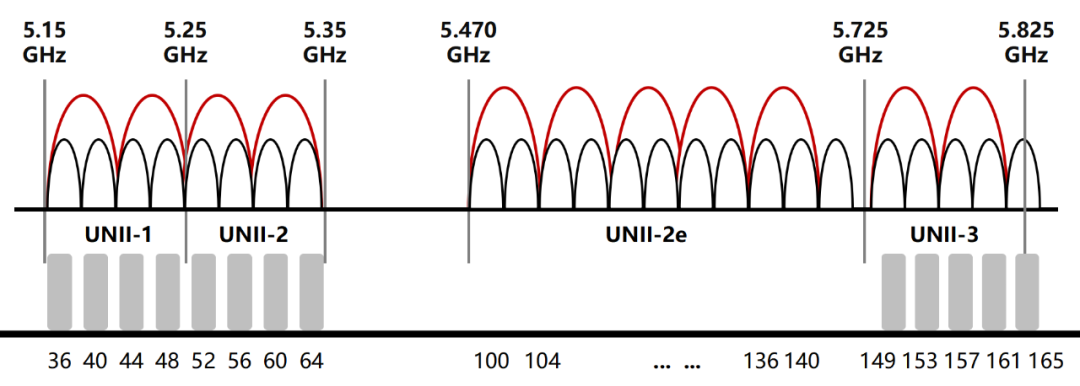
Channels in the 5G band.
The 5G band has a larger bandwidth, allowing for higher speeds. Additionally, there are fewer devices using this band, resulting in less interference and a more stable network. However, the 5GHz band has greater attenuation, and its coverage distance is shorter compared to the 2.4G band.
So, what problems might arise when using the 5G band for networking?
If it is a small office, there is not much to say; just buy a router and choose a larger signal bandwidth (generally 80MHz or 160MHz), which can balance speed and coverage without much interference.
However, if it is a large office area that requires the deployment of many APs, problems will arise—
The deployment distance between APs is usually in the range of 10-12 meters. If a bandwidth of 20MHz is used for networking, there will be many channels, and interference will be relatively low. But a 20MHz bandwidth is too small, resulting in low network connection speeds for single users, making it impossible to watch ultra-high-definition video conferences without lag.
If the bandwidth is set to 40MHz, although the theoretical speed for single users is improved, the number of available channels decreases, and spectrum interference becomes more severe.
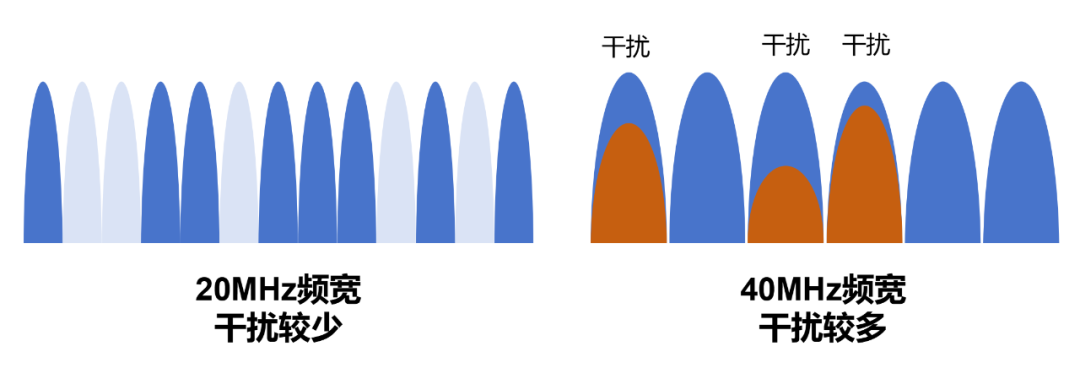
For most countries or regions, if a bandwidth of 40MHz is used, there are only 6 available channels. According to tests, under a 40MHz networking setup, the overall network performance will decrease by 30% due to co-channel interference.
If set to 80MHz (with APs deployed at a distance of 12 meters), most countries or regions will have only 3 available channels, leading to even more severe interference.
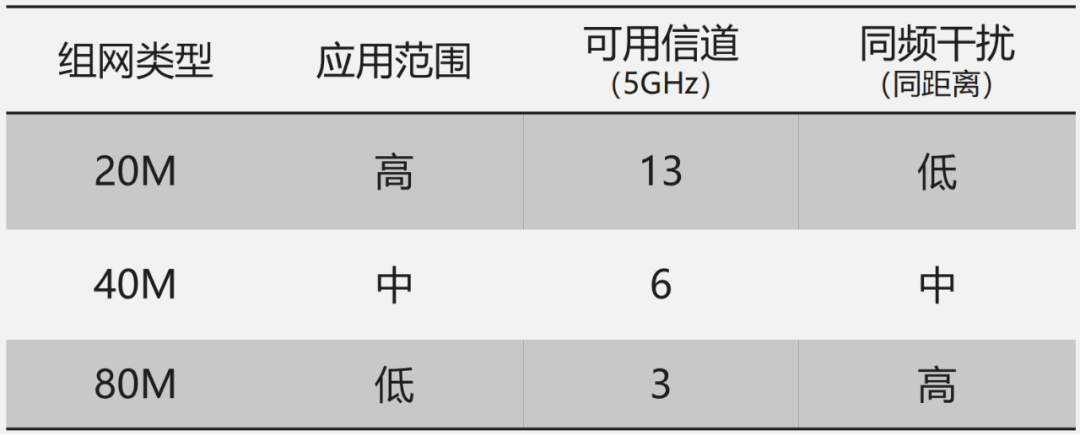
In fact, the capacity of an 80MHz network is logically twice that of a 40MHz network, but due to interference issues, the actual performance of an 80MHz network may be even worse than that of a 40MHz network.
Because of this, many enterprise customers still choose a smaller bandwidth (20MHz) when deploying Wi-Fi, sacrificing speed to increase channels, control interference, and ensure performance.
This is the main reason why everyone feels that the Wi-Fi speed in the company is slow. Co-channel interference is the culprit.
█ How to Reduce the Impact of Interference in Multi-AP Networking?
So, is the problem of co-channel interference unsolvable? Is there really no way to address the high-density networking in the company’s office area?
Of course not.
Recently, I came across a very unique solution specifically designed to address the challenges of high-density Wi-Fi networking mentioned earlier. This solution is called: Intelligent Coordinated Scheduling and Spatial Reuse (iCSSR).
The iCSSR mainly includes two key technologies—AP collaboration and intelligent antennas.
● AP Collaboration
Let’s first look at AP collaboration. AP collaboration is a technology for “team cooperation” among multiple APs, which includes several steps:
Step 1: Select the co-frequency AP group.
Several APs share information such as RSSI (Received Signal Strength Indication) and traffic load to select a group of APs for collaborative scheduling (supporting up to 5 co-frequency APs in a group) and confirm priorities.
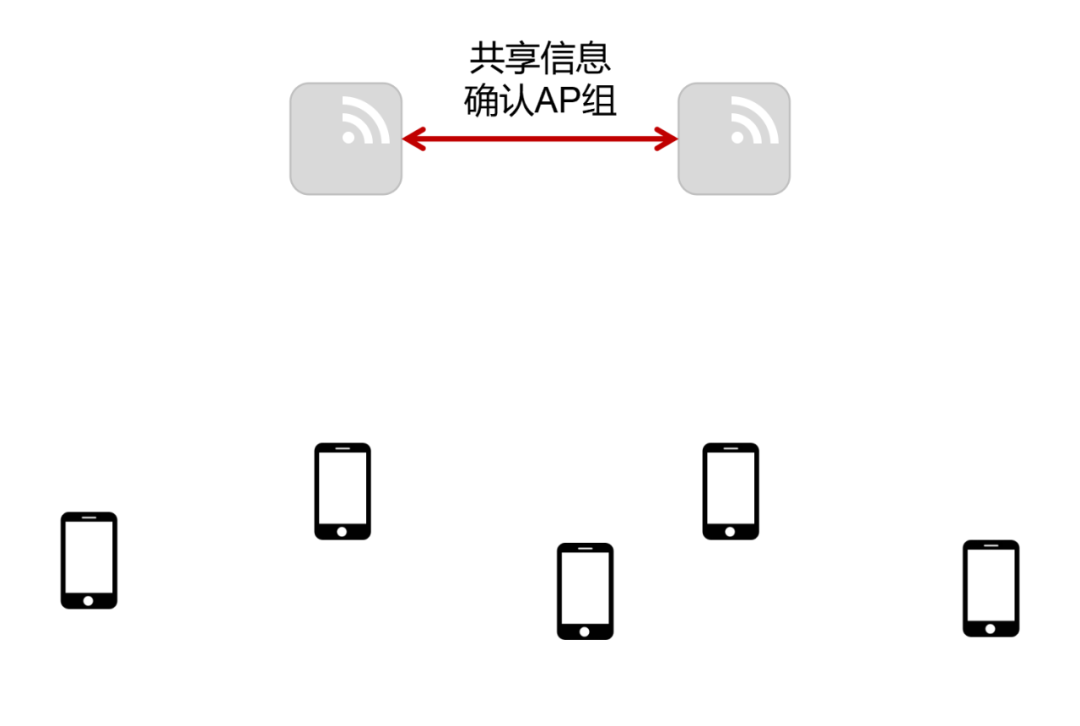
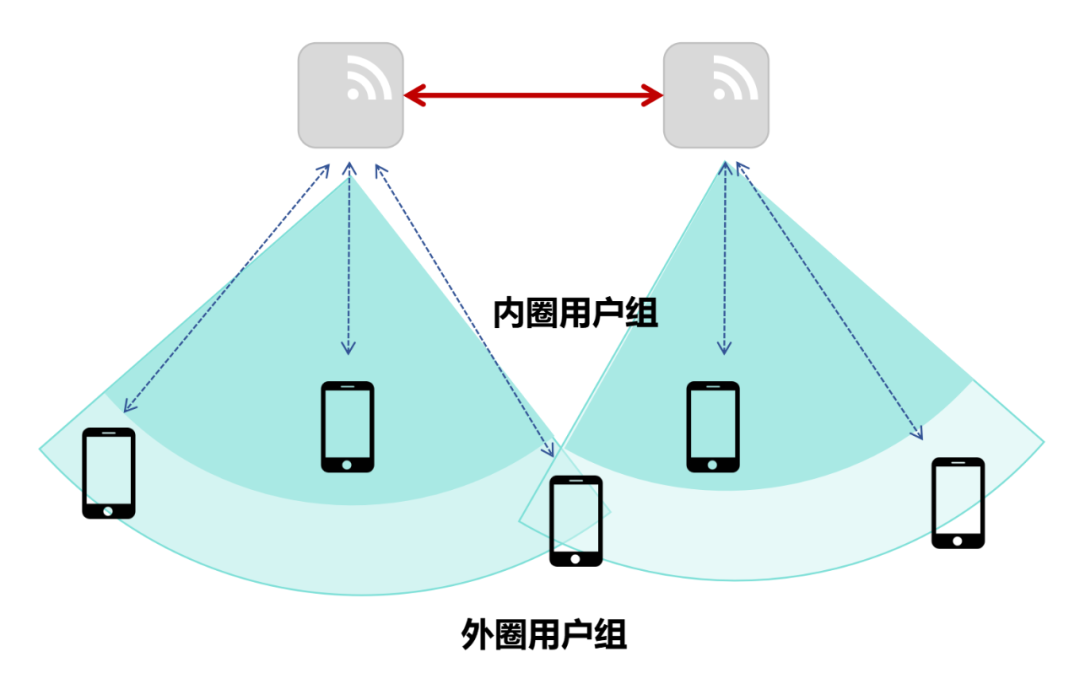
Step 2: Select the inner circle user group and outer circle user group.
Based on the signal strength of the user’s uplink BA (Block ACK), determine the inner circle user group and outer circle user group.
As shown in the figure, the dark area represents the inner circle user group (close to the AP), while the light area represents the outer circle user group (edge users, far from the AP):
Step 3: Conduct user group scheduling.
The scheduling methods for the inner circle user group and outer circle user group are different.
For the inner circle user group, the method used is “AP collaboration concurrent, sending data simultaneously”.
The specific steps are:
First, the AP that seizes the channel priority will become the main AP.
Then, the main AP sends a collaborative scheduling frame through the air interface to notify the selected subordinate APs to perform “simultaneous scheduling”.
The main AP will instruct all subordinate APs to adjust parameters to avoid mutual interference.
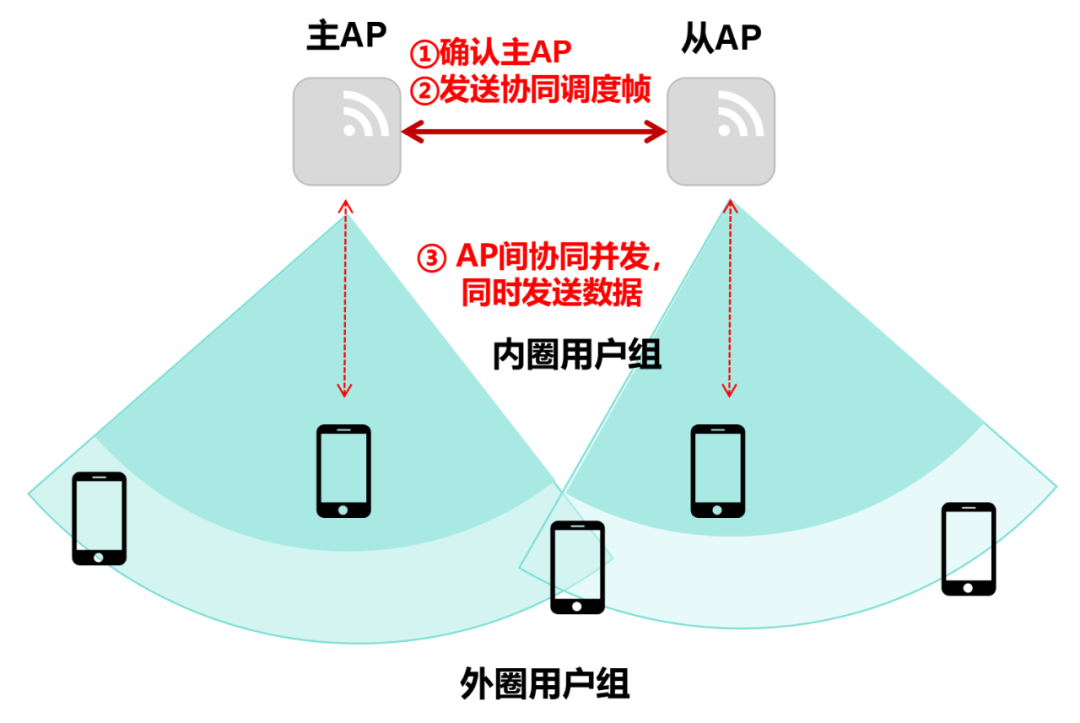
Inner circle user group scheduling.
This concurrent transmission allows users to achieve higher transmission speeds, resulting in a better network experience.
It is worth mentioning that the precise collaboration between APs is at the microsecond level, with a very fast response time.
Now let’s look at the outer circle user group.
For the outer circle user group, the method is “AP collaboration time division, sending data in turns”.
Once the main AP is determined, it will also send a collaborative scheduling frame to notify all subordinate APs. However, the command is to perform “time division scheduling”.
Then, the main and subordinate APs will sequentially perform time division scheduling for the outer circle user group (edge users).
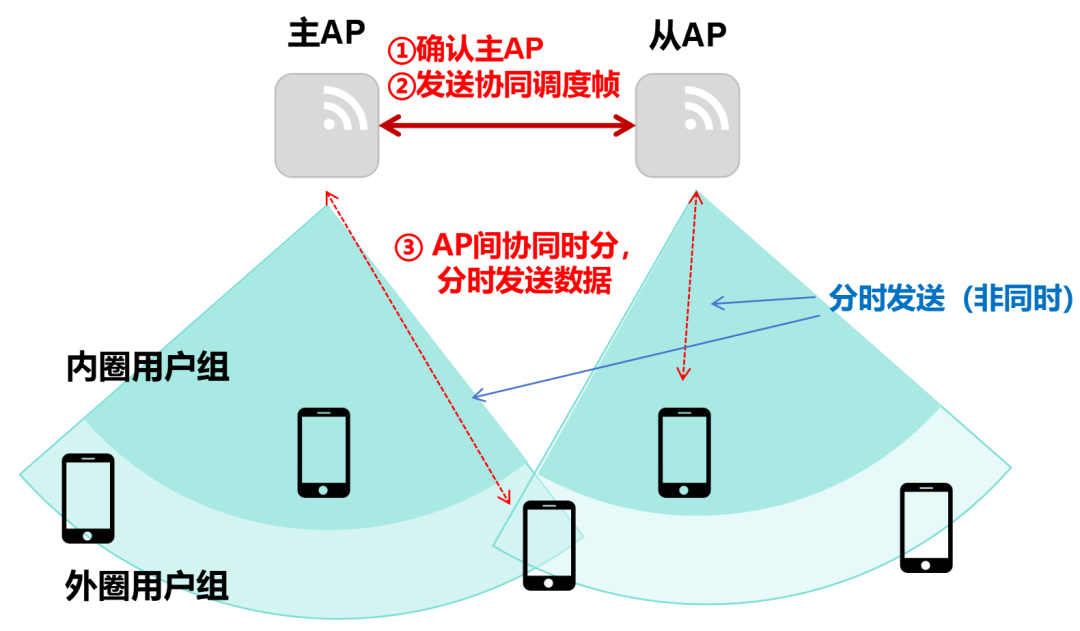
Outer circle user group scheduling.
This is the processing process of AP collaboration.
As you can see, AP collaboration allows multiple APs to form a “virtual team”. Through close cooperation among the “team”, an invisible “wall” is formed between them, significantly reducing interference and improving the efficiency of the wireless air interface. This clears the obstacles for high-density networking at 80MHz bandwidth, achieving a new balance between speed and coverage.
● Intelligent Antennas
Now let’s look at intelligent antenna technology, which has two major functions:
First, it has the ability to follow signals.
Traditional AP antennas have fixed signal beams, while intelligent antennas can change their signal beams according to user movement.
The other function is dynamic zoom.
Traditional APs have only one antenna beam. They can either be omnidirectional antennas, which emit signals in all directions like a light bulb, providing good coverage but causing significant interference, or directional antennas, which emit signals in a fixed direction like a spotlight, causing less interference but poor edge coverage.
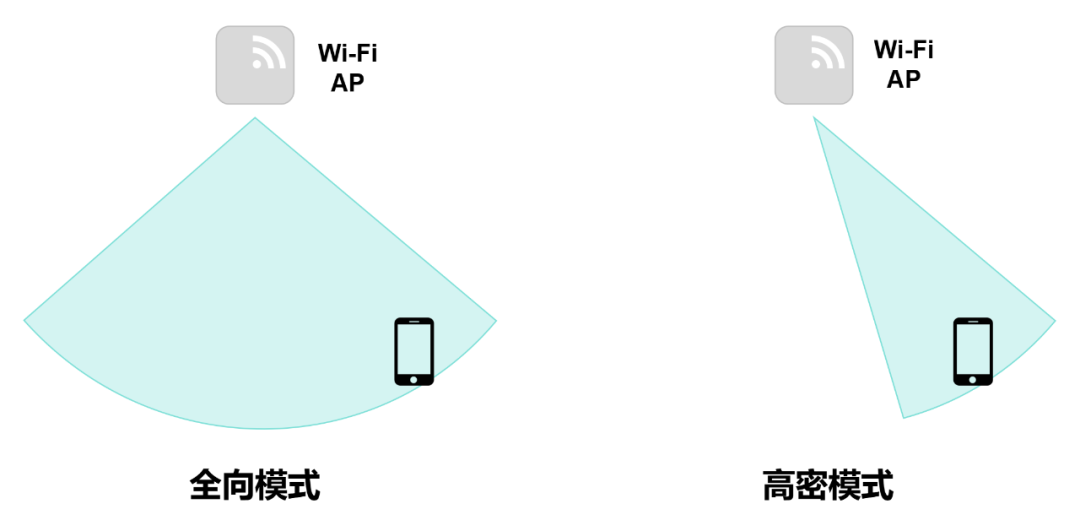
However, when APs introduce intelligent zoom antenna technology, they can flexibly switch between omnidirectional mode and high-density mode.
In scenarios with fewer people, omnidirectional mode is used. In crowded scenarios, high-density mode is used.
In high-density mode, by introducing pre-correction technology (DPD algorithm), the antenna beam can dynamically adjust the beam width and angle based on user distribution and AP deployment distance.
This not only improves the signal strength for users but also avoids signal “spillage” that causes interference to other APs.
Those familiar with mobile communications might think: “This is exactly like the ‘beamforming’ technology in 5G!”
Indeed, mobile communication and Wi-Fi have always been “learning” from each other. The AP collaboration mentioned earlier actually references the design of cellular mobile communication. Technologies such as OFDMA, beamforming, and DPD algorithms have also inherited from mobile communication technologies.
█ Final Thoughts
Wi-Fi technology was born in the 1990s and has become an indispensable part of our daily lives after decades of development.
Most of us first encountered Wi-Fi with the Wi-Fi 3 (802.11g) or Wi-Fi 4 (802.11n) standards. Today, Wi-Fi has evolved to Wi-Fi 7 (802.11be), and Wi-Fi 8 is also in development.
From the perspective of wireless spectrum efficiency, Wi-Fi is approaching its performance limits, and the difficulty of further improving theoretical speeds is increasing. However, theoretical speed does not equate to actual experience speed. In practical applications, solving signal interference issues is the most effective way to enhance user experience.
New technologies such as iCSSR provide innovative solutions to address interference issues in high-density Wi-Fi networking. Looking ahead, Wi-Fi technology will undoubtedly see more innovations, enriching our network life and accelerating the digital transformation of society.
Source: Fresh Date Classroom
Editor: Xiao Gugu
The reproduced content only represents the author’s views
It does not represent the position of the Institute of Physics, Chinese Academy of Sciences
If you need to reprint, please contact the original public account
Recent Popular Articles Top 10
↓ Click the title to view ↓
1. Is There Anything More Thirst-Quenching Than Water? | No.459
2. Why Do Some People Fear and Feel Uncomfortable with Blue Glass Windows in Old Buildings?
3. The Truth Behind the Incident of the Tibetan Bear “Luring and Eating People”.
4. Why Do Cinema Screens Break Upon Contact and Cost Tens of Thousands? Is It Really Made of Silver?
5. 8-Year-Old “Magic” Child Breaks World Record; Has He Mastered the Ultimate Secret of Group Theory?
6. Can Giving Cao Cao a Box of Ibuprofen Save His Headache?
7. The Most Bitter Substance to Date! 1 Gram Can Make the Water of 16 Swimming Pools Bitter.
8. Does a “Quantum Superposition State” Appear on Windows When It Rains? | Serious Play
9. Is Spacetime Derived from Quantum Entanglement?
10. sin θ ≈ θ? Not Bad! You Truly Deserve to Study Physics.
Click here to view all past popular articles