In the presence of strong domestic companies, there are still small and medium-sized IoT platforms sharing the market; however, the smart home industry faces issues such as instability, lack of smooth operation, insecurity, and non-standardization, leading to a market that is eager for more quality and comprehensive solutions.
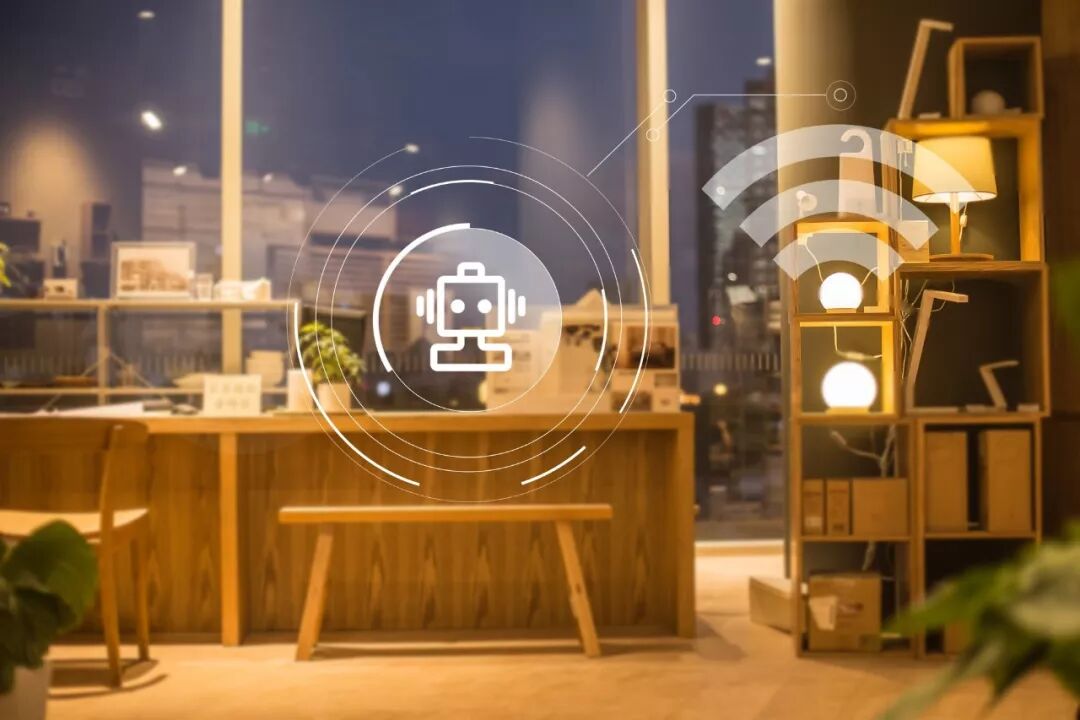
The current user impression of smart homes is largely about verbally interacting with a smart speaker and controlling various devices at home. However, even with the prefix “smart,” the concept of smart homes is still somewhat outdated.
As early as 1984, the first “smart building” that utilized the concept of integrated building equipment information was born in the United States; and Bill Gates, the founder of Microsoft, already had the first smart home by the end of the last century, which makes one sigh—being wealthy is great.
In China, the smart home industry has nearly a twenty-year history since its inception. Unlike the fierce competition in the IoT arena among internet companies in recent years, smart homes were initially the domain of traditional home appliance companies. To this day, companies like Haier, Midea, and Gree are still significant players heavily investing in smart homes.
No matter who the leader is, the basic logic of smart homes, which is “IoT + hardware,” has not changed. In other words, only when the IoT system and hardware are mutually compatible can the essence of intelligence be realized. Imagine when your Tmall Genie and the Xiaomi bedside lamp are unable to communicate, you might spend hundreds of dollars only to end up with a Bluetooth speaker and a simple lamp, leading to profound sadness.
In an effort to approach the essence of “smart,” traditional enterprises and internet companies are now striving to break through their respective barriers.
The New Journey of Old Players
As traditional players’ home appliance businesses mature, many brands are expanding into their own smart home service platforms due to the need for business diversification in the new wave of IoT. From the perspective of brand presence, Haier, Midea, and Gree are typical examples.
Public information shows that Haier built a cross-industry, cross-brand, and cross-platform smart living ecosystem in 2015 and officially launched the first smart living platform “U+ Smart Living” that highlights human-machine intelligent interaction. Later, by promoting smart appliances, developing smart chips, and launching apps, they formed a smart home model that integrates appliances, services, and platforms.
Haier’s 2018 semi-annual report indicated that to promote the scale of smart homes, the company released a “4+7+N” scenario-based solution, covering four major spaces: living room, kitchen, bedroom, and bathroom, involving seven major home experiences such as food, water usage, air, cleaning, security, and entertainment, and supporting personalized scene customization. Currently, Haier promotes a complete solution of “complete experience, complete design, complete sales, and complete service” to facilitate the implementation of smart home solutions for users.
Compared to Haier, Midea took action earlier in the same field. In 2014, Midea launched the “M-Smart” smart home strategy and attracted investment from Xiaomi. Both parties hoped to leverage the “Internet +” wave to create synergy along the industrial chain. In 2017, Midea proposed a “dual intelligence” strategy centered on “smart home + smart manufacturing,” aiming to empower its product chain with big data and AI, and proposed to eliminate unnecessary human-machine interaction to achieve the goal of “no interaction.”
Specifically, Midea’s smart home has released self-developed products such as smart gateways, smart locks, combustible gas detectors, smoke detectors, and smart panels, and invested in chip development, attempting to provide an overall smart home solution from chips to the cloud and then to the terminal. They later developed a third-party IoT platform called “Mizhi,” where other developers can sign contracts with Midea to access the M-Smart platform’s SDK package and related technical documents, and products developed by these developers can obtain M-Smart certification after testing.
When discussing the smart transformation of traditional home appliances, one cannot forget “Ms. Dong.” As early as 2012, Gree launched technology that allowed remote operation of air conditioning via mobile phones, which can be seen as a primary smart air conditioning product. In recent years, Gree has also launched smart products including air conditioners, refrigerators, washing machines, and smart home management systems.
However, Gree’s biggest obstacle in smart homes remains Dong Mingzhu’s obsession with Gree’s mobile phone. Dong Mingzhu has repeatedly mentioned her desire to use Gree’s mobile phone as the control entry for smart homes to boost its sales; however, the internet tier has made smart speakers the current trend for smart home entry, while Gree’s mobile phone has faced poor sales. Nevertheless, Ms. Dong still promoted Gree’s refrigerators, washing machines, and rice cookers at the shareholders’ meeting on January 16, 2019, stating that the combination of household appliances is preparing for the future of smart homes.
Although traditional home appliance companies may not have the youthful brand image of internet companies, on one hand, they have matured in products like refrigerators, air conditioners, and televisions, as well as in offline channels and supply chains; on the other hand, all of the above are publicly listed companies with strong financial resources and customer bases; for instance, Haier and Midea have collaborated with large real estate companies like Evergrande, Country Garden, and Vanke for smart community and smart home layouts, and have gradually leveraged internet e-commerce platforms like Tmall and JD.com.
With hardware accumulation and continuous investment, traditional players have at least firmly established a foothold in the smart home sector.
The Old Tricks of New Forces
Compared to the product barriers established by traditional home appliance companies, internet companies seem to have more say in system and platform construction. In the wave of new technologies, internet giants adept at creating concepts have been brought to the smart home table.
On one side are smart home platforms represented by JD Micro Link and Alibaba Smart. These platforms have a strong e-commerce gene, leveraging numerous partners accumulated on the platform to connect users with as many smart categories as possible. According to statistics, as early as 2017, the number of smart devices on Alibaba Smart and JD Micro Link platforms exceeded 300, while the number of Xiaomi smart hardware was less than 200 during the same period.
Taking JD as an example, public information shows that JD has built the world’s largest cross-brand, cross-category IoT platform, currently having over 300 partners including Samsung, Philips, Panasonic, AO Smith, and Gree, with over 1,000 types of connected devices covering 70 categories, generating nearly 20 million units shipped; and devices connected to JD’s Joylink protocol are now spread across the globe.
Alibaba and JD provide consumers with more choices by leveraging their inherent platform advantages, but they often collaborate with third parties on hardware, and their self-developed smart categories are noticeably insufficient. Although Alibaba has released several small smart products such as Tmall Genie, Tmall Magic Box, Tmall Router, and Tmall Magic Screen, the Tmall Genie speaker still occupies a large part of the market, and in the area of large smart appliances, they still choose to collaborate with brands like Midea and Haier.
On the other side is Xiaomi, representing the ecological chain IoT platform. According to a previous article by Qifeng Finance (ID: QFCJ2018) titled “Xiaomi Universe,” Xiaomi’s ecological chain layout has been detailed. Compared to Alibaba and JD, Xiaomi shows a certain degree of closure in its system, while its self-developed hardware is more advanced.
Currently, with over 100 companies in Xiaomi’s ecological chain layout, the “Xiaomi Department Store” has achieved full coverage of categories from smart wristbands to air purifiers in the consumer market, almost covering most of the living scenarios at home. Even though the manufacturers vary, Xiaomi generally presents a unified style of smart home system. As Xiaomi deepens its channels, supply chains, and brand, more brands will be integrated into the Xiaomi system.
In addition, Xiaomi’s “rival” Huawei is also making moves in the smart home space. As a counterpart to Xiaomi’s Mijia, Huawei has launched Huawei Smart Selection, currently with a relatively limited number of products, but there are already thousands of smart devices connected to Huawei IoT. Unlike Xiaomi’s ecological chain strategy, Huawei seems to be focused on being a connecting medium; given its technological advantages, Huawei’s ecosystem includes IoT chips, operating systems, AI, and Huawei Cloud as foundational infrastructure services to be opened to partners. From this perspective, Huawei seems to be closer to the paths of Alibaba and JD.
In fact, for internet giants, the smart home platforms they build almost always include both their own smart home systems and physical product sales, with the only difference being the focus and extent. Like traditional players, leading internet forces also possess substantial financial and related resources, extending into the hardware field while consolidating their own moats. They attract more collaborators to jointly expand the ecosystem by opening up smart home systems.
Integration and Fragmentation
In summary, home appliance manufacturers looking to catch the smart home wave need to appropriately rely on internet giants for channels and technology; if their brand influence is limited, they may even become “OEM factories” for internet giants; internet companies, on the other hand, are constrained by the basic products and weak offline sales channels, constantly gravitating towards traditional manufacturers. In terms of business cooperation, the intersection of multiple brands is increasing, and the mutual integration of various products and platforms presents a dazzling array of blurred boundaries.
However, while appearing to be on good terms, both sides are also working behind the scenes to fill their shortcomings as much as possible. Midea’s openness resembles the approach of internet companies, while Xiaomi’s ecological chain strategy reflects its ambition in terms of categories. The systems and categories of each platform are generally similar, and the overall models and marketing tactics are also quite alike.
It is not difficult to see that despite the various tactics of new and old players, in the overall landscape of smart homes in China, there are essentially only two paths—platform provision or product manufacturing. For themselves, both sides, each holding half an advantage, are trying to achieve exploration and integration towards the other side through self-construction and cooperation, but they are gradually converging on this path. However, for consumers, given the current chaotic integration situation, they still face fragmented platforms and products.
Moreover, even though the smart home battlefield is already quite noisy, the market space for smart homes can still be considered a blue ocean. According to data estimates, the global smart home market size reached $162.2 billion in 2017 and is expected to grow at a compound annual growth rate of 11% to $277 billion by 2022, with the global smart home market size expected to reach 500 billion yuan by 2021. Meanwhile, the current penetration rate of the smart home market in China is only 5%, and among the sold smart speakers, less than 10% are connected to smart devices such as lights, switches, and TVs.
In the presence of strong domestic companies, there are still small and medium-sized IoT platforms like Zhiyun, Tuya Smart, and Yunzhiyi sharing the market; however, the smart home industry faces issues such as instability, lack of smooth operation, insecurity, and non-standardization, leading to a market that is eager for more quality and comprehensive solutions.
Therefore, for any manufacturer, the long-distance test of IoT smart homes is not just about their capabilities in one aspect; aside from continuous adjustments and sustained efforts, establishing unique competitive barriers and enhancing user experience is the long-term strategy.
Source: Qifeng Finance

KnowandGainWisdom|WithWisdomObserveSituations
WithWisdomReadNewPolitics|WithTextReadAllUnderTheHeavens