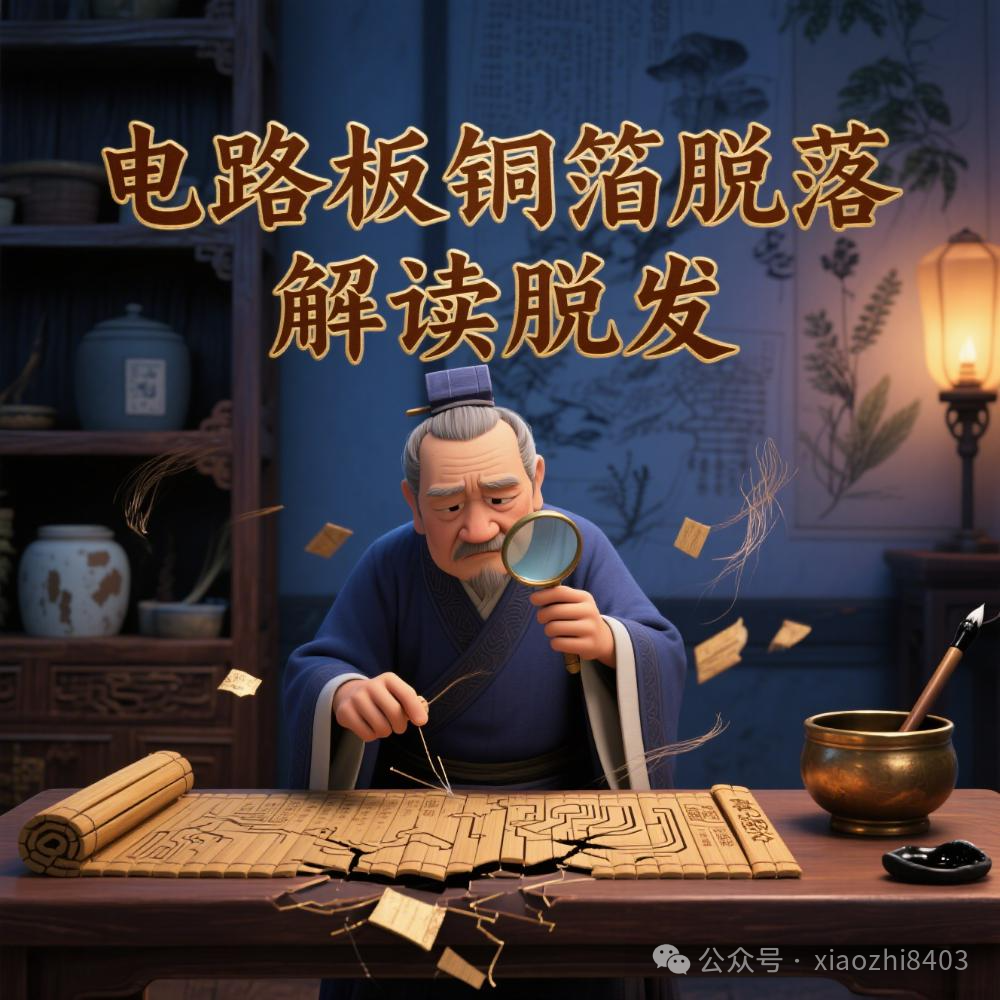
Imagine a circuit board where the copper traces, once strong and shiny with clear paths, suddenly develop cracks, voids, or the copper foil completely detaches. This is akin to experiencing “broken links” or “damage” in our bodies or lives, affecting normal operation. The copper foil plays a crucial role in transmitting current and connecting electronic components on the circuit board. Once it detaches, the entire circuit can short-circuit, leak current, or even completely fail, severely impacting the device’s functionality. This is similar to hair loss in humans, which serves as a signal indicating that there may be underlying issues that need attention.
🗺️ Copper Foil Shedding Metaphor: Like a broken wire in a circuit, it cannot conduct electricity
When you notice your hair becoming sparse and falling out more frequently, it resembles the gradual shedding of copper foil on a circuit board, leading to circuit inefficiencies and signal interruptions. This is actually telling you: “There may be some issues with your body, possibly due to weakness, hormonal imbalances, malnutrition, or even stress.”
🔍 Why Does Copper Foil Shed?
🔧 “Nutritional Deficiency” – Lack of iron, zinc, vitamins, etc.
Just as a circuit board lacks good conductive materials, the body lacking nutrients such as iron, zinc, and B vitamins can lead to malnourished hair follicles, resulting in thinning and hair loss.
🌫️ “Hormonal Imbalance” – Changes in hormones
For example, postpartum or menopausal changes in women; changes in androgen levels in men can affect hair growth. Hormonal imbalances are like unstable voltage in a circuit, preventing normal current conduction.
🔥 “High Stress and Poor Sleep” – Poor mental state
Prolonged anxiety and high stress can release a large amount of stress hormones, affecting blood supply to hair follicles and cellular metabolism, leading to slower hair growth or even loss. This is akin to a circuit being shaken or interfered with, causing signal interruptions.
💊 “Diseases or Medication Effects” – Thyroid issues, autoimmune conditions, etc.
Thyroid dysfunction, skin diseases, or immune system disorders can lead to hair follicle degeneration, resulting in hair loss. This is like a circuit board that has been corroded or damaged, unable to function normally.
🛠️ How to Address Copper Foil Shedding (Hair Loss)?
Of course, here are specific suggestions on how to address copper foil shedding (hair loss), presented clearly in a table format:
| Method Category | Specific Measures | Effects | Notes |
|---|---|---|---|
| Nutritional Supplementation | Increase intake of iron, zinc, B vitamins (especially biotin), and vitamin D | Promotes follicle nutrition, improves growth environment | Consume a diet rich in trace elements and vitamins to support healthy hair growth |
| Improving Lifestyle Habits | Regular sleep schedule, reduce stress, ensure adequate sleep | Promotes body repair, reduces stress impact | Maintain mental and physical relaxation, avoid excessive fatigue and anxiety, which helps hormone balance |
| Scalp Care | Scalp massage, avoid frequent dyeing and perming, use gentle shampoo products | Promotes blood circulation, protects hair follicles | Massage enhances blood supply, choose gentle care products to reduce scalp irritation |
| Increased Exercise | Moderate exercise such as walking, yoga, tai chi | Enhances blood circulation, strengthens physique | Improves overall body condition through exercise, promoting nutrient delivery to the scalp |
| Traditional Chinese Medicine (TCM) Care | Use herbs like He Shou Wu, black sesame, goji berries, and angelica to condition the body | Replenishes kidney and nourishes blood, improves hair growth | From a TCM perspective, it conditions the body to improve hair loss caused by blood deficiency and kidney deficiency |
| Medication Treatment (Western Medicine) | Use minoxidil, finasteride, etc. | Promotes hair regrowth, slows hair loss | Medically validated drugs that help improve hair growth conditions, must be used under physician guidance |
| Timely Medical Consultation | Persistent hair loss accompanied by scalp discomfort or worsening, undergo a physical examination | Rule out potential diseases, obtain professional guidance | Seek medical attention promptly for abnormalities, rule out potential causes like thyroid disease or immune issues |
If needed, I can also help you create a more intuitive summary chart!
⚠️ Warning!
If you notice a sudden increase in hair loss accompanied by severe itching, redness, or swelling of the scalp, or if the area of hair loss gradually expands, seek medical examination promptly. Chronic hair loss may indicate internal body issues that require attention.
🎯 Health Tips to Help Improve Hair Loss Issues:
- Maintain a cheerful mood, reduce stressExcessive stress can affect hormone balance and hinder hair growth. Relaxation methods such as walking, yoga, and meditation can help.
- Ensure adequate sleepGuarantee 7-8 hours of sleep daily to support normal hormone secretion, promote body repair, and hair growth.
- Balanced diet, nutrient supplementationEat foods rich in protein, iron, and zinc, such as legumes, seafood, animal liver, and nuts, while minimizing spicy and fried foods.
- Moderate exerciseExercise can promote blood circulation, speeding up nutrient delivery to the scalp, helping hair to thrive again.
- Pay attention to scalp cleanliness and careAvoid washing hair with water that is too hot, refrain from frequent dyeing and perming to prevent scalp damage. Choose gentle shampoos to maintain scalp health.
About TCM Conditioning:
TCM believes that hair loss is often related to “kidney deficiency,” “blood deficiency,” and “dampness.” Treatment plans that nourish kidney yin, enrich blood, and promote hair growth can include herbs like He Shou Wu, black sesame, goji berries, and angelica. Acupuncture can also help to unblock meridians and enhance blood supply to the head. TCM conditioning focuses on fundamentally improving the body’s constitution and enhancing overall nourishment capacity, with some scientific basis supporting its effectiveness in improving hair loss (individual differences exist, and it is recommended to take under the guidance of a professional TCM practitioner).
About Western Medicine Treatment:
Using minoxidil can promote vasodilation, increase blood supply, and aid hair regrowth; finasteride regulates androgen levels and reduces follicle shrinkage. These medications have been clinically validated and have certain efficacy, but must be used under physician guidance to avoid side effects.
Combining Lifestyle and Health:
In addition to medication treatment, establishing good lifestyle habits, balanced nutrition, and psychological adjustment are key to maintaining hair health. Scientific and reasonable conditioning can significantly improve hair loss issues, restoring confidence and mental state.
Conclusion:
Copper foil shedding (hair loss) is not an isolated issue; it reflects the internal state of the body. Only through scientific conditioning, focusing on nutrition, lifestyle habits, and mental health, combined with reasonable treatments from both TCM and Western medicine, can we help repair the “broken copper wires” and allow our hair to regain its luster, leading to a healthier body and a more vibrant spirit.
#HairLoss #BodyConditioning #NutritionalSupplementation #TCMHealth #ScientificTreatment #ImprovingHair #HealthyLiving #StressManagement #ChronicDiseaseWarning