Python was invented by Dutchman Guido van Rossum. During Christmas in 1989, he started writing a compiler for the Python language to pass the time. In 1991, the first Python interpreter was born, implemented in C language, and included core data types such as lists and dictionaries. In 1994, Python 1.0 was released. In 2000, Python 2.0 introduced new features such as garbage collection. In 2008, Python 3.0 was released, making incompatible improvements in syntax and other areas.
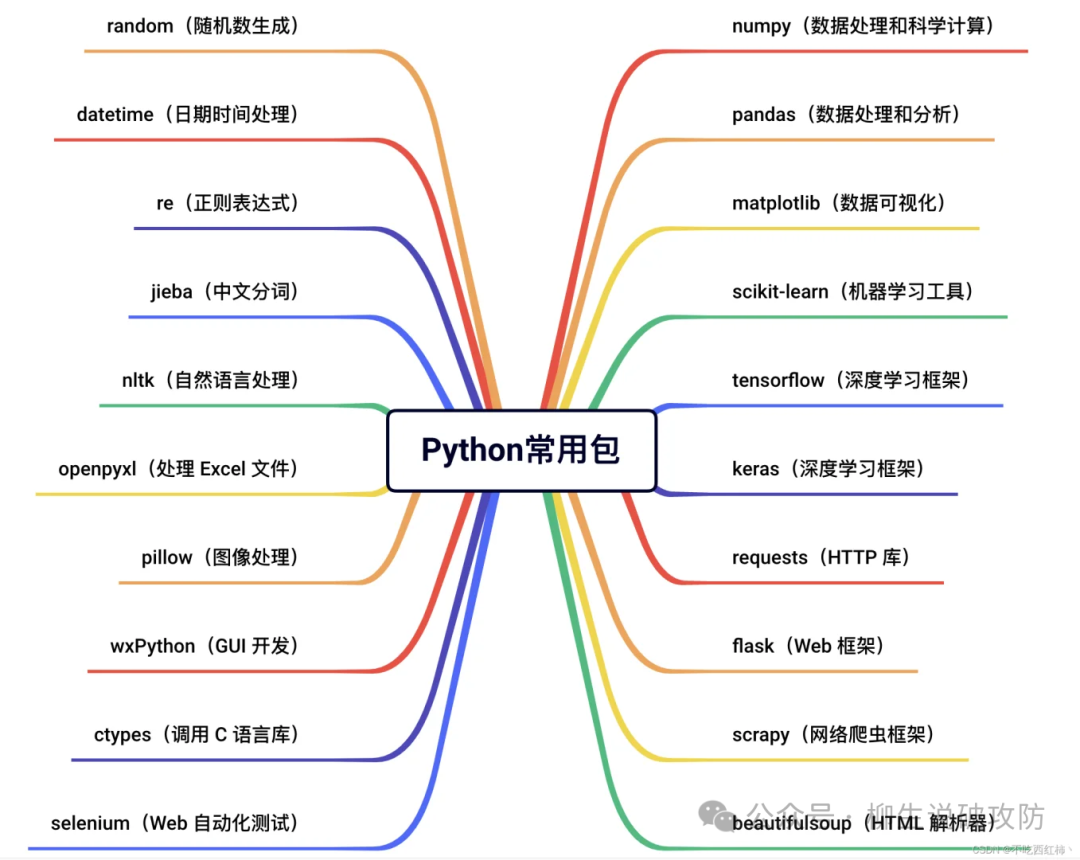
Python is a high-level, general-purpose, interpreted programming language with the following characteristics: Advantages: simple and easy-to-understand syntax; strong code readability; cross-platform operation; rich libraries and frameworks, such as NumPy for scientific computing and Django for web development. Application scenarios: web development, data science (data analysis, machine learning, deep learning), automation scripts, game development, web scraping, etc. If you want to learn Python, you can install the Python interpreter and a suitable IDE (such as PyCharm or VS Code). Basic environment setup: download and install the Python interpreter, such as Python 3.x, and use pip to manage packages. Basic syntax: master variables, data types (numbers, strings, lists, tuples, dictionaries, etc.), operators, and expressions. Control structures: learn if statements, for loops, and while loops. Functions: understand function definitions, parameter passing, return values, and be able to write simple functions. Modules and packages: know how to import and use modules, such as math and random.
Advanced improvement in object-oriented programming: understand the concepts of classes, objects, inheritance, and polymorphism, and be able to create and use custom classes. File operations: master file read and write operations, such as the open() function. Exception handling: learn to use try-except statements to catch and handle exceptions. Data processing: use Pandas for data cleaning and analysis, and NumPy for numerical calculations. Visualization: use Matplotlib and Seaborn to draw charts. Advanced applications in database programming: learn to use SQLite and MySQL for data storage and querying. Web development: understand the Flask or Django framework to build web applications. Web scraping: use Requests and BeautifulSoup libraries to scrape web data. Machine learning: master the Scikit-learn library for model training, and understand TensorFlow or PyTorch for deep learning. Testing and debugging: learn to use tools like unittest for code testing and debugging.