In the aviation field, whenever news of a new fighter jet emerges, it always sparks widespread attention and speculation. When Boeing announced that it would manufacture the U.S. Air Force’s new manned sixth-generation stealth fighter, the F-47, the public was filled with curiosity about the final appearance of the F-47. Due to the extremely limited images of the F-47 currently available, there are many questions about it, but comparing the F-47 with earlier prototypes and concept aircraft has become an important way to explore its design secrets. Among the many early models, the tail-less X-36 prototype has attracted considerable attention, as it likely played a key role in the development of the F-47.
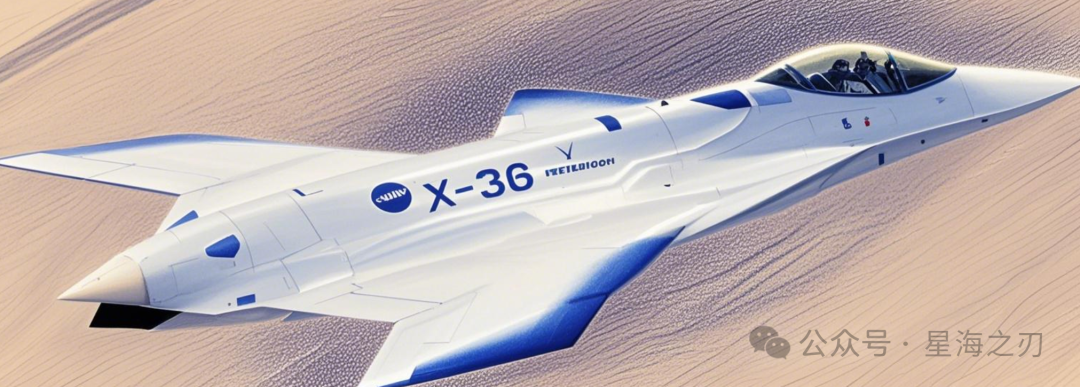
The X-36 prototype was jointly developed by McDonnell Douglas (now part of Boeing) and NASA in the mid-1990s. It is an unmanned prototype that simulates the theoretical layout of an advanced fighter jet at a scale of 28%. The design of the X-36 is highly innovative, discarding the traditional tail design in favor of a canard configuration, combined with split ailerons similar to those on a lambda wing, and advanced thrust vectoring engine nozzles for directional control. However, this unique design also brought some challenges, as the X-36 exhibited instability in pitch and yaw axes, necessitating the use of an advanced digital fly-by-wire control system to ensure stability during flight.
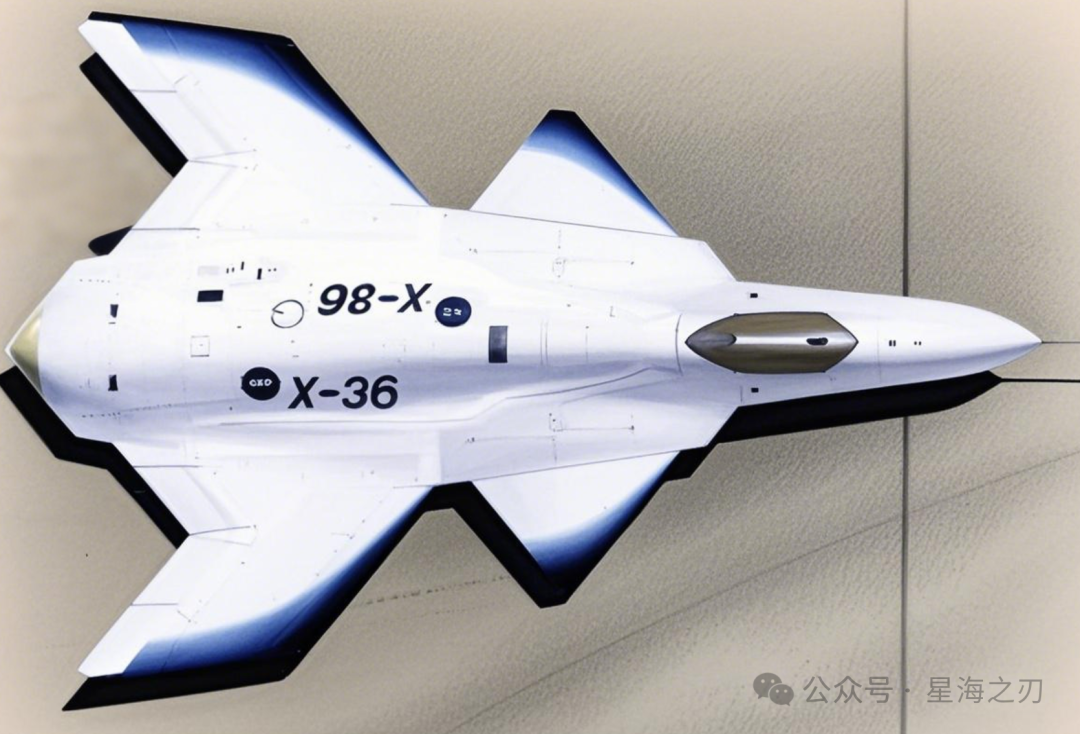
From the basic parameters of the X-36, it weighs approximately 1,250 pounds when fully fueled, with a fuselage length of 19 feet, a height of 3 feet, and a wingspan just over 10 feet. Its power comes from a Williams International F112 turbofan engine, capable of producing about 700 pounds of thrust. Although two X-36 prototypes were built, only one actually underwent flight testing. During the flight, the pilot at the ground station remotely controlled the aircraft using a camera mounted on the nose and monitored the flight status through a standard fighter HUD and a moving map displaying the aircraft’s position within the test range.

From May to November 1997, the X-36 conducted 31 test flights at NASA’s Dryden (now renamed Armstrong) Flight Research Center. Over a total flight time of 15 hours and 38 minutes, the X-36 performed excellently, with NASA reporting that it “met or exceeded all project objectives.” During the test flights, researchers evaluated the X-36’s agility in various flight states, including high roll rates, low-speed high angles of attack, and high-speed low angles of attack. The results showed that the X-36 “was very stable and easy to control at both ends of the speed envelope.” At the end of 1998, the Air Force Research Laboratory (AFRL) contracted Boeing to conduct two additional test flights with the X-36 equipped with reconfigurable control software (RESTORE) to verify the compensatory capabilities of machine learning software in the event of damage or failure in flight control surfaces such as flaps, ailerons, and rudders.
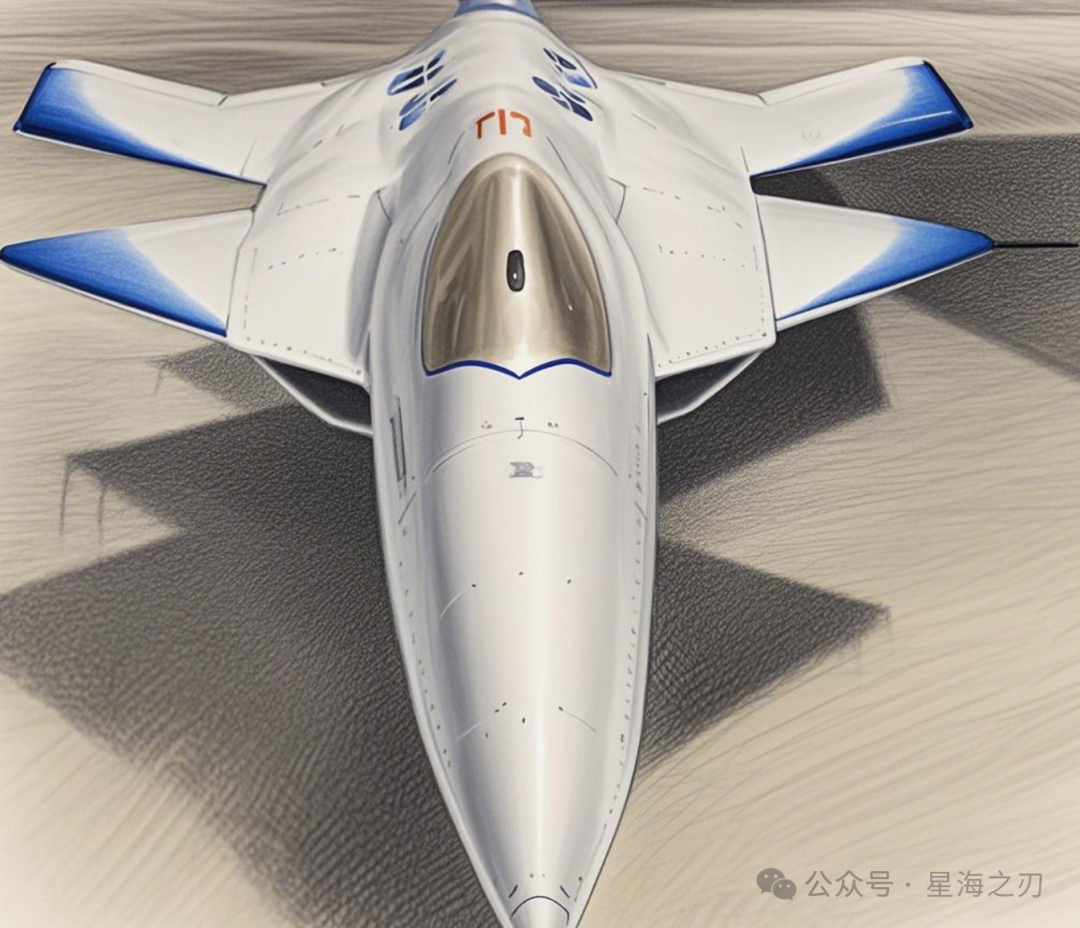
The significance of the X-36 lies not only in its flight test results but also in its validation of the tail-less fighter design concept, which is likely to be applied to the F-47. However, it cannot be definitively confirmed until the final design of the F-47 is revealed. Visually, there are several similarities between the X-36 and the F-47, the most obvious being the canard configuration. However, it is important to note that it is still uncertain whether the F-47 will ultimately adopt canards. While canards are not the best choice for low observability, their application has precedent in advanced fighter designs, including stealth fighters. The canard configuration can be seen in Boeing’s proposed next-generation air dominance (NGAD) concept aircraft, the X-36, and even in the exploratory concept designs for the F-22 Raptor’s predecessor, the Advanced Tactical Fighter (ATF).
The cockpit of the F-47 also shares similarities with that of the X-36. Although the X-36 is an unmanned prototype, it was designed with a cockpit-like shape to simulate the flight characteristics of a manned fighter. At the end of the X-36 test program, the test pilot at the ground station even drew a self-portrait on the cockpit with a marker. The F-47 features a relatively large bubble canopy that provides good visibility for the pilot. Currently, it is still undetermined whether the F-47 will be single-seat or dual-seat, and the existing official renderings do not allow for a clear judgment of the overall length of the cockpit. Considering that the F-47 may serve as a drone controller within the broader NGAD system, a tandem dual-seat design is a possibility.

There are also similarities in the nose sections of both aircraft. The noses of the X-36 and F-47 are relatively wide, with the F-47’s nose being particularly broad and shovel-shaped. This design is likely intended to accommodate a large radar array. Although the renderings of the F-47 seen so far may be misleading, and significant changes to its design may occur before the final product is revealed, these similarities still provide important clues for studying the design of the F-47.
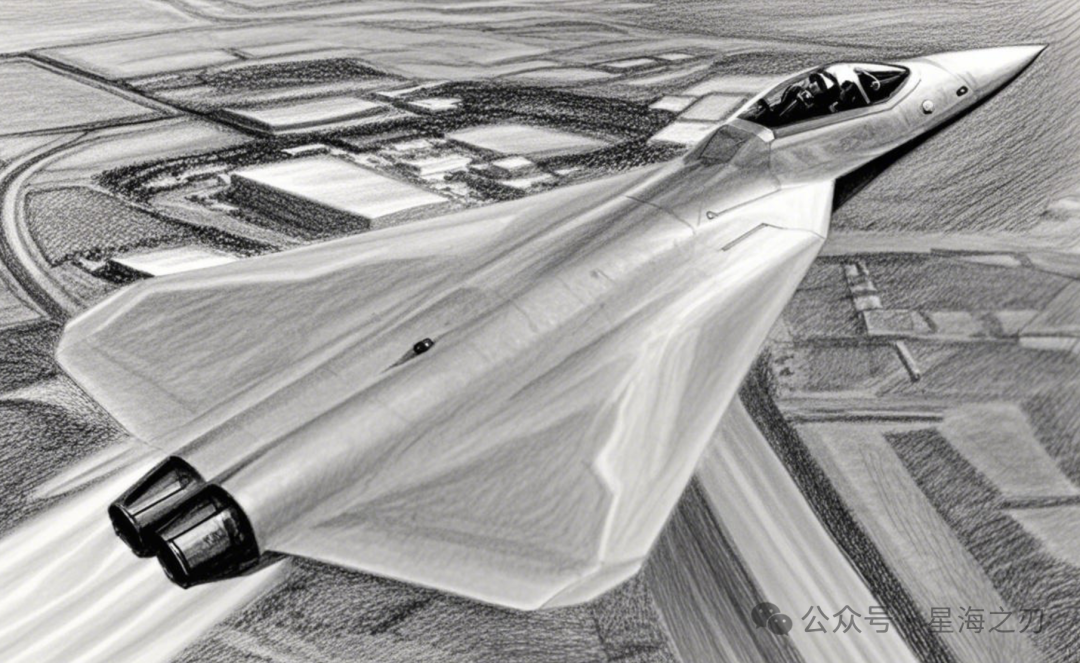
The X-36 is not the only tail-less prototype or concept aircraft that has influenced the design of the F-47. The Lockheed Skunk Works’ X-44 Manta project is also an important tail-less fighter research project. Although there is currently no concrete information indicating that this project produced physical hardware, it is understood that it aimed to study the design of tail-less manned aircraft. This conceptual aircraft planned to use thrust vectoring as its primary flight control system, aiming to achieve a perfect combination of speed, fuel efficiency, and maneuverability within a single design, while also exploring simpler and more cost-effective aircraft structural manufacturing methods. Although little is known about the results of this project, it is easy to imagine that if it had not been canceled, it could have had a significant impact on the design of the F-47 and other NGAD manned fighters.

The McDonnell Douglas/General Dynamics A-12 Avenger II stealth attack aircraft, while not a fighter with extreme performance, is also a noteworthy tail-less aircraft from the 1990s. It features a triangular flying wing platform design, which is representative in the field of tail-less aircraft design.
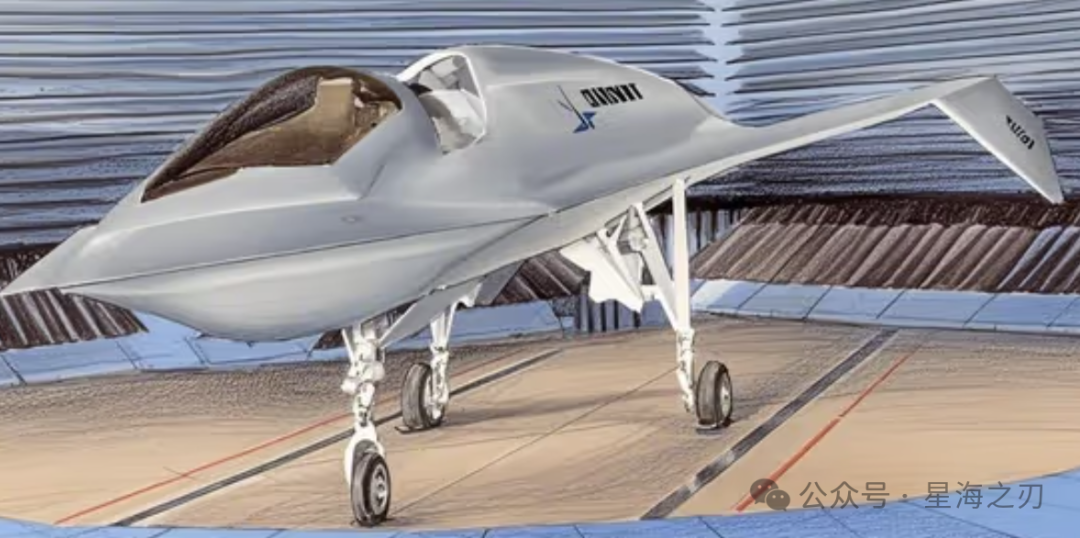
The Boeing “Bird of Prey” technology demonstrator should not be overlooked either. It largely adopted a tail-less design, although it was equipped with downward-canted wingtips and occasionally used ventral vertical stabilizers. From the renderings of the F-47, it is evident that its wings have a noticeable upward cant, a feature very similar to the “Bird of Prey.” The “Bird of Prey” was secretly flight-tested at Area 51 in the 1990s, accumulating valuable experience in advanced stealth technology, new manufacturing methods, and visual stealth across multiple technical fields. It wasn’t until 2002 that the “Bird of Prey” was disclosed to the public, and its relevance to the NGAD manned fighter project may become more apparent in the future.
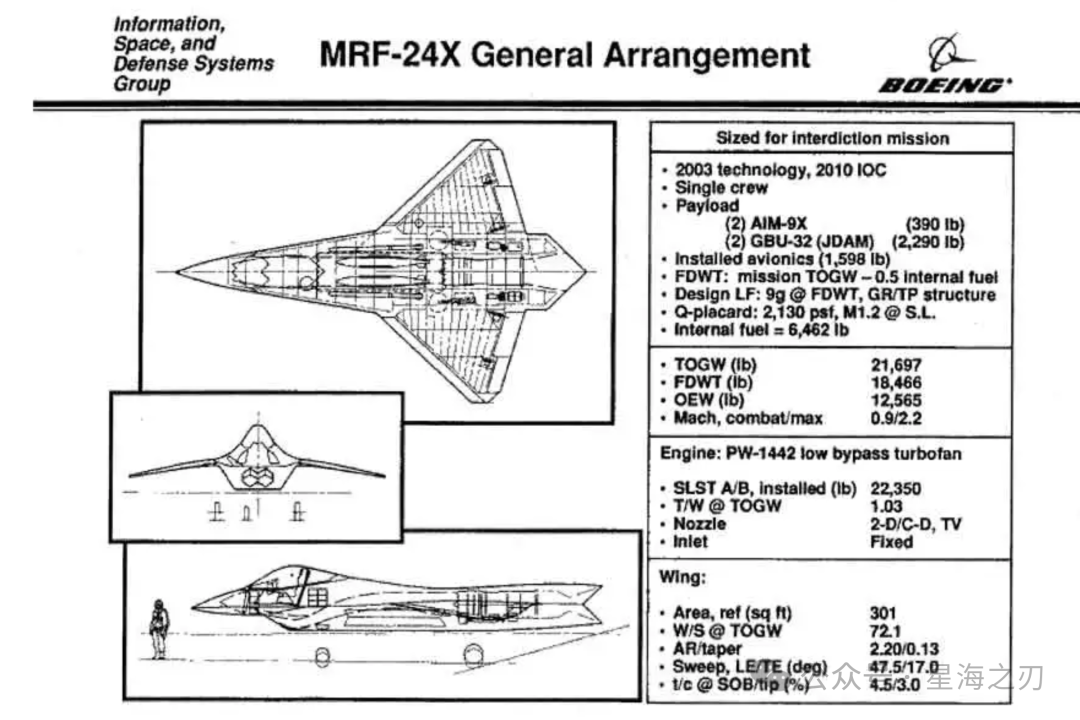
Additionally, there are rumors about the YF-24. Although the existence of this aircraft has never been confirmed, there are speculations that it was a tail-less demonstrator built by Boeing for future fighter aircraft. An official biography of a U.S. Air Force pilot once mentioned that he had flown the YF-24, but this content was later deleted. From Boeing’s MRF-24X design study, it showcased a platform similar to a tail-less fighter, equipped with a single engine and X-32 style wings with a noticeable downward cant. Like the X-36, it may also have been equipped with advanced thrust vectoring engine nozzles to assist with directional control. However, it is still uncertain whether the YF-24 actually exists and what its specific appearance might be.
Looking back at the 1990s, tail-less fighter design has become an important direction for future technological development. At Area 51, it is likely that numerous secret demonstrators were tested, laying the groundwork for the later NGAD manned fighter project. At the same time, the Navy’s F/A-XX NGAD program may have developed its own demonstrator. While it is currently impossible to determine how the results of these early test projects will be specifically applied to the F-47, it is certain that these projects have influenced the design of the F-47. At least over the past thirty years, the experiences and technologies accumulated from these test projects are likely to be applied to the F-47, which may be the Pentagon’s first true tail-less fighter. As time goes on, as more information about the F-47 and related X-plane projects is disclosed, the connections between them will become clearer and will provide more insights for the future development of aviation technology.
For more exciting content, see: 2.8 Mach Grim Reaper Scythe! Russian MiG-31BM with R-37M missile crushes the Ukrainian sky, is the Patriot the last hope? The B-52 bomber carrying nuclear bombs caught fire, nearly causing a nuclear disaster worse than the Soviet Chernobyl. There is no ugliest, only uglier: a roundup of the UK’s most visually unappealing aircraft. “Vertical takeoff, jet flight” – the continuously evolving concept of American high-speed vertical takeoff aircraft (exciting content). The legendary Nazi German cruiser Prinz Eugen and its more bizarre torpedo launchers. The little-known Lapeer version of the FB-111 “strategic bomber,” which nearly replaced the B-1, the genuine strategic bomber.