


AI Agent Business Model
Structural Breakthrough
Remix Functionality
Addresses Cost Pain Points
Reconstructs Ecological Collaboration through Collective Intelligence
Drives the Evolution from Tools to Value Co-Creation Networks


1. Current Cost Dilemma and Industry Pain Points of AI Agent Services
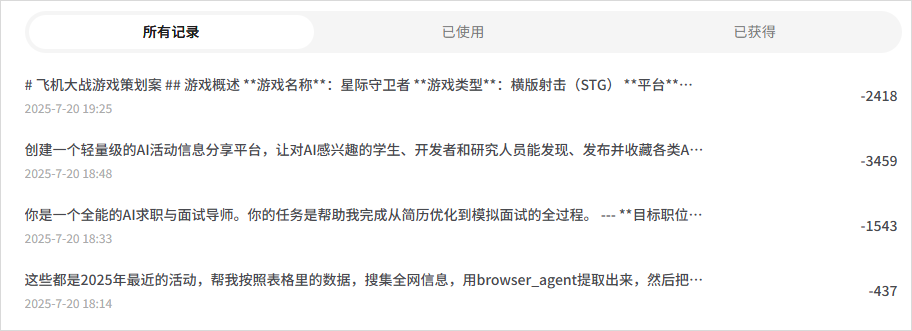
In the current rapid iteration of artificial intelligence technology, while the agent services based on large models demonstrate strong application potential, their business models still face structural contradictions. Taking the mainstream token-based billing model as an example, each user input, each model inference step, and each tool invocation incurs costs, forming a rigid cost structure of “process payment.” This model forces users to bear high trial-and-error costs before obtaining definitive results. According to my tests, using the MiniMax Agent for web development can incur costs of over $250 per task, regardless of whether the results meet expectations.
This cost transfer mechanism essentially reflects the phased characteristics of industry development. On one hand, the inference costs of large models remain high, with a single invocation of a model with hundreds of billions of parameters costing several dollars; on the other hand, the success rate of agent tasks has not yet reached a commercially stable level, making it difficult for service providers to independently bear the risk of failure. In this context, users are forced to become the ultimate bearers of risk, creating an absurd situation akin to “chefs charging for chopping.”

2. Remix Functionality: Paradigm Innovation in the AI Agent Ecosystem
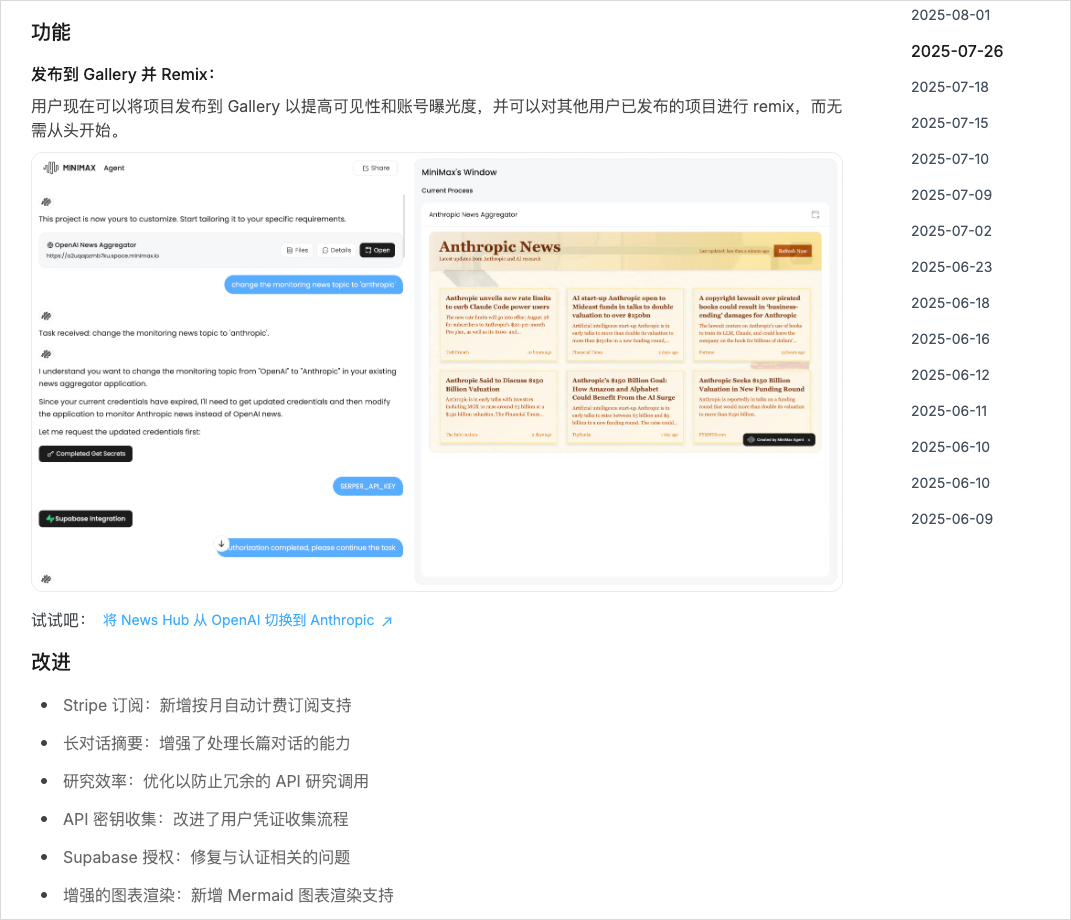
The recently launched “Publish to Gallery & Remix” feature of MiniMax Agent provides an innovative path to break this dilemma. This feature allows users to publish successful projects to a public portfolio (Gallery), where other users can obtain remix rights by paying 100 points to create secondary works based on the original project. This mechanism achieves a triple value breakthrough:
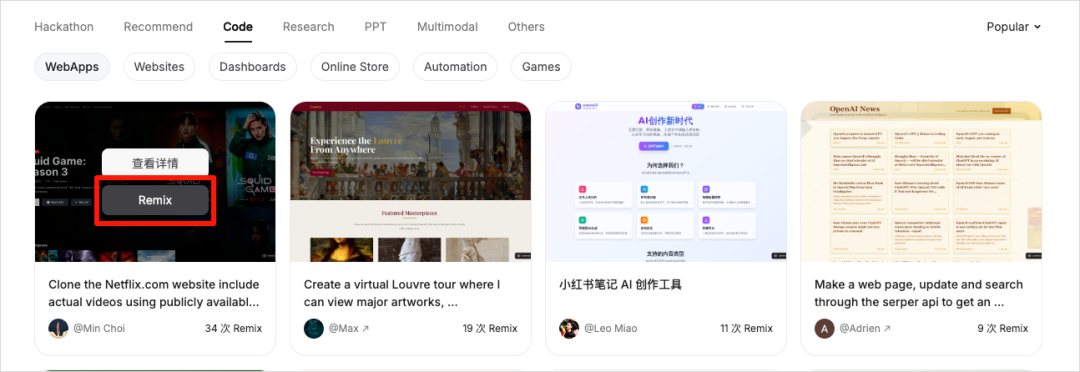
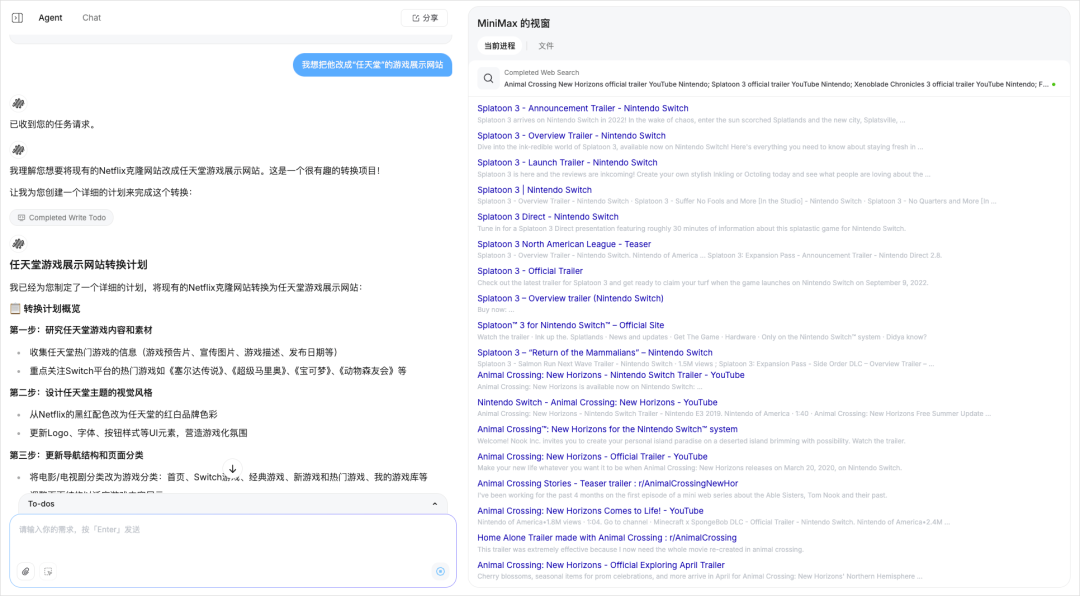
Cost Leverage Effect: By reusing verified successful frameworks, users can reduce task costs by over 70%. For example, in web development, building from scratch may consume thousands of points, while secondary creation based on Remix can complete core functionality development for only 500-600 points. This cost optimization stems from the collective sharing of the trial-and-error process, transforming individual trial-and-error into an iteratable collective intelligence accumulation.

Wisdom Flywheel Effect: The structured knowledge of successful projects can be transferred across domains through the Remix mechanism. For instance, an A-share analysis framework can be quickly adapted to the US stock market by modifying data source parameters, without the need to rebuild a complete analysis system. This knowledge reuse model is highly similar to GitHub’s Fork mechanism, bringing the open-source collaboration paradigm from software development into the AI application ecosystem.

Productivity Fission Effect: Each user is both a consumer and a producer, and their creative results are quantified through a trading system. When user A’s project is remixed by user B, A can receive a reward of 100 points, forming a positive cycle of “creation – sharing – profit.” This incentive mechanism promotes the Agent ecosystem’s transition from tool usage to value creation.
3. Deep Logic of Ecological Reconstruction and Industry Insights
The essence of the Remix functionality is to build a new collaborative network of “AI as a Service” (AaaS), whose underlying logic closely aligns with the evolutionary trajectory of the open-source movement. Just as GitHub restructured the software development paradigm through a code hosting platform, MiniMax is upgrading the Agent service from the tool level to the ecological level through the Remix mechanism:

Decentralization of Creative Power: Ordinary users can participate in AI application development without mastering complex technologies, similar to how the Warcraft 3 map editor gave rise to phenomenal works like Dota. This “democratization of innovation” breaks the technological monopoly and promotes the penetration of AI applications from professional fields to the mass market.
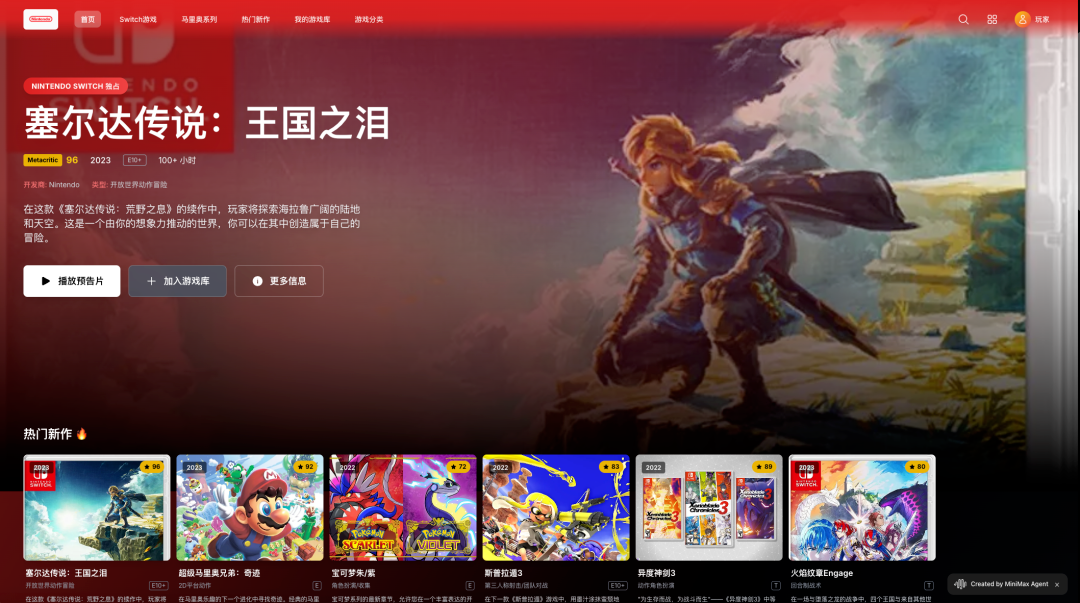
Value Distribution Innovation: Under the traditional token-based billing model, service providers dominate value distribution; however, the Remix mechanism, through a point trading system, allows users to directly participate in value distribution, forming a symbiotic relationship between “platform – user.” This model has been validated in fields such as AI drawing and video generation, becoming a standard feature of mainstream platforms.
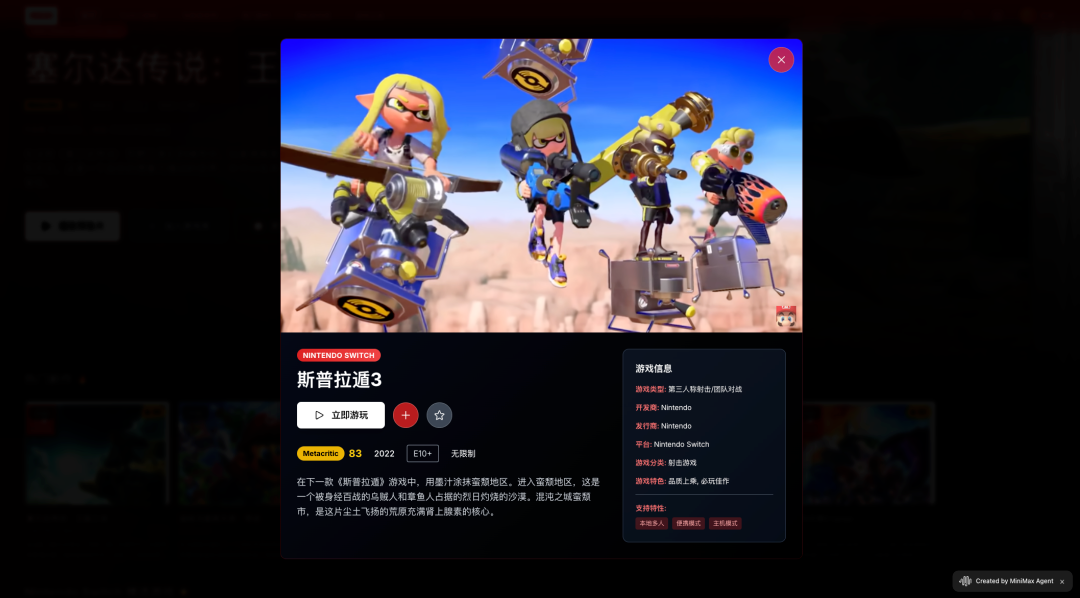
Risk-Sharing Mechanism: By distributing the costs of failure across the ecological network, the risk-reward structure for service providers and users is optimized. When the project success rate exceeds 80%, service providers can cover fixed costs through scaled transactions, while users reduce individual risks by reusing successful cases.
4. Existing Challenges and Optimization Paths
Despite the significant innovative value demonstrated by the Remix mechanism, there is still room for improvement in product realization:
Interaction Experience Optimization: Currently, the project sharing path is missing, and users cannot invite others to participate in Remix, limiting the efficiency of quality content dissemination. It is recommended to refer to GitHub’s repository sharing mechanism, adding features such as generating exclusive links and setting access permissions.
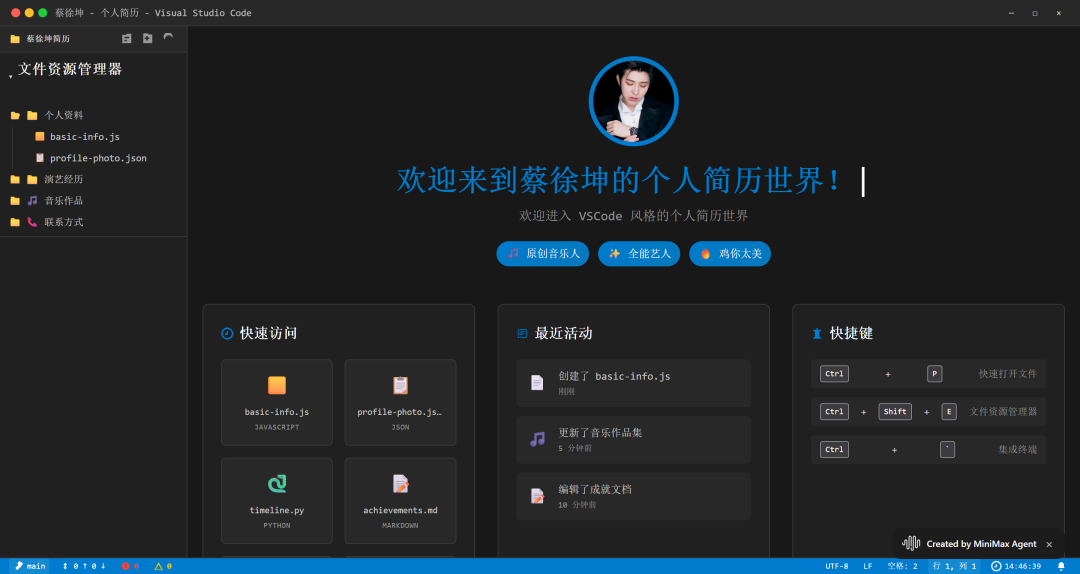
Data Asset Rights Confirmation: A comprehensive intellectual property protection system needs to be established to clarify the standards for recognizing the original contribution of Remix works. The copyright declaration mechanism in open-source agreements can be referenced to automatically generate intellectual property statements upon project release.
Exploration of Commercialization Paths: Currently, the point system has not been integrated with real currency, limiting the economic circulation efficiency of the ecosystem. It is recommended to introduce a “points – fiat currency” exchange channel while exploring value-added models for enterprise-level services, such as providing exclusive technical support and data compliance audits as paid services.

5. Future Outlook: Evolution from Tools to Ecosystems
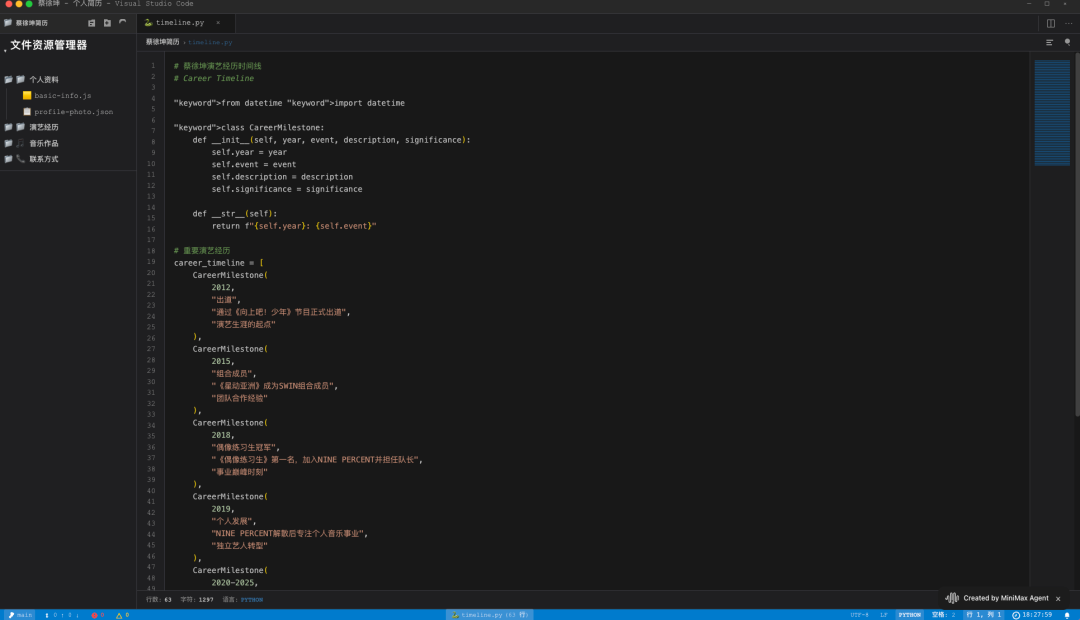
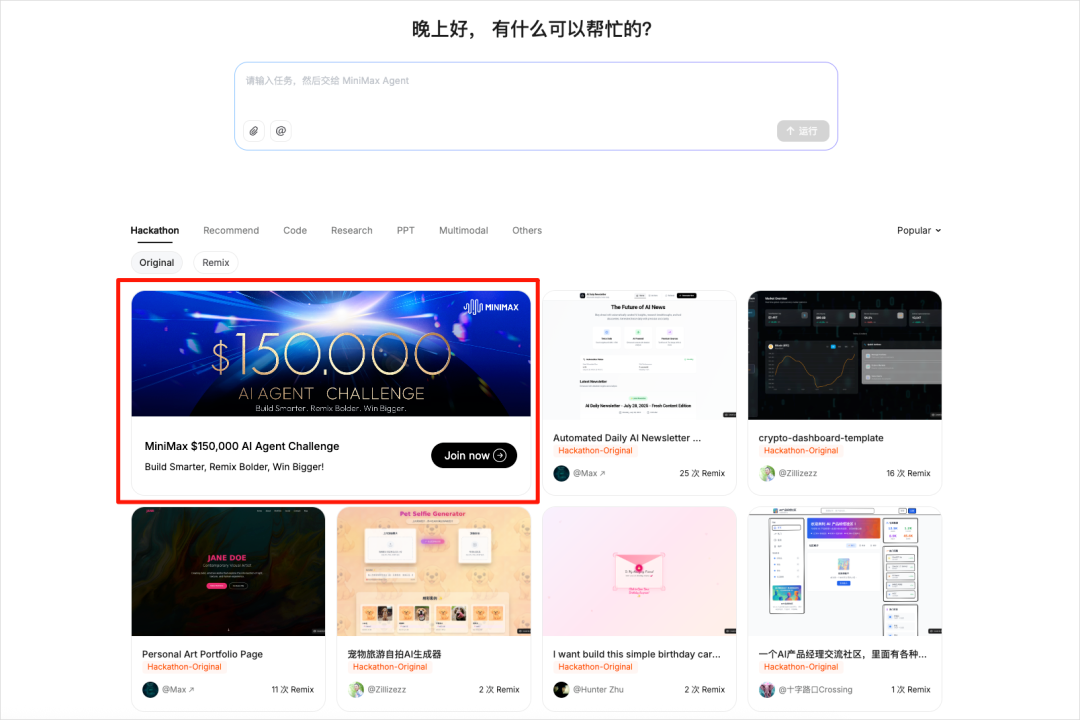
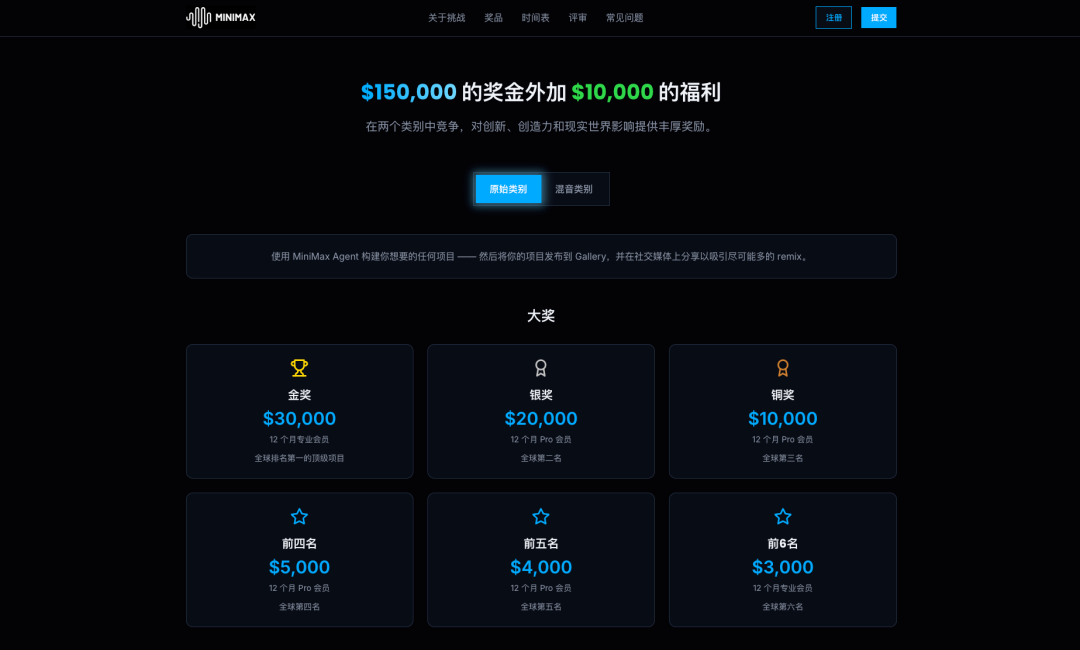
Recently, MiniMax held a $150,000 prize hackathon, with its official website generated by the Agent itself, a practice that confirms technological confidence. As the Remix mechanism is applied more deeply, the AI Agent ecosystem will present three major development trends:
Vertical Field Standardization: In specialized fields such as finance and healthcare, a library of industry solutions based on Remix will gradually form, lowering the threshold for enterprise digital transformation.
Rise of the Creator Economy: Users with the ability to produce high-quality content will form a professional group, obtaining continuous income through project transactions, giving rise to a new form of digital economy.

Cross-Modal Fusion Innovation: The development of multi-modal agents will promote the deep integration of different forms of creative results such as text, images, and videos, creating a more immersive interactive experience.
Just as GitHub restructured the software development industry, the Remix functionality is reshaping the production relationships of AI applications. When every user can innovate on the shoulders of giants, and when the flywheel of collective intelligence begins to accelerate, we may be witnessing the “Cambrian Explosion” of the AI era. This paradigm shift not only concerns technological progress but also signifies another major leap in human collaboration models.

END