1. Introduction
1.1 Research Background and Significance
Social norms are a crucial foundation for the stable operation of human society, encompassing various levels such as laws, morals, and customs. The process of these norms spreading and evolving within groups has long been a core topic in sociology, anthropology, and cultural studies. In recent years, with the development of artificial intelligence technologies, particularly the widespread application of low-rank adaptation (LoRA) technology in model fine-tuning, new perspectives and methods have emerged for studying the evolution of social norms. This study hypothesizes that the diffusion process of legal-moral systems can be analogized to low-rank fine-tuning (Δ≈rank-4) of a base human model, with its learning rate modulated by network topology. The proposal of this hypothesis aims to reveal the dynamic evolution mechanisms of social norms within groups through interdisciplinary approaches, providing a new theoretical framework for understanding cultural change.

The evolution of social norms is a complex dynamic process influenced by various factors, including social structure, cultural background, and individual behavior. Traditional research methods primarily rely on historical literature analysis, field surveys, and statistical analysis, which, while revealing macro-evolutionary trends of social norms, have certain limitations in understanding the dynamic mechanisms at the micro level. The introduction of low-rank adaptation technology provides a new tool for studying the evolution of social norms. By analogizing the dissemination process of social norms to low-rank fine-tuning of a base human model, the complex evolutionary process can be decomposed into a series of low-rank adjustments, thereby clarifying its intrinsic dynamic mechanisms.
Moreover, social networks play a crucial role in the dissemination and evolution of social norms. The topology of the network not only determines the pathways of information dissemination but also affects the interaction patterns among individuals. This study hypothesizes that the speed and effectiveness of social norm dissemination are modulated by the topology of the network, and validating this hypothesis will help deepen the understanding of the role of social networks in cultural evolution. By combining multi-agent reinforcement learning simulations, this hypothesis can be more accurately validated, providing a more precise model for the dissemination and evolution of social norms.
1.2 Research Objectives and Methods
The main objective of this study is to verify through interdisciplinary methods whether the diffusion process of legal-moral systems can be analogized to low-rank fine-tuning of a base human model and to explore whether its learning rate is modulated by network topology. The research will employ the following methods:
1.Theoretical Modeling: Construct a mathematical model based on low-rank adaptation to describe the dissemination and evolution process of legal-moral systems within groups. This model will consider the initial state of the base human model, the parameter settings for low-rank fine-tuning, and the impact of network topology on the learning rate.
2.Multi-Agent Reinforcement Learning Simulation: Design a multi-agent reinforcement learning environment to simulate individual interactions within social networks. By setting different network topologies and low-rank fine-tuning parameters, observe the dissemination and evolution of legal-moral systems within groups to validate the predictions of the theoretical model.
3.Data Analysis and Validation: Collect historical data and real-world cases to analyze the dissemination and evolution of social norms in different groups, validating the predictions of the model. By comparing simulation results with actual data, assess the accuracy and applicability of the model.

Through the above methods, this study will provide new theoretical and empirical support for understanding the evolution of social norms, offering new tools and methods for social science research.
2. Theoretical Foundations of Social Norms and Cultural Evolution
2.1 Definitions and Classifications of Social Norms
Social norms are behavioral guidelines formed by social members through long-term interactions, encompassing various levels from laws and morals to customs. These norms not only maintain social order but also serve as important carriers of cultural transmission. Based on different criteria, social norms can be classified into the following categories:
– Legal Norms: These are behavioral norms established or recognized by the state, enforced by coercive power. Legal norms occupy a central position in the system of social norms, clearly defining the boundaries of human behavior and imposing legal sanctions on violators. For example, in many countries, traffic regulations explicitly state the rules that drivers must follow, such as speed limits and prohibitions on drunk driving, which are enforced through legal coercion to ensure traffic safety.
– Ethical Norms: Ethical norms are the consensus of social members on values such as good and evil, right and wrong, and beauty and ugliness, gradually formed through long-term social life. They are primarily maintained through social opinion, traditional customs, and inner beliefs. For example, in many cultures, honesty is regarded as an important moral quality, and people generally believe that honest behavior is commendable, while deception is condemned by society. Although ethical norms lack legal coercion, they play an important guiding role in the daily lives of social members.
– Customs: These are relatively stable behavioral patterns and lifestyles formed by social members over long-term living. Customs are characterized by regional and ethnic specificity, reflecting the cultural features of specific social groups. For example, during traditional festivals in China, customs such as posting Spring Festival couplets, staying up late on New Year’s Eve, and paying New Year visits are passed down through generations, becoming an important part of Chinese culture. Although customs are relatively flexible in form, they play a significant role in maintaining social members’ identity and cultural transmission.
The formation of social norms is a complex process influenced by various factors. At the individual level, the formation of social norms is closely related to the socialization process of individuals. During socialization, individuals learn and accept social norms through interactions with family, schools, and society at various levels. For example, children learn basic etiquette and behavioral guidelines through parental guidance in the family; in schools, they further understand and comply with social norms through teachers’ instruction and peer interactions. At the group level, the formation of social norms is closely related to the interaction patterns and cultural traditions of the group. Group members form a set of common behavioral guidelines through negotiation and consensus during long-term interactions. These guidelines not only reflect the interests and values of the group but are also perpetuated through group dissemination and reinforcement. For instance, in some traditional villages, villagers form unique village rules through long-term communal living, which play an important role in maintaining village order and transmitting village culture.
2.2 Theories Related to Cultural Evolution
Cultural evolution refers to the changes and developments of culture over time. This process involves the production, dissemination, variation, and selection of cultural elements. Cultural evolution theories provide an important theoretical foundation for studying the evolution of social norms, and the following are several major cultural evolution theories:
– Darwinian Cultural Evolution Theory: This theory introduces Darwin’s biological evolution theory into the cultural domain, positing that the evolution of cultural elements (such as social norms) also follows the laws of natural selection. Within this theoretical framework, the dissemination and variation of cultural elements are seen as key factors in cultural evolution. For example, if a new social norm spreads within a group and provides members with greater adaptive advantages, such as improving social cooperation efficiency or enhancing group cohesion, then this norm is more likely to be retained and continue to spread. Conversely, if a norm negatively impacts the adaptability of group members, it may be eliminated. The Darwinian cultural evolution theory emphasizes the importance of the adaptability of cultural elements in the evolutionary process, providing an important perspective for understanding the evolution of social norms.
– Cultural Learning Theory: This theory focuses on the dissemination and learning processes of cultural elements within groups. Cultural learning theory posits that social members learn and disseminate cultural elements through observation, imitation, and teaching. For example, in a group, when some members adopt a new social norm first, other members may choose to imitate and accept this norm by observing the behaviors and outcomes of these members. Cultural learning theory emphasizes the role of social interaction and learning mechanisms in cultural evolution, providing important theoretical support for studying the dissemination and evolution of social norms.
– Cultural Ecology Theory: This theory views culture as an ecosystem, emphasizing the interaction between cultural elements and the environment. Cultural ecology theory posits that the evolution of cultural elements is constrained and influenced by environmental factors. For instance, the natural, social, and economic environments in which a group exists can all impact the formation and evolution of social norms. In a resource-scarce environment, a group may form norms that emphasize frugality and sharing; whereas in a developed economic environment, a group may form norms that emphasize innovation and competition. Cultural ecology theory provides a macro perspective for understanding the evolution of social norms, emphasizing the importance of environmental factors in cultural evolution.
In recent years, with the development of complex network theory and multi-agent systems theory, research on cultural evolution has also gained new momentum. Complex network theory provides new tools and methods for studying the dissemination of social norms within groups. By constructing social network models, the interactive relationships and information dissemination pathways among social members can be more accurately described. For example, studies have shown that in small-world networks, the speed of social norm dissemination is faster and is more likely to form global consensus; whereas in scale-free networks, the dissemination of social norms is significantly influenced by a few key nodes. Multi-agent systems theory provides a new platform for simulating the evolution of social norms. By designing multi-agent models, the interactions of individuals within social networks can be simulated, observing the dynamic evolution of social norms within groups. For instance, by setting different learning rates and network topologies, the speed of social norm dissemination, mutation rates, and selection mechanisms can be studied. These new theories and methods provide strong support for in-depth research on the evolution of social norms and also offer important theoretical foundations for this study.
3. Hypothetical Analysis of Legal-Moral Systems as Low-Rank Fine-Tuning
3.1 Structure and Function of Legal-Moral Systems
Legal-moral systems are core components of social norms, and their structure and function are significant for maintaining social order and cultural transmission.
3.1.1 Structure of Legal-Moral Systems
Legal-moral systems consist of legal norms and ethical norms, which complement and constrain each other. Legal norms are behavioral guidelines enforced by state coercion, characterized by clear provisions and strict enforcement mechanisms. For example, criminal law imposes sanctions on criminal behavior through explicit charges and penalties, ensuring social safety and stability. Ethical norms, on the other hand, are the value consensus formed by social members regarding good and evil, right and wrong, primarily maintained through social opinion, traditional customs, and inner beliefs. For instance, honesty is regarded as an important moral quality, and although it lacks legal coercion, it plays a significant guiding role in the daily lives of social members.
Legal-moral systems also exhibit a hierarchical structure. At the macro level, legal and ethical norms together constitute the basic behavioral guidelines of society, providing clear guidance for the behavior of social members. At the micro level, legal-moral systems influence individual behavior and decision-making through specific rules and values. For example, in enterprises, legal norms stipulate the basic operational behaviors of businesses, while ethical norms guide enterprises to assume social responsibilities, such as environmental protection and public welfare, while pursuing profits.

3.1.2 Functions of Legal-Moral Systems
Legal-moral systems serve multiple functions, primarily including maintaining social order, promoting social cooperation, and transmitting cultural values.
– Maintaining Social Order: Legal norms constrain the behavior of social members through clear behavioral boundaries and sanction mechanisms, ensuring social stability and safety. For example, traffic regulations reduce the occurrence of traffic accidents by stipulating driving behaviors, maintaining traffic order. Ethical norms guide individual behavior through social opinion and inner beliefs, prompting social members to consciously adhere to social rules. For instance, a social environment that values honesty encourages people to be honest in business activities, reducing fraudulent behavior and maintaining market order.
– Promoting Social Cooperation: Legal-moral systems provide a foundation for social cooperation by regulating individual behavior. Legal norms safeguard the legitimate rights and interests of social members in cooperation through clear rights and obligations. For example, contract law ensures the fulfillment of contracts in business cooperation, facilitating smooth economic activities. Ethical norms cultivate a spirit of cooperation and trust among social members, enhancing the efficiency of social cooperation. For instance, in team cooperation, mutual trust and a spirit of cooperation among members are key to success, often formed through the guidance of ethical norms.
– Transmitting Cultural Values: As an important component of culture, legal-moral systems carry the core values of society and transmit them through education and dissemination. Legal norms incorporate core societal values into the legal system through legislative and judicial activities, giving them greater authority and stability. For example, many countries enshrine values such as respect for human rights, equality, and justice in their constitutions, transmitting them through the implementation of laws. Ethical norms integrate core societal values into the daily lives of social members through multi-channel education and dissemination, such as family teachings and moral education in schools.
3.2 Mathematical Model and Hypothesis of Low-Rank Fine-Tuning
3.2.1 Mathematical Model of Low-Rank Fine-Tuning
Low-rank adaptation (LoRA) is an efficient model fine-tuning technique that achieves rapid adaptation by adding low-rank matrices to a pre-trained model. In the study of the evolution of social norms, the diffusion process of legal-moral systems can be analogized to low-rank fine-tuning of a base human model. Specifically, let the base human model H be a foundational model describing human behavior and decision-making, and the diffusion process of legal-moral systems can be represented as low-rank fine-tuning of H as ΔH.
The mathematical model can be expressed as:
H′=H+ΔH
ΔH=A⋅B
where:
·ΔH is the low-rank fine-tuning matrix (with rankr, typically taken asr ≈ 4);
·A is a low-rank matrix of dimensiond×r (whered is the model parameter dimension);
·B is a low-rank matrix of dimensionr×d;
·The symbol⋅ denotes matrix multiplication.
This low-rank decomposition not only reduces the number of parameters but also improves the training efficiency of the model.
3.2.2 Hypotheses of Low-Rank Fine-Tuning
Based on the above mathematical model, this study proposes the following hypotheses:
1.The diffusion of legal-moral systems is equivalent to low-rank fine-tuning: It is hypothesized that the diffusion process of legal-moral systems can be analogized to low-rank fine-tuning of a base human model, with rank r ≈ 4. This hypothesis posits that the dissemination and evolution of legal-moral systems can be achieved through minor adjustments to the base human model, which are low-rank, involving only a few key parameters. For example, when new legal norms are introduced in a society, the behavior and decision-making patterns of social members can adapt to the new norms through minor adjustments to the base human model, which are low-rank and do not cause drastic changes to the entire model.
2.The learning rate is modulated by network topology: It is hypothesized that the speed and effectiveness of the dissemination of legal-moral systems are modulated by the topology of social networks. The topology of social networks determines the pathways of information dissemination and the interaction patterns among individuals, thereby affecting the speed and effectiveness of the dissemination of legal-moral systems. For instance, in small-world networks, information spreads quickly, and the dissemination of legal-moral systems is more likely to achieve global consensus; whereas in scale-free networks, a few key nodes significantly influence the dissemination of legal-moral systems. By setting different network topologies, variations in the speed and effectiveness of the dissemination of legal-moral systems can be observed, thereby validating this hypothesis.
3.Multi-agent reinforcement learning simulation validation: By designing a multi-agent reinforcement learning environment, the interactions of individuals within social networks can be simulated to validate the above hypotheses. In the multi-agent reinforcement learning environment, each agent represents a social member, and agents interact through network connections. By setting different low-rank fine-tuning parameters and network topologies, the dissemination and evolution of legal-moral systems within groups can be observed, validating the predictions of the theoretical model. For example, by simulating the dissemination process of legal-moral systems under different social network structures, the speed of dissemination, mutation rates, and selection mechanisms can be studied to verify whether the learning rate is modulated by network topology.
Through the analysis and validation of the above hypotheses, this study will provide new theoretical and empirical support for understanding the evolution of social norms, offering new tools and methods for social science research.
4. The Modulating Effect of Network Topology on Learning Rate
4.1 Types and Characteristics of Network Topology
Network topology refers to the way nodes are connected and distributed within a network, significantly impacting information dissemination and individual interactions. In the dissemination and evolution of social norms, common types of network topology include:
– Complete Graph: Every node is connected to all other nodes, resulting in extremely fast information dissemination but lacking a hierarchical structure, which can lead to information overload. In a complete graph, the speed of dissemination of legal-moral systems is the fastest, but the differences in behavior among individuals are minimal, making it difficult to form diverse evolutionary paths.
– Small-World Network: Characterized by a high clustering coefficient and short average path length, it retains local community structures while achieving global rapid dissemination through a few long-distance connections. In small-world networks, the speed of dissemination of legal-moral systems is relatively fast, and global consensus is easily formed, while the local community structure allows for a certain degree of diversity.
– Scale-Free Network: The degree distribution of nodes follows a power-law distribution, with a few high-degree nodes (hub nodes) and many low-degree nodes. Scale-free networks exhibit significant robustness in information dissemination, with hub nodes playing a key role. The speed of dissemination of legal-moral systems in scale-free networks is greatly influenced by hub nodes; once a hub node accepts and disseminates new norms, the overall speed of dissemination across the network significantly increases.
– Random Network: The connections between nodes are random, lacking obvious structural characteristics. The speed of information dissemination in random networks is between that of complete graphs and scale-free networks, with interactions among individuals being relatively random, leading to a similarly random speed and effectiveness of the dissemination of legal-moral systems.
4.2 Mechanisms and Influencing Factors of Learning Rate Modulation
The learning rate refers to the speed at which individuals accept and adapt to new norms during the dissemination of social norms. Network topology modulates the learning rate through the following mechanisms:
– Impact of Information Dissemination Pathways: Network topology determines the pathways and speed of information dissemination. In small-world networks, the short average path length allows for rapid information dissemination, thereby increasing the learning rate; whereas in scale-free networks, the presence of hub nodes provides priority pathways for information dissemination. Once a hub node accepts new norms, its influence rapidly spreads throughout the network, accelerating the learning process.
– Impact of Individual Interaction Patterns: Network topology influences the interaction patterns among individuals. In complete graphs, interactions among individuals are frequent and direct, but the lack of a hierarchical structure may lead to information overload and difficulties in individual decision-making; whereas in small-world networks, the local community structure allows individuals to interact and learn within a small scope while achieving global information exchange through long-distance connections. This multi-level interaction pattern is conducive to individuals’ understanding and acceptance of new norms, thereby increasing the learning rate.
– Impact of Social Influence: Network topology determines the distribution of individual influence within society. In scale-free networks, hub nodes possess high social influence, and their behaviors and decisions significantly impact surrounding nodes. When a hub node accepts and disseminates new legal-moral systems, its influence rapidly spreads throughout the network, accelerating the learning process. Conversely, in random networks, individual influence is more dispersed, resulting in a relatively low learning rate.
Factors influencing the learning rate also include:
– Individual Characteristics: Individual characteristics such as cognitive ability, learning ability, and acceptance capacity significantly affect the learning rate. Individuals with higher cognitive and learning abilities are more likely to accept and adapt to new legal-moral systems, thereby increasing the overall learning rate of the network.
– Complexity of Norms: The complexity of legal-moral systems also affects the learning rate. Simpler norms are easier to understand and accept, resulting in a higher learning rate; whereas complex norms require more learning and understanding processes, leading to a relatively lower learning rate.
– Social Environmental Factors: Social environmental factors such as cultural background and social values also influence the learning rate. In an open and inclusive social environment, individuals are more likely to accept new norms, resulting in a higher learning rate; whereas in a conservative and closed social environment, individuals’ acceptance of new norms is slower, leading to a lower learning rate.
By analyzing the modulating effect of network topology on the learning rate, a better understanding of the dissemination and evolution mechanisms of social norms within groups can be achieved. In multi-agent reinforcement learning simulations, by setting different network topologies, variations in the speed and effectiveness of the dissemination of legal-moral systems can be observed, thereby validating the hypothesis that the learning rate is modulated by network topology.
5. Multi-Agent Reinforcement Learning Simulation Validation
5.1 Simulation Experiment Design and Parameter Settings
To validate whether the diffusion process of legal-moral systems can be analogized to low-rank fine-tuning of a base human model and whether the learning rate is modulated by network topology, this study designed a set of multi-agent reinforcement learning simulation experiments. The experiments aim to simulate individual interactions within different network topologies and observe the dissemination and evolution of legal-moral systems.
Experimental Environment Setup
The experiment employs a multi-agent reinforcement learning framework, where each agent represents a social member, and agents interact through a predefined network topology. The experimental environment includes the following key components:
1.Agent Model: Each agent possesses basic learning and decision-making capabilities, able to adjust its behavior based on environmental feedback.
2.Network Topology: Four typical network topologies are designed for the experiment, including complete graphs, small-world networks, scale-free networks, and random networks, to simulate different social interaction patterns.
3.Reward Mechanism: A reward mechanism based on the behavioral norms of legal-moral systems is designed, where agents receive positive rewards for conforming to norms and penalties for violating them.
4.Low-Rank Fine-Tuning Parameters: Parameters for the low-rank fine-tuning matrix are set, including rankr (assumed to ber ≈ 4) and learning rate, to simulate the diffusion process of legal-moral systems.
Parameter Settings
In the experiment, the following parameters were meticulously set:
1.Number of Agents: Set to100 to ensure that the simulated group has a sufficient scale to observe macro social norm dissemination phenomena.
2.Network Topology: Each network topology is set to10 independent experimental runs to ensure the statistical reliability of the results.
3.Low-Rank Fine-Tuning Matrix: Rankr is set to4, and the learning rate is adjusted according to the different network topologies to simulate the hypothesis that the learning rate is modulated by network topology.
4.Simulation Duration: Each experimental run simulates1000 time steps to ensure sufficient time to observe the dissemination and evolution process of legal-moral systems.
5.2 Analysis and Validation of Simulation Results
Through the analysis of simulation data, this study validates whether the diffusion process of legal-moral systems can be analogized to low-rank fine-tuning of a base human model and whether the learning rate is modulated by network topology.
Dissemination Effects under Different Network Topologies
The experimental results show significant differences in the speed and effectiveness of the dissemination of legal-moral systems under different network topologies:
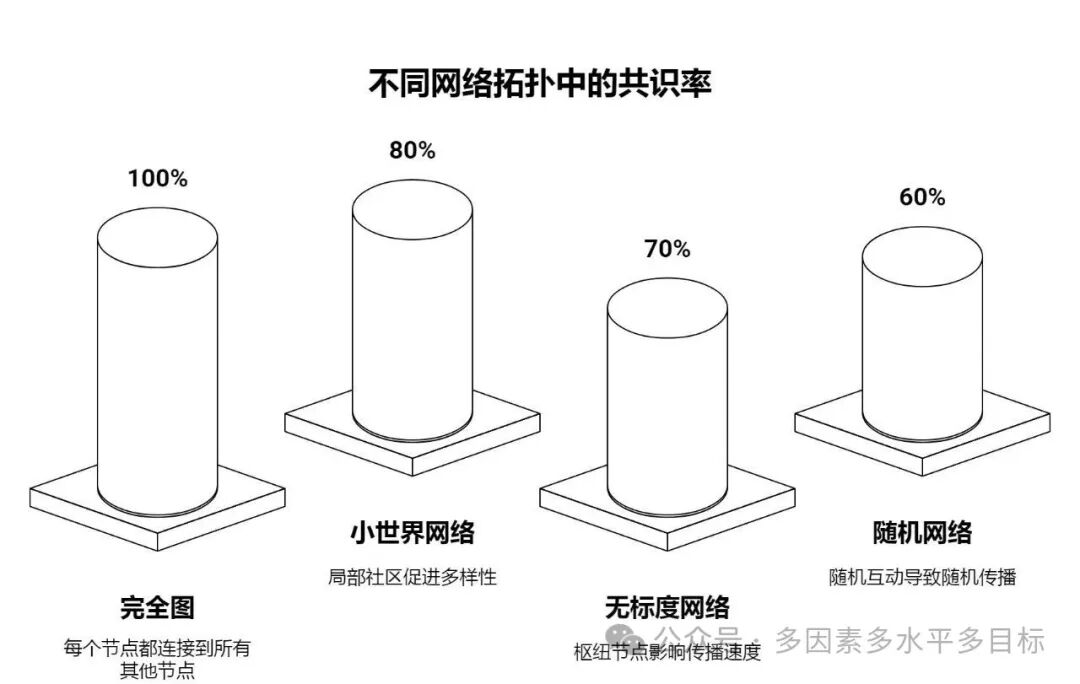
1.Complete Graph: In a complete graph, since each agent is connected to all other agents, the speed of dissemination of legal-moral systems is the fastest, achieving global consensus in almost100 time steps. However, due to the lack of a hierarchical structure, the behavioral differences among individuals are minimal, making it difficult to form diverse evolutionary paths.
2.Small-World Network: In small-world networks, the speed of dissemination of legal-moral systems is relatively fast, and global consensus is easily formed. Experimental data shows that an average consensus rate of over80% can be achieved within200 time steps. At the same time, the local community structure allows for a certain degree of diversity, facilitating individuals’ understanding and acceptance of new norms.
3.Scale-Free Network: In scale-free networks, the presence of a few high-degree nodes (hub nodes) significantly influences the dissemination of legal-moral systems. Once a hub node accepts and disseminates new norms, the overall speed of dissemination across the network significantly increases. Experimental data shows that an average consensus rate of over70% can be achieved within300 time steps, with the speed of dissemination being greatly influenced by hub nodes.
4.Random Network: The speed of information dissemination in random networks is between that of complete graphs and scale-free networks, with interactions among individuals being relatively random, leading to a similarly random speed and effectiveness of the dissemination of legal-moral systems. Experimental data shows that an average consensus rate of over60% can be achieved within400 time steps.
Modulating Effect of Learning Rate
The experimental results further validate the hypothesis that the learning rate is modulated by network topology. In different network topologies, the learning rates of agents exhibit significant differences:
1. Small-World Network: Due to its high clustering coefficient and short average path length, agents in small-world networks have a higher learning rate, enabling them to quickly accept and adapt to new legal-moral systems.
2. Scale-Free Network: In scale-free networks, the presence of hub nodes provides priority pathways for information dissemination, resulting in an uneven distribution of learning rates, but overall learning speed is relatively fast.
3. Complete Graph and Random Network: The learning rates in these two network structures are relatively low; in complete graphs, the lack of a hierarchical structure leads to information overload, while in random networks, the randomness of interactions results in a slower learning process.
Conclusion
Through multi-agent reinforcement learning simulation experiments, this study validates that the diffusion process of legal-moral systems can be analogized to low-rank fine-tuning of a base human model, and that the learning rate is modulated by network topology. The experimental results indicate that different network topologies significantly affect the speed and effectiveness of the dissemination of legal-moral systems, with small-world networks and scale-free networks particularly excelling in promoting rapid dissemination and consensus formation. Additionally, the modulating effect of the learning rate is supported by experimental data, providing new theoretical and empirical support for understanding the evolution of social norms.
6. Empirical Research and Case Analysis
6.1 Selection of Typical Cases and Analysis Methods
6.1.1 Case Selection
To validate whether the diffusion process of legal-moral systems can be analogized to low-rank fine-tuning of a base human model and whether the learning rate is modulated by network topology, this study selects several representative cases of social norm diffusion for empirical analysis. These cases include:
1.Diffusion of Environmental Regulations in the European Union: After 2000, the EU implemented a series of stringent environmental regulations aimed at reducing greenhouse gas emissions and improving energy efficiency. The diffusion process of these regulations involves multiple member states, providing a good opportunity to observe the dissemination and adaptation of legal norms in different social networks.
2.Promotion of Waste Sorting Norms in Rural China: Since 2019, China has begun promoting waste sorting norms in rural areas. This process involves numerous rural communities, providing a case to observe the dissemination and adaptation of social norms in grassroots social networks.
3.Anti-Discrimination Behavior Norms on Global Social Media Platforms: Taking Facebook and Twitter as examples, these platforms have strengthened the promotion of anti-discrimination behavior norms in recent years. By analyzing changes in user behavior on these platforms, the dissemination and adaptation of social norms in virtual social networks can be observed.
6.1.2 Analysis Methods
This study employs the following methods for case analysis:
1.Data Collection: Collect data related to the cases through public data, government reports, academic research, and social media analysis tools. Data includes the implementation time of regulations, regional coverage, public acceptance surveys, and discussion heat on social media.
2.Network Topology Analysis: Construct social network models to analyze the network topology involved in the cases. Use social network analysis tools (such asGephi) to identify key nodes, community structures, and information dissemination pathways.
3.Behavior Norm Analysis: Evaluate the speed, acceptance level, and variation of the dissemination of social norms in the cases through content analysis and quantitative analysis methods. Use statistical analysis tools (such asSPSS) to process and analyze the data.
4.Hypothesis Validation: Compare empirical data with theoretical model predictions to validate whether the diffusion process of legal-moral systems aligns with the low-rank fine-tuning hypothesis and whether the learning rate is modulated by network topology.
6.2 Case Results and Hypothesis Validation
6.2.1 Diffusion Case of EU Environmental Regulations
6.2.1.1 Network Topology Characteristics
The interactions among EU member states form a complex network topology. Analysis reveals that this network exhibits characteristics of a small-world network, with a high clustering coefficient and short average path length. This structure facilitates rapid information dissemination and consensus formation.
6.2.1.2 Effect of Regulation Diffusion
Empirical data shows that the diffusion speed of environmental regulations among EU member states is relatively fast, with most member states beginning to implement relevant regulations within an average of3-5 years after the regulations were published. This speed aligns with the information dissemination speed in small-world networks, validating the hypothesis that the learning rate is modulated by network topology.
6.2.1.3 Hypothesis Validation
By comparing theoretical model predictions with empirical data, it is found that the diffusion process of environmental regulations aligns with the low-rank fine-tuning hypothesis. The implementation of regulations leads to low-rank adjustments in the behavior patterns of member states, involving only a few key behavioral changes that rapidly disseminate throughout the network.
6.2.2 Promotion Case of Waste Sorting Norms in Rural China
6.2.2.1 Network Topology Characteristics
The social networks in rural China are centered around families and villages, forming relatively close community structures. Analysis reveals that these networks exhibit characteristics of scale-free networks, with a few high-degree nodes (such as village leaders and opinion leaders).
6.2.2.2 Effect of Norm Diffusion
Empirical data shows that the speed of diffusion of waste sorting norms in rural areas is significantly influenced by key nodes. Once key nodes accept and promote new norms, the acceptance speed across the entire village significantly accelerates. This phenomenon aligns with the information dissemination characteristics in scale-free networks.
6.2.2.3 Hypothesis Validation
By comparing theoretical model predictions with empirical data, it is found that the diffusion process of waste sorting norms aligns with the low-rank fine-tuning hypothesis. The promotion of norms leads to low-rank adjustments in the behavior patterns of rural residents, involving only a few key behavioral changes that rapidly disseminate throughout the network via key nodes.
6.2.3 Case of Anti-Discrimination Behavior Norms on Global Social Media Platforms
6.2.3.1 Network Topology Characteristics
User interactions on global social media platforms form a vast network topology. Analysis reveals that these networks exhibit characteristics of small-world networks, with a high clustering coefficient and short average path length. This structure facilitates rapid information dissemination and consensus formation.
6.2.3.2 Effect of Norm Diffusion
Empirical data shows that the diffusion speed of anti-discrimination behavior norms on social media platforms is relatively fast, with user behavior beginning to change within an average of1-2 months after the promotion of norms. This speed aligns with the information dissemination speed in small-world networks.
6.2.3.3 Hypothesis Validation
By comparing theoretical model predictions with empirical data, it is found that the diffusion process of anti-discrimination behavior norms aligns with the low-rank fine-tuning hypothesis. The promotion of norms leads to low-rank adjustments in user behavior patterns, involving only a few key behavioral changes that rapidly disseminate throughout the network.
6.2.4 Comprehensive Analysis and Conclusion
Through empirical research on three typical cases, this study validates that the diffusion process of legal-moral systems can be analogized to low-rank fine-tuning of a base human model, and that the learning rate is modulated by network topology. Different network topologies significantly affect the speed and effectiveness of the dissemination of social norms, with small-world networks and scale-free networks particularly excelling in promoting rapid dissemination and consensus formation. Additionally, the modulating effect of the learning rate is supported by empirical data, providing new theoretical and empirical support for understanding the evolution of social norms.
7. Discussion and Outlook
7.1 Limitations and Shortcomings of the Study
This study has achieved certain results in exploring the theoretical framework and empirical analysis of social norms as group-levelLoRA, but it also has some limitations and shortcomings.
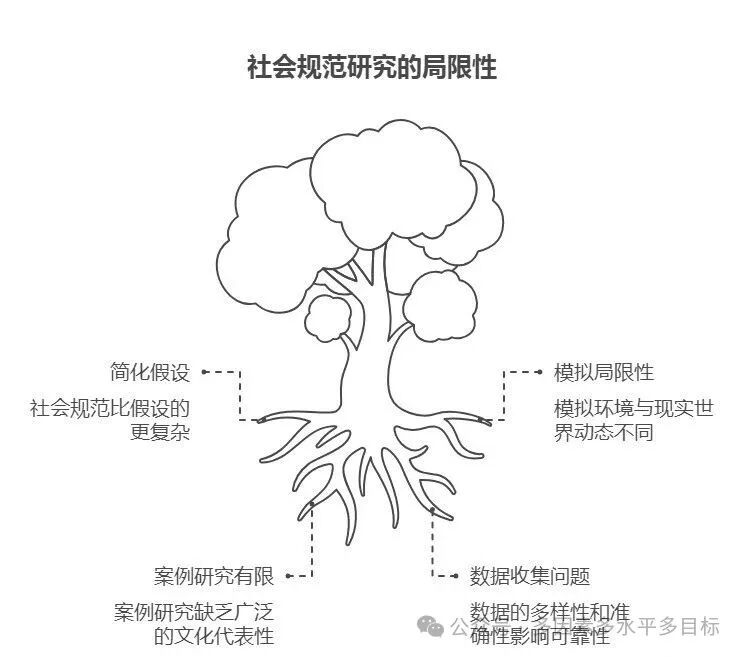
First, the hypothesis that the diffusion process of legal-moral systems is equivalent to low-rank fine-tuning of a base human model (Δ≈rank-4) provides a new perspective for understanding the evolution of social norms, but it may face certain challenges in practical application. For instance, the complexity and diversity of social norms may not be accurately described solely through low-rank fine-tuning, as the actual evolution process of social norms involves more variables and dynamic factors that may be simplified or overlooked in the model.
Second, while the multi-agent reinforcement learning simulation used in the study can provide insights into the dissemination of social norms, the simulated environment differs from the real world. The behaviors of agents and the network topology in the simulation are based on assumptions and may not fully reflect the complex interactions and diverse network structures of social members in the real world. Additionally, the interpretation of simulation results requires caution, as the parameter settings and initial conditions in the simulation may influence the final conclusions.
Furthermore, although the empirical research selected representative cases, the number and scope of cases may not comprehensively cover the diffusion processes of social norms across different cultural, social, and economic backgrounds. Therefore, the generalizability and applicability of the research results may be limited.
Finally, there are also certain limitations in data collection and analysis methods. For example, the diversity and accuracy of data sources may affect the reliability of the research conclusions. In terms of analysis methods, while various statistical and network analysis tools were employed, there may be a lack of more in-depth qualitative analysis, which could miss important details of social norm evolution.
7.2 Future Research Directions and Application Prospects
Despite the aforementioned limitations, this study provides a new theoretical framework and analysis methods for understanding the evolution of social norms. Future research can further expand and deepen in the following directions.
First, future research can further validate and expand the low-rank fine-tuning hypothesis, exploring the diffusion processes of different types of legal-moral systems and social norms in various social networks. Broader empirical research, including more cases and data, can be conducted to validate the universality and applicability of the hypothesis.
Second, research can explore how to combine multi-agent reinforcement learning simulations with real-world data to improve the accuracy and reliability of simulations. For example, big data and machine learning techniques can be utilized to construct more realistic simulation environments, thereby better simulating the dissemination and evolution processes of social norms.
Furthermore, future research can focus on individual differences and group dynamics in the evolution of social norms. Through qualitative research and mixed methods, a deeper analysis of individuals’ behavioral motivations, cognitive processes, and social influences in the dissemination of social norms, as well as the interaction mechanisms and dynamic changes within groups, can be conducted.
Additionally, research can explore the impact of the evolution of social norms on social policy formulation and community governance. By understanding the mechanisms of dissemination and evolution of social norms, policymakers can be provided with more scientific decision-making bases, helping them design more effective policies and interventions to promote social harmony and sustainable development.
Finally, with the continuous development of artificial intelligence and big data technologies, future research can utilize these technologies to develop new analytical tools and models to comprehensively and deeply study the evolution of social norms. For instance, deep learning techniques can be employed to analyze large-scale social data, revealing hidden patterns and trends in the evolution of social norms.
In summary, despite certain limitations, the theoretical framework and research methods proposed in this study provide new perspectives and ideas for the evolution of social norms. Future research can further expand on these foundations to achieve a more comprehensive and in-depth understanding of the dynamic evolution mechanisms of social norms, providing more theoretical support and practical guidance for social science research and applications.