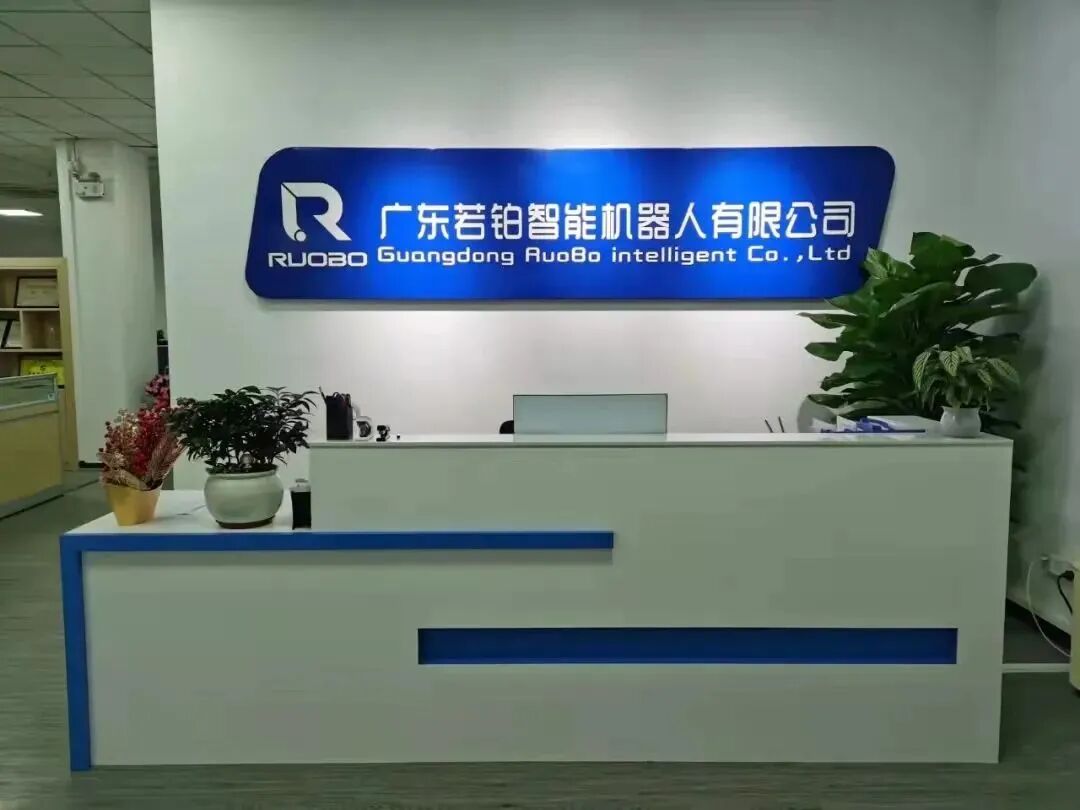
In the wave of intelligent transformation in the manufacturing industry, Nanhai is accelerating industrial transformation and upgrading through technological innovation, promoting Nanhai manufacturing to elevate to a “world brand”. Recently, Foshan City released the “Outstanding Products Empowered by Artificial Intelligence and Intelligent Robotics in Key Industries (First Batch)”, and the AI robot for aquatic product processing developed by Guangdong Ruobo Intelligent Robotics Co., Ltd. (hereinafter referred to as “Ruobo Robotics”), an investment enterprise in the Lihe Science and Technology Innovation Park, stood out as one of the top ten outstanding products selected.
01
From “Handicraft Workshop” to “Unmanned Workshop”
Nanhai is racing into the unique “Robotics + Agriculture” track
Entering the intelligent processing factory for aquatic products in Jiujing Town, Nanhai, the automatic processing line for fish “three removals” (removing gills, scales, and internal organs) is operating efficiently. Here, fish sorting robots, scale-removing robots, and gill-removing robots each perform their duties, from sorting fish to removing gills, scales, and then opening the belly and back, with the entire process requiring almost no human intervention, as various robots collaborate precisely.
Click to watch the short video of Ruobo’s aquatic product processing AI robot.
This advanced production line is supported by technology from Ruobo Robotics. The AI robot for aquatic product processing developed by the company has built a full-stack technical closed loop from underlying hardware to top-level control, and its highly flexible hardware system effectively addresses the pain points of traditional equipment’s insufficient adaptability. By integrating IoT and AI technologies, this robot can process over 1,000 fish per hour, with a head and tail recognition rate exceeding 99% for various aquatic products such as bass, tilapia, and soft-shelled turtles. The factory has reduced its workforce to 40% of the original, achieving a daily output of up to 60,000 to 80,000 jin, with processing capacity leading in the country.
The successful application of Ruobo’s aquatic product processing AI robot not only provides strong technological support for the development of high-level agriculture in Nanhai District but also brings more efficient and stable solutions to local fishery enterprises, serving as a successful example for the intelligent transformation of the aquatic processing industry and leading the industry into a new stage of development.
02
“Stubbornly Tackling” Key Technologies of Robotics
Successfully Achieving 100% Domestic Substitution
Ruobo Robotics was founded in 2016 and is a high-tech enterprise focused on industrial hard technology with software algorithms at its core. Relying on self-developed industrial operating systems, AI technology, high-precision servo drive and control technology, and other cutting-edge technologies, it integrates capabilities in industrial internet, machine vision, and robot simulation, rapidly rising to become a supplier of technology and equipment at the level of Industry 4.0 and AI. Its development is a legend of breaking through difficulties and advancing through innovation.
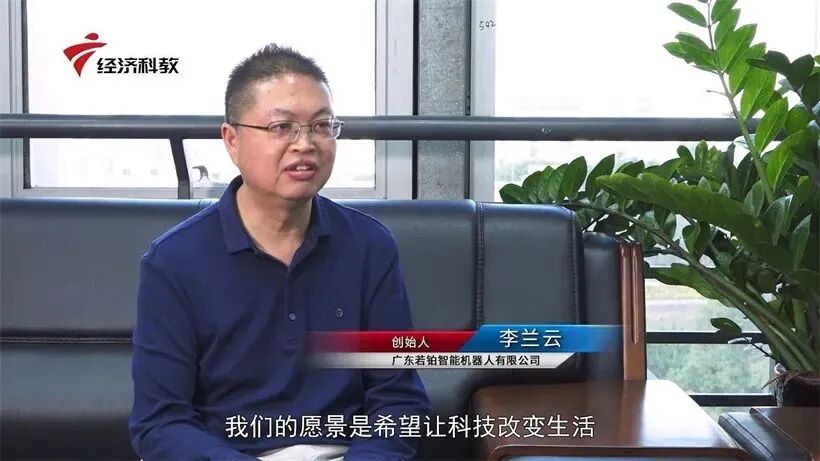
Li Lanyun, founder of Ruobo Robotics.
The robot servo drive and control technology is known as the “Mount Everest” of the manufacturing industry, being both the “heart” and “brain” of robots, as well as a recognized “hard nut” in the industry. In 2018, senior computer expert Li Lanyun, supported by the Foshan Institute of Industrial Technology, led a young team to settle in Nanhai and began tackling technical challenges.
In the early stages of entrepreneurship, three major problems were presented: “how to do it, where to do it, and who to find to do it”. Li Lanyun took a dual approach: recruiting software talent domestically and seeking technical support abroad in Japan. Although Japanese experts believed that this was an “impossible task” for such a young Chinese startup team, Li Lanyun, with 30 years of software development experience, firmly believed that the core of the robot drive controller lies in software and algorithms, and that the team could tackle this “hard nut”.
Efforts do not betray the diligent; by the end of 2019, the testing results of the first-generation product far exceeded expectations, astonishing even Japanese experts. However, the real challenge was just beginning.
The first-generation product only achieved 50% domestic substitution, with key components still relying on Japanese chips. At that time, the team set a higher goal: to surpass Japanese products and create a universal driver that could adapt to any scenario with high precision, high response speed, and high stability.
“The challenges during that time were immense, but they also forced the team to focus on R&D.” By the end of 2022, the team finally welcomed a historic moment—successfully achieving 100% domestic substitution, breaking the long-standing foreign monopoly on high-precision servo drive and control technology for robots.
03
Seizing Opportunities for Change
“Made in Nanhai” Robots Breakthrough in Multiple Fields
In addition to the aquatic processing field, Ruobo Robotics has also expanded its business into other agricultural scenarios. The balance robot “machine cow” currently under development, equipped with self-developed AI and drive and control systems, can replace manual labor to complete various agricultural tasks at heights and on the ground, with mass production expected to be launched by the end of this year. Furthermore, Ruobo’s AI robots are also making strides in medical, aerospace, and other fields, with several medical products achieving domestic substitution.
Notably, in July of this year, Ruobo Robotics’ “Automatic Spraying Technology for Aircraft Engine Blades” was recently selected as one of the first typical application scenarios of “Robotics +” in Guangdong Province. Aircraft engines are known as the “jewel in the crown of industry”, and the precision of blade spraying directly determines the engine’s lifespan and safety. In the past, this process relied on manual labor, which was inefficient and costly, and long constrained by imported equipment. Ruobo Robotics’ AI spraying robot system, centered on AI technology and high-precision servo drives, allows Chinese aviation manufacturing to truly master the “AI algorithm level” technology initiative through self-controllable core components and top-notch motion control algorithms.
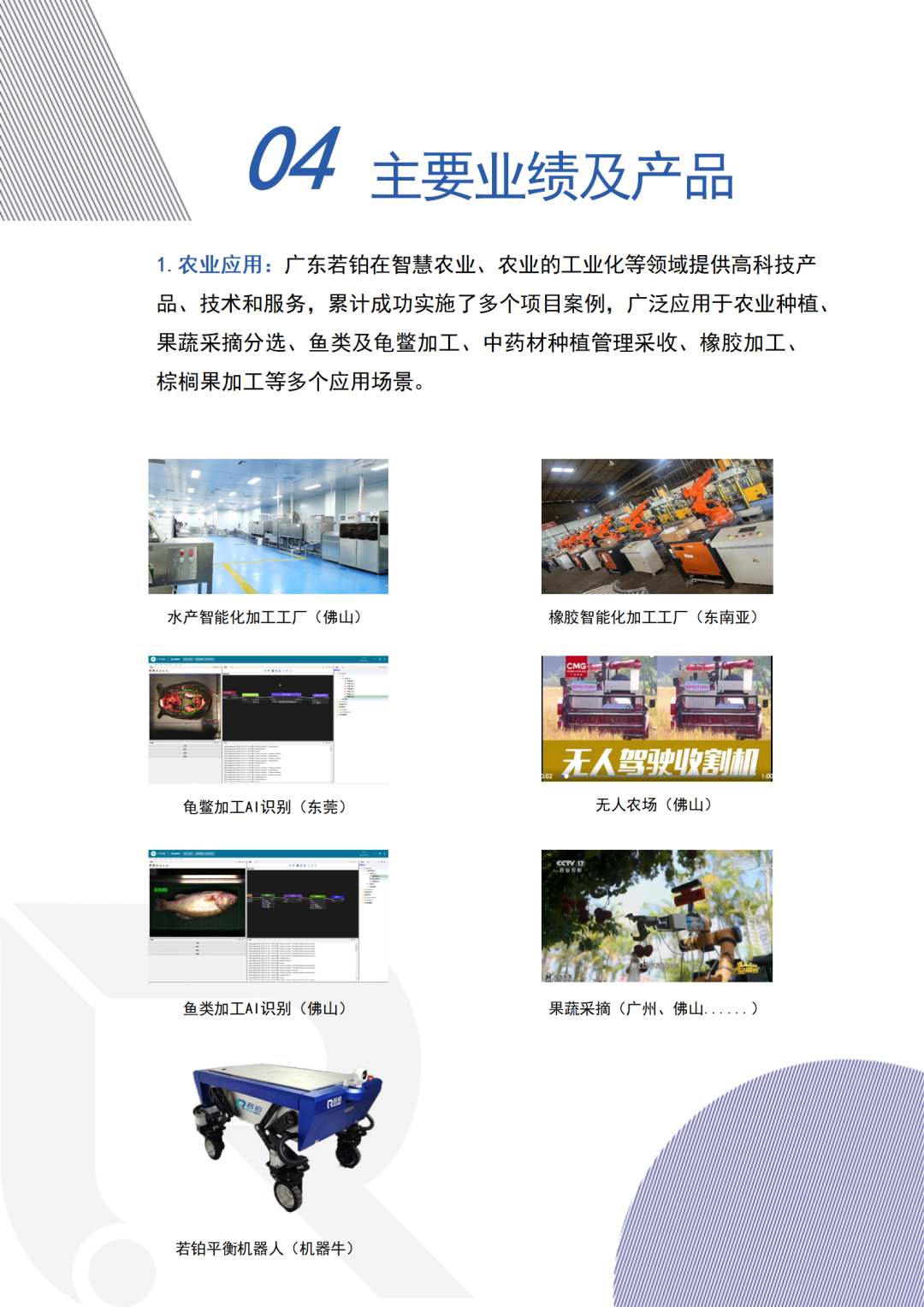
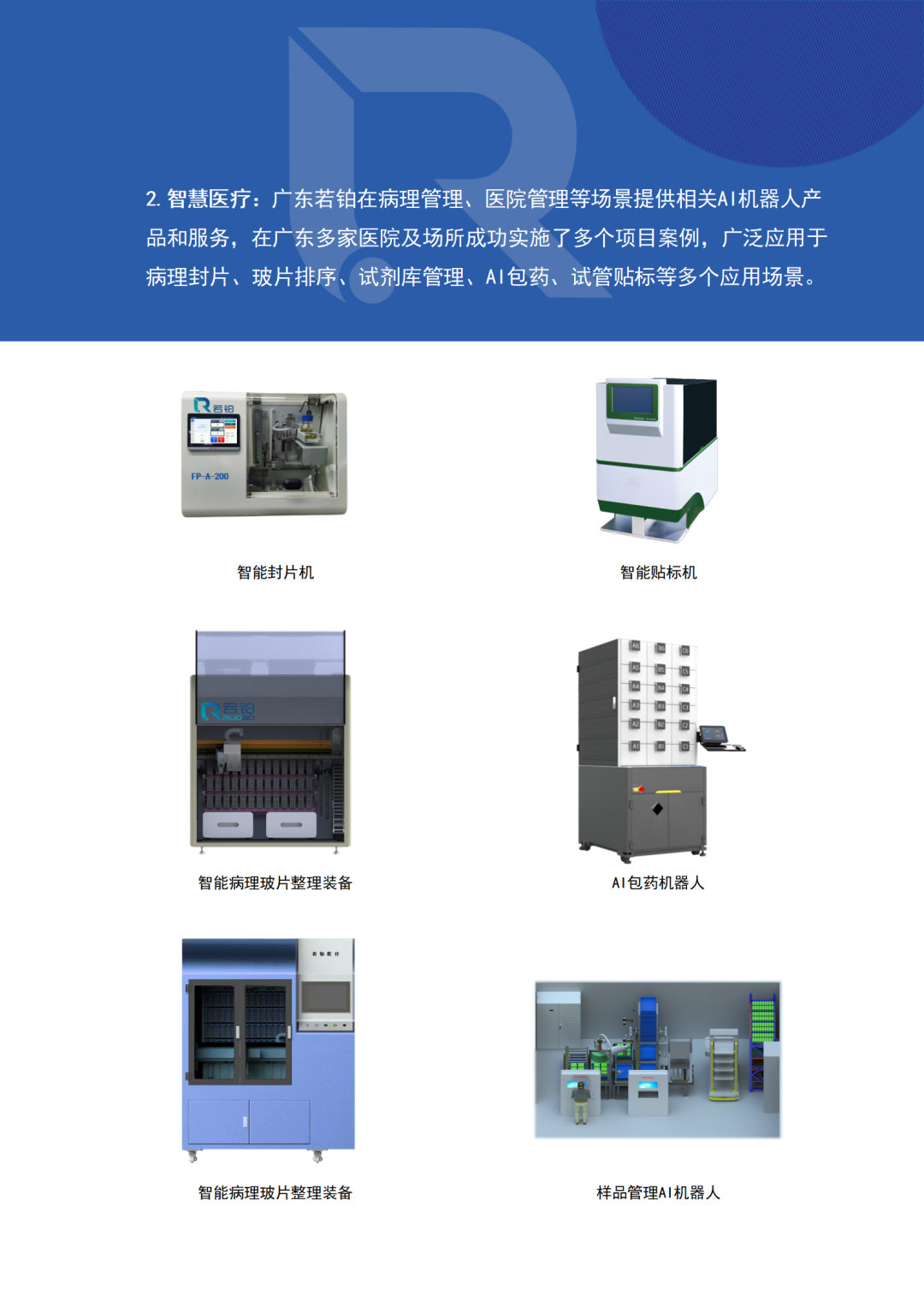
Swipe left and right to view application cases
The success of Ruobo Robotics is inseparable from its strong R&D team and continuous investment in innovation. “The support from the government has given us great assistance,” Li Lanyun stated. In 2018, the team was recognized as an innovative entrepreneurial team under the “Blue Ocean Talent Plan” in Nanhai District, and the following year became an industrialization innovation team of the Foshan Institute of the Chinese Academy of Sciences. Thanks to government funding support and project innovation breakthroughs, the R&D environment of the enterprise has greatly improved, and the number of employees has doubled every year, with 80% being R&D personnel.
“Foshan and Nanhai have a profound industrial foundation, providing countless application scenarios for new technologies, allowing sci-tech innovation enterprises to have a stage to showcase their talents.” Li Lanyun stated that in the future, Ruobo Robotics will continue to be based in Foshan and Nanhai, deeply cultivating the fields of AI and robotics technology, accelerating the launch of new products and technologies, empowering traditional industries to upgrade in quality, and helping “old industries” create new brands, contributing more wisdom and strength to the industrial development of Foshan and Nanhai.
Source: Nanhai Technology
Disclaimer:All related text, images, background posters, and other intellectual property in this article belong to the original author. This article is for reference only. If there is any infringement, please contact us for removal.
—— END ——