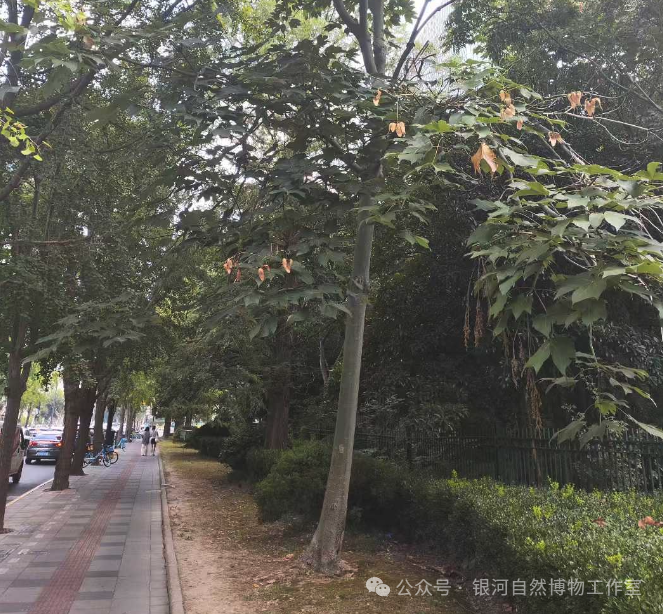
 August in Shanghai has become a complete furnace; the weather makes it impossible to work outside. Standing outdoors for even a minute feels like being roasted into jerky, so I spend a lot of time at home reading and contemplating some strange things.After returning from Lishui, we started going to the library to escape the heat. The atmosphere in the library is great; you can read all day long. Therefore, I want to continue looking for a place to live in Shanghai, ideally close to the library. Especially the town libraries, which are not as crowded as Huaihai Library and are not so pretentious, allowing you to read any book. I have been looking at houses near the Songjiang and Jiading libraries, but unfortunately, most are just intermediary rentals, and there are none close to the village. It’s even worse than places like Luxiang, which are forgotten suburbs.At the Luxiang Library, I found the complete version of “Insect Life” published by Huacheng, and I was moved after reading it several times. Fabre’s writing remains gentle, even though he loved to dissect endlessly to explore the secrets of insects. However, that was the 19th century, and all the knowledge and secrets of the universe we have today are the result of the curiosity of our predecessors; science is passed down bit by bit. Now we have enough knowledge, and with just an AI, we can continuously answer our questions. We have reached a perfect era where everyone is like a library. When I was in middle school, buying a book online required remittance and waiting half a month to receive it at the post office, so when the book finally arrived, I was genuinely excited.Now I am looking for that kind of “excitement”. Believe me, even the post-00s and post-10s kids are still searching for that excitement. However, getting many things now is too easy, so the threshold for that excitement keeps rising. But from another perspective, this “ease” actually makes them think more about what is special. So, while I sometimes feel that kids do not cherish the past, I also believe that they will create things that I cannot even imagine.
 Now, the descriptions in “Insect Life” seem outdated. In that era, whoever could name many organisms was considered fashionable. Knowing more about plants and animals was the advertising slogan when Confucius promoted the “Book of Songs”, meaning that by reading my “poetry”, you could not only learn to write poetry but also recognize many plants and animals. In today’s context, this is also a fashionable thing; it just transformed into a scientific form of pretentiousness. Moreover, more and more people aspire to that kind of scientific pretentiousness.However, I also read two other books: “Chaos and Order” and “Exploring the Subatomic World”, along with a paper version of “Life and New Physics” that I bought after enjoying it previously. The oldest of these, Asimov, uses his genius to narrate how humanity gradually enters the atomic world. This book is highly recommended; no contemporary science popularizer can match his ability to use curiosity as the central axis to gradually introduce the essence of any subject into how humanity understands the material within material, even the structure within material. Once we understand the structure, does it end there? We have understood the nucleus of the atom, but no one can comprehend why life is the way it is.Thus, “Chaos and Order” and “New Physics” discuss this matter. The foundation of life has been understood: hormones, chemical molecules, these are too simple. The pheromones of a moth can be artificially manufactured as insecticides since the 1970s. However, the moth is evolving; we even know that moths communicate, observe the world, and exchange more information. Moths are not mindless mechanical bugs; they are living beings that are constantly in dialogue. They even watch us produce pheromones, helpless against us, gradually resisting our arrogance.People in the past believed that we had understood all the basic structures of matter, so the essence of all life had been resolved. However, when we invented a new virtual world, we finally understood what the essence of life is.This is the “machine of computation”.
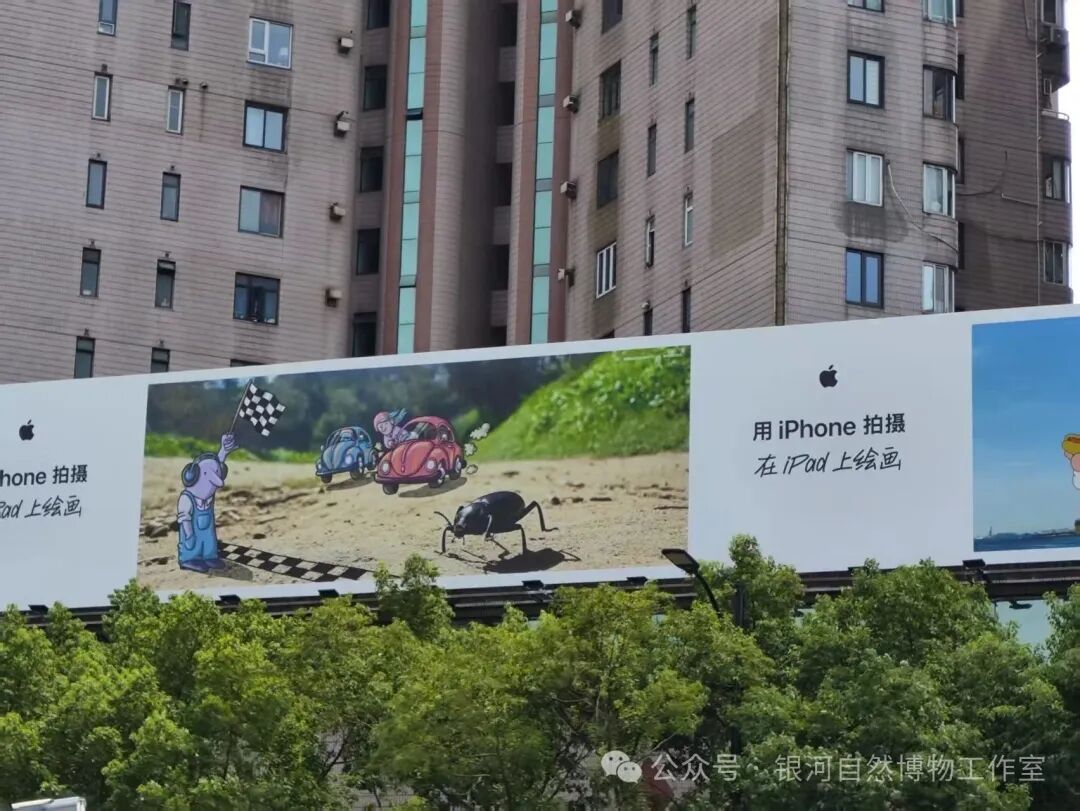 Why is it “computation”? How can 1+1 create a world?Let’s not worry about how computation replicates this world. As the computing power of computers increases, when everything becomes digital and virtual, people really think that even the smartest human brain is just mechanized data. However, the reality is not that simple. When we describe a machine, we often say that a programmed sequence eventually becomes wisdom—this is also how the computers we create appear. I have always been averse to this notion, including the dark forest theory. I feel that using specific rules to describe an unknown space is very “classical mechanics”; it’s like describing a physical law while discarding all time and space, merely staying on that specific description, which is a very narrow perspective.A moth can read, write poetry, and contemplate the universe itself, proving that the “universe” itself is a massive enigma. This enigma is not an empty starry sky but a poetic combination of matter and information. When matter combines and separates, and information controls information, how can the miracle of life be determined by an empty game engine?Thus, I have always felt that the reason humans have an uncontrollable attraction to games is that “interaction” is filled with a kind of temptation. Insects also play games; all life plays games. Even cruelly, many dolphins and cats’ toys are weaker life forms. However, humans have their own morals to restrain ourselves (though sometimes we cannot), while we cannot interfere with other lives. But all this proves one point: the “interaction” we enjoy is indeed a very vast proposition.In recent years, through my experiences in activities, including observing young people and children in libraries, including myself, we are all game enthusiasts, just with varying degrees of enthusiasm. Moreover, today’s children lack real-world games and are immersed in video games as if entering an uncontrollable space. Therefore, when I see atoms, chaos, and computer theory in the library, I start to wonder, what exactly is a game? What is 1+1?
 In the past, I could not see programming or understand any computer books; they were all like celestial scripts to me. I was curious how humans could create such bizarre things. Until last year, I opened a Saturn and began to repair the circuit board, thanks to the developed internet, I started to realize that every electrical device is a poem. Yes, every circuit board is a poem! Every moth is a poem, every bird is also a poem, and the circuit board is even more so.The language of these poems has become increasingly obscure, which is why we are drifting further away from them. When I disassembled the circuit board to understand “analog circuits” and “digital circuits”, I began to comprehend these two methods of replicating and explaining the world: analog uses existing physical laws to simulate other sound, light, and electrical parts. For example, sound vibrations create electromagnetic waves, which then cause objects to vibrate, thus transmitting sound, leading to the creation of radios; cameras convert images into electromagnetic waves, which cause a bent electron beam to glow on glass, resulting in analog televisions. This is the “analog law” of the world; we use existing physical rules to replicate the images of the world.This is akin to creating a painting, which itself is a state of simulation. Even impressionism and abstraction, where “feeling” outweighs “reality”, have become something many people still nostalgically remember.Digital flavor is different; all real-world objects are first decomposed into 0s and 1s, and then the information encoded in 0s and 1s is restored to another player, allowing reality to be perfectly and clearly replicated one-to-one on the screen. Digital television and digital audio mean this. Digital means 0 and 1; everything becomes data, just as the finer the physical laws are divided, the more they become quantum. Thus, the most important feature of digital circuits is “discrete”, while analog is continuous, but paradoxically, the closer to reality is the digital—this also hints at the fun parts of quantum theory.Thus, we have created another perfect world in computers.
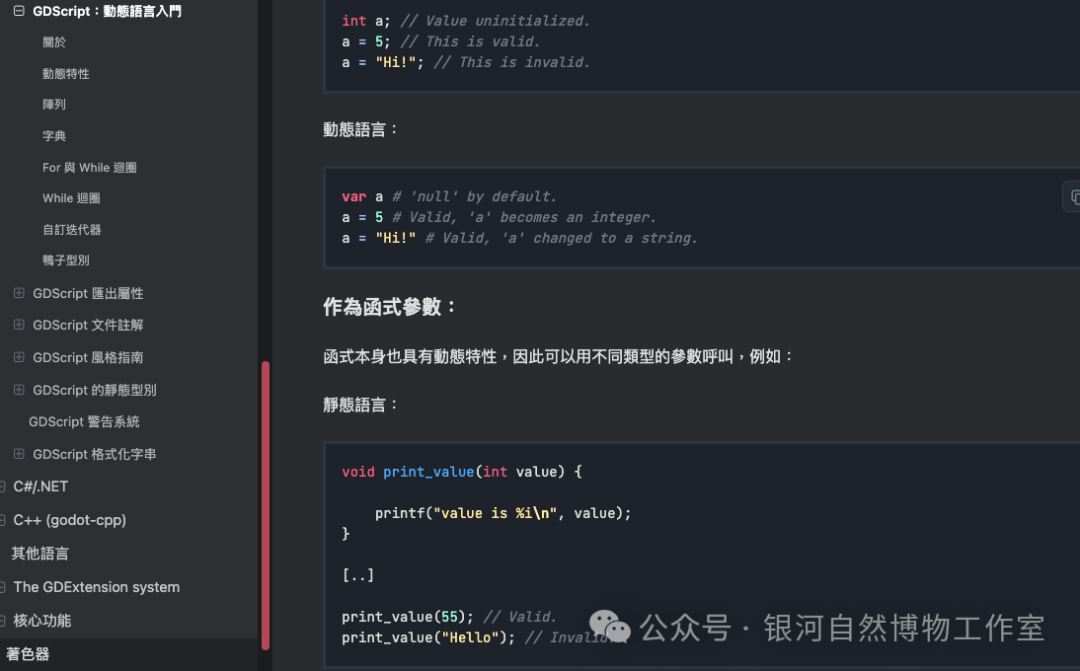
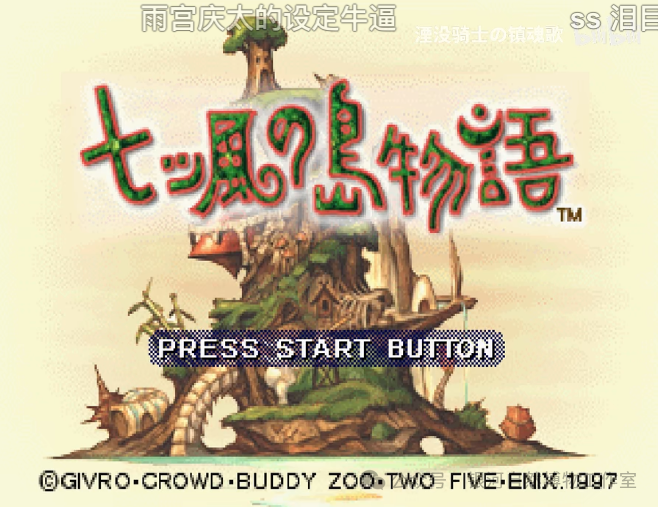 The same goes for video games. Original games were limited by technology, so they were all “simulations” of this world. Although we have entered the digital computer age, perfectly restoring this world is still challenging. Therefore, we only replicate the curiosity, exploration, and emotional parts of this world, using only simple images and text to accomplish everything. As technology advances, the virtual world becomes increasingly realistic, and pure joy and emotion gradually yield to beauty filters and hyper-realistic 3D.However, there still exist two ways of understanding the world: digital and analog. These two have not replaced each other as one became stronger; they remain one of the ways humans observe the world. Yes, this is also the distinction between what I call “strong images” and “weak images”. Both strength and weakness are parts of the world, just as art always forms the shell of the world while also being able to enter the world’s interior.With the increasing number of soft and violent games that deceive children, I have been pondering one thing: can we restore the essence of games back to the “simulation” era? I began to look for things related to game development. I must say, AI is incredibly advanced now. When I simply asked how to make a game, AI provided me with a complete answer, even detailing many things I could learn.Next, I had a long conversation with AI.I shared my love for game consoles, observed children’s obsession with games and the prevalence of trash games, and then expressed my sudden desire to create a nature-related game. In this era where smartphones are prevalent, children cannot live without their phones. Is there a way to create a game that instills a desire to explore nature and guides them back to reality? AI said, of course, and even suggested that this would be a revolution in the gaming industry—I thought about it and came up with a name: “My First Insect Guide”, a puzzle-collecting mini-game. Although “Animal Crossing” has similar elements, they are all about breeding and pet insects. Wouldn’t it be better to have a local biological science popularization? With the idea in mind, I asked AI if it could help me with the coding—AI said no problem, I will write the code for you, you just need to learn the engine, so I downloaded Godot—an open-source engine, popular across the internet, a new favorite for 2025. I thought the timing was just right; GPT-5 had also been updated, and I started learning programming with AI—Variables? Functions? Classes? Architecture? Pointers? I was completely confused. AI guided me step by step, reminding me of the “Turing completeness” I had played before, and I became interested in the essence of the CPU. How can a bunch of logic gate circuits create a virtual world?—I understood the assembly language of Super Mario; computer language is how we communicate with the computer core. But how does this core work? The core has no intelligence, but humans have built a “pseudo-intelligent structure” from the ground up using 0s and 1s. For example, the binary operation of the XOR gate combined with the carry of the AND gate creates an adder, thus achieving computation—This is the Turing machine! But how is memory (registers) achieved? The machine does not know it is remembering, so humans set up a circuit that generates 0s and 1s as feedback, forming a “loop”. Memory is born. By applying a high level, new memories are written. Suddenly, I realized that “remembering” something means a continuous process of input and output!—Suddenly, I understood all programming languages; the fundamental logic is “computation”. Ultimately, these computations can derive all 01 data in 3 billion calculations per second, including typing now—I began to understand the joy of being a programmer, but making games is really troublesome. You are implementing a world you created from the ground up—In the midst of ambition, the bills arrived, and I had to look for a job again. I quickly noted down not to forget: memory is a loop—
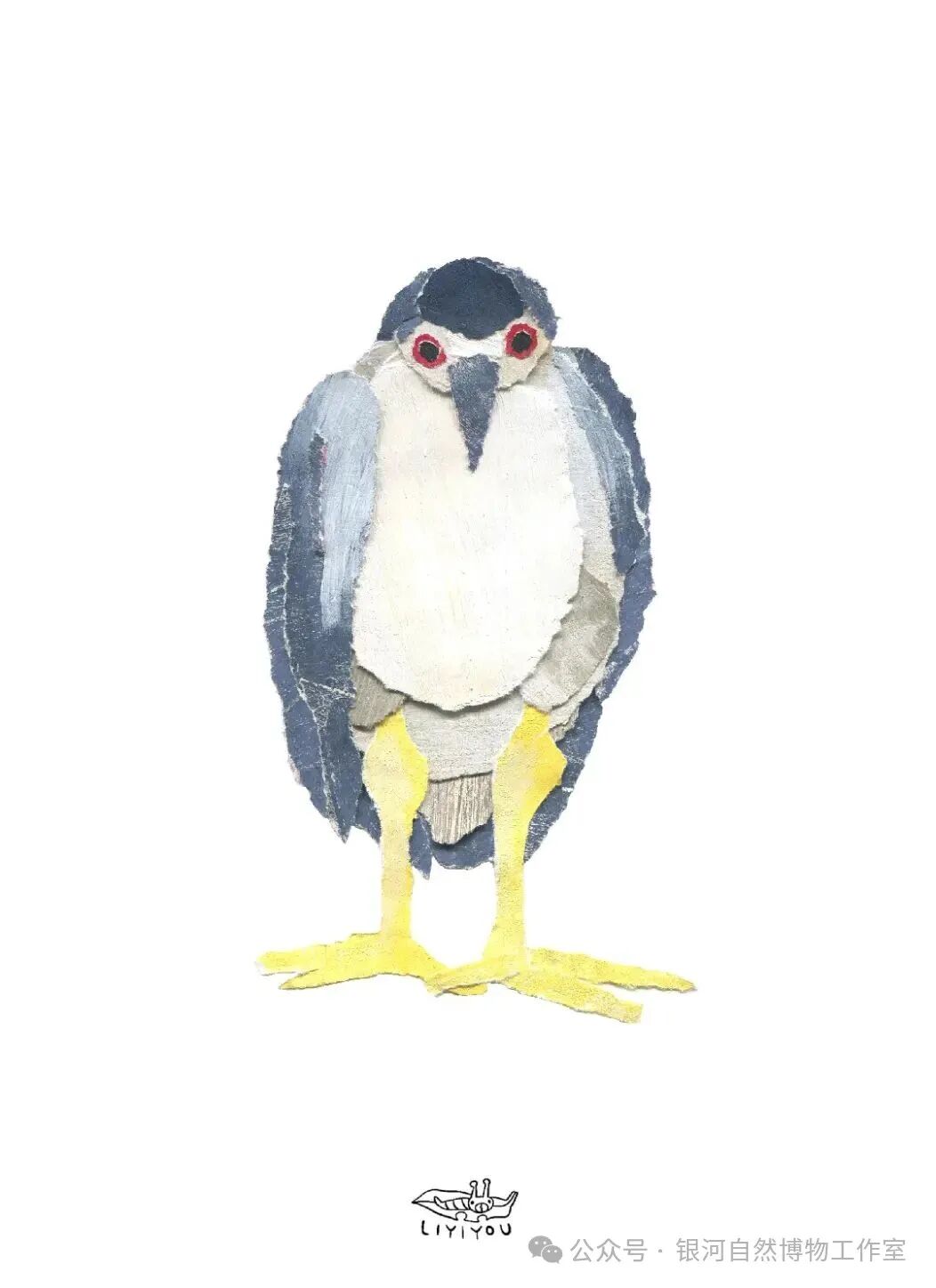 Memory is a loop.This was the most shocking conversation I had after talking with AI for a long time. I even asked AI what the difference is between human memory and computer memory. AI said human memory is much more complex, and other animals’ memories are even more intricate, even affecting DNA. However, the basic underlying logic, which is the “digital” part, is the same: memory is a loop.If you don’t understand, you can look at how humans invented the “adder”. Many people know binary; we use 0 and 1 to represent the on and off states of circuits, and then we create a logic gate from these switches. I first create a logic circuit (the specific method is not discussed), and then my input controls the switches, which operate as follows:0+0=0, 0+1=1, 1+0=1, 1+1=0At this point, you can see that the last 1+1 should equal 10. As long as 1+1=0 can advance one position, binary addition is achieved. Therefore, we add another circuit to allow the result of 1+1 to carry over to the next position, and an addition operation is realized!Thus, we achieve one computation.The computer does not know it is performing addition; we defined addition and let it complete this operation using binary circuits. This is the underlying logic of “information”; it is also the relationship between a single ant and the entire ant colony. A single ant may only know the switch operation, but a colony of ants has a logical circuit, thus capable of calculating more numbers until “intelligence” emerges!Thus, we begin to incorporate “time” into computers, allowing computations to proceed step by step. However, this step-by-step process is much faster than we imagine, reaching dozens of billions of times per second. When we purchase a CPU, the advertising data can reach GHz, which represents its “time”. Within this time, time becomes an equidistant frequency, constantly oscillating, creating a sense of rhythm. The CPU is a super complex and massive circuit executing various calculations, allowing everything to become digital and then restoring the digital data into images and dynamics of the world, ultimately becoming a “game”. And this rhythm controls everything within it.With computation, with time, the intermediate part is memory. How is memory realized? I have always been puzzled. I understood the adder, understood “CPU time”, but memory is also a crucial part; it allows all these calculations to proceed in an orderly manner, ultimately turning computation into the world itself. Until AI patiently explained to me for a whole night, I finally understood that memory is a stable equilibrium! A logic circuit (or NOT gate) requires simultaneous 0s to output 1. By connecting two circuits that require simultaneous 0s, you find that no matter how you press, 0 and 1 will always alternate in a loop. Because each circuit’s output changes the input, as long as power is supplied, no matter how you press, a balance is established, and this becomes a “memory”.This is “feedback”.Humans invented memory in computers! The secret of the feedback mechanism was gradually discovered by humans. People initially found the relationship between feedback and chaotic systems, precisely under the secret of 0s and 1s in computers. This stable state coincidentally forms a certain resemblance to the ecological balance in nature. Each balance is a process of mutual checks and balances of organisms continuously inputting and outputting, thus forming the “memory of the Earth”!Computers are amazing; discrete numbers are “quantum”, and feedback forms the “memory of ecological balance”!Memory is a cycle.Therefore, I suddenly understood the essence of those “memory techniques”. The most fundamental essence is that you must understand a “concept” or a “term” to form a balanced state of input and output in your brain. You must continuously use this knowledge to keep it in your mind. Even many uses of memory and feedback control our hormones, and then we use hormones to select memories, thus generating numerous emotions. Emotions create art, art simulates reality, and reality is digitized into memory.Making games is also like this. Thus, I began to look at code; I immediately understood that we are creating a world, a world where you need to understand its physical laws, collision volumes, and boundary ranges. In a small space, how do you understand it, create it, and make it interact with every user—you are God, and the programmer is a basic component of God.We are “God’s quantum”; memory is a cycle and balance. To obtain more, we must write rules, exceed rules, until new cycles and balances emerge.The wonders of nature began to flood into my brain, and I realized that this world continuously creates new things and new balances. This is what all life and all God’s quanta are doing, and when we combine, we become an unknown massive “God”.Yes, God is ourselves, also a computer, and a massive system we cannot see.
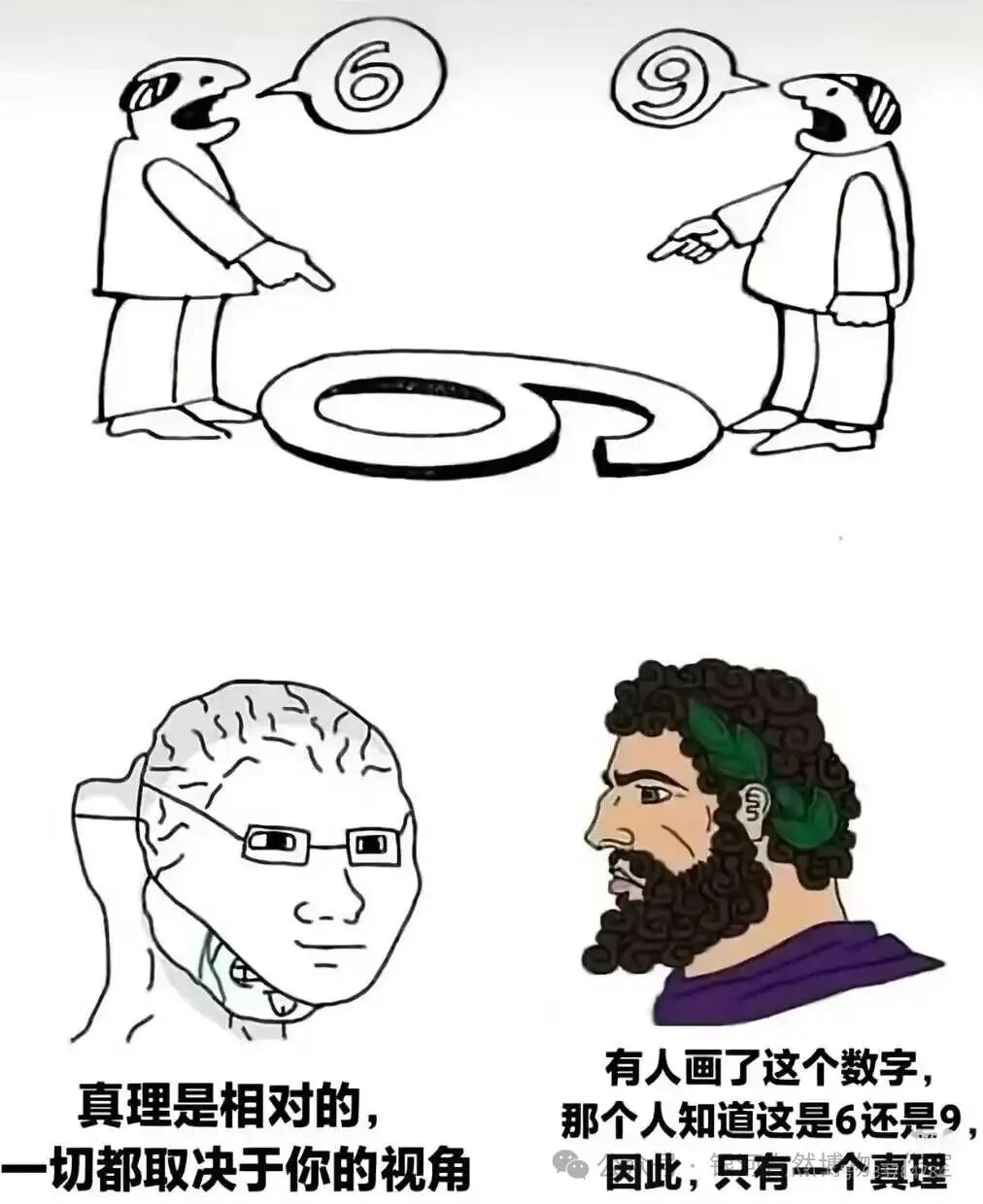 “Life and New Physics” discusses why life is life. This system can create so many things at the atomic level we are already familiar with due to the entanglement of information, memory, and balance, which can create countless data. These data manifest in every insect; every insect is a high-level computing CPU. Humans quickly understand all this with their overclocked brains (which is why they are more prone to dementia), but other life forms have taken billions of years to create all this. The machines that write poetry and the machines that create machines both exist and belong to every life.Information is the essence of life; the body is merely a carrier. So returning to the interpretation of “soul” by the Brown people: when a stick insect is resurrected as a branch under grandmother’s soul, is this still a myth? No, it seems to have become a prophecy. Even a scientific prophecy, we are the single entity created by the universe to explain and solve mysteries, but we can imagine that massive machine, even surpass that massive machine. This ability and impulse to solve mysteries accompany us throughout our lives, along with all life’s lives.This, perhaps, is curiosity, just like a plant seeking a climbing object in that moment.
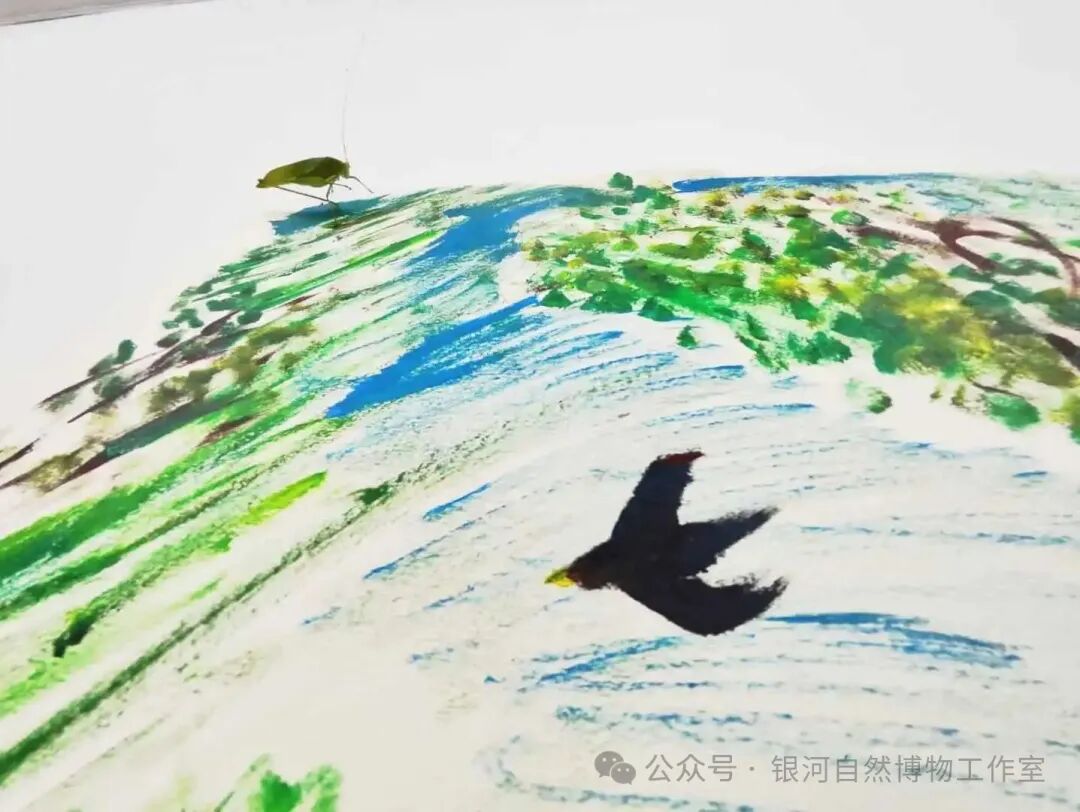 This world is far from a point where we can solve everything with a computer. Just as a computer is merely a carrier, while information is the essence, the future will certainly be an era where everyone seeks themselves in libraries—technology has advanced so much; how will we choose a way of life?Therefore, children’s obsession with games is inherently part of the game. What kind of game should we create to bring them back to nature? From digital to analog, until returning to reality?This will be left to the future Galactic Natural History Game Company to ponder! Hahahahahaha
The public account has launched AI intelligent replies, which is great; it’s much gentler than I am. Everyone can go tease it.
Those who want to join the new natural history art group can add customer service WeChat, but the group has not been established yet.Anyone who does not speak will be blacklisted; those already blacklisted are not welcome.

 Click the link to view:About the paid discussion group introduction:We are not “nature enthusiasts”; we are a new wave group of natural history and the world of life.I haven’t had high-quality dialogue moments for many years.Paid group benefits | Offline gathering invitations—let’s go outdoors to explore, returning to the essence of nature (activities are free, accommodation is self-catered, no lectures).Our group publication third issue: about the neural connections of imagination (first week of May).Our group publication fourth issue: what kind of life do you want to live (second week of May, about the paid group).Online course first session | Come, let me identify what this “species” is!—about species.Online course first session | Come, let me identify what this “species” is!—course record summary.Online course first session | Come, let me identify what this “species” is!—course record summary (II).About “New Natural History”:Do you really like natural history?Is natural history biology?Yes, you are searching for a new “natural history”.When humans start to cyberbully a cuckoo.How does a moth describe the wind direction and light it senses?Will you pick up your curiosity again?About reading, recording, and drawing:Reading “Making Teaching Aids for Primary Schools”, reminiscing.Encountering a small mantis.The scene of ants moving their heads.A spider’s night stroll.Enough said, I’m going to draw.Summer birdwatching adventures in pursuit of the cuckoo.Finding insects in green belts.A world on a sapling of a mulberry tree.Mobile recording: what happens around us after ten o’clock at night.Product series—reading “The Fate of Birds” Chapter Two: Africa.Product series—reading “The Fate of Birds” Chapter One: The Path of Learning to Draw.Product series—reading “The Fate of Birds” introduction (uncut, a bit verbose).