A one-stop distributed solution for enterprise-level IoT development!
In IoT (Internet of Things) project development, developers often face challenges such as complex device access, non-standard protocols, poor system scalability, and high management costs: traditional solutions either rely on custom development (long cycles, high costs) or use closed commercial platforms (limited functionality, low flexibility).
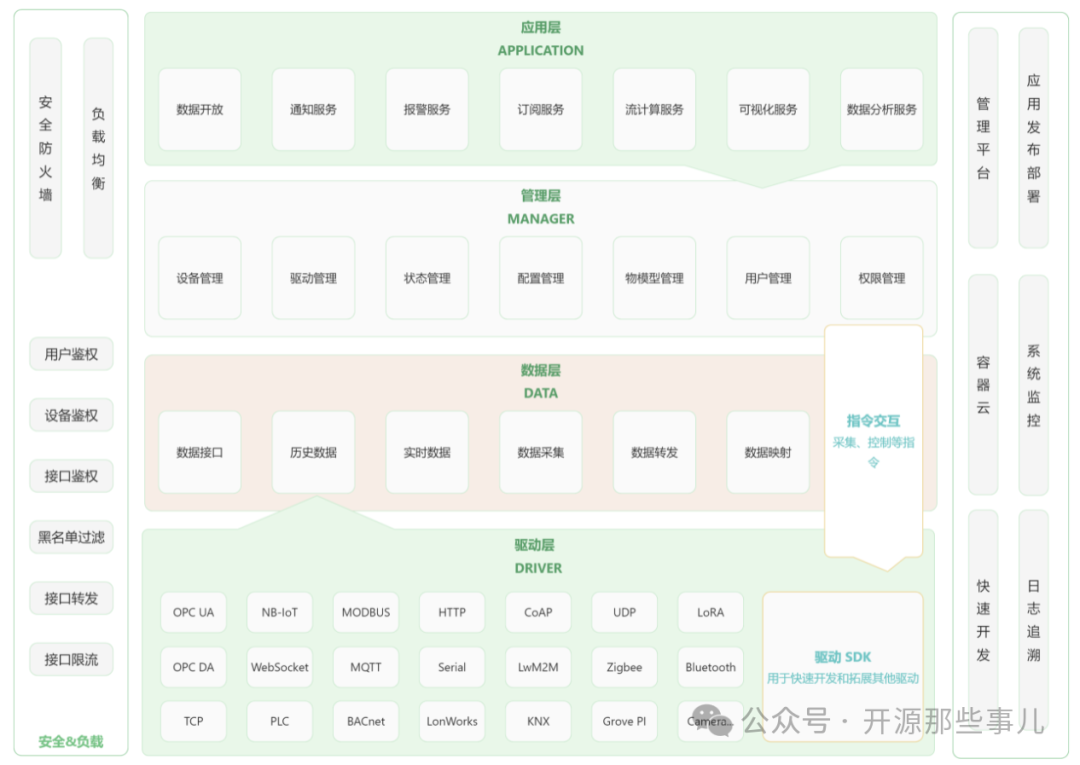
Today, we introduce DC3 (Distributed Cloud Computing IoT Platform), which is an open-source, distributed IoT platform designed to solve these problems! It is built on the Spring Cloud microservices architecture and provides a complete IoT system solution, covering the entire lifecycle of IoT projects from device access, data management to application development, helping enterprises/developers quickly implement IoT applications.
Prerequisites
Infrastructure Mysql Redis RabbitMQ MongoDB Nacos Basic Services dc3-center-auth dc3-center-data dc3-center-manager dc3-center-gateway WebUI If not, please refer to Building Basic Services & Infrastructure for IoT DC3 Web UIInterface Display
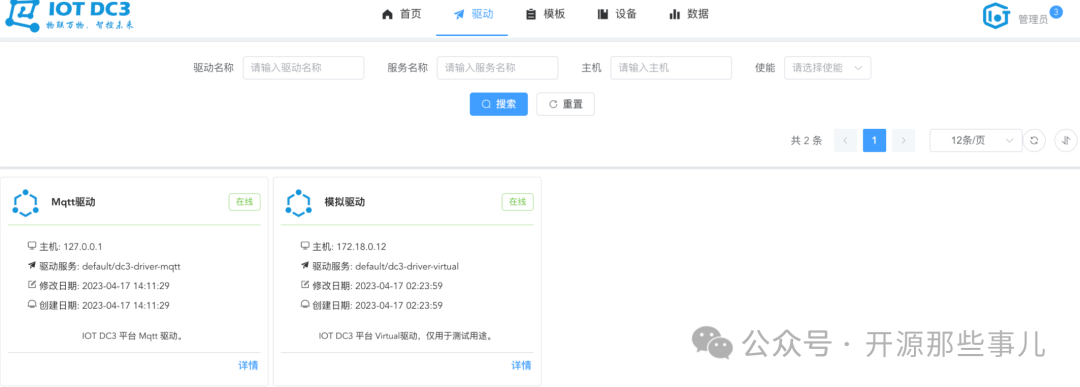
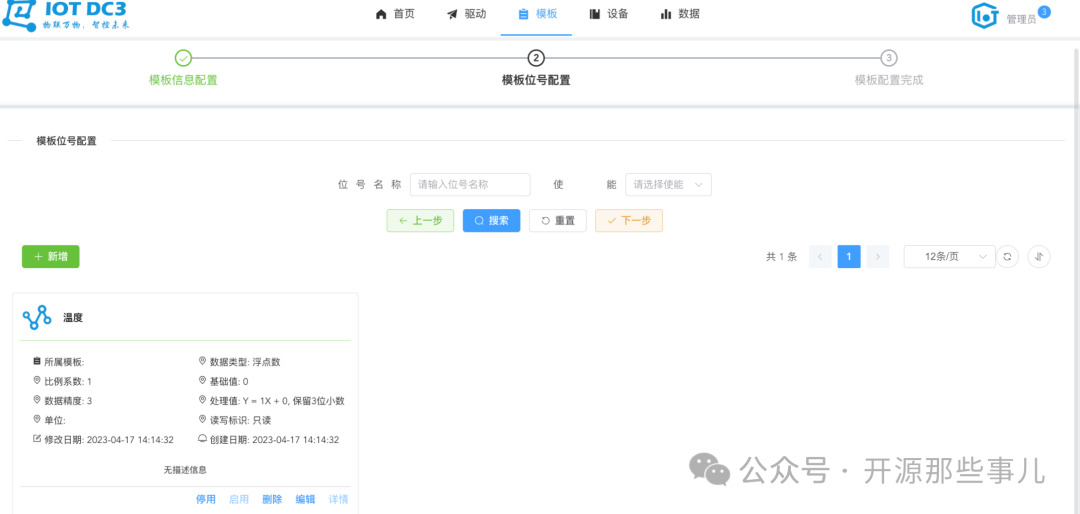
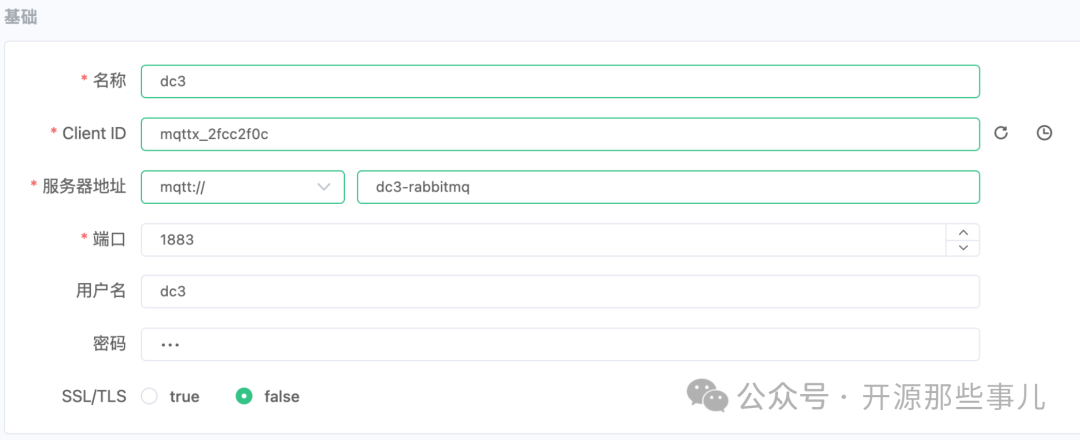
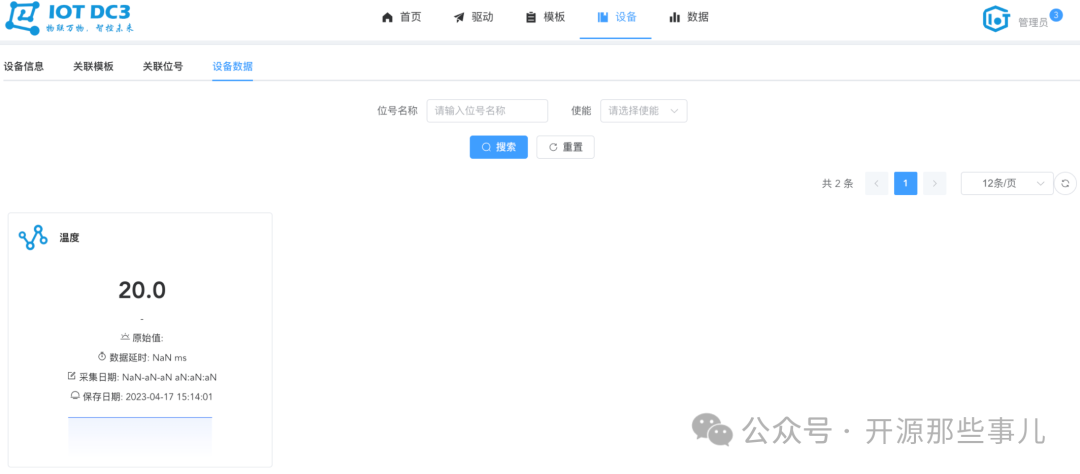
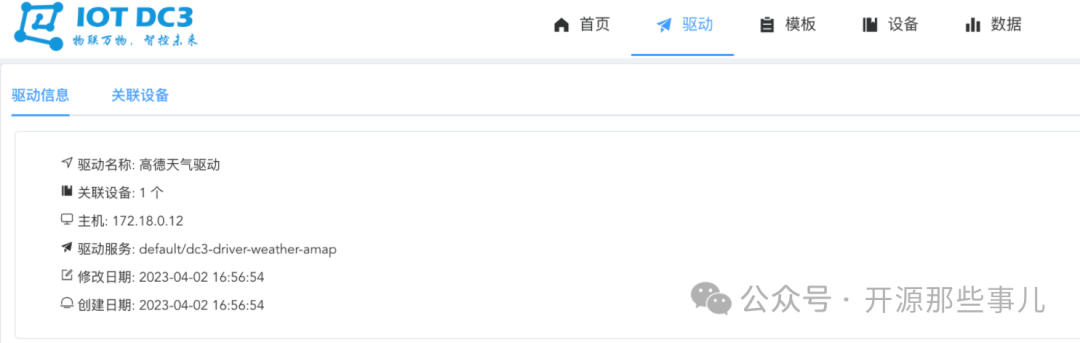
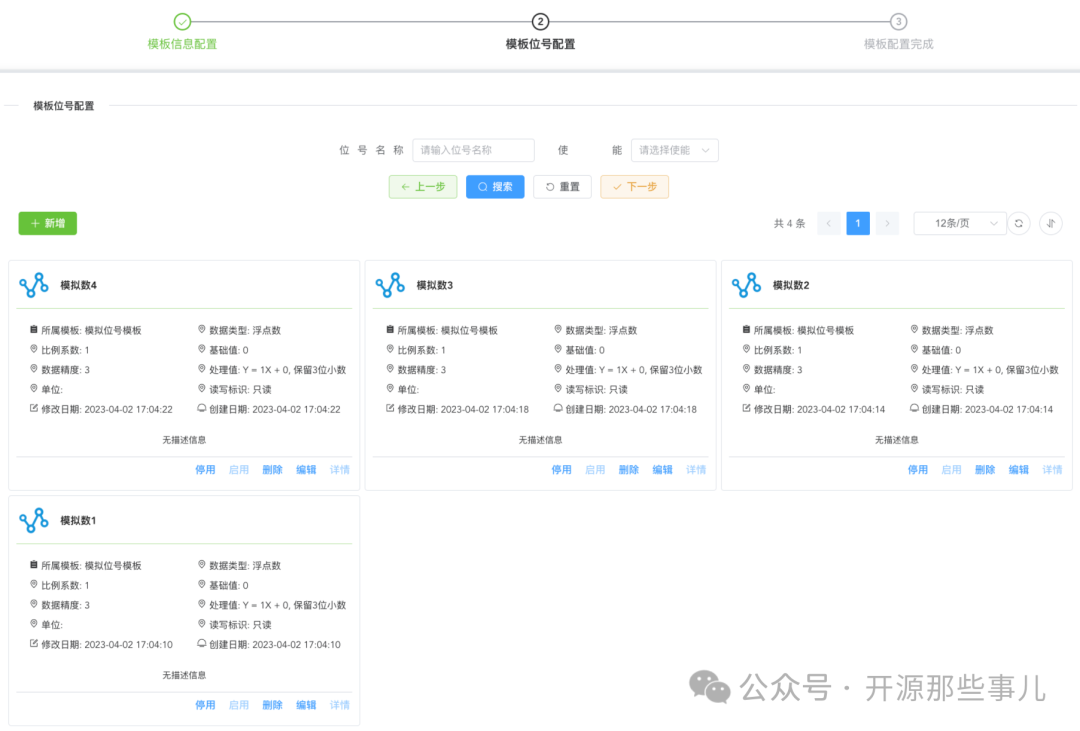
Core Positioning: Distributed IoT Operating System
The essence of DC3 is a set of “out-of-the-box” IoT infrastructure, with the core goal of allowing developers to focus on business logic innovation without having to build the underlying architecture from scratch through standardized and modular design. Specifically, it provides the following key capabilities:
1️⃣ Distributed Microservices Architecture, Strong Elastic Scalability
Based on Spring Cloud (the current mainstream Java microservices framework), DC3 splits IoT functions into multiple independent service modules (such as device management, data storage, protocol adaptation, user permissions, etc.), with each module working together through lightweight communication (such as HTTP/RPC). The advantages of this architecture include:
– High Scalability: Services can be flexibly added or reduced according to business needs (for example, when the number of devices surges, the data storage service can be expanded separately);
– High Availability: A single point of failure does not affect the overall system (for example, if a microservice crashes, other modules continue to operate normally);
– Mature Technology Stack: The Spring Cloud ecosystem is well-developed (integrating configuration center, service registration and discovery, circuit breaker, and degradation capabilities), reducing maintenance costs.
2️⃣ Full-Process Device Management, Covering Access-Communication-Control
DC3 supports various mainstream IoT protocols (such as MQTT, CoAP, HTTP, Modbus, etc.), enabling quick integration with different manufacturers/types of devices (industrial sensors, smart home hardware, energy monitoring terminals, etc.). Its device management features include:
– Protocol Adaptation Layer: Solves the “fragmentation of device protocols” problem through a unified protocol conversion gateway (for example, simultaneously integrating an MQTT protocol camera and a CoAP protocol temperature and humidity sensor);
– Device Lifecycle Management: From device registration, activation, online status monitoring, to remote configuration, firmware upgrades, and deactivation, the entire process is controllable;
– Real-time Data Interaction: Supports devices actively reporting data (such as sensor values) and allows the platform to send control commands to devices (such as turning devices on/off, adjusting parameters).
3️⃣ Data Storage and Analysis, Mining IoT Value
The platform has built-in capabilities for storing and processing collected data: supports time-series databases (such as InfluxDB) for storing high-frequency sensor data, relational databases (such as MySQL) for storing device metadata, and provides RESTful API and WebSocket interfaces for easy data access by upper-layer applications (such as management backends, mobile apps). Developers can quickly build visual dashboards, alarm rules, or AI analysis models based on this data.
Highlighted Advantages: Why Choose It?
✅ 1. Open Source and Free, Self-Controlled with No Risk of Being Locked In
The code is fully open source (usually hosted on GitHub/Gitee), allowing enterprises/teams to customize it according to their actual needs (for example, adding industry-specific protocol adaptations, customizing management interfaces) without worrying about the authorization limitations or functionality cuts of commercial platforms.
✅ 2. Distributed Design, Easily Handling Large-Scale Device Scenarios
Traditional monolithic IoT platforms experience performance bottlenecks (such as response delays, high storage pressure) when the number of devices exceeds thousands. In contrast, DC3’s microservices + distributed architecture naturally supports horizontal scaling—by increasing the number of instances of the “device access service,” it can easily support concurrent connections of hundreds of thousands or even millions of devices.
✅ 3. Strong Protocol Compatibility, Reducing Device Access Costs
In industrial scenarios, device protocols are often diverse (such as Modbus for PLCs, DL/T645 for smart meters, and MQTT for emerging devices). DC3 addresses this by using a unified protocol adaptation layer to “translate” devices with different protocols into a common data format for the platform, allowing developers to avoid developing drivers for each protocol separately, saving over 70% of access development time.
✅ 4. Comprehensive Permission and Security Mechanisms, Ensuring Reliable System Operation
Integrating Spring Security and OAuth2, it provides multi-role permission control (such as administrators, operations personnel, device owners), device-level access authentication (to prevent unauthorized device access), and data transmission encryption (HTTPS/TLS), meeting enterprise-level security compliance requirements (such as compliance with the 2.0 standard).
Comparative Analysis of Other IoT Platforms: DC3’s Differentiated Competitive Edge
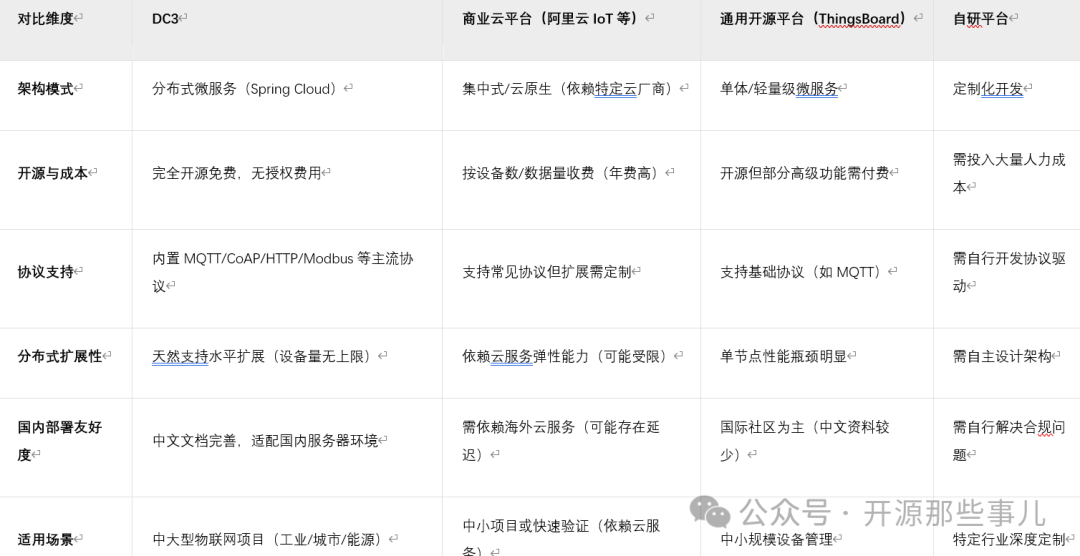
Currently, IoT platforms on the market can be divided into three categories:
– Commercial Closed-Source Platforms (such as Alibaba Cloud IoT, Huawei Cloud IoT, AWS IoT Core): Comprehensive functionality but reliant on cloud services (which may incur high costs) and limited customization capabilities;
– General Open Source Frameworks (such as ThingsBoard, Mainflux): Provide basic device management functions but have weak distributed expansion capabilities (for example, ThingsBoard has obvious single-node performance bottlenecks) or lack support for Chinese documentation/domestic deployment;
– Self-Developed Platforms: IoT systems developed by enterprises themselves, which are costly, time-consuming, and difficult to reuse.
DC3’s core advantages are reflected in the following comparison table:
Who is Suitable for Using DC3?
– Enterprise Developers: Need to quickly build their own IoT platform (such as industrial equipment monitoring, smart home gateways, energy management systems) without being tied to commercial platforms;
– Technical Teams: Want to develop based on a mature architecture (for example, adding industry-specific features) to reduce the cost of reinventing the wheel;
– Universities/Research Institutions: Used for IoT teaching experiments or research projects (such as sensor network data collection and analysis), providing a complete reference implementation;
– Small and Medium-Sized IoT Companies: Need a cost-effective underlying platform to support their business while retaining self-control.
Even beginners can complete basic deployment and run their first device access demo within 1-2 days using the official tutorial!
Conclusion: As IoT development transitions from “proof of concept” to “large-scale implementation,” DC3, with its combination of distributed architecture, full-process capabilities, and open-source free model, has become a cost-effective choice for enterprises to build IoT systems. If you are looking for an IoT platform that can support large-scale device connections and has flexible scalability, consider trying DC3—it might just be the technical foundation you have been searching for!
Open Source Address
Follow the official account and reply 20250823 to obtain
We think you might like:
[Open Source] 45.9K Stars! This Open Source Rich Text Editor Makes Web Editing as Flexible as “Building Blocks”
[Open Source] RICH Design Paradigm is Here! How the Ant Design Team Built the Next Generation AI Interface?
[Open Source] 2.2K Stars, Specially Designed for Developers Who “Can’t Remember”! Heynote: Chunk Buffering + Syntax Highlighting, Keeping Code and Inspiration Organized
[Open Source] 14.7K Stars! How Apache Answer Builds an Enterprise-Level Q&A Community?
[Open Source] 91.4K Stars! Why is shadcn/ui the Most Loved Component Library Among Developers?
Add WeChat to Join Relevant Discussion Groups,
Note “Microservices” to join the group for discussion
Note “Low Opening” to join the low opening group for discussion
Note “AI” to join the AI big data and data governance group for discussion
Note “Digital” to join the IoT and digital twin group for discussion
Note “Security” to join the security-related group for discussion
Note “Automation” to join the automation operation and maintenance group for discussion
Note “Trial” to apply for product trials
Note “Customization” to customize projects, with full source code delivery