Click the blue text to follow us
1
Nova Lake-S chip has been taped out, using TSMC’s
N2 process
Intel is preparing to launch the Panther Lake processor this year, which has been confirmed to use Intel’s 18A process. As for the Nova Lake expected to be released next year, although there has been much information about the specifications of this processor, the manufacturing process has not been finalized. Some say it will use Intel’s 14A, while others suggest TSMC’s N2P. It is likely that Intel has not yet made a decision and plans to try both.

According to SemiAccurate, Intel’s Nova Lake-S processor has been taped out at TSMC’s wafer fab, using the TSMC N2 node to produce some computing modules. However, this does not mean that Nova Lake-S will definitely use the TSMC N2P process, as it is a modular product. Until the final design is settled, the manufacturing process for each module can be freely combined. There is a significant possibility that they have also internally taped out some samples using Intel’s 14A for comparison to see which process yields better results. It is also possible that TSMC’s N2P is being kept as a backup in case their own 14A process encounters issues, or if internal production costs are too high, or if internal capacity cannot meet market demand. A reliable backup plan is necessary, as Nova Lake must be delivered on time in the second half of 2026.
From tape-out to final product will take several months. After the chip is taped out, it will be powered on and tested in Intel’s labs, running various tests to determine the chip’s performance under different conditions, and more importantly, to check for bugs in the chip design. Generally, power-on testing takes a few weeks to a month, and mass production will begin a few months later. After that, it will take another two to three months to produce and ship, meaning Nova Lake-S is most likely to be released in the third quarter of 2026.
Nova Lake-S will be equipped with up to two computing modules, with a maximum of 52 cores, including 16 P-cores, 32 E-cores, and 4 LP E-cores, using the LGA 1954 interface, supporting DDR5-8800 memory. The GPU module will adopt the Xe3 Celestial architecture, while the display and media engine will use the Xe4 Durid architecture, making it a very interesting product.
2
Microsoft’s Win11 Promotion of TPM 2.0 Shows Limited Effect: Ordinary
Users Do Not Care
According to Neowin, since Microsoft launched Windows 11 nearly four years ago, there has been ongoing controversy surrounding its stringent hardware requirements. In particular, the mandatory requirement for TPM 2.0 (Trusted Platform Module) has rendered many older but still capable computers obsolete.
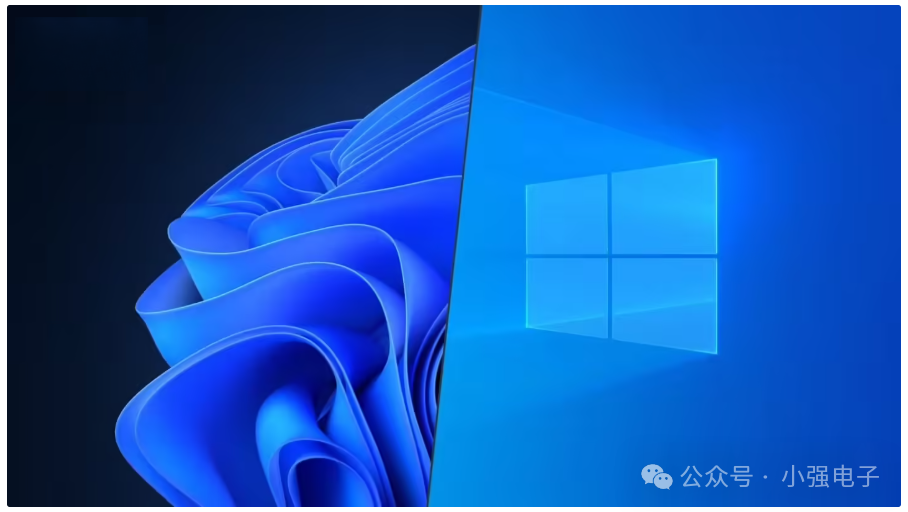
TPM is not a product of the Windows 11 era; its earliest version dates back to 2003. TPM 2.0, as a security chip, is primarily used to store passwords, encryption keys, and other sensitive data, ensuring security during system boot, BitLocker disk encryption, and Windows Hello authentication. Although the vast majority of modern PCs come pre-installed and enabled with TPM 2.0, there are still millions of older devices on the market that lack this module or have it disabled.
Over the past few years, Microsoft has continuously emphasized the importance of TPM 2.0 to users. The company has repeatedly highlighted through blog posts and technical guides that TPM 2.0 is “indispensable” for Windows 11, claiming it is the “next generation of security defense,” aiming to persuade users who insist on using Windows 10 to upgrade to Windows 11 before the end of support (EoL) on October 14, 2025.
However, this strategy has had limited effectiveness. Ordinary users do not care about TPM 2.0, and many have never even heard of it. When purchasing Windows 10 computers, few people inquire whether the device has a TPM module. Consumers are often more concerned with functionality, such as fingerprint recognition and facial unlocking, rather than the underlying technical assurance provided by TPM 2.0. Full disk encryption with BitLocker is unfamiliar to most home users, and many are concerned that encryption will slow down system performance.
Additionally, the interface for TPM 2.0 remains stuck in the outdated tpm.msc traditional user interface, lacking an intuitive visual management experience and real-time feedback on device protection status. Most people only understand PC security as “logging in with a password” and do not delve into the security mechanisms behind the system.
In fact, TPM 2.0 is a low-key and invisible security technology that operates quietly in the background, avoiding interference with users’ daily operations. Therefore, only government, enterprise IT administrators, and cybersecurity experts truly understand the value of TPM 2.0. Microsoft’s attempts to popularize TPM 2.0 through a series of technical articles aimed at the general public have proven to be largely ineffective for ordinary users.
Moreover, the issue is that TPM 2.0 is not the “killer feature” that Microsoft claims it to be; for the average user, terms like “tamper resistance” and “static data encryption” sound more like marketing jargon than actual perceivable core selling points. Although TPM 2.0 is crucial for government and critical enterprise environments, it has never been a reason for ordinary consumers to upgrade to Windows 11.
StatCounter’s latest statistics show that as of June 2025, Windows 11’s market share has not yet surpassed 50%, with many devices stuck on Windows 10. Microsoft had to announce in May that it would extend the official support period for Windows 10 by another year and offer free upgrades, effectively acknowledging that the “TPM 2.0 route” has failed to stimulate consumer upgrade willingness.
The report suggests that if Microsoft truly wants to promote migration, it should shift its promotional focus to experiences that ordinary users can perceive: smoother animations, longer battery life, better support for new games and applications, and a visually refreshed interface.
3
Weibo Bans 20 Digital Car Bloggers for Violating
Corporate Regulations
Recently, a number of digital and automotive self-media accounts on the Weibo platform have been banned, with nearly 20 accounts involved. This includes well-known bloggers such as “I am Da Bin”, “Stone Tech”, “Racing Star Frappuccino”, and “Little Vest Not Small”.
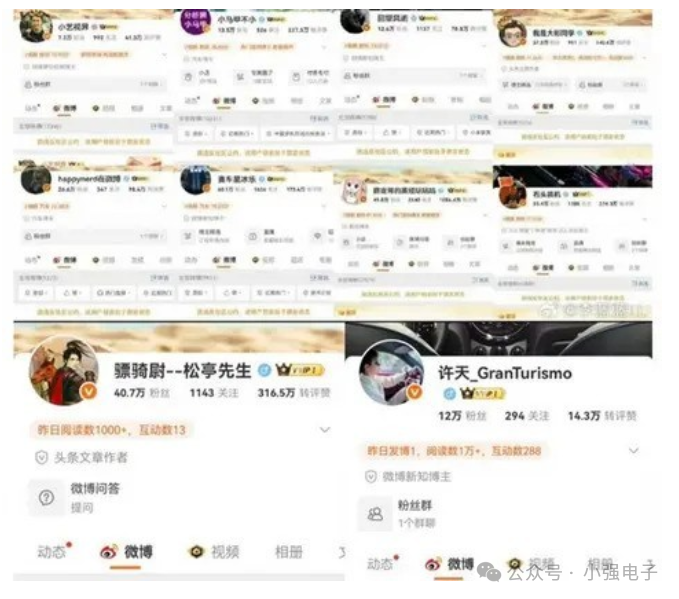
Some bloggers revealed through alternate accounts that their main accounts have been banned for 15 days. Other reports indicate that someone previously stated, “A long list has already been submitted.”
Some of the banned bloggers expressed confusion and questioned, “Can just submitting a list lead to account bans?”
In response to this banning incident, a Weibo representative stated that some bloggers had engaged in continuous attacks on new energy vehicle companies and related individuals, violating relevant regulations.
To implement the Central Cyberspace Administration’s deployment of the “Clear and Optimize the Business Network Environment – Rectification of ‘Black Mouth’ Related to Enterprises” special action, the platform has focused on rectifying malicious defamation of enterprises, publishing false negative information, extortion, or illegal marketing hype.
Recently, based on relevant laws and regulations and the requirements of the special action, the platform has imposed varying degrees of bans ranging from 7 days to 1 month on 17 violating accounts, including “I am Da Bin”, “Racing Star Frappuccino”, “Stone Tech”, and “DSP-Charles”, depending on the severity of their violations.
The platform stated that a good online business environment requires joint efforts from all parties to maintain. In the future, it will continue to improve management mechanisms to provide enterprises with more compliant promotional channels while ensuring a normal user experience. The platform also calls on enterprises to adhere to the principles of objectivity and truthfulness when speaking, comply with laws and regulations and platform rules, and express opinions rationally. The platform is willing to work with all sectors of society to create a healthier and more orderly online business environment.