Minimum Shift Keying (MSK) is a special type of Continuous Phase Frequency Shift Keying (CPFSK) modulation method. It has advantages such as constant signal envelope, continuous phase, high bandwidth efficiency, and good power spectral characteristics, making it widely used in mobile communications, satellite communications, and other scenarios where signal quality and bandwidth resources are strictly required.01Basic Principles of MSK ModulationMSK is a special form of binary Frequency Shift Keying (2FSK) with a modulation index of 0.5. In MSK modulation, the carrier frequency switches between two frequencies based on the input binary digital signal, and the phase of the signal remains continuous at the moment of symbol transition. This gives MSK signals good spectral characteristics, allowing for more efficient data transmission within a limited bandwidth.The expression of the MSK signal can be represented as: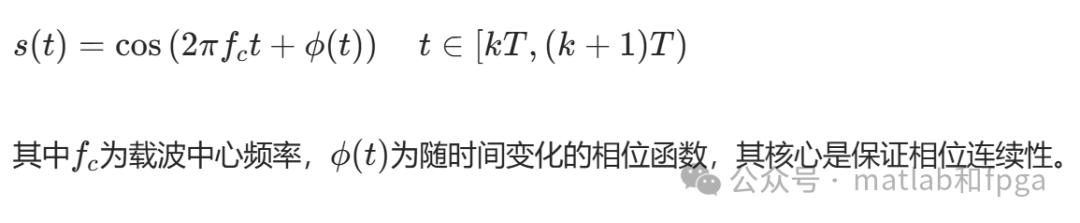 02MSKBasic Principles of DemodulationCoherent demodulation requires recovering the carrier synchronized with the transmitter. The core steps include:Orthogonal Downconversion: The received signal is multiplied by a local carrier, and the baseband I/Q components are extracted through a Low Pass Filter (LPF):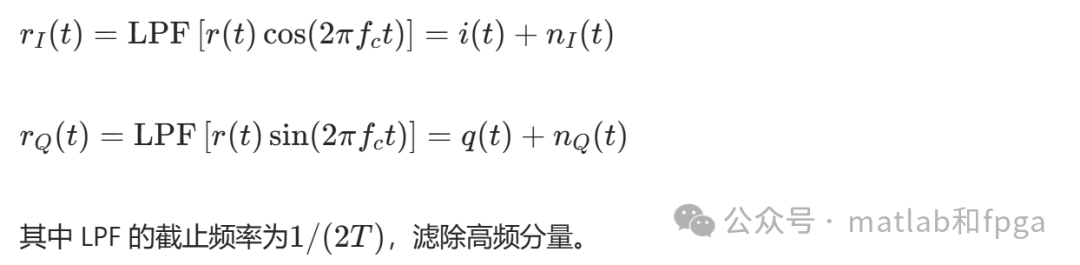
Sampling:The I channel is sampled at t=(2n+1)T (the midpoint of each I channel symbol), and the Q channel is sampled at t=(2n+2)T (delayed by T relative to the I channel):
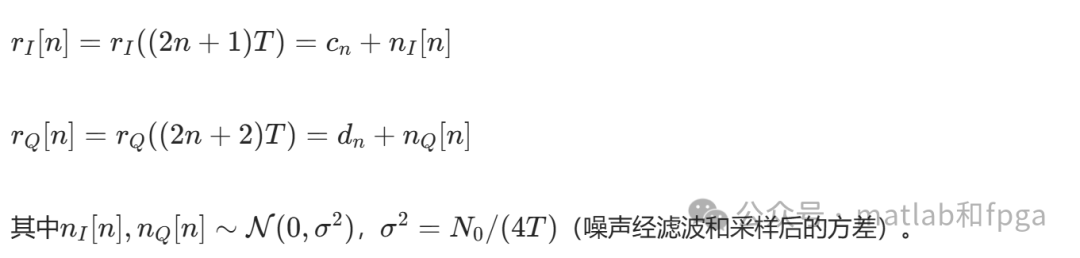
Decision and Symbol Mapping: Perform hard decision on the sampled values to recover bipolar symbols:

Interleaving: Interleave the decision bits from the I and Q channels to recover the original bit stream:

03MATLAB Simulation of MSK Modulation and Demodulation SystemThe complete runnable code has been uploaded by the author to CSDN, using version matlab2022a:
(This program includes a brief explanation of the program and a video of the operation steps)
https://download.csdn.net/download/ccsss22/90349169
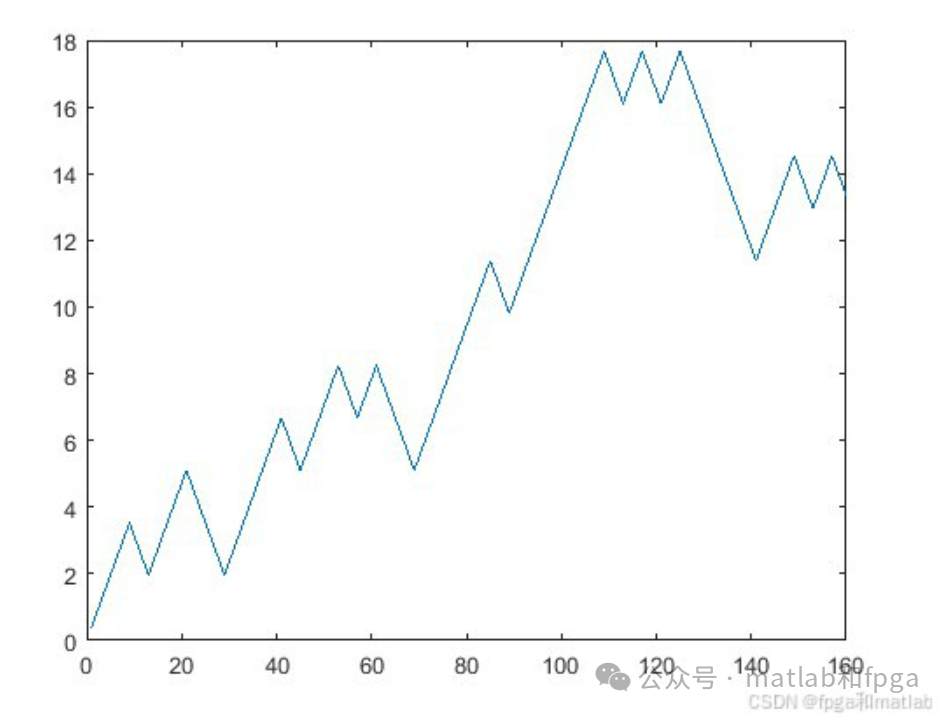
The simulation results are as follows:
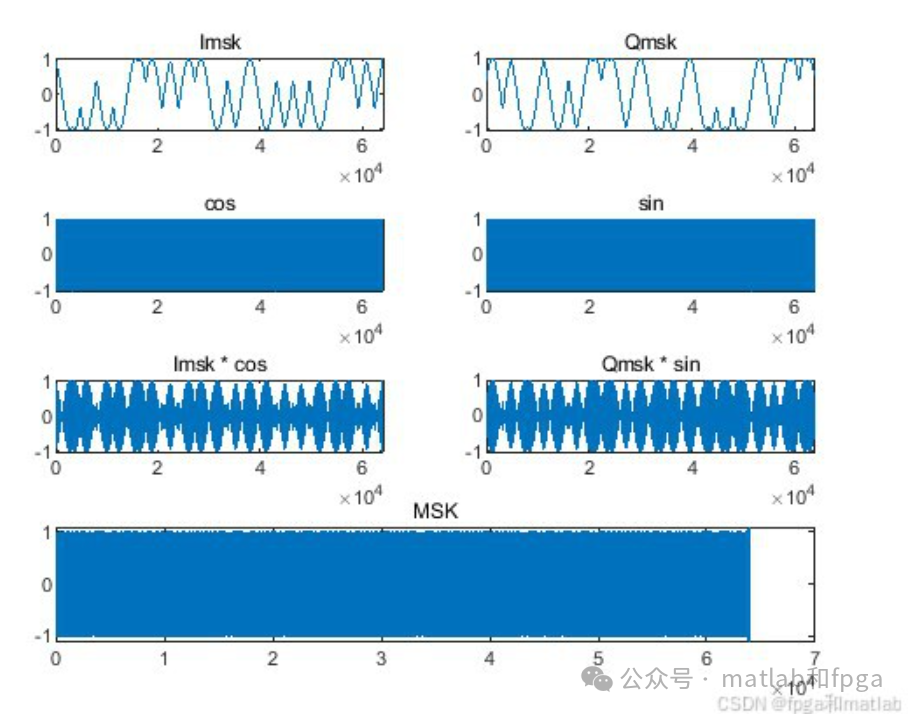
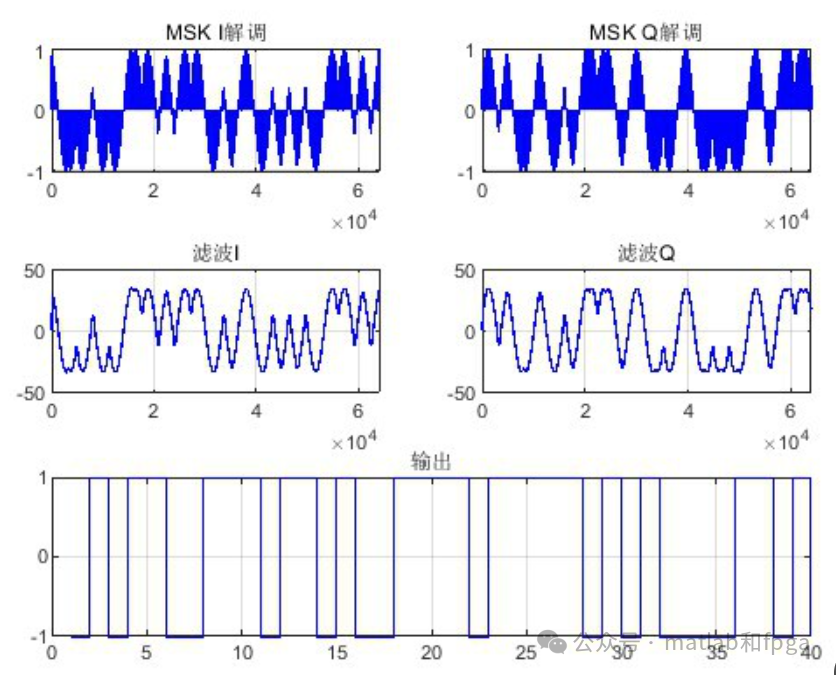
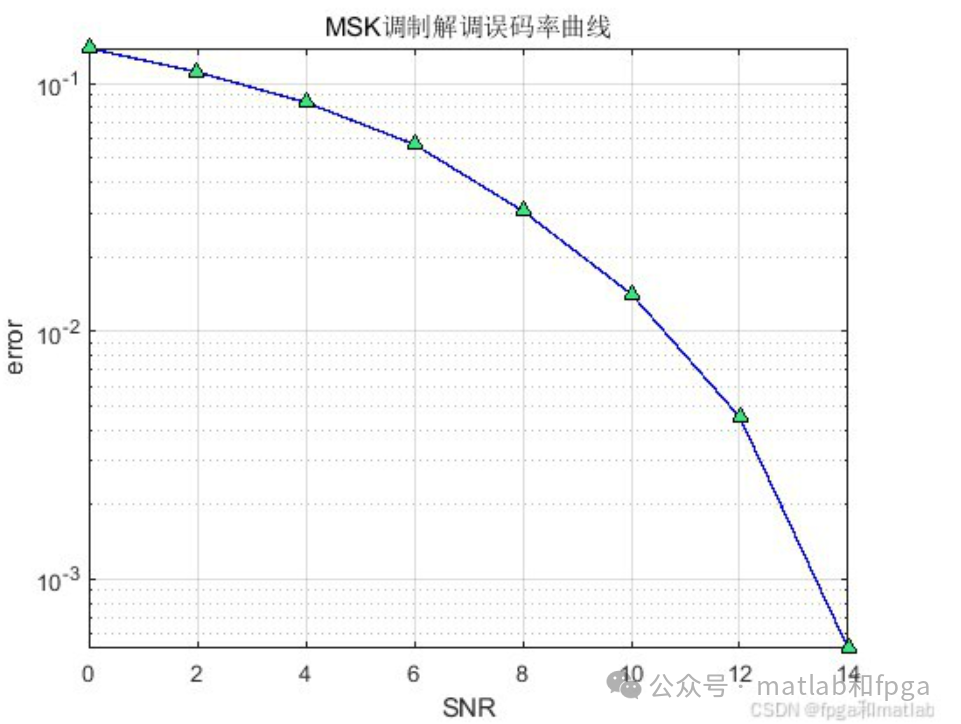 04ConclusionMSK modulation and demodulation communication link principles are relatively simple, with strong anti-interference capabilities, and have been widely used in digital communication systems, especially in scenarios with high bit error rate requirements and limited channel bandwidth, such as satellite communications and deep space communications.
Feel free to like, bookmark, and share, thank you!
*
FPGA/MATLAB/Simulink Tutorials
The author has been engaged in MATLAB algorithm simulation work for 15 years and FPGA system development for over 12 years. He specializes in solving various algorithm simulation, modeling, communication, image processing, AI, and intelligent control issues. The author has written4 volumes of FPGA/MATLAB/Simulink learning tutorials on CSDN blog over the years. Interested students and friends can click the article link below for more details.
[Click the “Read Original” button in the lower left corner to view the tutorial introduction]