Embedded systems are specialized computer systems that typically serve as core components of devices or apparatus. Their typical form consists of control boards made up of embedded processors, with programs running from ROM. Almost all devices with digital interfaces (such as watches, microwaves, video recorders, cars, etc.) utilize embedded systems. Some embedded systems may be equipped with operating systems, but in most cases, a single program can implement all control logic.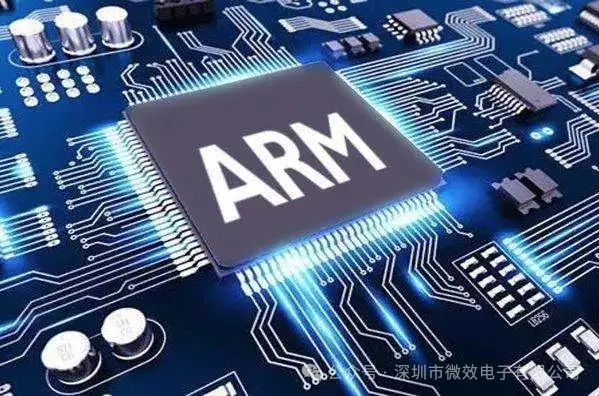
Overview of Embedded Chip Giants: Core Technology Routes and Ecological Competition
Renesas Electronics — Global Leader in Automotive MCUs
Core Products and Technologies
RH850 Series: 32-bit multicore MCU, integrated hardware security module (HSM), supports ASIL-D functional safety level, meets ISO 26262 standards, occupying 40% of the global automotive MCU market share (source: Strategy Analytics).
RA Series: Based on Arm Cortex-M core, integrated TrustZone security technology, focusing on IoT terminal security.
Innovation Directions
“Renesas autonomy” platform: Integrates MCUs, SoCs, and power management chips, providing L2+/L3 level autonomous driving domain controller solutions.
Silicon photonics technology: Focuses on core chips for automotive LiDAR, reducing LiDAR system costs.
Market Positioning: Core supplier for Japanese automakers such as Toyota and Nissan, covering high-reliability scenarios in the industrial sector including PLCs and servo drives.
NXP — Dual-Track Strategy for Automotive and Industrial Security
Technical Moat
S32G Automotive Processor: Integrates Arm Cortex-A53/Cortex-M7, supports Gigabit Ethernet TSN, achieving hardware virtualization for domain controllers.
EdgeLock Security Architecture: The world’s first IoT security solution certified by PSA Level 3, providing end-to-end encryption.
Deep Binding to Application Scenarios
Automotive: Millimeter-wave radar transceiver (TEF82xx), V2X communication chip (SAF5400) with over 60% market share.
Industry 4.0: i.MX RT crossover MCU integrates real-time control and Linux application processing capabilities, supporting Predictive Maintenance algorithm deployment.
Ecological Strategy: MCUXpresso toolchain supports FreeRTOS/Zephyr, providing machine learning model optimization plugins (eIQ Toolkit).
Intel — Transition from x86 to Heterogeneous Computing
Product Iteration Roadmap
Atom x6000E Series (Elkhart Lake): 11th generation GPU supports 4K encoding/decoding, with TDP as low as 6W, replacing traditional industrial computers.
12th Generation Core Embedded Version: Big.LITTLE architecture (performance cores + efficiency cores), enabling real-time analysis for machine vision.
Vertical Field Breakthroughs
OpenVINO Toolkit: Optimizes edge AI inference performance, forming a computing power combination with Movidius VPU.
Industrial Edge Cloud: Collaborated with Siemens to launch predictive maintenance solutions based on vPro technology.
Challenges: The impact of RISC-V architecture in low-power scenarios requires maintaining real-time advantages through Time Coordinated Computing (TCC) technology.
ARM — The Invisible Rule Maker of the Ecological Empire
Architecture Layering Strategy
Product Line Typical Cores Target Scenarios
Cortex-M M0+/M33/M55 Sensor/Motor Control
Cortex-R R52/R82 Automotive Braking/Hard Disk Controllers
Cortex-A A78/A710 Smart Cockpits/Edge Servers
Disruptive Innovations
Armv9 Architecture: Introduces SVE2 vector instruction set, improving ML inference efficiency by 3 times.
Cortex-M85: The first MCU core to support Helium technology, with 4 times DSP performance improvement.
Ecological Control: The 2023 Arm Total Design program integrates TSMC’s 3nm process with Cadence toolchain, shortening high-performance SoC development cycles by 50%.
Huawei HiSilicon — Technological Pioneer for Domestic Substitution
Product Matrix Restructuring
Ascend 310: 12nm process, INT8 computing power of 16TOPS, empowering Atlas 200 edge computing modules.
Kirin A1: Dual-mode chip with Bluetooth 5.2 + BLE 5.1 for FreeBuds Pro headphones, with latency as low as 150ms.
Breakthrough Directions
Exploration of RISC-V Architecture: HiSilicon Hi3861 V200 IoT module equipped with self-developed RISC-V CPU.
OpenHarmony Ecosystem: Launched Hi3516DV300 camera solution, achieving <100ms response for edge-side face recognition.
Challenges: Advanced process limitations require integration of 14nm computing chiplets with 28nm I/O modules through Chiplet technology.
Rockchip — The Cost-Performance Disruptor of AIoT
RK3588 Technology Analysis
| Parameter | RK3588 | Competitor QCS8250 |
|---|---|---|
| CPU | 4xA76+4xA55 | 2xA77+6xA55 |
| NPU Computing Power | 6TOPS(INT8) | 15TOPS(INT8) |
| Video Encoding/Decoding | 8K60fps HDR | 8K30fps |
| Interface Expansion | 3xPCIe3.0+Dual Type-C | Single PCIe3.0 |
Scene Implementation Advantages
Educational Hardware: The BBK Learning Machine S6 equipped with RK3588 enables AI grading of assignments.
Commercial Display: Supports 6-screen independent display, 4-channel 4K video synchronous playback, with costs 30% lower than Qualcomm solutions.
Ecological Cooperation: Established the “Zhouyi” NPU Joint Laboratory with Arm China to develop operator compilers.
Industry Competitive Landscape and Future Trends
Automotive Chip Arms Race
Renesas/NXP competing for EE architecture dominance, Infineon joining the silicon carbide power chip battle.
Computing Power Standard Upgrade: L4 level autonomous driving requires 500+ TOPS computing power by 2025.
Opportunities for RISC-V Breakthroughs
SiFive Technology launched U74 dual-core MCU, 20% lower cost than Arm solutions.
ESP32-C6 supports WiFi6 + Bluetooth 5.3, threatening traditional IoT chip vendors.
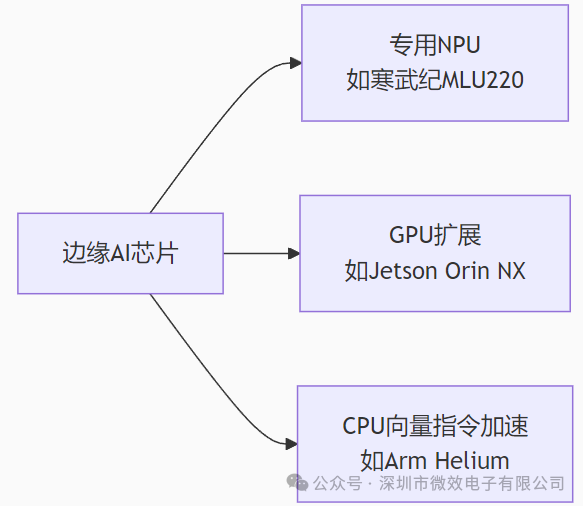
Three Technical Routes for Edge AI
Real-time Performance: Embedded systems typically need to complete tasks within strict time limits. Thanks to the close collaboration between hardware and software, the system can respond to inputs in real-time and generate output results within the designated time.
Low Power Consumption: Embedded systems often operate in resource-constrained environments, making power optimization crucial. Compared to general-purpose computer systems, they typically use low-power processors and optimized power management technologies, significantly improving energy efficiency and extending battery life.
Miniaturization: To adapt to diverse application scenarios, embedded systems often require compact and lightweight designs. By optimizing hardware and software architecture, the system can achieve high integration, effectively reducing physical size, making it easier to embed in various devices.
High Reliability: Embedded systems are often used in critical tasks or harsh environments, making reliability a core consideration. Both hardware and software undergo rigorous testing and validation to ensure the stability and reliability of system operation.
Customizability: Embedded systems can be customized according to specific application requirements. Both hardware and software can be deeply optimized for specific tasks and functions, achieving higher performance and efficiency.