Industrial Robots: The Unsung Heroes of the Industry
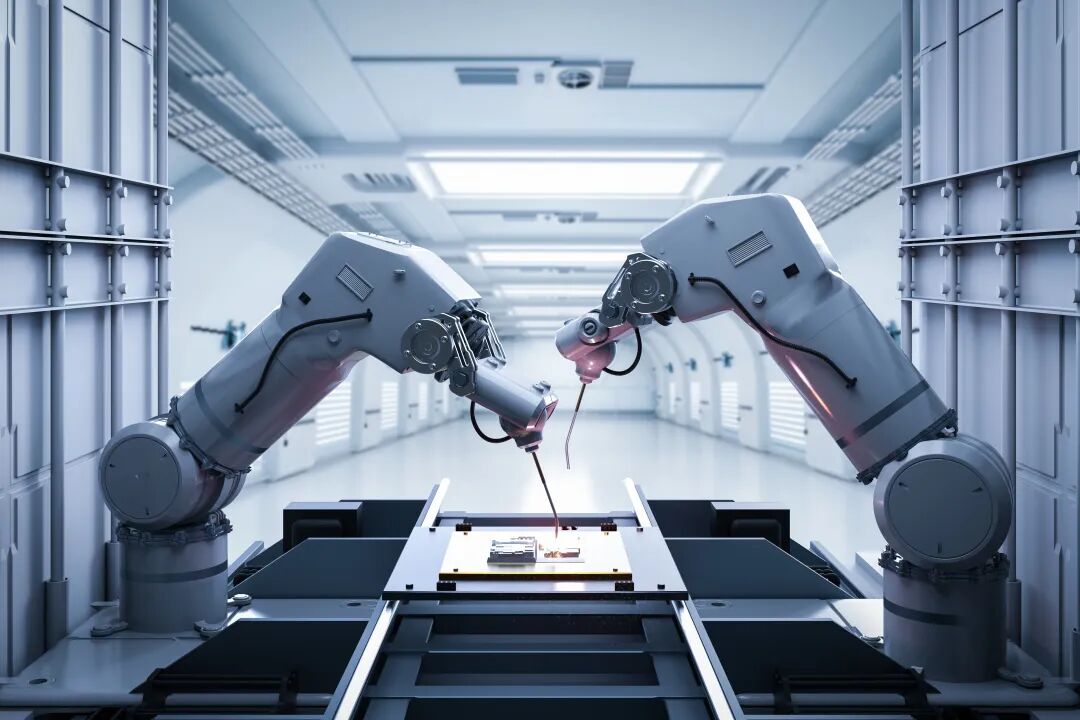 Industrial robots are undoubtedly the unsung heroes in the industrial sector. In automotive manufacturing plants, they showcase their capabilities. Take automotive welding as an example; the mechanical arms of industrial robots are flexible and precise, able to move quickly across complex body structures to perform spot welding, arc welding, and other high-difficulty operations. The speed of welding by these robots is several times faster than that of humans, and the weld points are uniform and strong, significantly improving welding quality and reducing defect rates. In a modern automotive welding production line, there may be hundreds of industrial robots working in coordination, tirelessly operating to greatly enhance the efficiency of automobile production. Welding processes that once required a large amount of manpower and time can now be completed efficiently and stably with the help of robots.
In electronic product assembly workshops, industrial robots also play a crucial role. The components of electronic products are often small and intricate, requiring extremely high assembly precision. Industrial robots, with their high-precision operational capabilities, can easily grasp tiny electronic components such as chips, resistors, and capacitors, and accurately install them onto circuit boards. In the smartphone manufacturing process, industrial robots can complete tasks such as mainboard assembly and testing in a short time, not only improving production efficiency but also ensuring product quality consistency. Imagine if there were no industrial robots; relying on human labor to complete such fine and large-scale assembly work would not only be inefficient but also difficult to guarantee product quality and stability.
The widespread application of industrial robots has greatly propelled the development of industrial automation. They make production processes more efficient, precise, and stable, helping companies reduce production costs and enhance product competitiveness. It can be said that industrial robots have become an indispensable part of modern industrial production and are an important force driving industrial progress.
Humanoid Robots: The Stars of Tomorrow in Technology
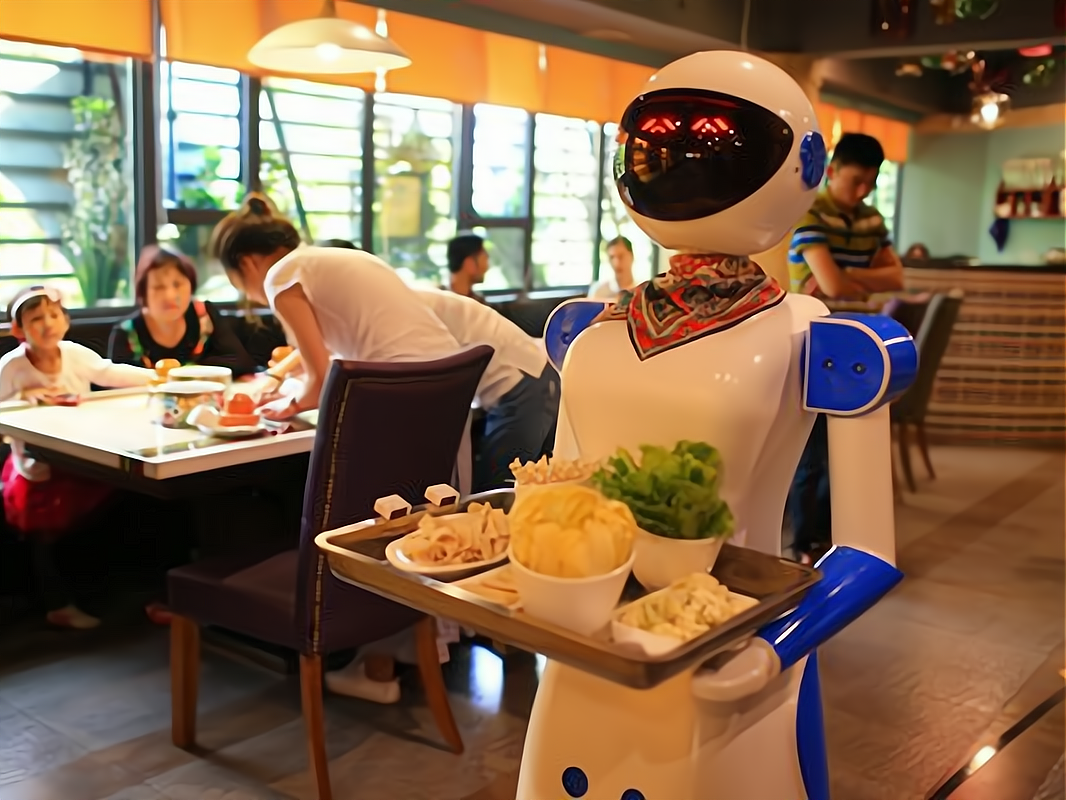 Humanoid robots, as the dazzling new stars in the field of technology, are gradually entering our lives, ushering in a new era of intelligence. In the service sector, humanoid robots have already made their mark. In hotels, they can serve as receptionists, warmly welcoming guests, assisting with check-in, and answering various inquiries. Their polite and professional service attitude makes one feel as if they are in a futuristic world. In restaurants, humanoid robot waiters can skillfully serve dishes and clear tables, moving smoothly and efficiently while engaging in simple conversations with customers, adding a unique enjoyment to the dining experience. In shopping malls, humanoid robot guides can provide customers with product information and help them find the items they need, becoming valuable assistants for businesses.
In rescue scenarios, humanoid robots play an irreplaceable role. When disasters such as earthquakes or fires occur, the on-site environment is often extremely complex and dangerous, filled with various uncertainties. Humanoid robots, with their strong environmental adaptability and fearlessness of danger, can delve into the ruins, using their high-precision sensors and advanced visual recognition technology to accurately detect signs of life, providing critical clues for rescue operations. They can also transport small rescue supplies, bringing hope for survival to trapped individuals. For example, in the ruins after an earthquake, humanoid robots can flexibly navigate through narrow gaps and obstacles, reaching places that human rescuers cannot access, discovering survivors and signaling for help.
In extreme environments such as space exploration and deep-sea exploration, humanoid robots also demonstrate significant advantages. The space environment is filled with radiation and microgravity, posing great challenges to human survival and work. Humanoid robots can replace astronauts in executing dangerous and complex tasks, such as maintaining space stations and exploring extraterrestrial surfaces. They can work stably in microgravity environments, accurately completing various operations, providing strong support for human exploration of the mysteries of the universe. In deep-sea exploration, humanoid robots can withstand immense water pressure, diving deep into the ocean floor to conduct geological surveys and biological research, helping humanity unveil the mysteries of the deep sea.
The development of humanoid robots represents a new height in artificial intelligence and robotics technology. They integrate cutting-edge technologies from multiple fields, including mechanical engineering, electronics, artificial intelligence, and sensor technology, embodying the convergence of multiple disciplines. Humanoid robots not only possess highly flexible movement capabilities, mimicking various human actions such as walking, running, jumping, and grasping, but also have powerful intelligent decision-making abilities, capable of understanding their surroundings and responding appropriately through deep learning and data analysis. They also possess natural human-computer interaction capabilities, enabling them to communicate with humans through language, expressions, and actions, truly achieving collaborative cooperation with humans.
Revealing the Similarities
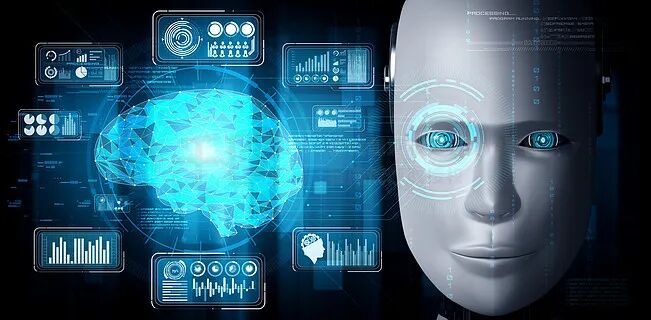 (1) Sensors: The “Perceptive Eyes”
In the world of robots, sensors act as their “perceptive eyes,” providing robots with the ability to perceive their surroundings and their own states. Both industrial robots and humanoid robots heavily rely on various sensors to collect information, enabling precise control and operation.
Industrial robots on production lines need to use sensors to accurately perceive the position, shape, and size of workpieces to ensure they can grasp and operate them accurately. In the assembly process of automotive components, industrial robots utilize visual sensors to identify and locate components, just as humans use their eyes to find targets, quickly and accurately locating the parts to be assembled and installing them in the correct positions. Visual sensors act like the eyes of industrial robots, capturing image information of objects and helping robots understand their surroundings through image processing and analysis techniques, determining the position and posture of objects. Some advanced industrial robots are also equipped with tactile sensors that can sense the force and pressure when grasping objects, preventing damage to workpieces due to excessive force. Tactile sensors function like the touch nerves of robots, allowing them to feel the interaction forces with objects, enabling more precise and safe operations.
Humanoid robots, in complex environments, also rely on sensor support. They need to use various sensors to perceive their surroundings, human behaviors, and their own states to achieve natural interaction and flexible actions. The visual sensors of humanoid robots not only need to have environmental perception and navigation capabilities but also need to achieve object recognition and facial recognition functions. When humanoid robots provide services in homes, they can use visual sensors to recognize the faces of family members, proactively greet them, and offer personalized services. Tactile sensors are key to enabling humanoid robots to achieve natural interaction. These sensors can cover the entire body of the robot, forming a tactile perception layer similar to human skin, allowing robots to sense user touches and pressures. When people gently pat a humanoid robot, it can perceive this action through tactile sensors and respond accordingly, such as friendly replies or adjusting its posture. Force/torque sensors are also critical components for humanoid robots to sense and measure forces at their joints, accurately measuring forces and torques in three directions, helping robots achieve precise operations, maintain balance, and avoid damage. When grasping objects, the sensors can provide real-time feedback on the weight and shape of the objects, allowing the robot to adjust its grasping force and posture to ensure that the objects do not fall or get damaged.
(2) Control Systems: The “Intelligent Brain”
The control system is undoubtedly the “intelligent brain” of robots, directing every move and determining their behavior and performance. Although the control systems of industrial robots and humanoid robots may differ in specific implementation methods, they both consist of hardware and software components that work together to endow robots with intelligence and mobility.
From a hardware perspective, both require powerful computing and control capabilities to support complex calculations and real-time decision-making. Industrial robots typically use high-performance chips from ARM series, DSP series, Intel, etc., to ensure that the control system has sufficient computing and storage capabilities. These chips act like the “central processors” of industrial robots, quickly processing various data and instructions, coordinating the movements of the robot’s joints. In large automotive manufacturing plants, numerous industrial robots operate simultaneously, and their hardware systems need to work efficiently and stably to ensure smooth production. Humanoid robots also rely on high-performance hardware to support their complex functions. Their control hardware core includes various types of chips, such as MCU, DSP, AI chips, etc. The MCU mainly handles basic control logic and sensor signals, executing simple control algorithms; the DSP, with its powerful digital signal processing capabilities, processes complex motion control algorithms, image processing algorithms, etc.; AI chips, with the development of artificial intelligence technology, play an increasingly important role in humanoid robots, enabling them to handle tasks such as speech recognition, image recognition, and natural language processing, enhancing human-robot interaction capabilities and intelligence levels. For instance, in some high-end humanoid robots, AI chips allow robots to understand human language and emotions, providing more intelligent and human-like responses.
The software component is the soul of the control system, implementing functions such as task planning, motion control, and interaction with the external environment. The software of industrial robots includes both operating systems and algorithm libraries. The operating systems of robots have high real-time requirements, and common specialized operating systems include VxWorks (embedded real-time operating system), Windows CE, embedded Linux, μC/OS – II, and general ROS platforms. Among them, VxWorks is widely used in military and industrial applications, such as in fighter jets and rockets; Windows CE, embedded Linux, μC/OS – II, and general ROS platforms are commonly used open-source operating systems. The algorithm library includes both low-level algorithm libraries and application process algorithms. The kinematic control algorithms in the low-level algorithm library are responsible for planning motion points, controlling the end effector of industrial robots to reach specified locations along defined trajectories; dynamic algorithms identify the rotational inertia of the body load in each posture, maintaining optimal output states. The software of humanoid robots also includes operating systems and algorithm libraries. Their operating systems need to support high real-time performance and flexible task scheduling to meet the strict requirements of motion control. The kinematic control algorithms in the algorithm library plan the robot’s motion trajectory, ensuring that the end effector can accurately reach specified positions; application process algorithms are optimized for specific application scenarios, such as grasping algorithms, walking algorithms, etc. These algorithms combine the dynamic characteristics of the robot with environmental information to achieve efficient operation in complex environments. For example, in rescue scenarios, the walking algorithm of humanoid robots can adjust the robot’s walking posture and pace in real-time based on complex terrain and obstacles, ensuring that it can successfully reach the rescue site.
(3) Motion Control: The “Graceful Dance Steps”
Motion control is the key link for robots to perform various actions, just as humans need to precisely control different parts of their bodies when dancing. Both industrial robots and humanoid robots achieve flexible movement through controlling motors and transmission devices.
The mechanical arms of industrial robots can move quickly and accurately in three-dimensional space to complete various complex tasks, which relies on precise motion control. In motion control, trajectory planning is a very important aspect. Industrial robots need to plan the motion trajectory of their mechanical arms based on task requirements to ensure they can accurately reach target positions. In welding operations, industrial robots need to plan a precise welding trajectory, allowing the welding gun to move smoothly along the weld seam, ensuring welding quality. Speed control and position control are also key elements of motion control. Industrial robots need to flexibly adjust their movement speed according to different task requirements while ensuring they can accurately position themselves at specified locations. In assembly tasks, robots need to install parts accurately at a slower speed to avoid damage or inaccurate assembly due to excessive speed. To achieve these precise motion controls, industrial robots typically use servo motors and high-precision transmission devices, such as harmonic reducers and ball screws. Servo motors can precisely control speed and position according to the instructions from the control system, while harmonic reducers and ball screws can convert the rotational motion of the motor into linear motion or precise angular motion, improving motion accuracy and stability.
Motion control in humanoid robots is even more complex and refined, as they need to mimic various human actions to achieve natural and smooth movements. When walking, humanoid robots need to precisely control the joints of their legs, coordinating body balance and posture. This involves complex gait planning and dynamic control. Gait planning needs to design reasonable leg movement patterns based on different terrains and walking speeds, allowing the robot to walk stably. When climbing slopes, humanoid robots need to adjust the strength and stride of their legs to adapt to the slope; when crossing obstacles, the robot needs to plan the height of leg lifts and crossing angles in advance to ensure successful passage. Dynamic control needs to consider factors such as the mass distribution of the robot’s body, inertial forces, and the ground reaction forces, achieving balance and stability through precise control of motor output torque. The arm movements of humanoid robots also require highly precise control to perform functions such as grasping and manipulating objects. When grasping objects, the robot needs to accurately control the trajectory of its arm and the grasping force of its fingers based on the shape, size, and position of the objects to ensure stable grasping. Humanoid robots also employ advanced motor and transmission technologies, such as high-performance servo motors and planetary reducers, to meet their high demands for motion precision and flexibility.
Showcasing Real-World Cases
 Taking Tesla’s humanoid robot and KUKA’s industrial robot as examples, they share many similarities. In terms of sensor applications, Tesla’s humanoid robot is equipped with numerous advanced sensors, such as visual sensors for environmental perception and object recognition, and force/torque sensors for precise control of action strength. KUKA’s industrial robots, when performing welding and assembly tasks on automotive production lines, also rely on visual sensors to identify the positions and shapes of components, using tactile sensors to precisely control the strength of welding and assembly accuracy.
In terms of control system architecture, Tesla’s humanoid robot employs advanced computing chips and intelligent algorithms to achieve efficient decision-making and motion control. KUKA’s industrial robots also have powerful control systems capable of quickly processing various task instructions and achieving coordinated movements of multiple joints. In BMW’s automotive production factory, KUKA’s industrial robot control systems are closely integrated with the factory’s automation management systems, allowing for rapid adjustments of robot work tasks and processes based on production plans.
In motion control strategies, Tesla’s humanoid robot achieves stable walking and flexible actions through optimized algorithms. KUKA’s industrial robots also utilize similar trajectory planning and motion control algorithms when completing complex handling and assembly tasks, ensuring that the mechanical arms can accurately and quickly reach target positions. In the production line of electronic products, KUKA’s industrial robots need to accurately place tiny electronic components onto circuit boards, which requires precise motion control strategies to ensure operational accuracy and stability.
Future Prospects and Challenges
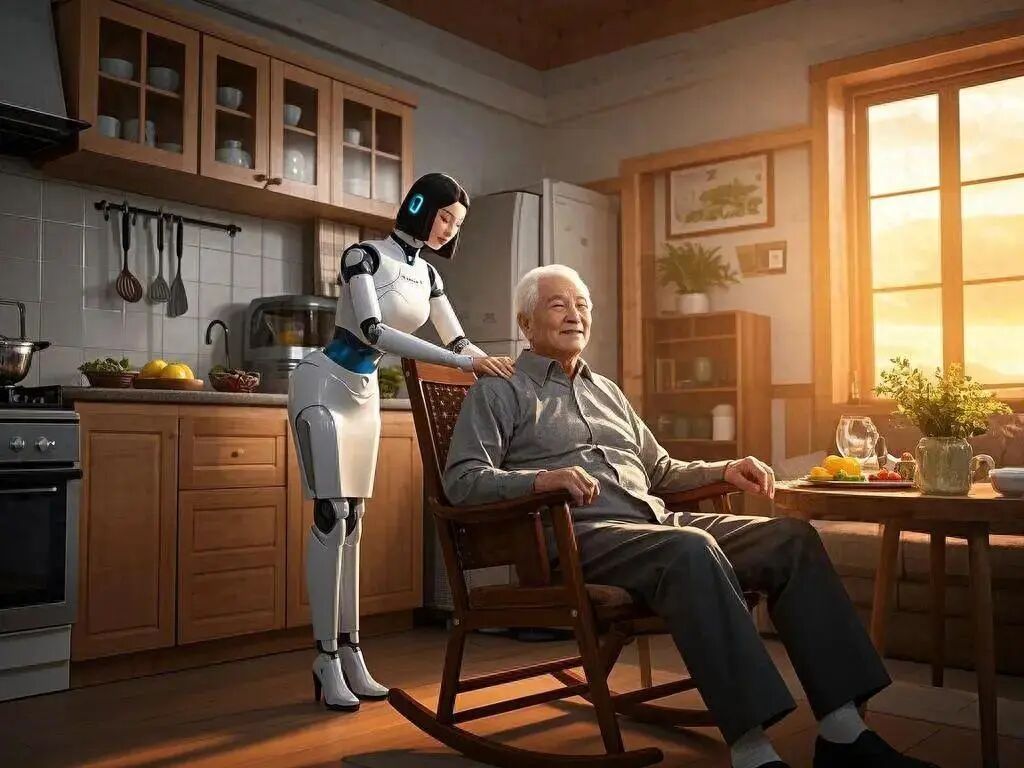 With the rapid development of technology, there is vast potential for collaborative development and innovative applications of industrial robots and humanoid robots based on similar control technologies in the future. In the industrial production sector, the two can work together, with industrial robots continuing to leverage their advantages in high-precision and high-repeatability tasks for large-scale manufacturing, while humanoid robots, with their flexibility and intelligent interaction capabilities, can take on tasks that require adaptability and human-robot collaboration, such as inspection, maintenance on production lines, and collaborative work with human workers. In the service sector, humanoid robots can provide more personalized and humanized services, such as medical care and educational companionship, while industrial robots can provide backend support, assisting with data processing and material management. In the smart home sector, the combination of the two will also bring more convenient and comfortable living experiences to people. Humanoid robots can serve as household assistants, accompanying family members, caring for children, and assisting the elderly, while industrial robots can handle maintenance and cleaning of home devices.
However, they also face numerous common challenges in their development. In terms of technological breakthroughs, although significant progress has been made, many key technologies still need further development. In terms of energy efficiency, robots require more efficient energy supply and management systems to extend working hours and reduce energy consumption. Currently, humanoid robots have low energy utilization rates, with a large amount of energy consumed in supporting bipedal movement, which limits their application in certain scenarios. In terms of intelligent decision-making and learning capabilities, robots need to possess stronger autonomous learning and adaptability, enabling them to make accurate decisions quickly in complex and changing environments. Although artificial intelligence technology has made great strides, robots still face issues of inflexibility and lack of intelligence when dealing with complex real-world scenarios. In terms of cost reduction, the current costs of industrial robots and humanoid robots remain high, limiting their widespread adoption and application. To reduce costs, innovations and optimizations are needed in hardware design, production processes, and supply chain management. In hardware design, more advanced materials and manufacturing processes can be adopted to improve robot performance and reliability while lowering costs; in production processes, optimizing production workflows and increasing production efficiency can help reduce production costs; in supply chain management, strengthening cooperation with suppliers can lower procurement costs. In terms of ethical standards, as the application of robots becomes more widespread, ethical and legal issues are becoming increasingly prominent. How to ensure that robots’ behaviors align with human values and moral standards, how to define robots’ responsibilities in accidents, and how to protect human privacy and safety are all issues that require in-depth consideration and resolution. For instance, when humanoid robots are used in homes, how to protect users’ privacy from being leaked; when robots malfunction and cause accidents, how to allocate responsibility.
The similarities in control between industrial robots and humanoid robots lay a solid foundation for their development and application. Although they face numerous challenges, with continuous technological advancements and innovations, it is believed that in the future, they will play important roles in more fields, bringing more convenience and surprises to human production and life. Let us look forward to the beautiful future of the robotic era together!
The Bond in the World of Robots
Industrial robots and humanoid robots, despite having different application fields and appearances, share similarities in control, acting like an invisible bond that tightly connects them. The commonalities in sensors, control systems, and motion control are not only the foundation for their functionalities but also the key to the continuous advancement of robotic technology. These similarities reveal the universality and scalability of robotic technology and provide infinite possibilities for the innovative development of future robots.